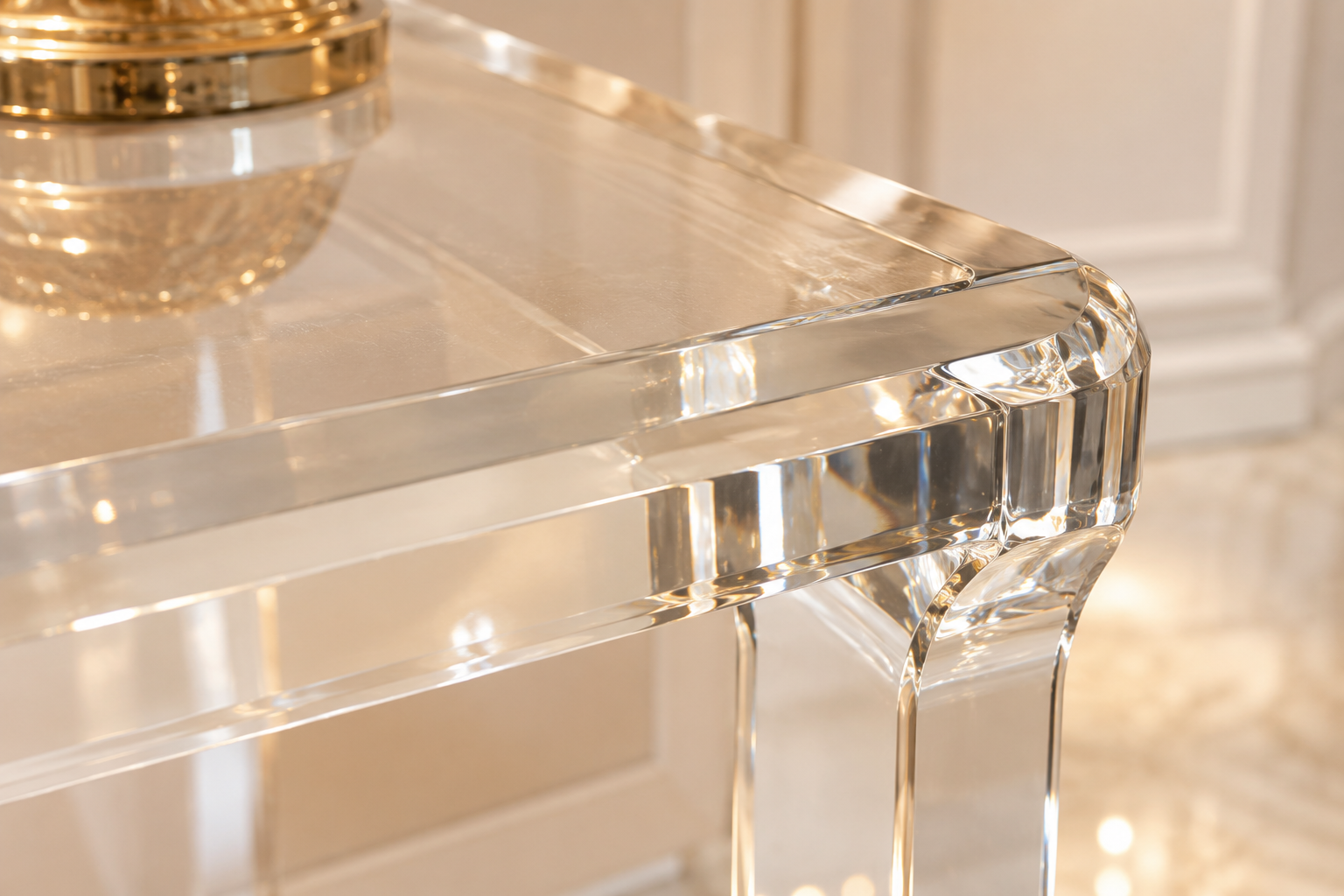
In luxury interiors, clear materials are no longer used simply to make a room look brighter. They have become strategic tools for creating depth, openness, light movement, and visual sophistication. In villas, hotels, private clubs, and high-end commercial spaces, designers use transparent and semi-transparent materials to make interiors feel more layered, more refined, and more memorable.
Clear materials can visually expand a space while still providing structure. They allow light to pass through, reflect across surfaces, and refract at polished edges. This creates subtle visual depth that traditional opaque materials often cannot achieve. For high-end projects, this is especially valuable because luxury is not only about expensive finishes; it is about how the space feels, how it responds to light, and how every material contributes to the overall atmosphere.
Today, three advanced material choices are becoming especially important: Synthetic Crystal, Platinum Acrylic, and Architectural Resin. Each material serves a different purpose. Synthetic Crystal is ideal for artistic furniture and premium focal pieces. Platinum Acrylic is suitable for light, clear, and elegant transparent effects. Architectural Resin is valuable for decorative surfaces, custom structures, and expressive forms.
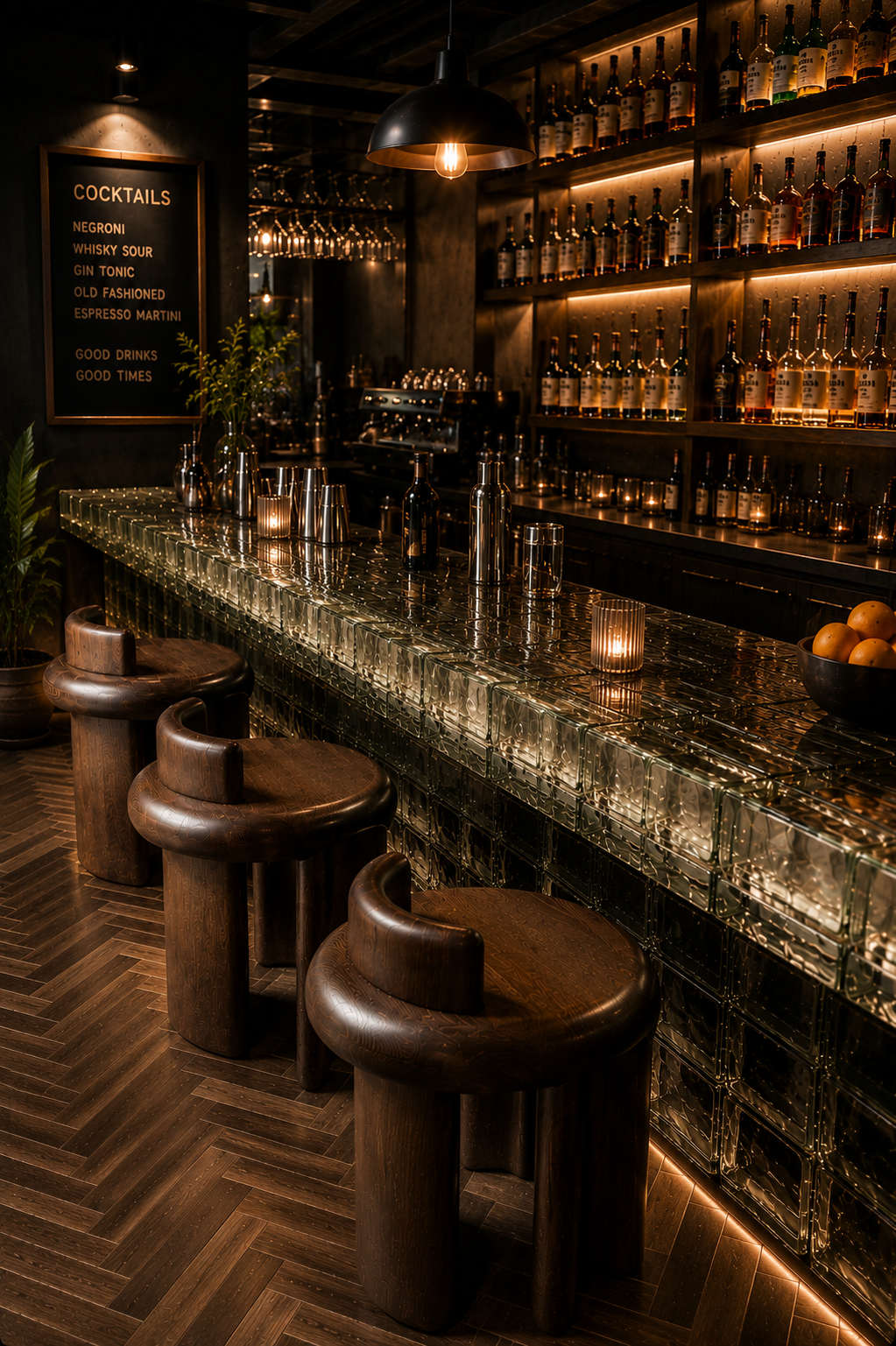
Industry Insight: Clear Materials as a Visual Upgrade
High-end spaces often need to feel open without feeling empty, bright without feeling cold, and luxurious without becoming visually heavy. Clear materials help achieve this balance. They create transparency, but also depth. They reduce visual blockage, but still define zones. They allow furniture and surfaces to interact with flooring, walls, lighting, and surrounding decor.
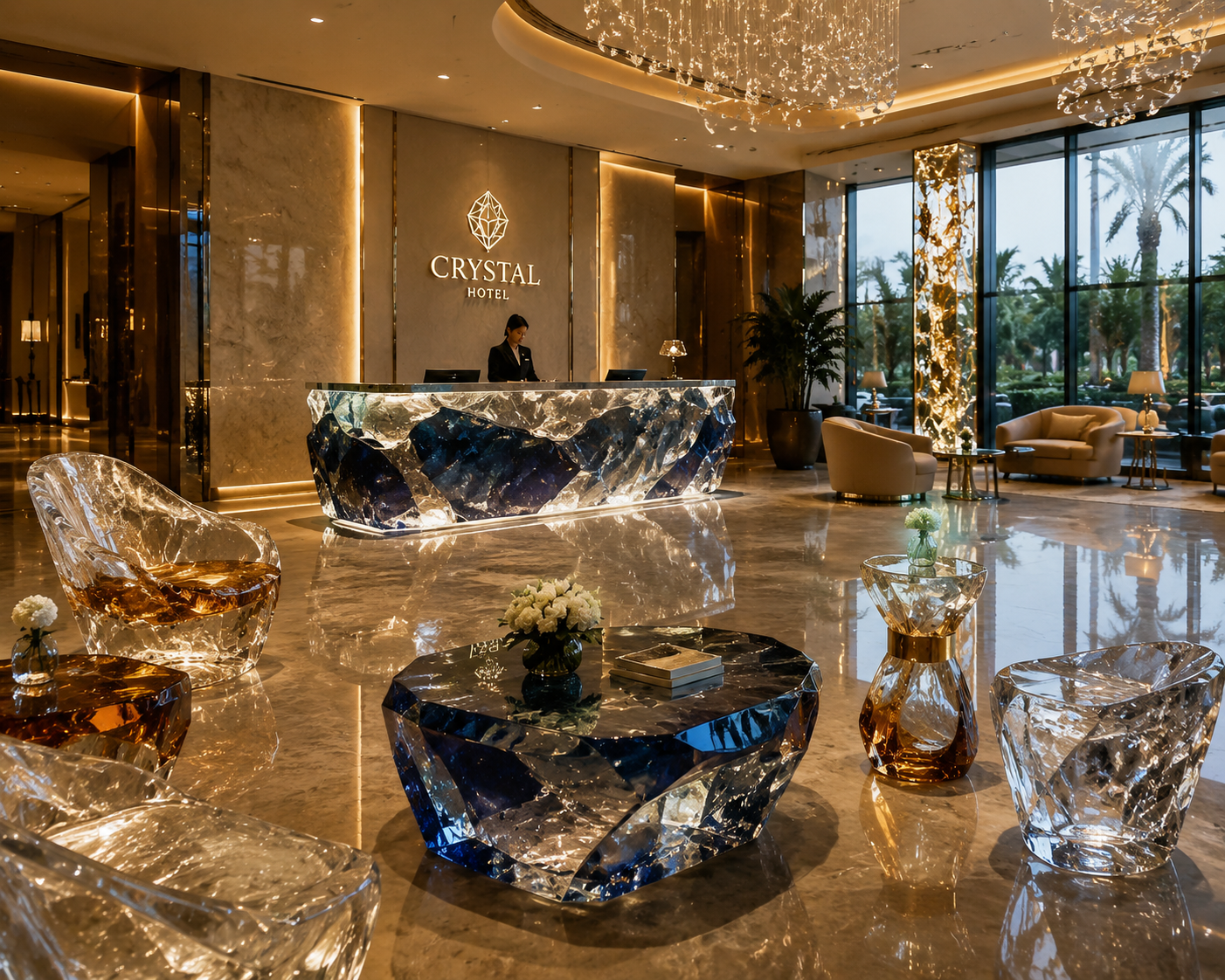
For example, a Synthetic Crystal console in an entrance hall can become a powerful visual statement while preserving openness. A Platinum Acrylic table can make a lounge area feel lighter and more fluid. Architectural Resin panels can introduce semi-transparent texture, color, or artistic surface expression without fully closing off the space.
This is why designers and developers increasingly look beyond appearance alone. They now evaluate materials based on visual effect, durability, long-term stability, maintenance cost, and suitability for the project goal.
Five Key Trends in Clear Material Design
1. Enhancing Spatial Layers
Clear materials help designers create visual layers without overcrowding the room. A transparent table, semi-transparent panel, or crystal focal piece can add depth while keeping the space breathable.
2. Optimizing Light Performance
Synthetic Crystal, Platinum Acrylic, and Architectural Resin each interact with light differently. Crystal creates stronger refraction and brilliance. Platinum Acrylic supports a cleaner, lighter transparent effect. Architectural Resin can diffuse light and create softer surface depth.
3. Using Material Contrast
Clear materials are often paired with stone, metal, leather, fabric, or wood. The contrast between transparency and solid texture makes the space feel richer and more intentional.
4. Combining Transparency and Semi-Transparency
Not every area needs full clarity. Semi-transparent surfaces can create privacy, softness, and atmosphere. This makes Architectural Resin especially useful for partitions, wall features, and custom decorative structures.
5. Matching Materials to Function
Designers are becoming more precise. They no longer choose a clear material just because it looks attractive. They choose based on purpose: art furniture, lightweight transparency, decorative surface, durability, or structural customization.
Changing Client and Developer Expectations
Clients and developers now expect materials to support the overall spatial goal. They want beauty, but they also care about performance. A material must remain stable, be practical to maintain, and match the intended experience of the space.
For luxury villas, the goal may be artistic identity. For hotels, it may be durability and strong first impressions. For commercial interiors, it may be brand recognition and efficient maintenance. This means material selection must be strategic, not decorative.
Design Language and 10 Key Questions
When choosing clear materials, designers should consider:
Should the space feel artistic, light, decorative, or architectural?
Is Synthetic Crystal needed for a strong focal piece?
Is Platinum Acrylic better for a lighter transparent effect?
Is Architectural Resin more suitable for surface design or custom forms?
How will the material perform under natural and artificial light?
Does the room need full transparency or semi-transparency?
Is the furniture scale suitable for the space?
Will the material remain stable and refined over time?
How easy is it to clean and maintain?
Does the material support the client’s aesthetic and functional goals?
Material and Craft Evolution
Clear materials have moved far beyond ordinary glass and basic acrylic. Synthetic Crystal is now used for sculptural tables, artistic consoles, statement furniture, and high-impact decorative pieces. Its thickness, clarity, polishing, and edge treatment create a strong sense of luxury.
Platinum Acrylic is suitable when a project needs a clean, lightweight, transparent effect. It works well for refined furniture details, display elements, and spaces where openness is important.
Architectural Resin is ideal for decorative surfaces, semi-transparent panels, textured features, and custom structures. It gives designers more freedom in color, form, and surface expression.
Implementation Strategy
The best way to select the right material is to begin with the project goal. For artistic impact, choose Synthetic Crystal. For clear and lightweight elegance, choose Platinum Acrylic. For sculptural surfaces, decorative texture, and custom forms, choose Architectural Resin.
Then evaluate lighting, scale, maintenance, installation conditions, and the surrounding materials. Samples, mockups, and lighting tests are especially important because clear materials change dramatically under different environments.
In conclusion, clear materials add depth to luxury spaces because they do more than transmit light; they shape atmosphere, create visual layers, and define how people experience a room. Synthetic Crystal, Platinum Acrylic, and Architectural Resin each offer a distinct path toward openness, refinement, and spatial identity… and the next generation of clear material design will make luxury interiors feel even more alive.
READ MORE:
- Durability in High-End Transparent Materials Is More Than Beauty
- Showing Platinum Acrylic Texture in One Perfect Shot
- Creating High-End Interiors with Sculptural Crystal Furniture
- Where Transparency Becomes a Luxury Design Language
- Dal "lusso" alla "raffinatezz": l'estetica degli spazi alberghieri sta cambiando silenziosamente
- Dettagli dei materiali di alta gamma più spesso trascurati nell’abbinamento tra soft decoration e hard decoration negli hotel
- Luxury Hotels Are No Longer Competing Only with Marble: Transparent Materials Are Becoming the New Focus
- Designer di hotel: 3 strategie di abbinamento dei materiali per valorizzare il senso di "lusso" negli spazi
- Perché un blocco di cristallo sintetico può raddoppiare il senso di lusso di una hall d'hotel?


