1. Material Innovation: What Composite Crystal Acrylic Really Is
Composite crystal acrylic furniture represents a new generation of interior design materials that merge engineering precision with aesthetic transparency. Unlike traditional wood, metal, or stone furniture, acrylic-based composites are engineered polymers designed to mimic the clarity of glass while providing significantly higher durability and flexibility.
At its core, composite crystal acrylic is a refined blend of polymethyl methacrylate (PMMA) and reinforcing nano-materials. These reinforcements improve scratch resistance, structural stability, and load-bearing capacity, making the material suitable for functional furniture such as tables, chairs, shelving systems, and decorative installations.
What makes this material particularly compelling is its optical clarity. High-grade acrylic can achieve up to 92% light transmission, which is even higher than many types of glass. This creates an almost “invisible furniture” effect in interior spaces, allowing designers to prioritize spatial perception rather than physical mass.
In modern interior architecture, where compact urban living is becoming the norm, composite crystal acrylic offers a way to reduce visual clutter while maintaining functionality. It transforms furniture from heavy objects into light-enhancing spatial tools.
2. Light as a Design Element: Transparency and Reflection in Space
Light is one of the most powerful yet underestimated elements in interior design. Composite crystal acrylic furniture interacts with light in a fundamentally different way compared to traditional materials.
Instead of absorbing light like wood or blocking it like opaque metal, acrylic transmits and refracts light. This creates subtle reflections and refractions that shift throughout the day depending on natural sunlight or artificial lighting conditions.
In smaller spaces, this effect can dramatically alter perception. A transparent acrylic coffee table, for example, does not interrupt visual flow. Instead, it allows the eye to travel through the object, making the room feel larger and more continuous.
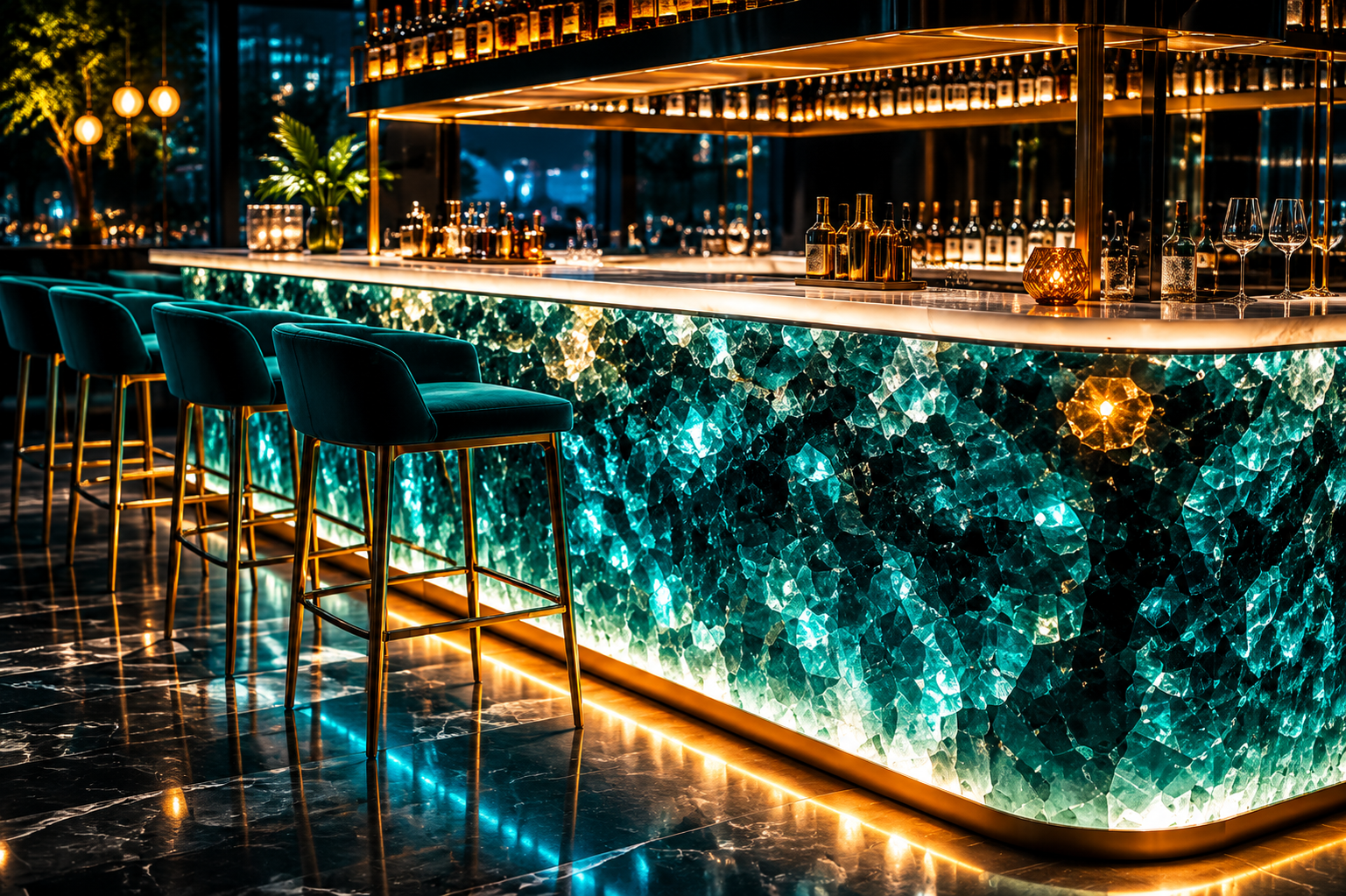
Designers often use acrylic furniture to amplify natural light distribution. When placed near windows, acrylic surfaces bounce daylight deeper into interiors, reducing reliance on artificial lighting. At night, when paired with LED or ambient lighting, acrylic furniture can take on a glowing, almost ethereal appearance.
This dynamic interaction with light turns furniture into an active participant in the atmosphere of a room, rather than a static object.
.png)
3. Structural Strength vs Visual Lightness: Engineering the Illusion
One of the most fascinating contradictions in composite crystal acrylic furniture is the balance between strength and visual weightlessness. Although acrylic appears delicate, modern composite formulations are engineered to be surprisingly strong.
Reinforced acrylic can withstand significant pressure, making it suitable for load-bearing furniture applications. Structural integrity is achieved through molecular densification and layering techniques that distribute stress evenly across surfaces.
This engineering allows designers to create furniture that appears to “float” in space. Chairs seem unsupported, tables look weightless, and shelving units appear suspended in mid-air. This illusion of defying gravity is not just aesthetic—it is a carefully calculated outcome of material science.
The psychological impact is equally important. Humans naturally associate visual lightness with openness and calmness. When furniture reduces perceived density in a room, it can create a sense of relaxation and spatial freedom.
This is why acrylic furniture is increasingly used in luxury apartments, boutique hotels, and modern office environments where mental clarity and spatial efficiency are prioritized.
4. Spatial Layering: How Acrylic Furniture Builds Depth in Interiors
Unlike opaque furniture, composite crystal acrylic allows designers to construct layered visual environments. Spatial layering refers to the perception of depth created through overlapping transparent and semi-transparent elements.
In traditional interiors, solid furniture blocks sightlines, dividing space into segmented zones. Acrylic furniture, however, preserves visual continuity while still defining functional areas.
For example, an acrylic bookshelf does not fully obstruct what is behind it. Instead, it creates a subtle separation that maintains openness while still organizing space. Similarly, acrylic dining chairs allow background textures—walls, flooring, lighting—to remain visually present.
This layering effect is particularly powerful in small apartments or studio layouts. By using transparent materials strategically, designers can create multiple “visual planes” within a single room. This makes interiors feel more complex and sophisticated without increasing physical clutter.
Layering also extends to color interaction. Because acrylic is neutral and transparent, it reflects surrounding colors, subtly shifting its appearance depending on its environment. This creates a living, adaptive design system that responds to décor changes in real time.
5. Style Integration: Minimalism, Luxury, and Contemporary Fusion
Composite crystal acrylic furniture occupies a unique position in modern design language. It is simultaneously minimalistic and luxurious, functional and artistic.
In minimalist interiors, acrylic furniture reinforces the philosophy of “less is more.” By removing visual weight, it allows architectural elements—walls, lighting, textures—to take center stage. The furniture becomes almost invisible, serving only its function without dominating the space.
In luxury interiors, however, acrylic takes on a different role. When combined with metal accents such as gold, chrome, or brushed steel, acrylic transforms into a high-end material that emphasizes precision and refinement. It becomes part of a curated aesthetic experience rather than a neutral backdrop.
Contemporary fusion design often blends acrylic with wood or stone, creating hybrid furniture pieces. For instance, a solid walnut base paired with a crystal-clear acrylic top creates a contrast between natural warmth and modern clarity. This juxtaposition highlights both materials more effectively than either would alone.
This versatility is one of the key reasons acrylic furniture is gaining global popularity. It adapts to multiple design philosophies without losing its identity.
.png)
6. Future Trends: Sustainable Acrylic and Smart Interior Applications
The future of composite crystal acrylic furniture is closely tied to sustainability and smart technology integration.
Traditional acrylic production has faced criticism due to its petroleum-based origins. However, recent innovations in bio-based acrylic alternatives are changing this narrative. These new materials aim to reduce environmental impact while maintaining optical clarity and durability.
Recyclable acrylic systems are also being developed, allowing furniture components to be broken down and reused in new production cycles. This aligns with circular economy principles increasingly adopted in the design industry.
Another emerging trend is the integration of smart technology. Transparent acrylic surfaces can now be embedded with LED systems, touch sensors, and even augmented reality interfaces. This transforms furniture into interactive surfaces capable of responding to user behavior.
Imagine a transparent acrylic table that adjusts lighting based on mood, or shelving that highlights displayed objects with adaptive illumination. These innovations are not far from reality—they are already in experimental stages.
As interior design continues to evolve, composite crystal acrylic furniture will likely become a central material in the creation of adaptive, intelligent living environments.
READ MORE:
- How to Use Synthetic Crystal Pieces to Create a Strong Focal Point Without Overcrowding a Space.
- From Material Expression to Spatial Language: The Design Evolution of Composite Crystal Acrylic Furniture
- Composite Crystal Acrylic Furniture: A “Light Visual Order System” in High-End Interiors
- When Furniture Becomes More Transparent, Space Becomes More Structured
- Why High-End Design Increasingly Emphasizes “Visual Breathing Space”
- Why Edge Finishing Can Make or Break the Perceived Value of Crystal Furniture
- From Showroom Appeal to Daily Use: What Luxury Buyers Should Know Before Choosing Crystal Furniture
- When Design Vision Meets Reality: Why Material Performance Decides the Final Result
- How Transparent Crystal Texture Shapes a Client's First Impression


