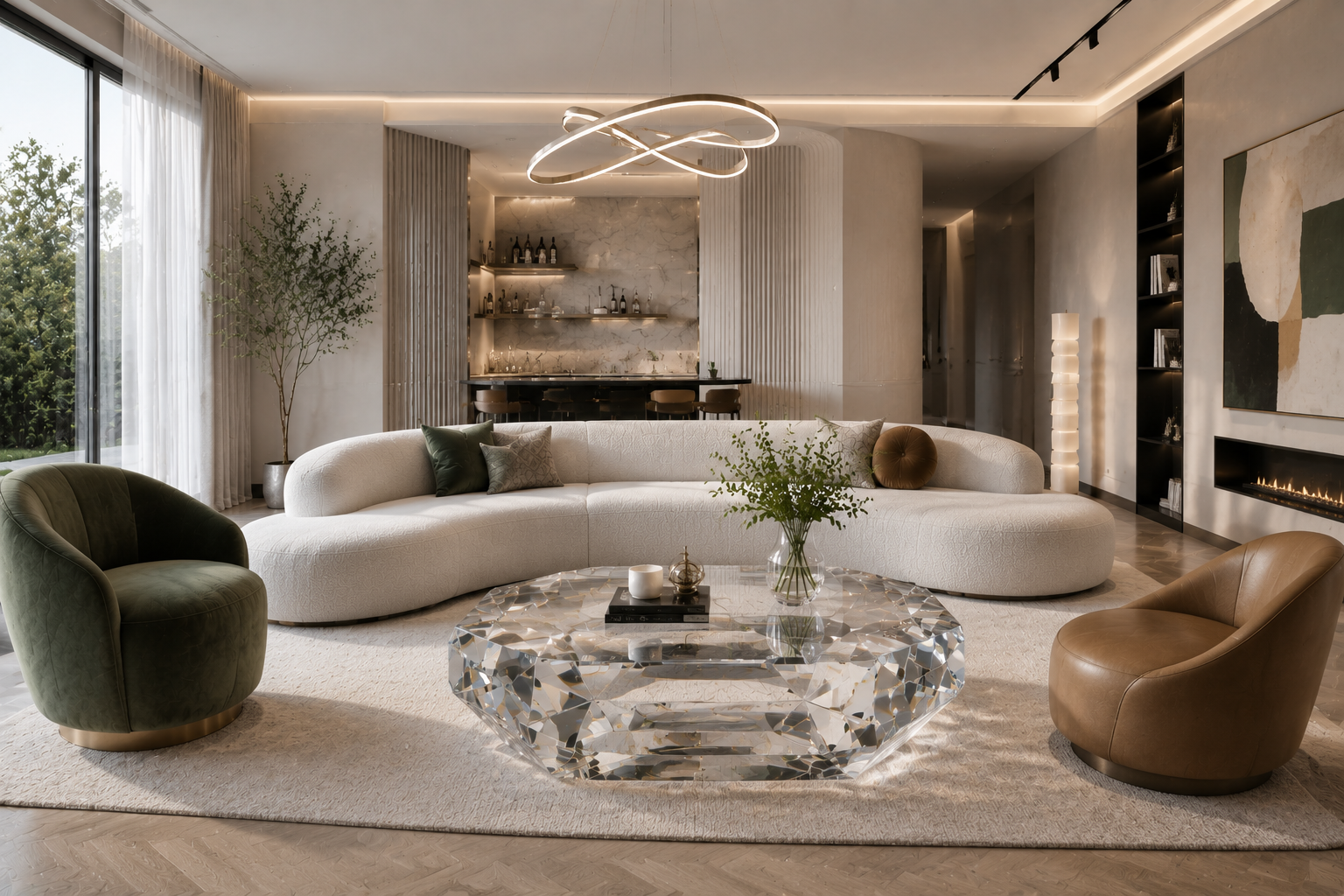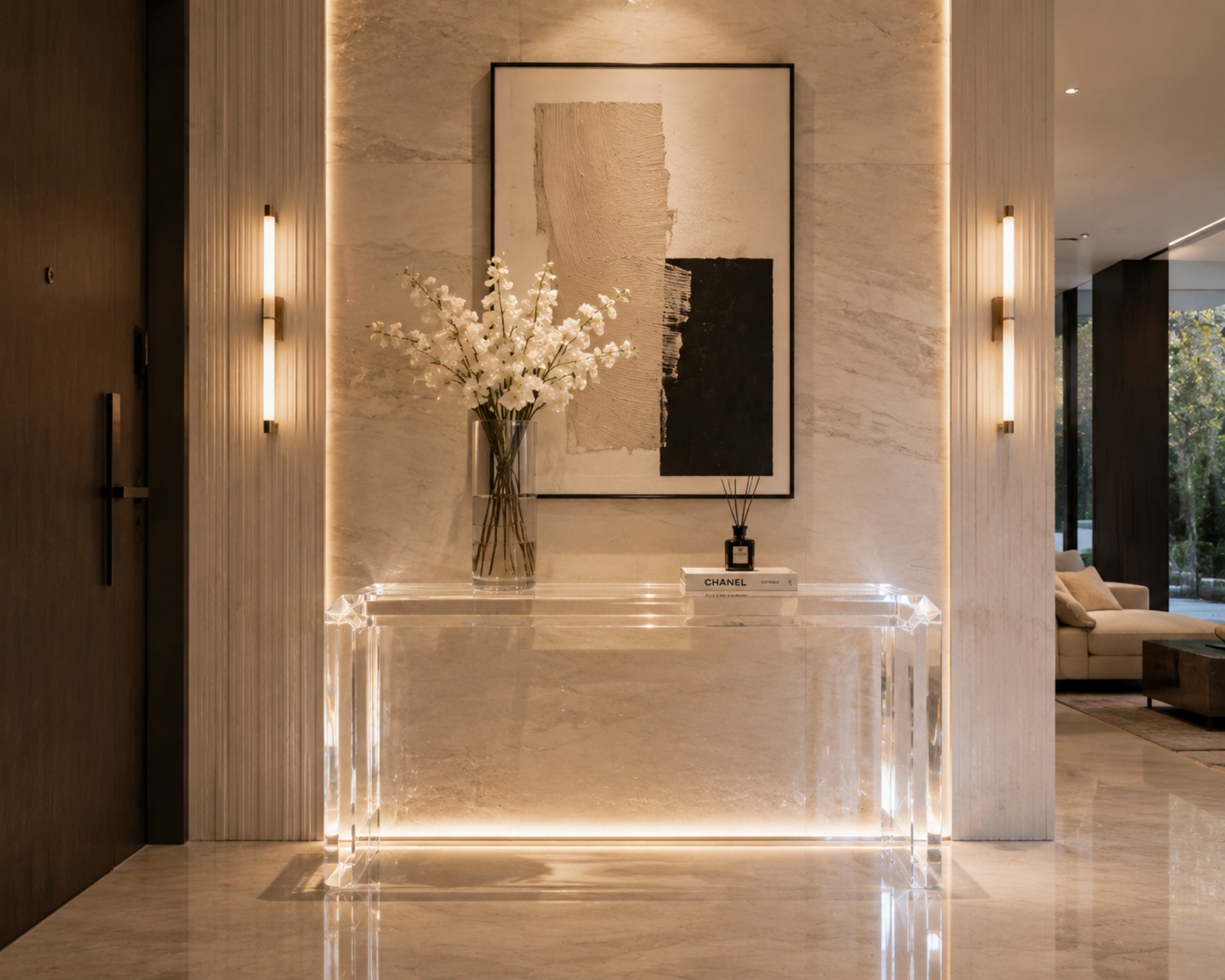
In luxury hospitality, the feeling of “high-end” is rarely created by one expensive object. It is built through a sequence of material decisions: the reception counter that glows softly under warm light, the transparent lounge chair that makes a compact suite feel larger, the resin screen that filters privacy without closing the space, and the synthetic crystal detail that catches the eye without shouting for attention. For suppliers of synthetic crystal, high-end resin, and platinum acrylic furniture, the real opportunity is not only to sell decorative products, but to help hotels translate brand value into touchable, visible, durable spatial experiences.
1. Luxury Begins at the First Material Contact Point
The hotel lobby is no longer just a waiting area. It is a brand theater, a social space, a check-in zone, a photo background, and often the first emotional proof that the guest has made the right booking decision. Deloitte notes that today’s travelers expect more than accommodation; they seek experiences that match their values, and hotel brands must turn a stay into something guests never want to leave. This means the first contact point in a hotel must carry emotional weight, not only functional value.
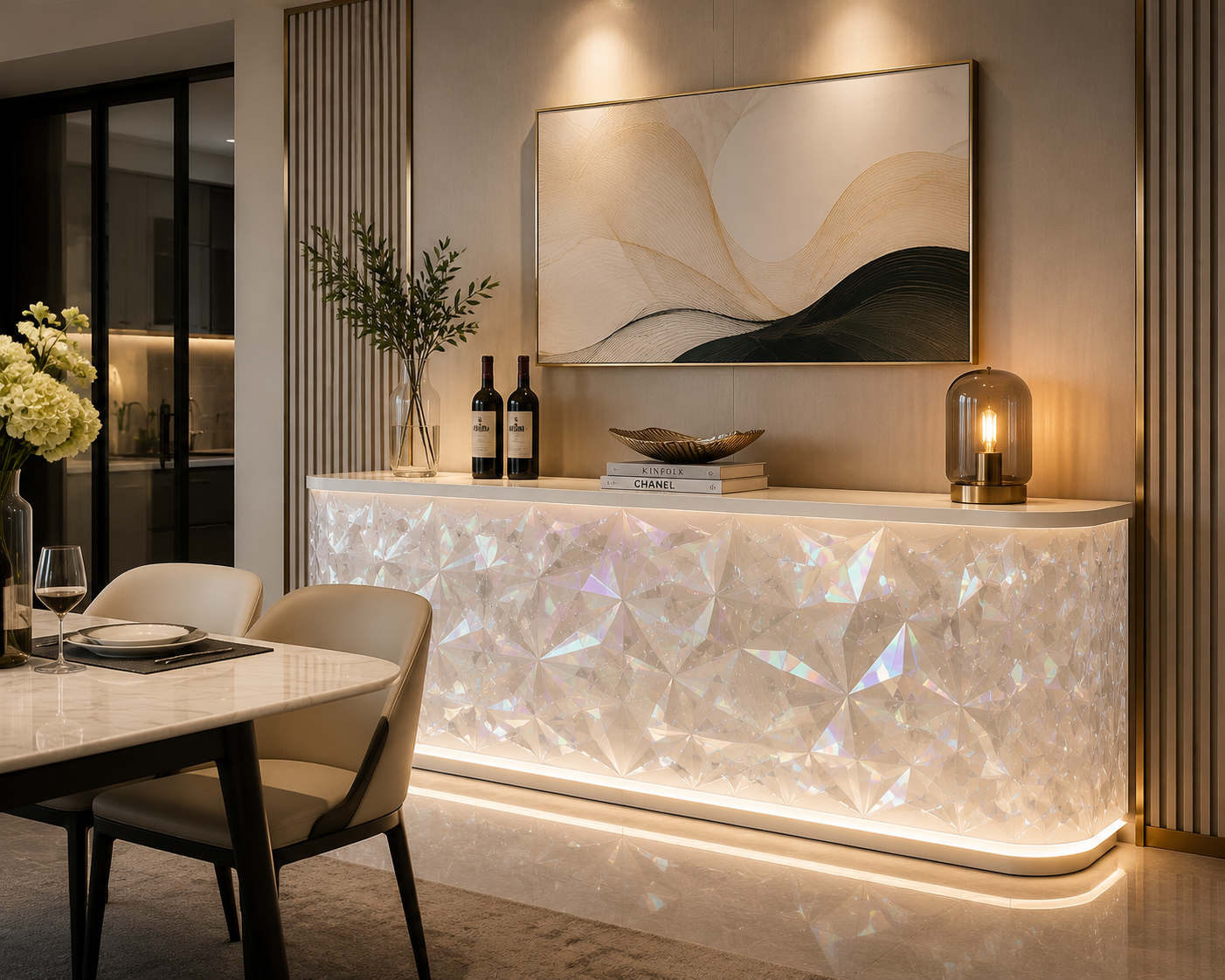
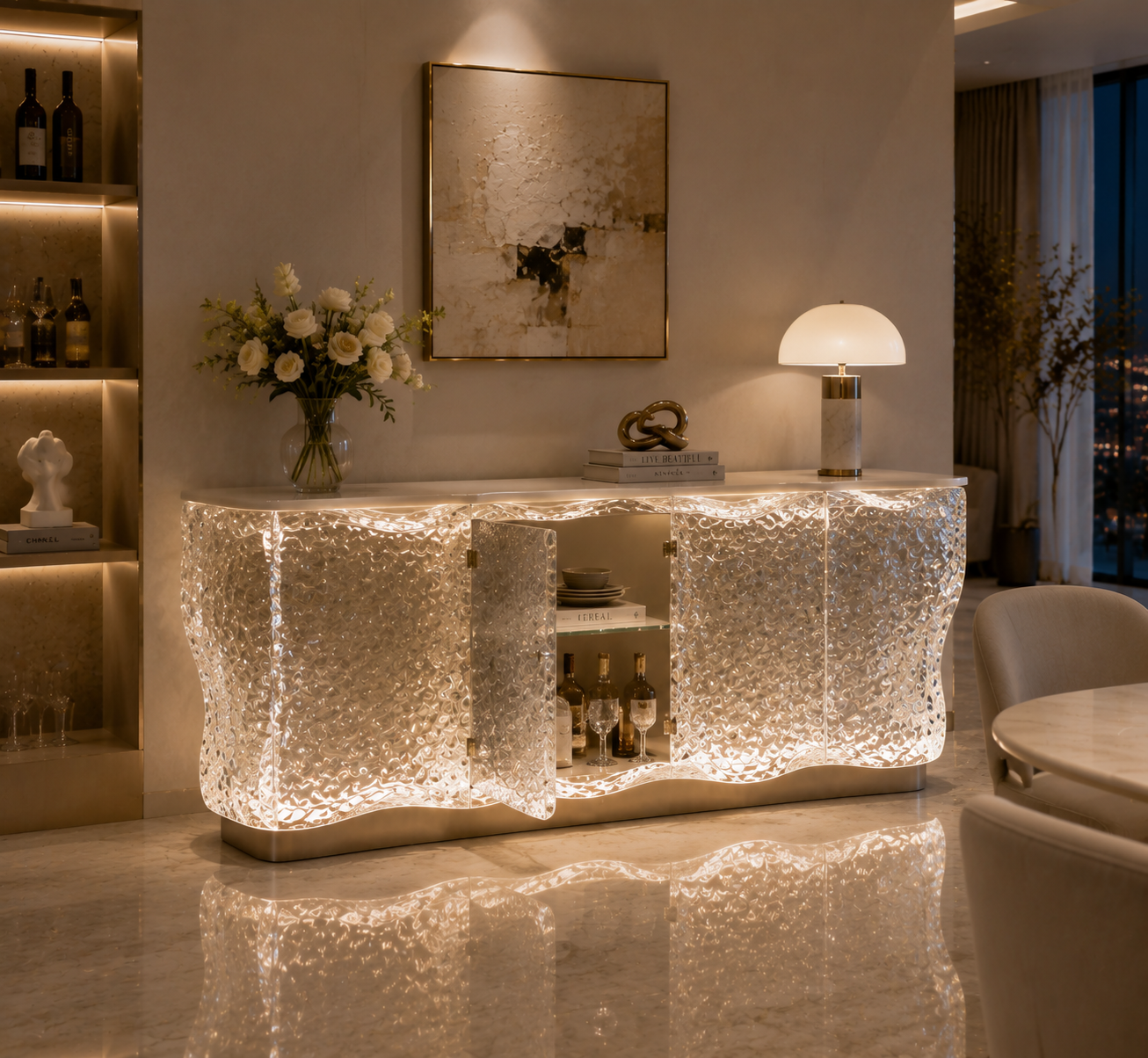
This is why the first material contact point matters. A reception desk made with ordinary laminate may function well, but it rarely communicates rarity. A sculptural counter using translucent resin, platinum acrylic, or synthetic crystal accents can immediately create depth, reflection, and visual layering. These materials are especially useful in hotels because they interact with light. A backlit resin panel can soften a large lobby wall. A crystal-like acrylic table can add brightness without visual heaviness. A polished transparent plinth can display flowers, art, or retail objects while keeping the surrounding space open.
In real projects, this is often where design and operation meet. Corian’s hospitality case study on Hilton Gdańsk describes how reception counters, lighting, signage, and functional details can be integrated into a refined guest journey, while also supporting durability and maintenance in high-traffic areas. The same logic applies to premium acrylic and resin furniture: the material must look elegant on day one, but it must also remain stable after thousands of guest interactions.
For high-end hotels, the lobby does not need excessive decoration. It needs a strong visual anchor. Synthetic crystal, premium resin, and platinum acrylic can serve this role because they create a sense of crafted precision. They can look clear, colored, frosted, layered, or jewel-like. They can be used for reception counters, side tables, console tables, bar fronts, decorative screens, wall features, art bases, and illuminated signage. The detail tells the guest: this hotel has considered the experience beyond the room rate.
2. Transparency Creates Space, Lightness, and Emotional Ease
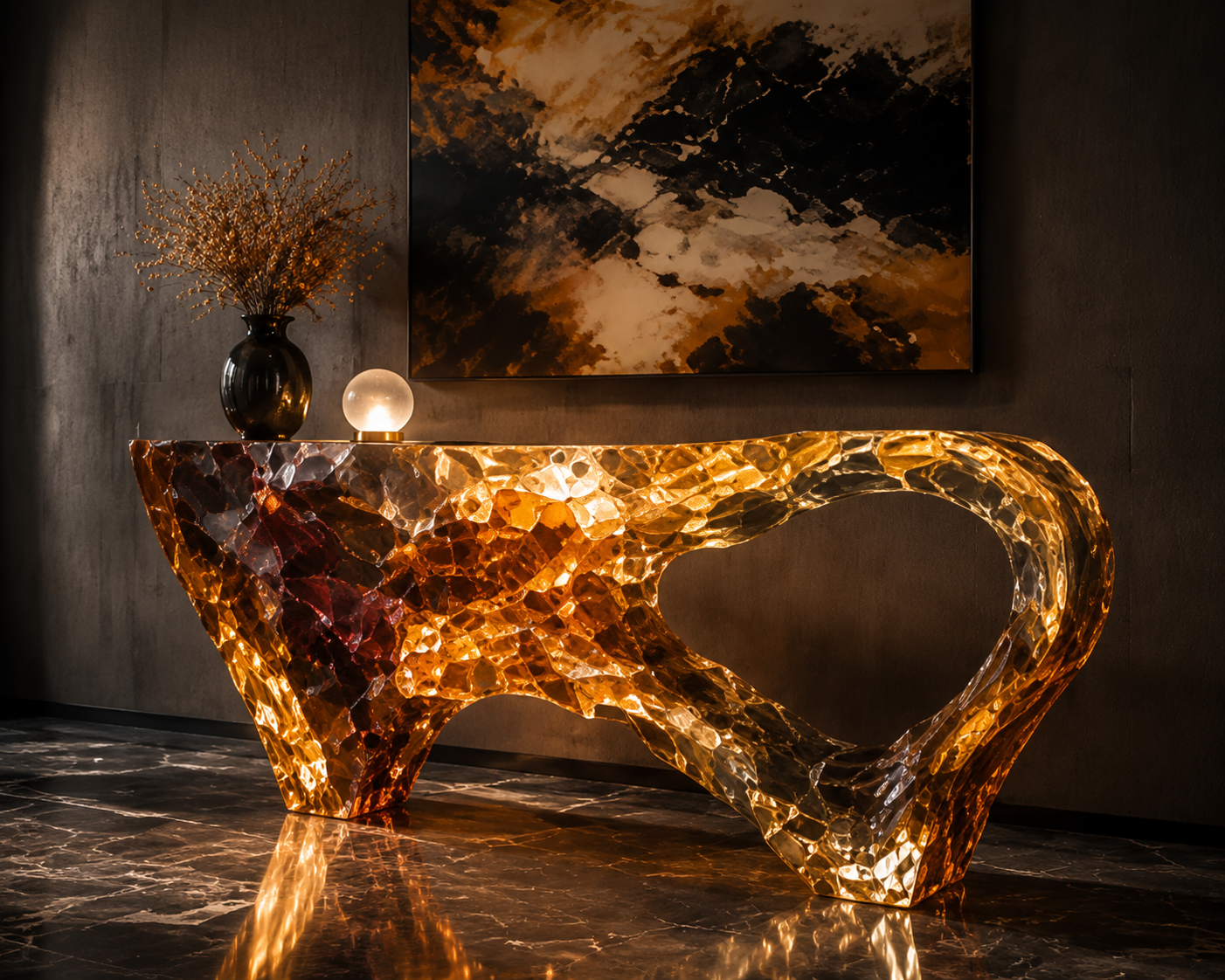
One of the strongest advantages of acrylic and resin furniture is visual lightness. In hotel rooms, suites, lounges, restaurants, and spa areas, furniture must support use without making the space feel crowded. Transparent or semi-transparent furniture helps solve this problem. It provides function while allowing flooring, rugs, wall finishes, and lighting to remain visible.
This matters because modern hotel spaces must serve many types of guests. Hilton’s 2025 Trends Report found that 76% of respondents look for accommodations offering a variety of experiences throughout their stay, while 69% of global travelers enjoy being active when they travel. A hotel lobby may need to support check-in, informal meetings, family waiting, solo dining, coffee service, and evening socializing. In such flexible spaces, heavy furniture can visually block movement. Acrylic and resin pieces help create zoning without closing the room.
Technically, PMMA acrylic is valued for clarity, transparency, UV resistance, weathering resistance, and design flexibility. SpecialChem describes PMMA as a transparent thermoplastic used as a glass replacement, with excellent light transmission, UV resistance, and coloring options. This is why platinum acrylic furniture can be more than a style choice. It can become a spatial tool. A clear acrylic coffee table in a suite can make the room feel more open. A resin lounge chair with a soft amber tint can add warmth without bulk. A synthetic crystal side table can introduce luxury without competing with the architecture.
In actual hotel planning, transparency also supports photography. Many guests judge a property through social media, booking platforms, and lifestyle images before arrival. Transparent furniture catches highlights, reflects surroundings, and creates a polished image without overwhelming the frame. For boutique hotels, resort villas, art hotels, and luxury serviced apartments, this creates a valuable balance: the space feels designed, but not visually crowded.
The key is restraint. Acrylic and resin should not be used everywhere. Their power comes from contrast. A platinum acrylic chair beside a velvet sofa, a clear resin console against a stone wall, or a synthetic crystal table under a fabric pendant light can create a dialogue between soft and hard, opaque and transparent, warm and cool. That contrast is where the high-end feeling often lives.
3. Material Detail Supports Wellness, Sleep, and Sensory Comfort
Luxury hospitality is increasingly connected with wellness. Marriott International’s 2025 Intentional Traveler research reported that 90% of surveyed affluent Asia-Pacific travelers consider wellness experiences a key factor in booking decisions, up from 80% the year before. The same report says luxury travelers are prioritizing wellbeing, immersive experiences, emotional value, and intentional design over pure extravagance.
This shift changes the way materials should be specified. In wellness-led hotel spaces, guests are sensitive to touch, sound, lighting, smell, and visual calm. A spa reception desk, bathroom vanity detail, meditation room partition, or wellness suite table should not feel cold or aggressive. High-end resin can be cast in soft tones that resemble water, stone, mist, amber, jade, or ice. Synthetic crystal can bring controlled sparkle into a spa or bathroom without becoming theatrical. Platinum acrylic can create clean, hygienic, light-reflective surfaces that suit modern wellness interiors.
Hilton’s 2025 report also found that 70% of luxury travelers choose hotels with sleep-centric amenities, and two in five travelers choose hotels where they believe they can achieve a better night’s sleep. This creates opportunities beyond beds and mattresses. Bedside tables, lighting bases, headboard inserts, minibar counters, bathroom shelving, and relaxation-area furniture all influence the perceived calm of the room.
For example, a guest room with dark wood, heavy stone, and metal details may feel premium but visually dense. Introducing a clear acrylic luggage bench, a resin bedside table with rounded edges, or a translucent screen can lighten the atmosphere. In suites, semi-transparent partitions can separate dressing, bathing, and sleeping zones while still allowing daylight to flow. In spa corridors, resin panels with embedded texture can guide movement and create a sense of ritual.
Indoor environmental quality also matters. The U.S. EPA’s Indoor AirPlus guidance emphasizes low-emission materials because volatile organic compounds can be emitted from certain solids and liquids and may have short- and long-term health effects. For premium resin and acrylic suppliers, this means product beauty should be supported by documentation, responsible formulation, and clear specification information. In luxury projects, designers increasingly want not only a beautiful sample, but also material data they can trust.
4. Durability Is Part of the Luxury Experience
Luxury is not only how something looks when it is new. It is how it performs under pressure. Hotels are demanding environments: suitcases hit corners, children touch surfaces, housekeeping uses cleaning products, restaurants face spills, lobbies handle constant traffic, and outdoor areas receive sunlight and humidity. A material that photographs well but ages poorly can damage the guest experience and increase operating cost.
This is where synthetic crystal, premium resin, and platinum acrylic must be positioned as engineered materials, not only decorative materials. A hotel owner wants visual impact, but also repairability, cleanability, dimensional stability, and consistent supply for future replacement. Designers want freedom in color, form, and finish. Contractors want predictable fabrication and installation. Operators want furniture that can survive repeated use.
PMMA acrylic provides a useful example. It offers glass-like qualities at lower weight, high light transmission, and UV stability, though it also has limitations such as brittleness under certain loads and sensitivity to some chemicals. A professional supplier should therefore guide hotels on appropriate thickness, edge treatment, load-bearing structure, cleaning methods, and placement. A transparent acrylic dining chair, for instance, has different technical demands from a decorative acrylic side table. A resin bar front has different performance needs from a resin art panel.
Practical detailing is crucial. Rounded edges reduce chipping risk and improve guest safety. Proper polishing improves perceived quality. Hidden metal reinforcement can improve structural performance without destroying the transparent effect. UV-stable formulations help maintain clarity near windows or outdoor terraces. Anti-scratch coatings or maintenance protocols can extend product life in public areas. For hospitality projects, these small technical decisions often determine whether the material feels premium after years of use.
Durability also affects brand consistency. A luxury hotel may expand, renovate in phases, or replace damaged furniture over time. Custom acrylic and resin products should therefore be documented with color codes, dimensions, molds, finish references, and installation drawings. This helps the hotel maintain the same visual language across rooms, public areas, restaurants, spa zones, and future refurbishments.
5. Sustainability and Transparency Are Becoming Design Requirements
High-end hotels are under pressure to prove that beauty and responsibility can coexist. Marriott Bonvoy’s 2025 travel research across Europe, Africa, and the Middle East reported that 72% of surveyed travelers look at the environmental impact of their travel plans, and 65% consider sustainability important when choosing accommodation.
In building and interior design, the material conversation is also becoming more technical. The World Green Building Council has called for all new buildings, infrastructure, and renovations to achieve at least 40% less embodied carbon by 2030, with net zero embodied carbon for new buildings and renovations by 2050. For hotel interiors, this does not mean every product must be natural or rustic. It means each material choice needs a clearer reason: longer life, lower waste, better repairability, more efficient manufacturing, safer chemistry, or stronger documentation.
This is important for resin and acrylic suppliers because synthetic materials are often questioned in sustainability discussions. The best response is not vague eco language. The best response is transparency. Health Product Declarations are standardized documents that disclose chemical substances in building materials and help architects, designers, consultants, and project teams make informed choices for certification systems such as LEED and WELL. The HPD Collaborative also states that its repository contains over 13,000 published reports representing more than 40,000 building products.
For suppliers of synthetic crystal, high-end resin, and platinum acrylic furniture, this creates a clear business direction. Product pages should not only show lifestyle images. They should include material composition guidance, low-VOC information where applicable, maintenance instructions, durability notes, recyclability or take-back possibilities, packaging information, and project suitability. Hotels, especially international luxury brands, increasingly need this information for procurement and ESG reporting.
Sustainability can also be expressed through longevity. A well-made acrylic console that remains beautiful for ten years may be more responsible than a cheaper decorative piece replaced every two years. A resin panel designed for disassembly can support future renovation. A modular synthetic crystal feature wall can be repaired in sections rather than discarded entirely. In luxury hospitality, sustainable value often comes from fewer replacements, less visual aging, and better operational planning.
6. The Future of Hotel Material Design Is Custom, Local, and Memorable
Luxury hotels increasingly compete through meaning, not only facilities. Guests want spaces that feel connected to place, culture, wellness, food, nature, and personal memory. Hilton’s 2025 report found that 74% of travelers want recommendations from locals, while 73% seek authentic local experiences when traveling with children. Marriott’s luxury research similarly found that 93% of surveyed high-net-worth travelers expect a personalized travel experience, and 92% say being close to nature is a key travel priority.
Materials can translate this desire into physical form. A seaside resort can use translucent blue resin tables that echo water and tide lines. A desert hotel can use amber resin panels inspired by sand layers and sunset light. An urban art hotel can use platinum acrylic furniture with bold geometry and reflective surfaces. A mountain retreat can combine smoky resin, warm wood, and synthetic crystal details to create a frozen-light effect. These are not generic products; they are spatial memories.
Gensler’s Design Forecast 2025 identifies major themes shaping design, including wellness real estate, flexible spaces, decarbonization, immersive and experiential environments, local ties, and multigenerational design. These themes align closely with what premium acrylic and resin materials can offer. They can support wellness through calm color and soft light. They can support flexibility through lightweight visual presence. They can support immersive design through transparency, layering, embedded textures, and sculptural forms. They can support local identity through custom colors, patterns, and object shapes.
For hotels, the most valuable furniture and material details are those guests remember but do not feel forced to notice. A crystal-clear side table beside a bathtub. A glowing resin reception wall. A platinum acrylic chair in a rooftop lounge. A translucent partition in a spa suite. A sculptural console in a corridor niche. These details become part of the guest’s memory and part of the hotel’s visual identity.
The commercial opportunity is clear: suppliers should not present synthetic crystal, resin, and acrylic furniture as isolated catalog products. They should present them as solutions for hospitality scenes: lobby arrival, suite living, spa relaxation, restaurant display, bar atmosphere, retail showcase, villa terrace, art installation, and branded photo moments. The more closely the product is connected to a hotel’s guest journey, the more valuable it becomes.
High-end hotel texture is not hidden because it is invisible. It is hidden because it is subtle. It lives in the edge radius, the polish, the transparency, the reflection, the way a surface catches light at sunset, the way a table does not crowd a room, the way a resin panel makes a corridor feel calm, and the way a synthetic crystal detail turns a functional object into a moment of memory. For luxury hospitality, materials are no longer background. They are one of the quietest and most persuasive forms of brand storytelling.