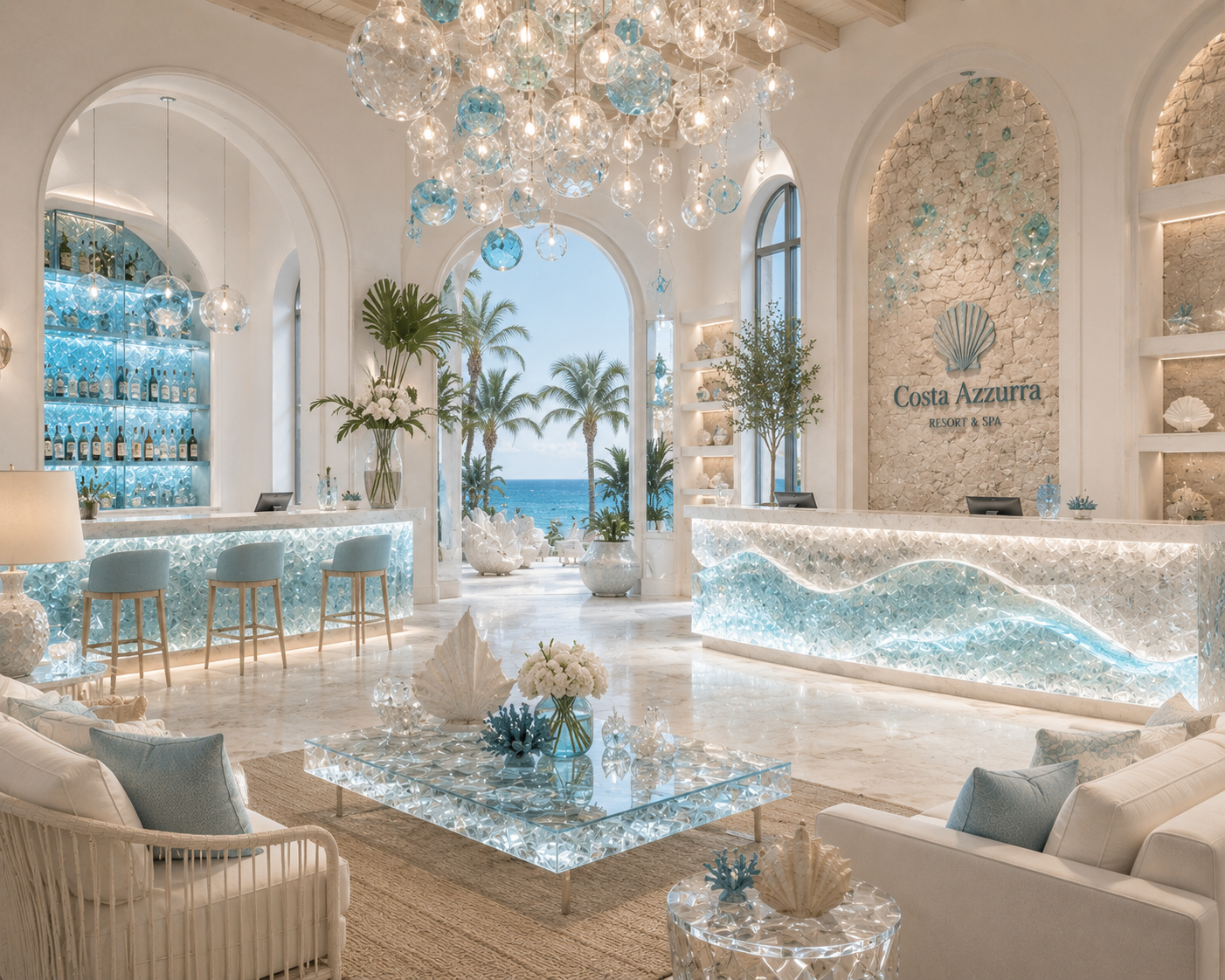
In high-end residential, hospitality, retail, and commercial projects, furniture materials are no longer selected only for function. They are selected as part of a larger value strategy: how a space feels, photographs, sells, and performs over time. A transparent acrylic console, a cast-resin dining table, a synthetic crystal installation, or a polished resin reception counter can change the perceived weight of a room, soften the transition between architecture and decoration, and create a refined sense of lightness that traditional opaque materials often cannot achieve.
This is why synthetic crystal, high-grade acrylic, PMMA, architectural resin, and custom cast-resin furniture have become increasingly relevant in premium interiors. These materials carry the visual language of glass and crystal, but they also offer processing flexibility, color control, sculptural freedom, and project-level customization. For designers, developers, furniture brands, hotel operators, and luxury retail clients, the question is not simply whether resin or acrylic furniture looks beautiful. The real question is how these materials can help a project justify a higher price, a stronger brand image, and a more memorable user experience.
Material value is also linked to broader market behavior. Harvard’s Joint Center for Housing Studies reported that the U.S. remodeling market remained above $600 billion after the pandemic boom and was still about 50% above pre-pandemic levels, showing that owners continue to invest heavily in interior upgrades even when costs are high. In this context, premium furniture materials become a practical tool for differentiation. When every project is competing for attention, the surface, clarity, texture, and craftsmanship of furniture can directly influence how buyers, guests, tenants, and visitors judge the quality of a space.
1. Optical Clarity: Making Space Feel Larger, Brighter, and More Expensive
One of the strongest advantages of synthetic crystal and premium acrylic furniture is optical clarity. Clear PMMA and high-quality acrylic sheets can achieve visible light transmittance of up to 92%, according to PLEXIGLAS technical information. This is not a minor technical feature. In interior design, light transmission changes the entire reading of a space.
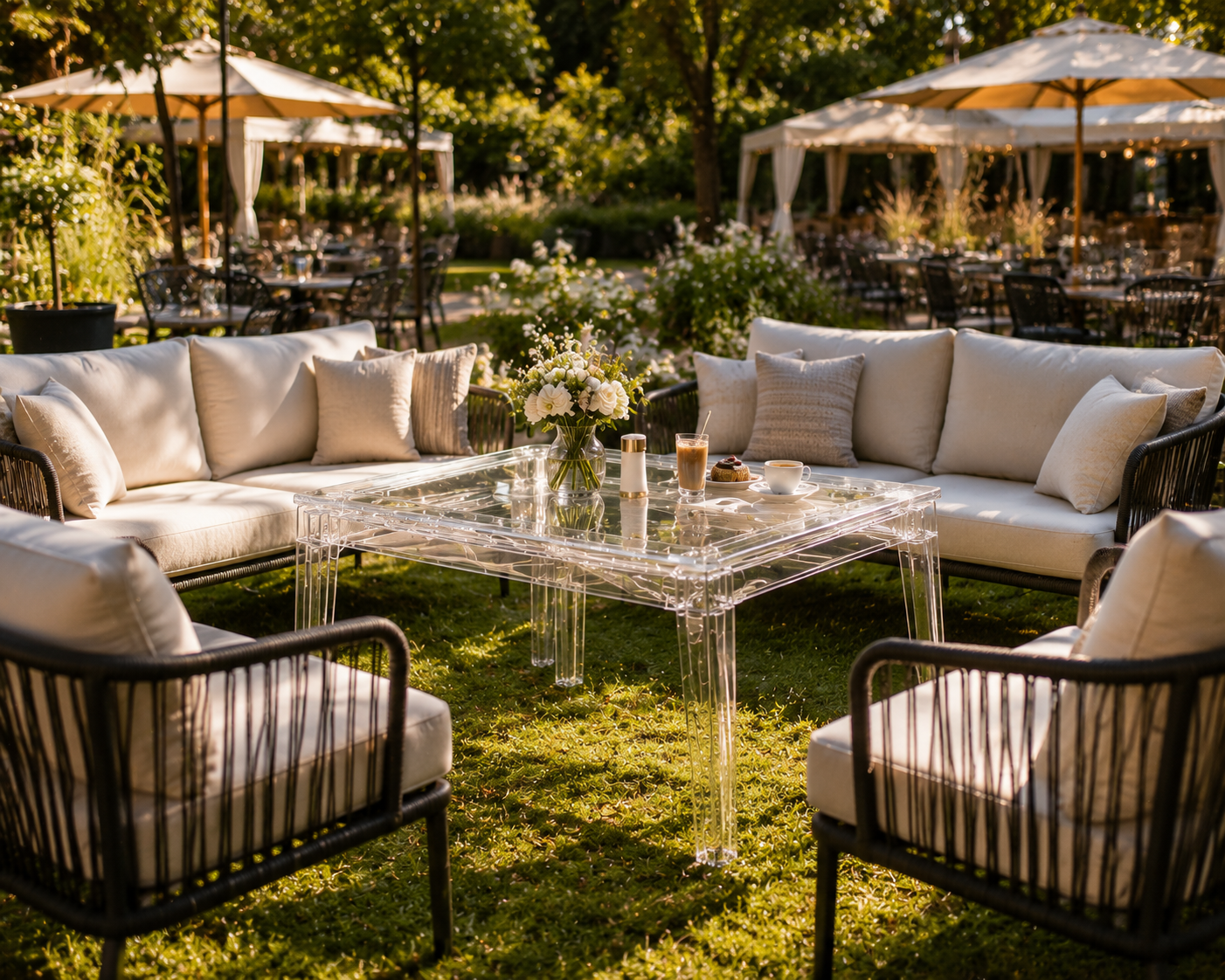
In a compact apartment, a transparent coffee table reduces visual blockage. In a hotel suite, a crystal-clear side table allows the carpet, flooring, and lighting design to remain visible. In a luxury retail boutique, transparent display plinths make products appear to float, creating a gallery-like atmosphere. Compared with heavy wooden or metal furniture, transparent resin and acrylic pieces create a sense of openness. The furniture is present, but it does not visually crowd the room.
This optical quality is especially valuable in urban projects where square footage is expensive. Developers and designers often need to make a limited area feel generous. A bulky console or dark display case can make a lobby, show flat, or boutique feel smaller. A clear acrylic or synthetic crystal piece can provide the same function while preserving sightlines. The result is a cleaner spatial rhythm and a more premium first impression.
Architectural Digest has also described acrylic furniture as a way to create lighter, airier interiors while combining durability with transparent or translucent visual effects. This explains why acrylic and Lucite-style furniture repeatedly returns in luxury interiors. It is not only a trend; it solves a spatial problem. It adds structure without heaviness.
From a project-value perspective, optical clarity supports premium positioning in three ways. First, it helps photography. Transparent furniture reflects light beautifully and makes interiors look polished in marketing images. Second, it supports flexible styling. Clear pieces can work with marble, wood, metal, leather, fabric, stone, or lacquer. Third, it communicates refinement. A well-polished transparent resin object suggests precision, cleanliness, and control.
However, clarity must be managed carefully. Low-quality acrylic can look cheap if the edges are cloudy, the surface scratches easily, or the material yellows over time. High-end projects should therefore specify optical-grade acrylic, controlled polishing, UV-resistant formulas, and proper fabrication standards. The difference between ordinary plastic and premium synthetic crystal is often visible at the edge, under lighting, and after months of use.
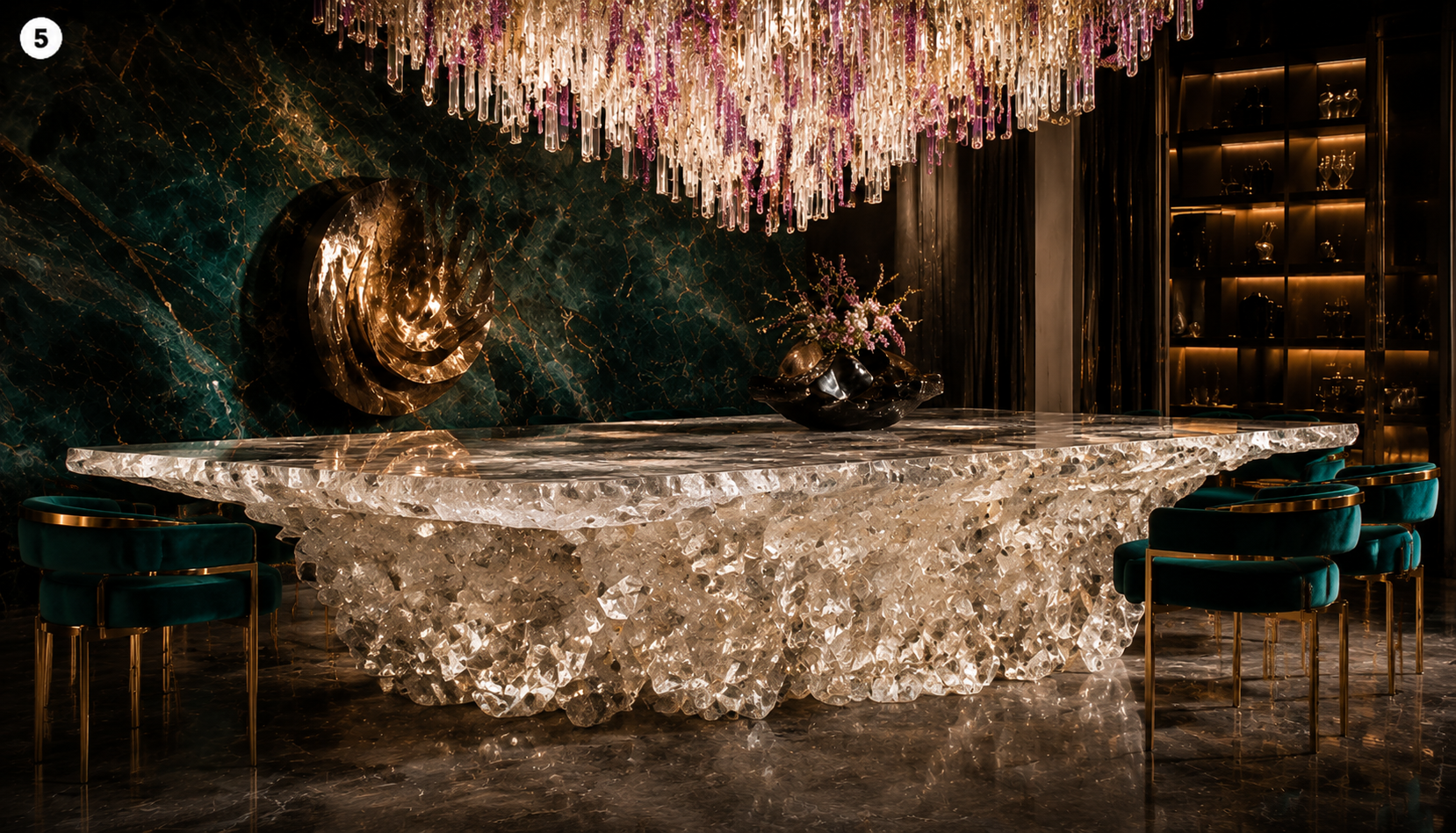
2. Sculptural Form: Turning Furniture into an Architectural Feature
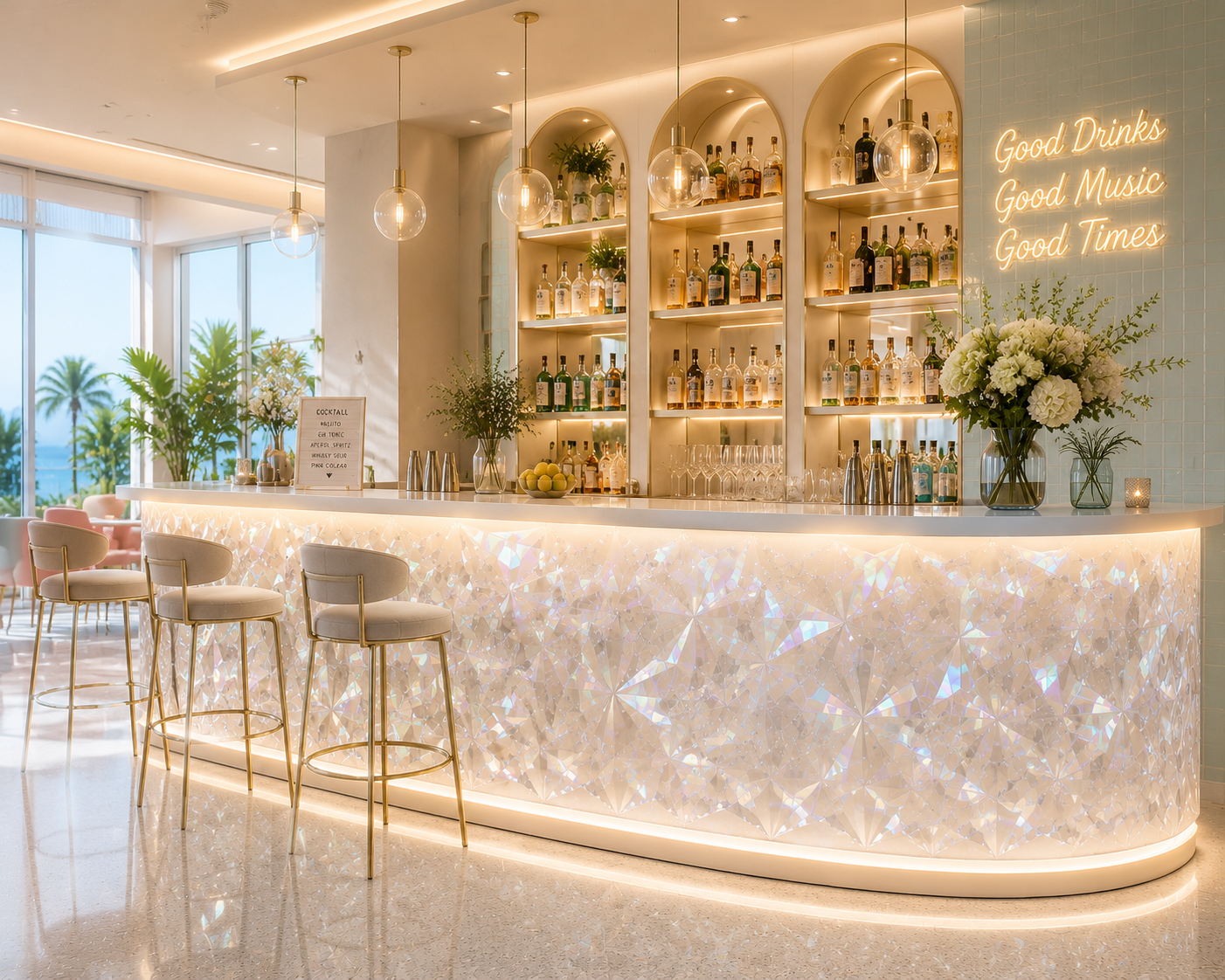
High-end resin materials allow designers to move beyond conventional furniture shapes. Unlike solid wood, stone, or metal, resin can be cast, layered, tinted, embedded, curved, or polished into complex forms. This makes it suitable for statement furniture: waterfall coffee tables, translucent dining bases, sculptural reception desks, illuminated bar counters, display blocks, room dividers, and bespoke art-furniture pieces.
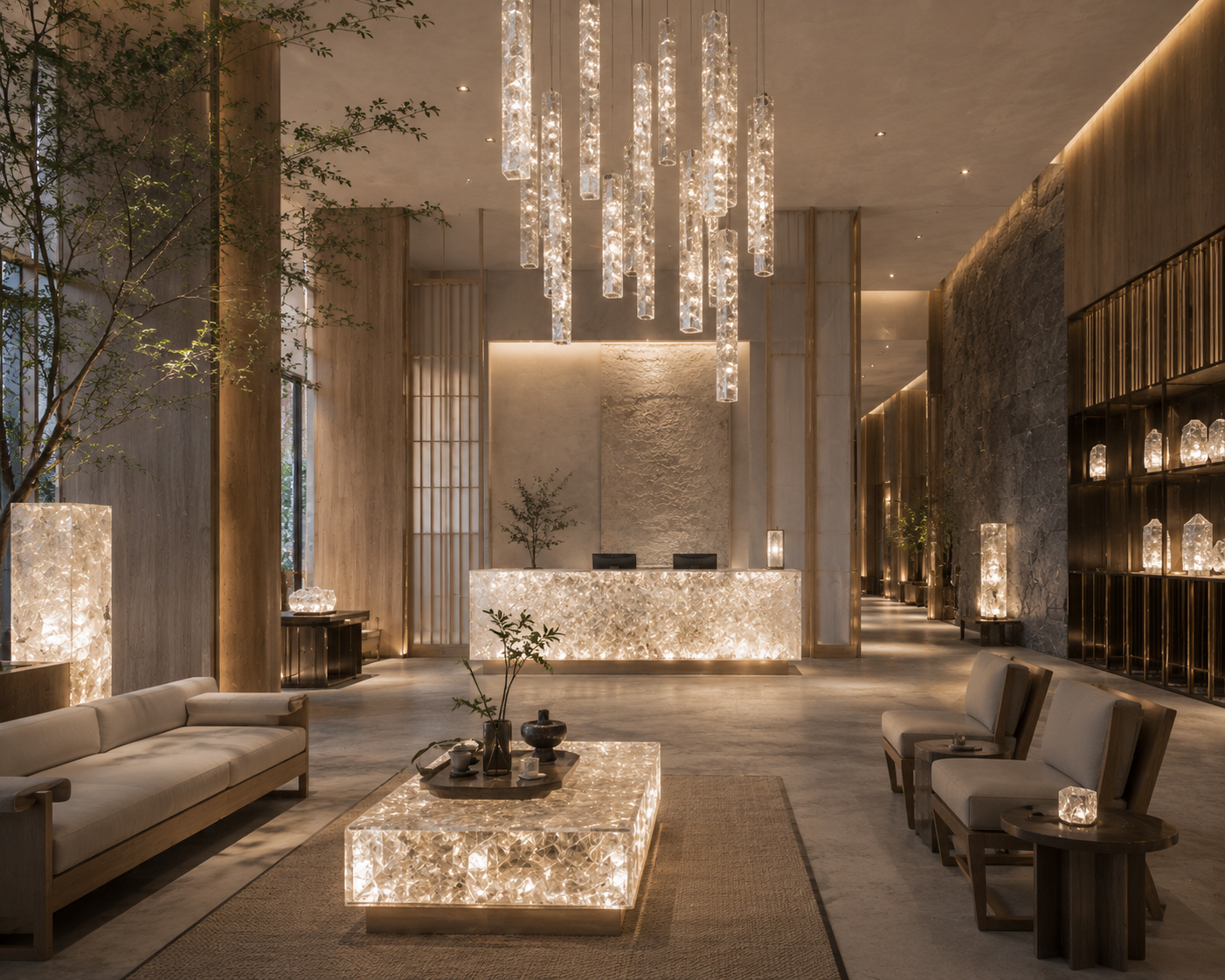
For luxury projects, this sculptural freedom is crucial. A premium space usually needs one or two memorable design anchors. In a hotel lobby, that anchor may be a glowing resin reception counter. In a penthouse, it may be a synthetic crystal dining table. In a boutique, it may be a series of transparent display cubes. These pieces do more than fill the room. They give the project a signature.
This is where furniture begins to function like architecture. A cast-resin installation can control circulation, divide space, reflect light, and establish the visual identity of the project. It can also express the client’s brand story. For example, a coastal resort may use blue-gradient resin to echo water and sky. A cosmetics store may use clear pink or champagne-toned acrylic to communicate softness and beauty. A luxury fashion boutique may use smoked resin, bronze acrylic, or translucent black forms to create a more dramatic atmosphere.
The market also supports this movement toward experiential interiors. Deloitte’s luxury industry commentary notes that luxury brands are under pressure to reinvent customer experience, deepen brand engagement, and build credibility through purpose and sustainability. In physical environments, furniture materials are one of the most direct ways to make that experience tangible. Customers may not understand a technical floor plan, but they immediately respond to a glowing resin counter, a crystal-clear display table, or a custom object that feels unlike mass-market furniture.
Sculptural resin also creates value through exclusivity. A standard chair can be copied. A custom-cast resin table with a unique gradient, embedded texture, or project-specific dimension is harder to replicate. For developers, designers, and furniture brands, this exclusivity supports higher pricing. The client is not only buying a table; they are buying a customized spatial identity.
In practical terms, this is especially useful for villas, showrooms, clubs, hotel suites, art galleries, beauty salons, and premium retail environments. These spaces often need furniture that performs as both a functional object and a visual attraction. Synthetic crystal and high-end resin can meet that requirement because they occupy the middle ground between furniture, sculpture, and lighting design.
3. Material Layering: Creating Depth, Texture, and Emotional Warmth
Premium interiors are rarely built from one material alone. The strongest spaces are layered: transparent with opaque, glossy with matte, warm with cool, smooth with textured. High-end resin furniture is powerful because it can connect these different material languages.
A clear acrylic chair beside a walnut table can make the wood grain feel richer. A translucent resin coffee table on a wool rug can highlight the softness of the textile. A smoked acrylic console against a stone wall can create depth without hiding the stone. A synthetic crystal sculpture near warm lighting can scatter reflections and create a sense of movement.
This layered quality is important because contemporary luxury is shifting away from pure minimalism. Many clients no longer want cold, empty interiors. They want calm spaces with character, craftsmanship, and tactile detail. Recent design coverage has described the return of glass textures such as fluted glass because they diffuse light, add privacy, and create subtle visual interest without overwhelming a room. Acrylic and resin furniture can play a similar role. They can introduce light, reflection, color, and texture while keeping the composition refined.
Houzz’s 2025 U.S. Kitchen Trends Study also shows that homeowners are investing in visual detail: more than half of renovating homeowners add or upgrade accent cabinets or shelves, and glass-front cabinet styles rank highest among accent cabinet doors at 36%. Although this data focuses on kitchens, it reflects a wider design preference: people want display, layering, and controlled transparency. High-end resin furniture fits naturally into this preference.
For project execution, designers can use resin materials in several practical ways. Clear acrylic can reduce visual weight. Frosted resin can soften light and add privacy. Colored resin can connect furniture with the project’s palette. Embedded resin can hold shells, stones, metallic particles, fabrics, or artistic inclusions. Gradient resin can create a luxury effect similar to tinted glass or gemstone.
The key is restraint. Resin should not be used everywhere. If every table, chair, shelf, and partition is transparent, the space may feel cold or artificial. The best results come from contrast. Pair transparent resin with natural stone. Pair synthetic crystal with warm wood. Pair colored acrylic with brushed metal. Pair thick cast resin with soft upholstery. This approach allows the material to feel premium rather than decorative.
Emotional value also matters. Transparent and translucent materials often create a dreamlike effect because they interact with light throughout the day. In morning light, a clear table almost disappears. At night, it reflects lamps, candles, and city lights. This changing appearance gives the room a living quality. In luxury interiors, that emotional response can be more persuasive than technical specifications.
4. Performance and Durability: Balancing Beauty with Project Practicality
Premium furniture materials must perform in real spaces. A hotel lobby, restaurant, showroom, sales center, or luxury home is not a museum. Furniture will be touched, cleaned, moved, photographed, and used repeatedly. High-end resin and acrylic furniture can support these demands, but only when material selection and maintenance are handled correctly.
Acrylic’s technical appeal comes from its combination of transparency, toughness, light weight, formability, weather resistance, and chemical resistance. PLEXIGLAS documentation describes acrylic sheet as suitable for applications where transparency, toughness, light weight, formability, and weather resistance are required. Another PLEXIGLAS technical source notes that certain impact-modified acrylic products can be more than 50% tougher than standard acrylic sheet. For furniture and interiors, these properties are valuable because they allow large transparent forms to be produced with lower weight than glass and with better impact behavior in many use cases.
This does not mean acrylic is indestructible. It can scratch if cleaned with abrasive materials. It can be damaged by unsuitable solvents. It may require anti-scratch coatings, careful polishing, protective packaging, and proper installation. In high-end projects, the specification should include not only the material name but also thickness, grade, fabrication method, edge finish, UV resistance, cleaning instructions, and expected use environment.
For example, a decorative acrylic side table in a private bedroom has different performance needs from a resin counter in a hotel reception area. A retail display cube may require high clarity and scratch resistance. A restaurant bar top may require chemical resistance, stain management, and repairability. A large synthetic crystal dining table may require structural reinforcement, stable support, and careful consideration of heat exposure.
This is where high-end resin differs from low-cost plastic furniture. Premium material strategy includes engineering. The goal is not simply to make the piece look transparent on delivery day. The goal is to keep the piece beautiful after months or years of use.
Maintenance should also be communicated to the client. Acrylic furniture should generally be cleaned with soft microfiber cloths and non-abrasive cleaners. Heavy objects should not be dragged across the surface. Protective pads can be used under decorative items. For commercial projects, a maintenance manual should be provided to housekeeping or facilities teams. This small step protects the long-term appearance of the project and reduces client complaints.
Durability also contributes to project value. If premium furniture keeps its clarity, polish, and structural integrity, the space remains photo-ready and guest-ready for longer. This matters for hotels, retail stores, showrooms, and serviced apartments, where visual freshness affects customer perception. A scratched or yellowed transparent surface quickly weakens the luxury message. A well-maintained resin or acrylic piece reinforces it every day.
5. Commercial Premium: How Materials Support Higher Pricing and Brand Perception
Premium materials can increase project value because they influence perception before the client reads any specification sheet. People judge quality visually and emotionally. They notice whether a lobby feels bright, whether a suite feels spacious, whether a retail display feels exclusive, and whether a showroom feels different from competitors. Synthetic crystal and high-end resin furniture can make these differences visible.
In residential sales centers and model homes, transparent and translucent furniture helps create a premium lifestyle atmosphere. It makes the space feel curated rather than simply furnished. For developers, this matters because buyers often purchase not only square meters but also aspiration. A carefully designed interior suggests that the whole project is better managed, more refined, and more valuable.
In hospitality, materials affect memory. Guests may not remember every furniture brand in a hotel room, but they remember a luminous bar, a sculptural lobby table, or a crystal-like vanity stool. These details support social media sharing and word-of-mouth. For boutique hotels and luxury resorts, this can become part of the brand experience.
In retail, furniture materials directly affect product value. A handbag displayed on a clear resin plinth can appear more precious than the same handbag placed on a basic laminate shelf. A jewelry brand using synthetic crystal display blocks can strengthen the association with clarity, rarity, and refinement. A cosmetics brand using pink-tinted acrylic can create a soft, photogenic environment that encourages customers to stay longer.
The economics of interior upgrades also support this logic. The National Association of Realtors’ Remodeling Impact Report found that certain interior projects can recover high percentages of cost, with refinishing hardwood floors at 147% and new wood flooring at 118% in its 2022 report. While furniture is different from flooring, the principle is relevant: visible interior upgrades can influence perceived property value and buyer appeal. Premium furniture materials are part of that visible upgrade strategy.
For commercial real estate and retail, the role of experience is also becoming more important. Premium stores increasingly operate as brand billboards, community hubs, and conversion tools rather than simple transaction spaces, according to commercial real estate coverage of luxury retail flagships. In this environment, furniture is not a background object. It is part of the brand’s selling system.
This is why high-end resin and synthetic crystal furniture often justify a higher project budget. The return is not only functional. It appears in stronger photography, better client impressions, increased dwell time, more distinctive brand identity, and a higher perceived level of craftsmanship. For a luxury client, these soft values can translate into real commercial advantages.
6. Specification Strategy: Choosing the Right Resin Material for the Right Project
To maximize both spatial texture and project premium, designers and buyers should choose resin materials based on project scenario rather than appearance alone. The most successful projects begin with a clear specification strategy.
For luxury homes and villas, the priority is usually atmosphere. Clear acrylic coffee tables, synthetic crystal side tables, translucent dining bases, and resin art consoles can create a refined but livable interior. The material should support the homeowner’s lifestyle, not overpower it. Warm lighting, natural textiles, and stone surfaces can balance the cool clarity of acrylic.
For hotels and serviced apartments, the priority is durability, maintenance, and repeatable luxury. A resin reception desk, acrylic luggage bench, or translucent decorative partition must withstand daily use. The specification should include scratch-resistant treatment, stable structure, easy cleaning, and replaceable components where possible. The material should look impressive but also remain practical for operations teams.
For retail stores and showrooms, the priority is product display and brand storytelling. Clear resin plinths, colored acrylic shelving, custom display blocks, and illuminated resin counters can help products stand out. The furniture should be designed around sightlines, lighting temperature, photography angles, and customer movement. In retail, a transparent material is not only a surface; it is a stage.
For restaurants, bars, and clubs, the priority is mood. Smoked resin, amber acrylic, backlit translucent panels, and thick cast-resin counters can create a strong evening atmosphere. However, these spaces require extra attention to cleaning chemicals, heat, alcohol exposure, and heavy use. A beautiful bar surface that cannot survive daily operation is not a premium solution.
For offices and wellness spaces, resin furniture can support a lighter, calmer environment when combined with natural materials and biophilic design principles. The Global Wellness Institute defines biophilic design as an approach that connects people more closely with nature by incorporating natural elements into built environments. Transparent resin, when paired with plants, daylight, natural stone, and wood, can help preserve visual openness and avoid a heavy corporate atmosphere.
Across all project types, there are five practical rules. First, specify the grade, not just the material name. “Acrylic” is too broad; optical-grade PMMA, cast acrylic, impact-modified acrylic, or architectural resin may perform differently. Second, control thickness and edge quality. Thin transparent furniture can look temporary; thick, polished edges create a more luxurious impression. Third, design with lighting. Resin and acrylic become more powerful when they interact with natural light, warm LEDs, or concealed illumination. Fourth, protect the surface. Anti-scratch coatings, proper cleaning, and careful logistics are essential. Fifth, use the material selectively. One excellent resin statement piece is usually more effective than many average pieces.
Ultimately, synthetic crystal and high-end resin furniture elevate space because they combine visual clarity, sculptural freedom, emotional atmosphere, and commercial differentiation. They allow designers to make rooms feel larger, brighter, softer, and more memorable. They help developers and brands communicate quality before a salesperson says a word. They give homeowners and guests a sense of modern luxury that is both refined and distinctive.
In premium projects, material is never neutral. It shapes the way people perceive value. From a transparent acrylic table that makes a small apartment feel open, to a glowing resin counter that defines a hotel lobby, to a synthetic crystal display system that turns products into objects of desire, high-end furniture materials can transform ordinary interiors into spaces with texture, identity, and measurable project premium.