Different materials create different feelings. Natural wood provides warmth and authenticity, marble represents timeless elegance, while synthetic crystal acrylic expresses innovation, transparency, and modern sophistication. The choice of material reflects personal taste and contributes to the identity of an interior environment.
Premium customers also value craftsmanship, customization, and long-term quality. They expect furniture to offer more than daily functionality; they want pieces with unique stories and artistic meaning. Innovative materials such as acrylic allow designers to create exclusive furniture with distinctive visual characteristics.
As luxury design continues to evolve, material expression will become a key factor in furniture selection. The future of high-end furniture will focus on combining advanced materials, creative design, and emotional experiences to create spaces with lasting value.
Introduction: The New Language of Luxury Furniture
For a long time, furniture was mainly evaluated by its function, durability, and comfort. A chair needed to provide support, a table needed to offer practicality, and a cabinet needed to provide storage.
However, the expectations of high-end customers have changed significantly. In today’s luxury market, furniture is no longer simply a household product. It has become an important element that represents lifestyle, personality, aesthetic preferences, and cultural understanding.
One of the most noticeable changes is that customers are paying increasing attention to the “material expression” of furniture.
Material expression refers to how a material communicates visual beauty, emotional value, craftsmanship, and design philosophy. It includes not only what a material looks like, but also how it feels, how it interacts with light, how it ages over time, and what message it delivers within a space.
A piece of furniture made from ordinary materials may serve the same practical purpose as a premium piece, but the emotional experience can be completely different.
High-end customers are no longer satisfied with furniture that only looks beautiful. They want materials that tell a story, create atmosphere, and demonstrate individuality.
This shift explains why innovative materials such as synthetic crystal acrylic, natural stone, premium wood, metal alloys, and advanced composites are becoming increasingly important in luxury furniture design.
1. The Changing Definition of Luxury: From Function to Material Storytelling
The Evolution of Luxury Furniture Consumption
Luxury furniture has always reflected the values of its time.
In earlier periods, luxury was often associated with rarity and craftsmanship. Large wooden furniture pieces, handcrafted details, and expensive materials represented wealth and social position.
Today, luxury has developed into a more personal and sophisticated concept.
Modern high-end customers are not only looking for expensive products. They want objects that reflect their personality and lifestyle.
A luxury sofa, table, or chair is expected to contribute to the overall identity of a space.
This means the material itself becomes part of the design story.
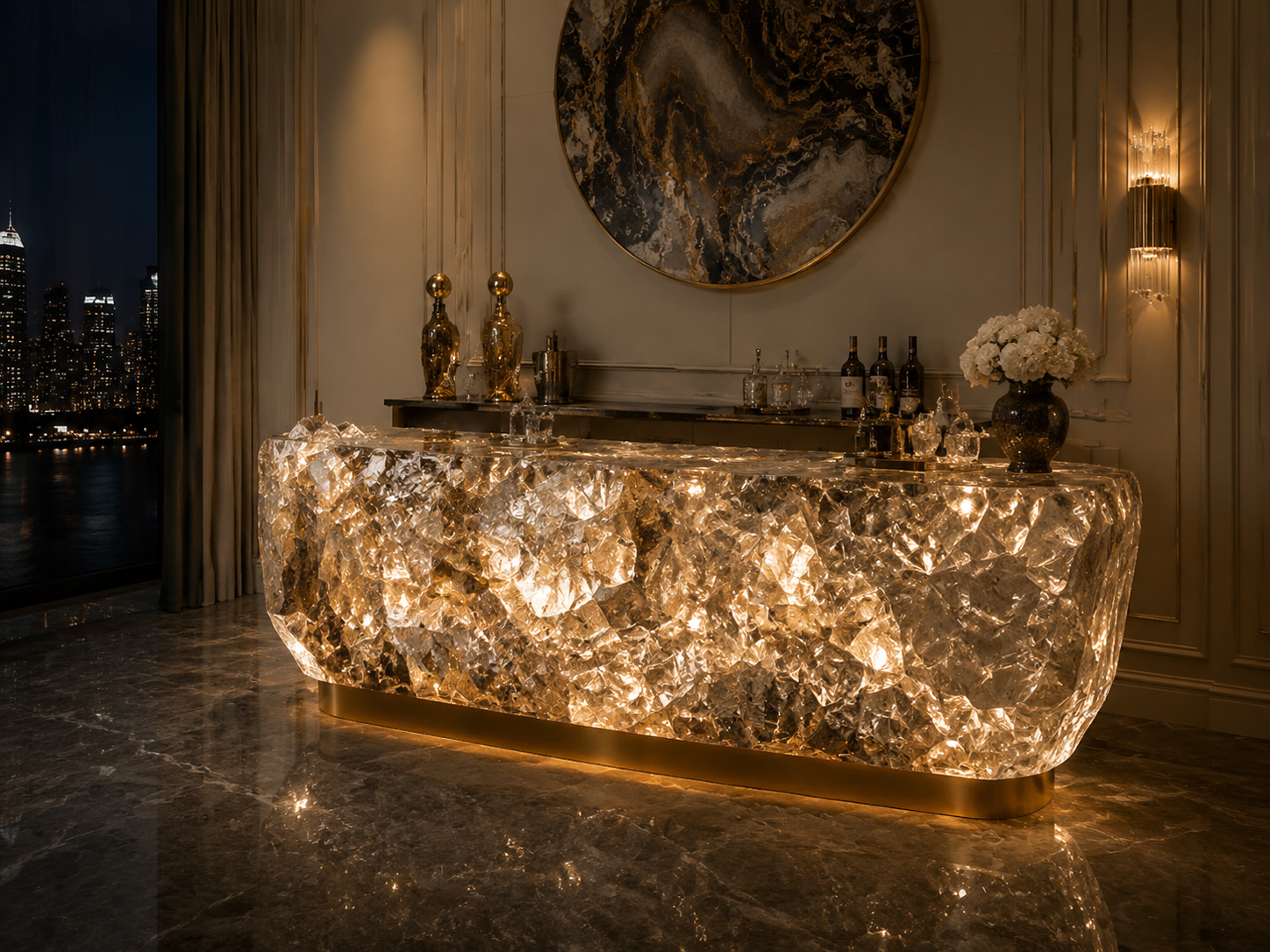
A transparent acrylic table communicates modernity and innovation.
A handcrafted wooden cabinet communicates tradition and warmth.
A marble surface communicates timeless elegance.
Different materials create different emotional responses.
High-end customers understand these differences and increasingly choose furniture based on the meaning behind the materials.
Materials as a Form of Personal Expression
The homes and commercial spaces of premium customers often serve as extensions of their identity.
Interior design becomes a way to communicate personal taste, values, and achievements.
Furniture materials play a major role in this communication.
For example, a customer choosing a custom crystal acrylic dining table may be attracted not only by its appearance but also by the ideas it represents:
Modern technology
Artistic creativity
Visual openness
Unique design thinking
Similarly, selecting handcrafted natural materials may represent appreciation for tradition and authenticity.
Material choices become a silent language.
They communicate messages without requiring words.
The Shift From Product Ownership to Experience Creation
Another important change in luxury consumption is the movement from owning products to creating experiences.
High-end customers increasingly care about how a space feels rather than simply how much each item costs.
Materials influence these experiences significantly.
The reflection of polished stone, the warmth of natural wood, the transparency of acrylic, and the texture of premium fabrics all contribute to the emotional atmosphere of a room.
Furniture becomes part of a sensory experience involving sight, touch, and emotion.
This is why material expression has become a central element in contemporary luxury design.
2. How Material Expression Creates Emotional and Visual Value in Premium Spaces
The Relationship Between Texture and Emotional Experience
Materials have the ability to influence human emotions.
A smooth surface can create a feeling of elegance and refinement.
A natural texture can create warmth and comfort.
A transparent material can create openness and modernity.
In high-end interior design, these emotional effects are carefully considered.
Designers do not select materials only based on appearance. They consider how materials interact with people and environments.
For example, synthetic crystal acrylic furniture creates a sense of lightness and sophistication. Its transparent structure allows spaces to appear larger and more dynamic.
Meanwhile, natural stone may create a sense of permanence and stability.
Each material carries its own emotional language.
How Materials Influence Spatial Atmosphere
A successful luxury interior is a combination of multiple elements working together.
Lighting, architecture, furniture, and materials must create harmony.
Material expression helps establish the atmosphere of a space.
A modern luxury apartment using transparent acrylic furniture may feel open, futuristic, and artistic.
A traditional residence using premium wood may feel elegant, comfortable, and timeless.
A commercial showroom using metallic materials may communicate technology and innovation.
The choice of materials directly affects how visitors perceive the environment.
This is especially important for luxury customers because they expect spaces to create strong emotional impressions.
Why Unique Materials Make Furniture More Memorable
In a competitive luxury market, uniqueness has become increasingly valuable.
Many customers do not want furniture that looks identical to products found everywhere else.
They prefer customized designs with distinctive material characteristics.
A unique material can transform an ordinary furniture shape into a memorable design piece.
For example, a simple table made from ordinary material may remain unnoticed, while the same design created with crystal acrylic can become the visual center of a room.
This ability to create recognition and emotional connection is one of the main reasons high-end customers focus on material expression.
.png)
3. The Importance of Craftsmanship and Material Quality in High-End Furniture
The Role of Manufacturing Techniques and Craftsmanship
In the high-end furniture market, materials alone are not enough. The way materials are processed, shaped, and presented determines their final value.
Premium customers pay close attention to craftsmanship because it represents the relationship between design ideas and manufacturing skills.
A high-quality material can lose its value if the processing is poor. On the other hand, professional craftsmanship can enhance the natural characteristics of a material and transform it into an artistic product.
For example, synthetic crystal acrylic requires precise cutting, polishing, and finishing techniques to achieve a flawless transparent appearance. Small imperfections can affect the way light passes through the surface and reduce the overall visual quality.
Similarly, premium wood requires careful selection, treatment, and finishing to preserve its texture and durability.
Craftsmanship allows materials to fully express their potential.
Why High-End Customers Evaluate Details and Authenticity
Luxury customers often have extensive experience with premium products. Their purchasing decisions are influenced by subtle details that ordinary consumers may overlook.
They evaluate:
Material consistency
Surface quality
Processing accuracy
Structural stability
Design originality
These details determine whether a piece of furniture feels truly premium.
For high-end customers, authenticity is extremely important. They want products that demonstrate genuine design value rather than simple decoration.
A furniture piece with carefully selected materials and refined craftsmanship represents a deeper level of quality.
It tells a story about creativity, expertise, and attention to detail.
The Connection Between Material Processing and Long-Term Value
High-end furniture is often viewed as a long-term investment.
Customers expect premium pieces to maintain their beauty and function over many years.
Material quality directly influences this expectation.
A carefully processed material can improve:
Durability
Visual stability
Maintenance performance
Aging characteristics
This is why premium customers are willing to invest in furniture with superior material expression.
They are not only purchasing a product for today. They are choosing an object that can continue creating value in the future.
4. Innovative Materials Are Redefining Modern Luxury Furniture Design
The Rise of New Materials in Contemporary Furniture
The definition of luxury materials is constantly evolving.
Traditional materials such as marble, wood, and metal remain important, but modern designers are exploring new possibilities through innovative materials.
Synthetic crystal acrylic, advanced composites, engineered stone, and customized metal finishes are becoming increasingly popular because they provide new visual experiences.
These materials allow designers to create furniture that combines technology with artistic creativity.
Unlike traditional materials that are limited by natural structures, innovative materials often provide greater freedom in shape, color, and application.
How Designers Use New Materials to Create Unique Concepts
Modern furniture designers are increasingly treating materials as the starting point of creativity.
Instead of designing a shape first and selecting materials afterward, many designers now explore what unique expressions a material can create.
For example, crystal acrylic can inspire:
Transparent structural designs
Floating visual effects
Light-based installations
Futuristic furniture concepts
The material itself becomes part of the creative process.
This approach creates furniture that feels more like artwork than ordinary household products.
Balancing Technology and Artistic Expression
One reason innovative materials are attractive in luxury design is their ability to combine technology and emotion.
Advanced manufacturing techniques provide precision and possibilities, while artistic design creates meaning and personality.
Synthetic crystal acrylic is a good example.
Its modern appearance reflects technological advancement, while its transparency and interaction with light create artistic beauty.
This balance between technology and creativity represents the future direction of luxury furniture.
5. Material Expression as a Symbol of Lifestyle and Brand Identity
How Furniture Materials Communicate Taste and Identity
Furniture choices often reveal personal preferences and lifestyle values.
In luxury environments, materials become symbols of taste.
A carefully selected material can communicate:
Appreciation for craftsmanship
Understanding of design trends
Preference for innovation
Desire for individuality
For premium customers, furniture is not only about comfort. It is also about creating an environment that represents who they are.
Material expression allows spaces to communicate identity without using excessive decoration.
The Role of Materials in Luxury Residential and Commercial Projects
In luxury residences, materials help create personalized living experiences.
Designers carefully select furniture materials to match architectural styles and customer preferences.
For example:
Transparent acrylic furniture can enhance modern minimalist homes.
Natural stone can strengthen a sense of timeless luxury.
Premium wood can create warmth and elegance.
In commercial spaces, material selection also influences brand perception.
Luxury hotels, fashion stores, and corporate offices use distinctive materials to create memorable environments.
A carefully designed space can strengthen customer trust and brand recognition.
Why Brands Use Material Innovation to Differentiate Themselves
Competition in the luxury market is increasing. Brands need new ways to create unique experiences.
Material innovation provides an effective strategy.
A brand using distinctive furniture materials can create a recognizable visual identity.
For example, a luxury showroom featuring custom acrylic furniture may communicate innovation and modern elegance.
Material becomes part of the brand language.
This is why many premium brands invest in unique furniture designs and customized material solutions.
.png)
6. The Future of High-End Furniture: A New Era of Material-Driven Design
Personalization and Customized Material Solutions
Future luxury furniture will become increasingly personalized.
Customers will expect products designed specifically for their spaces, lifestyles, and aesthetic preferences.
Material customization will play a major role in this development.
Manufacturers will provide more options in:
Transparency levels
Surface finishes
Colors
Textures
Structural designs
This will allow customers to participate more deeply in the creative process.
Furniture will become a reflection of individual identity rather than a standardized product.
Sustainable Materials and Future Luxury Trends
Sustainability is becoming a key consideration in luxury design.
Future customers will not only ask whether a product looks beautiful but also whether it is responsibly produced.
Material innovation will focus on creating products that balance:
Visual quality
Durability
Environmental responsibility
Long-lasting materials and efficient manufacturing processes will become important factors in premium furniture selection.
The future of luxury is likely to combine beauty with responsibility.
Why Material Expression Will Become a Core Competitive Advantage
As furniture design becomes more competitive, material expression will become one of the most important ways to create differentiation.
Customers can easily compare basic functions, but emotional and visual experiences are harder to replicate.
A unique material can create a strong connection between people and spaces.
It can transform furniture from a simple object into an artistic statement.
This is why material expression will continue to influence the development of high-end furniture design.
Conclusion
The growing attention toward furniture material expression reflects a fundamental change in the concept of luxury.
High-end customers are no longer focused only on functionality or appearance. They are seeking deeper value through materials that communicate creativity, quality, identity, and emotion.
From synthetic crystal acrylic to premium natural materials, every material carries its own design language.
The right material can transform furniture into an artistic element, enhance spatial atmosphere, and create unforgettable experiences.
In the future, high-end furniture will continue moving toward material-driven design, where innovation, craftsmanship, and personalization become the foundation of modern luxury.
Furniture is no longer just something placed in a space.
It is a statement of taste, a reflection of lifestyle, and an expression of the relationship between people and their environment.
READ MORE:
- Future Luxury Home Trends: How Synthetic Crystal Acrylic Is Redefining Furniture Aesthetics
- Synthetic Crystal Acrylic Furniture: Creating Irreplaceable Spatial Experiences Through Transparent Aesthetics
- From “Furniture” to “Art Installation”: How Synthetic Crystal Acrylic Enhances Spatial Value
- Synthetic Crystal Acrylic Furniture: Why Is It Becoming the Visual Focus of High-End Spaces?
- Custom Furniture Without Project Delays: What Designers Should Confirm Before Production
- How Lighting Changes the Appearance of Transparent and Reflective Furniture
- Where Statement Furniture Creates the Most Value in a Luxury Hotel
- How to Compare Decorative Materials Faster: A Practical Framework for Hospitality Projects
- Material Inspiration for Overseas Resort Projects: Creating a Distinctive Sense of Escape


