For luxury hotels, private villas, restaurants, flagship stores, and other high-end commercial interiors, furniture is expected to do more than simply look impressive on installation day. A lobby table may be cleaned several times a day. A retail display can remain under strong lighting for long periods. A villa coffee table must continue to look refined after years of daily use. This creates a practical question for designers and buyers: can transparent and highly decorative furniture really be beautiful, durable, and easy to maintain at the same time?
With synthetic crystal, high-end casting resin, and premium acrylic—sometimes commercially described as platinum acrylic—the answer can be yes, but only when the material, engineering, finish, application, and maintenance system are correctly matched.
That qualification matters. “Synthetic crystal” and “high-end resin” are broad commercial descriptions rather than a single internationally standardized material specification. Likewise, “platinum acrylic” is generally a premium commercial description, not an independent polymer category. A responsible supplier should therefore support performance claims with information about the actual material formulation, product construction, samples, testing, and care requirements.
When those elements are controlled, transparent furniture can provide much more than visual impact. It can become a practical long-term choice for demanding luxury interiors.
1. Beauty Is More Than Transparency: It Comes From Material Quality and Manufacturing Control
The attraction of synthetic crystal furniture begins with something traditional opaque furniture cannot easily reproduce: the ability to create volume without creating the same degree of visual heaviness.
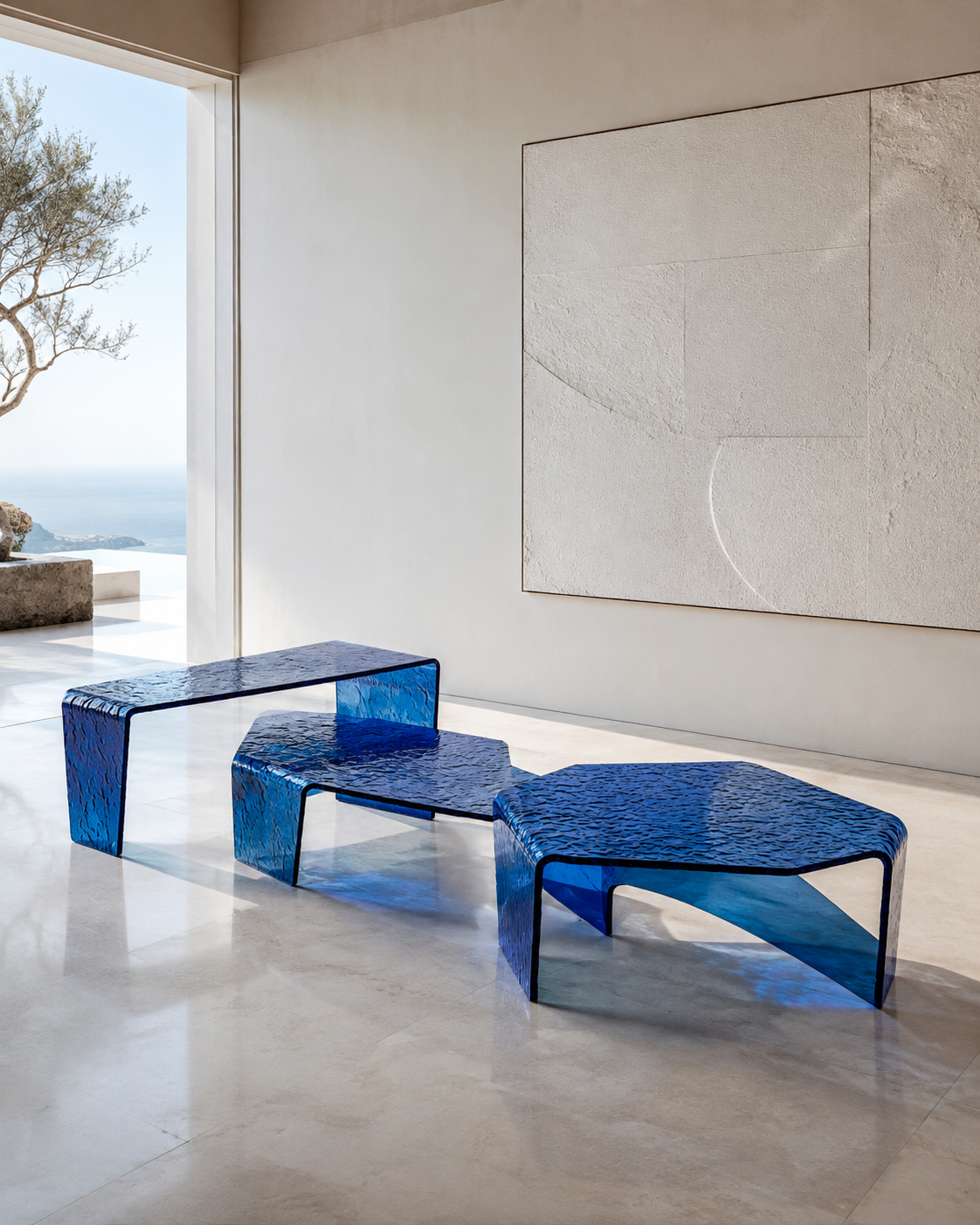
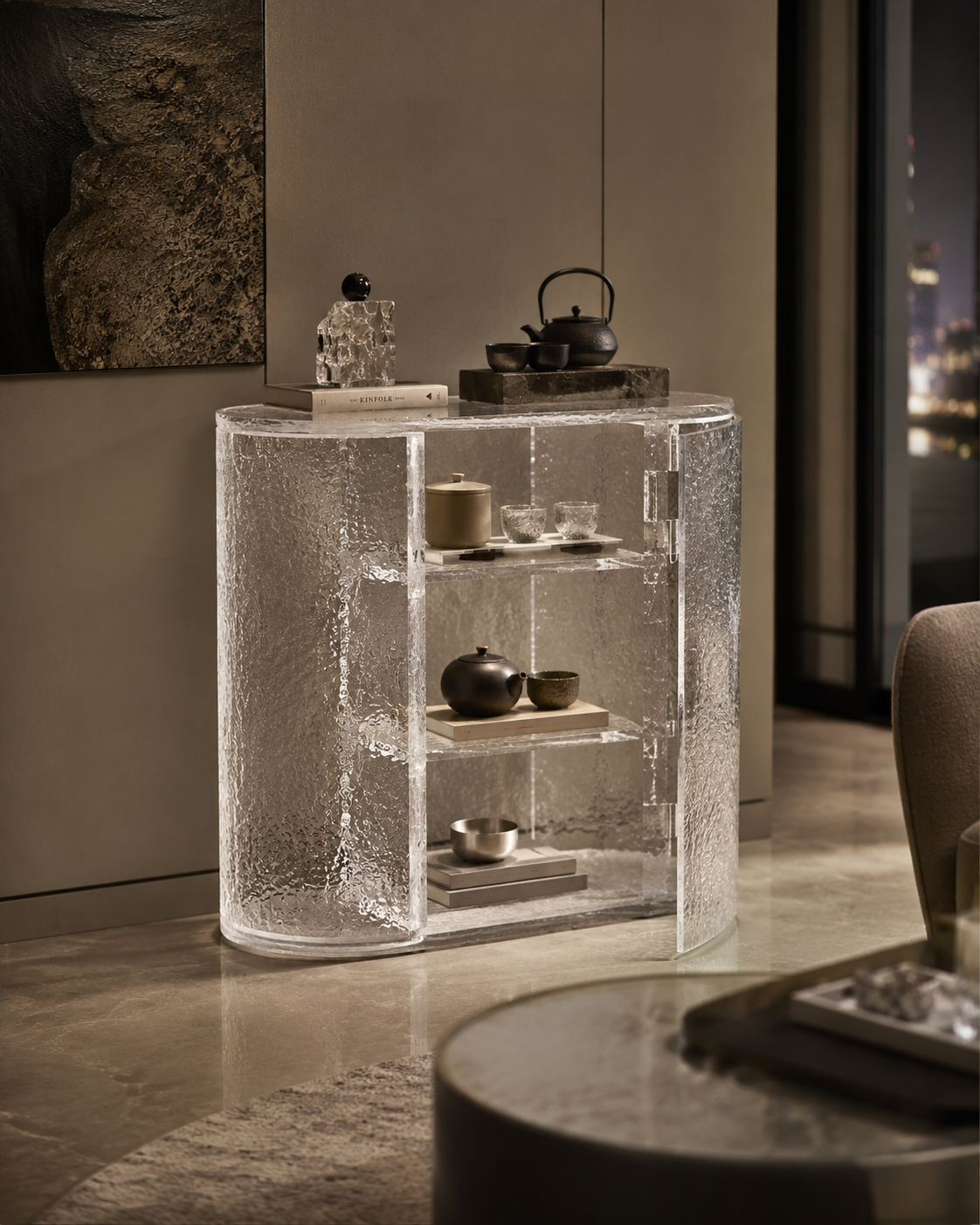
A transparent synthetic crystal console can stand in front of a marble feature wall without hiding it. A clear premium acrylic coffee table can allow an expensive stone or patterned floor to remain visible. A colored resin dining table can introduce amber, smoke, emerald, blue, or another customized tone while still interacting with surrounding light.
This is particularly valuable in hotel lobbies, luxury villas, jewelry boutiques, galleries, and fashion retail, where furniture must support the interior architecture instead of competing with it.
Optical quality, however, should not be treated as an abstract marketing term. In PMMA, for example, Röhm states that its colorless transparent PLEXIGLAS® products can achieve visible-light transmission of up to 92%. It also states that specific clear-transparent product grades are guaranteed to retain light transmission of up to 90%, depending on product type and region, after long-term exposure. These figures apply specifically to the manufacturer's qualifying PMMA products and should not automatically be attributed to every acrylic furniture product, but they demonstrate that optical performance can be technically specified rather than judged only by photographs.
For a premium furniture manufacturer, this means the visual result depends not only on buying clear material. Edge polishing, bonding quality, casting technique, color consistency, mold quality, thickness, internal inclusions, sanding, finishing, and final inspection can all influence how luxurious the finished object appears.
Consider two transparent console tables photographed from several meters away. Both may look similar online. Under the directional lighting of a five-star hotel, however, inconsistent polishing, visible bonding marks, bubbles in the wrong locations, surface distortion, or an uncontrolled color shift can become immediately noticeable.
That is why high-end synthetic crystal, resin, and platinum acrylic furniture often requires more sampling and finishing work than ordinary furniture. The goal is not simply transparency. It is controlled transparency, controlled color, and controlled visual detail.
2. Durability Is Possible, but It Must Be Engineered Into the Complete Furniture Piece
One of the biggest misconceptions about premium furniture materials is that durability can be predicted from the material name alone.
It cannot.
A table is a system. Its durability depends on material properties, thickness, span, geometry, joints, supporting structures, adhesives, hardware, load distribution, manufacturing quality, and intended use. A beautiful resin block can still perform poorly if its connection to the base is badly engineered. A thick acrylic table can still have problems if stress is concentrated around an inappropriate joint.
International furniture standards illustrate this performance-based approach. ISO 19682:2023 specifies test methods for the stability, strength, and durability of tables and desks and states that the methods apply regardless of materials, design, construction, or manufacturing process. In other words, professional durability evaluation focuses on how the finished furniture performs—not simply on whether the manufacturer calls the material “premium.”
This distinction is especially important when moving from residential furniture into contract projects.
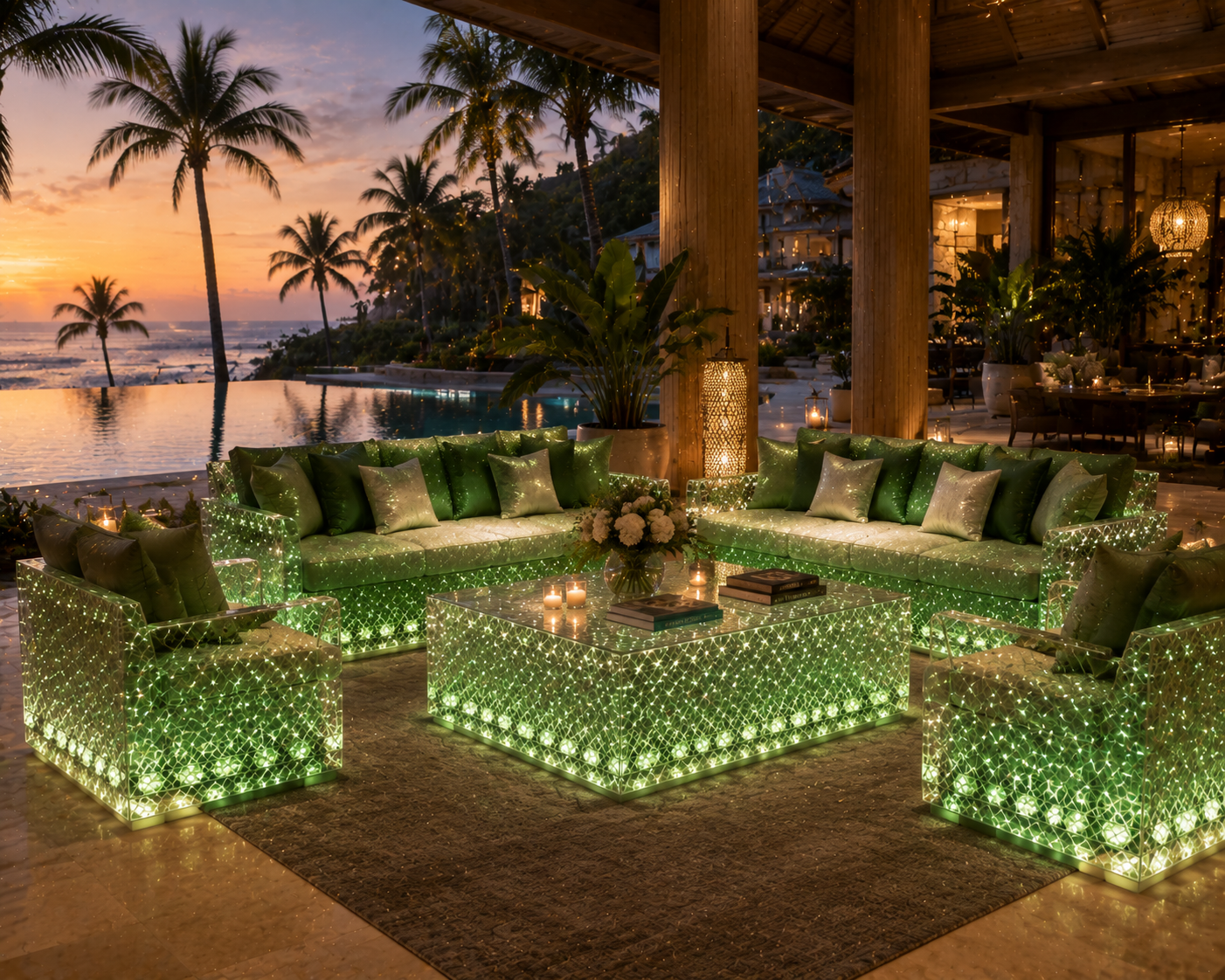
A side table in a private villa may be moved only occasionally. A table in a hotel lobby can be touched by hundreds of guests, repositioned by housekeeping staff, and subjected to impacts from luggage. A boutique display may carry expensive merchandise every day and must remain stable even when customers lean against it.
The correct design can therefore be different even when the aesthetic appearance is almost identical.
For synthetic crystal and high-end resin furniture, engineering may involve increasing critical sections, reinforcing hidden areas, redesigning connections, incorporating metal components where appropriate, or altering the construction so that the furniture can be transported safely without weakening visually important areas.
This is also why responsible manufacturers should avoid statements such as “our furniture never cracks” or “our resin is impossible to damage.” No serious material should be presented as immune to every condition.
A stronger statement is that the furniture has been designed for its intended environment, produced under controlled specifications, and evaluated according to relevant performance requirements.
For architects and buyers, that is far more valuable than an exaggerated durability promise.
3. Easy Maintenance Is Real, but “Easy” Does Not Mean Maintenance-Free
Transparent furniture creates another concern for buyers: will every fingerprint, scratch, or cleaning mistake become visible?
The answer depends heavily on surface type, finish, color, usage, and maintenance practice.
Premium acrylic illustrates this clearly. According to Röhm's official PLEXIGLAS® maintenance guidance, routine indoor cleaning can often be performed with lukewarm water, a small amount of suitable detergent, and a soft lint-free cloth or sponge. The company also specifically warns against rubbing the surface completely dry because this can create static charge, attract dust, and potentially produce scratches. Certain aggressive or incompatible cleaners can also damage the material.
ACRYLITE® provides similar guidance for its acrylic sheet products, recommending mild soap or detergent with lukewarm water and a clean soft cloth while warning against abrasive cleaning compounds and a range of incompatible solvents. Its technical guidance also notes that fine scratches can, in appropriate cases, be addressed through polishing procedures.
This produces an important lesson for luxury furniture buyers: a surface that is simple to clean can still require the correct cleaning protocol.
Imagine a platinum acrylic console in a hotel corridor. If housekeeping employees treat it exactly like ordinary glass and repeatedly use an inappropriate chemical or abrasive cloth, surface quality can decline unnecessarily. The problem may not be the furniture itself but the maintenance system.
The same principle applies to high-end resin and synthetic crystal. Different resin formulations can respond differently to chemicals, heat, ultraviolet exposure, abrasion, and polishing. Maintenance instructions must therefore correspond to the actual formulation and finish supplied.
For manufacturers, providing a one-page care guide with every project can create significant long-term value. It should identify appropriate daily cleaning methods, prohibited cleaners, recommended cloth types, handling precautions, and procedures to follow when minor surface damage occurs.
This is particularly useful for hotels and commercial spaces, where the person buying the furniture is usually not the person cleaning it.
Easy maintenance is therefore achievable, but the best definition is not “nothing can happen to the surface.” It is routine care is straightforward, predictable, and clearly documented.
4. The Real Test Is Whether the Furniture Matches Its Environment
A furniture material that performs beautifully in one project may be the wrong choice for another. This is why professional specification should begin with the environment, not with a product photograph.
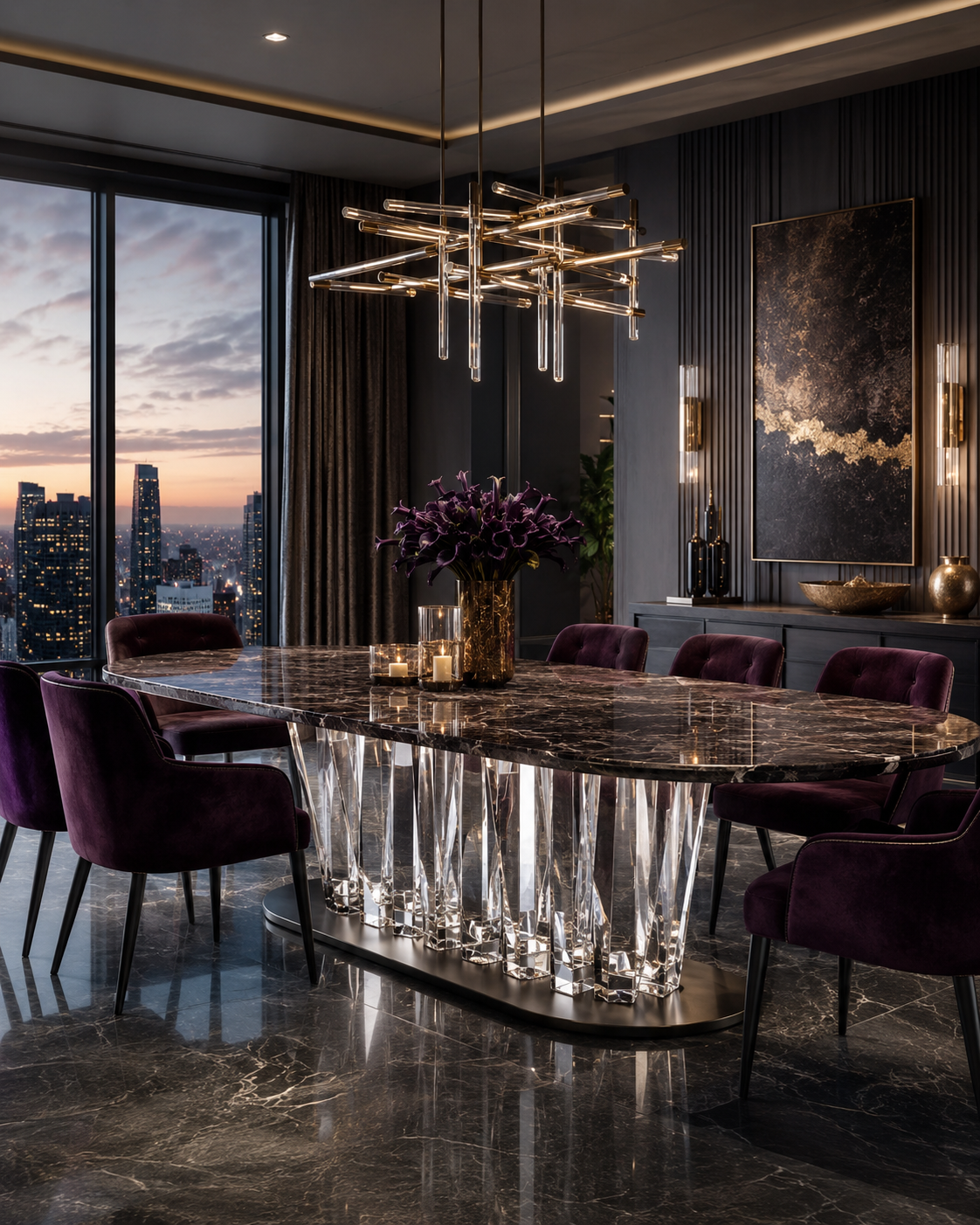
Consider a transparent resin coffee table for the lounge of a luxury hotel. The primary concerns may include frequent cleaning, luggage impact, contact with beverages, and continuous public use. A similar table in a private villa may face significantly lighter traffic but stronger sunlight from large windows. A premium acrylic display in a jewelry boutique may experience limited physical loading but require extremely high optical quality because spotlights expose every surface detail.
These three projects require different priorities.
Surface resistance also deserves specific attention. ISO 4211-1:2025 establishes a test method for assessing the resistance of rigid furniture surfaces to cold liquids, regardless of the material used. The existence of such a standard highlights an important procurement principle: buyers should evaluate the real conditions a finished surface will encounter rather than assuming that a visually impressive material automatically withstands every substance.
For restaurant applications, for example, the supplier may need to consider food and beverage contact, repeated wiping, decorative objects, and cleaning schedules. For a villa dining table, hot objects, strong daylight, children's use, and long-term color expectations may be more important. For a luxury boutique, fingerprints and optical appearance may dominate the specification.
This is where synthetic crystal and high-end resin offer considerable design freedom. Casting processes can create thick sculptural legs, transparent blocks, embedded decorative effects, controlled colors, and forms that would be difficult to produce economically from conventional glass or stone. Premium acrylic can be cut, machined, bonded, polished, and combined with metal or stone to create extremely clean contemporary forms.
But freedom of form does not remove the need for engineering.
A professional supplier should ask where the furniture will be used, whether it is indoor or outdoor, how much sunlight it receives, what loads it carries, how often it will be cleaned, whether customers can sit or stand on parts not intended as seating, and what chemicals the facility uses.
The most successful luxury furniture is not the material with the longest list of generic advantages. It is the material correctly specified for the actual project.
5. Repairability Can Be More Valuable Than the Claim That Nothing Will Ever Wear
Luxury buyers increasingly look beyond the appearance of a new product and ask what happens several years later.
That question changes how “durability” should be understood.
The European Commission's Joint Research Centre has emphasized durability, reparability, availability of spare parts, and warranty provisions in its work on Green Public Procurement criteria for furniture. The underlying logic is practical: extending a furniture product's useful life can reduce the need for premature replacement.
A JRC technical review of furniture life-cycle studies also assessed 109 reports before analyzing selected LCA studies and verified Environmental Product Declarations. It reported that approximately 80–90% of the environmental impacts in the furniture cases studied were associated with materials and components, while also noting the importance of durability and recyclability. The figure is an environmental rather than financial calculation, but it reinforces the importance of keeping material-intensive furniture in useful service for longer when technically practical.
This has direct relevance to synthetic crystal, resin, and acrylic furniture.
Suppose a luxury hotel owns a large transparent coffee table with a minor surface problem after several years. If the entire table must be discarded, the original purchase becomes much more expensive. If the surface can be professionally refinished under the appropriate process, or if damaged hardware can be replaced while retaining the primary body, the product's useful life can potentially be extended.
The same applies to custom furniture documentation.
If a manufacturer records dimensions, color samples, construction drawings, hardware references, and approved finishes, it becomes easier to reproduce a damaged component or manufacture a matching piece for a future hotel expansion.
For luxury projects, this serviceability can be more meaningful than claiming that a product will remain permanently untouched.
Premium furniture lives in the real world. It will be cleaned, moved, touched, and occasionally damaged. Long-term quality therefore depends not only on resisting wear but also on having a realistic strategy for what happens when wear eventually occurs.
6. So Can Synthetic Crystal Furniture Really Be Beautiful, Durable, and Easy to Maintain?
Yes—but the buyer should treat those three qualities as measurable project requirements rather than marketing adjectives.
Beauty should be confirmed through physical samples, approved colors, transparency standards, finishing references, edge-polishing quality, and pre-production mock-ups when necessary.
Durability should come from appropriate material selection and structural engineering. For tables, standards such as ISO 19682 show that stability, strength, and durability can be evaluated through performance-oriented testing instead of relying on assumptions based on material names.
Ease of maintenance should be supported by a written care procedure specific to the actual material. Premium acrylic manufacturers themselves distinguish between recommended cleaning methods and practices that may create scratches or chemical damage, demonstrating why correct maintenance information is part of the product rather than an optional after-sales detail.
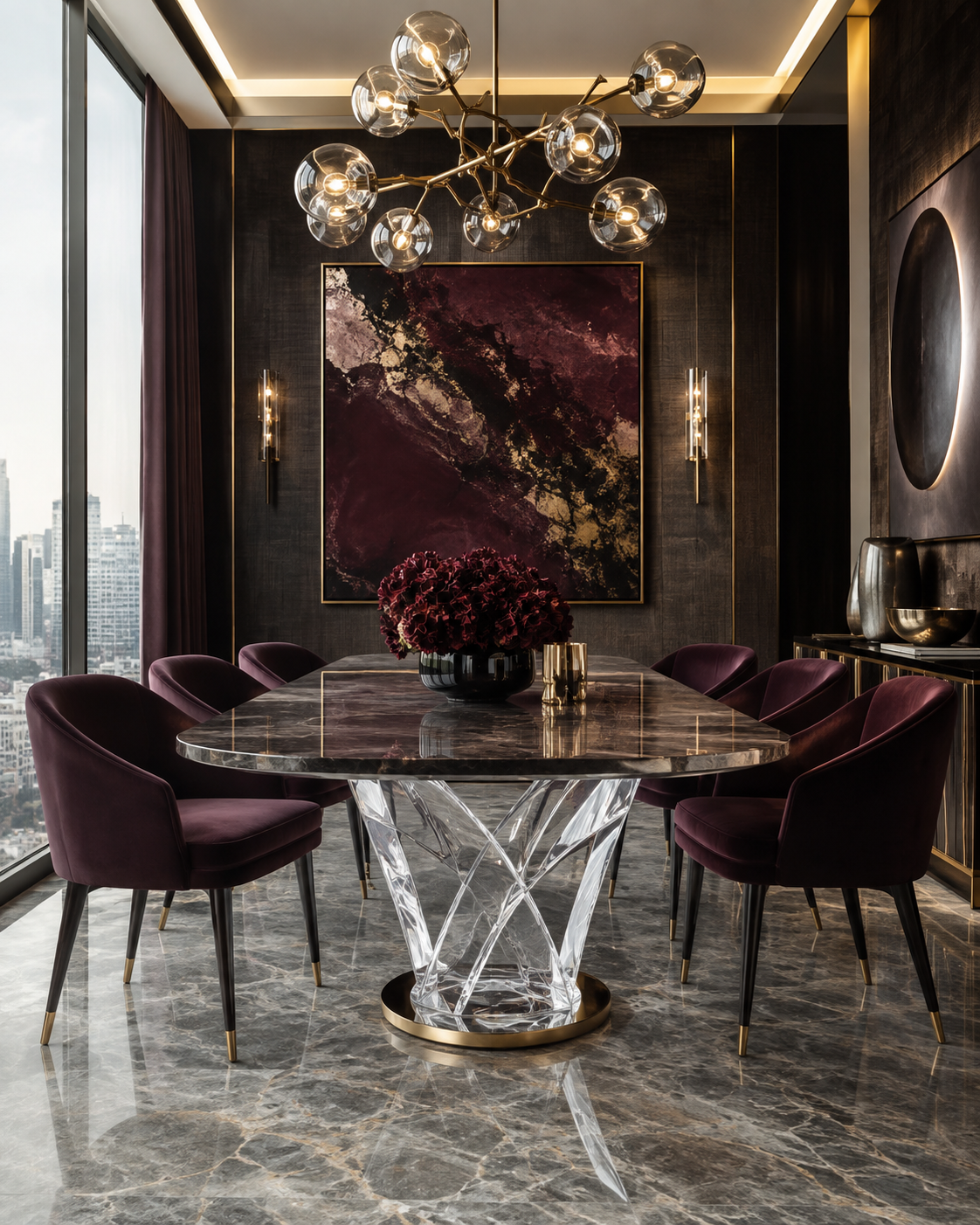
For a hotel lobby, this could mean specifying a synthetic crystal centerpiece with a structurally engineered base and a finish compatible with frequent cleaning. For a private villa, it could mean creating a high-end resin dining table with a customized tone that complements marble and metal finishes while providing the owner with precise care instructions. For a luxury boutique, it could mean choosing platinum acrylic displays because their transparency keeps visual attention on handbags, watches, jewelry, or other merchandise while allowing the store's architecture to remain visible.
The important point is that synthetic crystal furniture should not be sold solely because it looks spectacular in photographs.
Its stronger value proposition is that a properly designed piece can combine sculptural freedom, transparency, custom color, functional performance, manageable maintenance, and the possibility of long-term care within one product.
The buyer should therefore ask a supplier practical questions: What is the actual material? Which properties are documented? How is the piece engineered? What cleaning products are compatible with the surface? Which conditions should be avoided? Can minor surface damage be repaired? Can components be replaced? Will drawings and color references remain available for future orders?
A manufacturer capable of answering these questions is offering more than a beautiful table.
It is offering a furniture system designed around the complete user experience—from the first impression in a hotel lobby or villa living room to everyday cleaning, years of use, and eventual repair.
That is the point at which beauty, durability, and easy maintenance stop being three competing promises and become three parts of the same high-end furniture specification.
READ MORE:
- What Luxury Furniture Buyers Should Consider When Choosing a Custom Transparent Piece
- From Decoration to Experience: How Custom Furniture Shapes Premium Hospitality Spaces
- How Statement Furniture Helps Luxury Spaces Create Stronger Emotional Connections
- Why High-End Interior Designers Are Choosing Acrylic Furniture for Unique Space Creation
- Why Transparent Furniture Is Becoming a New Expression of Modern Luxury
- Il cliente non compra davvero un tavolo: compra la stabilità dell’immagine dello spazio per gli anni a venire
- Perché alcuni progetti di alta gamma accettano un costo iniziale più elevato per i mobili in cristallo sintetico?
- Hotel, ville e spazi commerciali: dove si manifesta il valore a lungo termine dei mobili in cristallo sintetico?
- Dall’acquisto alla manutenzione: come calcolare il “costo totale del ciclo di vita” dei mobili di lusso in cristallo sintetico?


