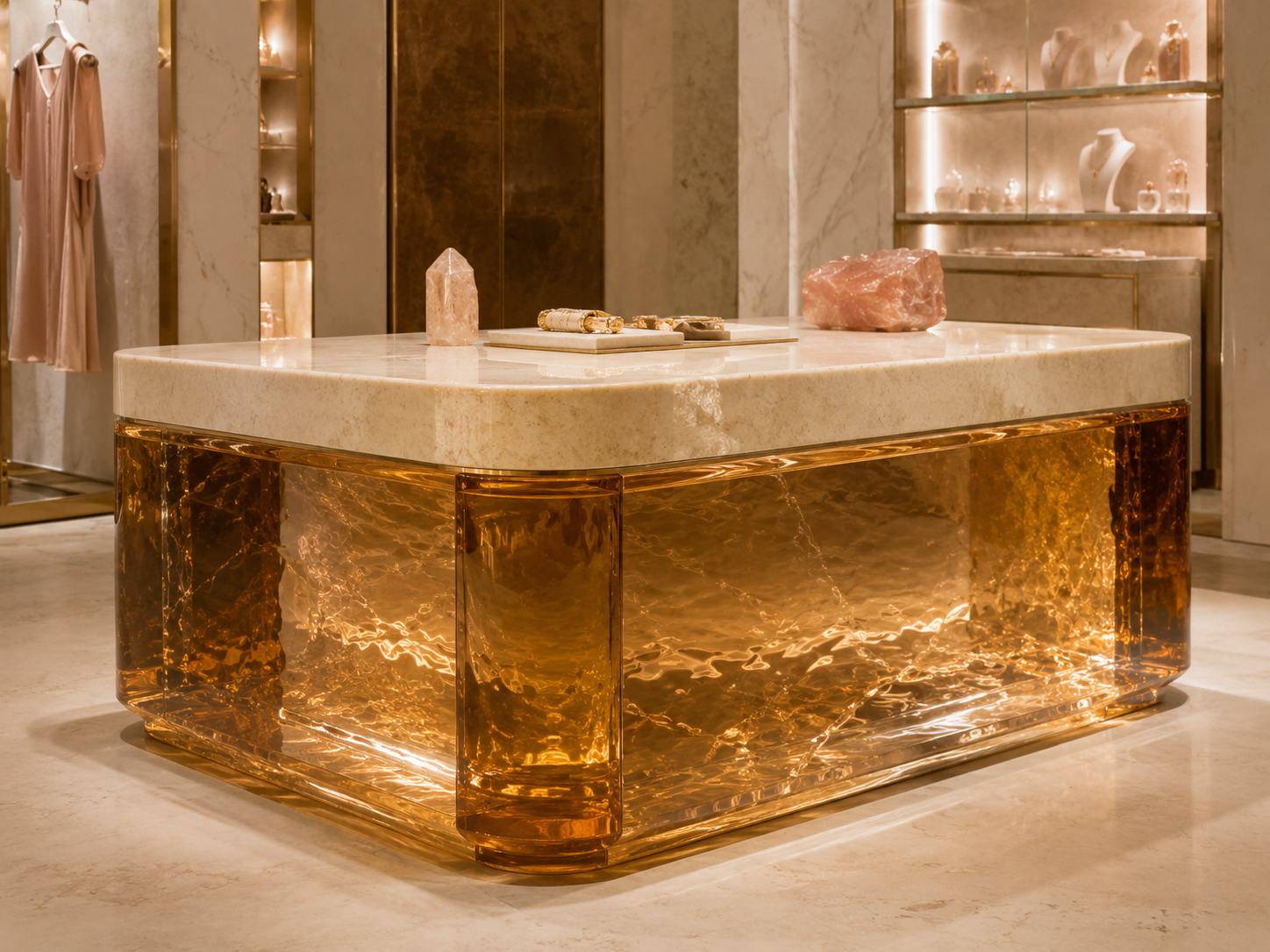
Luxury interior design has always been about creating more than beautiful rooms. The most successful spaces communicate a feeling, tell a story, and create an emotional connection between people and their environment.
In recent years, transparent materials have become one of the most powerful tools used by luxury interior designers to achieve this goal. Once considered a simple functional choice, transparency is now recognized as a sophisticated design language that represents elegance, openness, innovation, and modern luxury.
From high-end residences and luxury hotels to exclusive commercial spaces, transparent furniture and decorative elements are transforming the way designers approach space planning. Among these materials, premium synthetic crystal has gained increasing attention for its ability to combine visual purity, artistic flexibility, and advanced craftsmanship.
Luxury designers are no longer using transparent materials simply because they look different. They are using them strategically to influence perception, enhance architecture, maximize light, and create interiors that feel more refined and timeless.
The growing popularity of synthetic crystal furniture reflects a larger movement in luxury design: the search for materials that offer both technological innovation and emotional value.
Transparency as a New Language of Luxury Design
Luxury interiors have traditionally been associated with rich materials such as marble, natural stone, hardwood, leather, and metals. These materials continue to play an important role, but modern luxury has expanded beyond traditional definitions.
Today’s luxury clients are looking for spaces that feel unique, balanced, and personal. They want environments that express individuality rather than simply display expensive materials.
Transparent materials provide designers with a new way to achieve this balance.
Unlike solid materials that create strong visual boundaries, transparent materials allow light, color, and architectural elements to flow through a space. They create a sense of openness while maintaining sophistication.
A synthetic crystal dining table, for example, can become the centerpiece of a luxury dining area without making the room feel visually heavy. A transparent lounge chair can introduce a sculptural element while allowing surrounding design features to remain visible.
This ability to add beauty without creating visual pressure is one of the reasons transparent materials have become increasingly valuable in premium interior projects.
Creating a Sense of Space and Openness
One of the greatest challenges in luxury interior design is achieving a sense of spaciousness while maintaining comfort and functionality.
Transparent materials provide an effective solution.
Because they allow the eye to move through the furniture and surrounding environment, transparent designs can make interiors appear larger and more connected.
This is particularly valuable in urban luxury residences where space efficiency is important.
A smaller apartment with carefully selected synthetic crystal furniture can feel more open because the furniture does not interrupt visual flow. Instead, it becomes part of the overall architectural composition.
Luxury designers often use transparent furniture in combination with other premium materials to create contrast.
For example, a transparent synthetic crystal table placed on a natural stone floor creates a dialogue between modern innovation and organic texture.
The result is a sophisticated environment where every element contributes to the overall atmosphere.
Enhancing Natural and Artificial Lighting
Light is one of the most important elements in luxury interior design. Professional designers understand that materials are not only experienced through their physical appearance but also through the way they interact with light.
Transparent materials have a unique relationship with illumination.
Synthetic crystal furniture can capture, reflect, and transmit light, creating depth and movement within a space.
During the daytime, natural sunlight can pass through transparent surfaces and create a brighter, more elegant atmosphere.
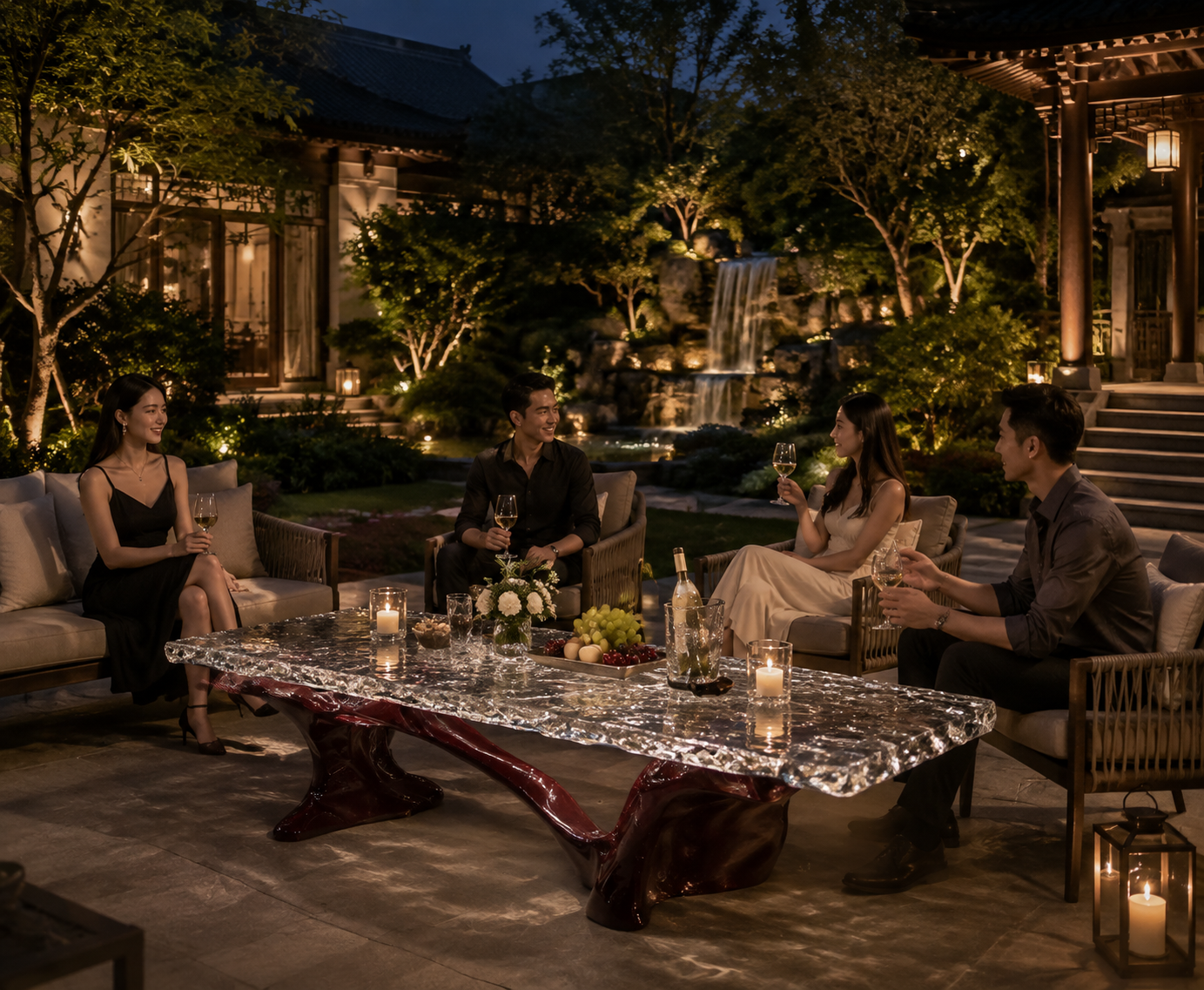
In the evening, carefully designed lighting can highlight the shape and structure of synthetic crystal pieces, turning furniture into an artistic feature.
Luxury designers often consider lighting and transparent materials together because the combination creates a more dynamic interior experience.
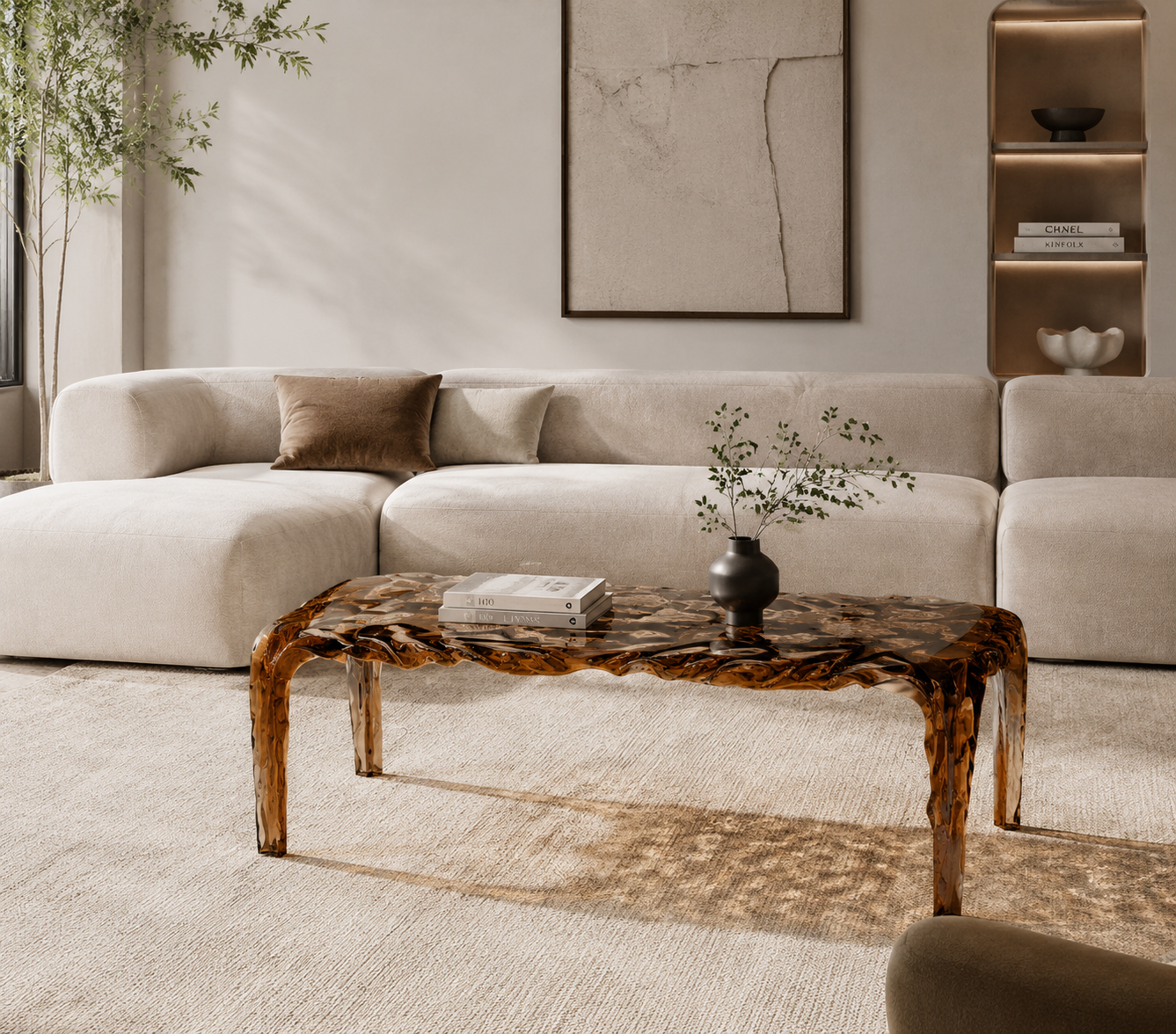
A transparent console near an entrance can create a welcoming first impression. A crystal-inspired coffee table under decorative lighting can become the visual focus of a living area.
The material does not simply exist inside the space. It interacts with the environment.
Using Synthetic Crystal Furniture as Functional Art
One of the most significant changes in modern luxury design is the growing connection between furniture and art.
High-end buyers increasingly view furniture as a form of personal expression. They are interested in pieces that have artistic value rather than only practical functions.
Synthetic crystal furniture perfectly supports this approach.
Because of advanced manufacturing techniques, designers can create unique shapes, flowing curves, and customized structures that would be difficult to achieve with many traditional materials.
A synthetic crystal chair can become a sculptural object.
A transparent table can become an architectural statement.
A custom-designed piece can become the signature element that defines an entire interior.
This transformation from furniture into functional art represents one of the biggest reasons transparent materials are becoming more popular in luxury projects.
Combining Transparent Materials With Premium Textures
Sophisticated interiors rarely rely on a single material. The most successful luxury spaces are created through thoughtful combinations of textures, colors, and finishes.
Transparent materials are especially powerful because they complement almost every design style.
Luxury designers often combine synthetic crystal with:
Natural stone
Fine wood
Metal finishes
Premium fabrics
Handcrafted decorative elements
The contrast between transparency and solid textures creates visual interest.
For example, a transparent synthetic crystal dining table paired with velvet chairs creates a balance between softness and modern elegance.
A transparent coffee table combined with marble surfaces creates a feeling of contemporary luxury.
A crystal-inspired reception desk inside a boutique hotel creates an impression of innovation and exclusivity.
Transparency works because it does not compete with other materials. Instead, it enhances them.
Designing Minimalist Luxury Through Transparency
Minimalism has become a major influence in contemporary luxury interiors.
However, modern minimalism is not about creating empty spaces. It is about selecting fewer elements with greater meaning.
Transparent materials are ideal for this design philosophy.
A carefully selected synthetic crystal furniture piece can provide strong visual impact without overwhelming the room.
This allows designers to create spaces that feel calm, elegant, and intentional.
The simplicity of transparent furniture creates a sense of refinement. It demonstrates confidence because the design does not rely on excessive decoration.
In luxury interiors, restraint is often a sign of sophistication.
A transparent piece with exceptional craftsmanship can communicate more than a room filled with unnecessary objects.
Customization: Creating Unique Luxury Experiences
Every luxury project has its own identity.
High-end clients often require furniture that matches specific architectural concepts, personal preferences, and lifestyle needs.
Synthetic crystal provides significant opportunities for customization.
Designers can explore different:
Shapes
Sizes
Thickness levels
Finishing styles
Structural concepts
This flexibility allows furniture to become part of the original design vision.
Instead of selecting a standard product, clients can collaborate with manufacturers to create a unique piece that belongs specifically to their space.
Customization increases emotional value because the final design reflects personal taste and creative intention.
In luxury interiors, uniqueness is one of the most important forms of value.
Why Synthetic Crystal Is Becoming a Preferred Choice for Luxury Projects
The growing popularity of synthetic crystal furniture is not accidental. It reflects changing expectations in the luxury market.
Modern designers need materials that offer:
A premium visual appearance
Creative design possibilities
Reliable performance
Customization flexibility
Compatibility with different interior styles
Synthetic crystal meets these requirements by combining advanced technology with artistic potential.
It represents a new generation of luxury materials where innovation and aesthetics work together.
For architects and designers, this means more creative freedom. For homeowners and developers, it means access to interiors that feel distinctive and memorable.
The Future of Transparent Luxury Design
As interior design continues to evolve, transparent materials will play an increasingly important role.
The future of luxury is moving toward spaces that feel lighter, more personalized, and more connected to human experience.
Synthetic crystal furniture represents this direction perfectly.
It allows designers to rethink traditional ideas about furniture, space, and decoration. It transforms transparency from a simple visual characteristic into a powerful design strategy.
Luxury interiors are no longer defined only by what fills a room. They are also defined by how materials interact, how light moves, and how people experience the environment.
Transparent materials provide designers with the ability to create spaces that feel sophisticated, modern, and timeless.
The next generation of luxury interiors will belong to those who understand that true elegance comes from the perfect balance between innovation, craftsmanship, and emotional design—and the most unforgettable spaces may begin with a single transparent masterpiece waiting to be discovered.
READ MORE:
- Beyond Decoration: How Statement Furniture Pieces Shape Brand Identity for Hotels, Retail Spaces, and Luxury Homes
- Why Some Transparent Furniture Looks Expensive While Others Feel Ordinary: A Buyer's Guide to Quality Differences
- What Makes Synthetic Crystal Furniture Valuable? Understanding the Details Behind Premium Transparent Designs
- Why High-End Buyers Are Rethinking Acrylic Furniture: From "Plastic Alternative" to Modern Luxury Material
- How Can One Piece of Furniture Change the Feel of an Entire Space? Understanding the Details of Luxury Through Synthetic Crystal
- If You Want a Commercial Space to Look Premium for Years, Furniture Materials Matter More Than Fashionable Styles
- Reducing Visual Aging: How Synthetic Crystal Furniture Keeps Spaces Light, Transparent, and Modern
- Why Are More High-End Spaces Turning to Synthetic Crystal Furniture? It Is About Much More Than Transparency
- How Long Does Luxury Last? Why Furniture Materials Determine a Space's "Visual Shelf Life"


