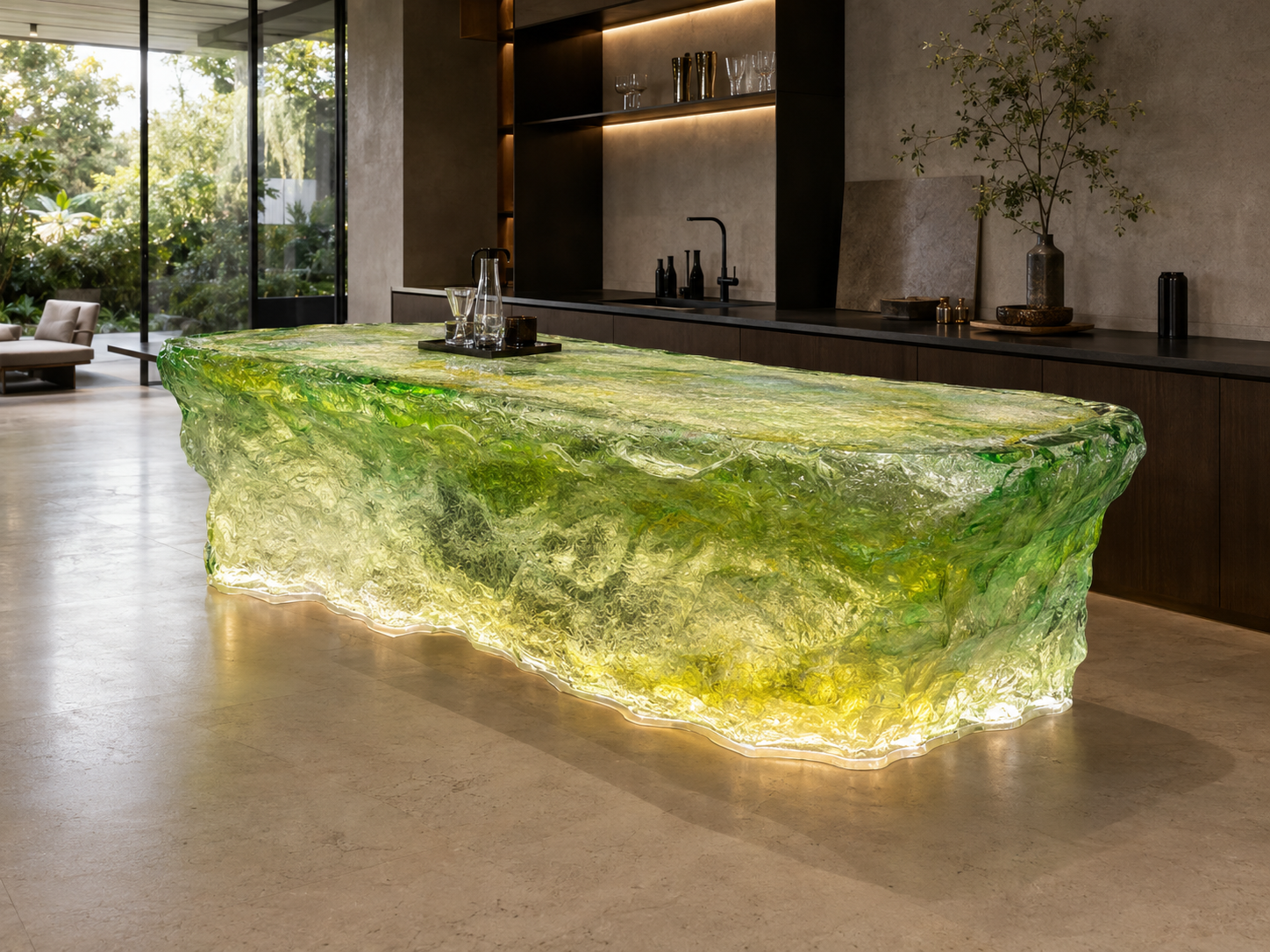
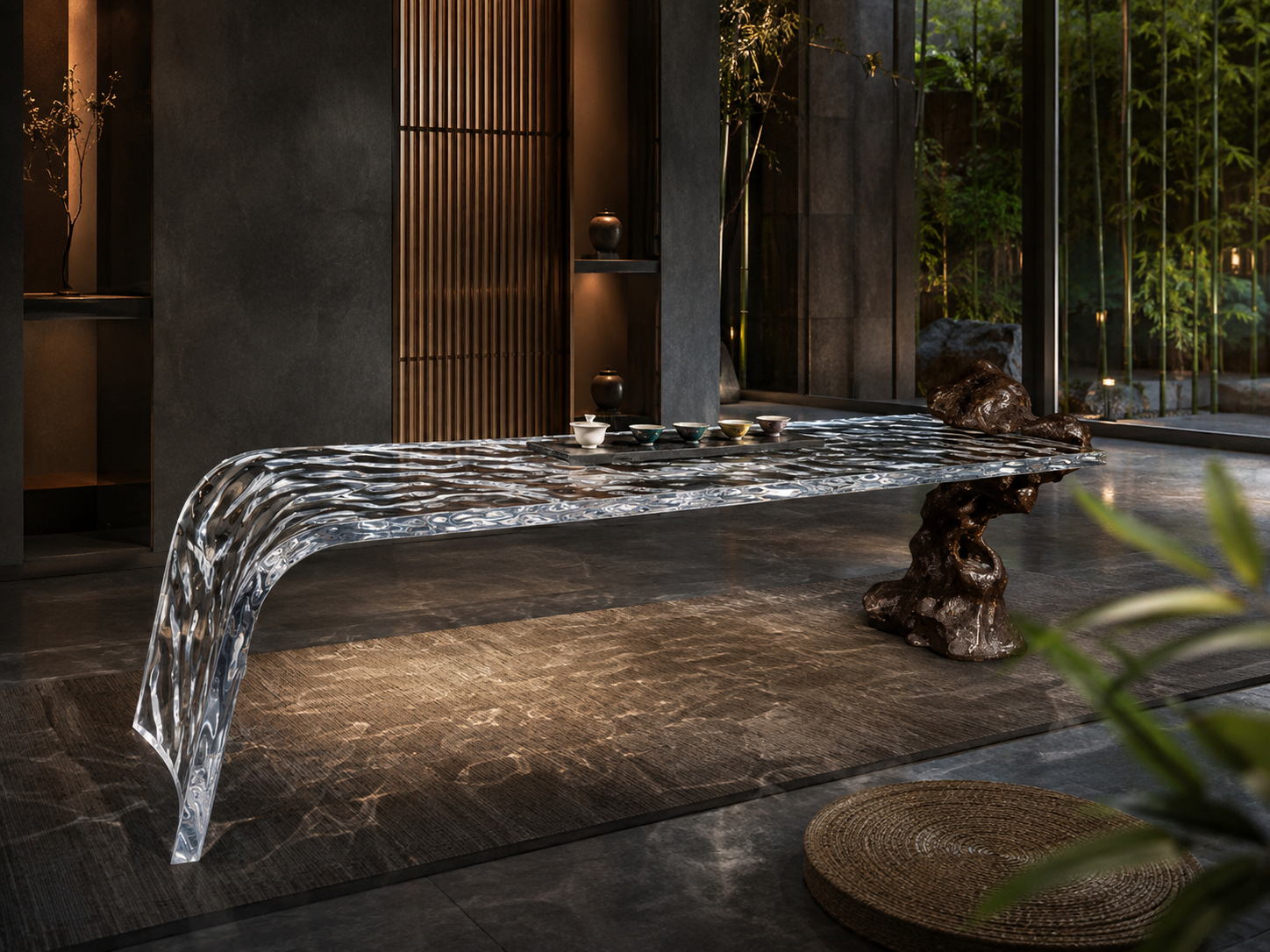
A memorable hotel interior is often associated with major renovation: new stone flooring, bespoke wall panels, redesigned ceilings, custom lighting and a completely new FF&E package. In practice, however, many hotel owners face a different reality. The property may still be operational, the existing sofas may be in good condition, and the lobby architecture may not justify demolition. What the space lacks is not functionality, but a visual signature guests can remember.
This is where a light-touch upgrade becomes commercially interesting. Instead of rebuilding an entire lobby, a hotel can concentrate investment on a limited number of highly visible furniture pieces—such as a synthetic crystal coffee table, premium acrylic side tables, a high-end resin console or a sculptural lobby table—and use them to change the visual hierarchy of the room.
The logic is consistent with how the hospitality industry increasingly evaluates capital expenditure. CBRE argues that hotel CapEx should be assessed through both qualitative outcomes, including guest satisfaction, and quantitative effects on asset value rather than treated simply as a cost. JLL’s 2025/2026 Asia-Pacific Hotel Operators’ Sentiment Survey, based on more than 830 hotels across 22 countries, likewise identifies product optimization as a leading CapEx focus.
For hotels that need visible change without heavy construction, furniture can therefore become one of the fastest ways to make existing architecture feel new.
1. A Memorable Hotel Does Not Need More Decoration—it Needs a Stronger Visual Hierarchy
One of the most common problems in an ordinary hotel lobby is not that the finishes are poor. It is that everything has approximately the same visual importance.
There may be a beige sofa, two lounge chairs, a conventional timber coffee table, several lamps and a neutral rug. Every individual piece may be perfectly acceptable, yet nothing tells the eye where to look. The result is comfortable but forgettable.
A light-touch upgrade starts by identifying where the guest’s attention should go first.
Instead of replacing all the seating, consider replacing one central coffee table with a substantial synthetic crystal or premium acrylic table. A thick transparent base, polished edges and a sculptural geometry can immediately establish a focal point. Smaller platinum acrylic side tables can repeat the same material language around the lounge, while a high-end resin console near reception can introduce color and depth.
The financial logic is straightforward: fewer pieces are upgraded, but each upgraded piece has greater visual influence.
This approach becomes more relevant when we consider how guests actually use public areas. A Cornell Center for Hospitality Research study found that only 27% of surveyed guests expected to use hotel lobby seating before their stay, while actual usage reached 42%. The researchers suggested that increasingly inviting and social hotel lobbies could encourage even greater use.
In other words, the lobby is not simply something guests walk through. They sit there, wait for colleagues, drink coffee, use their phones and observe the environment.
That makes a central coffee table, side table or console more important than its square footage suggests.
For a hotel owner with a controlled budget, this changes the investment question. Instead of asking, “How much of the lobby can we renovate?” it may be more productive to ask, “Which three pieces can change how guests perceive the entire lobby?”
2. Transparency Creates Presence Without Adding Visual Weight
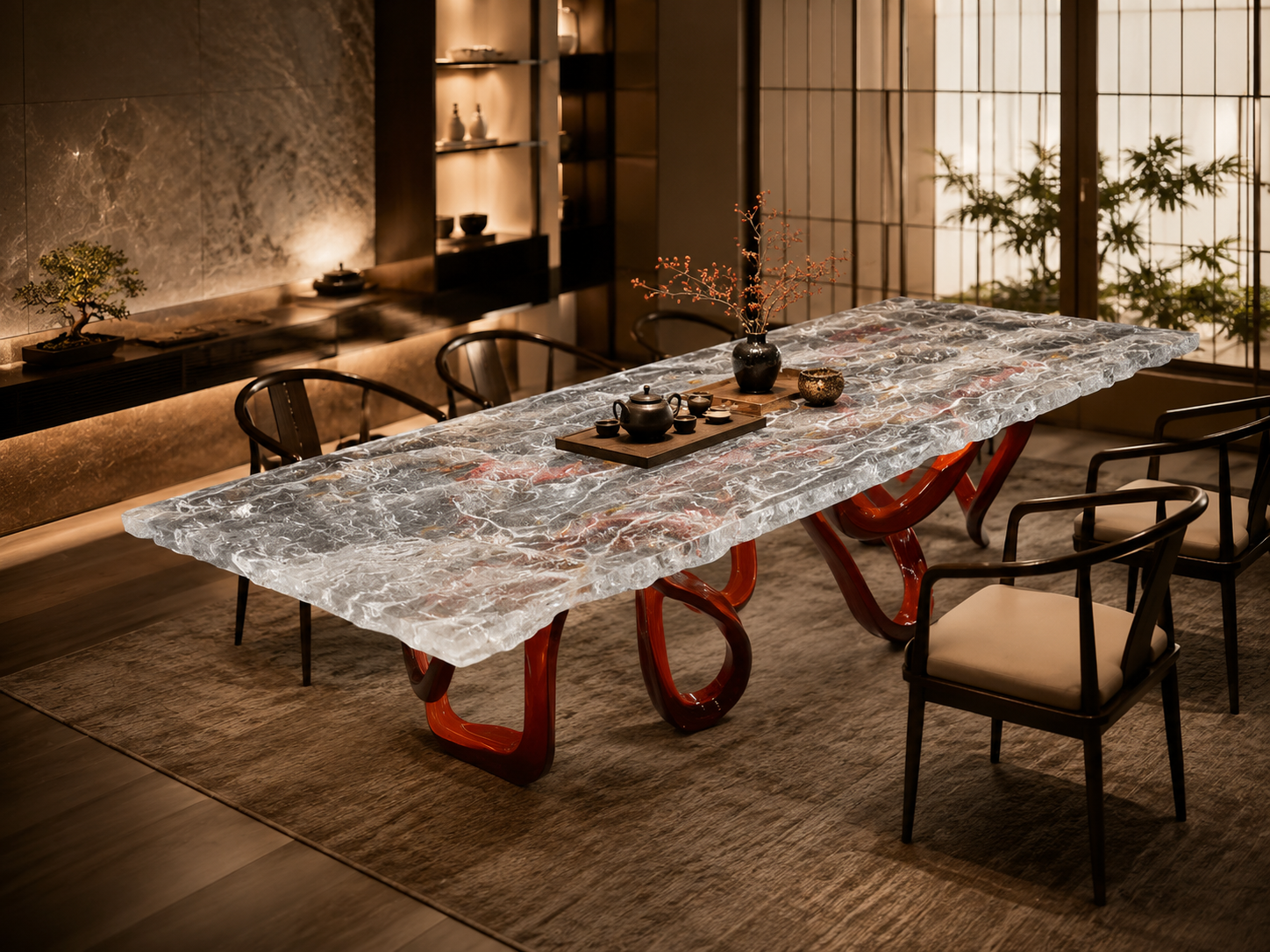
A major advantage of synthetic crystal and premium acrylic furniture is the ability to create physical volume without making the room feel equally crowded.
This matters particularly in urban hotels, boutique properties and renovations of existing buildings where lobby dimensions cannot easily be changed. Adding more solid stone, dark timber or fully upholstered furniture may increase material richness, but it can also make an already compact space feel smaller.
Clear furniture behaves differently.
High-quality PMMA provides useful technical context. PLEXIGLAS states that its clear transparent products can achieve visible-light transmission of up to 92%, depending on product type and thickness. This is a specification for particular branded acrylic products, not a performance claim that should automatically be applied to every acrylic or synthetic crystal product, but it demonstrates why high-quality transparent materials can work so effectively in interiors.
Imagine a 1.4-meter coffee table in the middle of a lobby seating group. If it is made from a visually heavy opaque material, it becomes another large block in the room. If the same footprint is interpreted through a thick, transparent synthetic crystal structure, the eye can continue to read the carpet, floor and furniture behind it.
The object remains substantial, but the room feels less obstructed.
The effect can be extended through platinum acrylic side tables, transparent consoles, pedestal tables and sculptural display plinths. These pieces can introduce luxury detailing without visually fragmenting the lobby.
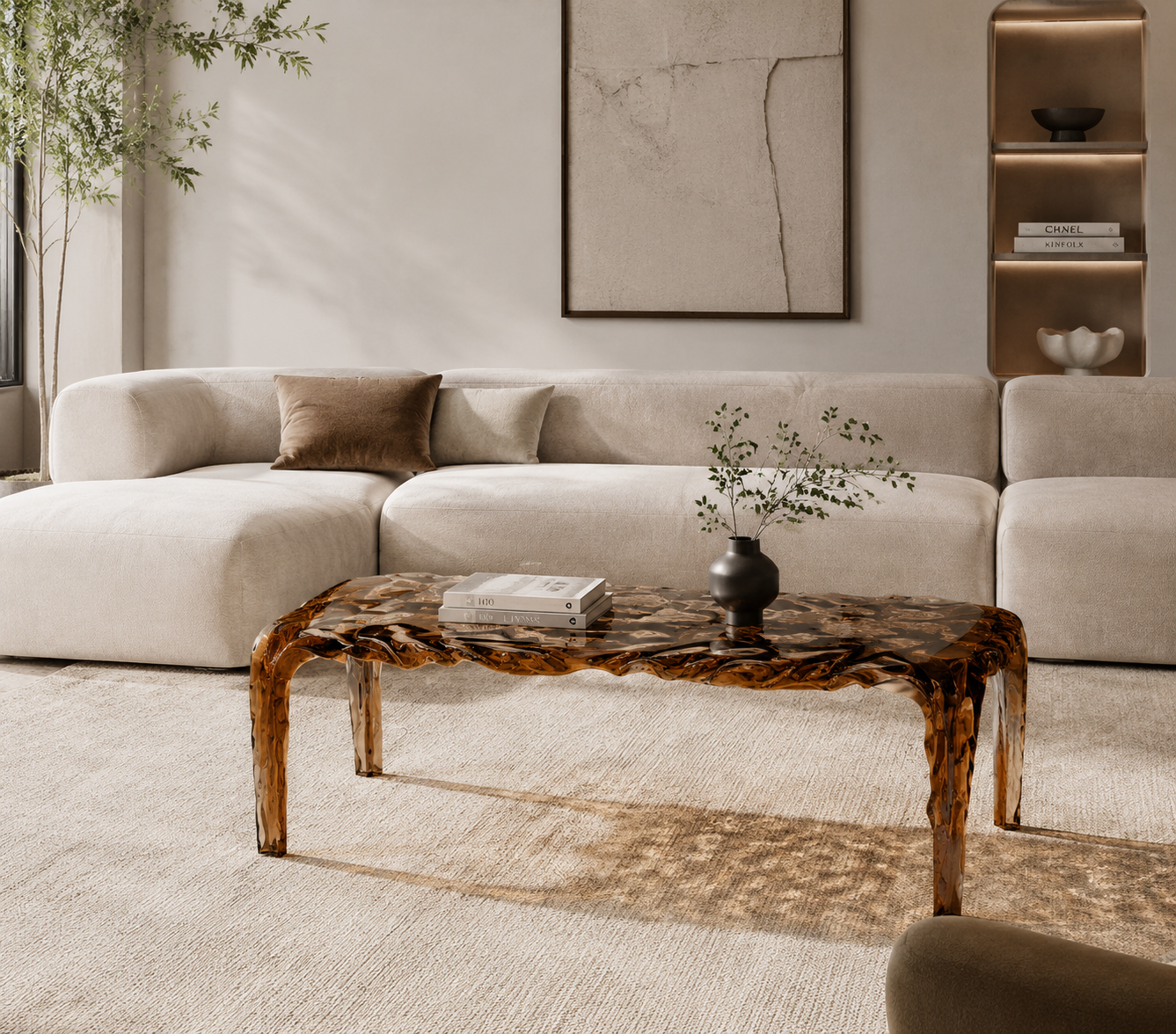
High-end resin adds another possibility because transparency does not have to mean colorless. A resin coffee table can be translucent amber, smoky grey, champagne, ocean blue or custom tinted to match the hotel identity. Controlled bubbles, mineral-inspired effects, embedded textures or layered color can create depth that changes as guests move around the furniture.
In this way, a light-touch upgrade does not need to fight the existing architecture. It can work with the existing stone floor, carpeting, lighting and upholstery, allowing a few new objects to give the old environment a different visual character.
3. Small FF&E Changes Can Deliver More Impact Than Replacing Everything at Once
Hotel renovation decisions are rarely made in a design vacuum. Owners also have to consider room revenue, construction schedules, guest disruption, procurement lead times and whether an existing asset actually needs to be replaced.
That is why phased FF&E upgrades can be more practical than complete interior replacement.
CBRE describes hotel CapEx as investment used to acquire, upgrade and maintain physical assets—including furniture—and recommends asking why an investment is being made, when it should occur and what return is expected from it. That framework supports a more selective approach to furniture.
Suppose an upscale hotel has lobby seating that is only four years old and still performs well. Replacing all of it simply to create a new appearance may destroy usable value. A lighter intervention could retain the seating while introducing a custom synthetic crystal coffee table, four platinum acrylic side tables and a high-end resin console.
The new pieces can be coordinated through one finish family. Clear acrylic might receive a subtle champagne tint. Resin could repeat the hotel’s brand color. Metallic inserts might reference existing brass lighting. The furniture therefore acts as a bridge between what is already there and the image the hotel wants to create.
This approach also allows upgrades to be phased. The lobby can be completed first, followed later by executive lounges, suites, elevator waiting areas or restaurant entrances.
JLL’s 2025/2026 survey is relevant here because it shows how operators are prioritizing product optimization alongside operational systems, MEP and brand-standard requirements. Hotels are not simply spending for novelty; they are under pressure to direct capital toward improvements that strengthen the product while preserving operating performance.
A furniture-led refresh can fit this mindset particularly well because it can deliver a visible change with less demolition, less dust, fewer wet trades and potentially less disruption than architectural renovation.
“Light-touch” therefore should not mean visually weak. It means changing fewer elements more deliberately.
4. Memorable Furniture Can Become Part of the Guest Experience—and the Hotel’s Visual Identity
Hotels increasingly compete not only on beds, bathrooms and service standards, but also on how the property feels and how easily guests can remember it afterward.
Deloitte’s research involving 6,600 hotel guests across 25 brands found that 75% of respondents said they return to hotels that provide a great guest experience. The same research found that Millennials place particularly high value on moments that “surprise and delight,” and that guests receiving a high level of attention are more likely to share positive reviews.
Design alone cannot create loyalty, but memorable design can support those moments.
Consider two otherwise similar hotel lobbies. One uses standard contract tables that could belong to almost any property. The other has a sculptural amber resin coffee table inspired by the color of the local landscape, accompanied by transparent acrylic side tables that catch the evening light.
Which environment is easier to describe to another person?
Which is more likely to appear in a guest photograph?
Which gives the hotel marketing team a recognisable image for its website, social media or campaign photography?
This is why custom materials can be more valuable than generic expensive materials. A piece does not necessarily need to contain rare stone or elaborate metalwork to become memorable. It needs a visual characteristic closely associated with the property.
Deloitte has also highlighted the use of local materials, local techniques and custom-made furniture as ways for hospitality design to create a stronger sense of place, while noting the importance of attractive, vibrant public spaces in building authentic guest experiences.
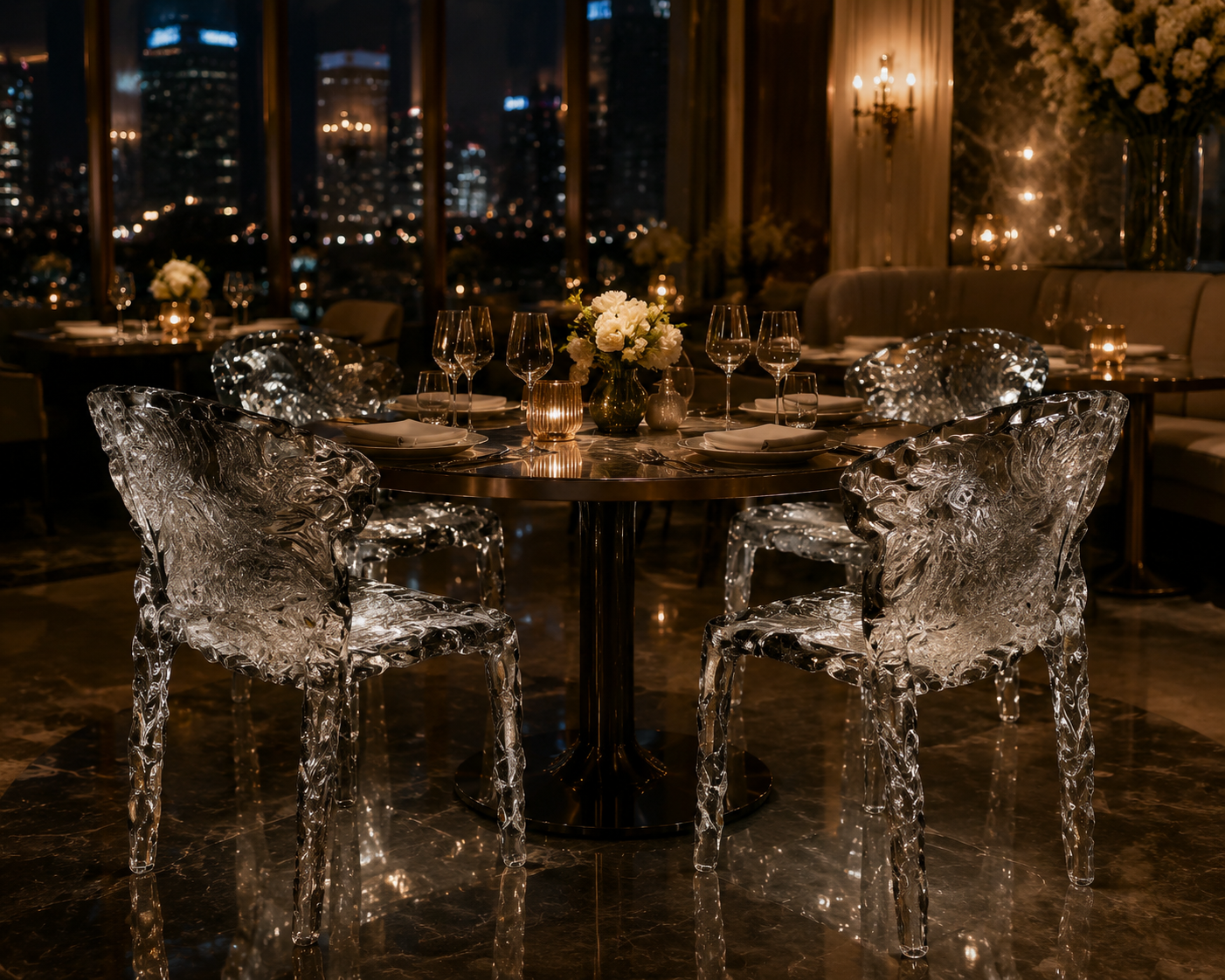
High-end resin is particularly suitable for this type of interpretation because color, translucency and internal effects can be customized. Synthetic crystal can create ice-like or water-like visual references. Platinum acrylic can provide cleaner, more architectural transparency for an urban luxury property.
Coffee tables, side tables, consoles, communal tables and decorative plinths can consequently do more than fill an FF&E schedule. They can become part of a hotel’s identity system.
5. A Light-Touch Upgrade Only Works if the Furniture Survives Real Hotel Operations
A memorable piece that looks tired after twelve months is not a successful upgrade.
Hotel furniture operates under conditions very different from residential furniture. Coffee tables are repeatedly cleaned, side tables receive drinks and phones, luggage can hit bases, housekeeping teams work quickly, and public areas may remain active from early morning until late at night.
Material specification therefore matters as much as visual design.
ACRYLITE’s technical information for its Optical mar-resistant acrylic sheet, for example, describes enhanced abrasion and chemical resistance for furniture and interior applications. The manufacturer states that this particular product weighs approximately half as much as glass and is designed to resist everyday marring associated with public contact, cleaning, dust and dirt. Again, those are product-specific properties rather than universal claims for every acrylic furniture item.
This distinction is important for professional hospitality procurement.
Terms such as synthetic crystal, high-end resin and platinum acrylic describe useful design categories or commercial positioning, but a hotel designer should still know exactly what material grade, formulation, coating, thickness and fabrication process will be supplied.
For a decorative console, optical clarity may be the first priority. For a frequently used coffee table, surface resistance and maintenance may matter more. For a large lobby table, structural stability, joints and weight distribution become critical. A resin top may require a suitable protective finish depending on its intended use.
Maintenance should also be discussed before production, not after installation.
CBRE has previously linked physical-property maintenance with guest satisfaction and noted that furniture, fixtures and finishes form part of hotel maintenance expenditure. Its research emphasizes that preserving the physical asset is necessary to sustain guest satisfaction and value.
The strongest light-touch upgrade is therefore not simply easy to install. It is also easy for the hotel to keep looking premium.
6. The Best Strategy Is to Build One Memorable “Furniture Moment,” Then Expand It Selectively
For many existing hotels, the most practical starting point is not a full furniture package. It is one carefully planned visual moment.
Take a conventional four-star lobby as an example. The stone floor, reception desk, sofas and ceiling lighting remain usable, but the room feels generic. Instead of demolishing the space, the hotel could identify the primary camera angle and guest arrival view.
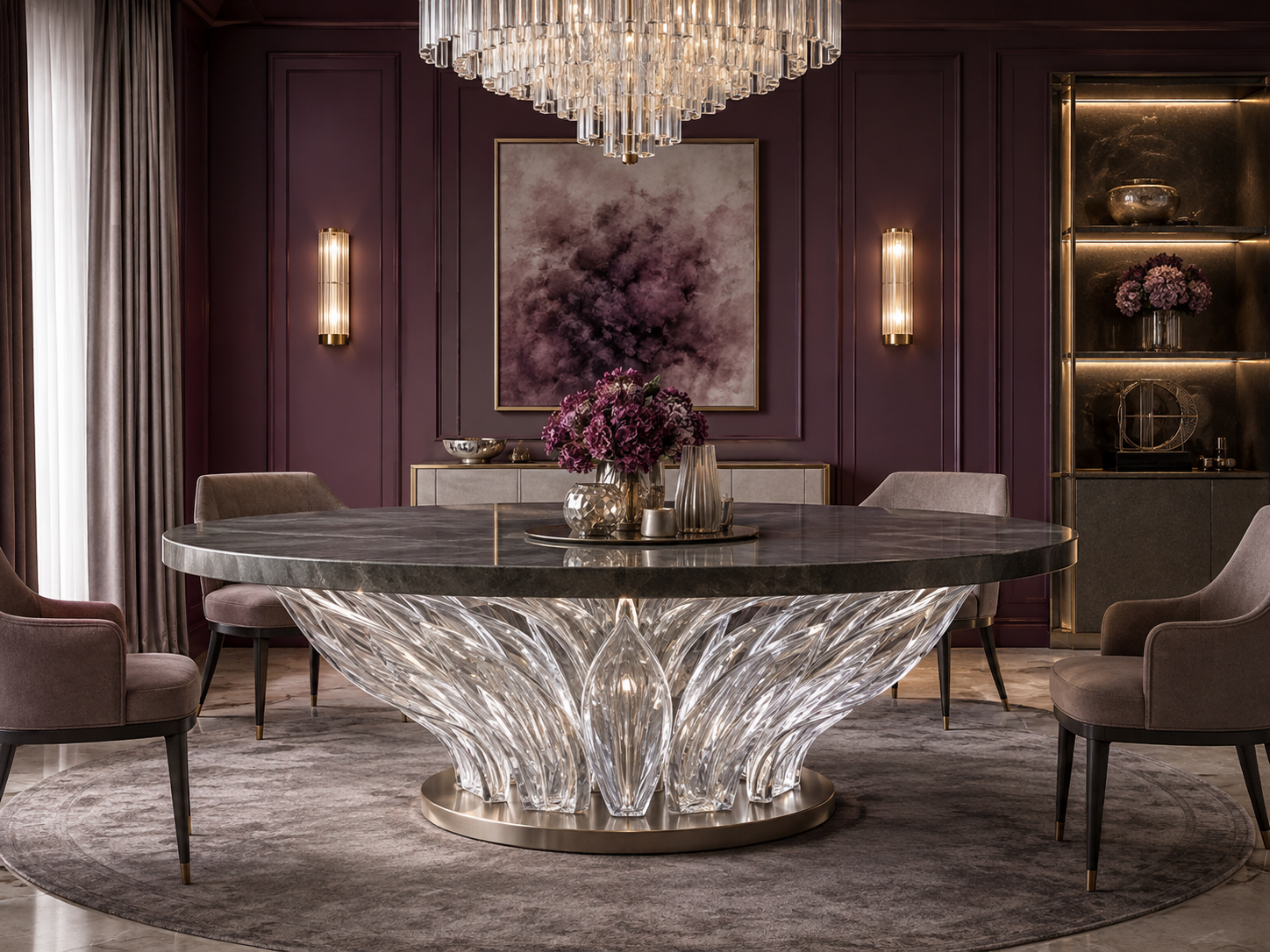
At that point, a large synthetic crystal coffee table becomes the hero piece. Its form is intentionally distinctive but visually light. Around it, smaller platinum acrylic side tables repeat the transparent language. Behind the seating group, a high-end resin console introduces a custom color developed specifically for the brand. Existing decorative objects are reduced rather than increased, allowing the new furniture to become the visual focus.
The next phase could extend the same language into the executive lounge with a communal table, into premium suites with bedside or occasional tables, or into the restaurant entrance with a resin host console.
The result is not simply “new furniture.” It is a recognizable material vocabulary.
Current guest data supports the broader principle that physical product quality still matters. J.D. Power’s 2026 North America Hotel Guest Satisfaction Index Study, based on 44,787 branded hotel guests, found overall satisfaction increased 13 points year over year to 665 on a 1,000-point scale. Satisfaction with hotel facilities rose 14 points, while perceived value for prices paid increased 18 points. The study attributed improving guest experiences in part to continued investment in guest rooms and property upkeep.
This does not mean that installing a resin table will automatically raise guest satisfaction or room rates. It does demonstrate something more useful: guests notice the physical quality and condition of the hotel product, and investments that improve that experience can contribute to perceived value.
For hotel owners, designers and procurement teams, that is the real argument for a light-touch furniture strategy.
A memorable space does not always require expensive demolition. Sometimes the existing architecture already provides the stage; what it lacks is a protagonist.
A transparent synthetic crystal lobby table, a sculptural high-end resin coffee table, a family of platinum acrylic side tables or a custom console can provide that protagonist while allowing the hotel to preserve functioning assets and concentrate budget where guests will actually see it.
The objective is not to make every piece dramatic. It is to create one strong visual memory and let the rest of the space support it.
When that principle is combined with proper material specification, custom color development, hospitality-grade fabrication and realistic maintenance planning, synthetic crystal, premium resin and high-quality acrylic furniture become more than decorative alternatives. They become practical tools for repositioning an existing hotel—one carefully selected piece at a time.
READ MORE:
- Why Product Photography Can Misrepresent the True Quality of Clear Acrylic Furniture
- When Should Acrylic Furniture Be the Focal Point—and When Should It Stay Visually Quiet?
- What Buyers Often Overlook When Ordering Large Acrylic Furniture for International Projects
- Why the Same Acrylic Table Can Look Sophisticated in One Room and Out of Place in Another
- How Lighting Changes the Color, Depth, and Presence of Clear Acrylic Furniture
- Le 4 domande che i designer di hotel fanno più spesso quando scelgono mobili in cristallo sintetico
- I 3 problemi dei materiali che preoccupano di più negli upgrade alberghieri: quali può risolvere l’arredo in cristallo sintetico?
- Da una lobby ordinaria a uno spazio premium: come tavolini da caffè e side table in cristallo sintetico diventano il punto focale del design alberghiero
- Budget limitato: come aumentare il valore percepito della lobby di un hotel con arredi in cristallo sintetico


