The evolution of interior design has always been closely connected with the evolution of materials. Throughout history, materials have represented not only technical possibilities but also cultural values and aesthetic ambitions. Marble has traditionally symbolized permanence and architectural prestige, natural wood has represented craftsmanship and warmth, while metals have expressed precision, strength, and industrial advancement. However, as contemporary architecture and interior design continue to move toward more personalized, experiential, and emotionally driven environments, designers are increasingly exploring materials that can create a different relationship between objects, people, and space.
Among these emerging design directions, transparent furniture has become one of the most significant expressions of modern luxury. Once considered primarily a functional solution for creating visual lightness, transparent materials are now being reinterpreted as sophisticated design mediums capable of transforming furniture into artistic and architectural elements.
The growing interest in transparent furniture reflects a broader transformation within the luxury interior market. Today, high-end projects are no longer defined simply by the presence of expensive materials or the quantity of decorative elements. Instead, they are increasingly evaluated by their ability to create memorable experiences, communicate identity, and establish emotional connections with users.
According to research from the American Society of Interior Designers (ASID), contemporary interior environments are increasingly influenced by personalization, technology integration, and the desire to create spaces that respond to human emotions and lifestyles rather than purely functional requirements. This shift has encouraged designers to explore innovative materials and customized solutions that can support unique spatial narratives.
Transparent materials such as synthetic crystal, high-end architectural resin, and platinum acrylic have become particularly valuable in this context because they offer qualities that traditional materials cannot easily replicate. Their ability to interact with light, create visual depth, maintain spatial openness, and support complex customized forms allows designers to develop furniture pieces that exist between functional products and artistic installations.
A synthetic crystal dining table in a luxury residence is no longer simply a surface for daily use. It can become the visual centerpiece of the home. A transparent reception desk in a five-star hotel can become part of the brand identity. A platinum acrylic lighting structure can redefine the atmosphere of an entire commercial environment.
The future of transparent furniture is therefore not about replacing traditional materials. It is about expanding the creative possibilities available to architects and designers.
Through material innovation, furniture is becoming a new form of spatial expression.
1. The Changing Role of Furniture: From Functional Object to Spatial Identity
For centuries, furniture was primarily understood through its practical purpose. Chairs provided seating, tables supported activities, and storage pieces organized belongings. While aesthetics and craftsmanship were always important, functionality remained the fundamental principle behind furniture design.
However, the contemporary luxury market has changed this perception significantly. In premium residential, hospitality, and commercial projects, furniture is increasingly expected to perform a much broader role. It must contribute to the atmosphere of a space, reinforce architectural concepts, communicate brand identity, and create emotional responses among users.
This transformation is closely connected to the evolution of luxury itself. Traditional luxury was often associated with visible signs of value: rare materials, complex craftsmanship, and decorative richness. Modern luxury, however, has moved toward more sophisticated forms of expression, where uniqueness, personalization, and experiential value have become increasingly important.
This is particularly evident in luxury hospitality design. A hotel lobby is no longer designed only as a functional reception area. It has become a carefully curated environment where every material, furniture piece, lighting element, and architectural detail contributes to the guest’s first impression.
A conventional reception counter can complete the operational requirements of a hotel, but a custom synthetic crystal reception desk can create a completely different experience. Through transparency, internal lighting effects, refined finishing, and carefully developed proportions, the furniture becomes part of the architectural storytelling.
The same principle applies to luxury residential environments. A dining table is no longer viewed merely as a practical object. In contemporary villas and premium residences, it often becomes the central gathering point of the home and a representation of the owner’s personal taste.
A custom synthetic crystal table with sculptural geometry can introduce a sense of sophistication and visual openness. A high-end resin table with layered textures and artistic depth can express individuality in a way that mass-produced furniture cannot achieve. A platinum acrylic furniture piece can introduce a futuristic and refined character to modern interiors.
Industry observations from design organizations and publications have shown that contemporary interiors are moving toward more personalized and distinctive environments, where individual furniture pieces increasingly contribute to the identity of the overall space rather than simply filling functional requirements.
This change has created new expectations for furniture manufacturers. Designers are no longer searching only for suppliers who can produce standard products. They are looking for partners capable of understanding concepts, recommending suitable materials, solving technical challenges, and transforming creative visions into physical reality.
In this new design environment, furniture becomes part of architecture.
It becomes a tool for storytelling.
It becomes a defining element of spatial identity.
2. Why Transparency Has Become a Powerful Language in Contemporary Interior Design
Transparency has always fascinated architects and designers because it creates a unique relationship between objects and their surroundings. Unlike solid materials that establish clear visual boundaries, transparent materials allow light, color, and spatial elements to pass through and interact with each other.
This quality has made transparency an increasingly important design language in contemporary interiors.
Modern architecture often emphasizes openness, natural light, and visual continuity. Designers frequently seek solutions that maintain spaciousness while still introducing distinctive design elements. Transparent furniture provides an unusual balance: it creates presence without creating visual heaviness.
This is one of the reasons transparent furniture continues to attract attention in luxury interiors. According to industry discussions from imm cologne, transparent furniture has remained relevant because it creates a sense of visual lightness while allowing designers to develop strong focal points without overwhelming the surrounding environment. Materials such as acrylic, resin, and other transparent composites have expanded the possibilities beyond traditional glass applications.
Synthetic crystal furniture represents an advanced interpretation of this principle.
Unlike ordinary transparent furniture designed mainly for minimal visual impact, synthetic crystal pieces can become highly expressive through form, thickness, polishing techniques, and lighting integration. The material can create depth, reflection, and a sense of movement, allowing designers to develop furniture pieces that appear almost sculptural.
For example, in a luxury hotel lounge, a synthetic crystal coffee table can interact with surrounding lighting and architectural surfaces, creating subtle changes throughout the day. In a private residence, a transparent dining table can maintain visual openness while becoming a central artistic feature. In a luxury retail environment, a crystal display structure can enhance the perception of premium products without competing with them.
High-end resin expands these possibilities further because it allows designers to introduce customized visual narratives into furniture surfaces. Resin can incorporate different layers, colors, textures, and artistic effects, making each piece highly individual.
A resin table can represent the movement of water, geological formations, abstract landscapes, or contemporary artistic concepts. Instead of simply imitating natural materials, advanced resin furniture allows designers to reinterpret nature through modern technology.
Platinum acrylic provides another important direction within transparent design. Its combination of clarity, lightweight characteristics, and flexibility makes it suitable for applications where designers require both aesthetic refinement and technical adaptability.
Applications include:
Luxury transparent furniture structures;
Architectural partitions;
Decorative installations;
Lighting elements;
Custom hospitality furniture.
The significance of these materials lies in their ability to create a new relationship between furniture and space.
Traditional furniture occupies space.
Transparent furniture interacts with space.
This difference explains why transparent materials have become increasingly important in modern luxury interiors.
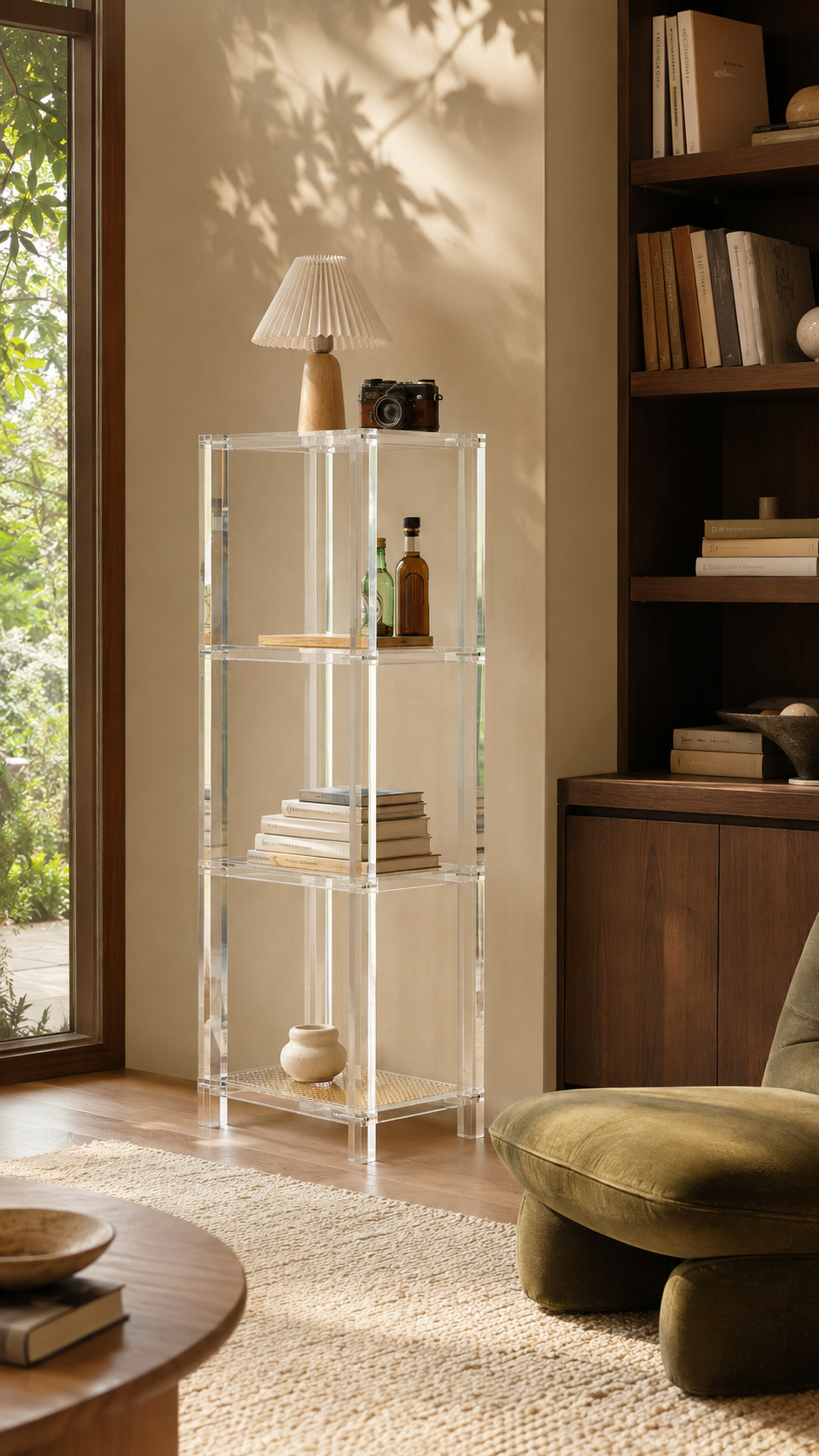
3. Material Innovation: How Synthetic Crystal, Resin, and Platinum Acrylic Are Expanding Design Possibilities
The rise of transparent furniture is not simply an aesthetic movement. It represents a deeper transformation in how designers approach materials.
For many decades, luxury design relied heavily on established materials with strong cultural associations. Marble represented timeless elegance. Wood represented craftsmanship and authenticity. Metal represented precision and durability.
While these materials remain valuable, contemporary projects increasingly require materials that provide greater creative freedom.
This is where synthetic crystal, high-end resin, and platinum acrylic demonstrate their importance.
Synthetic crystal furniture provides designers with the ability to create exceptional optical effects while maintaining a refined and luxurious appearance. The material’s transparency allows furniture to interact with surrounding environments, making it particularly suitable for statement pieces.
Applications such as crystal dining tables, coffee tables, reception desks, and sculptural furniture elements demonstrate how synthetic crystal can transform functional objects into artistic focal points.
High-end resin introduces another dimension by combining craftsmanship with customization. Unlike standardized materials, resin allows designers to control visual characteristics during the creation process. Color variations, embedded elements, layered structures, and surface effects can all be customized according to the project requirements.
This makes resin particularly valuable for projects where originality is essential.
A luxury restaurant may require a signature dining table that reflects its concept. A boutique hotel may need a unique decorative element that reinforces its identity. A private residence may require furniture that represents the personality of the owner.
In each situation, customized resin furniture provides possibilities that conventional materials cannot easily achieve.
Platinum acrylic represents another important development because it bridges the gap between transparency and structural versatility. Its refined appearance and adaptability allow designers to explore larger-scale applications while maintaining a sophisticated visual language.
Recent design exhibitions have demonstrated growing interest in transparent materials, resin applications, and innovative approaches to light interaction, showing that designers are increasingly using these materials not only for functionality but also as tools for artistic expression.
The importance of these materials extends beyond appearance.
They represent a new philosophy of design where materials are not simply selected after a concept has been created.
Instead, materials become part of the creative process itself.
They influence form.
They influence atmosphere.
They influence emotion.
For this reason, companies specializing in synthetic crystal, architectural resin, and platinum acrylic furniture are becoming increasingly important partners for architects and designers seeking to create distinctive modern spaces.
4. Transparent Furniture in Luxury Hospitality and Commercial Spaces: Creating Memorable Brand Experiences
The increasing adoption of transparent furniture in luxury hospitality and commercial environments reflects a fundamental change in how brands use physical spaces to communicate identity. In the past, furniture selection was often considered a functional decision made after architectural planning was completed. Today, leading hotels, restaurants, retail brands, and commercial developers increasingly recognize furniture as an essential component of the overall brand experience.
In highly competitive markets, a visually distinctive environment has become an important advantage. Customers and guests are no longer influenced only by the quality of services or products; they are also influenced by the atmosphere, emotional impression, and uniqueness of the physical environment. A carefully designed interior can become a powerful communication tool that reinforces brand positioning and creates lasting memories.
This shift has increased demand for statement furniture pieces that can serve as visual landmarks within a space. Transparent materials are particularly effective in achieving this goal because they create a balance between visual impact and spatial openness.
For luxury hotels, the lobby represents one of the most important areas for creating a first impression. A reception area must communicate professionalism, exclusivity, and hospitality within seconds. Traditional materials such as stone, wood, and metal remain valuable choices, but customized transparent furniture introduces a different level of visual expression.
A synthetic crystal reception desk, for example, can transform a functional hospitality element into an architectural feature. Through precise shaping, polished surfaces, and integrated lighting solutions, the furniture can create a sense of sophistication while maintaining a light and contemporary atmosphere.
The same principle applies to luxury restaurants. In premium dining environments, furniture contributes directly to the emotional quality of the experience. A custom synthetic crystal dining table can reflect surrounding lighting and architectural details, creating a dynamic relationship between guests, furniture, and space. A high-end resin table can introduce artistic depth through customized layers, colors, and textures, allowing the furniture itself to become part of the restaurant’s identity.
Retail and commercial spaces are also increasingly adopting transparent materials to create distinctive environments. Luxury brands understand that physical spaces are no longer simply locations for transactions; they are platforms for storytelling. A platinum acrylic display structure, transparent partition, or illuminated furniture installation can strengthen a brand’s image by communicating innovation, refinement, and exclusivity.
According to research from Deloitte’s Global Powers of Luxury Goods Report, luxury consumers are increasingly influenced by experiences, personalization, and emotional connections rather than traditional indicators of value alone. This trend has encouraged luxury brands to invest in environments that create memorable interactions with customers.
Transparent furniture aligns naturally with this evolution because it allows brands and designers to create environments that are visually distinctive while remaining adaptable to different architectural concepts.
The future of luxury commercial design will therefore depend not only on selecting beautiful materials but on understanding how materials contribute to human experience.
5. The Importance of Craftsmanship and Engineering in Transparent Furniture Production
Although transparent furniture often appears visually simple, achieving high-quality results requires advanced manufacturing expertise and careful engineering. The purity and clarity that make transparent materials attractive also make them technically demanding because every detail becomes visible.
For luxury projects, the difference between ordinary transparent furniture and exceptional transparent furniture is often found in the manufacturing process.
Synthetic crystal furniture requires precise control over dimensions, surface finishing, edge treatment, and optical quality. Since transparency allows viewers to observe the internal structure of the material, imperfections that may remain unnoticed in traditional furniture become immediately apparent.
A premium synthetic crystal table, for example, requires careful polishing techniques to achieve smooth surfaces and refined reflections. The thickness of the material, structural support system, and connection methods must also be carefully considered to maintain both beauty and reliability.
High-end resin furniture presents different technical challenges. Because resin allows designers to create customized visual effects, manufacturers must understand how to control transparency, color consistency, embedded elements, and curing processes. A large resin table or architectural panel is not simply a decorative object; it is a carefully engineered combination of material science and craftsmanship.
Platinum acrylic applications also require specialized knowledge. While the material provides excellent transparency and design flexibility, successful implementation depends on understanding structural requirements, fabrication methods, and installation conditions.
This is why collaboration between designers and manufacturers has become increasingly important in contemporary luxury projects.
Architects and interior designers often develop ambitious concepts that require specialized knowledge to transform them into reality. A professional manufacturing partner can provide essential guidance during the early design stages, helping determine suitable materials, production methods, and technical solutions.
The importance of this collaborative approach is recognized across the architecture and design industries. Organizations such as the Royal Institute of British Architects (RIBA) have emphasized the value of integrated collaboration between architects, specialists, engineers, and suppliers in achieving successful project outcomes.
For transparent furniture, this collaboration is particularly valuable because the final result depends on the relationship between artistic vision and technical execution.
A successful piece of transparent furniture is not created through material alone.
It is created through the combination of design intelligence, engineering precision, and manufacturing expertise.
.png)
6. The Future of Transparent Furniture: From Material Innovation to New Forms of Luxury Expression
The development of transparent furniture represents a larger transformation taking place within contemporary interior design. As architects, designers, and brands continue searching for more meaningful ways to create spaces, materials are becoming increasingly important as tools for emotional and experiential design.
Synthetic crystal, high-end resin, and platinum acrylic represent more than alternative material choices. They represent a new approach to creating relationships between furniture, architecture, and human experience.
In the future, furniture will continue moving beyond traditional categories. A table will not only be a table. A lighting structure will not only provide illumination. A decorative element will not only serve aesthetic purposes.
Instead, these elements will increasingly become integrated expressions of design identity.
This evolution is particularly relevant for luxury projects where uniqueness and differentiation are essential. Standardized furniture collections can provide efficiency, but they rarely offer the level of personalization required by high-end environments.
The most successful luxury spaces of the future will likely be defined by carefully selected signature elements that create emotional connections with users.
Transparent furniture is well positioned within this future because it possesses qualities that align with contemporary design priorities:
It supports visual openness.
It interacts with natural and artificial light.
It allows customization.
It creates artistic possibilities.
It strengthens spatial identity.
For designers, these characteristics provide new opportunities to explore forms and concepts that were previously difficult to achieve.
For brands and developers, they provide opportunities to create environments that are memorable and recognizable.
For manufacturers specializing in synthetic crystal, architectural resin, and platinum acrylic furniture, the challenge is not simply producing attractive objects. The challenge is developing complete solutions that connect creative concepts with reliable manufacturing processes.
This is where companies such as ZYRA contribute value by combining material innovation, engineering capability, and customized production methods to support complex luxury interior projects.
The future of transparent furniture will not be defined by replacing traditional materials.
Instead, it will be defined by expanding the possibilities of design.
Through the combination of advanced materials, craftsmanship, and creative collaboration, transparent furniture is becoming an important symbol of contemporary luxury — a symbol that represents openness, innovation, and the ability to transform imagination into physical space.
Conclusion: Transparent Furniture as a New Language of Modern Luxury
The rise of transparent furniture reflects a fundamental change in how modern spaces are designed and experienced. Luxury is no longer defined only by expensive materials or decorative complexity. It is increasingly defined by originality, emotional connection, and the ability to create unforgettable experiences.
Synthetic crystal furniture, high-end resin furniture, and platinum acrylic solutions demonstrate how material innovation can redefine the relationship between furniture and architecture.
They allow designers to create pieces that are functional while also being artistic, practical while also emotional, and visually refined while also technically advanced.
In luxury residences, hotels, restaurants, and commercial environments, transparent furniture has the ability to become more than an interior element.
It becomes a statement of identity.
It becomes part of the architectural language.
It becomes a lasting memory within the space.
As the future of interior design continues moving toward personalization, innovation, and experience-driven environments, transparent furniture will continue to play an increasingly important role in shaping the next generation of luxury spaces.


