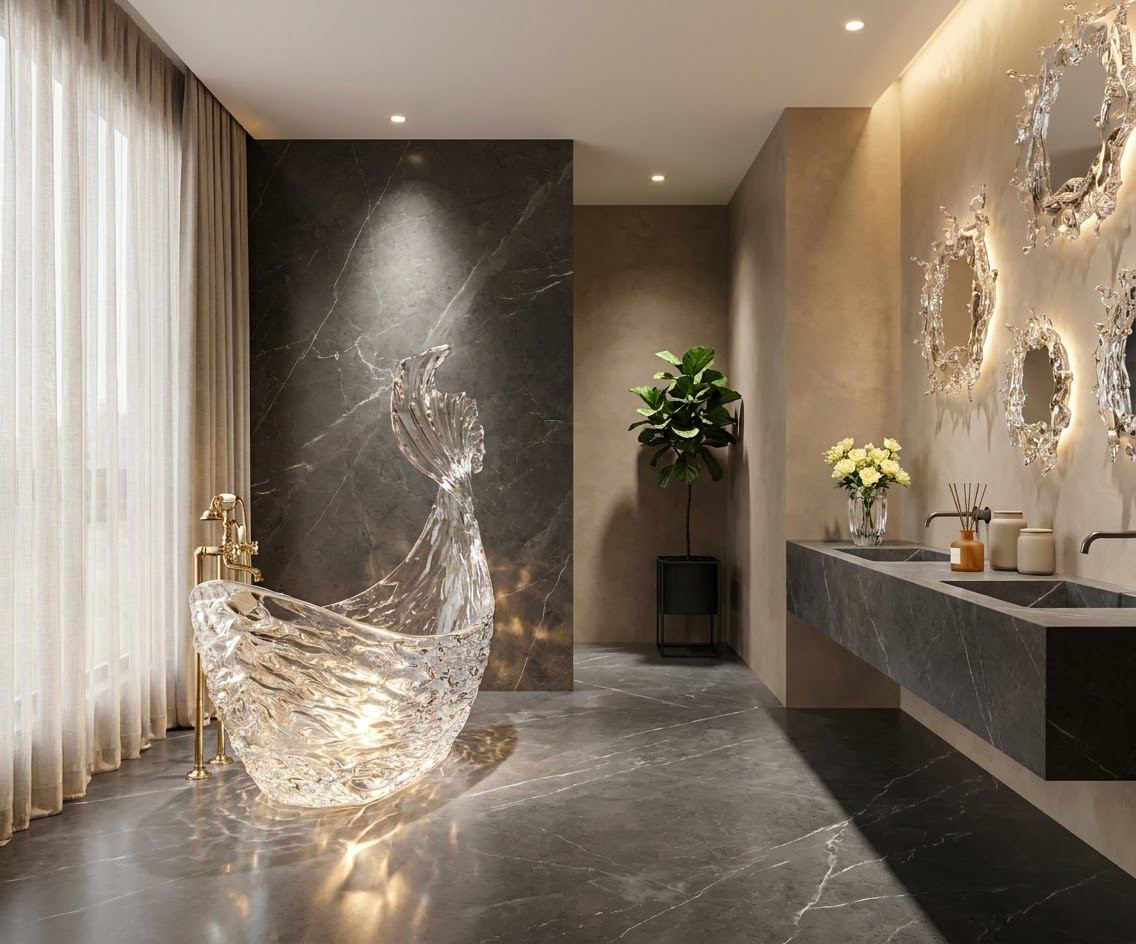

In 2026, luxury real estate development projects increasingly prioritize synthetic crystal furniture to elevate high-end residential and commercial spaces. As interior designers seek statement pieces that combine durability with aesthetic appeal, supply chain teams face mounting pressure to deliver custom orders without compromising on standards. This guide breaks down actionable strategies for managing synthetic crystal furniture supply chains, with insights tailored to industry experts overseeing large-scale development portfolios.
1. Core Material Sourcing: Foundation of Synthetic Crystal Furniture Quality
The quality of any synthetic crystal furniture piece starts with raw material selection. For 2026 projects, supply chain managers must vet suppliers that can deliver consistent material grades across large batch orders. This section explores how to align sourcing strategies with project-specific quality requirements.
1.1 High-Purity Optical-Grade Materials: Why Grade Matters
High-purity optical-grade materials are the gold standard for premium synthetic crystal furniture, as they ensure clarity, light refraction, and structural uniformity. For real estate projects requiring matching sets of synthetic crystal tables and chairs, even minor variations in material purity can lead to visible differences in finished pieces.
Key sourcing criteria for 2026 include:
Minimum 99.99% silica purity to avoid clouding or discoloration
Consistent refractive index across all material batches
Certified compliance with international safety standards for furniture use
Traceability documentation from raw material production to fabrication
1.2 Supplier Qualification for Large-Scale Real Estate Orders
Not all synthetic crystal material suppliers can support the volume and consistency demands of full-scale real estate development projects. In 2026, top supply chain teams use a multi-stage qualification process to reduce risk before placing large orders.
Critical qualification steps:
Audit production facilities to verify capacity for batch consistency
Request sample material lots to test for high surface hardness and clarity
Review past project portfolios with similar luxury furniture requirements
Evaluate sustainability practices, as 78% of 2026 luxury buyers prioritize eco-friendly materials

2. Production Process Optimization: Speed Without Compromising Craft
Custom synthetic crystal furniture often requires hand-finishing steps that can extend lead times. For real estate projects with tight move-in deadlines, production teams must streamline workflows while preserving the precision that defines high-end pieces. This section covers 2026’s most effective production optimization tactics.
2.1 Digital Twin Technology for Pre-Production Validation
In 2026, leading furniture manufacturers use digital twin technology to simulate synthetic crystal furniture production before cutting raw materials. This reduces costly reworks and ensures that custom designs meet interior designer specifications at the first attempt.
Benefits for real estate supply chains:
Reduces pre-production approval time by up to 40%
Allows stakeholders to visualize synthetic crystal tables and chairs in 3D
Identifies structural or aesthetic issues early in the process
Creates a digital reference for maintaining batch consistency across orders
2.2 Modular Production Workflows for Batch Consistency
Modular production is a game-changer for delivering consistent batches of artificial crystal furniture across large real estate portfolios. By standardizing core production steps while allowing for custom finishes, teams can speed up output without sacrificing uniformity.
Key modular production best practices for 2026:
Standardize base components for synthetic crystal chairs to reduce setup time
Assign dedicated production cells to specific furniture categories
Implement in-line quality checks at every production stage
Use automated cutting tools to ensure identical dimensions across all pieces in a batch

3. Quality Control Protocols: Ensuring Uniformity Across Every Batch
Quality control is non-negotiable for synthetic crystal furniture, especially when multiple units are intended for the same property. In 2026, advanced testing methods make it easier to catch inconsistencies early, reducing delays and post-delivery issues. This section outlines the QC steps every real estate supply chain should include.
3.1 Performance Testing for Durability and Safety
High surface hardness is a key selling point for synthetic crystal furniture, but it must be verified through rigorous testing. For real estate projects, furniture must withstand heavy use while maintaining its appearance over time.
Mandatory performance tests for 2026 orders:
Scratch resistance testing to validate high surface hardness ratings
Load-bearing testing for synthetic crystal tables and seating pieces
Temperature fluctuation testing to prevent cracking in climate-controlled spaces
Chemical resistance testing for hospitality and commercial project applications
3.2 Visual Consistency Audits for Aesthetic Alignment
Even with top-tier materials, visual variations can occur across batches of synthetic crystal furniture. For interior designers focused on cohesive space design, these differences can delay project approvals.
Visual audit steps for batch consistency:
Compare finished pieces against a master sample approved by the design team
Use color-matching technology to ensure uniform clarity and tone
Inspect edge finishes and polishing quality across every unit
Document all inspection results with photos for full supply chain transparency

4. Supply Chain Visibility: Keeping Projects On Schedule
Real estate development projects operate on tight timelines, and delays in furniture delivery can push back occupancy dates. In 2026, supply chain teams rely on real-time tracking tools to monitor synthetic crystal furniture orders from production to installation. This section explains how to build visibility into every stage of the supply chain.
4.1 Real-Time Tracking for Production and Logistics
Cloud-based supply chain platforms allow project managers to track the status of synthetic crystal furniture orders in real time. In 2026, 62% of top real estate firms use these tools to reduce lead time uncertainty.
Core tracking features to prioritize:
Live production progress updates from manufacturing facilities
Shipping location tracking with estimated delivery windows
Customs clearance status for international orders
Automated alerts for potential delays or quality issues
4.2 Contingency Planning for Supply Chain Disruptions
Even with careful planning, disruptions can impact synthetic crystal furniture delivery timelines. In 2026, resilient supply chains build contingency plans into every project to avoid costly setbacks.
Effective contingency strategies:
Maintain relationships with 2-3 backup material suppliers for critical orders
Buffer 10-15% extra lead time for custom artificial crystal furniture orders
Pre-approve alternative finish options in case of material shortages
Partner with local installation teams that can adjust schedules on short notice

5. 2026 Case Study: Successful Rollout for a Luxury Residential Tower
To illustrate these strategies in action, let’s examine a 2026 luxury residential development project in Miami that included 120 units fitted with custom synthetic crystal furniture. The project team delivered all pieces on time, with 99.8% batch consistency across all units.
5.1 Project Scope and Stakeholder Requirements
The 45-story tower required synthetic crystal tables and chairs for every unit’s dining area, plus custom statement pieces for common spaces. Interior designers specified high-purity optical-grade materials and a uniform polished finish across all units.
Key project challenges:
Tight 6-month production and delivery timeline
Strict consistency requirements across 120 identical unit sets
Need for high surface hardness to withstand residential use
Coordination with multiple interior design teams for common areas
5.2 Results and Key Takeaways for Industry Experts
By implementing the strategies outlined in this guide, the project team delivered all synthetic crystal furniture orders 12 days ahead of schedule. Post-installation inspections found zero material defects and perfect visual consistency across all residential units.
Key takeaways for 2026 real estate supply chain teams:
Invest in pre-production digital validation to reduce rework
Prioritize material suppliers with proven batch consistency track records
Use real-time tracking to align furniture delivery with construction milestones
Conduct mid-production quality audits to catch issues early
For industry experts overseeing real estate development projects, mastering synthetic crystal furniture supply chain management is key to delivering luxury spaces on time and on budget. By focusing on material quality, optimized production, rigorous QC, and full supply chain visibility, teams can balance product excellence, speed, and batch consistency in even the most complex 2026 projects.

READ MORE:
- Mobili in Cristallo Sintetico Curve: Realizzare Senza Deformazioni
- Mobili in Cristallo Sintetico: Eliminare Giunzioni Visibili nel Lusso
- From Design Concept to Physical Product: Synthetic Crystal Furniture Prototyping, Sampling, and Custom Production
- How Synthetic Crystal Furniture Improves Hotel FF&E Delivery Efficiency: Coordination, QC, and Installation Strategies for 2026
- Synthetic Crystal Furniture: How to Maintain Consistency Between Unique Design and Scalable Manufacturing for Commercial Spaces
- How Synthetic Crystal Furniture Unifies Design and Quality in 2026 High-End Residential Customization
- Global Interior Project Solutions: How to Coordinate Cross-Border Supply, Customization, and International Delivery?
- Architectural Interior Solutions: How to Address Complex Spaces, Engineering Coordination, and Final Project Execution?
- Solutions for Design Studios: How to Turn Client Visions into Custom Products with Professional Manufacturing Support?


