In commercial space design, material selection is never merely a decorative matter. It directly affects brand image, spatial experience, operational efficiency, and customer perception. An excellent commercial space should not only look visually appealing at first glance, but also remain stable, attractive, and easy to maintain over long-term use, while accurately communicating the brand’s positioning and value.
Whether in high-end retail stores, brand showrooms, hotel lobbies, clubhouse spaces, office reception areas, art exhibition spaces, or restaurant interiors, designers and brand owners are placing increasing importance on the expressive power of materials. Compared with traditional glass, metal, wood, or standard acrylic materials, platinum acrylic has become a highly competitive material choice for commercial spaces thanks to its premium visual texture, stable durability, and flexible customization capabilities.
Platinum acrylic is not simply an upgraded version of ordinary acrylic. It places greater emphasis on refined surface gloss, visual depth, decorative performance, and commercial display value. When combined with lighting, spatial structure, and brand presentation, platinum acrylic can create a transparent, luxurious, modern, and high-end atmosphere. Therefore, it is not only a decorative material, but also a design language that helps enhance the overall value of commercial spaces.
1. Why Commercial Spaces Are Paying More Attention to Material Selection
The biggest difference between commercial spaces and residential spaces lies in the complexity of their usage scenarios. Residential spaces mainly serve personal living needs, while commercial spaces are responsible for displaying the brand, attracting customers, encouraging consumption, improving experiences, and creating memorable impressions.
The material quality of a brand store directly affects a customer’s first impression of the brand level. The refinement of display props in a showroom influences the perceived value of the products. The premium quality of decorative materials in a hotel lobby or clubhouse affects customers’ expectations of service quality. Therefore, materials are not merely background elements in a space; they are an important part of brand expression.
In the past, common materials used in commercial spaces included glass, metal, stone, wood veneer, and ordinary acrylic. Each of these materials has its own advantages, but also certain limitations. For example, glass is transparent but heavy and fragile; metal has a strong texture but can feel cold; stone looks premium but involves higher cost and construction pressure; wood is warm but sometimes lacks transparency in modern luxury spaces; ordinary acrylic is lightweight, but its visual expressiveness is relatively limited.
The advantage of platinum acrylic lies in its ability to balance visual quality, practical performance, and processing flexibility. It can deliver a transparent effect similar to glass while being lighter and safer. It can also offer a refined, metallic-like gloss without appearing as heavy or cold as large areas of metal. In addition, it can be customized according to the needs of commercial spaces, meeting the design requirements of different brands, scenarios, and budget levels.
2. Core Reason One: Premium Visual Texture That Enhances the Level of Commercial Spaces
One of the most outstanding advantages of platinum acrylic is its strong premium visual performance. Commercial space design places great emphasis on the “first impression” because customers often form an initial judgment of a brand’s positioning and space quality within just a few seconds of entering.
Platinum acrylic has a delicate surface gloss and excellent transparency. Under lighting, it creates a soft and layered reflective effect. This visual effect is neither as intense as mirror-finish materials nor as inexpensive-looking as ordinary plastic materials. Its premium quality comes from the combined effect of light, color, and surface texture, making it especially suitable for luxury, modern, artistic, high-end retail, and brand display spaces.
In high-end retail spaces, platinum acrylic is often used for display cabinets, product stands, jewelry display platforms, brand signage backgrounds, and decorative structures. It can reduce the heavy appearance of display props, allowing the products themselves to become the visual focus, while also enhancing the overall display quality through its own gloss and texture. Products such as jewelry, perfume, cosmetics, trendy art pieces, and high-end home accessories are especially suitable for display with platinum acrylic.
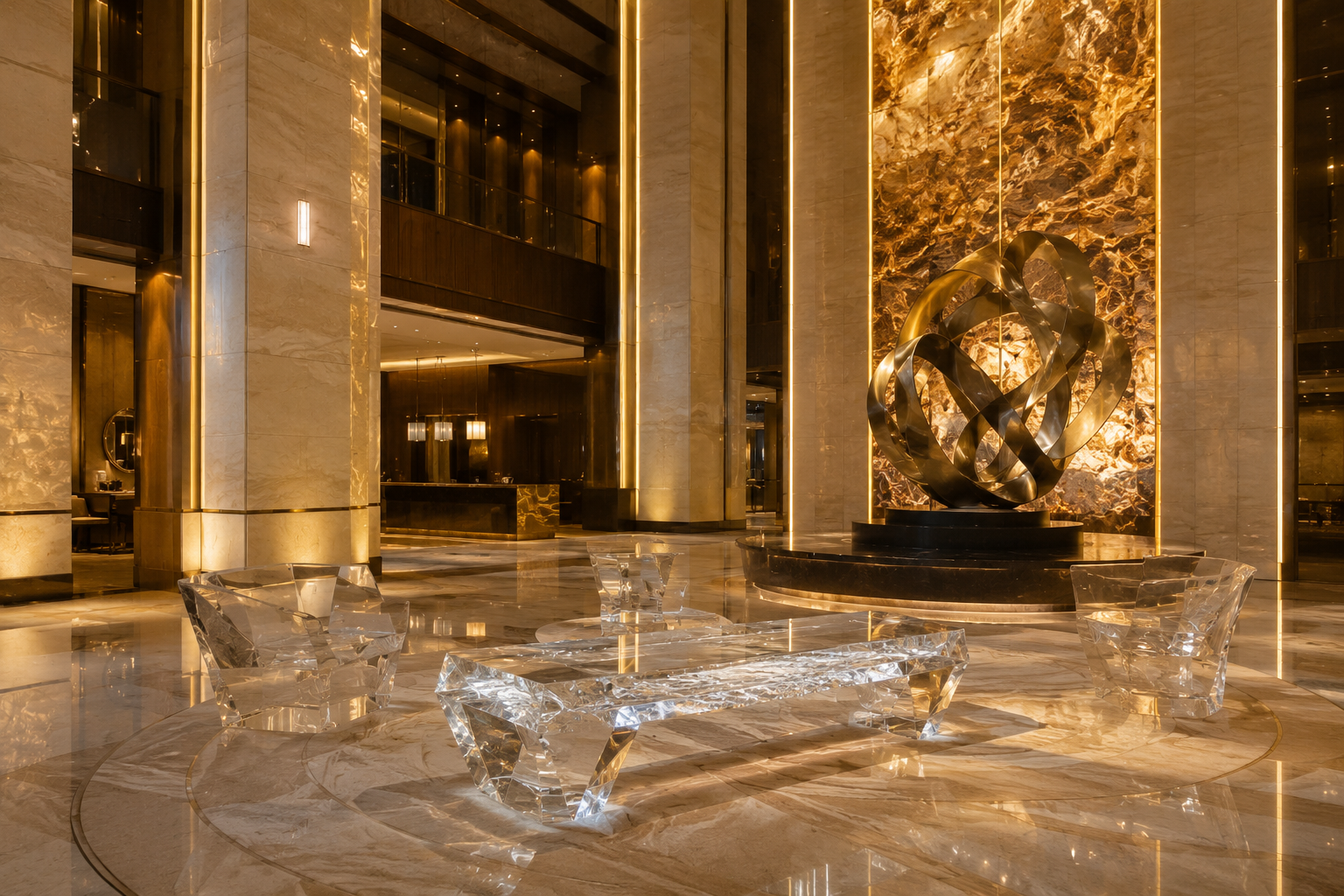
In hotels, clubhouses, and office reception spaces, platinum acrylic can also be used for feature walls, partitions, art installations, reception desk decoration, and lighting structures. It makes spaces appear brighter, lighter, and more modern, avoiding the dullness often caused by traditional decorative materials. Especially in commercial spaces with limited area, the transparent nature of platinum acrylic can reduce visual pressure and make the space look more open.
More importantly, platinum acrylic works very well with lighting design. In commercial spaces, lighting is not only used for illumination, but also for creating atmosphere and guiding visual attention. When platinum acrylic is combined with concealed light strips, spotlights, or localized lighting, it can create soft light-and-shadow effects, giving the space more depth and a stronger sense of memorability. This interaction between material and light is difficult to achieve with ordinary decorative panels.
For commercial brands, premium materials bring more than beauty; they also create trust. Customers judge whether a brand is professional, detail-oriented, and worth purchasing from based on the materials used in its space. The refined texture of platinum acrylic helps brands build a more high-end, modern, and quality-driven visual identity.
3. Core Reason Two: Strong Durability for High-Frequency Commercial Environments
Materials used in commercial spaces must not only look good, but also withstand long-term use. Compared with residential spaces, commercial spaces usually have higher foot traffic, more frequent use, and more intensive cleaning and maintenance requirements. As a result, they demand higher standards for material stability, safety, and durability.
Compared with glass, platinum acrylic is lighter and offers better impact resistance. In areas that require display, partitioning, or decoration, glass can provide transparency, but it also increases weight, safety concerns, and installation difficulty. Especially in shopping malls, showrooms, children’s activity areas, pop-up stores, and high-interaction commercial spaces, material safety is extremely important. Platinum acrylic can maintain visual appeal while reducing safety risks caused by breakage.
In addition, platinum acrylic has stable surface performance, making it suitable for long-term commercial display and decorative use. Commercial spaces face daily customer contact, cleaning, lighting exposure, and environmental changes. If a material easily deforms, fades, or loses its gloss, it will affect the overall image of the space. Under normal use and maintenance conditions, high-quality platinum acrylic can maintain its appearance well, helping commercial spaces remain clean, refined, and visually appealing over time.
Ease of maintenance is another key factor when selecting materials for commercial spaces. For retail stores, hotels, restaurants, and showrooms, cleaning efficiency directly affects operating costs. If a material easily collects dust, is difficult to wipe clean, or requires complicated maintenance, it will increase management difficulty. Platinum acrylic has a relatively smooth surface and is easy to clean on a daily basis, making it suitable for commercial venues that need to maintain a bright, clean, and refined appearance for the long term.
From an operational perspective, material durability is directly related to long-term costs. Many commercial projects focus only on the initial purchase price of materials during the design stage, while ignoring later maintenance, replacement, and loss costs. Seemingly inexpensive materials may increase renovation costs if they age, break, or lose visual quality after a short period of use. The value of platinum acrylic is reflected not only in its initial decorative effect, but also in its stable long-term performance.
This is especially important in brand chain stores, showroom systems, and commercial display props, where material consistency and durability are critical. Brands often need to maintain a unified image across different stores, cities, or exhibitions. Platinum acrylic offers good processing consistency and display stability, helping brands achieve standardized visual presentation and a more unified, professional spatial image.
4. Core Reason Three: Flexible Customization for Different Commercial Space Design Needs
Commercial space design is rarely completely standardized. Different brands have different positioning, different spaces have different dimensions, and different products require different display methods. Therefore, whether a material has strong customization capabilities directly affects whether the design solution can be successfully implemented.
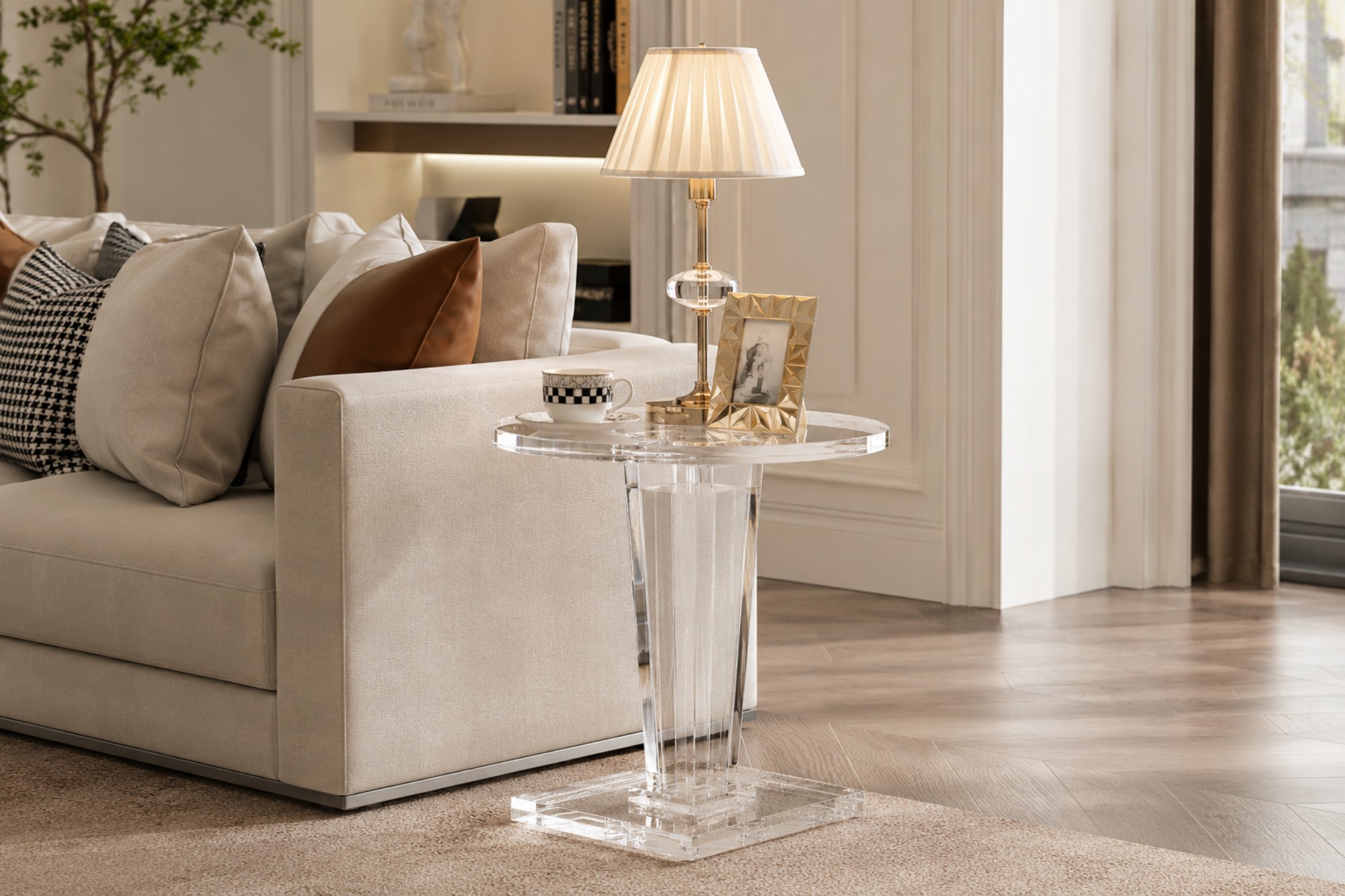
Platinum acrylic has excellent processing adaptability. It can be cut, engraved, heat-bent, bonded, polished, silk-screen printed, laser processed, drilled, and assembled in various ways according to project requirements. This means it can be made not only into simple panels, but also into display racks, lightbox structures, brand signage, art installations, product trays, partition screens, furniture components, and decorative forms.
For designers, platinum acrylic provides greater creative freedom. It can be used for flat decoration as well as three-dimensional structures. It can maintain a transparent or translucent effect, or present differentiated visuals through different colors, thicknesses, and surface treatments. If a commercial space wants to avoid homogeneous design, material flexibility is essential, and platinum acrylic supports richer design expression.
For brand owners, customization means that the space can better serve business goals. For example, a cosmetics brand may need transparent, lightweight, and refined display racks to highlight product bottle design. A jewelry brand may require glossy and premium display bases to enhance product value. An art showroom may need uniquely shaped installations to create a visual focal point. A corporate showroom may need customized display systems that incorporate brand colors and logos. Platinum acrylic can be adapted to all these specific needs.
Platinum acrylic is also suitable for use with other materials. It can be combined with metal, wood, stone, glass, lighting, electroplated components, and soft furnishings to create richer spatial layers. For example, when combined with metal, platinum acrylic enhances a modern luxury feel; when paired with wood veneer, it balances warmth and transparency; when integrated with lighting, it improves visual recognition; and when used with glass, it creates an even clearer and more refined spatial effect.
This flexible customization capability allows platinum acrylic to function not just as a single material, but as part of an entire commercial space system. From entrance signage to brand feature walls, from display cabinets to merchandising props, from decorative partitions to art installations, it can play a role in different areas and help create a unified and complete visual language.
5. Application Value of Platinum Acrylic in Different Commercial Spaces
In high-end retail stores, the value of platinum acrylic is especially obvious. The core goal of a retail space is to highlight products, attract customer attention, encourage customers to stay, and promote purchases. Display racks, shelves, product trays, and decorative props made of platinum acrylic can enhance display quality without taking attention away from the products themselves. Its transparency reduces visual clutter, while its gloss increases the refinement of the products.
In brand showrooms and exhibition spaces, platinum acrylic is suitable for product displays, information signs, interactive installations, booth structures, and visual wayfinding systems. Showrooms often need to communicate brand strength and product value quickly within a limited time, making material performance particularly important. Platinum acrylic can make display content clearer and more modern while giving the entire showroom a more professional appearance.
In hotels and clubhouse spaces, platinum acrylic can be used for feature walls, decorative screens, art pieces, lighting installations, and partial decorative structures. Hotels and clubhouses emphasize atmosphere, quality, and service experience, and the light luxury character of platinum acrylic fits these spaces very well. It does not feel as cold as large areas of metal or as heavy as traditional wood veneer. Instead, it creates a bright, refined, comfortable, and premium atmosphere.
In office spaces, platinum acrylic can be used for corporate reception desks, logo signage, meeting room partitions, culture walls, and display areas. Modern office spaces increasingly emphasize brand image and client reception experience. A high-quality reception background or brand display area can significantly enhance a company’s professional image. The modern appearance and customization capability of platinum acrylic help companies create a more recognizable office environment.
In restaurants, cafés, and lifestyle spaces, platinum acrylic can be used for bar decoration, menu displays, lighting structures, tabletop elements, and spatial installations. Today’s dining spaces sell not only food, but also experience and social atmosphere. A visually memorable material application can often become a highlight for customers to photograph and share, thereby increasing the space’s communication value.
6. Conclusion: Platinum Acrylic Is an Ideal Material for Enhancing the Value of Commercial Spaces
Overall, there are three core reasons why platinum acrylic is suitable for commercial spaces. First, it has a premium visual texture that enhances spatial quality and brand image. Second, it offers good durability and safety, making it suitable for high-frequency commercial environments. Third, it provides flexible customization capabilities that meet the needs of different brands, spaces, and design solutions.
Competition among commercial spaces is essentially a competition of experience, efficiency, and brand value. Excellent materials can make a space more beautiful, while also giving the brand stronger recognition and encouraging customers to stay, pay attention, and make purchases. Platinum acrylic is exactly this kind of material, combining aesthetic value with practical value.
For commercial projects that pursue modernity, light luxury, high-end quality, and differentiated expression, platinum acrylic can be used not only as a partial decorative material, but also as a key visual element in spatial design. It connects lighting, products, brand identity, and customer experience, making commercial spaces more refined visually, more stable in use, and more memorable in communication.
In the future, commercial space design will place greater emphasis on the comprehensive value of materials. Design approaches that simply pursue low cost or a single visual effect can no longer meet the needs of brand upgrading and consumer experience. With its premium appearance, durability, and flexibility, platinum acrylic will have broader application prospects in high-end retail, hotels and clubhouses, brand showrooms, office spaces, and artistic commercial environments.
Contact
LinkedIn: https://www.linkedin.com/in/adtender-zyra/?locale=zh_CN
Facebook: https://www.facebook.com/profile.php?id=61586259131631
Instagram: https://www.instagram.com/zzzzyyrraa4/
YouTube: https://www.youtube.com/@ZZZZyra-k7w
Office: (904) 258-3290
WhatsApp/Wechat: +86 18923188839


