In modern spatial design, materials are no longer merely basic elements that support function. They have become important media for expressing style, shaping atmosphere, and enhancing spatial quality. Whether in commercial displays, home furnishing, office environments, hotels, exhibition halls, retail stores, or other high-frequency-use spaces, designers and brands are paying increasing attention to the visual language and practical value conveyed by materials themselves. Among many new decorative materials, platinum acrylic has gradually become a preferred material in spatial design because of its transparency, lightness, refined appearance, stability, and durability.
Platinum acrylic is not simply an ordinary transparent sheet material. It offers a more premium visual effect, surface texture, processing adaptability, and spatial integration capability. It can present a clarity and brightness similar to glass while being lighter and easier to shape. It can also deliver a refined metallic-like luster without creating a heavy or cold visual impression. Therefore, in spaces that emphasize modernity, light luxury, technology, and brand recognition, platinum acrylic has outstanding application value.
1. Why Platinum Acrylic Is Suitable for Modern Spatial Design
Modern spatial design increasingly emphasizes a lightweight visual experience and high-quality expression. Traditional heavy materials may provide a sense of stability, but in certain commercial spaces, display areas, and refined residential settings, they can easily create a feeling of pressure. By contrast, platinum acrylic enters a space with a lighter visual presence, allowing furniture, installations, display racks, and decorative structures to maintain functionality while presenting a more transparent, dynamic, and premium visual effect.
Acrylic itself has excellent light transmission and plasticity. After being treated with a platinum-like finish, its surface appears more delicate, and light passing through the material creates soft refraction and reflection, making the space look brighter and more layered. For smaller spaces, this transparency can effectively reduce visual obstruction and make the area appear more open. For commercial display spaces, platinum acrylic can enhance the refinement of the display without distracting from the products themselves.
In addition, platinum acrylic has strong processing adaptability. It can be cut, heat-bent, engraved, polished, bonded, and combined with lighting, metal, wood, stone, and other materials. This high level of craftsmanship flexibility allows it to be used in various spatial design applications, such as acrylic furniture, brand display racks, transparent partitions, decorative panels, lighting installations, and signage systems. For projects that pursue personalized design and customized expression, platinum acrylic provides great design freedom.
2. Texture Value: How Platinum Acrylic Creates a Premium Spatial Atmosphere
A premium spatial impression does not come solely from expensive materials. It comes from the combined expression of material texture, proportion, light and shadow, and detail treatment. The advantage of platinum acrylic lies in its ability to enhance the overall refinement of a space through delicate gloss, clear edges, transparent volume, and a lightweight visual effect.
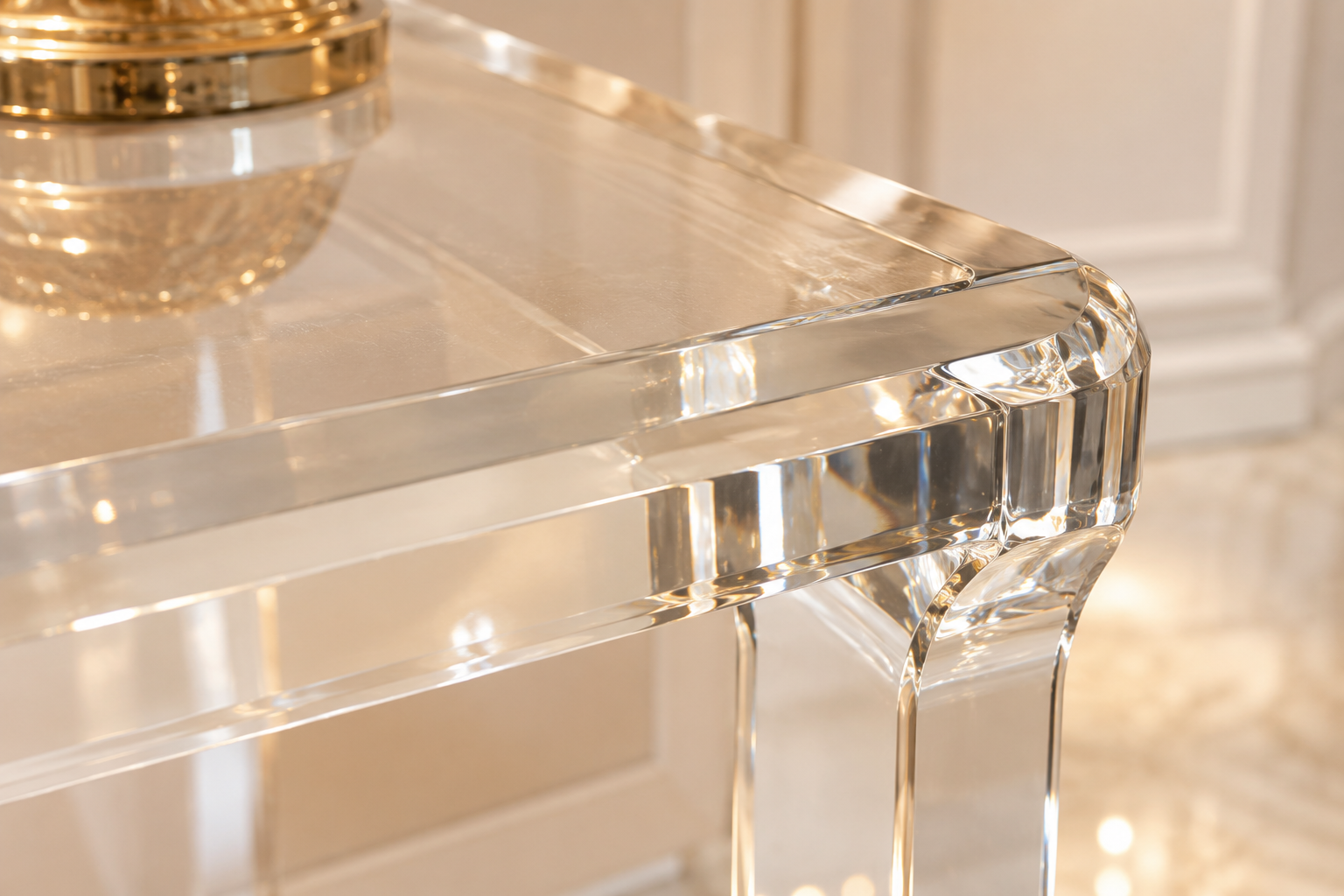
Visually, platinum acrylic has a strong modern decorative quality. It does not look cheap like ordinary plastic, nor does it feel overly cold and hard like traditional glass. After high-quality processing, its edges can appear crystal clear, while its surface can become smooth, bright, and full of light. When used for coffee tables, side tables, display shelves, storage racks, or decorative cabinets, it often creates a light-luxury, clean, simple, and design-oriented atmosphere.
Platinum acrylic also works well with other materials. When paired with metal, it enhances refinement and modernity. When combined with wood, it balances the warmth of wood with the transparency of acrylic, giving the space more depth. When matched with stone, it reduces the heaviness of stone and makes the overall composition lighter. When integrated with lighting, it amplifies refraction and reflection effects, forming a more artistic visual focus.
In commercial spaces, material texture often directly affects consumers' first impression of a brand. Using platinum acrylic to create display props, product stands, or brand signage can present products in a more high-end, clean, and orderly way. Especially for industries that emphasize visual experience, such as jewelry, beauty products, perfume, designer toys, and boutique home goods, platinum acrylic can support the product display without overpowering the product itself. It is highly suitable for premium visual merchandising.
3. Stability Value: From Structural Support to Spatial Security
The value of spatial materials cannot remain only at the visual level. They must also withstand long-term use. For furniture, display installations, and commercial display systems, stability is directly related to safety, user experience, and maintenance costs. Platinum acrylic is widely used not only because it is attractive, but also because it can provide reliable structural performance under proper design and processing conditions.
Stability first comes from the rigidity and thickness selection of the material itself. Different spatial applications have different requirements for acrylic sheet thickness, load-bearing capacity, and structural methods. For example, when used as a decorative panel, thinner specifications can be selected to emphasize lightness and aesthetics. When used for coffee tables, display platforms, or load-bearing shelves, thicker sheets and proper structural design are needed to strengthen support. Thicker is not always better; the material should be selected according to actual load, frequency of use, and modeling requirements.
Second, processing techniques directly affect the stability of platinum acrylic. Whether the edges are smoothly polished, whether the bonded areas are secure, whether the corners are properly treated, and whether the hole positions are accurately processed will all affect the service life and safety performance of the final product. High-quality platinum acrylic products usually require careful design in structural connection, corner treatment, and force distribution to reduce problems such as cracking, deformation, and shaking.
In spatial applications, stability is also reflected in the material's adaptability to environmental changes. Commercial and public spaces often have heavy foot traffic and high usage frequency. Furniture and display installations need to withstand repeated touching, moving, placement, and cleaning. If a material easily loosens, deforms, or suffers surface damage, it will affect the overall spatial image. Under reasonable use conditions, platinum acrylic can maintain good shape stability, allowing spatial installations to remain clean, firm, and orderly over time.
4. Durability Value: Anti-Aging and Maintenance Advantages in Long-Term Use
Durability is an important standard for evaluating whether a spatial material is worth the investment. Especially in commercial spaces, office spaces, and public display areas, a material must not only present a good effect when first installed, but also maintain stable appearance and function over long-term use. The durability value of platinum acrylic is mainly reflected in anti-aging performance, easy maintenance, impact resistance, and repairability.
Compared with some materials that are prone to moisture damage, deformation, or surface peeling, acrylic performs well in indoor environments. Platinum acrylic has a flat and smooth surface, does not easily accumulate dust, and is relatively easy to clean. In most cases, its surface can remain bright by using a soft cloth and neutral cleaning methods. For commercial stores, this easy-maintenance feature can effectively reduce daily management costs and keep the space clean, bright, and professional.
In terms of impact resistance, acrylic offers better safety advantages than ordinary glass. Glass is transparent, but it is heavy and can create safety risks when broken. Platinum acrylic is lighter and is less likely to break into sharp fragments when impacted. Therefore, in retail spaces, exhibition halls, children's activity areas, or public display environments with heavy foot traffic, platinum acrylic provides a higher level of safety.
Durability is also related to resistance to yellowing, staining, and abrasion. High-quality platinum acrylic, through better raw materials and processing techniques, can maintain good transparency and gloss for a long period. Although any material requires maintenance during long-term use, the advantage of platinum acrylic is that it can partially restore its surface effect through polishing, local repair, and proper cleaning. This maintainability gives it greater economic value in long-term spatial applications.
5. Spatial Application Value: Multi-Scenario Expansion from Furniture to Commercial Display
Platinum acrylic has a very wide range of spatial applications. It can be used as an independent furniture material, a decorative auxiliary material, or part of brand display and spatial structure. In different scenarios, its value may vary, but the core purpose remains the same: enhancing visual texture, strengthening functional expression, and optimizing spatial experience.
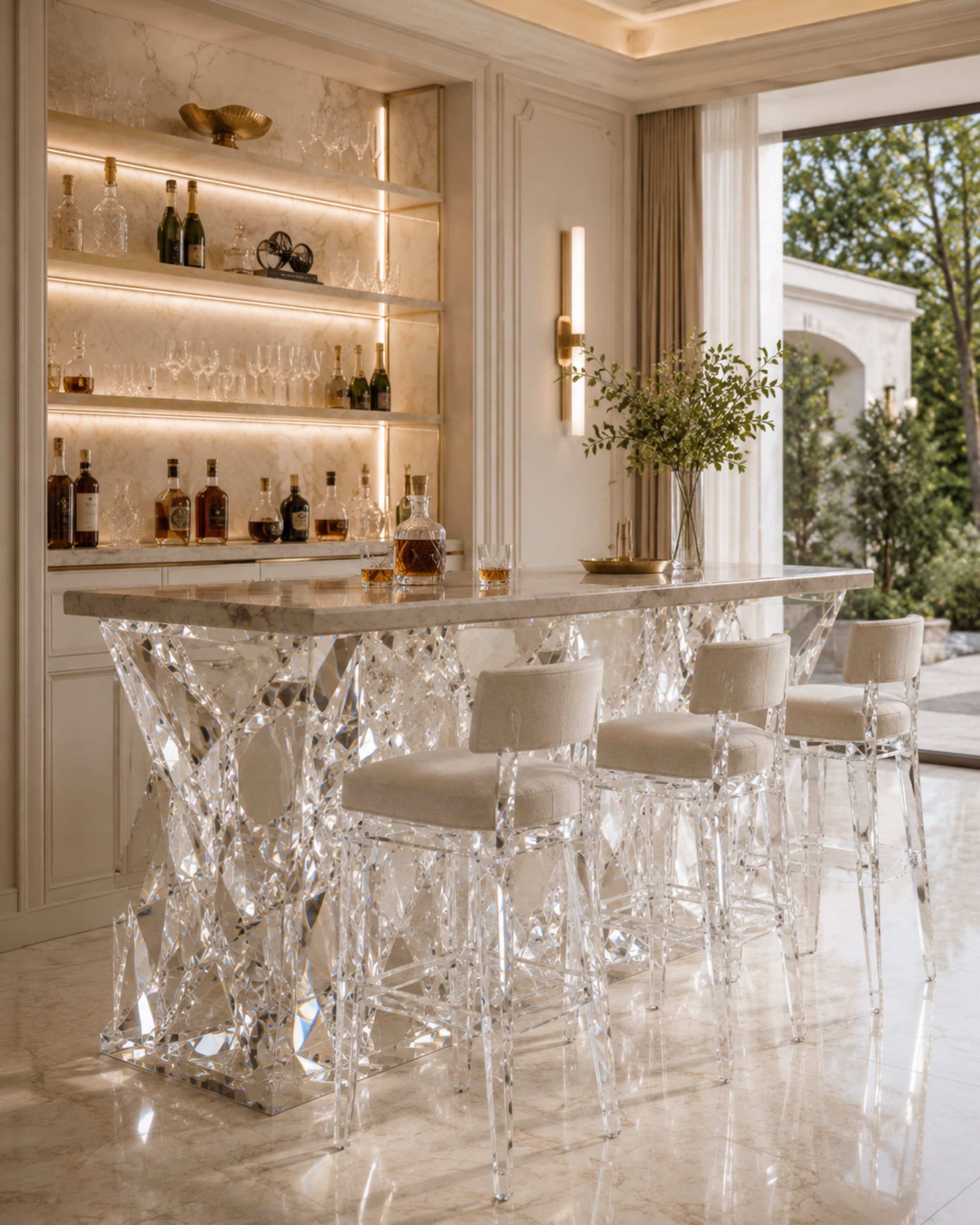
In residential spaces, platinum acrylic is commonly used for coffee tables, side tables, stools, storage shelves, decorative cabinets, trays, and art pieces. Because of its strong transparency, it does not create a strong sense of visual pressure when placed in living rooms, bedrooms, or studies. It is especially suitable for small apartments, modern minimalist interiors, light-luxury styles, and artistic spaces. Transparent or translucent furniture can reduce visual clutter and make the space feel lighter.
In commercial spaces, the value of platinum acrylic is even more prominent. Brand display racks, cosmetic display counters, jewelry holders, electronic product stands, perfume display bases, light box panels, and wayfinding signage can all be made with platinum acrylic. It can highlight products through its clear and bright material qualities, while also strengthening brand identity through customized colors, shapes, and lighting structures. For retail spaces that need to frequently update display themes, acrylic products also offer strong flexibility and replaceability.
In office spaces, platinum acrylic can be used for partitions, door signs, reception desk decoration, display walls, and corporate culture walls. It maintains the clean look required in modern offices while improving lighting and visual transparency through transparent or translucent effects. Compared with traditional solid partitions, acrylic partitions are lighter and more suitable for flexible office scenarios.
In hotels, art galleries, and high-end clubs, platinum acrylic can become part of a spatial focal point. For example, when used in art installations, lighting designs, stair handrail decoration, wall inserts, or display covers, it can achieve a balance between functionality and artistry. Especially when light passes through the edges of acrylic, the material produces a unique halo effect, giving the space stronger visual appeal and memorability.
6. Selection and Application Suggestions: How to Maximize the Value of Platinum Acrylic
To fully realize the spatial application value of platinum acrylic, it is not enough to focus only on the material itself. It is necessary to consider spatial function, usage frequency, structural requirements, and design objectives. Scientific material selection and reasonable design are key to the final result.
First, the appropriate material effect should be selected according to the spatial style. Transparent platinum acrylic is suitable for spaces that emphasize openness, simplicity, and lightness. Frosted effects are suitable for areas that require softer light and a certain level of privacy. Colored or translucent materials are more suitable for brand displays, art installations, and personalized visual merchandising. Different surface effects convey different spatial qualities, so material selection should serve the overall design language rather than simply pursue novelty.
Second, material thickness and structural form should be determined according to load-bearing requirements. Acrylic used for decoration can be light and flexible, while acrylic used for furniture or load-bearing display structures must consider thickness, support points, and connection methods. Especially in commercial displays, product weight, placement methods, and consumer interaction frequency should all be considered in advance to avoid safety issues caused by insufficient structural design.
Third, craftsmanship details determine the final quality. The premium look of platinum acrylic largely comes from edge treatment, polishing quality, assembly precision, and surface protection. If the cutting is rough, bonding marks are obvious, or corners are unevenly finished, even high-quality materials will lose their overall spatial effect. Therefore, when customizing acrylic furniture or display props, it is important to choose a supplier with mature processing capabilities to ensure that the design can be executed at a high standard.
Finally, post-installation maintenance should not be ignored. Although platinum acrylic offers good durability, sharp objects should still be avoided to prevent surface scratches. Strong corrosive cleaning agents should not be used, and long-term exposure to extremely high temperatures should be avoided. Proper maintenance can extend the service life of the material and help the space maintain a good visual condition over time.
Conclusion
From texture and stability to durability, the spatial application value of platinum acrylic is not limited to a single dimension. It is both a decorative material with modern aesthetic qualities and a functional material that meets practical usage needs. It enhances spatial texture with a transparent and lightweight visual effect, ensures usage stability through strong structural adaptability, and supports long-term spatial operation with easy maintenance, customization potential, and high safety performance.
In future spatial design, materials will increasingly emphasize comprehensive performance. A material that is only visually attractive but lacks stability and durability will struggle to withstand long-term use. A material that is merely practical but lacks visual quality will also fail to meet modern consumers' expectations for spatial experience. Platinum acrylic finds a balance among aesthetics, function, and commercial value.
Whether used in home furniture, commercial displays, office partitions, brand showcases, or art installations, platinum acrylic can give spaces a brighter, more refined, and more modern expression through its unique material language. For design projects that pursue high-quality spatial effects, platinum acrylic is not only a material choice but also a design strategy for enhancing spatial value.
Contact
LinkedIn: https://www.linkedin.com/in/adtender-zyra/?locale=zh_CN
Facebook: https://www.facebook.com/profile.php?id=61586259131631
Instagram: https://www.instagram.com/zzzzyyrraa4/
YouTube: https://www.youtube.com/@ZZZZyra-k7w
Office: (904) 258-3290
WhatsApp/Wechat: +86 18923188839


