In commercial space design, materials do more than provide structure and decoration. They directly influence visual quality, brand positioning, and customer experience. Spaces such as retail stores, showrooms, and hotels often need to leave a clear impression on visitors within a short period of time, making material texture, gloss, color, and detail especially important. As a decorative material that combines transparency, luxury, and modern aesthetics, platinum acrylic is increasingly being used in commercial displays, brand exhibitions, hotel decoration, and high-end custom spaces.
Compared with traditional glass, metal, or wood materials, platinum acrylic offers the lightweight, flexible, and highly processable advantages of acrylic, while its platinum tone creates a more refined and upscale visual effect. It can blend subtly into a space or become a visual focal point. It helps retail stores enhance the perceived value of products, showrooms strengthen their professional image, and hotels create a luxurious, comfortable, and memorable atmosphere.
1. Material Characteristics of Platinum Acrylic: Why It Naturally Looks Premium
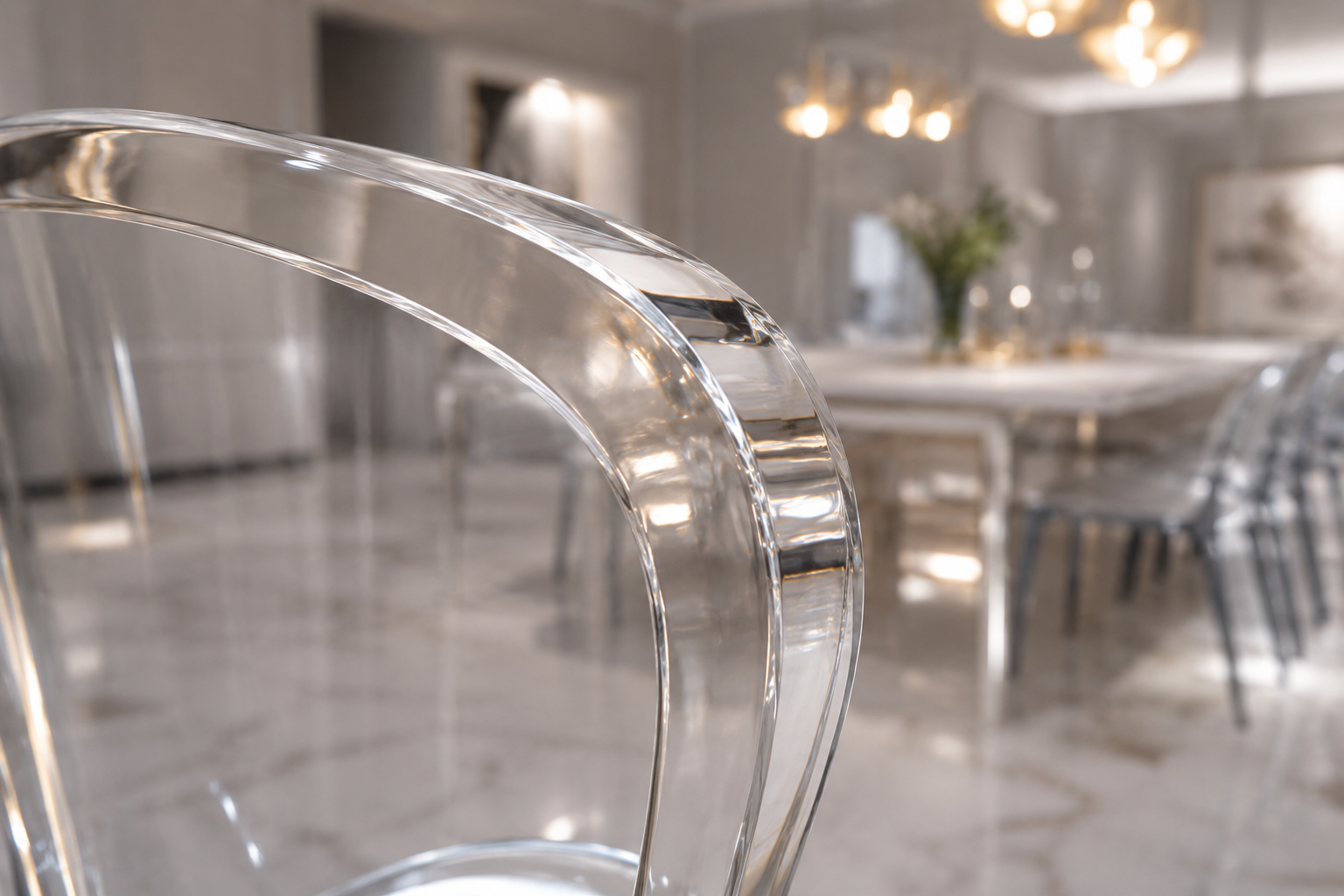
The reason platinum acrylic can enhance spatial quality first comes from the visual performance of the material itself. Acrylic has excellent light transmission, appearing more transparent than ordinary plastic, lighter than glass, and easier to process into complex shapes. When combined with a platinum color tone, it is no longer simply transparent or semi-transparent, but presents a soft metallic glow, delicate reflection, and a sense of light luxury.
In a space, platinum acrylic can create different layers through changes in lighting. Under natural light, it appears clean, bright, and gentle. Under artificial lighting, it produces subtle reflection and refraction, making the space feel richer and more dimensional. Especially in commercial environments, this material can make flat walls, cabinets, and display props appear more three-dimensional, reducing visual dullness.
Compared with glass, platinum acrylic is lighter, safer, and more suitable for customized irregular structures. Compared with metal, it does not feel overly cold or rigid, and its visual effect is softer. Compared with stone, it is less heavy and better suited to the modern commercial pursuit of lightness, elegance, and flexibility. Because of this unique quality between transparent material, metallic material, and decorative material, platinum acrylic is often used in areas where a higher spatial grade is required.
2. Application in Retail Stores: Enhancing Brand Display and Commercial Appeal
The core purpose of retail store design is to help customers quickly understand the brand positioning and encourage them to stay, browse, and purchase. The role of platinum acrylic in retail spaces is not merely decorative; it helps products establish a stronger sense of sophistication and value.
In jewelry, beauty, fragrance, fashion, streetwear, boutique retail, and luxury spaces, platinum acrylic can be used for display racks, presentation tables, window props, cashier counter decoration, brand logo backboards, and wall decorative lines. It provides a refined background for products without overpowering them. For example, in a beauty store, platinum acrylic display stands can make bottles, perfumes, and skincare products look cleaner and more transparent. In a jewelry store, it can enhance the brilliance of accessories through light refraction, giving customers a stronger impression of quality.
For retail stores, spatial quality often directly affects customers’ perception of price and brand value. The same product placed on an ordinary wooden shelf and placed on a finely polished acrylic display table with platinum gloss will communicate very different levels of value. Platinum acrylic makes display areas look cleaner, more modern, and more likely to create a first impression of being high-end, professional, and trustworthy.
In addition, when combined with lighting, platinum acrylic can effectively improve the attractiveness of window displays. Soft light strips hidden inside acrylic structures can create layers of light and shadow, keeping the window display visually striking even at night. For street-facing shops and mall stores, this material helps attract passing customers and increase store entry rates.
3. Application in Showrooms: Strengthening Visual Focus and Professional Image
Showroom spaces emphasize information delivery, brand expression, and product presentation. Whether it is a corporate showroom, technology showroom, furniture showroom, art exhibition space, or new product launch area, material selection influences how visitors perceive the strength of the brand. The advantages of platinum acrylic in showrooms are mainly reflected in creating visual focus, enhancing display layers, and strengthening a professional atmosphere.
In product display cabinets, platinum acrylic can be used as bases, supports, information plaques, protective covers, or background panels. It does not overwhelm exhibits like heavy materials do, but instead makes products stand out through transparency and reflection. For electronic products, models, art objects, and design samples, platinum acrylic can create a technological, precise, and modern atmosphere.
In corporate showrooms, platinum acrylic is also commonly used in wayfinding systems, brand walls, honor walls, and interactive display installations. Through engraving, screen printing, UV printing, thermoforming, and assembly, it can be integrated with company logos, brand slogans, and product information to create a unified visual system. Compared with ordinary printed graphics or traditional panels, platinum acrylic has a more refined surface, clearer details, and better suits the professional image companies want to communicate.
A common problem in showrooms is having complex content without clear focal points. Platinum acrylic can help designers establish hierarchy through local highlights. For example, placing a luminous platinum acrylic base beneath a key exhibit or using a platinum acrylic background installation in a core area can naturally guide visitors’ attention, make the circulation clearer, and improve communication efficiency.
4. Application in Hotels: Creating a Refined, Luxurious, and Comfortable Experience
Hotel spaces are different from ordinary commercial spaces. They need to look attractive while also making guests feel comfortable, relaxed, and surrounded by quality. The use of platinum acrylic in hotels is usually reflected in light luxury decoration, atmosphere creation, and detail enhancement.
In hotel lobbies, platinum acrylic can be used for reception background walls, front desk decoration, lighting structures, partition screens, signage systems, and art installations. The lobby is the first visual area guests encounter after entering the hotel, and the quality of materials directly affects their impression of the hotel’s standard. Platinum acrylic is not as strong as large areas of metal, nor as cold as glass. It creates refinement in a softer way, making it especially suitable for modern luxury hotels, boutique hotels, and high-end serviced apartments.
In guest rooms, platinum acrylic can be used for headboard decoration, wall lamps, trays, tabletop accessories, minibar decoration, and bathroom storage details. Its advantage is that it does not occupy too much visual space, yet it enhances overall refinement through gloss and material contrast. When paired with common hotel color palettes such as beige, coffee, gray, wood tones, and metal lines, it creates a warm yet premium spatial effect.
In hotel restaurants, lounges, corridors, and other public areas, platinum acrylic also plays a strong decorative role. When used as a screen, it separates spaces without completely blocking visibility. When used in lighting fixtures, it softens the light. When used as wall decoration, it adds reflective layers and creates a stronger sense of atmosphere. For hotels that value social media exposure, spaces with distinctive material details are also more likely to become photo-worthy backgrounds for guests.
5. The Design Logic of Combining Platinum Acrylic with Other Materials
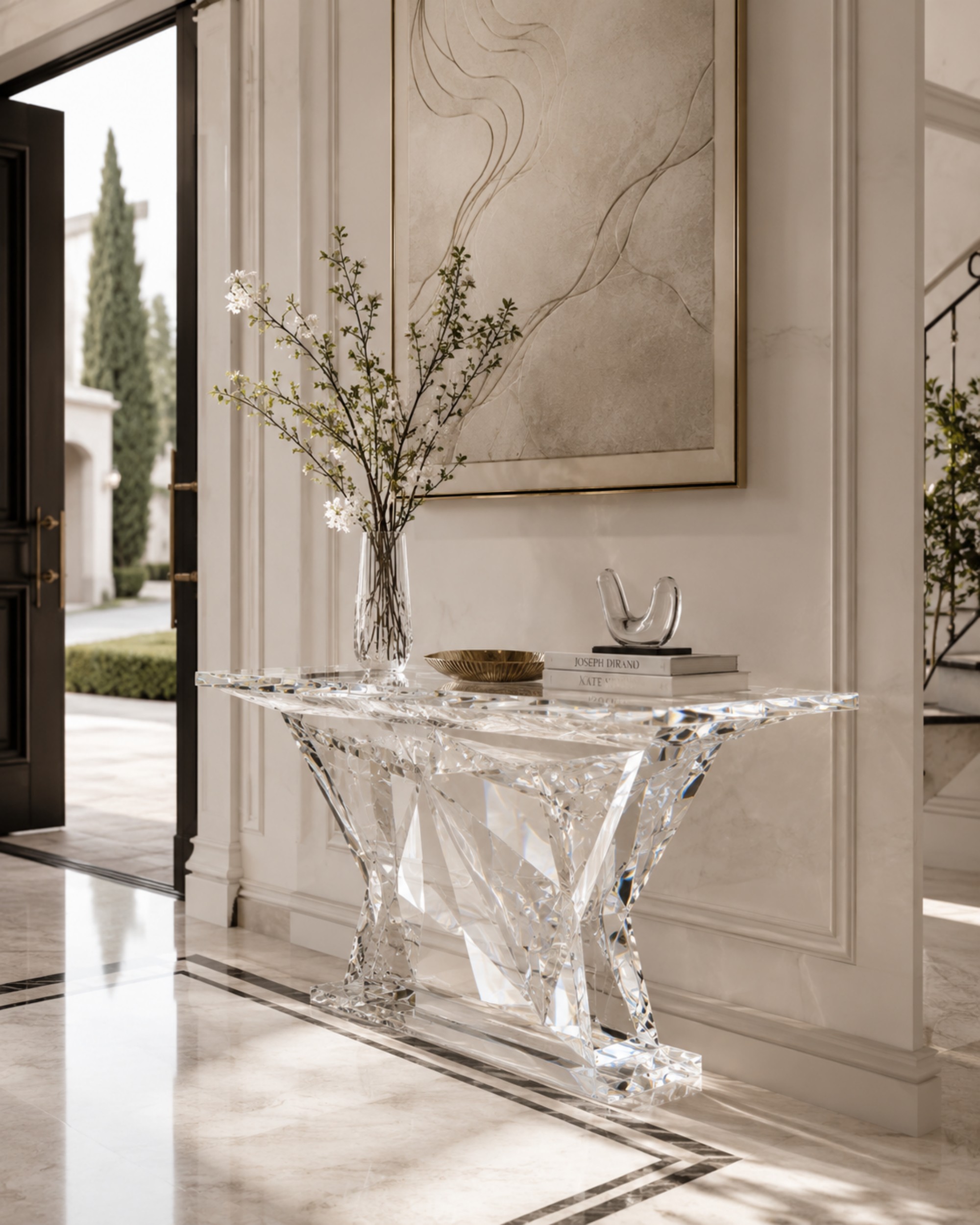
Although platinum acrylic has strong decorative qualities, truly improving spatial quality depends on proper coordination rather than simple accumulation. Excellent spatial design needs to consider the relationship between materials, including light, color, proportion, and placement.
First, platinum acrylic is highly suitable for combining with lighting. Through light transmission, reflection, and refraction, it can create rich visual layers. Hidden light strips, spotlights, and backlit designs can all enhance the material expression of platinum acrylic, making the space brighter and more refined. However, the lighting should not be too strong, as excessive brightness may cause glare. Soft, even, and locally emphasized lighting is more suitable.
Second, it pairs well with wood veneer. Wood brings warmth and a natural feeling, while platinum acrylic provides modernity and refinement. The combination prevents a space from feeling too cold or overly commercial. For example, in hotel lobbies or high-end retail stores, a wood veneer background with platinum acrylic lines can create a subtle yet premium decorative effect.
Third, platinum acrylic also coordinates well with metal materials. Metal trims, brushed stainless steel, champagne gold accessories, and platinum acrylic can work together to strengthen a light luxury style. However, proportion control is important. Too much metal can make the space look flashy, while using platinum acrylic as a local accent often creates a more refined effect.
In addition, it can also form contrasts with stone, glass, leather, and fabric. Stone is stable and solid, while acrylic is light and transparent. Glass is clear, while platinum acrylic has a more decorative color tone. Fabric is soft, while acrylic is smooth and glossy. Through these material contrasts, a space becomes less monotonous and gains a more complete design hierarchy.
6. Key Factors to Consider When Choosing Platinum Acrylic
To truly use platinum acrylic to enhance spatial quality, material selection and processing craftsmanship are extremely important. Low-quality materials may have uneven color, poor transparency, visible surface scratches, or rough edges, which can negatively affect the overall spatial effect. Therefore, several factors should be considered carefully when choosing platinum acrylic.
The first is material thickness and transparency. Different applications require different thicknesses. Display stands, tabletops, partitions, and decorative panels do not have the same structural requirements. Insufficient thickness may affect stability, while excessive thickness may appear bulky. Transparency and color stability are also important. High-quality platinum acrylic should have even color and a delicate light effect.
The second is processing craftsmanship. Much of the premium appearance of acrylic comes from edge treatment and surface details. Whether the cutting is smooth, polishing is clear, bonding is clean, and thermoforming is natural will all influence the final result. In high-end retail stores, showrooms, and hotel projects, any visible glue marks, rough edges, or deformation can reduce the quality of the space.
The third is customization capability. Commercial spaces often need to be customized according to brand style, site dimensions, and functional requirements. Platinum acrylic can be made into various forms, including irregular display stands, curved partitions, brand logos, luminous structures, and modular display systems. Choosing a manufacturer with mature design and processing capabilities can better transform design drawings into real spatial results.
The final factor is maintenance and durability. Although acrylic surfaces are smooth and attractive, they need to be protected from hard scratches. Daily cleaning should be done with soft cloths and mild cleaning agents, while strong corrosive chemicals should be avoided. For high-frequency areas such as retail display tables, hotel reception counters, and public decorative pieces, scratch resistance, impact protection, and replaceable structural design should be considered in advance to ensure long-term performance.
Conclusion
Platinum acrylic can enhance the spatial quality of retail stores, showrooms, and hotels because it combines transparency, lightness, refinement, and modern aesthetics. It is not merely a decorative material, but a design element that can influence spatial atmosphere, brand expression, and customer experience.
In retail stores, it can increase the perceived value of product displays and strengthen customers’ perception of a premium brand. In showrooms, it can highlight key exhibits and reinforce a company’s professional image. In hotels, it can create a luxurious and comfortable experience while improving detail quality and visual memorability. Through proper coordination with lighting, wood veneer, metal, stone, and other materials, platinum acrylic can present rich and sophisticated effects in different commercial spaces.
For projects that pursue spatial quality, brand recognition, and commercial appeal, platinum acrylic is a material worth serious consideration. Its best application does not lie in excessive large-area use, but in appearing at the right key positions, allowing the space to express value through details and communicate sophistication through light and shadow.
Contact
LinkedIn: https://www.linkedin.com/in/adtender-zyra/?locale=zh_CN
Facebook: https://www.facebook.com/profile.php?id=61586259131631
Instagram: https://www.instagram.com/zzzzyyrraa4/
YouTube: https://www.youtube.com/@ZZZZyra-k7w
Office: (904) 258-3290
WhatsApp/Wechat: +86 18923188839


