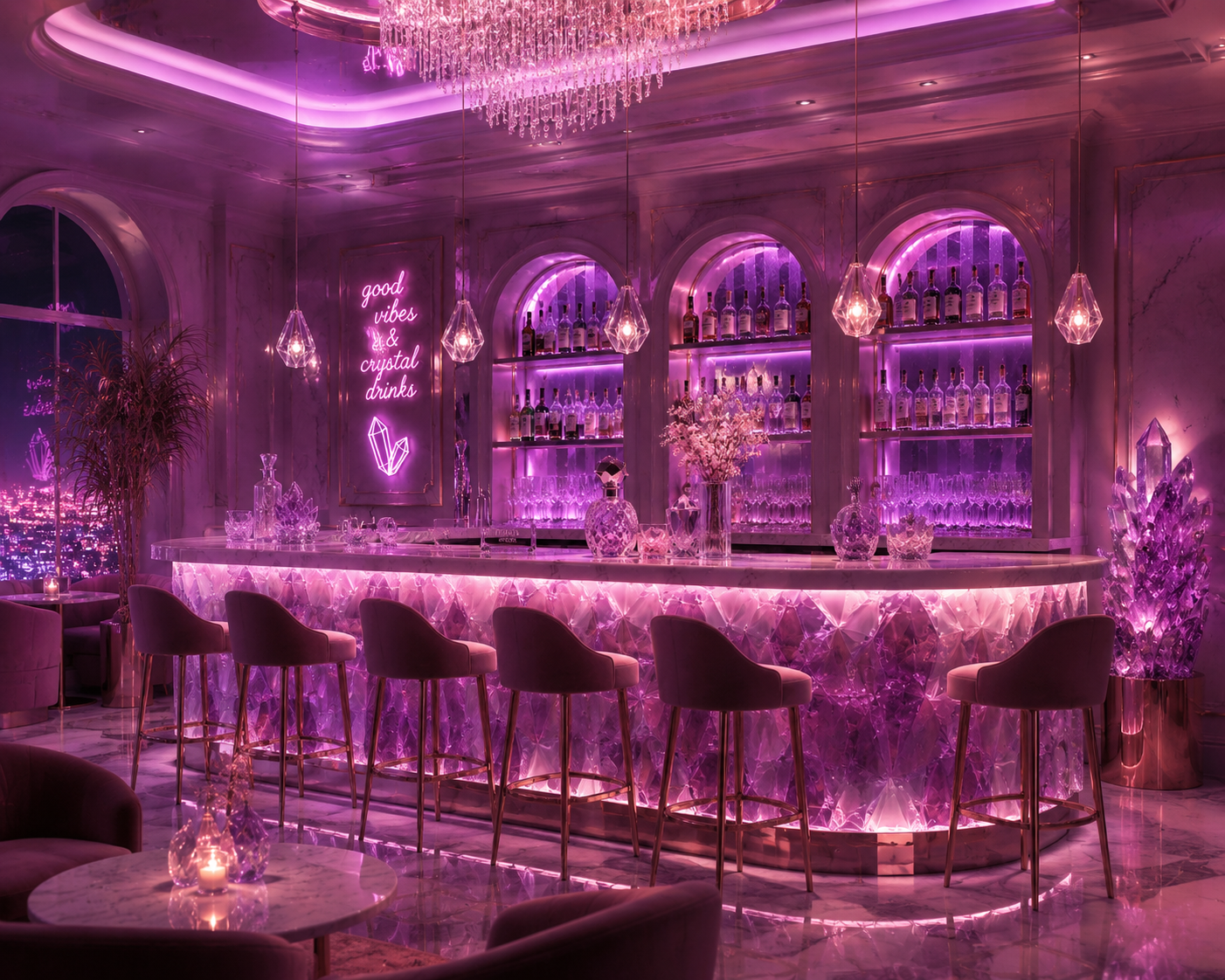
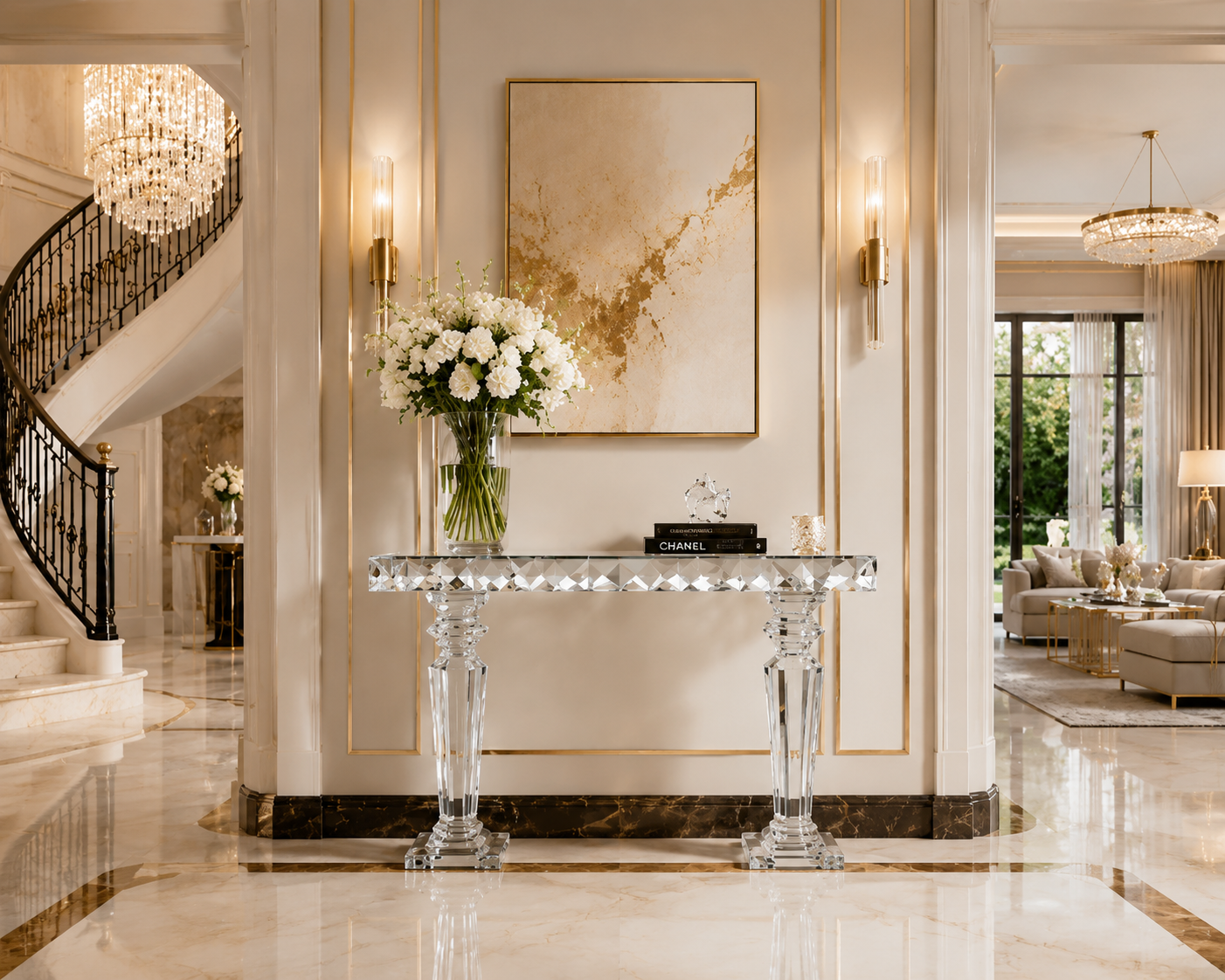
Have you ever walked into a space and immediately felt that it was expensive, even before noticing the furniture brand or decorative details?
A luxury hotel lobby, a modern villa, or a premium restaurant can create a strong impression within just a few seconds. Interestingly, this feeling does not always come from gold finishes, oversized decorations, or expensive-looking ornaments.
In many high-end projects we have worked on, we discovered something important:
The spaces that feel the most premium are usually not the ones with the most elements. They are the ones where every element has been carefully controlled.
The relationship between space proportion, material selection, lighting, color balance, and visual focus determines whether a design feels refined or ordinary.
This is especially true when working with transparent luxury materials such as synthetic crystal furniture. A crystal table, console, or architectural furniture piece can completely transform a space, but only when the surrounding design supports its visual character.
Through years of observing custom furniture projects, material testing, and installation processes, we have learned that creating a premium first impression is not about adding more luxury elements.
It is about knowing what to add, where to place it, and what to remove.
The First Impression of Luxury Is Created Before People Notice Details
When people enter a luxury space, they usually do not immediately analyze:
“Is this marble imported?”
“What brand is this sofa?”
“How much does this table cost?”
Instead, they subconsciously notice:
Does the space feel balanced?
Does the furniture belong here?
Do the materials feel authentic?
Does the environment have a clear visual identity?
This is why some expensive interiors still feel average, while some simple spaces feel extremely sophisticated.
The difference is design logic.
A premium environment creates a sense of confidence because nothing feels accidental.
What We Learned from Real Design Decisions: Proportion Comes Before Decoration
One common mistake we see in luxury interior projects is focusing on expensive materials before solving spatial proportion.
A beautiful material cannot rescue an incorrect layout.
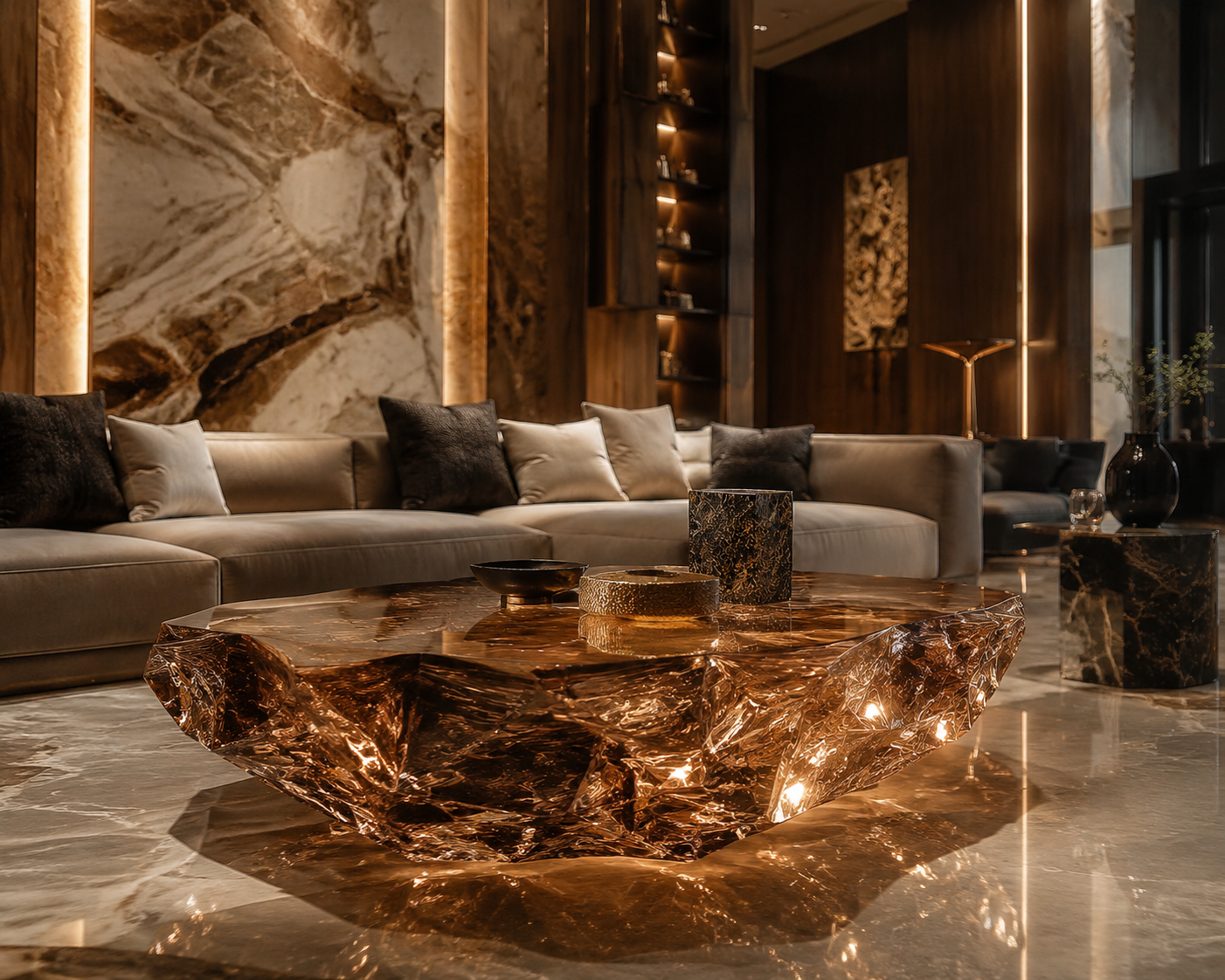
During one residential design process, a client wanted a large transparent coffee table as the centerpiece of a modern living room. The original idea was simple: a larger table would create a stronger luxury feeling.
However, after reviewing the space relationship, we found that the oversized piece reduced the sense of openness. The furniture became the focus, but the room lost its breathing space.
After adjusting the furniture scale and reducing unnecessary decorative elements, the synthetic crystal table actually became more impressive.
Why?
Because transparency needs space.
Unlike solid materials, transparent furniture interacts with its surroundings. If the background is crowded, the visual effect becomes weaker. If the environment has enough negative space, the material can show its depth, reflection, and light interaction.
This experience changed our approach:
A luxury furniture piece does not need to dominate the room.
It needs the right environment to reveal its value.
Material Selection: What We Discovered When Comparing Transparent Materials
When customers first hear “synthetic crystal furniture”, many people compare it with glass or acrylic.
This is a natural question because all three materials can create transparent visual effects.
However, during material evaluation for custom projects, we found that their performance and appearance are quite different.
Glass
Glass offers excellent transparency and a clean modern appearance.
However, in large custom furniture applications, designers need to consider:
• Higher weight
• Transportation challenges
• Safety requirements
• Limited flexibility for complex shapes
For certain architectural applications, glass remains an excellent choice, but it is not always the best solution for artistic furniture.
Standard Acrylic
Acrylic has advantages such as lighter weight and easier processing.
However, for high-end furniture applications, we found some limitations:
• The surface appearance may feel more industrial
• Edge finishing becomes extremely important
• The depth effect is usually different from premium crystal-like materials
Synthetic Crystal
High-quality synthetic crystal provides a different visual experience.
The value is not simply transparency.
The difference comes from:
• Optical depth
• Light reflection quality
• Edge polishing results
• Ability to create artistic forms
In our experience, the final appearance depends heavily on craftsmanship.
A poorly finished transparent material can look ordinary.
A carefully processed synthetic crystal surface can become the visual highlight of an entire space.
This is why material selection is not just choosing a product.
It is choosing how the space will feel.
The Hidden Details Behind Premium Synthetic Crystal Furniture
Many people see the finished furniture piece and only notice the beautiful surface.
But the real quality is often hidden in the production process.
For custom synthetic crystal furniture, several details directly influence the final result.
Edge Processing
The edge of transparent furniture is one of the most important areas.
Sharp or poorly polished edges can immediately reduce the sense of quality.
For luxury applications, precise edge finishing creates smoother light reflection and a more refined appearance.
Surface Treatment
Transparent surfaces naturally attract attention, which means small imperfections become easier to notice.
Production teams need to carefully consider:
• Surface polishing
• Protection during transportation
• Installation handling
• Daily maintenance methods
Lighting Interaction
One interesting thing we noticed during installation is that synthetic crystal does not look the same under every lighting condition.
Under carefully designed warm lighting, the material can create a soft and elegant atmosphere.
Under unsuitable cold lighting, the same piece may lose some of its richness.
The material is important, but the relationship between material and environment is what creates the final effect.
Luxury Design Is Moving Away from “More” Toward “Better”
The luxury market is changing.
Many high-end customers today are no longer interested in simply showing expensive items.
They are asking different questions:
“Does this space represent my personality?”
“Will this design still look beautiful years later?”
“Does this material create a unique experience?”
This change has influenced the way designers approach furniture selection.
Instead of filling every corner, premium projects increasingly focus on carefully selected statement pieces.
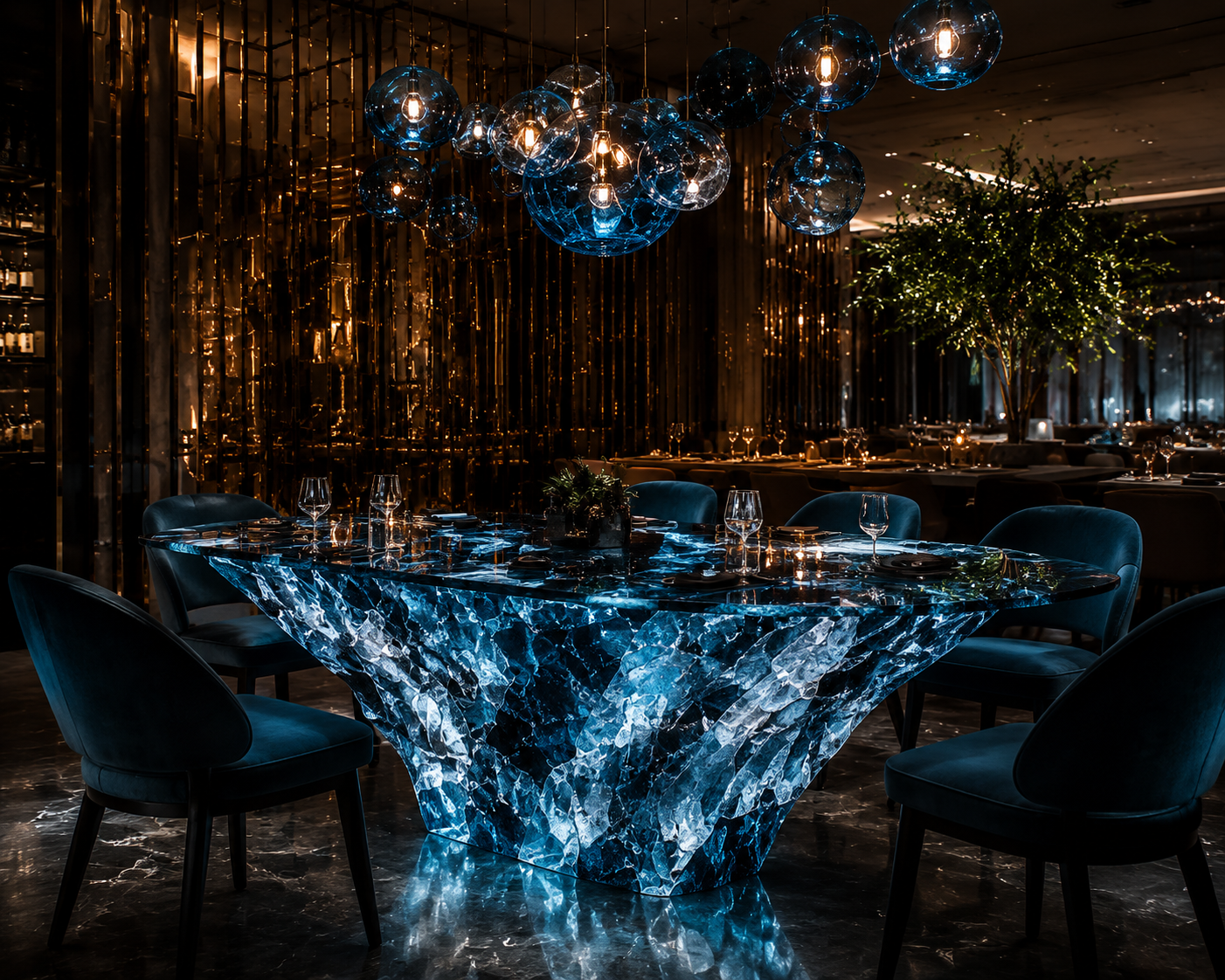
A single well-designed synthetic crystal dining table can sometimes create a stronger impression than an entire room filled with unnecessary decoration.
Because people remember emotional experiences, not the number of objects in a room.
Five Major Changes We See in Modern Premium Interiors
1. Decoration Is Becoming More Controlled
Luxury design is moving away from visual overload.
Today’s premium spaces focus on:
• Clean composition
• Material quality
• Functional beauty
• Strong identity
The goal is not to make visitors notice everything.
The goal is to make them remember something.
2. Materials Are Becoming the Main Design Language
In the past, decoration often created luxury.
Today, materials create luxury.
Designers are exploring materials that provide unique experiences, including:
• Synthetic crystal
• Platinum acrylic
• Advanced resin materials
• Special transparent composites
These materials allow designers to create furniture that feels closer to art.
3. Space Planning Has Become More Important
Modern luxury requires discipline.
A beautiful furniture piece needs enough surrounding space to communicate its value.
Small details such as walking distance, visual balance, and furniture height can significantly change how premium a room feels.
4. Statement Pieces Are Replacing Excessive Decoration
Luxury spaces increasingly use one strong visual element.
This could be:
• A crystal dining table
• A sculptural console
• A unique lighting installation
• An artistic furniture piece
The purpose is not decoration.
It is creating a memory.
5. Timeless Design Is Becoming More Valuable
Trends change quickly.
However, customers investing in premium interiors want designs that remain attractive over time.
This is why materials with strong visual character and excellent craftsmanship continue to gain attention.
What High-End Clients Really Look For Has Changed
One of the biggest changes we have observed in luxury furniture projects is that customers are no longer simply looking for expensive products.
They are looking for a feeling.
A high-end client today may not ask:
“How much does this furniture cost?”
Instead, they often ask:
“Will this piece make my space feel different?”
“Does it have a unique character?”
“Will people remember this environment?”
This shift has changed the way designers and manufacturers approach luxury furniture.
In the past, luxury was often associated with visible symbols: complicated patterns, heavy decoration, and recognizable materials.
Today, premium design is more about emotional value.
A transparent synthetic crystal table, for example, does not create luxury because it looks expensive. It creates luxury because it changes how people experience the space.
It allows light to pass through, reflects the surrounding environment, and creates a feeling of openness that traditional solid furniture cannot easily achieve.
However, we also learned an important lesson:
Not every space is suitable for transparent furniture.
A successful project requires understanding both the advantages and limitations of the material.
When Synthetic Crystal Works Best — And When It Does Not
Transparent furniture is powerful, but it is not a universal solution.
During design discussions, we always evaluate the complete environment before recommending synthetic crystal.
Spaces Where Synthetic Crystal Works Especially Well
Synthetic crystal furniture performs beautifully in spaces that already have:
• Clean architectural lines
• Controlled lighting
• High-quality finishes
• A balanced color palette
Examples include:
Modern Luxury Residences
In open-plan homes, transparent furniture can help maintain visual connection between different areas.
A crystal dining table between a kitchen and living area can separate functions while keeping the entire space visually connected.
Boutique Hotels
Hotel lobbies often need a strong first impression.
A carefully designed crystal reception desk, side table, or decorative furniture piece can create a memorable arrival experience.
Luxury Retail and Showrooms
Premium brands often use unique materials to communicate exclusivity.
Transparent furniture can support a brand image focused on innovation and craftsmanship.
Situations Where Transparent Furniture Requires More Care
We have also encountered situations where transparent furniture was not the best choice.
For example:
A Visually Crowded Background
Because synthetic crystal reflects and interacts with surroundings, a messy background can reduce its impact.
Too many colors, patterns, or decorative elements can make the furniture lose its visual clarity.
Poor Lighting Conditions
Lighting is critical.
A beautiful crystal surface under incorrect lighting may appear ordinary.
Warm directional lighting often reveals more depth, while flat lighting may reduce the material’s character.
Excessive Size Without Proper Planning
Large transparent furniture creates a strong presence.
However, bigger does not always mean better.
The surrounding space must support the scale.
This is why professional planning matters before production begins.
The Ten Questions We Ask Before Creating a Premium Space
A successful luxury project is not only about selecting a beautiful product.
It requires solving many design questions before manufacturing starts.
1. Is the Space Proportion Correct?
Before choosing furniture, we study:
• Room dimensions
• Ceiling height
• Walking paths
• Existing architectural elements
A beautiful table in the wrong size can reduce the entire room’s quality.
2. Is the Material Suitable for the Environment?
Different spaces have different requirements.
A private residence, hotel lobby, and commercial showroom may require different approaches.
We consider:
• Usage frequency
• Cleaning requirements
• Lighting conditions
• Long-term appearance
3. Are the Colors Supporting the Material?
Transparent materials are influenced by their surroundings.
The wall colors, flooring, lighting, and nearby furniture all affect how synthetic crystal appears.
4. Where Is the Visual Focus?
Every memorable space needs a visual anchor.
The question is not:
“How many impressive elements can we add?”
The question is:
“Which element should people remember?”
5. How Does Lighting Change the Material?
Lighting testing is one of the most important steps for transparent furniture.
Before final production, designers should consider:
• Light direction
• Reflection angles
• Daylight conditions
• Evening atmosphere
6. Are Different Materials Creating Enough Contrast?
A completely transparent environment may feel cold.
Premium spaces often combine different textures:
• Soft fabrics
• Natural stone
• Metal accents
• Crystal-like surfaces
The contrast creates depth.
7. Is the Furniture Scale Comfortable?
Luxury is not only visual.
People need to use the space comfortably.
Furniture must support daily activities while maintaining aesthetic value.
8. Does the Space Feel Comfortable?
A premium environment should not feel like a showroom only.
It should feel natural and welcoming.
9. Are All Design Elements Speaking the Same Language?
A modern crystal table combined with unrelated styles can create conflict.
Every element should support the same design direction.
10. Will the Design Still Look Valuable Years Later?
The best luxury projects are not based on short-term trends.
They focus on timeless materials, craftsmanship, and emotional connection.
From Factory to Final Installation: Where Quality Is Really Created
Many people only see the final furniture piece.
But creating high-end synthetic crystal furniture involves multiple stages where quality decisions are made.
Design Confirmation
The process usually begins with understanding:
• Space requirements
• Functional needs
• Desired visual effect
• Installation environment
A beautiful product starts with the correct application.
Material Selection and Testing
Before production, material samples are often evaluated.
Important factors include:
• Transparency level
• Surface quality
• Edge appearance
• Light response
Small differences in material quality can create significant differences in the final result.
Precision Manufacturing
For custom crystal furniture, craftsmanship matters.
Processes such as:
• Precision cutting
• Edge shaping
• Surface polishing
• Quality inspection
directly influence the final appearance.
Packaging and Installation
Large transparent furniture pieces require careful handling.
During installation, teams must consider:
• Protection against scratches
• Transportation safety
• Site conditions
• Final positioning
A perfect product can still lose value if installation is not carefully managed.
Common Mistakes We Have Seen in Luxury Furniture Projects
Understanding mistakes is often more valuable than understanding success.
Mistake 1: Choosing Materials Only Because They Look Expensive
A luxury material does not automatically create a luxury space.
The material must match the architecture.
Mistake 2: Ignoring Maintenance Requirements
Transparent surfaces naturally attract attention.
Customers should understand:
• Cleaning methods
• Surface protection
• Daily care requirements
Good design considers long-term ownership.
Mistake 3: Using Too Many Statement Pieces
A room with multiple competing highlights often feels less premium.
The strongest spaces usually have one clear visual story.
Mistake 4: Focusing Only on Product Appearance
A furniture piece must work with:
• Lighting
• Space
• User habits
• Surrounding materials
The final result depends on the entire environment.
Why Synthetic Crystal Furniture Represents a New Direction in Luxury Design
The future of luxury interiors is moving toward materials that combine technology, craftsmanship, and emotion.
Synthetic crystal represents this direction because it allows designers to explore:
• Transparency
• Light interaction
• Custom shapes
• Artistic expression
However, the true value is not only in the material itself.
The real value comes from the knowledge of how to use it.
A premium furniture manufacturer does not simply create a product.
It helps designers understand where the product belongs, how it should be presented, and how it can continue creating value over time.
Frequently Asked Questions About Synthetic Crystal Furniture
Is synthetic crystal furniture easy to maintain?
With proper care, high-quality synthetic crystal furniture can maintain its appearance for many years.
Regular cleaning with suitable materials and avoiding harsh abrasive products are important.
Is synthetic crystal stronger than glass?
The answer depends on the application.
Synthetic crystal and glass have different advantages. Synthetic crystal offers flexibility in design, lighter structural possibilities, and unique processing opportunities, while glass provides excellent hardness and traditional transparency.
The best choice depends on the project requirements.
Can synthetic crystal furniture be used in hotels?
Yes.
Many hospitality projects consider transparent materials because they create strong visual impact.
However, designers must consider cleaning frequency, usage intensity, and installation conditions.
How long does custom crystal furniture production take?
Production time depends on:
• Design complexity
• Size
• Processing requirements
• Custom details
Early communication between designer and manufacturer helps avoid delays.
Final Thoughts: Premium Design Is About Experience, Not Just Appearance
After working through different furniture concepts, material evaluations, and installation challenges, we have learned one thing:
A premium space is not created by adding more luxury elements.
It is created when every decision supports the same visual story.
The right proportion allows furniture to breathe.
The right material creates emotion.
The right craftsmanship turns an object into a signature piece.
Synthetic crystal furniture is powerful because it does more than fill a space. It interacts with light, architecture, and human perception.
But the most successful designs are not the ones that simply attract attention.
They are the ones that make people stop for a moment and think: this space feels different.
And sometimes, the smallest material decision made before production begins is the one that determines whether a space feels ordinary or unforgettable.
If you are planning a luxury interior project, the question is not only what furniture you want to place in the room — it is what feeling you want people to experience the moment they walk in.
READ MORE:
- How Unique Furniture Helps Luxury Spaces Stand Out in a Competitive Market
- What Designers Should Consider When Choosing Furniture for Luxury Projects
- How Statement Furniture Becomes the Focal Point of Luxury Interiors
- Why High-End Brand Spaces Need Customized Materials
- Dal punto di vista del designer: quali materiali sono più adatti ai progetti di hotel di fascia alta?
- The Texture of High-End Hotel Spaces Often Lives in Material Details
- Perché i designer danno sempre più importanza all’eseguibilità dei materiali?
- Nel design degli hotel di alta gamma, la scelta dei materiali incide più della forma sulla qualità finale
- Un progetto alberghiero di alta gamma: come elevare la qualità dello spazio attraverso la scelta dei materiali
READ MORE:
- Dal materiale trasparente al valore del brand: il potenziale commerciale dei mobili in cristallo sintetico acrilico
- Perché l’arredamento di alta gamma sta passando dal “design accumulativo” al “design puro”?
- Mobili in cristallo sintetico acrilico: un’espressione leggera di eleganza e lusso negli spazi moderni
- Mobili in cristallo sintetico acrilico: la nuova direzione di crescita del mercato dell’arredamento di alta gamma del futuro
- High-End Space Material Selection: The Customer Experience Is Not Defined by Price, but by These Three Details
- How Unique Furniture Helps Luxury Spaces Stand Out in a Competitive Market
- What Designers Should Consider When Choosing Furniture for Luxury Projects
- How Statement Furniture Becomes the Focal Point of Luxury Interiors
- Why High-End Brand Spaces Need Customized Materials


