.png)
In high-end interiors, price is often the easiest thing to notice and the hardest thing to trust. A luxury lobby can be filled with expensive stone, imported metals, designer lighting, and custom furniture, yet still feel cold, fragile, or forgettable. A private villa can spend heavily on statement pieces, yet fail to create the emotional response the client expected. A boutique, hotel lounge, art gallery, or VIP reception area can look impressive in photographs but disappoint the moment a customer touches the surface, sees scratches under angled lighting, or notices that the space feels difficult to maintain.
This is why material selection in premium spaces should not begin with the question, “How much does it cost?” It should begin with a more practical question: “What will the customer feel, see, and remember after spending time here?”
That question matters because customer experience has become a measurable business issue, not just a design preference. PwC’s 2025 Customer Experience Survey found that 52% of consumers stopped using or buying from a brand after a bad product or service experience, while 29% stopped because of poor customer experience online or in person. For any brand investing in a luxury environment, this means the physical space is not decoration; it is part of the promise being made to the customer.
For makers of synthetic crystal, high-end resin, and platinum acrylic furniture, this shift is especially important. These materials are not simply alternatives to glass, stone, or metal. Used well, they create depth, clarity, sculptural presence, and lightness that traditional materials often cannot achieve. Used poorly, they can look artificial, over-polished, or impractical. The difference is not price. The difference lies in three details: how the material handles light, how it feels at human contact points, and how well it performs over time.
1. Price Can Attract Attention, but Experience Creates Trust
Luxury customers are becoming more skeptical of price as a standalone signal. In the past, expensive materials automatically communicated prestige. Today, buyers, designers, developers, and hospitality operators are asking whether the material delivers emotional value, functional value, and long-term credibility.
McKinsey’s 2026 State of Luxury report points to this change clearly. Based on research among more than 2,000 luxury clients in the United States and China, McKinsey notes that emotional connection is overtaking status as a driver of desirability, and that experiences increasingly compete with products for discretionary spending. The report also states that craftsmanship and quality are now the price of entry, not the final reason customers choose one luxury brand over another.
This is directly relevant to high-end interior materials. A customer walking into a luxury showroom does not evaluate the space like a procurement manager. They do not calculate the cost per square meter. They respond instinctively to the atmosphere. They notice whether a reception desk looks clean and luminous. They notice whether a sculptural chair feels stable. They notice whether the edge of a transparent table is beautifully finished or slightly rough. They notice whether the material still looks refined after repeated use.
In luxury spaces, trust is built through consistency between promise and physical reality. If a brand claims to be premium, the space must prove it through touch, light, proportion, comfort, and maintenance. A high price can create expectation, but every visible or tactile flaw creates doubt.
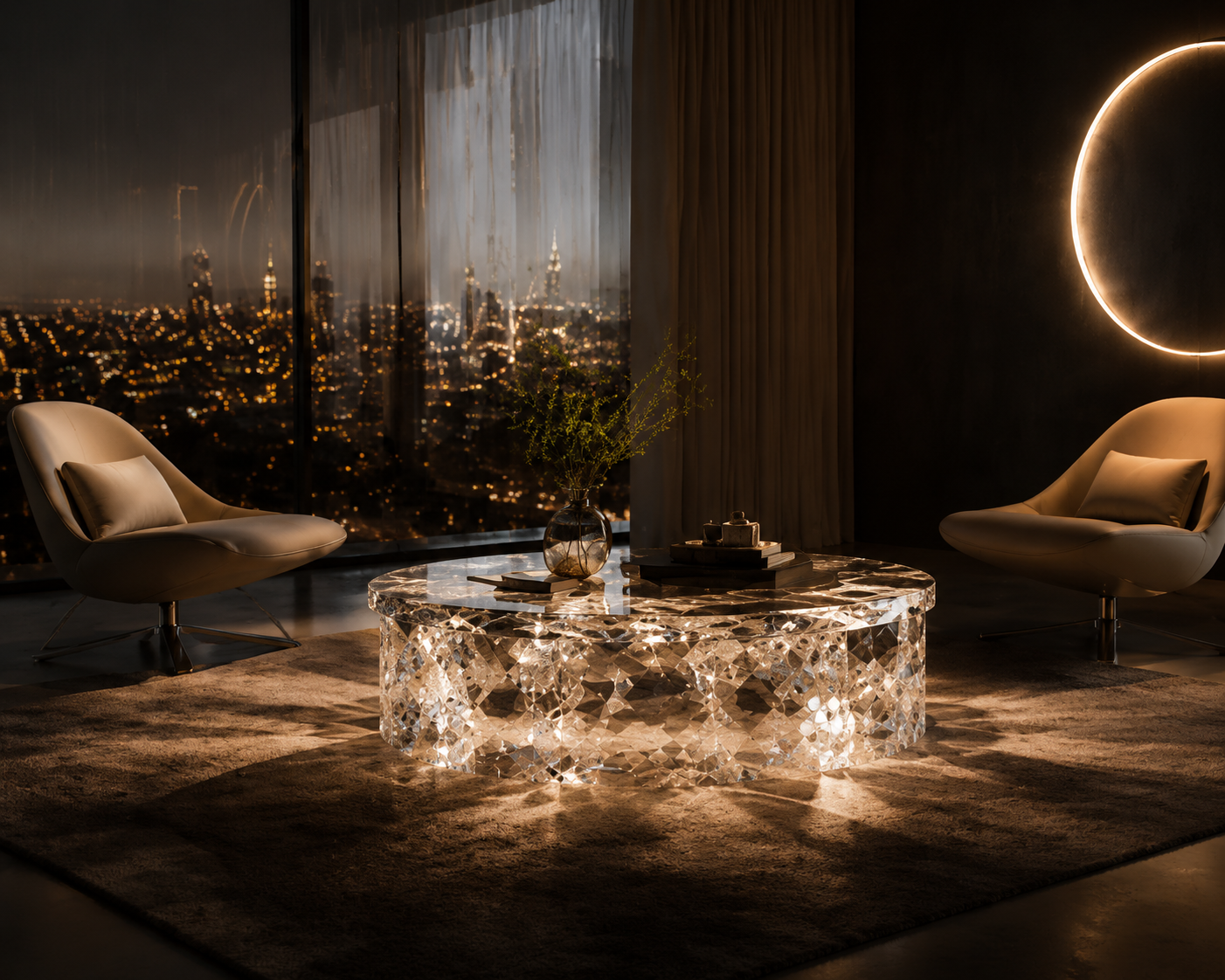
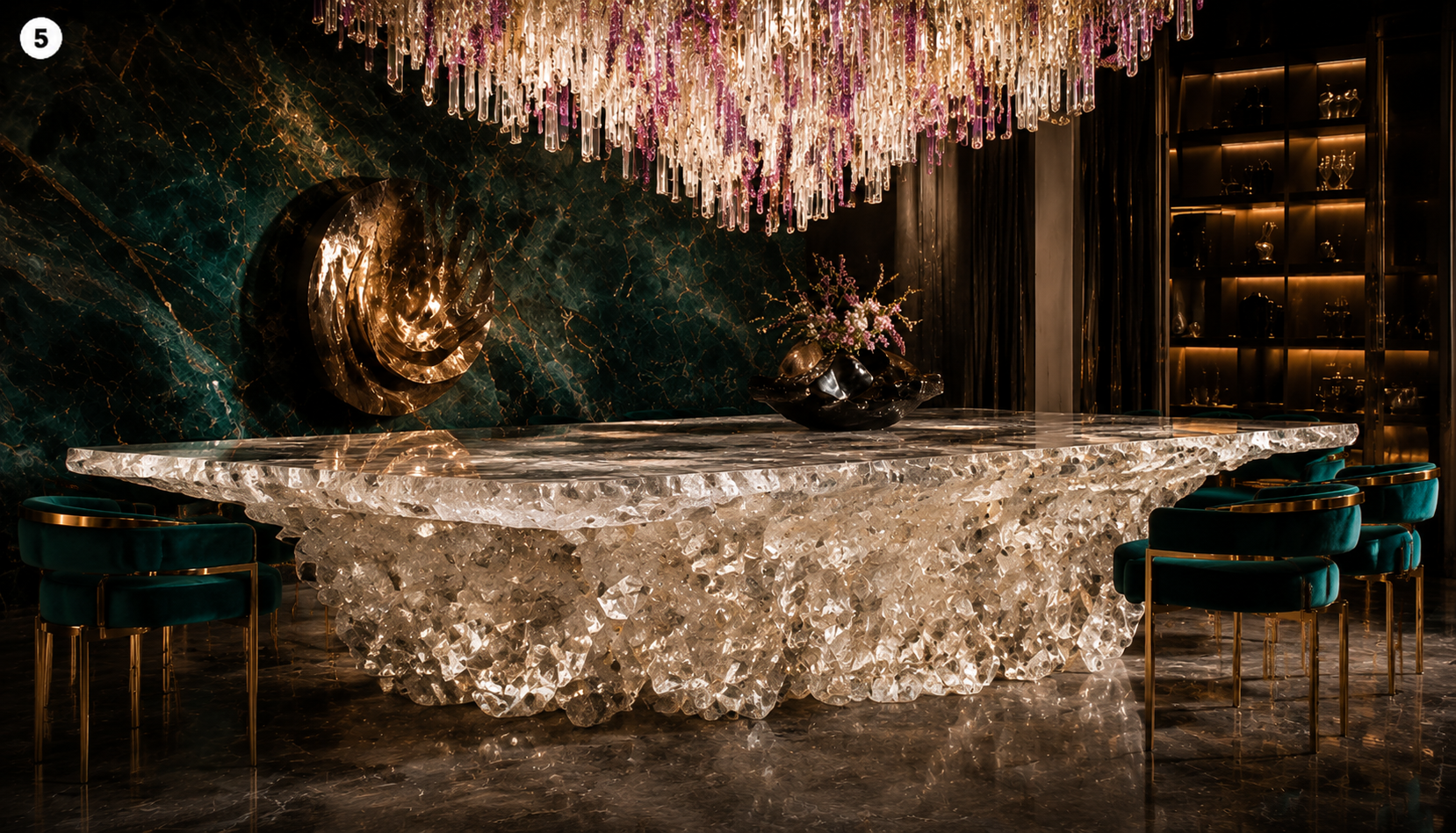
This is where synthetic crystal, premium resin, and platinum acrylic can become powerful design tools. Their transparency, color depth, reflective quality, and formability allow designers to create furniture that feels contemporary, artistic, and memorable. Unlike heavy stone or opaque wood, these materials can soften visual weight. A thick acrylic console can appear almost weightless. A resin dining table can hold color like a piece of art. A synthetic crystal installation can turn a reception area into a signature brand moment.
But these effects only work when the material is chosen and fabricated with the customer journey in mind. The material must perform under real lighting, real traffic, real cleaning routines, and real emotional expectations.
2. Detail One: Light Interaction Decides Whether a Space Feels Expensive or Merely Shiny
The first detail is light. In high-end spaces, light does not simply illuminate materials; it reveals their quality. Transparent and translucent furniture is especially sensitive to this. Synthetic crystal, resin, and platinum acrylic can look extraordinary under controlled lighting, but they can also expose flaws if the material quality, thickness, polishing, or placement is not properly considered.
Acrylic is valued in design partly because of its optical performance. PMMA, commonly known as acrylic or acrylic glass, is a transparent thermoplastic used as a shatterproof replacement for glass, with advantages including UV and weathering resistance, excellent light transmission, and broad coloring possibilities. It can allow around 92% of visible light to pass through it, which is higher than many common transparent materials.
This matters in premium furniture because the customer does not only see the surface; they see through the object. In a clear acrylic table, the edge, internal clarity, polish, and refraction all become part of the experience. In a synthetic crystal reception counter, light can create depth and a gemstone-like glow. In a resin feature table, controlled translucency can make color feel suspended inside the piece rather than painted onto it.
However, brightness alone is not luxury. A space filled with reflective surfaces can quickly feel commercial or harsh. The goal is not to make every piece shine. The goal is to choreograph how light moves across the material during the customer’s journey.
For example, in a boutique hotel lobby, a platinum acrylic coffee table near a warm seating area should not create glare that disturbs guests. Instead, it should catch soft highlights at the edges, visually open the space, and add a refined contemporary note. In a jewelry showroom, a synthetic crystal display plinth should enhance the product without competing with it. In a private villa, a resin dining table should create depth and atmosphere under evening lighting, not reveal bubbles, yellowing, or uneven coloration.
This is why designers should evaluate transparent furniture under the actual lighting conditions of the project. Daylight, warm LEDs, spotlights, linear lighting, and backlighting each reveal different qualities. A sample that looks perfect in a factory may behave differently under a hotel’s ceiling lights or beside a window with strong afternoon sun.
Gensler’s Global Workplace Survey 2025 also shows why light matters to user experience more broadly. The firm reported that 40% of global workers prioritize access to natural light and operable windows, while 36% prefer workspaces enhanced with greenery. Although this research focuses on workplaces, the message applies across high-end interiors: people respond to environments that feel natural, calm, and visually comfortable.
For synthetic crystal, resin, and platinum acrylic furniture, this creates a practical design rule: do not treat light as an afterthought. Choose thickness, tone, surface finish, and placement according to how the piece will receive light throughout the day. A slightly tinted acrylic may feel more sophisticated than fully clear material in a bright lounge. A frosted or satin section may reduce glare while preserving translucency. A polished bevel may make a table edge glow like jewelry. A resin gradient may create emotional warmth in a space that otherwise feels too minimal.
Luxury is often found in the way light behaves at the edge of a material.
3. Detail Two: Touch Points Determine Whether Customers Believe the Quality
The second detail is touch. In high-end spaces, the customer may first be attracted visually, but belief is often formed physically. People touch tabletops, chair arms, reception counters, display edges, door handles, and bar surfaces. These contact points tell the body whether the environment is refined, safe, and well made.
Research into haptic perception supports this. Consumer studies have shown that touch plays an important role in how people evaluate products, and that haptic information gives customers a broader understanding of what they are interacting with. Sensory marketing research also emphasizes that sensory inputs can influence consumers at deep, non-conscious levels, which helps explain why texture, temperature, weight, and finish can affect how customers judge a brand environment.
This is especially important for transparent and sculptural furniture. Customers may admire a synthetic crystal table from across the room, but when they sit beside it, their experience becomes much more specific. Is the edge smooth? Does the table feel stable? Does the surface feel pleasant under the hand? Is the chair comfortable, or does it only photograph well? Does the material feel substantial, or does it feel hollow and temporary?
For high-end resin furniture, touch can become a signature advantage. Resin can hold depth, color, and organic movement. It can be polished to a smooth surface or shaped into sculptural forms that invite interaction. But if the finishing is careless, the same material can feel sticky, uneven, or overly plastic. For platinum acrylic furniture, tactile precision is essential. A polished edge should feel clean and deliberate. A curved acrylic chair should feel stable and ergonomic, not sharp or unstable. Synthetic crystal should communicate clarity and density, not fragility.
In real projects, the most important touch points are often not the most visible areas. A customer may not consciously study the underside of a table edge, but their hand will find it. A hotel guest may not analyze the radius of a reception counter corner, but they will feel whether it is comfortable while checking in. A retail client may not comment on the exact polish level of a display plinth, but they will sense whether the product environment feels worthy of the items being sold.
This is why premium material selection should include a touch-point audit. Designers and manufacturers should identify every area the customer is likely to touch, lean on, sit in, place a glass on, or walk around. These areas require higher finishing standards than purely decorative surfaces. They also require realistic testing. A tabletop should be evaluated for fingerprints, cleaning marks, edge comfort, and scratch visibility. A chair should be tested not only for appearance but also for posture, stability, and repeated use. A reception desk should be tested for hand contact, bag contact, document handling, and lighting reflections at standing height.
Luxury customers may not always describe these details, but they remember how a place made them feel. A beautiful material that feels uncomfortable or fragile creates tension. A material that looks beautiful and feels reassuring creates confidence.
4. Detail Three: Long-Term Performance Protects the Brand Image After Installation
The third detail is durability over time. The first day after installation is not the true test of a high-end material. The real test comes after months of cleaning, customer traffic, sunlight exposure, accidental impact, and changing lighting conditions. A luxury material must continue to look intentional after use.
This point is particularly important for acrylic and resin-based furniture because many clients still carry outdated assumptions about plastics. They may worry about scratching, yellowing, instability, or cheapness. The way to overcome that concern is not simply to say the material is expensive. The way to overcome it is to specify the correct grade, fabrication method, coating, thickness, and maintenance plan.
PMMA’s strengths are well documented, but so are its limitations. It offers clarity, brilliance, transparency, low moisture absorption, good dimensional stability, and UV resistance. At the same time, designers should consider limitations such as lower impact resistance compared with some materials, limited heat resistance, and vulnerability to certain organic solvents. This is useful information for luxury furniture because it encourages responsible specification rather than overpromising.
Technical acrylic product information from established manufacturers also highlights features such as optical clarity, uniform thickness, easy processability, scratch-resistant hard-coat options, and applications including retail display, architecture, and furniture. These technical details should guide how premium acrylic furniture is selected for different environments.
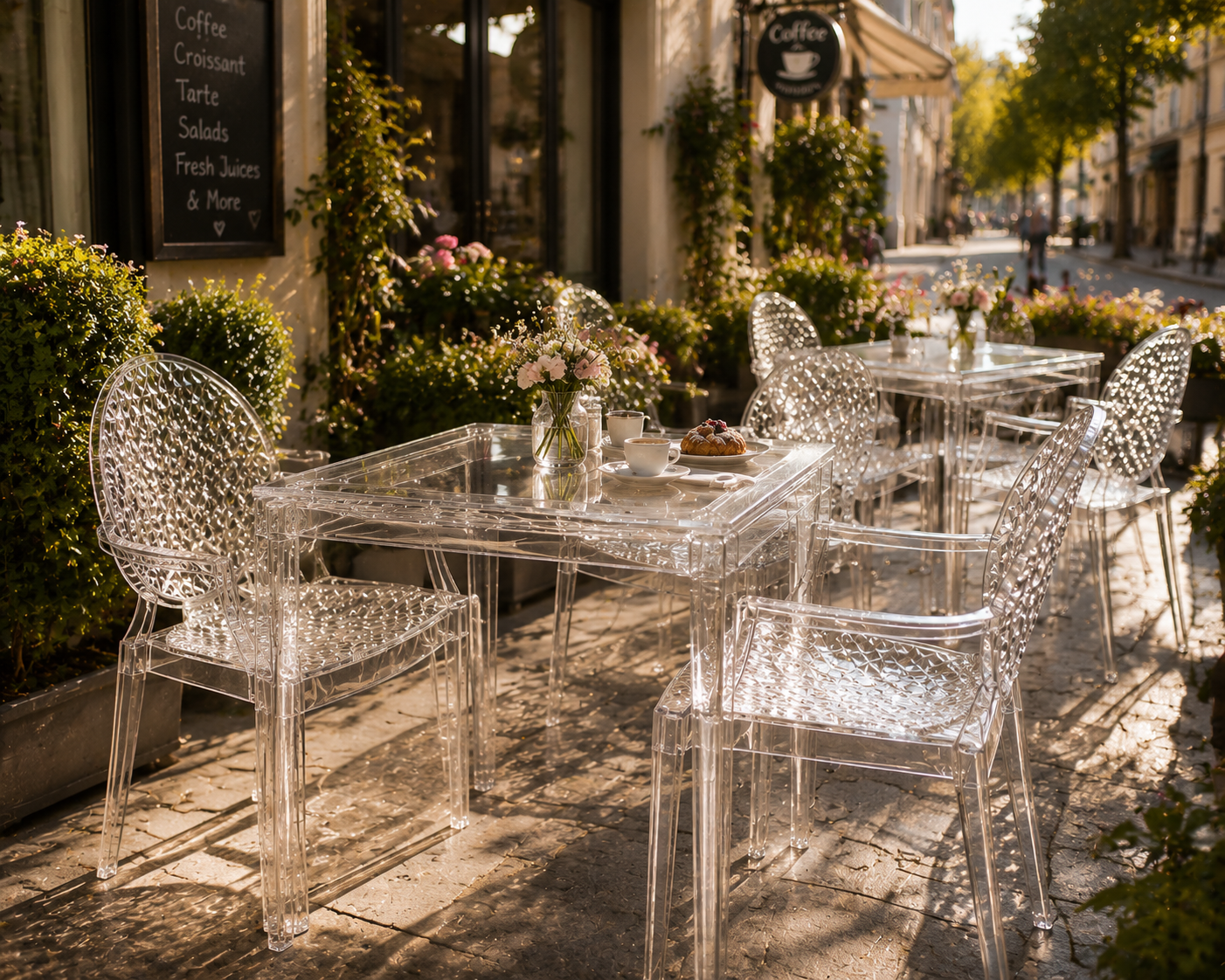
For example, a private residence may prioritize sculptural beauty and optical purity. A hotel lobby may require stronger attention to scratch resistance and cleaning routines. A retail store may need high clarity, repeated cleaning tolerance, and stable appearance under strong lighting. A restaurant or bar must consider heat, spills, alcohol exposure, and maintenance discipline. A luxury office reception area may need a balance of transparency, branding, safety, and long-term polish.
The key is to match the material to the operational reality. A stunning resin table in a low-traffic villa is a different performance challenge from an acrylic counter in a busy commercial lounge. A transparent chair used as a decorative accent is different from a chair used daily in a hospitality setting. A synthetic crystal installation mounted as an art piece is different from a tabletop that will receive keys, glasses, bags, and cleaning chemicals every day.
Long-term performance is also part of sustainability. A material that looks poor after one year may create replacement waste, brand disappointment, and additional cost. The U.S. Green Building Council describes LEED as a holistic framework that addresses energy, water, materials selection, waste, and indoor environmental quality. For high-end furniture, this suggests that material selection should not be limited to visual beauty; it should also consider lifecycle, maintenance, repairability, and responsible use.
In premium interiors, the most sustainable luxury is not always the most natural-looking material. It is often the material that performs beautifully for the longest time in the specific conditions of the project.
5. The Three Details Must Be Adapted to the Space Type
The three details—light, touch, and long-term performance—should not be applied in the same way to every project. High-end space design becomes more convincing when material choices respond to how people actually use the environment.
In a luxury hotel lobby, the first goal is emotional arrival. Guests enter with luggage, expectations, and sometimes fatigue. They need the space to feel calm, clear, and elevated. Synthetic crystal can work well as a central sculptural element because it catches attention without requiring heavy ornament. Platinum acrylic can help maintain visual openness in seating areas. High-end resin can introduce warmth, color, and artistic depth. The key is to avoid glare and visual chaos. The furniture should create a sense of welcome, not a showroom of expensive objects.
In a retail boutique, materials must support product desirability. A transparent plinth, acrylic display table, or resin feature counter should make merchandise feel more valuable, not distract from it. Here, lighting control is critical. If the material reflects too much, customers may struggle to see the product. If it is too dull, the space may lose energy. Edges, joints, and surface polish must be perfect because customers view these pieces at close distance.
In a private villa, the emotional requirement is more intimate. Clients want uniqueness, comfort, and personal expression. Resin furniture can be especially powerful here because color, embedded effects, and custom shapes can make each piece feel personal. Acrylic furniture can help smaller rooms feel more open. Synthetic crystal can function as art furniture, especially in lounges, dressing rooms, wine rooms, or entrance areas. But comfort and maintenance must be discussed early. A client may love a dramatic sculptural piece, but they also need to understand how to clean it and where it should be placed.
In a luxury office or club reception area, materials must communicate professionalism and exclusivity. The customer may not stay long, but the space must quickly build confidence. A platinum acrylic reception desk, a synthetic crystal logo feature, or a resin conference table can make the brand feel modern and precise. However, these pieces must resist fingerprints, scratches, and clutter. The experience should feel effortless.
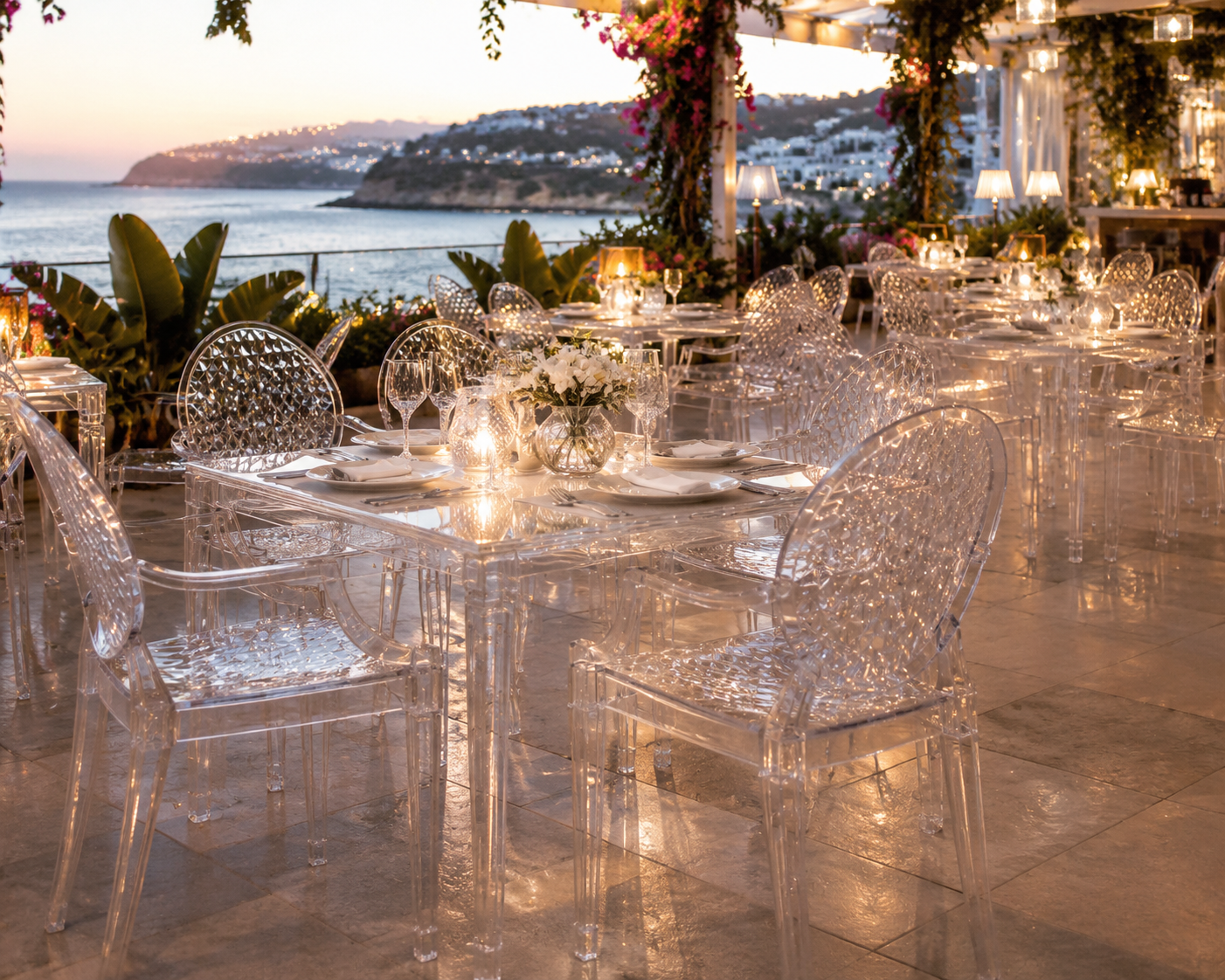
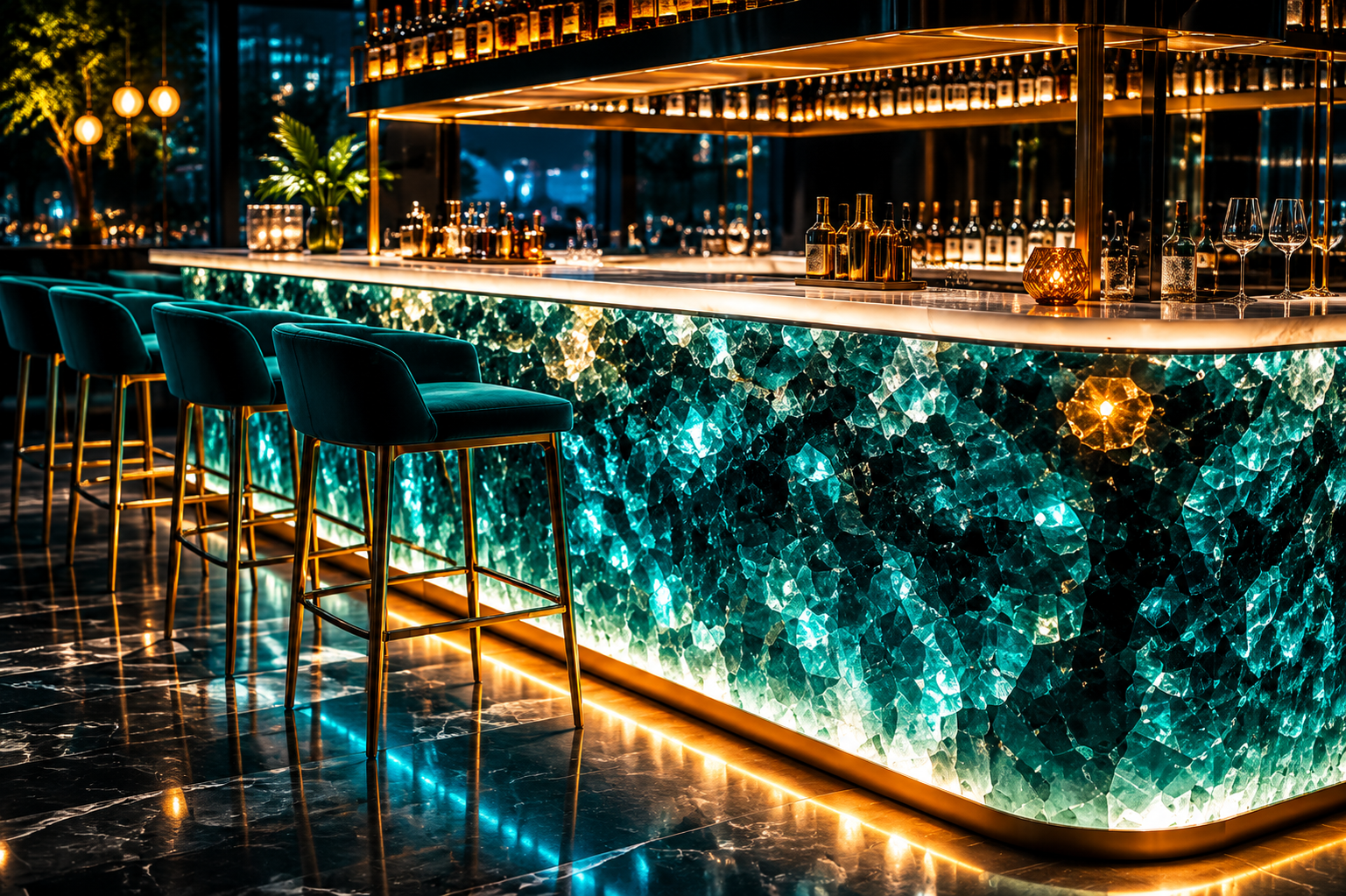
In high-end restaurants and bars, the challenge is atmosphere plus abuse. Lighting is low, drinks spill, surfaces are touched constantly, and cleaning is frequent. Here, the material must be specified carefully. Transparent acrylic may work beautifully for selected feature pieces, but not every surface should be transparent. Resin may create a memorable bar top or decorative table, but heat and chemical exposure must be considered. The best result often comes from combining statement materials with more forgiving supporting materials.
This scenario-based thinking prevents a common mistake: choosing a material because it looks luxurious in isolation. Materials do not live in isolation. They live in lighting, traffic, cleaning routines, brand stories, and customer behavior.
6. A Practical Framework for Selecting Synthetic Crystal, High-End Resin, and Platinum Acrylic Furniture
A premium material decision should move through six practical questions.
First, what emotion should the customer feel within the first ten seconds? If the goal is calm sophistication, the material palette should be controlled, with soft reflections and clear proportions. If the goal is drama, a synthetic crystal centerpiece or colored resin table can become the visual anchor. If the goal is futuristic minimalism, platinum acrylic can create transparency and precision.
Second, where will the customer touch the material? Every touch point should have a higher finishing standard. Edges should be polished, rounded, or beveled according to use. Surfaces should be tested for fingerprints and cleaning marks. Chairs and tables should be evaluated at human scale, not only in renderings.
Third, how will the material interact with light at different times of day? Samples should be reviewed under the project’s actual lighting temperature and angle. Transparent furniture should be tested beside windows, under spotlights, and near reflective floors or walls. A material that looks elegant in soft light may look harsh in direct light.
Fourth, what is the real traffic level? A villa, boutique, hotel, restaurant, and office have different durability requirements. The same material family can be used differently depending on thickness, coating, structure, and placement.
Fifth, how will the piece be cleaned and maintained? A high-end furniture supplier should provide clear maintenance guidance. This should include recommended cleaners, materials to avoid, polishing advice, and instructions for protecting the surface during installation and daily use.
Sixth, does the material support the brand story? A synthetic crystal table can express clarity, precision, and artistic luxury. High-end resin can express craft, individuality, and color depth. Platinum acrylic can express modernity, openness, and architectural lightness. The right material is not simply the one with the highest cost; it is the one that makes the brand experience more believable.
The broader design industry is moving in this direction. Nature’s Scientific Reports published a study comparing occupant surveys in WELL-certified and LEED-certified buildings and found higher overall building and workspace satisfaction in WELL-certified buildings, with the study emphasizing the relationship between design standards, health, comfort, and well-being. While furniture is only one part of a built environment, this research reinforces a larger point: people judge spaces through lived experience, not material price lists.
For high-end furniture makers, this creates a strong opportunity. Synthetic crystal, premium resin, and platinum acrylic are experience-rich materials. They can shape atmosphere, direct attention, open space visually, and turn furniture into a brand memory. But their value depends on precision. Light must be controlled. Touch points must be refined. Long-term performance must be planned.
In the end, the most convincing luxury spaces are not the ones that simply spend more. They are the ones where every material decision has a reason. The table glows because the lighting was considered. The edge feels smooth because the customer’s hand was considered. The surface remains beautiful because maintenance and durability were considered. The furniture feels memorable because the brand experience was considered.
Price may help a client choose a premium category. But details determine whether the customer believes it.