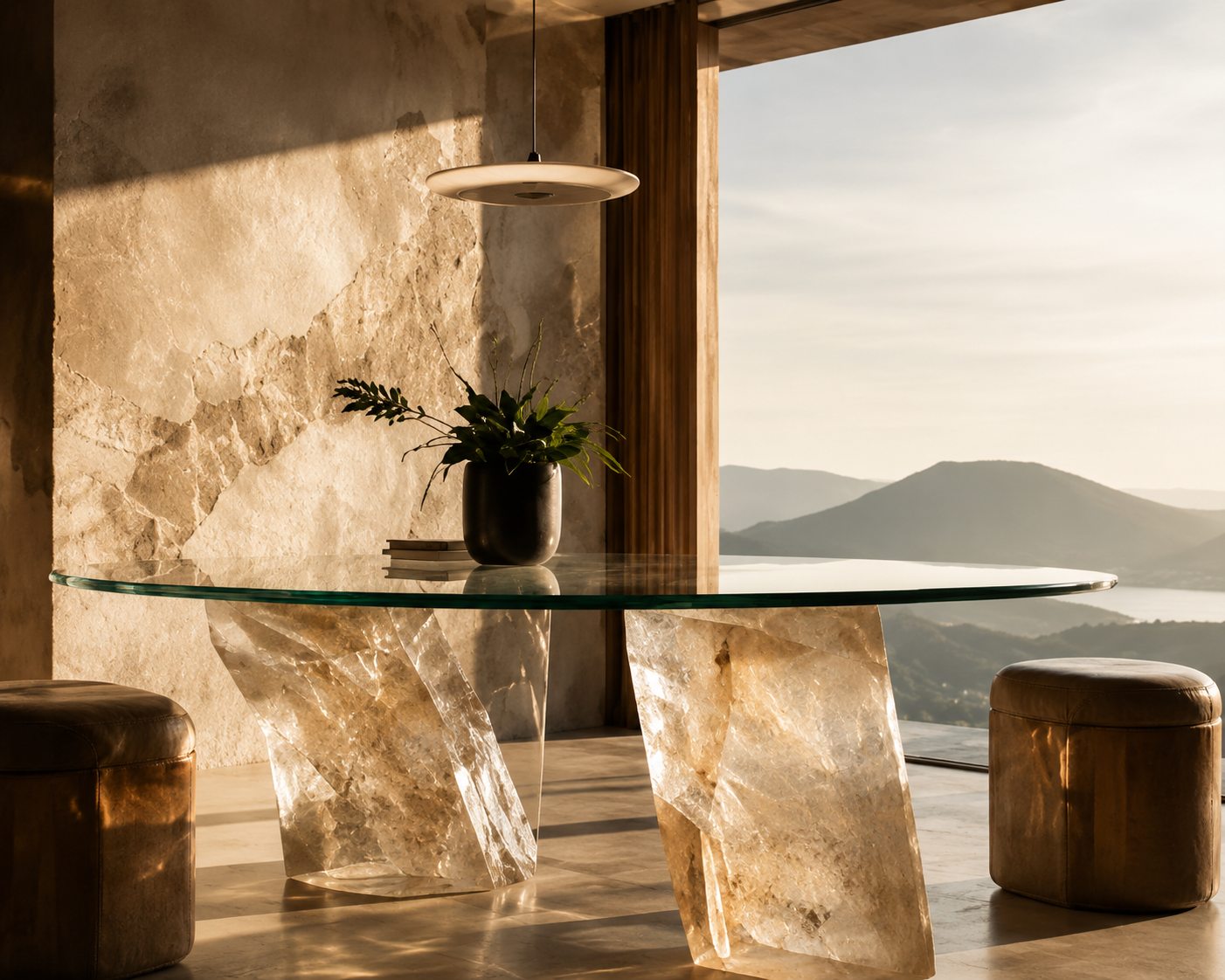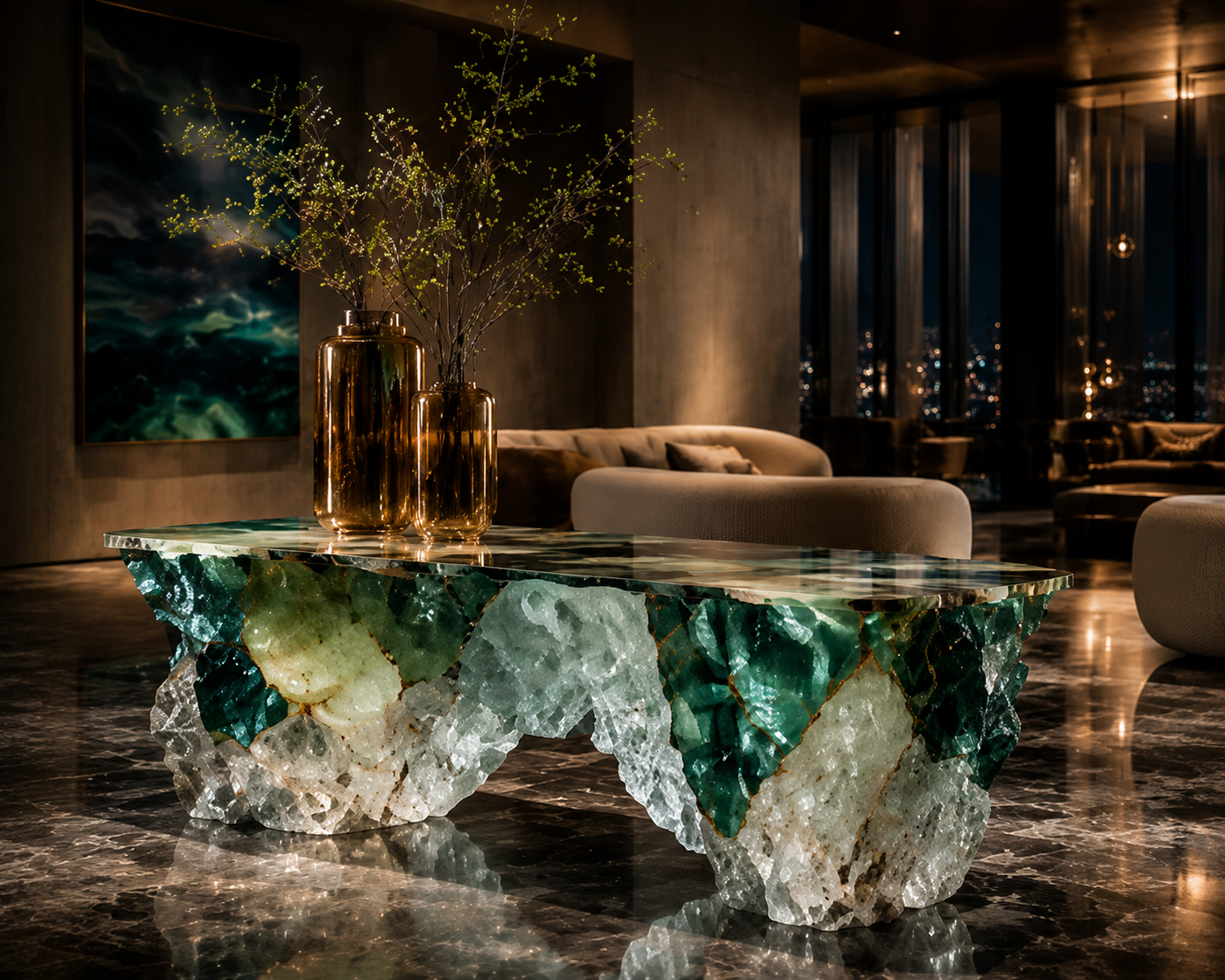
A space can look impressive in a photograph and still fail in real life. It can have a dramatic silhouette, a fashionable palette, sculptural furniture, reflective surfaces, and a carefully staged lighting plan, yet lose its sense of refinement within a year. The reason is simple: design is often judged at the moment of completion, while luxury is judged over time.
This is especially true in high-end interiors. A luxury home, boutique hotel suite, private club, gallery-style retail space, or executive lounge is not only a visual composition. It is a daily environment. People touch the tables, lean on the consoles, place drinks on the surfaces, move chairs, open curtains, turn on warm lighting, expose materials to sunlight, cleaning products, humidity, temperature shifts, and repeated human contact. What looked “designed” on day one may begin to look tired if the material yellows, warps, cracks, scratches too easily, loses gloss unevenly, absorbs stains, or emits unpleasant odors.
That is why material stability is not a technical detail hidden behind aesthetics. It is the foundation of lasting beauty. For brands working with synthetic crystal, high-end resin, and platinum acrylic furniture, the real value is not only transparency, gloss, sculptural form, or visual drama. The deeper value is controlled aging: optical clarity that remains clear, color that remains consistent, surfaces that remain elegant, and structures that continue to feel solid after years of use.
1. First Impressions Sell the Space; Material Stability Keeps the Space Valuable
The difference between a trendy space and a high-end space usually appears after daily use begins. A trendy space depends on immediate visual impact. A high-end space depends on visual impact plus long-term performance. This is why material selection should not be treated as the final decorative step. It should be considered at the beginning of the design strategy.
In real projects, many clients are attracted to statement furniture: a transparent dining table, a crystal-like console, a luminous resin side table, or a glossy acrylic coffee table that seems to float in the room. These pieces can create a strong architectural effect because they play with light, reflection, shadow, and volume. However, if the material is unstable, the same transparency that once looked expensive will make every defect more visible. Slight yellowing, cloudiness, edge crazing, uneven polishing, bubbles, internal stress marks, or surface distortion can quickly destroy the sense of precision.
This is why the luxury market values stability. A stable material protects the designer’s original intention. It allows the line, proportion, and finish of a piece to remain visually accurate over time. In a minimalist interior, this is even more important. Minimal spaces have fewer decorative distractions, so every surface must carry more responsibility. A cloudy transparent table in a richly decorated room may be overlooked; in a quiet, gallery-like room, it becomes the first thing people notice.
The Getty Conservation Institute’s work on plastics preservation is a useful reminder that synthetic materials do not all age in the same way. Getty notes that deterioration in plastic objects can include yellowing, opacifying, cracking, warping, stickiness, and powdering in extreme cases. For furniture makers and interior designers, this is not only a museum conservation issue; it is a commercial reality. A material that cannot maintain its appearance changes the identity of the space itself.
For synthetic crystal, high-end resin, and platinum acrylic furniture, the goal is not to imitate glass, stone, or metal. The goal is to create a new language of transparency and depth while controlling the risks that come with polymer-based materials. High-end clients do not only pay for an object. They pay for confidence: confidence that the dining table will still look refined under natural light, that the side table will not discolor beside a window, that the sculptural chair will not feel fragile, and that the material will continue to support the emotional tone of the interior.
A space becomes truly luxurious when its beauty does not depend on perfect staging. It remains convincing in morning sunlight, under evening lamps, after cleaning, after use, and after time.
2. True Luxury Is Tactile, Not Only Visual
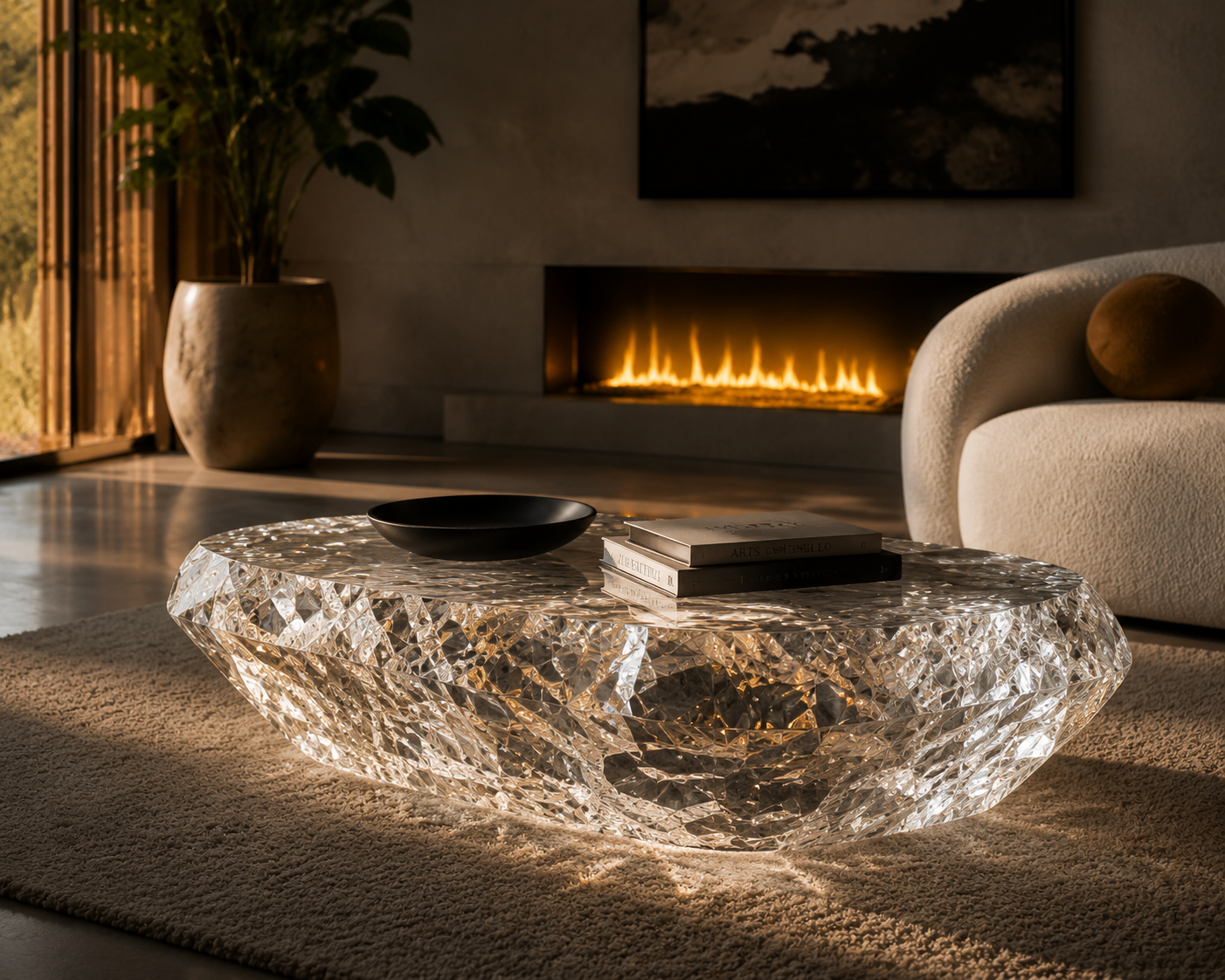
Many people think luxury is something seen. In reality, luxury is often something felt. The hand moving across a surface, the weight of a table, the smoothness of an edge, the temperature of a polished object, the quietness of a stable structure, and the way a material catches light at close range all shape the user’s perception.
This is where material stability becomes emotional. When a surface feels solid, smooth, and predictable, the user trusts it. When it feels brittle, sticky, uneven, overly light, or poorly cured, the user may not immediately know why the piece feels cheap, but the body understands. Luxury is not only a design language; it is a sensory agreement between the object and the user.
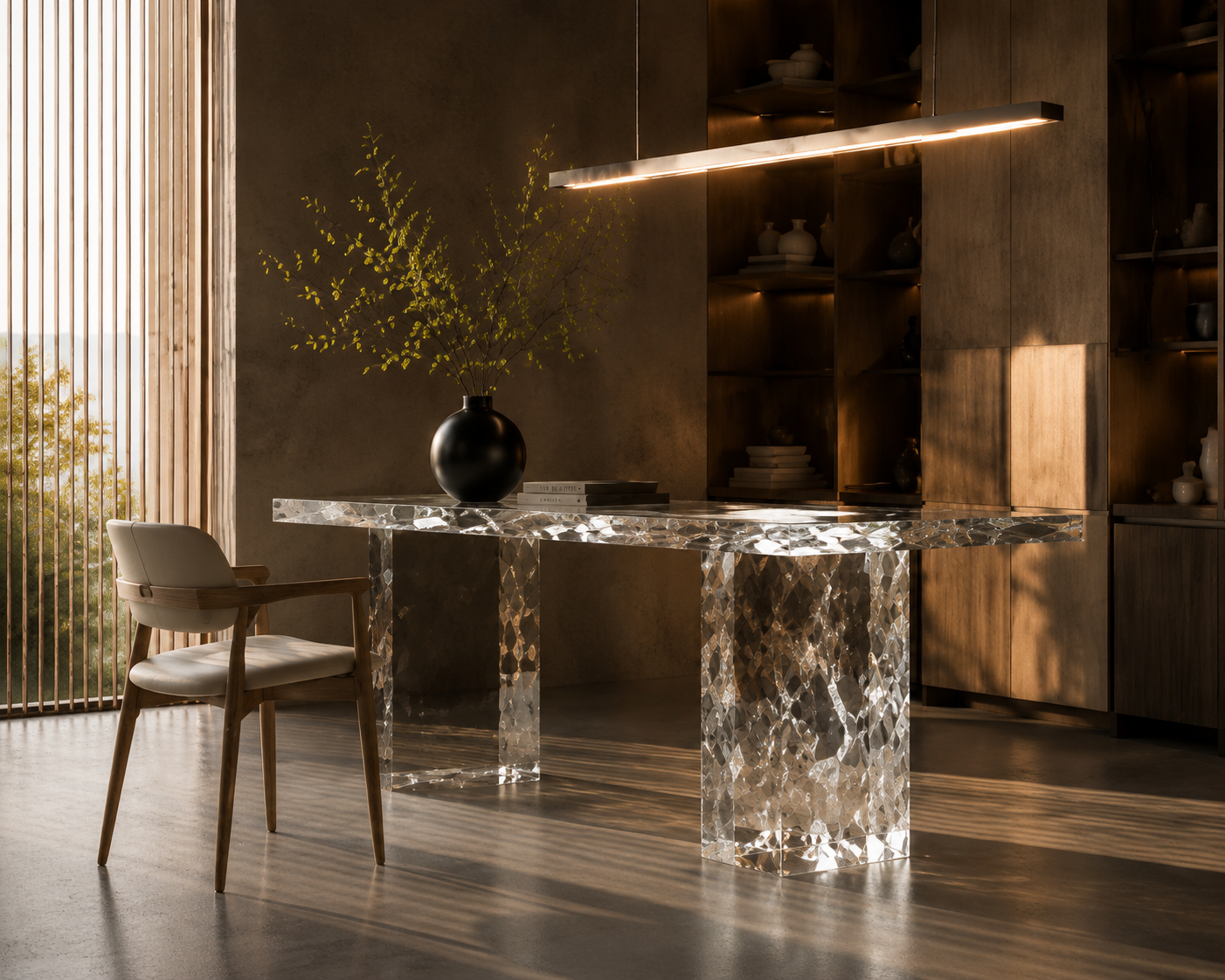
High-end resin and premium acrylic furniture are especially powerful because they can create depth that traditional opaque materials cannot. A well-made transparent or translucent table does not simply occupy space; it edits space. It allows floors, rugs, shadows, and surrounding architecture to remain visible. It can make a room feel lighter without becoming invisible. Synthetic crystal elements can create jewel-like reflections, while platinum acrylic finishes can bring a clean, luminous, almost architectural clarity.
However, these qualities require precision. If the material is not stable, tactile luxury collapses. A poorly finished edge can feel sharp or plastic-like. A surface that scratches too easily can look neglected. A resin body with internal imperfections can seem decorative rather than refined. A transparent piece with uneven optical quality can distort the floor or rug beneath it in a way that feels accidental rather than designed.
This is why high-end manufacturing must control not only the appearance but also the interaction between material and body. Thickness, edge radius, polishing method, curing quality, UV resistance, hardness, load-bearing structure, and repairability all matter. In a showroom, a piece may only be looked at. In a real home or hospitality project, it will be touched every day.
Indoor environmental quality also plays a role in how materials are experienced. The U.S. Environmental Protection Agency reports that Americans spend about 90 percent of their time indoors, and that some indoor pollutant concentrations are often two to five times higher than outdoor concentrations. For furniture and interior materials, this makes low-emitting, well-controlled material systems more than a technical preference; it makes them part of the lived quality of the space.
USGBC’s LEED guidance also emphasizes that selecting low-emitting and non-emitting products can significantly reduce indoor VOC exposure. This supports a broader point: a refined interior should not only look clean; it should feel clean to live with.
For high-end furniture made from synthetic crystal, resin, and acrylic, material stability should therefore include sensory stability: no unpleasant odor, no unstable surface feel, no unexpected tackiness, no rapid loss of gloss, and no texture change that makes the object feel cheaper over time. The material should continue to communicate calm, precision, and trust.
3. Transparency Makes Quality Visible — And Defects More Unforgiving
Transparent and translucent materials are beautiful because they reveal depth. They are also unforgiving because they reveal mistakes. This is why acrylic, resin, and synthetic crystal furniture require a different quality standard from many opaque materials.
A wooden table can hide internal structure. A stone table can rely on natural variation. A painted cabinet can conceal substrate differences. But a transparent object exposes its body. Light travels through it, around it, and across its edges. Any bubble, haze, uneven tint, internal stress, poor lamination, yellowing, or polishing inconsistency becomes part of the visual experience.
This is why premium acrylic and resin furniture should be treated more like optical objects than ordinary furniture. The quality is not only in the shape; it is in the behavior of light. A high-end acrylic console must have clarity, edge brilliance, dimensional accuracy, and resistance to environmental change. A synthetic crystal furniture piece must feel pure from different viewing angles, not only from the front. A resin table must maintain color depth without turning cloudy or amber too quickly.
Technical references for PMMA acrylic commonly describe it as a transparent thermoplastic valued for optical clarity, rigidity, weather resistance, strength, and UV resistance in applications such as display panels, signage, and protective barriers. These properties explain why acrylic can be so effective in high-end interiors when properly specified and manufactured.
At the same time, polymer stability cannot be assumed. Research on epoxy and vinyl ester resins has shown that polymer resins can face yellowing problems under elevated temperature, UV exposure, and natural aging, which limits their use in color-sensitive applications. This is directly relevant to luxury furniture, where color stability is not optional. A slight yellow shift in a clear or pale resin piece can make the entire room feel older, warmer, or less precise than intended.
The practical lesson is clear: transparency raises the standard. A high-end transparent table must be engineered for the way it will age, not only for the way it photographs. This includes UV-stabilized formulations, controlled curing, careful polishing, appropriate thickness, stress reduction, and realistic placement advice. For example, if a piece will sit near floor-to-ceiling windows, the material system should be selected with sunlight exposure in mind. If it will be used in a hotel lobby, scratch resistance and cleaning compatibility become critical. If it will be used in a private dining room, surface maintenance and stain resistance become part of the luxury experience.
Many clients describe transparent furniture as “light,” “clean,” or “modern,” but the real luxury is not lightness alone. It is controlled lightness. The piece must appear effortless while being technically disciplined. That is the quiet difference between a decorative acrylic object and a high-end acrylic furniture piece.
4. A Timeless Space Depends on Materials That Age Gracefully
Timeless interiors are not frozen in time. They age. The question is whether they age beautifully or badly.
Some materials develop patina in a way that adds character. Bronze, natural stone, leather, and solid wood may gain depth through use. Synthetic materials age differently. Their beauty often depends on maintaining clarity, color, smoothness, and structural integrity. Therefore, the luxury standard for resin, acrylic, and synthetic crystal is not patina in the traditional sense. It is graceful preservation.
This does not mean the material must remain untouched forever. All furniture needs care. But high-end materials should fail slowly, predictably, and manageably. The user should not see sudden yellowing, unexpected cracking, cloudy patches, sticky surfaces, or warping after ordinary use. When maintenance is needed, it should be clear, reasonable, and consistent with the lifestyle of the client.
This is one reason emotionally durable design matters. The Ellen MacArthur Foundation argues that products should be designed to be physically durable, emotionally durable, and able to be remade or recycled at the end of use. Although the foundation often speaks in the context of circular economy, the idea applies strongly to high-end interiors: the most sustainable luxury piece is often the one people continue to value.
In practice, emotionally durable furniture has several qualities. It does not look dated after one design season. It can move between interiors. It has material honesty. It has enough visual presence to feel special, but enough restraint to remain usable. For synthetic crystal and platinum acrylic furniture, this often means choosing forms that emphasize proportion, thickness, edge quality, and light behavior instead of relying on excessive decoration.
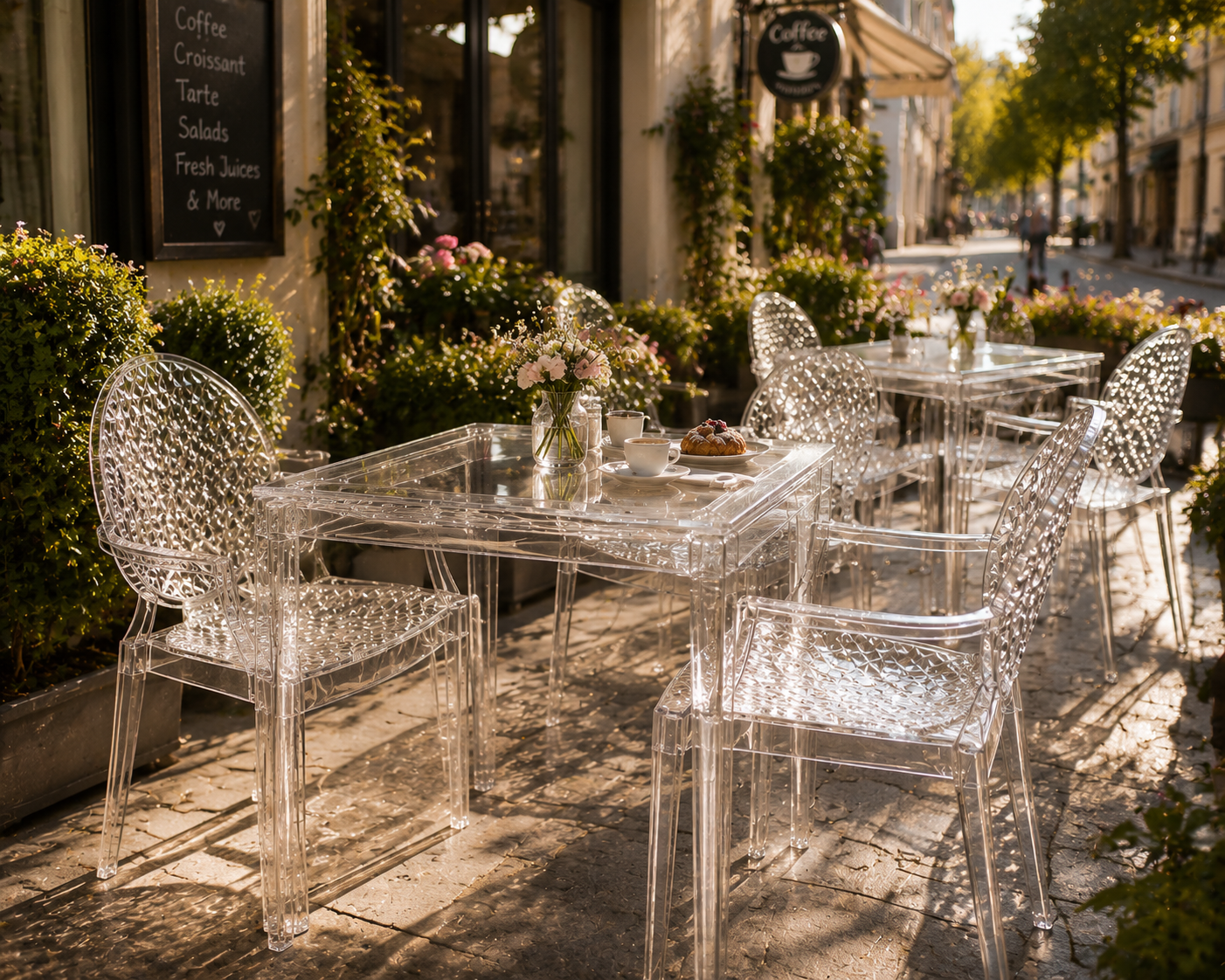
The best transparent furniture often appears simple, but it is not simple to make. A clear acrylic table with perfect proportions may outlast a complicated piece because its design language is based on material purity. A resin console with controlled translucency may stay relevant because it creates atmosphere rather than trend. A synthetic crystal stool with polished volume may feel almost architectural because it interacts with light and space without demanding too much attention.
Material stability supports this timelessness. When clarity remains clear and edges remain crisp, the piece continues to look intentional. When surfaces stay smooth and colors remain stable, the design keeps its dignity. When the structure remains reliable, the user continues to trust the object.
Recent discussions in architectural and interior design media increasingly point toward long-term wellness, healthier materials, and homes designed for decades rather than seasons. This reflects a larger shift in high-end interiors: clients are becoming less interested in disposable visual novelty and more interested in spaces that remain healthy, adaptable, and emotionally comfortable over time.
For furniture makers, this shift is important. The future of luxury is not louder. It is more stable, more intentional, and more accountable.
5. Stable Materials Reduce Hidden Costs in Real Projects
Material instability is expensive, even when the initial purchase price is low. In residential projects, it creates client dissatisfaction. In hospitality projects, it increases replacement cycles. In retail environments, it damages brand perception. In office and commercial interiors, it affects maintenance budgets and operational consistency.
A table that yellows near a window may need replacement. A resin surface that scratches too visibly may require frequent polishing. An acrylic chair that cracks under stress may create safety concerns. A transparent counter that becomes cloudy from incorrect cleaning products may look unhygienic. These problems do not only cost money; they weaken trust between designers, contractors, suppliers, and clients.
This is why professional interior projects increasingly look to standards and certifications. BIFMA describes the ANSI/BIFMA e3 Furniture Sustainability Standard as a leading standard for assessing environmental, health and wellness, and social impacts relevant to furniture products. Its LEVEL certification involves independent third-party assessment against that standard. For buyers, standards like this help shift the conversation from vague claims to verifiable performance.
Even when a project does not require formal certification, the mindset is useful. High-end furniture should be evaluated through performance questions: How stable is the material under UV exposure? How does it respond to cleaning chemicals? What is the expected behavior under temperature and humidity changes? How scratch-resistant is the surface? Can it be repaired or refinished? Does the material have odor or emission concerns? How is quality controlled between batches?
For synthetic crystal, high-end resin, and platinum acrylic furniture, these questions can become a competitive advantage. Many suppliers sell the appearance of luxury. Fewer can explain the technical discipline behind it. A brand that can speak clearly about curing, optical clarity, UV stabilization, edge polishing, structural thickness, surface hardness, and maintenance guidance appears more professional because it treats luxury as performance.
The hidden cost issue is also environmental. The U.S. EPA estimated that the United States generated 600 million tons of construction and demolition debris in 2018, more than twice the amount of municipal solid waste generated. Although furniture is only one part of the built environment, the number shows how costly short life cycles can become at scale.
UNEP’s Global Status Report for Buildings and Construction states that the buildings and construction sector accounts for about 21 percent of global greenhouse gas emissions. This makes durability and longer product life part of responsible design, not just premium marketing.
In other words, stable materials protect three forms of value at once: aesthetic value, financial value, and environmental value.
6. The New Luxury Language: Quiet Materials With Strong Performance
The future of high-end interiors will not be defined only by rare materials or complicated shapes. It will be defined by materials that perform quietly. This is especially true as clients become more informed, projects become more sustainability-conscious, and indoor environments are judged by comfort, health, maintenance, and longevity.
Synthetic crystal, high-end resin, and platinum acrylic furniture are well positioned for this new luxury language because they offer something distinctive: visual lightness without visual weakness. They can make a room feel open, luminous, and contemporary. They can create sculptural focal points without heaviness. They can work in minimalist homes, luxury retail spaces, boutique hotels, private villas, galleries, and high-end commercial interiors.
But the material must justify the design. A transparent material must remain transparent. A glossy surface must retain its elegance. A sculptural form must remain structurally confident. A premium finish must not become a maintenance burden. Luxury clients may be attracted by beauty, but they stay loyal to reliability.
This is where the phrase “design sense is not the same as luxury sense” becomes important. Design sense may create surprise. Luxury sense creates trust. Design sense may focus on what is visible. Luxury sense understands what will happen after installation. Design sense may follow trends. Luxury sense asks whether the material will still look right after sunlight, cleaning, touch, and time.
For a furniture brand specializing in synthetic crystal, high-end resin, and platinum acrylic, the most persuasive message is not simply “our products are beautiful.” Many products are beautiful on the first day. A stronger message is: our materials are selected, engineered, and finished to remain beautiful. That is a more mature form of luxury.
In practical marketing language, this can be expressed through several ideas: optical clarity that enhances space, UV-conscious material selection, stable color performance, polished edges that catch light cleanly, durable surfaces for real interiors, low-maintenance elegance, and sculptural transparency designed for long-term use.
The best interiors do not shout. They hold their quality quietly. A well-made acrylic table does not need to announce itself. It lets light move through the room. A resin console does not need excessive decoration. It gives depth to a wall, hallway, or entry space. A synthetic crystal accent piece does not need to imitate natural crystal. It can create its own contemporary luxury through mass, clarity, reflection, and proportion.
This is the essence of durable high-end design: the material, the form, and the environment continue to support each other after the first impression has passed.
Conclusion: A Truly High-End Space Is Designed for the Second Look
The first look is easy to win. A dramatic shape, reflective finish, or unusual material can capture attention immediately. The second look is harder. It happens after the client has lived with the object, cleaned it, touched it, moved around it, seen it in daylight and at night, and compared it with the rest of the space over time.
That second look is where luxury is proven.
Design sense can create beauty, but material stability protects beauty. For synthetic crystal, high-end resin, and platinum acrylic furniture, stability is not a background specification. It is the core of the product’s value. It determines whether transparency remains pure, whether color remains elegant, whether the surface continues to feel refined, and whether the space continues to look intentional.
In truly timeless interiors, the most important details are often the quietest ones. Material stability is one of them. It is a small thing at first glance, but it decides whether a space merely looks designed — or truly feels high-end.