A furniture project rarely fails on the day it is installed. It usually fails months later, when the surface begins to scratch, stains become difficult to remove, cleaning staff use the wrong chemicals, edges discolor, joints loosen, or the client realizes that the original “beautiful” material cannot survive the actual environment.
This is a small but costly problem: the project has already been delivered, the photos look good, the owner has accepted the installation, and only then does the maintenance issue appear. By that point, replacement is expensive, responsibility is unclear, and the brand experience has already been damaged. For commercial furniture, luxury interiors, hospitality spaces, retail stores, villas, clubs, showrooms, and high-end reception areas, material selection must never be based only on appearance. It must be based on how the material will perform after daily use begins.
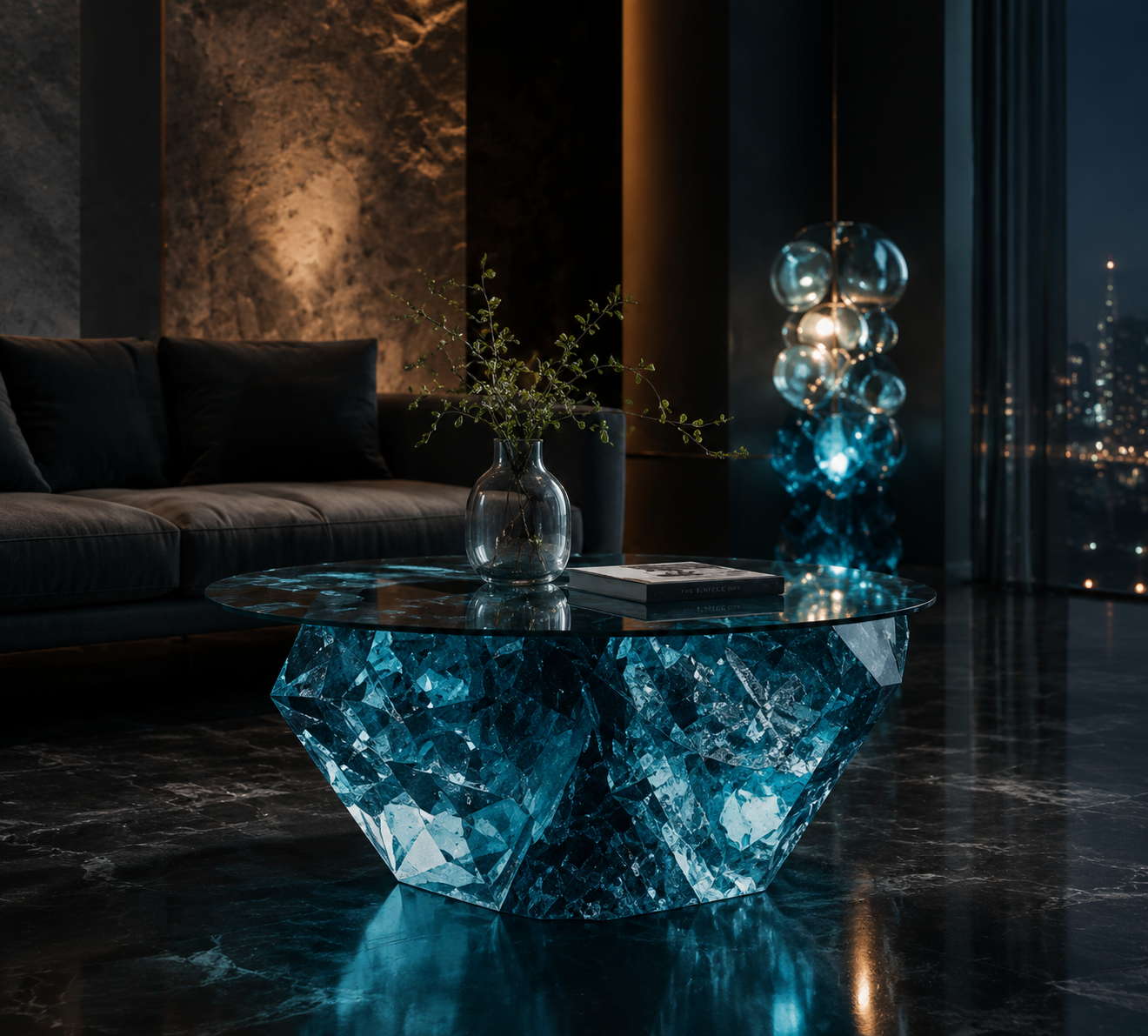
This is especially important for furniture made with synthetic crystal, premium resin, and platinum acrylic. These materials can create a refined, translucent, sculptural, and high-end visual effect that traditional wood, stone, metal, or glass cannot always achieve. But their value depends on the right specification: surface hardness, stain resistance, repairability, cleaning compatibility, installation details, and long-term maintenance expectations must be confirmed before production.
Below are six key points every designer, contractor, project owner, procurement manager, and furniture brand should confirm before selecting materials for a high-end furniture project.
1. Confirm the Real Use Scenario, Not Just the Design Rendering
The first mistake in material selection is judging the material in a showroom instead of in the actual project environment. A sample displayed under clean lighting and light handling is very different from a furniture surface used daily by hotel guests, restaurant customers, office visitors, retail staff, children, cleaners, and maintenance teams.
Before selecting synthetic crystal, premium resin, platinum acrylic, or any decorative furniture material, ask one practical question: who will touch it, clean it, move it, and live with it every day?
For example, a platinum acrylic coffee table in a private villa may mainly face light use, occasional wiping, and controlled indoor temperature. The same material used in a hotel lobby may face luggage impact, beverage spills, fingerprints, cleaning carts, high-frequency wiping, and inconsistent cleaning methods. A resin reception counter in a boutique showroom may remain elegant for years if it is used gently, while a resin bar counter in a restaurant must be evaluated for alcohol, citrus, oil, heat, and repeated cleaning.
This is why life-cycle thinking matters. The U.S. Green Building Council explains that life-cycle assessment examines a product or building from raw material extraction through transportation, use, maintenance, and end of life. In other words, maintenance is not a secondary issue; it is part of the product’s environmental and commercial performance from the beginning.
A practical material confirmation process should include traffic level, contact frequency, cleaning frequency, indoor or outdoor exposure, moisture risk, chemical exposure, expected service life, and replacement difficulty. For high-end custom furniture, this should be written into the project brief before the quotation stage.
In real projects, the most painful maintenance problems often happen because the material was selected for the wrong usage level. A glossy surface may look luxurious but may not be ideal for a high-touch public counter unless the client accepts visible fingerprints and regular polishing. A highly transparent acrylic element may create a premium crystal-like effect, but it must be protected from abrasive cleaning pads and sharp contact. A decorative resin surface may offer excellent design flexibility, but the resin formula, coating, edge design, and cleaning instructions must match the project environment.
For manufacturers of synthetic crystal, high-end resin, and platinum acrylic furniture, the best approach is not to promise that one material can solve every problem. The more professional approach is to match each material to the right scenario. A luxury residential table, a hotel lobby console, a retail display plinth, and a commercial bar counter may all use premium resin or acrylic, but the technical configuration should not be identical.
A good project starts with an honest use-scenario conversation. Once the real operating conditions are clear, material choice becomes a business decision, not just an aesthetic decision.
2. Confirm Surface Durability: Scratches, Impact, Stains, and Edge Wear
Many furniture materials do not fail structurally. They fail visually. The frame remains stable, but the surface becomes scratched, cloudy, stained, chipped, or dull. For high-end projects, visual aging is often enough to create a quality complaint.
This is especially true for furniture in hotels, clubs, luxury retail stores, sales galleries, restaurants, and public reception spaces. These environments do not only require beauty; they require beauty that can survive contact.
The U.S. Environmental Protection Agency reports that furniture and furnishings are part of durable goods in municipal solid waste, and durable-goods data includes generation, recycling, combustion, and landfilling. This matters because premature replacement of furniture is not only a cost issue; it also contributes to material waste.
Durability should therefore be confirmed at the specification stage. For synthetic crystal, premium resin, and platinum acrylic furniture, the following performance issues should be discussed before production: surface hardness, abrasion resistance, impact resistance, resistance to water rings, resistance to common stains, UV stability, yellowing risk, edge protection, and the possibility of polishing or repair.
A table top, for instance, needs a different durability profile than a vertical decorative panel. A table top may face cups, keys, handbags, laptops, cleaning cloths, oil, cosmetics, alcohol, and hot objects. A vertical panel mainly faces fingerprints, occasional impact, and dust. If both are produced with the same finish without considering use intensity, one may age much faster than expected.
Edges are another key detail. Many maintenance complaints begin at the corners. A sharp polished corner may look clean in a rendering but may chip more easily in daily use. A slightly rounded edge can reduce impact concentration and make cleaning safer. In high-end resin and acrylic furniture, edge design should be treated as a performance detail, not only a visual detail.
Stain behavior is equally important. In real use, stains are not limited to water. Furniture may encounter coffee, wine, tea, cosmetics, hand sanitizer, perfume, ink, sauce, oil, and cleaning chemicals. Before confirming a bulk order, suppliers should provide test samples and recommended cleaning procedures. Designers and clients should test common stains based on the actual project environment.
For premium acrylic and resin pieces, scratch expectations must also be communicated honestly. Acrylic is valued for clarity, light transmission, and sculptural beauty, but like many high-gloss materials, it can show fine scratches if treated with abrasive cloths or harsh cleaners. That does not mean it is unsuitable. It means the surface must be specified, installed, and maintained correctly.
The right question is not “Will this material ever scratch?” Almost every surface can scratch under the wrong conditions. The right question is: “What type of contact can this surface tolerate, what cleaning method is allowed, and can minor damage be restored?” When a supplier can answer those questions clearly, the project risk drops significantly.
3. Confirm Cleaning Compatibility Before the Cleaning Team Receives the Furniture
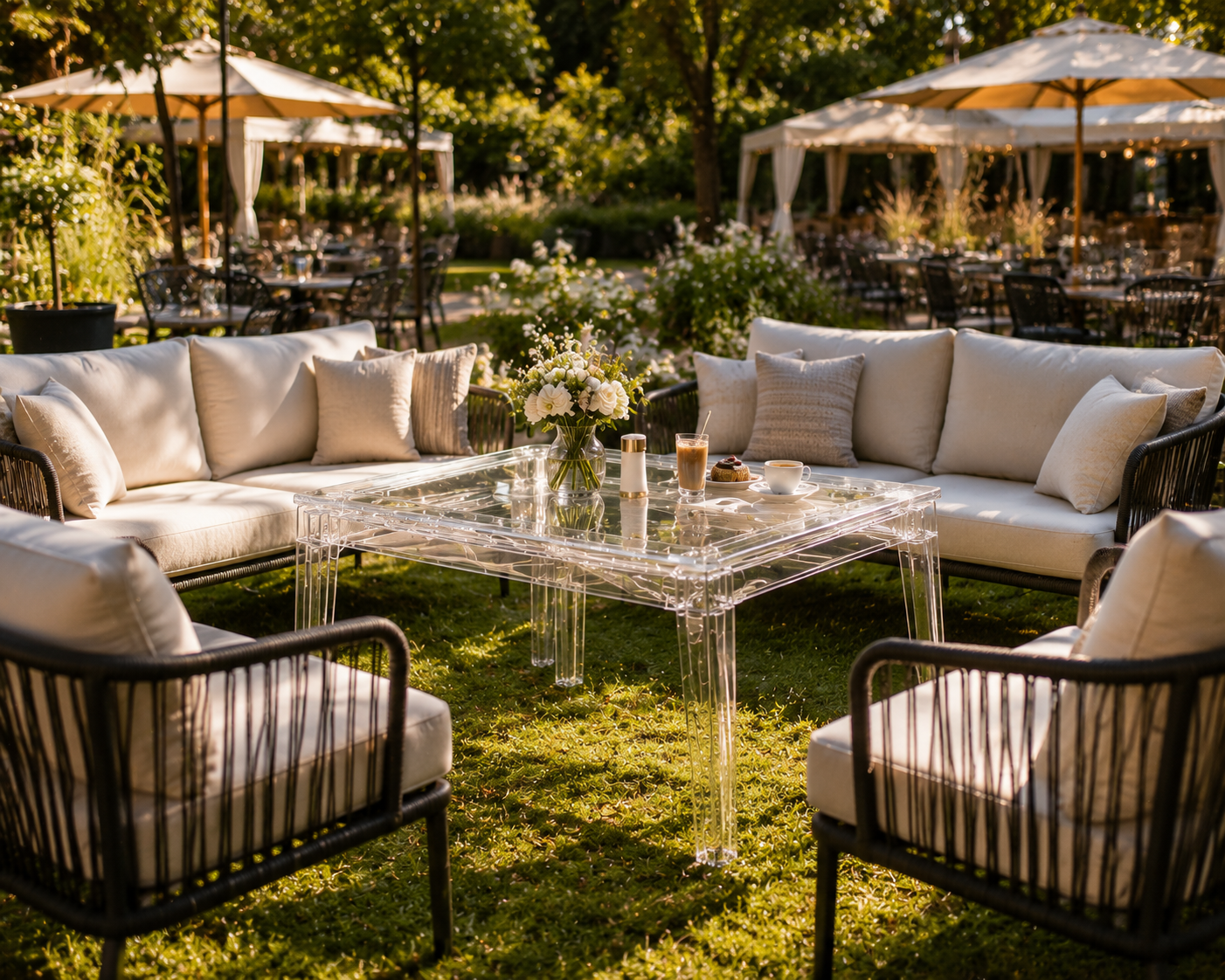
A common project failure happens when the furniture is designed by one team, purchased by another team, installed by a contractor, and cleaned by people who never received the material instructions. The cleaning team then uses whatever chemical, cloth, brush, or disinfectant is already available on site. The result may be surface haze, discoloration, residue, loss of gloss, or micro-scratches.
This is why cleaning compatibility must be confirmed before delivery, not after damage appears.
The U.S. EPA states that indoor pollution sources include building materials, household cleaners, and other products that release gases or particles into indoor air. Its guidance on volatile organic compounds also recommends identifying and reducing sources, increasing ventilation when using products that emit VOCs, and following label precautions.
For furniture projects, this means material maintenance is connected to indoor environmental quality. A beautiful surface that requires aggressive chemical cleaning may not be the best long-term choice for a hotel, clinic, school, office, or private residence. A surface that can be cleaned with mild, clearly defined methods is easier for the client to manage.
The CDC’s environmental cleaning guidance for healthcare settings emphasizes structured cleaning procedures, including cleaning from cleaner to dirtier areas and from high to low surfaces. Although most luxury furniture projects are not hospitals, the principle is useful: cleaning is a system, not a random action.
For synthetic crystal, premium resin, and platinum acrylic furniture, every project should include a simple maintenance document. It should explain what cleaners are allowed, what cleaners are prohibited, what cloth type should be used, whether alcohol is permitted, whether disinfectants are compatible, whether acidic or alkaline products should be avoided, and how to handle spills.
In practical terms, this document should be written for the cleaning team, not only for the designer. It should avoid vague words such as “clean carefully.” Instead, it should say: use a soft microfiber cloth; remove dust before wiping; avoid abrasive pads; test any new cleaner in a hidden area; do not use strong solvents unless approved; wipe spills promptly; and do not drag sharp objects across the surface.
For high-end acrylic furniture, the cleaning cloth can be as important as the cleaning liquid. A rough towel or dusty cloth can create fine surface marks even when the chemical is mild. For resin furniture, cleaning compatibility may depend on the resin system, coating, pigment, and surface finish. For synthetic crystal elements, transparency and gloss may make residue more visible, so cleaners that leave streaks should be avoided.
The professional solution is to supply maintenance instructions with the furniture and confirm that the client’s cleaning contractor accepts them. In commercial projects, it is also wise to provide a small maintenance kit or sample panel for cleaning trials. When cleaning procedures are confirmed before handover, the client receives not only furniture but also a realistic operating method.
4. Confirm Indoor Air Quality, Emissions, and Material Health Expectations
A material can be beautiful, durable, and still create concerns if the client has strict indoor air quality requirements. This is especially important for hotels, offices, healthcare spaces, schools, luxury residences, and enclosed retail environments where people spend long hours indoors.
The World Health Organization has published indoor air quality guidelines addressing selected pollutants commonly present in indoor air, with the purpose of protecting public health from chemical exposure. The EPA also notes that VOCs are common indoor pollutants and that formaldehyde is one of the best-known VOCs associated with indoor sources, including some furnishings and building materials.
For furniture materials, the practical implication is clear: clients may ask not only “Is it strong?” but also “Is it low-emission?” A high-end project may require documentation related to VOC emissions, formaldehyde control, coatings, adhesives, and finishing systems.
UL Solutions states that GREENGUARD Certification is designed for low chemical emissions and that its criteria have served as the basis for LEED credit for low-emitting furniture since 2002. It also notes that GREENGUARD Gold provides a higher level of protection for sensitive groups.
For manufacturers working with synthetic crystal, premium resin, and platinum acrylic, this does not mean every project must use the same certification path. It means the supplier should be prepared to discuss emissions, adhesives, coatings, curing, odor, ventilation after installation, and documentation. A luxury client may not understand the chemistry, but they will understand whether the supplier can provide clear answers.
In real projects, odor after delivery is one of the most sensitive issues. Even if the material is structurally sound, a strong smell can trigger complaints from owners, guests, or staff. Some odor may come from packaging, adhesives, coatings, cleaning products, or insufficient curing time. Therefore, production scheduling should include enough curing and ventilation time before shipment, especially for custom resin furniture or large pieces installed in enclosed spaces.
Material health also affects brand positioning. High-end furniture is not only about looking expensive; it is about feeling safe, refined, and reliable. A premium reception desk, luxury dining table, or custom display unit should not create doubt when the client enters the space. The client should feel that the material has been selected with both aesthetics and responsibility in mind.
For premium resin and acrylic furniture, the supplier should be able to explain the selected material system, finishing method, and care requirements in professional language. When possible, test reports, emission documentation, or third-party certifications can strengthen trust. When certification is not available, transparent communication is still essential: explain what the material is suitable for, how it has been processed, and how the project should be ventilated and maintained after installation.
The best material is not only the one that shines on day one. It is the one that supports a healthier, more predictable interior environment over time.

5. Confirm Repairability, Replaceability, and Long-Term Service Planning
Maintenance is not only cleaning. It also includes repair, replacement, polishing, refinishing, and future service. Many project teams focus on purchase cost but ignore the cost of keeping the furniture attractive throughout its service life.
ISO 15686-1 identifies general principles and a framework for service-life planning for buildings and constructed assets. Although the standard is written for buildings and assets, the idea is directly relevant to custom furniture in built environments: service life should be planned, not guessed.
For high-end furniture, service planning should include several questions. Can the surface be polished if it is scratched? Can a damaged component be replaced without remaking the entire piece? Are the legs, connectors, inserts, panels, or decorative elements modular? Can the supplier reproduce the same color, transparency, or pattern later? Is there a maintenance agreement? Are spare parts available?
These questions are especially important for custom resin and acrylic furniture because color, translucency, embedded effects, and surface texture may vary between batches. If a project requires future expansion, the supplier should keep color formulas, mold information, drawings, finish references, and production records. Without those records, future repair or replacement may not match the original piece.
Repairability also affects sustainability. The Ellen MacArthur Foundation promotes circular economy principles focused on eliminating waste, keeping products and materials in use, and regenerating nature. For furniture, this supports a simple but powerful idea: a product that can be repaired, refreshed, or reused has more long-term value than one that must be discarded after the first major defect.
For synthetic crystal and acrylic furniture, minor surface issues may sometimes be improved through professional polishing, depending on the material and finish. For resin furniture, repair options depend on the resin type, color depth, coating, and damage location. For mixed-material furniture, repairability depends heavily on how the materials are joined.
This is why construction details matter. A permanently bonded decorative panel may look seamless, but if it is damaged, the entire structure may need replacement. A hidden mechanical fixing system may cost more at first, but it can make future replacement easier. A modular table base may help the client replace only the top after heavy use rather than discard the entire table.
The supplier should also define what can and cannot be repaired. Overpromising creates disputes. Professional guidance creates trust. For example, the supplier might say: light surface scratches can be polished by trained technicians; deep cracks require evaluation; solvent damage may not be fully reversible; color-matched resin repairs are possible but may remain slightly visible under strong light.
That kind of honesty protects both the supplier and the client. It also positions the manufacturer as a professional partner rather than only a product seller.
6. Confirm Documentation, Samples, Testing, and Handover Responsibilities
The final point is simple: if it is not written down, it is not truly confirmed.
Many maintenance disputes happen because each party remembers the conversation differently. The designer thought the material was suitable for a public area. The supplier assumed it was for light residential use. The contractor installed it near heat or moisture. The cleaning team used a strong chemical. The client expected it to remain perfect with no special care.
A professional furniture project should include written confirmation of material selection, performance expectations, cleaning methods, limitations, sample approval, installation conditions, and handover responsibilities.
BIFMA describes the ANSI/BIFMA e3 Furniture Sustainability Standard as a leading standard for assessing environmental, health and wellness, and social impacts related to furniture products. This reflects a broader industry movement: furniture is increasingly evaluated not only by appearance, but by documented performance and responsible practice.
For custom synthetic crystal, premium resin, and platinum acrylic furniture, documentation does not need to be complicated, but it must be complete. A strong handover package should include approved drawings, material samples, finish samples, care instructions, cleaning restrictions, installation notes, warranty terms, repair guidance, and contact information for after-sales support.
Sample testing is also essential. Before producing a large order, the project team should approve physical samples under real lighting. A resin color may look different under warm hotel lighting than under factory lighting. A platinum acrylic surface may appear more reflective in a bright showroom than in a dim lounge. A synthetic crystal effect may look more transparent or more saturated depending on thickness and background color.
Testing should also reflect actual use. If the furniture will be used as a bar counter, test beverage stains. If it will be used in a retail store, test fingerprints, cleaning frequency, and display-light exposure. If it will be used in a hotel lobby, test luggage contact, cleaning cloths, and common guest behavior. These tests do not need to be overly complex, but they must be realistic.
The handover stage should include training. Even a five-minute explanation to the client’s facility or cleaning team can prevent months of damage. Show them the correct cloth, the correct cleaning method, and the common mistakes to avoid. Provide the instructions digitally and physically. Label the maintenance kit if one is supplied.
This is where a professional manufacturer can stand out. Many suppliers compete only on price, but high-end clients value predictability. They want to know that the furniture will remain beautiful after delivery, that maintenance will be manageable, and that there is a clear process if something goes wrong.
For a manufacturer specializing in synthetic crystal, high-end resin, and platinum acrylic furniture, this is a powerful selling point. These materials can create impressive luxury effects: crystal-like clarity, artistic depth, smooth sculptural forms, luminous edges, and customized colors. But the true premium value appears when the beauty is supported by technical confirmation and service thinking.
Conclusion: Beautiful Materials Must Be Easy to Live With
The small problem of “hard-to-maintain materials after project delivery” is not small at all. It affects cost, client satisfaction, sustainability, brand reputation, and long-term project quality.
Before selecting furniture materials, confirm the real use scenario, surface durability, cleaning compatibility, indoor air quality expectations, repairability, and documentation responsibilities. These six points turn material selection from a visual decision into a professional project strategy.
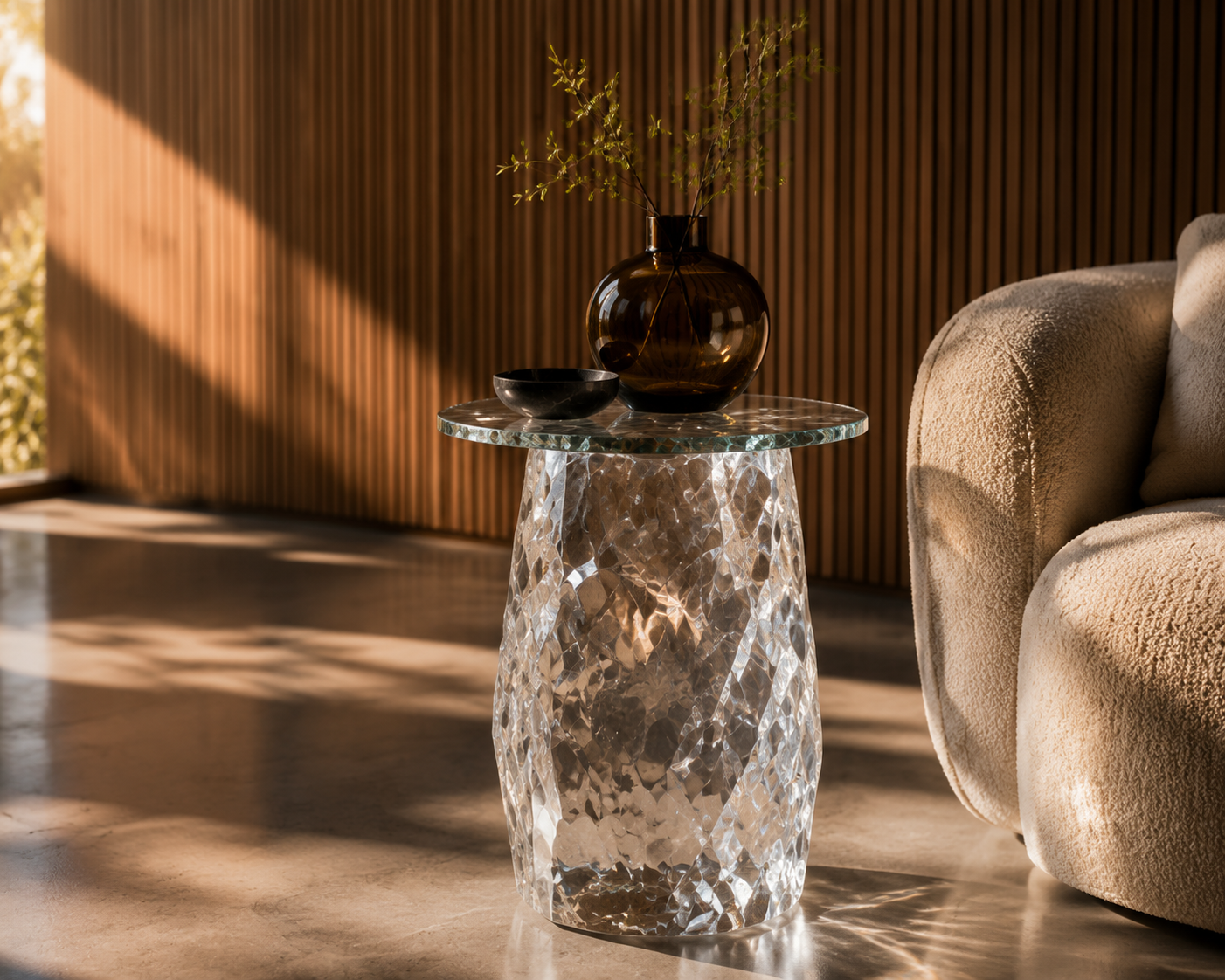
Synthetic crystal, premium resin, and platinum acrylic are excellent choices for high-end furniture when they are specified correctly. They offer clarity, depth, luxury, customization, and a distinctive modern identity. But like all premium materials, they must be matched to the right environment and supported with the right maintenance plan.
A successful project is not only the one that looks impressive on installation day. It is the one that still looks refined after daily use begins.


