.png)
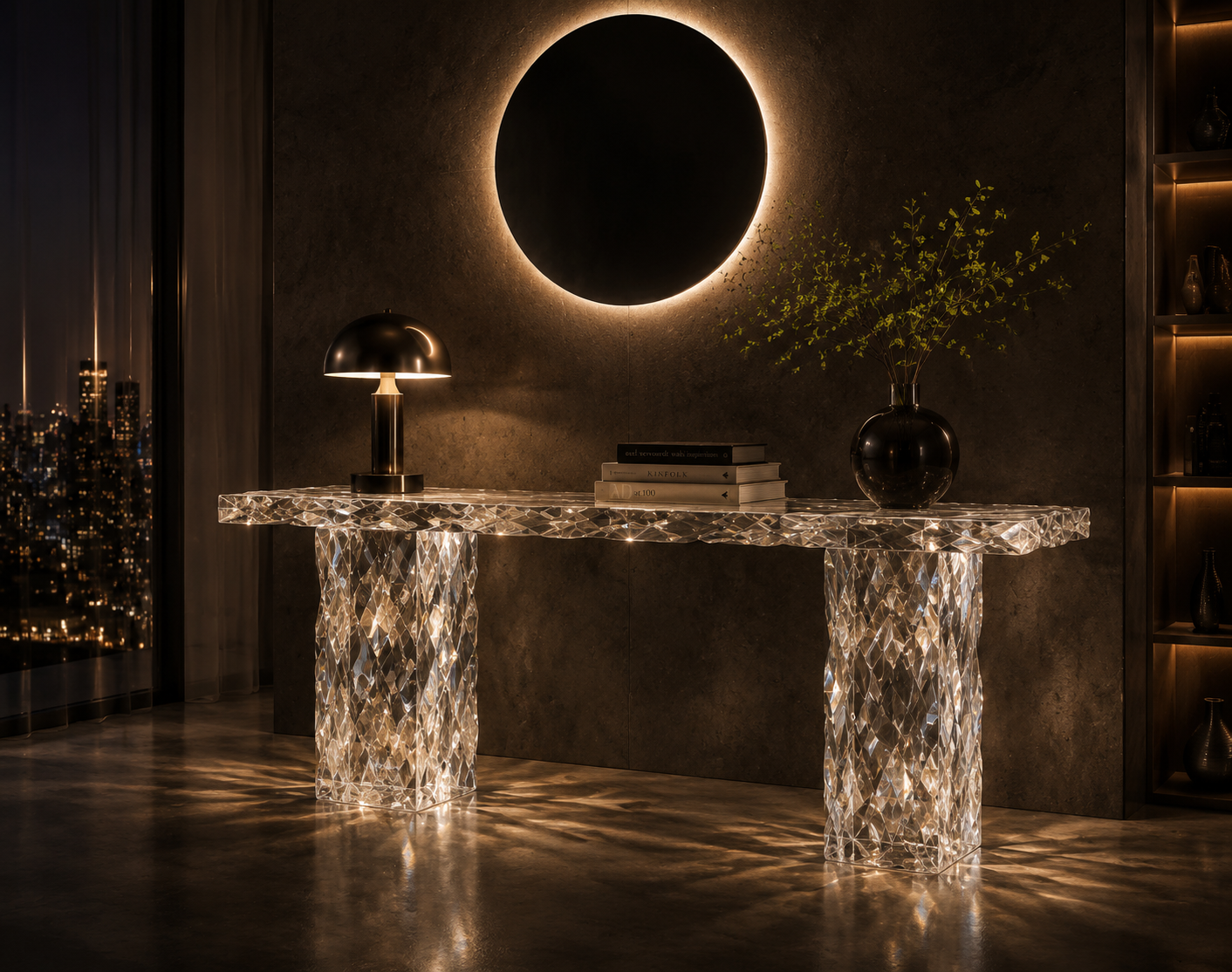
In high-end furniture, people often talk first about beauty. They notice the clarity of a synthetic crystal coffee table, the depth of a premium resin surface, or the luminous edge of a platinum acrylic console. They admire the way light moves through the material, how a sculptural dining table anchors a room, or how a glossy side table gives a lobby, villa, boutique, or penthouse a more refined atmosphere. But after the first impression, a more practical question begins to shape the customer’s long-term feeling: Will this piece stay beautiful in real life?
That question is usually not asked in technical language. Customers rarely say, “Does this material offer good surface cleanability, low moisture absorption, appropriate chemical resistance, and long-term optical stability?” Instead, they ask a much simpler question: Is it easy to clean? Behind that small question is a serious purchasing concern. A luxury piece of furniture is not only judged on the day it is delivered. It is judged after a dinner party, after children touch it with oily fingers, after a hotel guest places luggage on it, after a boutique customer leaves cosmetics on the display surface, and after the housekeeping team wipes it down hundreds of times.
This is why cleanability should not be treated as an after-sales detail. For synthetic crystal, high-end resin, and platinum acrylic furniture, it is part of the core material experience. A piece that is visually stunning but difficult to maintain can quickly become a source of anxiety. A piece that looks luxurious and is easy to care for becomes part of a more relaxed, confident lifestyle.
1. Cleanability Is No Longer a Minor Detail; It Is Part of Modern Luxury
Luxury used to be measured mainly by rarity, craftsmanship, and appearance. Those qualities still matter, but today’s customers also expect luxury to reduce friction in daily life. A beautiful object should not create a constant maintenance burden. If a coffee table looks spectacular under showroom lighting but shows every stain, traps dust in seams, or requires special care after every use, the customer’s emotional response changes from admiration to caution.
This shift is closely connected to how people now live indoors. The U.S. Environmental Protection Agency notes that Americans spend about 90 percent of their time indoors, and that some indoor pollutant concentrations can be two to five times higher than typical outdoor levels. The EPA also identifies household cleaners, furnishings, building materials, and other indoor sources as contributors to indoor air quality concerns. For furniture brands, this means the surface of a product is not separate from the living environment; it is part of the customer’s everyday indoor experience.
Cleanability therefore becomes a bridge between beauty and well-being. When a surface can be wiped clean easily, customers use fewer aggressive cleaning products, spend less time worrying about stains, and feel more comfortable allowing the piece to become part of daily life. The WELL Building Standard makes a similar point in the built-environment context: high-touch surfaces can remain sanitary when they are designed with suitable materials that facilitate easy cleaning, and this can reduce reliance on cleaning products that may contain potentially toxic chemicals.
For a manufacturer of synthetic crystal, premium resin, and platinum acrylic furniture, this creates a strong positioning opportunity. The sales message should not only be, “Our furniture is beautiful.” It should also be, “Our furniture is designed to keep its beauty with less effort.” That second promise is powerful because it speaks to what customers experience after purchase.
In practice, a luxury dining table must survive more than compliments. It must handle water rings, fingerprints, sauce droplets, wine spills, candle wax, dust, and repeated wiping. A boutique display plinth must stay clear under bright lighting even after customers touch it all day. A hotel lobby table must be cleaned quickly between guests without losing gloss. In these situations, the customer does not separate design from maintenance. The maintenance experience becomes the design experience.
This is especially true for transparent and translucent materials. Synthetic crystal and platinum acrylic invite people to look closely. Their appeal lies in clarity, reflection, depth, and light transmission. Any haze, residue, scratch, or cleaning mark becomes visible. That is why cleanability must be designed into the material, the finish, the edge treatment, and the product instructions from the beginning.
2. Customers Judge Materials Through Daily Contact, Not Technical Specifications
Manufacturers understand materials through formulas, processing conditions, density, curing systems, hardness, optical clarity, and finishing techniques. Customers understand materials through touch, sight, sound, and maintenance. They run a hand across the tabletop. They notice whether fingerprints disappear after one wipe. They see whether the surface still looks clear in daylight. They remember whether cleaning feels simple or stressful.
This is where the emotional value of easy cleaning becomes important. A customer may not remember the exact grade of resin or acrylic used, but they will remember whether the table was still presentable after a family gathering. In luxury residential projects, this matters because the furniture is often part of a lifestyle statement. In commercial interiors, it matters because the furniture must support operations. A five-star hotel, luxury showroom, or private club cannot afford surfaces that require complicated maintenance after every interaction.
Customer experience research supports this logic. Harvard Business Review’s well-known work on customer effort argues that reducing the effort customers must make can be a stronger driver of loyalty than simply trying to delight them. In other words, ease matters. For furniture, “effort” appears in the cleaning routine: how many steps are required, how careful the user must be, how easily a stain disappears, and how confidently the owner can maintain the piece.
Forrester’s Customer Experience Index evaluates customer experience through ease, effectiveness, and emotion. In 2025, Forrester analyzed more than 275,000 customer perceptions across 469 brands in 12 industries and 13 countries. Although that research is not furniture-specific, its framework applies strongly to material selection: a surface must be easy to maintain, effective in daily use, and emotionally reassuring.
Consider a platinum acrylic dining table in a luxury apartment. The owner may buy it because it looks architectural and sophisticated. But after purchase, the relationship becomes practical. Can the owner wipe away fingerprints before guests arrive? Can a housekeeper clean it without leaving cloudy marks? Can the table handle ordinary use without making the owner nervous? If the answer is yes, the material becomes trusted. If the answer is no, the customer may still admire the design, but the piece becomes less usable.
This is why cleanability should be described not as a technical afterthought but as a customer benefit. Instead of saying only “smooth finish,” a brand can say “a smooth, non-porous surface designed for quick daily wiping.” Instead of saying only “premium acrylic,” it can say “crystal-clear acrylic with a polished surface that helps reduce dirt retention and simplifies routine care.” Instead of saying only “high-end resin,” it can say “a resin surface engineered for visual depth and practical maintenance.”
The language matters because customers buy confidence. They want to know that the beauty they see today will not become a burden tomorrow.
3. Smooth, Non-Porous Surfaces Create a More Confident Cleaning Experience
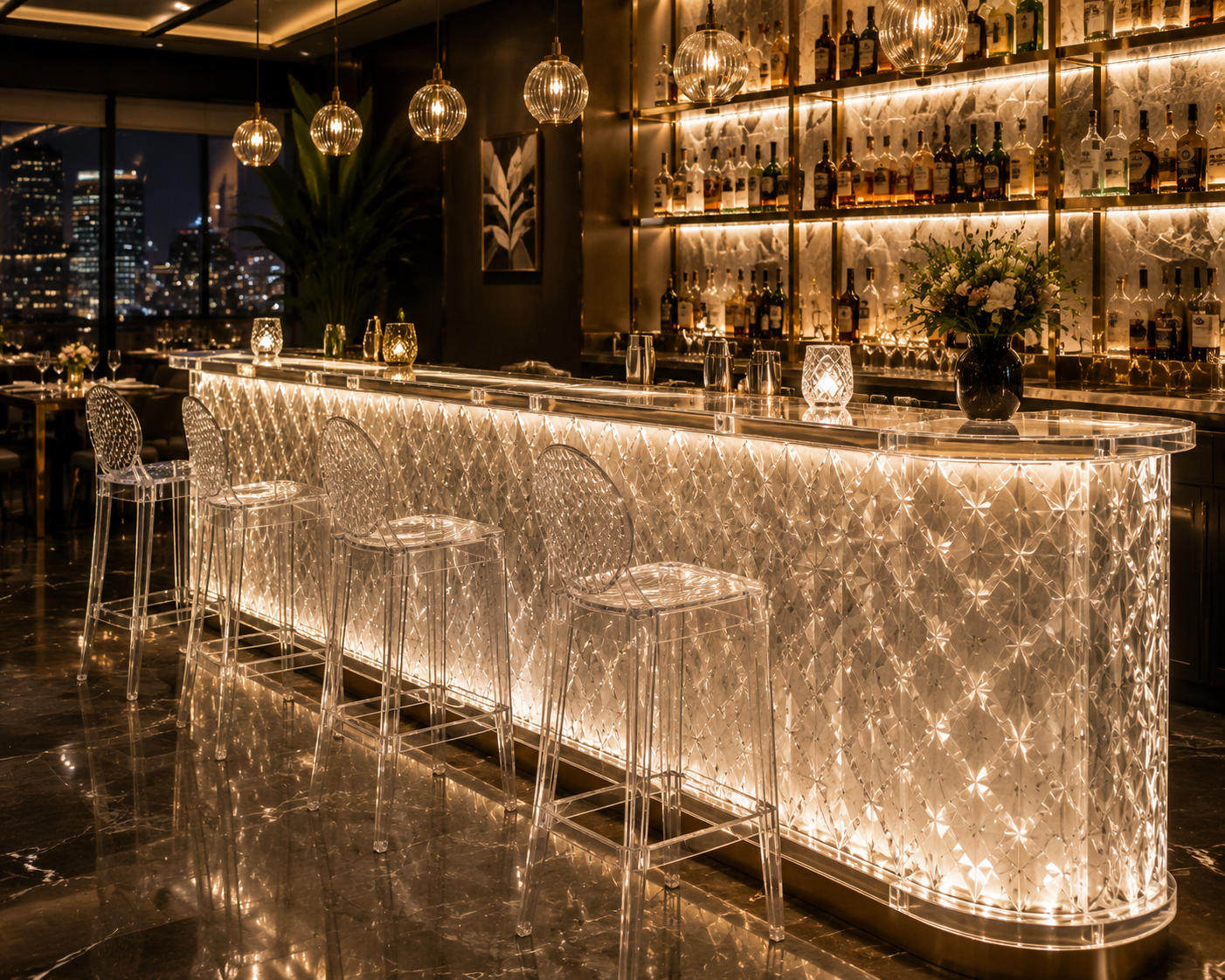
One of the most important reasons synthetic crystal, premium resin, and platinum acrylic can perform well in modern interiors is their potential for smooth, continuous, non-porous surfaces. In furniture, small crevices, rough textures, open grains, deep joints, and absorbent surfaces can make cleaning more difficult. Dust gathers in corners. Liquids penetrate. Residue remains after wiping. Over time, the piece looks older than it should.
The WELL Building Standard’s cleanable environment feature specifically emphasizes smooth high-touch and non-porous surfaces that are free of visible defects, hard-to-reach crevices, and difficult joints. The standard is written for buildings, not furniture alone, but the principle is directly relevant: cleanability is partly a design decision.
The CDC also advises that high-touch surfaces should be cleaned regularly and that cleaning is often enough in many routine situations. It recommends considering the type of surface and how often it is touched, because high-touch surfaces are more likely to spread germs. The CDC further notes that hard surfaces such as counters, light switches, desks, and floors should be cleaned with soap and water or products appropriate for the surface.
For furniture manufacturers, this reinforces a practical design principle: the best cleaning experience starts before the customer receives the product. It starts with material selection, mold quality, polishing process, edge finishing, seam reduction, and hardware placement. A seamless resin console or a polished acrylic table is easier to maintain not only because of the material itself, but because there are fewer places for dirt to hide.
This is where synthetic crystal, premium resin, and platinum acrylic have a strong advantage. Synthetic crystal furniture can offer the visual purity associated with stone or glass while allowing sculptural shapes and controlled surface finishing. Premium resin can create depth, color, translucency, and artistic texture while maintaining a smooth protective surface. Platinum acrylic can provide glass-like brilliance with lighter weight and strong design flexibility. PMMA, commonly known as acrylic, is widely recognized for high light transmission, glass-like qualities, UV stability, and lower moisture absorption compared with many materials, all of which support its use in clear, durable design applications.
However, the key is not to overpromise. Acrylic and resin furniture should still be cleaned correctly. Architectural Digest, writing about acrylic and Lucite care, warns against ammonia-based household cleaners because they can make acrylic surfaces cloudy, and recommends using soft microfiber cloths and cleaners made for plastic. This kind of guidance is valuable because it protects the customer’s long-term experience.
A strong brand does not simply say, “This is easy to clean.” It also teaches the customer how to clean it properly. For example: use a soft microfiber cloth, avoid abrasive pads, wipe spills promptly, use mild soap or an acrylic-safe cleaner, and avoid ammonia, strong solvents, or harsh chemicals unless they are approved for the material. Clear care instructions reduce misuse, complaints, and unnecessary damage.
4. Easy Cleaning Protects the Visual Value of Transparent and High-Gloss Furniture
For transparent, translucent, and high-gloss furniture, cleanability is directly connected to visual value. A wooden table can sometimes hide minor dust or fingerprints within its grain. A textured stone surface may disguise small marks. But synthetic crystal, premium resin, and platinum acrylic are more visually honest. They reveal light, reflection, and depth, and they also reveal dirt, haze, scratches, and residue.
That is not a weakness. It is part of their beauty. But it means the surface must be designed and maintained with precision.
A platinum acrylic side table, for example, may be chosen because it makes a room feel lighter and more spacious. Its transparency reduces visual weight, making it ideal for modern apartments, luxury boutiques, and hospitality spaces. But if the surface becomes cloudy from the wrong cleaner, the main design value is damaged. A premium resin dining table may be chosen because of its deep, liquid-like finish. But if food residue or cleaning streaks remain on the surface, the sense of depth is interrupted. A synthetic crystal console may be chosen for brilliance and sculptural presence. But if dust accumulates in complex details, the object can look neglected.
The technical properties of acrylic help explain why proper material and care choices matter. SpecialChem reports that PMMA allows about 92 percent of light to pass through it and offers strong optical clarity, while also having good scratch resistance compared with other transparent polymers such as polycarbonate, although less than glass. It also notes that acrylics are generally unaffected by many aqueous solutions such as detergents and dilute inorganic acids, but are not recommended for certain organic solvents.
This balance is important for marketing. The message should be confident but responsible. Acrylic, resin, and synthetic crystal surfaces can be highly practical when properly engineered and properly maintained. But customers should understand that luxury materials deserve suitable cleaning methods. That honesty builds trust.
In real use, the most successful high-gloss furniture pieces are those that make maintenance feel predictable. A customer should know that a fingerprint can be removed with a microfiber cloth. A water mark should not become a permanent worry. A guest’s coffee cup should not cause panic. A housekeeper should not need a complicated cleaning ritual. The furniture should invite use, not fear.
For showrooms and online product pages, this can be demonstrated visually. A short care video can show coffee, fingerprints, dust, and light residue being wiped away. A close-up can show the surface before and after cleaning. A product card can explain “daily care,” “deep cleaning,” and “what to avoid.” These small pieces of content answer the hidden question behind many purchase decisions: Will this still look good after I live with it?
5. Cleanability Also Supports Health, Sustainability, and Operational Efficiency
The cleaning experience is not only about appearance. It also connects to health, sustainability, and labor. In homes, easier cleaning can reduce stress and make daily life feel more controlled. In hospitality and commercial spaces, easier cleaning can save time, reduce operational complexity, and support hygiene routines.
The American Cleaning Institute’s 2024 National Cleaning Survey, conducted among 1,000 nationally representative U.S. adults, found that 80 percent of Americans planned to spring clean, and other ACI survey reporting noted that nearly nine in ten Americans connect cleaning with well-being. These findings show that cleaning is not just a chore; it is emotionally connected to how people feel about their spaces.
This matters for premium furniture. A customer does not experience a dining table only as an object. They experience it as part of a clean home, a prepared home, a welcoming home. A hotel does not experience a lobby table only as décor. It experiences it as part of service quality. A boutique does not experience a resin display only as a platform. It experiences it as part of brand presentation.
From a sustainability perspective, cleanable materials can also support more responsible use. If a surface can be maintained with mild cleaning methods, customers may rely less on harsh chemicals. The EPA identifies cleaning supplies as one source that can introduce volatile organic compounds into indoor air, so reducing unnecessary chemical use is a meaningful benefit in indoor environments.
The WELL Building Standard also links cleanable surfaces with a potential reduction in cleaning products that may contain toxic chemicals. This is especially relevant for furniture in wellness-focused homes, luxury apartments, spas, clinics, hotels, and offices where material health is becoming part of the purchasing conversation.
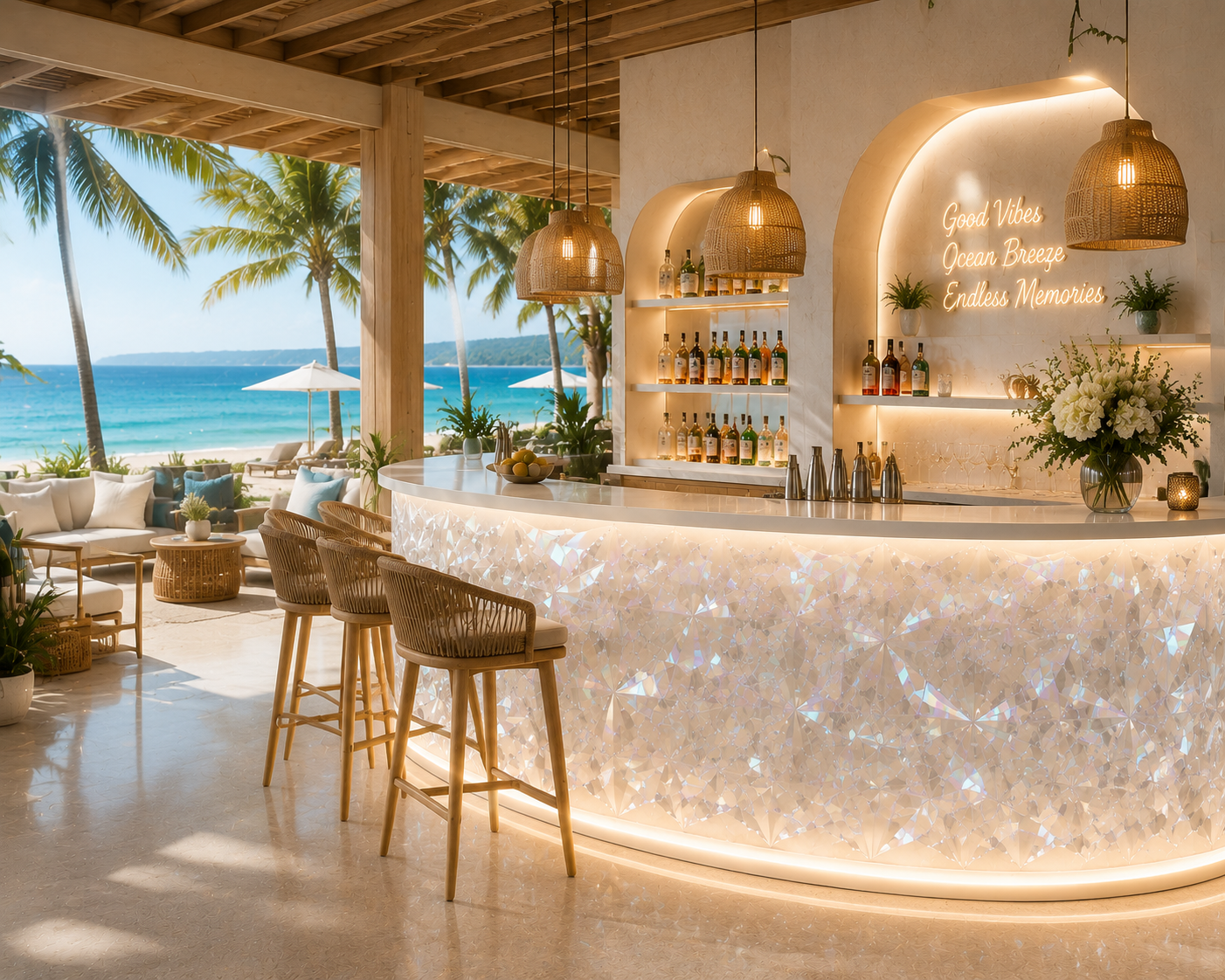
In commercial projects, operational efficiency is equally important. A hotel housekeeping team must clean quickly and consistently. A restaurant must turn tables without damaging surfaces. A luxury retail store must maintain displays under bright lights all day. If a surface requires too many steps or too much caution, the cost of ownership rises. If a surface is intuitive to clean, the furniture supports the business.
This is a strong argument for premium resin and acrylic furniture in high-traffic interiors. The value is not just that the piece looks expensive. The value is that it can remain presentable with a practical care routine. In project sales, this point can be decisive. Designers, architects, procurement teams, and property owners often need to justify material choices not only by aesthetics, but by maintenance, durability, and lifecycle performance.
For example, when specifying a custom resin reception desk, the discussion should include how often the surface will be touched, what cleaners the facility uses, whether the material is compatible with those cleaners, how scratches can be reduced, and whether the finish can be restored. BIFMA’s 2026 update to its furniture surfaces guideline reflects this broader industry concern by expanding guidance on how furniture surfaces perform when exposed to commonly used cleaning, sanitizing, and disinfecting products.
That kind of industry movement sends a clear message: cleanability is no longer only a healthcare issue. It is becoming a general furniture performance issue across commercial and residential environments.
6. The Best Material Story Combines Beauty, Care, and Long-Term Trust
For brands making synthetic crystal, premium resin, and platinum acrylic furniture, the strongest material story is not only about shine, transparency, or luxury. It is about long-term trust. Customers need to believe that the piece will remain beautiful, usable, and manageable.
This requires a complete communication strategy. First, explain the visual appeal: crystal clarity, sculptural form, luminous edges, depth of color, and contemporary elegance. Second, explain the practical advantage: smooth surfaces, reduced dirt retention, easy wiping, and clear care routines. Third, explain the responsibility: correct cleaning methods, compatible products, and protection against unnecessary damage.
This combination is more persuasive than pure decoration language. A buyer may love the look of a resin table, but they also want permission to use it. They want to host guests, place flowers on it, serve drinks on it, and live around it. They do not want a museum piece that creates anxiety. Easy cleaning gives them that permission.
A useful sales message might be: “Designed for the way luxury spaces are actually used.” This phrase connects beauty with reality. It tells customers that your furniture is not only made for photos, but for homes, hotels, boutiques, clubs, offices, and interiors where people touch, gather, eat, work, and entertain.
Product pages can include a “Material Experience” section with three simple questions:
Is it visually distinctive?
Is it comfortable to live with?
Is it easy to maintain?
For synthetic crystal, the answer can focus on brilliance, polished surfaces, and everyday wipeability. For premium resin, it can focus on artistic depth, seamless forms, and protective finishing. For platinum acrylic, it can focus on optical clarity, lightweight elegance, and proper acrylic-safe care.
The most convincing brands also show proof. They provide cleaning videos, care guides, material samples, project case studies, and before-and-after images. They explain which cleaners are recommended and which should be avoided. They train distributors and sales teams to answer maintenance questions clearly. They treat care instructions not as a warning label, but as part of the luxury service experience.
In the end, customers may first fall in love with the look of a material, but they stay loyal because of how that material behaves in daily life. A table that cleans easily after dinner becomes part of the family rhythm. A console that stays clear in a hotel lobby becomes part of operational confidence. A resin display that remains polished after hundreds of customer interactions becomes part of a retail brand’s image.
The small question “Is it easy to clean?” is therefore not small at all. It contains concerns about beauty, hygiene, time, effort, durability, chemical safety, and emotional comfort. For synthetic crystal, high-end resin, and platinum acrylic furniture, answering that question well can turn material beauty into long-term customer trust.
A truly premium material is not only admired when it is new. It is appreciated every time it is cleaned, touched, used, and seen again.