The Competition in Commercial Spaces Is Shifting from Functional Needs to Experience Creation
In the past, commercial space design mainly focused on functional layouts, product displays, and efficient space utilization. Whether it was a hotel, restaurant, showroom, retail store, or office environment, the primary concerns were often whether the space was practical, whether customer flow was smooth, and whether the overall decoration looked attractive.
However, as consumer expectations continue to evolve, the role of commercial spaces has changed dramatically.
Today, a successful commercial environment must do more than simply provide functionality. It needs to create memorable experiences through visual appeal, emotional connection, atmosphere, and sensory interaction. When customers enter a store, hotel, or brand showroom, they are not only experiencing the products themselves—they are experiencing the values and identity communicated by the entire environment.
Against this background, transparent furniture has gradually become an important element in modern commercial design.
Transparent furniture is not simply furniture made from clear materials. More importantly, it represents a new spatial design philosophy: reducing visual barriers, improving spatial flow, maximizing light transmission, and creating a more sophisticated visual experience within limited areas.
The transformation from ordinary spaces to premium experiences is not achieved through excessive decoration, but through precise control of every design element. Transparent furniture plays a crucial role in this process by making spaces appear more open, elegant, and contemporary.
Its value goes far beyond aesthetics. In commercial environments, transparent furniture helps solve issues such as visual congestion, enhances brand positioning, improves customer experience, and creates stronger commercial appeal.
1. Transparent Furniture Breaks Spatial Boundaries and Creates Greater Visual Expansion
One of the biggest challenges in commercial space design is creating a comfortable and premium atmosphere within limited physical dimensions.
Whether it is a boutique store, hotel lobby, restaurant, or showroom, businesses are constantly looking for ways to make their spaces feel larger, brighter, and more welcoming.
Traditional furniture made from wood, metal, or solid materials often provides strong functionality, but its visual weight can make a space appear smaller and more enclosed.
Transparent furniture changes this perception.
Its greatest advantage is its ability to reduce visual obstruction.
For example, in a small fashion boutique, traditional display cabinets, solid partitions, and heavy seating arrangements can easily create a crowded environment. However, when transparent acrylic display units, clear chairs, or transparent reception counters are introduced, the furniture remains functional while visually occupying far less space.
Customers can see the complete structure of the environment, creating the perception of a larger and more open area.
This design approach has already been widely adopted in premium retail environments. Many international luxury brands incorporate glass and acrylic elements into their stores because these materials allow products to remain the primary visual focus while maintaining a refined spatial atmosphere.
The key advantage of transparent furniture is that it does not compete with the main visual elements of a space.
Traditional furniture often features strong colors, textures, and solid forms, which may distract attention from displayed products. Transparent furniture works differently—it acts as a supporting element that provides functionality without overwhelming the overall design.
This is particularly valuable in industries such as jewelry retail.
For example, when jewelry is displayed on traditional counters, customers often perceive the entire display structure first. However, when high-transparency acrylic platforms are used, attention naturally shifts toward the jewelry itself because the supporting structure becomes visually minimized.
In premium commercial design, less often creates more impact.
High-end spaces do not necessarily rely on excessive decoration. Instead, they achieve sophistication by carefully controlling every visual element. Transparent furniture perfectly reflects this design philosophy by reducing visual burden and creating a cleaner, more efficient environment.
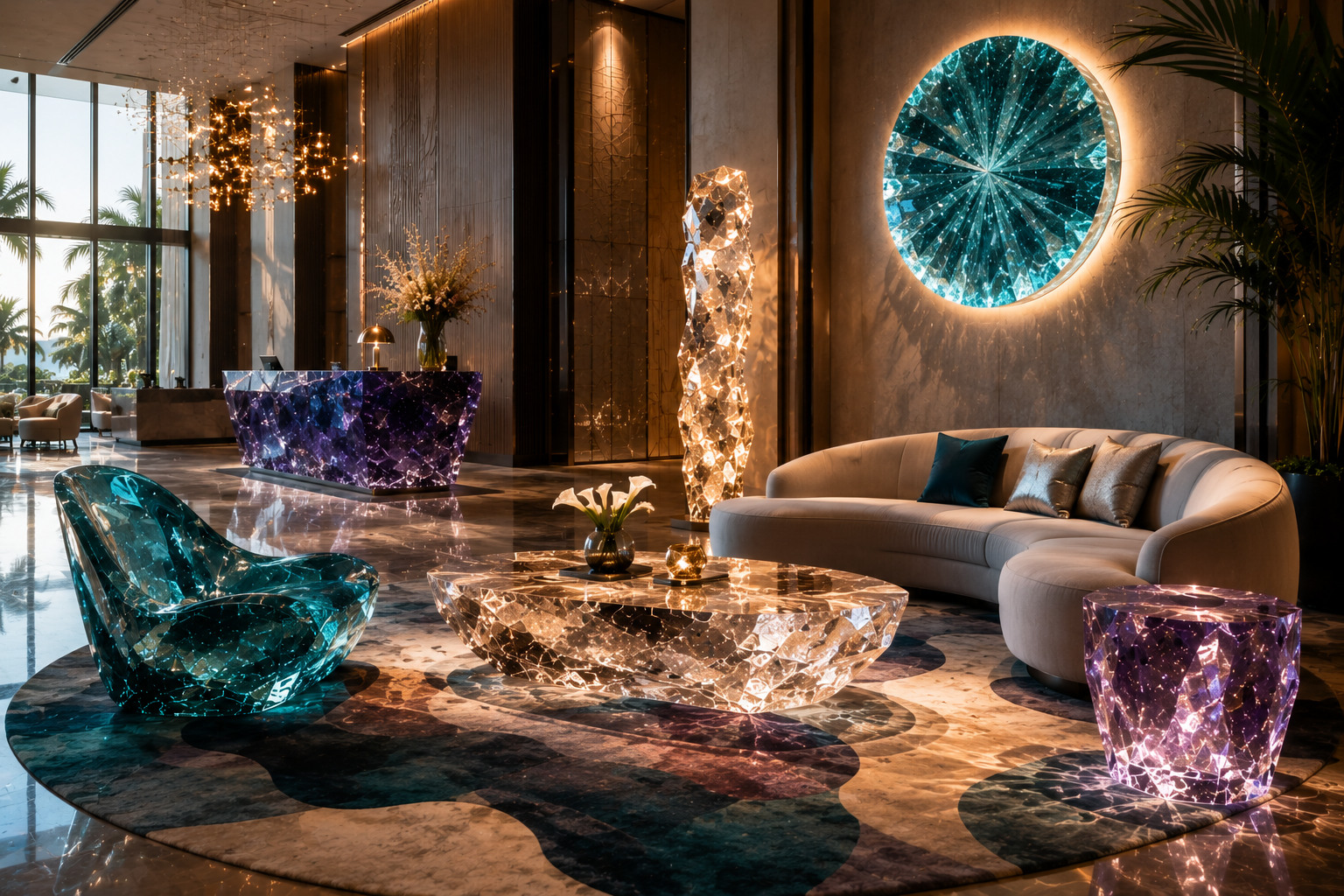
2. Transparent Furniture Enhances Lighting Efficiency and Creates a More Premium Atmosphere
Lighting plays a fundamental role in shaping the atmosphere of commercial spaces.
Many businesses invest heavily in advanced lighting systems, but the final result depends greatly on how furniture interacts with light.
Transparent furniture provides a unique advantage by maximizing the movement and distribution of light throughout a space.
Because transparent materials allow light to pass through, they help create a continuous visual connection between different areas. This is particularly valuable for commercial environments with limited natural lighting or smaller floor plans.
For example, consider a small urban café located in a building with limited sunlight exposure. If the interior is filled with dark wooden furniture, the space may feel heavy and enclosed. However, using transparent tables and chairs combined with warm lighting can create a brighter, lighter, and more inviting atmosphere.
This transformation affects not only visual perception but also customer psychology.
Research in environmental psychology shows that brighter and more open spaces often create feelings of comfort, relaxation, and accessibility. For commercial businesses, encouraging customers to stay longer directly increases opportunities for engagement and purchasing.
This is especially important in the hospitality industry.
High-end restaurants frequently use transparent dining tables, clear partitions, and transparent decorative furniture to maintain openness while creating an elegant atmosphere. Customers can enjoy their surroundings without feeling visually restricted by bulky furniture.
Transparent furniture also works naturally with modern lighting technology.
LED strips, hidden lighting systems, and focused spotlights can create unique reflections and visual effects when combined with transparent materials. Acrylic furniture, for example, can produce subtle light diffusion effects, adding a sense of technology and artistic sophistication.
Therefore, transparent furniture is not merely a functional product—it is also a tool for creating spatial atmosphere.
By combining transparency with thoughtful lighting design, businesses can achieve premium visual effects without relying on expensive decorative structures.
3. Transparent Furniture Strengthens Brand Identity and Turns Spaces into Marketing Tools
In today’s competitive market, commercial spaces are no longer just locations where transactions happen. They have become essential platforms for brand communication.
Customers often judge a brand’s quality, positioning, and professionalism through the environment they experience.
For example, a luxury beauty clinic using ordinary plastic furniture and outdated interior elements may unintentionally weaken customers’ perception of its premium positioning. However, incorporating transparent reception desks, display shelves, and elegant seating areas immediately creates a more modern, sophisticated, and professional image.
Transparent furniture naturally communicates several brand values:
Innovation
Modernity
Premium quality
Openness
A forward-thinking mindset
This is why many technology companies, creative studios, and lifestyle brands choose transparent furniture in their commercial environments.
In corporate showrooms, transparent display cabinets allow products to be viewed from multiple angles while minimizing visual distractions. In offices, transparent conference tables and partitions create a sense of openness and collaboration, reflecting a culture of communication and innovation.
From a marketing perspective, a visually distinctive space becomes a powerful brand asset.
Today’s consumers frequently share their experiences through social media. When a commercial environment has unique design characteristics, customers are more likely to photograph and share the space, creating organic brand exposure.
A restaurant featuring unique transparent furniture design, for example, can naturally encourage customers to create social media content. This type of user-generated promotion can significantly enhance brand visibility.
Therefore, transparent furniture is not simply a design choice—it is a strategic branding tool.
It allows businesses to communicate their identity through space itself, enabling customers to understand the brand atmosphere even before interacting with products or services.
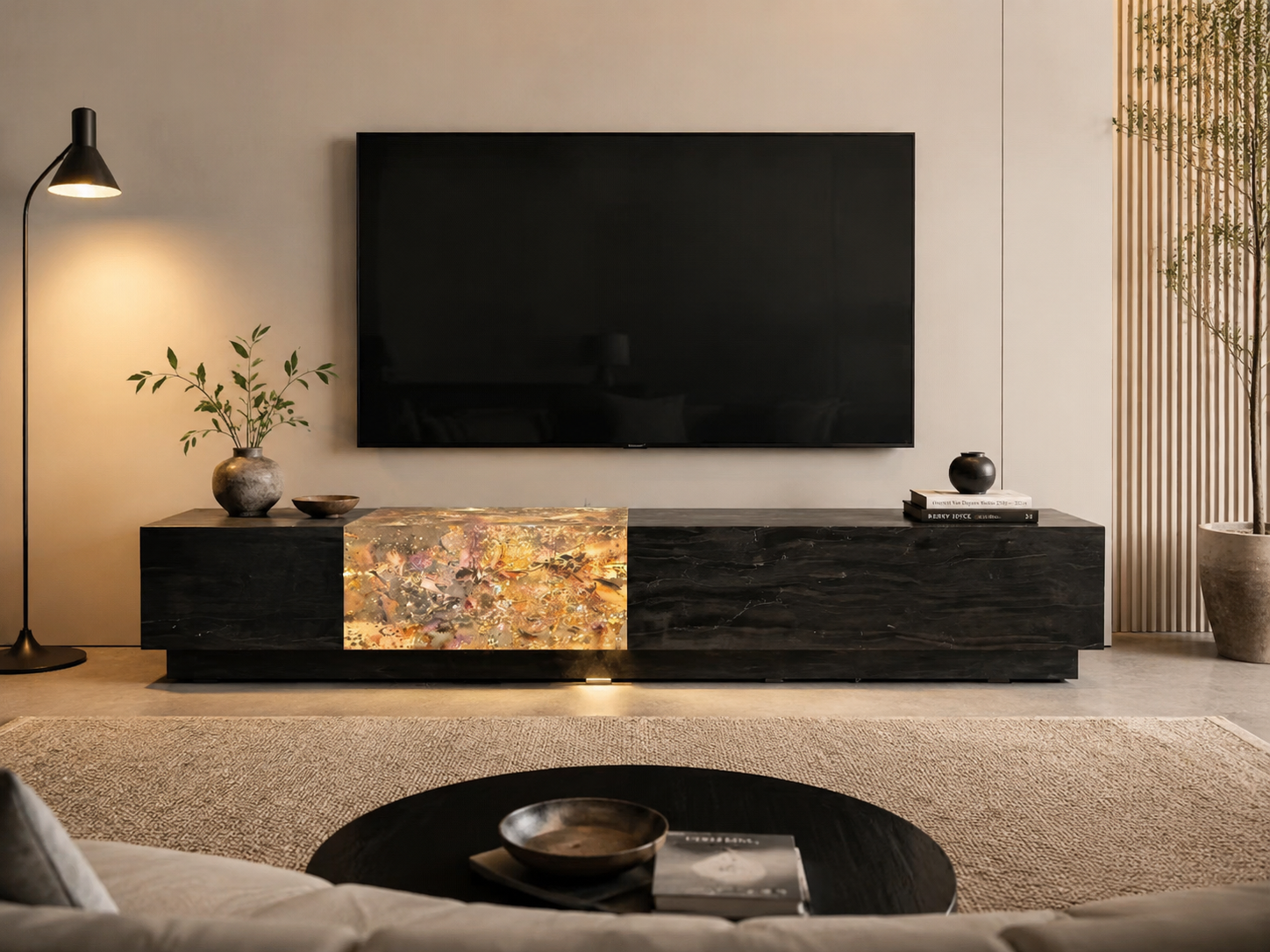
4. Transparent Furniture Optimizes Commercial Layouts and Improves Space Efficiency
One of the biggest challenges in commercial space design is maximizing value within limited areas.
Whether it is a retail store, hotel lobby, office environment, or restaurant, physical space is always a valuable resource. Businesses need to create comfortable and attractive environments while ensuring that every square meter contributes to operational efficiency.
Transparent furniture provides significant advantages in optimizing spatial layouts.
Traditional furniture often creates strong visual boundaries due to its solid structure and heavy appearance. For example, large sofas, wooden display cabinets, and fixed partitions can clearly separate different areas, but in smaller spaces, these elements may make the environment feel fragmented and crowded.
Transparent furniture offers a different approach.
It can define functional areas while maintaining visual continuity.
For example, in a hotel lobby, traditional reception counters, large sofas, and solid partitions may make the entrance area appear smaller and less flexible. By introducing transparent reception desks, clear coffee tables, and transparent seating elements, hotels can maintain essential functions while preserving a sense of openness and spaciousness.
This design approach is particularly valuable in high-density urban commercial environments.
As rental costs continue to increase in major cities, businesses are paying closer attention to the value created by every square meter of space. Transparent furniture helps improve the perceived size of a space, allowing smaller commercial areas to appear more premium and comfortable.
For boutique stores, beauty salons, and specialty retail shops, this advantage is especially important.
These businesses often operate within limited floor areas but still need to provide customers with a high-quality experience. Excessive use of traditional furniture can reduce accessibility and create a crowded atmosphere. Transparent furniture minimizes visual pressure and helps create a cleaner, more sophisticated environment.
Another important advantage of transparent furniture is its flexibility.
Commercial spaces frequently require adjustments due to seasonal campaigns, product updates, exhibitions, or changing customer demands. Fixed and heavy furniture increases the difficulty and cost of redesigning a space.
Transparent furniture is usually lightweight, easy to move, and adaptable. Businesses can quickly modify layouts while maintaining a consistent design language.
For example, a brand launching a temporary pop-up store may need to complete installation within a short period. Transparent display shelves, tables, and furniture systems allow brands to create a unified premium atmosphere quickly while reducing future modification costs.
Therefore, transparent furniture does more than improve visual appeal—it enhances the operational efficiency of commercial spaces.
It transforms spaces from static environments into flexible platforms capable of adapting to changing business needs.
5. Transparent Furniture Enhances Customer Experience and Builds Emotional Connections
The ultimate goal of a commercial space is not simply to display products. It is to influence customer emotions, behaviors, and decisions.
Whether customers choose to enter a store, stay longer, explore products, or make a purchase is strongly influenced by their environmental experience.
Transparent furniture creates a more welcoming atmosphere through its lightweight visual appearance and sense of openness.
For example, in luxury retail environments, overly enclosed layouts and heavy furniture may create psychological distance between customers and the brand. Transparent furniture helps remove these barriers, allowing customers to explore products more naturally.
This is particularly important for experience-driven industries.
Take electric vehicle showrooms as an example. Traditional automotive stores mainly focused on vehicle display and sales conversations. However, modern EV experience centers increasingly focus on lifestyle experiences. Many brands use transparent display platforms, open seating areas, and modern furniture designs to create an environment that feels less like a traditional dealership and more like a vision of future living.
In this context, transparent furniture is not just a functional object—it becomes part of the overall experience design.
The same principle applies to premium office environments.
Transparent conference tables, glass partitions, and open collaboration areas can reduce the traditional sense of hierarchy and isolation found in conventional workplaces. They help communicate values such as transparency, innovation, and teamwork.
Consumer expectations have changed significantly.
People no longer evaluate brands only through product quality, price, or performance. Increasingly, they seek emotional value and meaningful experiences.
A thoughtfully designed commercial environment can create psychological associations such as:
“This brand is trustworthy.”
“This brand represents quality.”
“This brand understands modern lifestyles.”
Transparent furniture contributes to this emotional connection by transforming commercial spaces from simple transaction locations into immersive brand experiences.
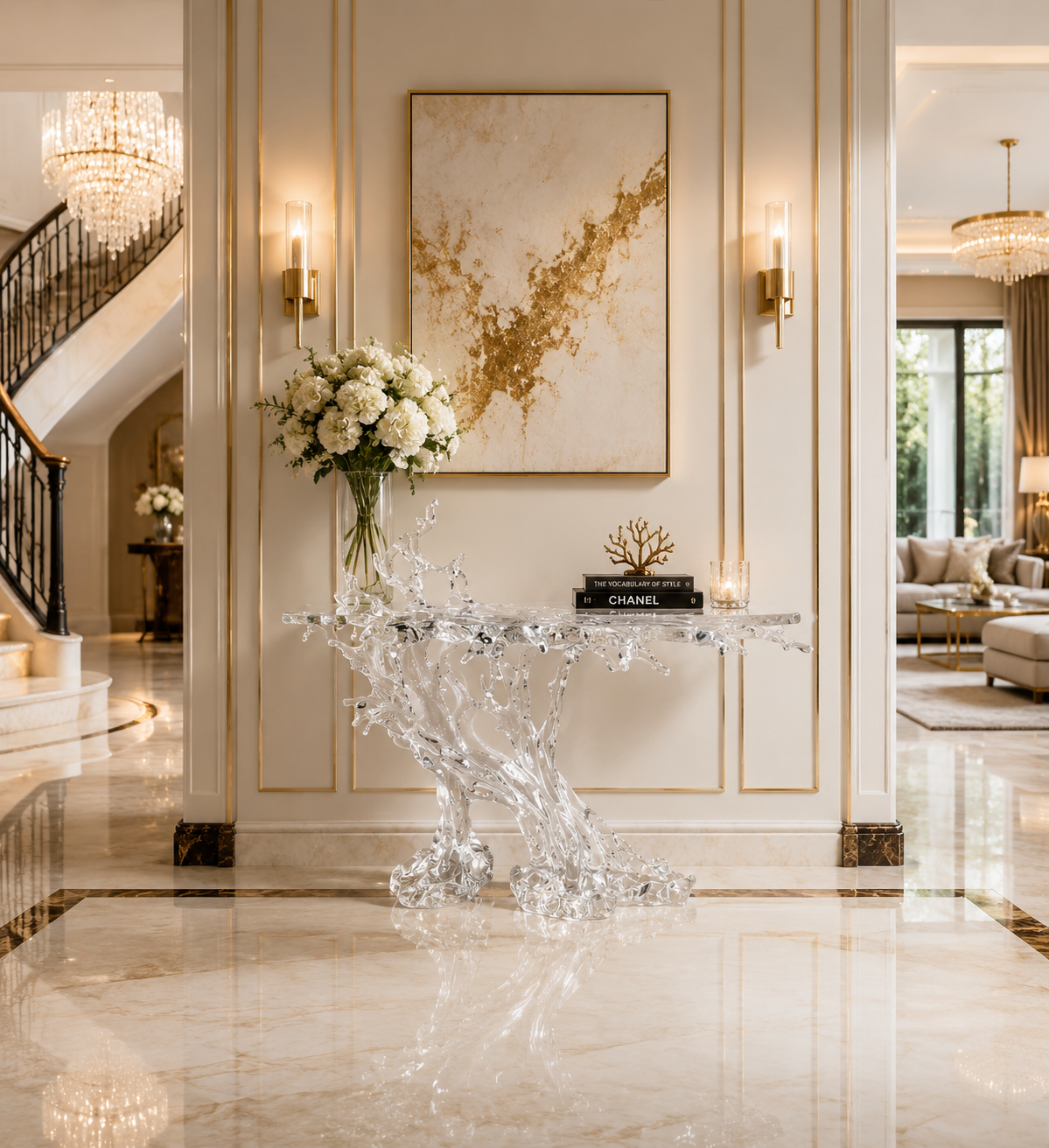
6. Transparent Furniture Represents the Future Direction of Commercial Space Design
As commercial environments continue to evolve, spatial design is becoming increasingly focused on experience, efficiency, and emotional engagement.
Future commercial spaces will no longer be defined simply by products, walls, and furniture arrangements. Instead, they will need to create meaningful interactions between brands and customers.
Transparent furniture aligns perfectly with this development.
First, transparent furniture matches the modern preference for minimalist and premium design.
Across both residential and commercial interiors, there is a growing movement toward simplicity, clean structures, and high-quality spatial experiences. Consumers increasingly appreciate environments that feel open, balanced, and visually comfortable.
By reducing unnecessary visual complexity, transparent furniture supports this contemporary design philosophy.
Second, transparent furniture fits naturally into the digital transformation of commercial spaces.
Future retail stores, showrooms, and experience centers will increasingly incorporate interactive technology, digital displays, and immersive experiences. Transparent materials allow information and visual content to remain visible while creating fewer physical barriers.
For example, transparent display systems can be combined with digital screens, projection technology, or smart lighting to create more engaging product presentations.
Transparent furniture can become an important component of future-oriented commercial environments.
Third, transparent furniture supports sustainable design concepts.
As businesses place greater emphasis on environmentally responsible development, material selection has become increasingly important. Many transparent furniture products now utilize recyclable materials, environmentally friendly acrylics, and advanced composite materials.
These solutions allow businesses to achieve modern design goals while supporting sustainability objectives.
However, transparent furniture should not be used without consideration.
A truly successful commercial space requires balance. If every element is transparent, the environment may appear cold or lack emotional warmth. Professional designers often combine transparent furniture with materials such as wood, metal, fabric, and natural textures to create richer visual layers.
The purpose of good design is not to highlight a single material, but to make every element work together to support the brand experience.
The true value of transparent furniture lies in the new possibilities it creates for commercial environments.
It provides businesses with a more open, efficient, and modern approach to spatial design while helping brands create stronger connections with customers.
Conclusion: Transparent Furniture Is Changing Not Only Spaces, but the Way Businesses Create Experiences
The transformation from ordinary spaces to premium experiences requires more than attractive decoration. It requires a deeper understanding of how design influences perception, emotion, and behavior.
Transparent furniture is redefining the visual logic of modern commercial environments.
It expands the perception of space by reducing visual barriers.
It enhances atmosphere by improving light circulation.
It strengthens brand identity by turning environments into communication platforms.
It improves customer experience by creating more open and memorable spaces.
In the future, competition among businesses will not only be about products and services—it will also be about experiences.
A commercial space that encourages customers to stay longer, remember the brand, and share their experience will become a valuable business asset.
Transparent furniture is not simply a decorative element. It is a connection between design, branding, and consumer psychology.
As commercial spaces continue to evolve from functional environments into immersive experiences, transparent furniture will play an increasingly important role in shaping modern business landscapes.
Its true significance is not only in its transparent appearance, but in the philosophy behind it: creating spaces that are more open, flexible, innovative, and connected to the people who use them.
.png)


