When people think about making a room feel larger, the first ideas that usually come to mind are lighter wall colors, bigger windows, fewer pieces of furniture, and a more minimal layout. These strategies can certainly help, but they are not the only ways to create a greater sense of openness.
One of the most effective and visually sophisticated approaches is to introduce transparent furniture into the space.
Transparent furniture has a unique ability to occupy physical space without creating the same visual weight as traditional opaque pieces. A table can still anchor a seating area. A console can still define an entrance. A chair can still provide structure and function. Yet because the material allows light and surrounding visual elements to remain visible, the room can feel noticeably less crowded.
For high-end interiors, this effect becomes especially interesting when transparent furniture is made from synthetic crystal.
Unlike ordinary transparent materials that may be selected primarily for utility, premium synthetic crystal furniture can become a design feature in its own right. It can reflect light, reveal sculptural details, and introduce a sense of refinement without visually dominating the room.
The result is a space that feels lighter, calmer, and more expansive, while still feeling intentionally furnished.
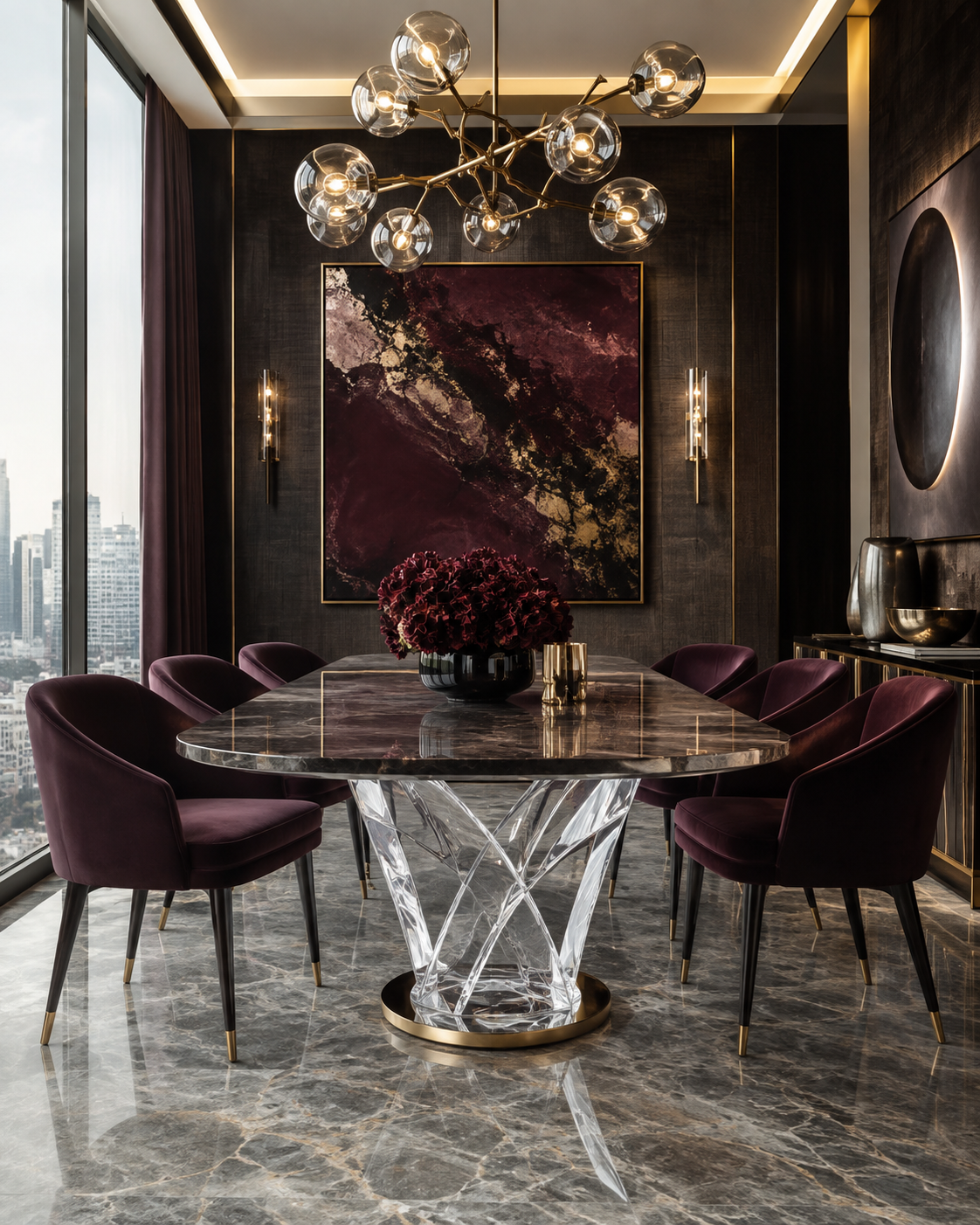
Transparency Changes How the Eye Reads Space
Every room contains visual boundaries.
Walls, furniture, rugs, cabinetry, architectural elements, and decorative objects all influence how the eye understands the size and structure of a space.
Large opaque furniture pieces can interrupt sight lines. A solid coffee table, for example, creates a visual block between the floor and the seating around it. A heavy console placed against a wall creates another horizontal mass. Several substantial pieces together can make a room feel visually dense even when the actual floor area has not changed.
Transparent furniture behaves differently.
Because you can see through the piece, the floor appears to continue beneath it. Light continues to move through and around it. The surrounding architecture remains visible.
This does not mean the furniture disappears.
Instead, its visual presence becomes lighter.
A transparent synthetic crystal table may still have a bold shape, generous proportions, and a strong sculptural identity, but the material prevents the piece from becoming an opaque barrier.
This is one of the main reasons transparent furniture can make a room feel more open.
The eye perceives fewer interruptions.
Openness Does Not Have to Mean Emptiness
There is an important difference between a room that feels open and a room that feels empty.
An empty room often lacks visual anchors. There may be too much unused floor area, too few layers, or not enough variation in materials and forms.
An open room, on the other hand, can still feel complete.
The furniture is present. The composition is intentional. There are focal points, functional zones, and decorative elements.
The difference is that the space has room to breathe.
Transparent furniture helps create this balance because it allows designers to add function without adding excessive visual heaviness.
A synthetic crystal side table beside a sofa can provide a useful surface without making the seating arrangement feel crowded.
A transparent console in an entrance can offer display space while preserving the openness of the hallway.
A pair of synthetic crystal accent chairs can introduce structure without visually reducing the room.
The furniture is still doing its job. It simply does not compete as aggressively with the surrounding space.
Why Synthetic Crystal Works Particularly Well in Luxury Interiors
Transparent furniture is not a new idea, but the material used to create it greatly influences the final impression.
In high-end interiors, clarity alone is not enough.
The material must also contribute to the atmosphere of the room.
Synthetic crystal can bring a sense of precision, luminosity, and sculptural character that works particularly well in luxury residential and hospitality environments.
Its transparency allows light to interact with the furniture rather than simply stopping at the surface.
Edges can catch highlights.
Thicker sections can create subtle optical depth.
Curved or faceted designs can produce interesting visual effects as the viewer moves through the room.
In daylight, synthetic crystal furniture may appear almost weightless in some areas while becoming more defined in others.
Under warm evening lighting, the same piece can take on a more jewel-like presence.
This ability to change character according to the surrounding light is one of the reasons transparent furniture can feel sophisticated rather than purely minimal.
Transparent Furniture Preserves Sight Lines
Sight lines are one of the most important elements in interior design.
When you enter a room, your eye naturally travels toward windows, artwork, architectural features, lighting, or other areas of visual interest.
Furniture can either support those sight lines or interrupt them.
In smaller living rooms, apartments, bedrooms, or open-plan spaces, maintaining long visual lines can make a significant difference to how spacious the room feels.
A solid piece of furniture placed in the middle of the room may visually divide the space.
A transparent synthetic crystal piece can define the same functional zone while allowing the eye to continue beyond it.
Imagine a living room with a large window overlooking a garden, city skyline, or terrace.
If the coffee table is visually heavy, it becomes another object the eye must process before reaching the view.
If the table is transparent, the floor, seating, and exterior view remain more visually connected.
The room can feel deeper because the eye is able to travel farther.
This is especially valuable in interiors where the architecture itself deserves attention.
Light Becomes Part of the Furniture
Opaque furniture mainly interacts with light at its surface.
Transparent furniture interacts with light throughout its form.
That difference can dramatically change the atmosphere of a room.
When natural light enters a space, transparent synthetic crystal furniture allows much of that brightness to remain visible.
The furniture does not create the same large areas of visual shadow that darker, solid pieces often do.
Instead, light can pass through the form and reflect from polished surfaces and edges.
This gives designers an additional tool for creating a brighter interior without adding more lamps or using only pale colors.
The furniture itself contributes to the perception of lightness.
In rooms with strong daylight, this can create a clean and energetic feeling.
In softer interiors, the effect can be more subtle and atmospheric.
Transparent materials can capture small reflections from lamps, chandeliers, windows, metallic finishes, and decorative objects, adding visual complexity without adding clutter.
A Strong Form Can Still Feel Light
One of the misconceptions about transparent furniture is that it must look delicate or visually insignificant.
That is not the case.
Transparency allows designers to work with bold proportions while controlling visual weight.
A synthetic crystal dining table can have a substantial base.
A console can have thick sculptural legs.
A coffee table can feature a dramatic geometric form.
Because the material remains transparent, these large shapes do not feel as visually dense as similar forms produced in dark wood, stone, or metal.
This creates an interesting opportunity in contemporary luxury design.
Instead of choosing between dramatic furniture and an open room, it becomes possible to have both.
A piece can be architecturally strong while still allowing the surrounding space to remain visually accessible.
This contrast between physical substance and visual lightness is one of the most compelling characteristics of synthetic crystal furniture.
Transparent Furniture Makes Layering Easier
Well-designed interiors usually contain layers.
Furniture, textiles, lighting, artwork, architectural finishes, decorative objects, and natural materials all contribute to the final composition.
However, too many opaque layers can quickly make a room feel busy.
Transparent furniture introduces another layer without adding the same level of visual competition.
For example, a living room might already contain a textured rug, upholstered sofa, stone wall, large artwork, and decorative lighting.
Adding a heavily patterned or dark coffee table could make the center of the room feel crowded.
A synthetic crystal table provides the functional layer without obscuring the rug beneath it.
The rug remains visible.
The surrounding furniture remains connected.
The room retains depth.
This makes transparent furniture particularly useful in spaces where the floor finish is an important part of the design.
Marble, patterned stone, luxury timber flooring, custom rugs, or other decorative surfaces can remain visible rather than being hidden beneath large opaque pieces.
It Can Help Smaller Rooms Feel More Generous
Transparent furniture is often associated with small-space design for a good reason.
When floor area is limited, every large piece has a stronger impact on the way the room feels.
A small dining room with a dark table and several heavy chairs can quickly appear crowded.
A narrow entryway with a bulky console may seem even narrower.
A compact living room with a solid central table can feel visually divided.
Using transparent furniture reduces some of that visual density.
A synthetic crystal dining table can define the dining area while allowing the floor and surrounding chairs to remain more visible.
A narrow crystal console can provide a surface for lighting or decorative objects without closing in the hallway.
A transparent side table can fit beside a lounge chair without making the corner look overloaded.
The physical dimensions of the furniture have not changed, but the perception of the room often does.
And in interior design, perception is extremely important.
Large Rooms Can Benefit Too
Transparent furniture is not only useful in small spaces.
In large luxury interiors, it can help prevent the room from becoming overly heavy.
Large homes often require furniture with generous proportions. Small-scale pieces may look lost in a spacious room, but oversized solid furniture can sometimes create an unnecessarily dense composition.
Synthetic crystal furniture offers an alternative.
It can provide the scale required by the architecture while preserving a sense of visual openness.
This is particularly effective in large living rooms, double-height spaces, penthouses, luxury villas, and hotel interiors.
A substantial transparent console can occupy a long wall without visually overpowering the artwork above it.
A large synthetic crystal coffee table can match the scale of an oversized sectional while allowing the rug and flooring to remain visible.
A sculptural crystal pedestal can hold an artwork or decorative object without introducing another heavy material into the composition.
The room remains furnished, but the architecture still has space to speak.
The Material Can Create a Floating Effect
One of the most visually appealing characteristics of transparent furniture is the way it can create the impression that objects are floating.
Place a sculpture on a synthetic crystal pedestal and the support can become almost secondary to the artwork.
Place a decorative object on a transparent console and it may appear more isolated and intentional.
Use a transparent base beneath a tabletop and the upper surface can seem lighter than expected.
This floating effect can make interiors feel more refined because visual relationships become clearer.
Objects appear to have more space around them.
The room feels less compressed.
Designers can use this quality to highlight important decorative pieces without creating overly complicated displays.
Synthetic Crystal Works With Many Interior Styles
Transparent furniture is often associated with ultra-modern interiors, but it can work in a much wider range of design environments.
In a contemporary space, synthetic crystal furniture can reinforce clean lines and architectural simplicity.
In a luxury modern interior, it can pair beautifully with marble, polished metal, leather, and high-quality textiles.
In a more classic room, a carefully designed transparent piece can introduce contrast and prevent traditional furniture from feeling too heavy.
In an eclectic interior, synthetic crystal can act as a neutral visual bridge between different materials and periods.
Because the material is visually light, it often adapts to surrounding colors rather than competing with them.
This makes it especially useful in interiors where furniture may need to remain flexible as artwork, textiles, or accessories change over time.
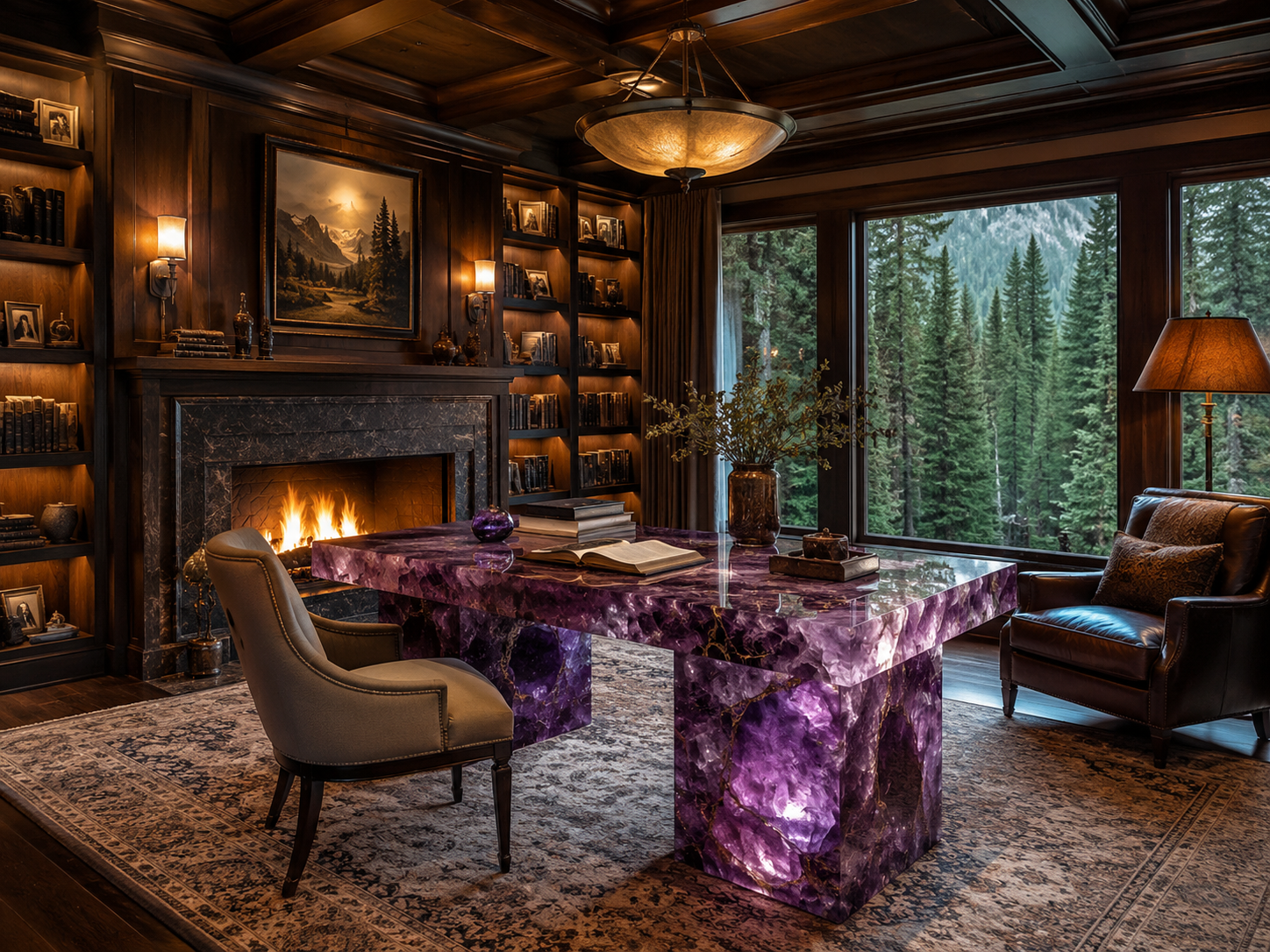
Transparency Can Highlight Craftsmanship
When a material is transparent, there is nowhere for poor construction to hide.
Every connection, edge, proportion, and surface becomes more noticeable.
For this reason, high-end synthetic crystal furniture requires careful attention to design and finishing.
The geometry needs to feel intentional.
Transitions between components need to be clean.
Polished areas must support the clarity of the material.
Proportions must work from multiple viewing angles.
This is where transparent furniture can move beyond being simply functional and become a piece of craftsmanship.
The viewer notices not only what the furniture does, but how it has been made.
In luxury interiors, this level of visual precision matters.
A well-designed synthetic crystal piece can communicate quality through restraint rather than ornament.
Transparent Does Not Mean Invisible
The most successful transparent furniture still has personality.
It may have bold curves, faceted surfaces, thick structural sections, or carefully controlled proportions.
The goal is not to make the furniture disappear completely.
If every transparent piece were visually invisible, the room could lose structure.
Instead, good design creates a balance.
The furniture should be visible enough to define the room, but light enough to preserve openness.
This is where material, form, scale, and lighting need to work together.
A synthetic crystal coffee table with a dramatic sculptural base can become a focal point while still allowing the floor to remain visible.
A clear console with thick, polished geometry can feel substantial without appearing heavy.
The material creates openness while the design creates identity.
Contrast Makes Transparent Furniture More Powerful
Transparent furniture often becomes more interesting when placed beside contrasting materials.
A synthetic crystal table next to a richly textured sofa creates a dialogue between softness and clarity.
A transparent console against natural stone highlights the difference between visual lightness and material weight.
Crystal paired with dark timber can create a striking contrast between transparency and depth.
Used alongside brushed or polished metal, it can produce a more contemporary and architectural look.
This contrast helps prevent transparent furniture from making a room feel sterile.
The key is not to make everything transparent.
Instead, synthetic crystal can be used strategically to balance heavier materials.
The result is a room that feels layered but not overloaded.
The Floor Becomes More Important
When furniture is transparent, the surface beneath it becomes part of the visual composition.
This can be a major advantage in luxury interiors.
A patterned rug can remain fully appreciated beneath a transparent coffee table.
A marble floor can continue visually through a dining area.
A detailed timber pattern can remain visible below a console or side table.
Instead of hiding expensive flooring or custom rugs, transparent furniture allows these design investments to remain part of the overall experience.
This creates stronger visual continuity across the room.
It also makes the space feel more cohesive because the floor is not repeatedly interrupted by large blocks of opaque furniture.
It Can Reduce Visual Clutter Without Reducing Function
Minimalism is often misunderstood as simply owning fewer things.
In reality, good minimalist design is more about controlling visual information.
A room can contain several functional pieces and still feel calm if those pieces do not compete excessively for attention.
Transparent furniture supports this approach.
You can add a side table where one is needed.
You can place a console behind a sofa.
You can create a small desk or display surface.
You can introduce additional seating.
Yet because synthetic crystal furniture has lower visual mass than many opaque alternatives, the room can retain a cleaner appearance.
This is particularly useful in luxury interiors where functionality cannot be sacrificed simply to achieve a minimal aesthetic.
Placement Matters as Much as Material
Transparent furniture works best when it is placed with intention.
Because the material allows the surrounding space to remain visible, placement determines what the viewer sees through the piece.
A synthetic crystal table positioned over a beautiful rug can enhance the floor design.
A console placed in front of an architectural wall can allow the texture behind it to remain visible.
A transparent pedestal near a window can interact beautifully with changing natural light.
Conversely, poor placement can reduce the effect.
If a transparent table is surrounded by excessive decorative clutter, the visual advantage may be lost.
If too many transparent pieces are grouped together, the room may lack contrast.
The goal is usually to use transparency as a balancing element rather than as the only material language in the space.
Lighting Can Transform Synthetic Crystal Furniture
Lighting plays a particularly important role in the appearance of synthetic crystal.
During the day, natural light can emphasize clarity and make the furniture feel subtle.
In the evening, artificial lighting can completely change the character of the piece.
A nearby floor lamp can create soft highlights along polished edges.
A chandelier above a dining table can produce multiple reflections.
Directional lighting can emphasize thickness, curvature, or faceted surfaces.
Warm lighting can make a transparent piece feel more inviting, while cooler architectural lighting can give it a sharper contemporary character.
Because of this, synthetic crystal furniture should not be considered separately from the lighting plan.
The two elements can work together to create a much more dynamic interior.
Transparent Furniture Can Give Decorative Objects More Presence
One of the interesting effects of transparent surfaces is that they can visually separate decorative objects from the furniture supporting them.
On a dark wooden console, the console itself may become a major part of the composition.
On a transparent synthetic crystal console, the decorative object may receive more attention.
A vase, sculpture, lamp, or art object can appear more visually isolated.
This creates a gallery-like quality.
The furniture supports the display without competing with it.
For collectors, art-focused interiors, luxury retail environments, and hospitality spaces, this can be particularly valuable.
The Best Results Come From Balance
Transparent furniture is powerful precisely because it contrasts with other materials.
A room filled entirely with transparent furniture may lose warmth, hierarchy, and visual grounding.
The strongest interiors usually combine clarity with texture.
Synthetic crystal may be paired with upholstered furniture, natural stone, timber, leather, metal, ceramics, and textiles.
The transparent material provides openness.
The opaque materials provide weight.
Soft materials provide comfort.
Reflective surfaces provide energy.
Together, these elements create a richer and more sophisticated environment.
The objective is not to eliminate visual weight completely.
The objective is to distribute it intelligently.
Choosing the Right Synthetic Crystal Furniture
When selecting transparent furniture for a high-end interior, it is useful to think beyond simple dimensions.
Consider what role the piece needs to play.
Should it disappear quietly into the architecture, or should it become a sculptural focal point?
Should it highlight the rug or flooring beneath it?
Will it sit near a window where natural light can interact with the material?
Does the room already contain many reflective surfaces?
Will the piece be paired with warm, textured materials to create contrast?
Proportion is equally important.
Transparent furniture can visually tolerate generous scale, but the piece still needs to respect circulation and functional requirements.
A coffee table should allow comfortable movement around the seating area.
A console should suit the width of the wall or corridor.
A dining table should provide the required seating without overwhelming the room.
The advantage of transparency is not that scale stops mattering.
It is that visual scale and physical scale can be managed more independently.
Why Synthetic Crystal Furniture Feels Modern Without Feeling Temporary
Trends in interior design change constantly.
Colors shift.
Furniture silhouettes evolve.
Decorative finishes come and go.
Transparent furniture has remained relevant because it is based on a deeper design principle rather than a single decorative trend.
It helps preserve light.
It protects sight lines.
It reduces visual density.
It creates contrast with heavier materials.
It supports both minimal and layered interiors.
Synthetic crystal adds another dimension by giving transparency a more luxurious and sculptural character.
Rather than functioning only as an invisible material, it can become an intentional design statement.
This makes it suitable for interiors that want to feel contemporary without relying on short-lived visual trends.
A Different Kind of Luxury
Luxury does not always need to be expressed through visual heaviness.
A room does not need to be filled with dark materials, ornate details, or oversized objects to feel valuable.
Modern luxury is often about precision, proportion, material quality, and atmosphere.
Synthetic crystal furniture fits naturally into this idea.
Its presence can be subtle, but the effect on the room can be significant.
It can make spaces feel brighter without removing furniture.
It can create openness without sacrificing function.
It can support decorative objects without competing with them.
It can introduce a strong sculptural form without visually closing the room.
Most importantly, it gives designers the ability to create spaces that feel complete without feeling crowded.
That balance is difficult to achieve, and it is one of the reasons transparent furniture continues to have such a strong role in sophisticated interior design.
When thoughtfully designed and carefully positioned, synthetic crystal furniture does more than simply allow you to see through it. It changes the relationship between furniture, light, architecture, and negative space, allowing a room to feel more expansive while still retaining warmth, structure, and personality. And perhaps the most interesting question is not whether transparent furniture can make your room feel larger, but which part of your interior could be transformed the moment you stop asking furniture to visually fill the space.


