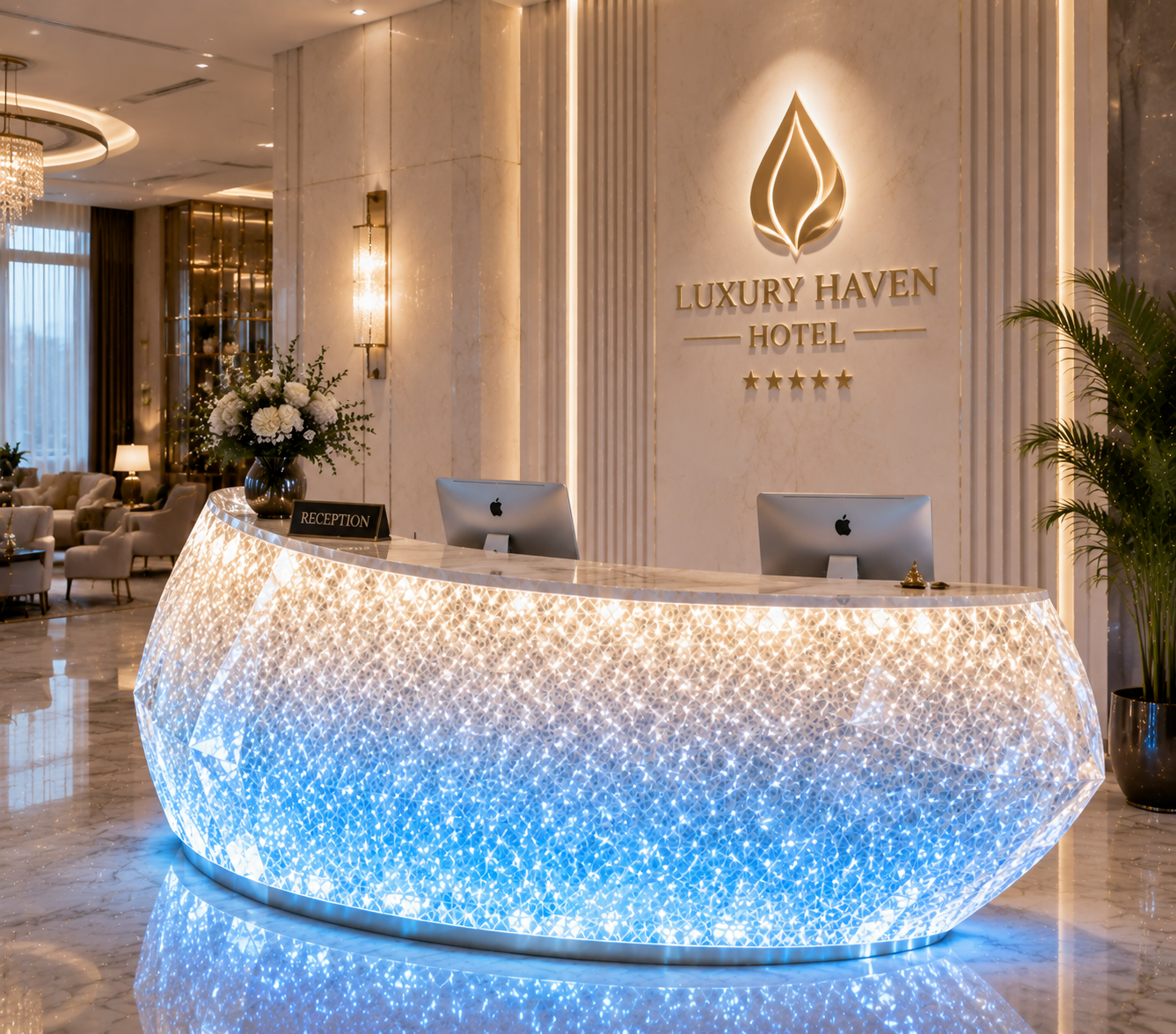
For many years, luxury furniture was closely associated with familiar materials such as solid wood, marble, brass, leather, stainless steel, and glass. These materials still play an important role in premium interiors, but the definition of luxury is changing. Increasingly, high-end design is not simply about using expensive materials. It is about creating a distinctive atmosphere, achieving visual clarity, expressing individuality, and using materials in unexpected ways.
This is one reason synthetic crystal acrylic furniture is receiving growing attention in premium residential and commercial projects.
The term often refers to high-quality transparent acrylic furniture designed to achieve a crystal-like appearance. Unlike natural crystal, acrylic is a manufactured polymer material that can be formed, machined, polished, bonded, and engineered into furniture with remarkable optical effects. When the material is thick, well-polished, properly fabricated, and carefully designed, it can create a visual impression that feels clean, luminous, modern, and highly refined.
From luxury villas and penthouses to boutique hotels, restaurants, fashion stores, galleries, corporate reception areas, and premium clubs, designers are exploring acrylic as more than a substitute for glass. They are increasingly treating it as a design material in its own right.
1. A New Visual Language for Luxury Interiors
Luxury design has gradually moved away from the idea that a premium space must always look heavy, ornate, or highly decorative. Many contemporary clients now prefer interiors that feel open, calm, sophisticated, and visually effortless.
Transparent acrylic works particularly well in this environment. One of its strongest characteristics is its ability to create presence without creating excessive visual weight. A conventional wooden console table, for example, may occupy a significant amount of visual space because its form is defined by solid surfaces. A transparent acrylic console with similar dimensions can appear much lighter because the surrounding architecture remains visible through the furniture.
This effect is especially valuable in interiors where designers want furniture to support the space rather than dominate it. In a luxury apartment with marble flooring and panoramic windows, transparent acrylic chairs can preserve the continuity of the view. In a high-end hotel lobby, an acrylic coffee table can provide function without interfering with a statement carpet or sculptural floor design. In a boutique store, transparent display furniture can allow products to remain the visual focus.
Acrylic also interacts with light in ways that make it particularly attractive for premium interiors. Thick polished edges can capture and reflect light. Curved surfaces can create subtle distortions. Transparent layers can generate depth. When lighting is carefully integrated, the material may appear almost luminous.
Another reason acrylic is attractive in luxury interiors is its stylistic flexibility. It can work within contemporary luxury, minimalism, modern classic interiors, futuristic spaces, art-inspired interiors, high-fashion retail environments, resort-style interiors, and gallery-like residential spaces.
2. Greater Freedom for Custom Furniture Design
Another major reason high-end projects are interested in synthetic crystal acrylic furniture is design freedom. Premium projects are rarely built around standard catalog furniture alone. Architects, interior designers, developers, and private clients often want customized dimensions, unusual proportions, exclusive forms, and furniture that fits a specific architectural concept.
Acrylic can support this demand. Depending on the design and manufacturing process, acrylic can be cut, drilled, routed, bent, polished, bonded, engraved, colored, layered, or combined with other materials. This creates possibilities that are difficult to achieve economically with some traditional furniture materials.
A designer may request a thick transparent dining table with sculptural legs, a curved console for a reception area, a transparent shelving system for a boutique, or a large acrylic pedestal for displaying luxury products. These pieces can be developed around the dimensions and visual requirements of the project.
Designers can also combine acrylic with other premium materials. For example, an acrylic table may include a stone top, stainless steel details, brass connectors, leather inserts, or timber components. A display cabinet may combine transparent acrylic with integrated lighting. A luxury side table may use colored acrylic together with polished metal. A custom headboard or decorative screen may incorporate layered acrylic to create depth and shadow.
It can be clear, translucent, tinted, frosted, textured, mirrored, or colored. This gives project teams more freedom to create furniture that supports a particular color palette or brand identity.
.png)
3. The Balance Between Transparency, Strength, and Practical Performance
Designers are naturally attracted to appearance, but high-end furniture must also perform reliably. This is where material selection and engineering become extremely important.
Acrylic offers the transparency designers want while providing several practical characteristics that can make it suitable for furniture applications. Compared with glass, acrylic is significantly lighter for an equivalent volume. This can simplify handling and make certain furniture structures more practical to manufacture, transport, and install.
Acrylic also generally has better impact resistance than ordinary glass, although performance depends on material grade, thickness, geometry, and application. This does not mean acrylic is indestructible. Like any material, it has limitations. It can scratch if handled incorrectly. Excessive loads can cause deformation. Poor bonding can weaken joints. Incorrect fabrication can create stress. Low-grade material may have inferior optical clarity or color stability.
For this reason, premium acrylic furniture requires proper engineering. Thickness is particularly important. A thin transparent sheet may work well for a decorative panel, but a large table, bench, or shelving structure may require much greater thickness depending on span, load, and support conditions. Designers and manufacturers must evaluate the piece as a structural object rather than simply as a decorative concept.
Edge polishing also plays a major role in visual quality. A poorly finished edge can immediately reduce the premium appearance of a transparent furniture piece. High-quality polishing creates clear, smooth edges that interact beautifully with light. When several acrylic components are joined together, accurate machining and bonding help create the clean appearance expected in luxury projects.
4. Why High-End Commercial Projects Value Its Space-Enhancing Effect
One of the most practical benefits of transparent acrylic furniture is its ability to make spaces feel less crowded. This is highly relevant to modern commercial interiors.
Luxury retail stores, boutique hotels, galleries, showrooms, restaurants, and high-end apartments often need to accommodate many functions within limited floor areas. Furniture is necessary, but too many visually heavy objects can make a space feel smaller. Transparent furniture provides an alternative.
Because the eye can see through acrylic, the furniture occupies less visual volume even though its physical dimensions remain the same. In a luxury fashion boutique, transparent acrylic display furniture allows the products and architecture to remain dominant. In a hotel suite, transparent side tables can preserve an open atmosphere around the bed and seating area. In a lobby, acrylic consoles and coffee tables can help maintain sight lines.
This space-enhancing effect is especially useful in compact luxury residences. High property values in major cities have encouraged designers to use space more efficiently. A transparent desk, dining chair, or console can provide necessary function while helping the room remain visually open.
Acrylic can also be effective in spaces with strong architectural features. If an interior contains a dramatic staircase, sculptural wall, panoramic view, special flooring, or large artwork, designers may not want furniture to compete for attention. Transparent pieces can support daily use while allowing those architectural elements to remain the focal point.
5. From Functional Furniture to Statement Art Piece
Although acrylic can visually disappear, it can also do the opposite. When designers use unusual thicknesses, bold forms, integrated lighting, color, or sculptural geometry, acrylic furniture can become a dramatic focal point.
A simple transparent acrylic table may feel almost invisible. A thick, sculpted acrylic table with curved legs may look like a piece of contemporary art. The same material can serve both purposes.
Designers are increasingly exploring furniture as part of the artistic identity of a space. Instead of treating tables, chairs, benches, or display units purely as functional objects, they may use them to create memorable visual moments. Acrylic is highly suitable for this approach.
Thick material can create a sense of optical depth. Colored layers can produce dramatic visual effects. Frosted areas can contrast with polished transparent sections. Internal lighting can turn a piece into an illuminated object. Engraving can introduce patterns, logos, or artistic details.
In luxury retail, these effects can create distinctive product displays. In hospitality spaces, they can contribute to highly recognizable interiors. In private villas or penthouses, a custom acrylic dining table or console can become a conversation piece.
Social media has also influenced commercial design. Hotels, restaurants, boutiques, and clubs increasingly consider how interiors will appear in photographs and videos. A visually memorable furniture piece may become part of the identity of the location.
.png)
6. What High-End Buyers Should Consider Before Choosing Acrylic Furniture
The growing popularity of acrylic furniture does not mean every acrylic product is suitable for a luxury project. Quality differences can be significant.
The first consideration is material quality. Premium projects generally require acrylic with excellent optical clarity, consistent appearance, and suitable performance for the intended application. Thickness is another critical factor. A thicker material may create a more substantial luxury appearance, but thickness should not be chosen purely for aesthetics. Furniture must be engineered according to load, span, connection points, and overall geometry.
Manufacturing accuracy is equally important. Transparent furniture reveals details that might be hidden in opaque materials. Cutting lines, joints, machining, drilling, bonding, and polishing must therefore be carefully controlled. Buyers should pay particular attention to edge quality. Well-polished edges can create the crystal-like effect that makes premium acrylic furniture so attractive.
Bonding is another area that deserves attention. In clear furniture, adhesive joints should be executed as cleanly as possible. Visible bubbles, excessive adhesive, misalignment, or cloudy areas can reduce the visual quality of the product.
Surface protection also matters during production, packaging, transportation, and installation. Acrylic can scratch, so professional handling is essential. Protective films, suitable packaging, careful installation procedures, and proper cleaning instructions can help preserve the finish.
Another important issue is customization capability. A supplier that produces simple acrylic accessories may not necessarily have the experience required for large custom tables, complex curved structures, luxury retail fixtures, or hospitality furniture. High-end projects may require support with drawings, prototypes, engineering details, material selection, packaging, shipping, and installation coordination.
Finally, high-end buyers should avoid evaluating acrylic furniture based on price alone. Two products may appear similar in photographs while differing substantially in raw material quality, thickness, structural design, polishing, bonding, machining accuracy, and packaging. In luxury furniture, these details define the final experience.
Conclusion
Synthetic crystal acrylic furniture is gaining attention in high-end projects because it responds to several important trends in contemporary design. Clients want interiors that feel lighter, more individual, more architectural, and more visually memorable. Designers want materials that provide flexibility without creating unnecessary visual weight. Commercial brands want environments that support both function and strong identity.
High-quality acrylic can address all of these requirements. Its transparency can make rooms feel more open. Its machining and forming possibilities can support custom designs. Its compatibility with metal, stone, timber, leather, and lighting allows it to work within complex material palettes. Its crystal-like appearance can introduce a refined contemporary character to residential, hospitality, retail, and commercial interiors.
Most importantly, acrylic gives designers options. It can quietly disappear into a room or become a sculptural centerpiece. It can support minimalist architecture or contribute to a highly expressive interior. It can be used for chairs, tables, consoles, shelves, benches, display furniture, decorative installations, and fully customized project pieces.
However, the final result depends heavily on quality. Material grade, structural engineering, thickness, machining, polishing, bonding, protection, and craftsmanship all influence how the finished furniture looks and performs.
For high-end projects, acrylic should therefore not be treated as a low-cost substitute for another transparent material. Its greatest value appears when designers and manufacturers take advantage of its unique properties. As luxury interiors continue to move toward lighter forms, custom solutions, visual transparency, and artistic furniture, synthetic crystal acrylic is likely to remain an increasingly relevant material.
READ MORE:
Why Do Some Materials Communicate Value at First Sight, Even in Equally High-End Furniture?
Natural Stone, Glass, or Synthetic Crystal? How to Choose the Right Material for High-End Furniture
Synthetic Crystal Acrylic Furniture: A New Trend Connecting Design Aesthetics with Commercial Value
Why Future Furniture Brands Need to Rethink the Premium Power of Materials
Synthetic Crystal Acrylic Furniture: Creating Memorable High-End Spaces Through Unique Transparency


