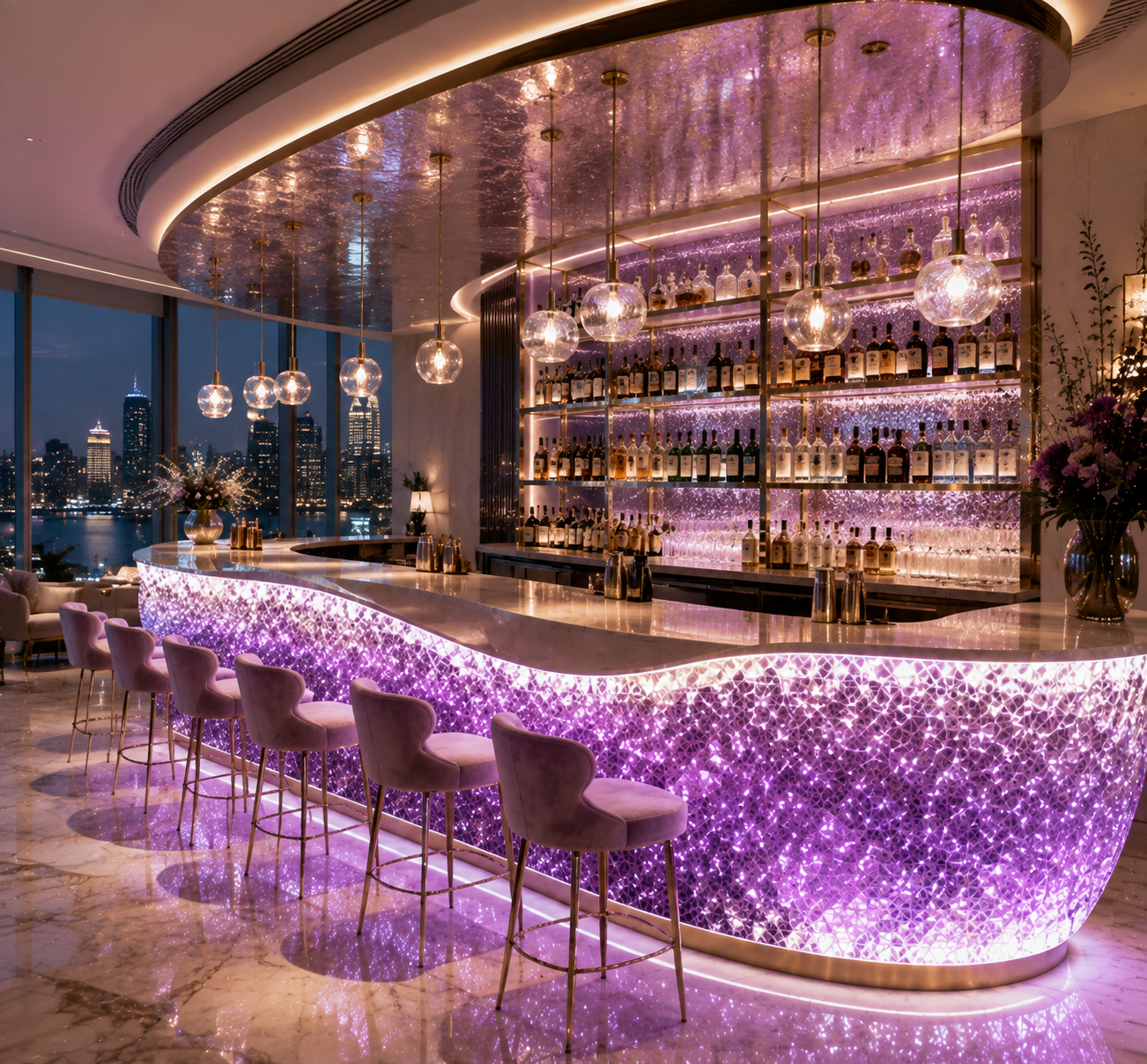
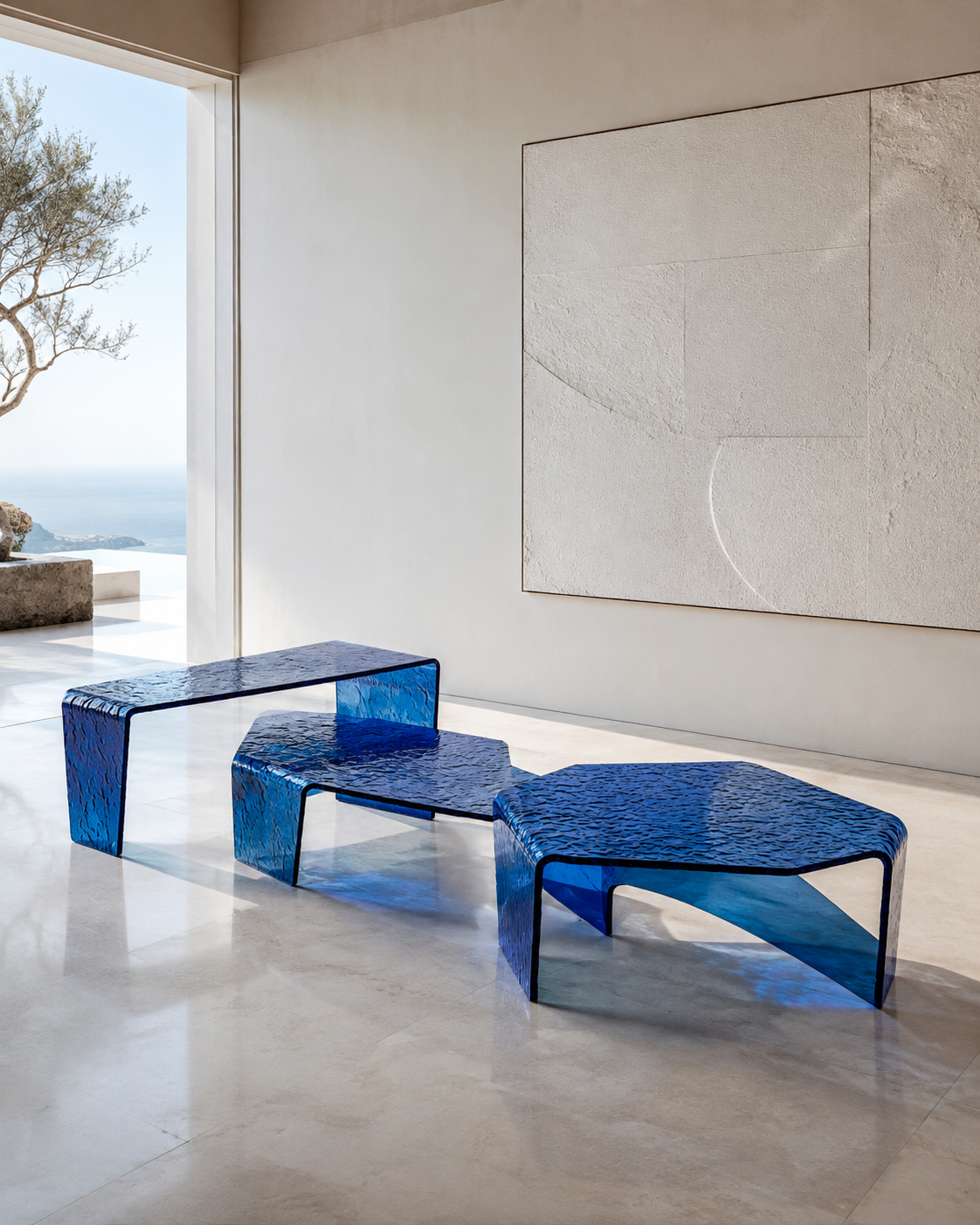
Two coffee tables can have similar dimensions, equally sophisticated proportions, and even comparable manufacturing costs, yet a client may look at one and immediately say, “This feels expensive,” while the other requires a salesperson to explain why it is valuable.
That reaction is not simply about brand recognition or price. In high-end furniture, material itself communicates information before the client touches the product, reads the specification sheet, or learns how it was made. Transparency, gloss, depth, edge quality, thickness, natural variation, reflection, color saturation, and the way a surface responds to light all become visual signals of quality.
This is particularly relevant to furniture made from synthetic crystal, high-end resin, premium acrylic—sometimes commercially described as platinum acrylic—glass, natural stone, and metal. These materials can all belong in luxury interiors, but they do not communicate value in the same way.
Understanding why some materials create an immediate premium impression helps explain an important principle of luxury furniture design: clients rarely see material as chemistry alone. They see material as evidence of quality, craftsmanship, rarity, and spatial experience.
1. Clients Begin Judging Material Quality Before They Know What the Furniture Costs
Human beings are surprisingly good at recognizing materials visually.
Research published in the Journal of Vision by researchers including Lavanya Sharan, Ruth Rosenholtz, and Edward Adelson of MIT found that observers can categorize real-world materials reliably and quickly from images. The researchers argued that fast material categorization is a distinct capability of the visual system rather than simply a side effect of recognizing an object's shape. Material perception also allows people to anticipate characteristics such as hardness, roughness, weight, temperature, and slipperiness before physically touching a surface.
That has direct consequences for furniture sales.
A client entering a showroom does not first analyze the molecular composition of a table. The eye immediately notices whether a surface is dull or luminous, whether transparent material appears crystal-clear or slightly cloudy, whether edges look optically polished or mechanically rough, and whether a thick object has convincing visual depth.
Consider two transparent console tables with almost identical silhouettes. One uses relatively thin clear material, obvious fasteners, visible adhesive lines, and ordinary edge finishing. The other uses substantial high-clarity platinum acrylic with carefully polished edges and discreet construction. Before knowing either price, many clients will already perceive the second as more sophisticated.
The same effect exists in natural stone. The Natural Stone Institute describes marble as a premium material valued for its natural appearance and notes that its random visual characteristics contribute to its appeal in applications including tabletops. Because natural stone contains genuine variation in color and veining, clients often read that variation as evidence that they are looking at a unique piece rather than a perfectly repeated industrial surface.
Synthetic crystal and premium resin communicate value differently. Their attraction does not necessarily come from natural rarity. It can come from controlled optical complexity: internal depth, suspended elements, gradients, translucency, color concentration, or unusual thickness.
The first impression of value, therefore, is rarely generated by the material name alone. It comes from how convincingly the material presents its own characteristics.
A cheap-looking resin and an extraordinary resin can share the same generic chemical category. An ordinary acrylic sheet and a museum-quality acrylic furniture object can both be called acrylic.
The value signal comes from execution.
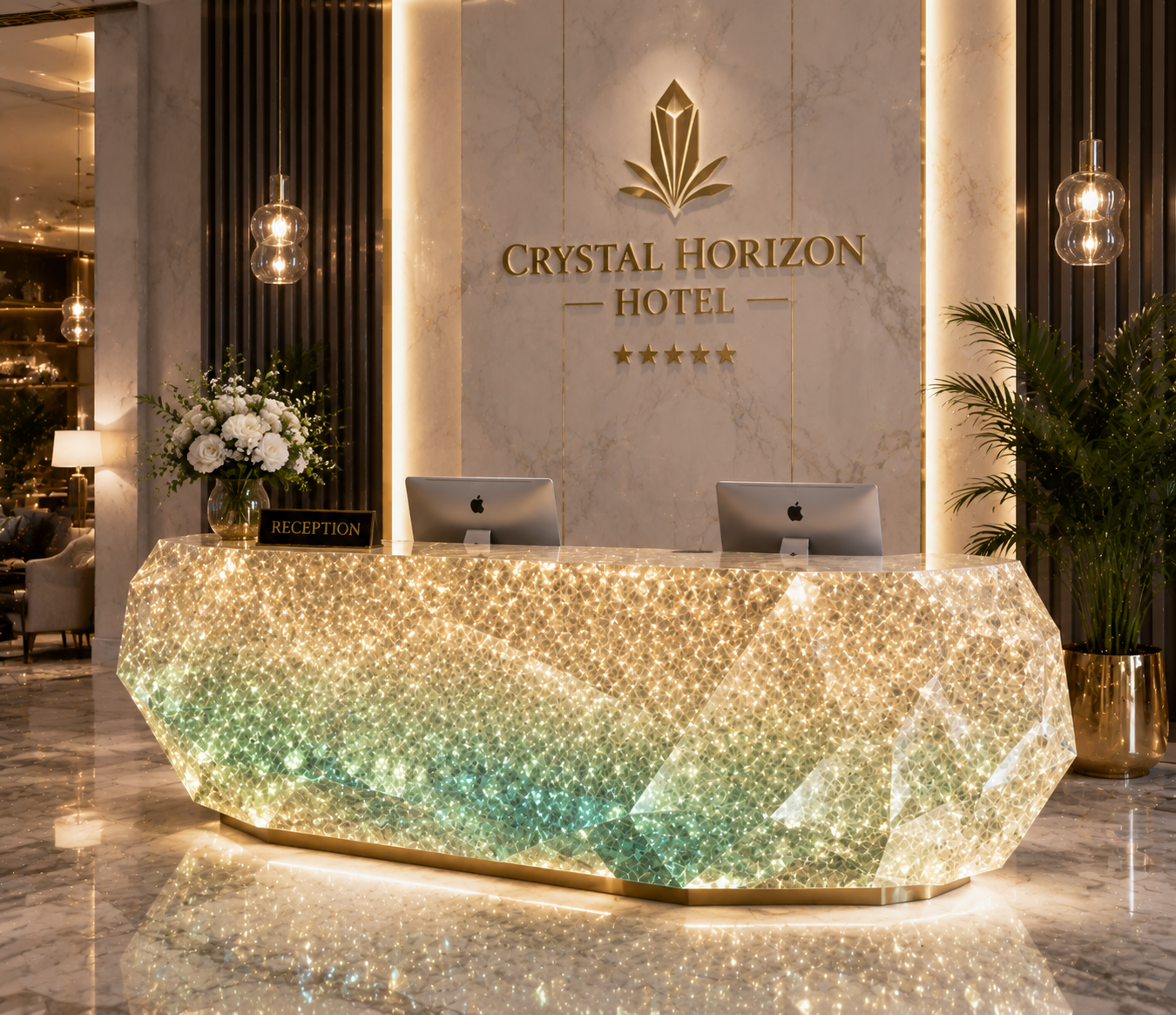
2. Light Is One of the Fastest Ways a Material Communicates Luxury
Why do polished marble, crystal, fine glass, lacquer, jewelry, and high-quality transparent furniture attract attention so quickly?
One reason is light.
Research into visual material perception has established that people use optical cues including gloss, specular highlights, transparency, translucency, reflection, and surface texture when determining what a material appears to be. Studies of gloss perception show that the visual system interprets highlights created by reflected light as important information about surface properties.
For luxury furniture, this means the interaction between light and material can become part of the perceived price.
Premium PMMA provides a useful example. Röhm states that colorless PLEXIGLAS acrylic can reach approximately 92% light transmission. The company also emphasizes PMMA's ability to conduct and transmit light, qualities that have made it useful not only in functional applications but also in lighting and design.
Ultra-clear architectural glass offers similarly high optical performance. Vitro reports visible-light transmittance above 91% for 6 mm Starphire low-iron glass.
Yet high-end transparent furniture is not simply a competition to achieve the highest possible transmission percentage.
Thickness changes the experience.
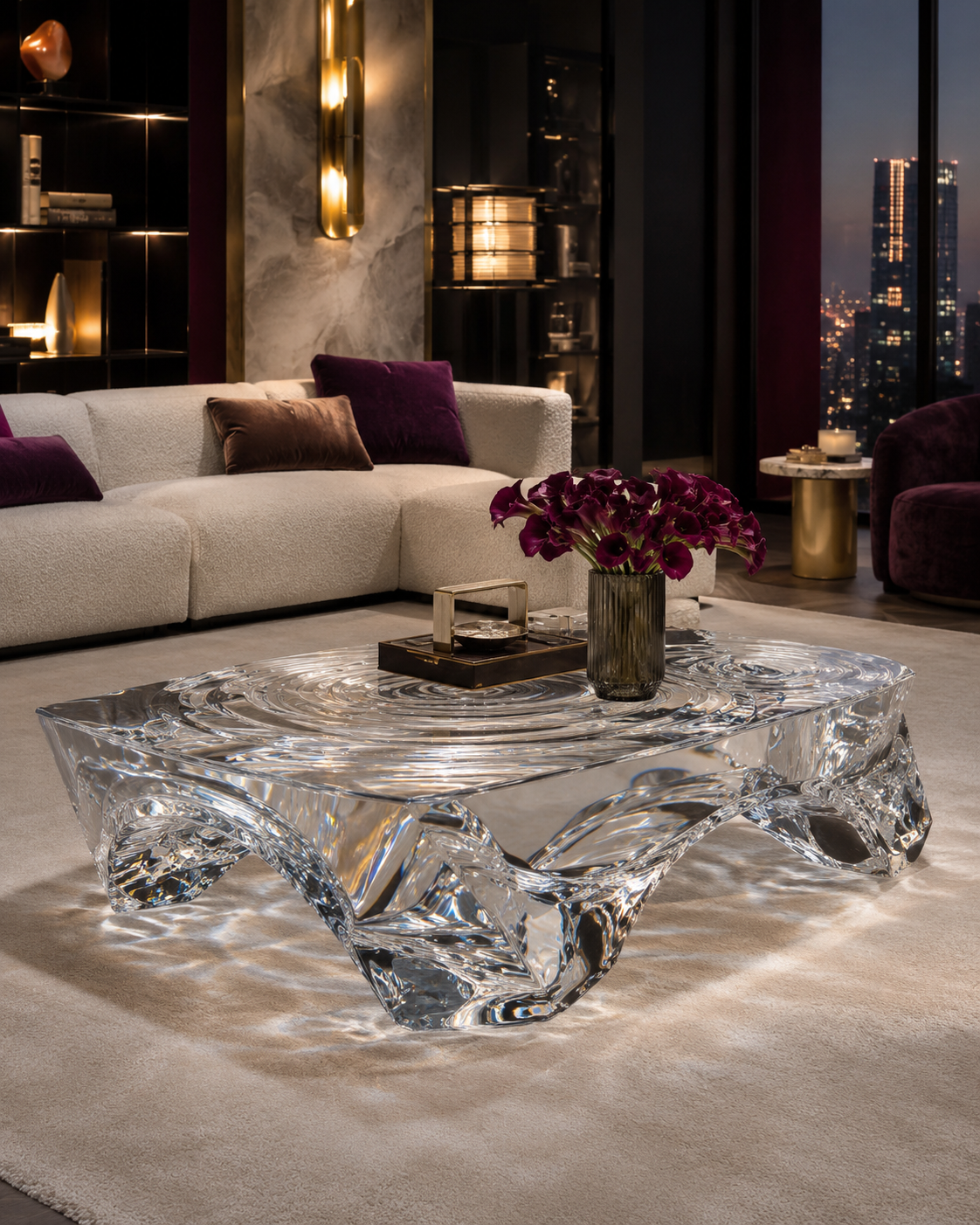
A thick synthetic-crystal coffee table can capture reflections along its edges while remaining clear through its main body. Champagne-colored resin may appear almost transparent through a thin section but develop a much richer amber tone where the material becomes thicker. Platinum acrylic can create sharp, luminous edges that respond dramatically to daylight or directional interior lighting.
Zaha Hadid's Liquid Glacial furniture collection demonstrates the high-design potential of this principle. Zaha Hadid Architects describes the collection as being milled from clear and colored acrylic, then hand-polished, using refraction to generate changing visual depth and complexity. The collection includes tables, stools, chairs, and centerpieces designed to resemble ice formations.
This is a useful lesson for furniture manufacturers.
Customers are rarely willing to pay a premium simply because something is transparent. They pay when transparency becomes an experience.
A basic clear table lets light pass through.
A sophisticated synthetic-crystal, high-end resin, or platinum-acrylic table captures, concentrates, refracts, reflects, and redistributes light.
That difference is visible almost immediately.
3. Thickness and Optical Depth Make Simple Furniture Feel More Valuable
Luxury furniture does not always need complicated geometry.
In fact, some of the most convincing high-end pieces are extremely simple: a rectangular console, a cylindrical pedestal, a cube side table, or a monolithic coffee table.
What makes them feel expensive is often material depth.
When clients see a substantial block of transparent or translucent material, they perceive more than physical thickness. They see layers of reflection, changing edge color, distortion, shadow, and internal optical effects. The object develops a visual interior.
This creates an interesting paradox: the furniture can look physically substantial without feeling visually heavy.
That is particularly valuable in luxury interiors. A thick marble coffee table communicates mass and permanence, but it also blocks views of the rug or flooring beneath it. A thick synthetic-crystal or platinum-acrylic table can communicate equally strong physical presence while allowing the surrounding interior to remain visible.
Acrylic's density also differs substantially from glass. Technical documentation from Röhm lists PMMA density around 1.19 g/cm³, while Vitro lists approximate weights for its soda-lime low-iron glass corresponding to a substantially higher material density. This helps explain why designers can explore large transparent forms in acrylic without reproducing exactly the same physical weight characteristics as solid glass of equivalent volume.
Zaha Hadid's Liquid Glacial series again provides a useful real-world example. David Gill Gallery lists substantial acrylic dining tables, coffee tables, consoles, and other pieces in limited editions, while Zaha Hadid Architects explains that the material is used to create the appearance of frozen water and complex refraction.
The geometry may be furniture, but the experience approaches sculpture.
High-end resin can achieve another form of depth. Pigment can become more saturated through thicker areas. Clouding can be controlled. Metallic elements, stone fragments, botanical material, or decorative components can appear suspended within the body.
Synthetic crystal can similarly use internal effects to make a simple table appear visually richer as the viewer changes position.
This is why increasing the thickness of premium transparent furniture can sometimes increase perceived value even when the silhouette remains unchanged.
The customer is not seeing “more plastic.”
The customer is seeing more depth, more optical complexity, and more evidence that the object was designed around the material rather than merely fabricated from it.
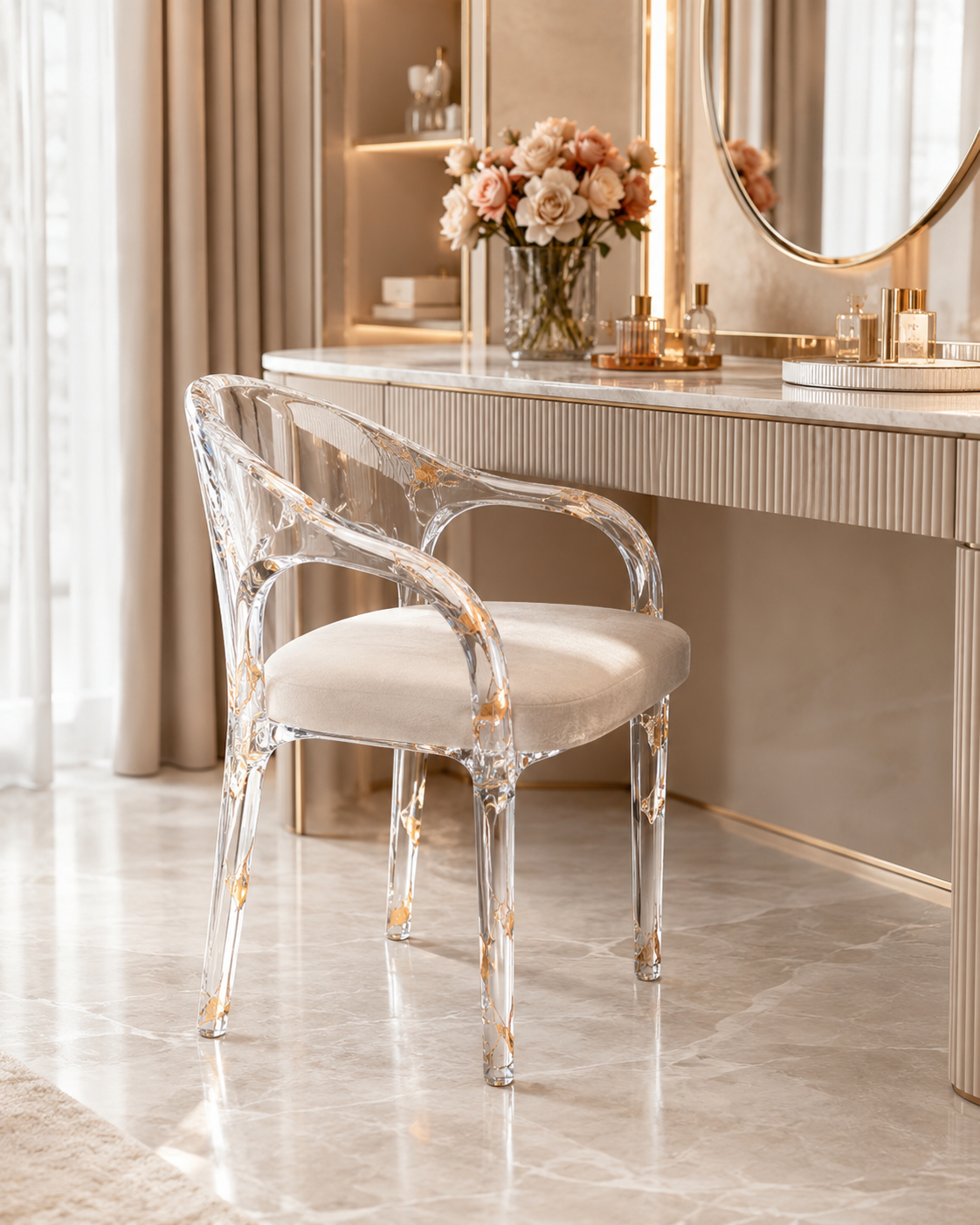
4. Edges, Joints, and Surface Finishing Quietly Reveal How Much Work Went Into a Piece
The closer a client approaches high-end furniture, the more important manufacturing quality becomes.
Transparent materials are especially unforgiving because they reveal construction.
An opaque painted surface can hide what happens beneath the finish. A clear acrylic console cannot easily hide poor bonding. A transparent synthetic-crystal block exposes internal contamination. High-gloss resin makes sanding and polishing quality visible. Thick clear components make edge geometry extremely noticeable.
That visibility can become a powerful premium signal.
A carefully polished acrylic edge can appear almost luminous. A precisely executed mitred corner can make a console look as though it were formed from a single transparent volume. A perfectly finished resin surface can allow internal color and depth to become the visual focus rather than surface defects.
This relationship between material and craftsmanship has a long history in furniture design. The Victoria and Albert Museum notes that new plastics helped twentieth-century designers explore forms that earlier furniture materials could not easily achieve. Its discussion of David Colwell's transparent Contour Chair describes how heated acrylic was formed specifically to exploit the material's capabilities.
The Museum of Modern Art provides another example through Gaetano Pesce's 1984 Pratt Chair. Pesce produced nine chairs from the same mold but altered the density of the urethane resin from one chair to another. According to MoMA, the early versions were too soft to support weight, while later versions became progressively stronger. The experiment demonstrated that seemingly subtle changes in material formulation could fundamentally alter the performance and identity of the same furniture form.
That principle remains highly relevant to contemporary resin furniture.
The word “resin” tells a designer very little about the finished quality.
Formula, curing process, UV behavior, pigment control, mold preparation, casting conditions, machining, sanding, polishing, bonding, and inspection all matter.
For platinum-acrylic furniture, buyers should similarly look beyond the generic label. “Platinum acrylic” is a commercial description rather than a universal scientific material classification, so premium positioning should be supported by information about the actual acrylic grade, optical quality, thickness, fabrication, bonding, finishing, and appropriate performance data.
When high-end manufacturing is successful, clients may not consciously identify every process.
But they can often see the difference.
5. Materials Feel Valuable When They Carry a Story That Shape Alone Cannot Provide
Luxury customers rarely pay only for function.
They also pay for meaning.
Natural stone communicates geological history. Timber can communicate age, species, grain, and craftsmanship. Bronze develops associations with sculpture and architecture. Glass communicates precision and fragility. Synthetic crystal, resin, and acrylic can communicate technology, experimentation, transparency, and contemporary design.
Design museums demonstrate that engineered materials have long moved beyond the category of inexpensive substitutes.
MoMA's collection includes Shiro Kuramata's celebrated 1988 Miss Blanche Chair, constructed from acrylic resin, aluminum, and artificial roses. Kuramata embedded the roses inside the transparent resin, making the material itself fundamental to the emotional identity of the chair.
Gaetano Pesce's resin furniture took a different approach, using variation in resin formulation as part of the design concept. MoMA explicitly describes experiments with new materials as important turning points in design history when discussing his Pratt Chair.
Zaha Hadid transformed acrylic again, using milling, polishing, refraction, and fluid geometry in Liquid Glacial.
These examples matter commercially because they change the conversation around synthetic materials.
High-end resin does not need to pretend to be marble.
Platinum acrylic does not need to pretend to be glass.
Synthetic crystal does not need to imitate natural crystal perfectly.
Their strongest value appears when designers exploit capabilities unique to them: exceptional thickness, controlled color, embedded objects, seamless visual volumes, translucent gradients, unusually light-looking structures, and optical effects that would be difficult to achieve with conventional stone or glass.
This also explains why material storytelling works particularly well in luxury furniture sales.
Instead of saying, “This console is made from premium resin,” the manufacturer can explain how the color changes with material depth, how the casting creates unique internal patterns, or why each piece reacts differently to directional lighting.
Instead of saying, “This table uses thick acrylic,” the more valuable story may be how the transparent base allows an important marble floor or hand-knotted rug to remain visible.
Customers understand value more easily when they understand what the material makes possible.
6. The Strongest First Impression Comes When Beauty and Credibility Support Each Other
A material can attract attention in five seconds, but high-end clients eventually ask harder questions.
Will it scratch? Will the color change? How should it be cleaned? Can the table support the intended load? What happens if one piece in a hotel project needs replacing? Can the manufacturer reproduce the approved color? Is the glass properly specified for furniture use? Is the material appropriate for sunlight, heat, or heavy commercial traffic?
This is where visual luxury becomes credible luxury.
For example, the National Glass Association notes that glass furniture must consider accidental impact and appropriate safety glazing. Its technical guidance explains that tempered glass is approximately four times as strong as annealed glass of similar thickness, while ASTM F2813 addresses safety glass used in horizontal surfaces such as dining, coffee, end, and display tables.
Natural stone carries its own performance considerations. The Natural Stone Institute notes that marble's calcite composition can make it vulnerable to mild acids, an important issue for dining tables, bars, and hospitality furniture.
Transparent acrylic and resin require material-specific care as well. Their performance should be evaluated using the actual grade and formulation rather than broad assumptions about “acrylic” or “resin.”
For manufacturers of synthetic crystal, high-end resin, and platinum acrylic furniture, this creates an important opportunity.
The strongest sales proposition combines emotional impact with technical confidence.
Show the client the optical depth first. Then provide the material specification.
Let them see the polished edge. Then explain the fabrication process.
Show how a synthetic-crystal coffee table transforms under lighting. Then provide cleaning and maintenance guidance.
Present a custom resin console in a distinctive color. Then demonstrate how color tolerances are controlled for the project.
A sophisticated architect, interior designer, hotel buyer, villa owner, or furniture dealer does not ultimately want a material that only looks expensive.
They want a material whose appearance can withstand closer examination.
That is the real reason some high-end furniture communicates value from the first glance.
The eye sees transparency, depth, reflection, thickness, craftsmanship, and rarity almost immediately. Those characteristics create an expectation of quality before the customer knows the price.
When manufacturing quality, material performance, and design intent confirm that expectation, the first impression becomes something much more powerful:
trust that the furniture is genuinely worth more.
READ MORE:
- What Counts as a "Good Material" to Hotel, Villa, and Private Club Clients? The Standards Are Completely Different
- Why Are Clients Willing to Pay for "Transparency"? The Visual Value of Synthetic Crystal Furniture in High-End Interiors
- Natural Stone, Glass, or Synthetic Crystal? How to Choose the Right Material for High-End Furniture
- The Designer's Eye for "Luxury": Why Furniture Materials Influence the Quality of a Space More Than Form
- Synthetic Crystal Acrylic Furniture: A New Trend Connecting Design Aesthetics with Commercial Value
- Why Future Furniture Brands Need to Rethink the Premium Power of Materials
- Synthetic Crystal Acrylic Furniture: Creating Memorable High-End Spaces Through Unique Transparency
- From Visual Differentiation to Market Competitiveness: The Value Upgrade of Synthetic Crystal Acrylic Furniture
- Synthetic Crystal Acrylic Furniture: Why More High-End Projects Are Paying Attention to This Material


