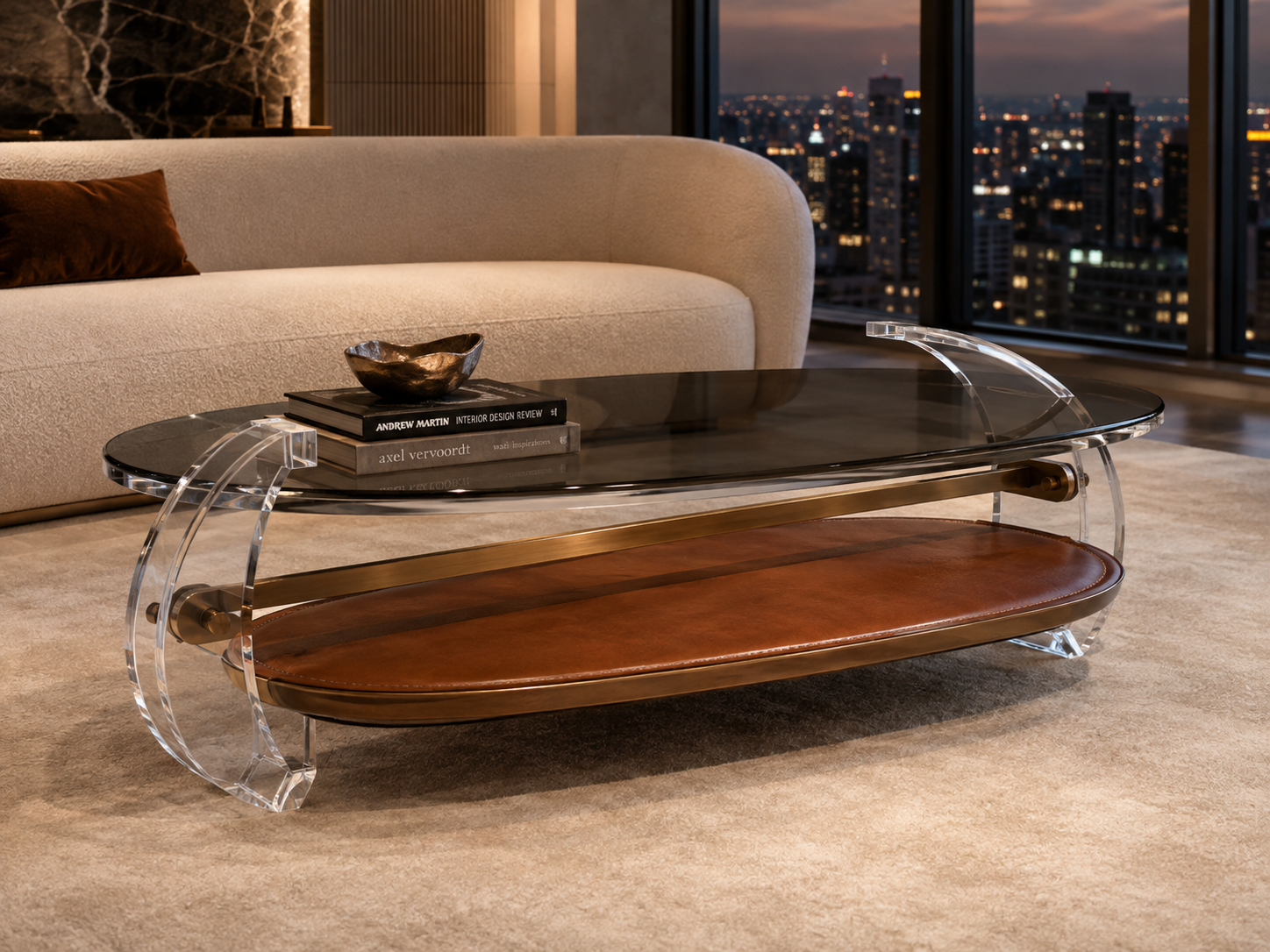
Luxury interior design is changing.
For many years, high-end spaces were associated with heavy materials, dark wood, large marble surfaces, metallic decoration, thick upholstered furniture, and visually dominant architectural details. These materials still have an important place in luxury design, but contemporary designers are increasingly pursuing a different kind of sophistication.
Today, luxury is becoming lighter.
Instead of filling a room with visually heavy furniture, designers are using transparency, reflection, clean lines, and carefully controlled negative space to create environments that feel elegant without appearing excessive.
This evolution has brought synthetic crystal acrylic furniture into the spotlight.
With its exceptional transparency, sculptural possibilities, smooth surfaces, and crystal-like visual quality, acrylic furniture can create a distinctive sense of what many designers describe as “light luxury.” It allows furniture to remain functional and visually impressive while occupying less visual space.
From luxury residences and boutique hotels to premium retail stores, restaurants, galleries, clubs, and corporate reception areas, transparent acrylic furniture is appearing in increasingly sophisticated projects.
Why is this material becoming so important to high-end interior design?
The answer lies not only in its appearance, but also in the way it influences space, light, proportion, and the overall emotional experience of an interior.
1. The Rise of Transparent Luxury in Contemporary Interior Design
Luxury has traditionally been expressed through visible abundance.
Large pieces of furniture, expensive natural materials, ornate finishes, decorative metalwork, and complex textures were often used to communicate value. A luxurious room was expected to look rich, substantial, and highly decorated.
However, contemporary luxury is moving toward a more restrained philosophy.
Many high-end residential and commercial spaces now emphasize openness, simplicity, architectural clarity, and carefully selected statement pieces.
Instead of showing everything, designers increasingly focus on what can be removed.
This shift is closely connected with changes in architecture.
Modern luxury homes often feature open floor plans, large windows, high ceilings, natural light, and uninterrupted views. Boutique hotels and premium retail environments also prioritize spatial flow and visual continuity.
Heavy furniture can interfere with these qualities.
A large wooden coffee table, for example, creates a strong visual block in the center of a living room. A transparent acrylic coffee table can provide the same function while allowing the flooring, rug, and surrounding furniture to remain visible.
The furniture is physically present but visually lighter.
This creates a subtle form of luxury.
The room feels more spacious, more deliberate, and less crowded.
Transparency also allows designers to create sophisticated layering.
Instead of treating furniture as isolated objects, transparent pieces can interact with surrounding textures. Marble floors, patterned carpets, sculptural walls, artistic lighting, and decorative objects remain visible through the furniture.
As a result, acrylic furniture becomes part of the composition without dominating it.
This effect is especially valuable in premium interiors, where every material and decorative element is carefully chosen.
In this context, luxury is no longer simply about adding expensive objects.
It is about achieving visual balance.
Synthetic crystal acrylic furniture supports this philosophy by allowing designers to introduce functional objects without sacrificing openness.
The transparency of acrylic also creates a connection with light.
Natural daylight passes through transparent furniture, reducing shadows and maintaining brightness. Artificial lighting can reflect from polished acrylic surfaces, producing subtle highlights that resemble crystal.
This interaction between material and light creates a sophisticated atmosphere that is difficult to achieve with opaque furniture.
For this reason, transparent furniture is increasingly used as a tool for controlling visual weight.
A room can contain substantial furniture while still feeling spacious.
That combination—physical presence without visual heaviness—is one of the defining characteristics of modern light luxury.
2. What Makes Synthetic Crystal Acrylic Furniture Different?
Acrylic is often misunderstood as simply a type of transparent plastic.
In reality, high-quality acrylic used for premium furniture can be very different from ordinary transparent plastic products.
The quality of the raw material, thickness, manufacturing process, polishing technique, structural design, and finishing accuracy all strongly influence the final appearance.
High-end synthetic crystal acrylic furniture is designed to achieve exceptional clarity.
When properly processed, thick acrylic panels can produce a visual depth similar to crystal or glass. Edges can be polished until they appear almost luminous, especially when exposed to directional lighting.
This crystal-like quality gives acrylic furniture a distinctive visual identity.
Compared with traditional glass furniture, acrylic also provides designers with greater flexibility.
Glass is elegant but relatively restrictive in terms of manufacturing.
Complex curves, thick sculptural forms, and unusual three-dimensional structures can be challenging or expensive to produce with glass.
Acrylic can be cut, machined, bent, bonded, carved, polished, and formed into a much wider variety of shapes.
This allows designers to create furniture that feels closer to sculpture than conventional cabinetry.
Coffee tables may feature sweeping curves.
Console tables can appear to be formed from a single transparent volume.
Chairs can combine transparent structures with upholstered cushions.
Pedestals can resemble blocks of crystal.
Side tables can incorporate geometric forms that manipulate reflections.
These design possibilities are particularly valuable in high-end interiors because premium projects often require distinctive furniture rather than standardized products.
Customization is an important part of luxury.
Designers want furniture that fits a particular space, concept, proportion, and visual language.
Synthetic crystal acrylic can respond well to these requirements.
Thickness is another important characteristic.
Thin acrylic sheets are common in displays, signage, and inexpensive furniture, but thick acrylic creates a very different aesthetic.
Large transparent sections generate depth and refraction. The material begins to look more substantial and more valuable.
A thick acrylic leg or table base can visually resemble a crystal architectural element.
When polished correctly, the edges capture and reflect light, producing highlights that enhance the sense of luxury.
Another important advantage is structural perception.
Transparent furniture creates an interesting contradiction.
It may be physically strong and substantial while visually appearing almost weightless.
This contrast attracts attention.
A large acrylic dining table, for example, can have thick legs and a strong structural presence, yet because light passes through the material, the table does not visually overwhelm the room.
This is one of the reasons acrylic furniture works so effectively in contemporary luxury spaces.
It creates presence without heaviness.
_(1).png)
3. How Transparency Makes a Space Feel Lighter and More Luxurious
Visual weight is one of the most important but often overlooked concepts in interior design.
Two pieces of furniture may have exactly the same dimensions but create completely different spatial experiences.
An opaque black cabinet will appear visually heavier than a transparent acrylic cabinet.
A dark wooden table creates a stronger visual boundary than a transparent table.
This difference matters greatly in premium interiors.
High-end spaces often depend on carefully controlled proportions.
Designers want furniture to complement architecture rather than compete with it.
Transparent acrylic helps achieve this balance.
Because the eye can see through the material, the furniture does not completely interrupt the visual field.
Flooring continues beneath it.
Walls remain visible behind it.
Lighting passes through it.
Decorative elements remain part of the visual composition.
This continuity creates the impression of additional space.
The actual dimensions of the room do not change, but the perceived spaciousness can increase significantly.
This is especially valuable in luxury urban residences.
Premium apartments in cities such as New York, London, Singapore, Hong Kong, Dubai, and Shanghai may have extremely high property values. Even luxurious interiors must use space efficiently.
Transparent furniture allows designers to maintain functionality without making rooms feel crowded.
Acrylic side tables can provide practical surfaces beside sofas without adding excessive visual volume.
Transparent dining chairs can reduce the visual density around a large dining table.
Acrylic benches or stools can provide seating while maintaining openness.
Console tables can appear almost invisible against feature walls.
The same principle applies to hospitality interiors.
Hotel lobbies often need numerous functional elements: tables, seating, display furniture, flower stands, decorative pedestals, and service stations.
If every item is visually heavy, the lobby can quickly feel crowded.
Transparent acrylic furniture can reduce this visual density.
It creates an atmosphere that feels more spacious and controlled.
This sense of restraint is strongly connected with luxury.
Expensive interiors rarely need to prove their value through excessive decoration.
Instead, sophisticated design often communicates confidence through simplicity.
A transparent acrylic table beside a sculptural sofa may appear simple, but the precision of the material, thickness, proportions, and polished edges can communicate exceptional quality.
Luxury becomes quieter.
This is the essence of light luxury.
The space does not look empty.
It looks carefully edited.
4. Why High-End Spaces Choose Acrylic Over Traditional Materials
Transparency is not the only reason designers use acrylic furniture.
The material also offers several practical and creative advantages.
Greater Design Freedom
Acrylic can be fabricated into a wide range of shapes.
It can be bent into smooth curves, machined into geometric forms, bonded into complex structures, and polished to achieve crystal-like surfaces.
This allows designers to explore shapes that might be difficult to manufacture using glass, wood, or stone.
For bespoke luxury projects, this freedom is extremely valuable.
Furniture can be designed specifically for the architecture of a room.
A curved acrylic console may follow the geometry of a wall.
A custom acrylic table may align precisely with a sculptural sofa.
A transparent pedestal may be designed to support a specific artwork.
This level of customization helps create unique interiors.
Strong Visual Compatibility
Transparent acrylic has another unusual advantage: it works with almost every color.
Because the material itself introduces relatively little visual color, it can integrate easily with different interior palettes.
It can accompany white marble, black stone, warm timber, brass, stainless steel, colorful upholstery, or patterned textiles.
This neutrality makes acrylic useful in both minimalist and decorative environments.
A designer can use transparent furniture without disrupting the main color scheme.
Interaction With Lighting
Lighting design is essential in high-end interiors.
Acrylic responds beautifully to carefully positioned lighting.
LED illumination, spotlights, natural sunlight, and decorative fixtures can create highlights along polished acrylic edges.
These reflections add depth and visual interest.
Some designs even incorporate lighting directly into acrylic furniture, transforming a table, bar counter, or pedestal into a luminous object.
The material therefore becomes part of the lighting strategy.
Reduced Visual Obstruction
Luxury interiors often contain important architectural or decorative features.
These might include panoramic windows, stone walls, artworks, carpets, fireplaces, sculptural staircases, or branded installations.
Opaque furniture can block these elements.
Transparent furniture preserves visibility.
This is particularly useful in retail and exhibition environments, where the furniture should support product presentation rather than compete with it.
Acrylic display tables, shelves, and pedestals allow products to remain the visual focus.
A Contemporary Identity
Materials communicate style.
Dark carved timber may suggest tradition.
Brushed metal may suggest industrial modernism.
Natural stone suggests permanence.
Transparent acrylic communicates modernity, creativity, and refinement.
For hospitality brands, fashion boutiques, beauty stores, jewelry retailers, and premium lifestyle spaces, this contemporary identity can be extremely valuable.
The furniture becomes part of the brand experience.
5. Where Synthetic Crystal Acrylic Furniture Works Best
The versatility of acrylic allows it to appear in many different premium environments.
Luxury Residential Interiors
In high-end homes, acrylic furniture can create visual breathing room.
A transparent coffee table works particularly well in living rooms with statement rugs. Because the table does not hide the rug, the entire floor composition remains visible.
Acrylic side tables can complement large upholstered sofas without making the seating area feel crowded.
Transparent consoles can be placed in entrance halls where designers want to emphasize wall finishes or artwork.
Acrylic dining chairs can also reduce visual density around a dining table.
In bedrooms, transparent benches, bedside tables, and dressing stools can introduce a subtle contemporary character.
The result is a space that feels elegant but not overloaded.
Boutique Hotels
Hotels constantly balance functionality and atmosphere.
Lobby furniture must accommodate guests while maintaining a strong visual identity.
Transparent acrylic tables, pedestals, benches, and decorative installations can help create memorable interiors without blocking circulation or architecture.
In hotel suites, acrylic furniture can also make rooms appear larger.
This is particularly useful in urban boutique hotels where designers want to maximize the sense of space.
Luxury Retail Stores
Retail environments are one of the most natural applications for acrylic furniture.
The purpose of retail furniture is to present products.
Furniture should support merchandise rather than dominate attention.
Transparent acrylic is ideal for this purpose.
Acrylic display tables allow clothing, accessories, cosmetics, jewelry, or decorative products to appear as if they are floating within the space.
The visual effect is clean and premium.
Transparent pedestals can also create dramatic product presentations.
When combined with focused lighting, the product becomes the center of attention while the supporting structure almost disappears.
Jewelry and Watch Boutiques
Jewelry stores require materials that communicate precision and value.
Crystal-like acrylic can complement glass display cases, polished metal, marble, and sophisticated lighting.
Transparent furniture creates a clean background for high-value products.
It also avoids introducing excessive visual texture that could distract from jewelry or watches.
Restaurants and Bars
In premium restaurants, acrylic stools, chairs, tables, and decorative elements can create a contemporary atmosphere.
Transparent furniture is particularly effective in spaces with dramatic lighting.
Colored light can pass through acrylic surfaces, creating reflections and visual depth.
In bars and clubs, acrylic furniture can also be combined with integrated lighting to produce a more theatrical effect.
Galleries and Exhibition Spaces
Art galleries often require furniture that does not compete with artwork.
Transparent acrylic benches, pedestals, and display structures are ideal because they maintain visual neutrality.
The material provides function while allowing the artwork to remain dominant.
This same principle applies to museums, showrooms, and temporary exhibitions.
_(1).png)
6. The Future of Synthetic Crystal Acrylic Furniture in Luxury Design
The growing popularity of transparent furniture is closely connected with broader changes in luxury culture.
Consumers are increasingly attracted to personalized experiences.
Luxury is becoming less about recognizable symbols and more about uniqueness, craftsmanship, atmosphere, and emotional impact.
This trend favors custom furniture.
Synthetic crystal acrylic is particularly suitable for customization because of its fabrication flexibility.
Designers can experiment with unusual proportions, sculptural forms, color effects, embedded materials, lighting, and combinations with metal, stone, wood, and upholstery.
Future acrylic furniture is likely to become even more artistic.
Instead of simply producing transparent versions of conventional tables and chairs, designers are exploring the material as a sculptural medium.
A table can become an installation.
A chair can become a transparent architectural form.
A console can become a crystal-like object that changes appearance depending on viewing angle and lighting.
This transformation is important.
When furniture becomes part of the artistic identity of a space, its value extends beyond function.
Another important trend is material contrast.
Designers increasingly combine acrylic with luxurious natural materials.
Transparent acrylic legs may support a marble tabletop.
An acrylic chair may include leather upholstery.
A clear console may feature brass details.
Acrylic cabinets may incorporate natural stone bases.
These combinations create a sophisticated dialogue between transparency and solidity.
The contrast makes both materials appear more distinctive.
Technology may also expand the possibilities of acrylic furniture.
Advanced CNC machining, precision polishing, improved bonding techniques, digital fabrication, and integrated lighting systems can support increasingly complex designs.
Custom shapes that once required extensive manual production can now be manufactured with greater precision.
This can lead to a new generation of furniture that combines industrial accuracy with artistic expression.
Sustainability will also influence future material decisions.
Clients and designers are paying greater attention to product lifespan, manufacturing quality, maintenance, and material sourcing.
For high-end acrylic furniture, durability and timeless design will become increasingly important.
Instead of disposable transparent furniture, the luxury market will focus on substantial pieces designed for long-term use.
Quality will become the dividing line between ordinary acrylic furniture and synthetic crystal acrylic furniture.
Precision matters.
Material purity matters.
Polishing matters.
Structural engineering matters.
The smallest details determine whether a transparent furniture piece looks inexpensive or exceptionally refined.
For manufacturers serving the luxury market, craftsmanship therefore remains essential.
Transparency Is Becoming a New Language of Luxury
Synthetic crystal acrylic furniture represents a broader transformation in interior design.
Luxury is moving away from purely visual abundance.
Modern high-end spaces increasingly value clarity, balance, openness, and carefully controlled details.
Transparent furniture supports these priorities exceptionally well.
It allows rooms to remain functional without feeling crowded.
It allows architecture and decorative materials to remain visible.
It interacts with light.
It creates visual depth.
It offers designers enormous freedom in shape and customization.
Most importantly, it creates a distinctive emotional quality.
The furniture is present, but it does not visually dominate.
It feels substantial yet light.
Modern yet timeless.
Decorative yet restrained.
This balance explains why synthetic crystal acrylic furniture is becoming increasingly relevant in premium residential, hospitality, retail, and commercial interiors.
For designers, developers, architects, hotel operators, and luxury brands, transparent furniture is no longer simply a visual novelty.
It is becoming a practical design strategy.
As high-end interiors continue to pursue lighter, cleaner, and more personalized forms of luxury, synthetic crystal acrylic furniture is likely to play an even greater role.
The future of luxury may not always be heavier, larger, or more decorative.
Sometimes, the most sophisticated statement is the one that allows the space around it to remain visible.
READ MORE:
- How Can a Design Rendering Become Reality? The Critical Role of Synthetic Crystal Furniture in Connecting Design and Construction
- The Material Selection Challenge in High-End Interior Design: Why Transparent Crystal Furniture Is Becoming a New Choice for Designers
- From Sample Approval to Mass Production: How Synthetic Crystal Furniture Can Make Project Delivery Smoother
- How to Avoid Repeated Material Revisions in Hotel and Commercial Space Projects
- Why More High-End Projects Are Building Unified Material Selection Standards: A New Solution with Synthetic Crystal Furniture
- Synthetic Crystal Acrylic Furniture: A New Breakthrough for High-End Brand Differentiation
- Why Are More Designers Seeing Synthetic Crystal Acrylic as a Material of the Future?
- Synthetic Crystal Acrylic Furniture: How Can Products Gain Stronger Visual Competitiveness?
- From Furniture Manufacturing to Spatial Art: New Possibilities Created by Synthetic Crystal Acrylic


