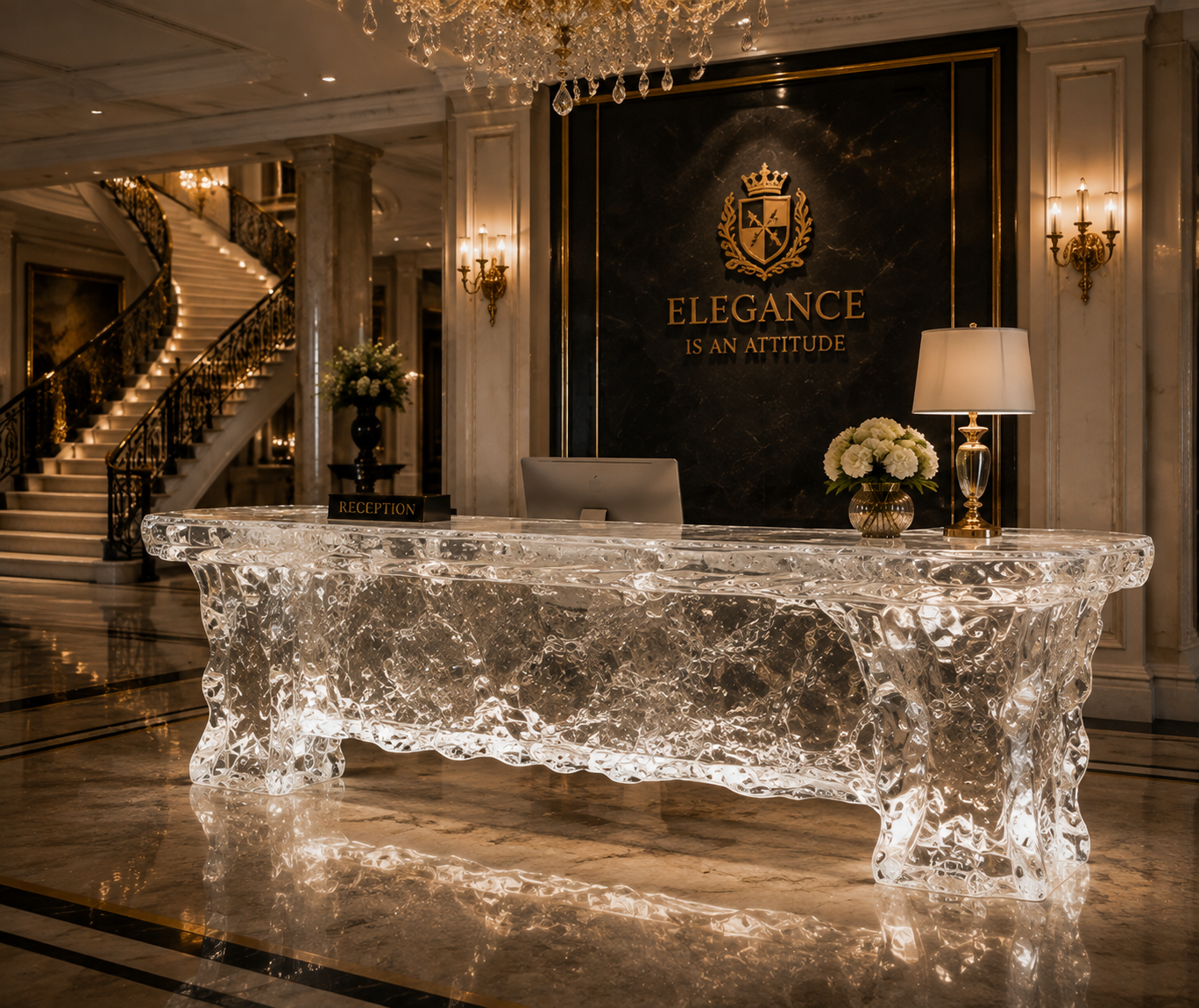
For decades, acrylic occupied a relatively straightforward position in commercial design. It was transparent, lightweight, practical, and frequently used for signage, display stands, protective panels, and functional fixtures. It performed its role effectively, but few designers considered it a defining material for sophisticated commercial interiors.
That perception is changing.
Across luxury retail stores, boutique hotels, premium restaurants, corporate reception areas, showrooms, galleries, beauty spaces, and other contemporary commercial environments, designers are discovering a new generation of acrylic materials capable of delivering far more than basic transparency.
At the center of this transformation is synthetic crystal, a refined material that combines remarkable optical clarity with impressive possibilities for shaping, polishing, coloring, layering, and customization.
Instead of hiding acrylic within functional components, designers are increasingly making synthetic crystal visible. It is becoming the material of reception desks, statement tables, display furniture, consoles, benches, decorative installations, shelving systems, and custom architectural elements.
This shift represents more than a new furniture trend. It reflects a broader change in the definition of premium commercial design itself.
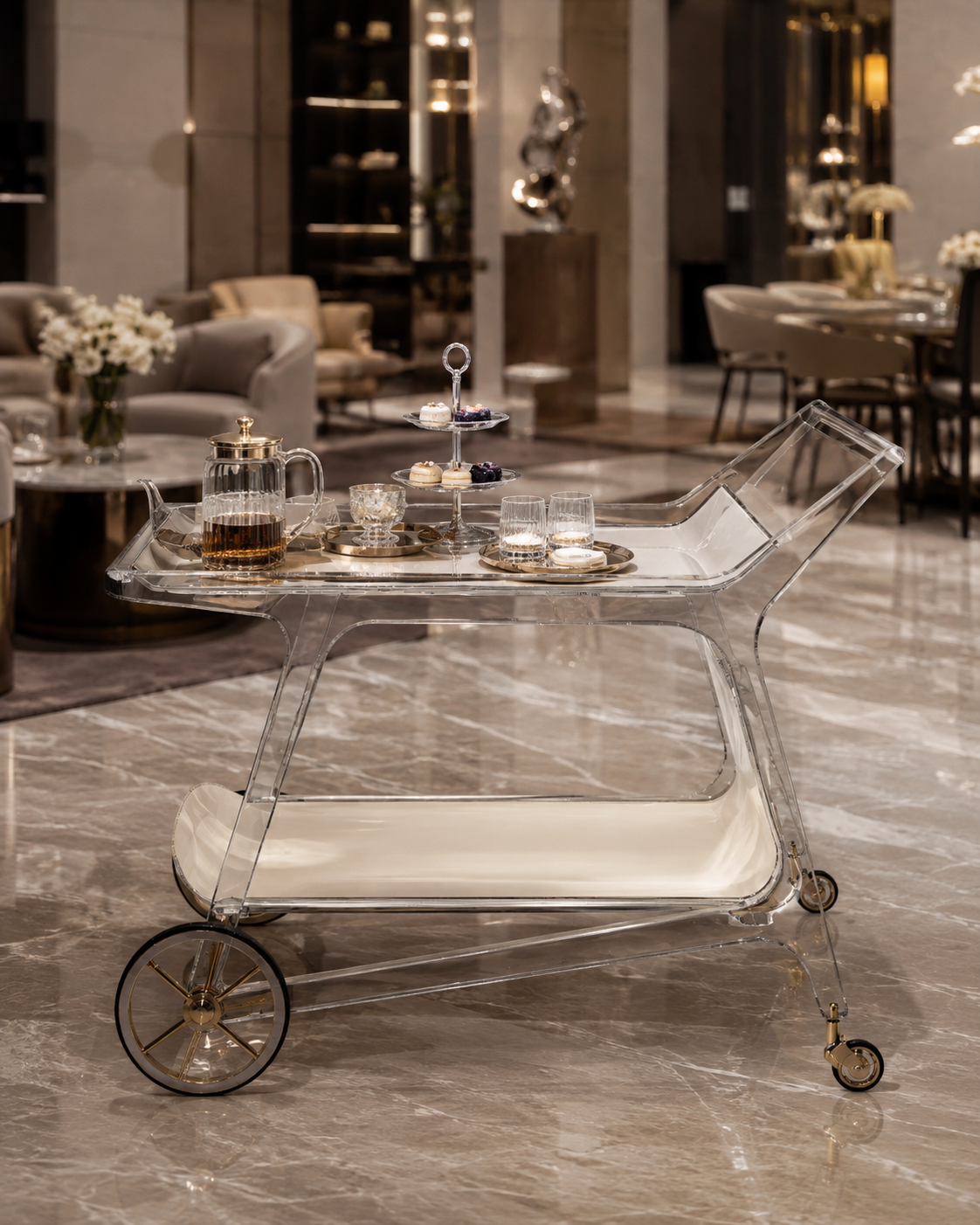
From Functional Acrylic to Design-Led Synthetic Crystal
The word “acrylic” can describe products with dramatically different levels of quality.
Basic acrylic used for inexpensive displays should not be confused with the carefully selected and processed synthetic crystal used for high-end furniture and custom interior applications. Material quality, thickness, transparency, manufacturing accuracy, polishing, bonding, surface treatment, and craftsmanship can completely transform the appearance of the finished product.
Premium synthetic crystal is particularly compelling because designers can work with transparency as if it were a physical design element.
A well-made synthetic crystal table, for example, does not simply occupy space. It interacts with the floor beneath it, the lighting above it, nearby furniture, architectural surfaces, and objects positioned around or on top of it.
Its appearance changes according to the environment.
In bright daylight, it can appear clean, minimal, and almost weightless. Under carefully controlled architectural lighting, polished edges and thicker sections can create reflections, highlights, and unexpected visual depth.
This responsiveness gives synthetic crystal a character that conventional opaque furniture materials cannot easily reproduce.
It explains why forward-thinking designers are beginning to treat the material not as a substitute for something else, but as a premium design medium in its own right.
Transparency Has Become a Form of Modern Luxury
Luxury commercial interiors have changed significantly over the past decade.
Traditional ideas of luxury frequently emphasized visible richness: heavy materials, elaborate decoration, polished metals, dark woods, marble surfaces, and ornamental detailing.
These elements remain important, but contemporary luxury has expanded beyond them.
Many premium spaces now communicate value through restraint, proportion, material quality, architectural precision, and carefully controlled visual experiences.
Transparency fits naturally into this new design language.
A transparent synthetic crystal console or display table can provide a strong physical presence without creating visual heaviness. The object is there, but the architecture remains visible through it.
This creates an interesting contradiction: the furniture can be substantial in size while appearing remarkably light.
For commercial designers, that characteristic is valuable.
Retail stores can display products without introducing unnecessary visual barriers. Hotel lobbies can incorporate functional furniture without making circulation areas feel crowded. Restaurants and lounges can create distinctive seating or table arrangements while preserving a sense of openness.
Transparency becomes more than an aesthetic feature. It becomes a tool for managing spatial perception.
Making Commercial Spaces Feel Larger and More Open
Space is one of the most valuable resources in commercial interior design.
Even large commercial environments can feel restricted when they contain too many opaque surfaces. Furniture, partitions, merchandising fixtures, and decorative elements can gradually interrupt sightlines and make an interior appear smaller than its actual dimensions.
Synthetic crystal furniture offers designers an alternative approach.
Because transparent furniture allows visual information to continue through the object, it can reduce perceived density within a space. A substantial coffee table, for instance, can provide the required functional surface without visually dividing a lounge area.
This can be particularly effective in boutique retail environments where every square meter must serve a purpose without compromising the premium atmosphere.
The same principle applies to hospitality projects.
In a hotel lobby, transparent side tables or consoles can complement stone flooring, statement lighting, textured walls, and sculptural seating without competing for attention.
Rather than adding another visual layer, synthetic crystal can connect existing layers.
That makes it especially useful for designers trying to achieve the difficult balance between functionality and visual breathing room.
Synthetic Crystal Furniture Creates a Stronger Relationship With Light
Few furniture materials interact with light as dramatically as transparent synthetic crystal.
Lighting designers spend considerable effort controlling brightness, shadow, reflection, color temperature, and focal points in commercial interiors. When synthetic crystal furniture is introduced into this environment, furniture itself can become part of the lighting composition.
Light can travel through transparent sections, reflect from polished surfaces, emphasize edges, and reveal the thickness of the material.
The effect can range from extremely subtle to highly theatrical.
In a luxury retail store, focused lighting can create brilliant highlights around the edges of a synthetic crystal display pedestal. In a restaurant or bar, atmospheric lighting can produce a completely different character after sunset. In a hotel lobby, natural daylight can continuously change the appearance of a transparent statement table throughout the day.
This ability to respond to lighting makes synthetic crystal particularly attractive for experience-focused commercial interiors.
The furniture does not remain visually static.
It changes with the environment.
Why Luxury Retail Designers Are Paying Attention
Retail design provides one of the clearest examples of why premium synthetic crystal is becoming increasingly relevant.
Luxury retail environments face a fundamental challenge: furniture and display systems must attract attention without overpowering the merchandise.
If a display fixture is too visually dominant, the customer may notice the furniture before noticing the product. If it is too ordinary, the environment may fail to communicate the level of exclusivity associated with the brand.
Synthetic crystal offers an elegant middle ground.
Its transparency allows merchandise to remain visually dominant while the craftsmanship and material quality of the furniture reinforce the premium positioning of the environment.
Imagine a luxury handbag presented on a precisely polished synthetic crystal pedestal. The support appears almost invisible from certain perspectives, making the product seem visually elevated within the space.
For jewelry, watches, cosmetics, fashion accessories, and collectible products, this effect can be especially powerful.
The material supports the product without competing with it.
That distinction is crucial in premium retail design.
A New Material for Boutique Hotels and Hospitality Projects
Hospitality interiors are increasingly designed around memorable experiences.
Guests encounter hundreds of visual details during a hotel stay, but only a few become memorable enough to define their impression of the property.
Statement furniture can be one of those details.
Synthetic crystal furniture provides hotel designers with opportunities to create distinctive visual moments in reception areas, suites, lounges, restaurants, bars, and other public spaces.
A sculptural synthetic crystal console positioned beneath a large artwork can appear almost architectural. A transparent coffee table can maintain visual continuity around dramatic lounge furniture. A custom reception feature can create a memorable first impression without relying on excessive ornamentation.
These applications are particularly relevant for boutique hotels, where individuality is often a central part of the brand.
Instead of selecting standardized furniture that guests may have seen elsewhere, designers can develop custom synthetic crystal pieces specifically for the project.
The furniture then becomes part of the property's identity.

Customization Is Changing the Possibilities of Acrylic Furniture
Perhaps the most important reason designers are reconsidering acrylic is customization.
Commercial interior projects rarely operate within completely standardized conditions. Dimensions vary. Architectural concepts differ. Brand identities require specific colors and forms. Designers frequently need furniture that fits a particular location rather than forcing a location to accommodate existing furniture.
Synthetic crystal provides considerable creative flexibility.
Depending on the design and manufacturing process, furniture can be developed with different dimensions, thicknesses, geometries, curves, surface effects, colors, and structural configurations.
This makes the material suitable for highly customized projects.
A designer may require an unusually long console for a hotel corridor, a sculptural table for a flagship store, transparent display furniture for a jewelry boutique, or a dramatic centerpiece for a corporate lobby.
Instead of starting with a catalog product and making compromises, the project can begin with the design concept.
The material follows the idea.
For architects and interior designers, that freedom is extremely valuable.
Thickness Becomes Part of the Visual Language
One of the most interesting characteristics of synthetic crystal furniture is the way material thickness influences perception.
Thin transparent elements can appear extremely delicate and understated. Thick components create a completely different impression, emphasizing depth, mass, edge reflections, and optical effects.
This allows designers to use thickness intentionally.
A substantial synthetic crystal table leg can have the physical volume of a heavy architectural element while retaining visual transparency. The result is a fascinating combination of mass and lightness.
This contrast can give premium furniture a sculptural quality.
Instead of concealing construction, designers can celebrate it.
The thickness of the material, the precision of the joints, the clarity of the surfaces, and the quality of the edges all become visible parts of the design.
This is also why craftsmanship matters so much.
Transparent furniture has nowhere to hide imperfections.
Craftsmanship Determines Whether Acrylic Looks Ordinary or Exceptional
Material alone does not create luxury.
The quality of synthetic crystal furniture depends heavily on how the material is processed and finished.
Precision cutting influences proportion and alignment. Polishing determines optical quality. Bonding affects whether joints appear refined or distracting. Edge treatment influences how light moves through the furniture.
For high-end commercial projects, these details are critical.
A designer may develop an exceptional concept, but poor execution can immediately reduce its visual impact. Conversely, careful manufacturing can transform a relatively simple geometric form into an elegant statement piece.
This is particularly noticeable with minimalist furniture.
The fewer decorative elements an object contains, the more visible its manufacturing quality becomes.
A transparent rectangular console may look simple in a drawing. In reality, achieving beautifully aligned surfaces, clean connections, precise geometry, and consistently polished edges requires considerable expertise.
Minimalism demands precision.
That is one of the reasons high-end synthetic crystal furniture should be evaluated not only by material specifications but also by manufacturing capability and craftsmanship.
Combining Synthetic Crystal With Other Premium Materials
Synthetic crystal does not need to dominate an interior to be effective.
Some of the most sophisticated applications involve combining it with contrasting materials.
Natural stone and synthetic crystal can create a dialogue between visual weight and transparency. Metal and synthetic crystal can introduce precision and architectural character. Wood can bring warmth to the clarity of transparent surfaces. Upholstery can soften the overall composition.
These combinations allow designers to create layered interiors.
For example, a synthetic crystal base supporting a natural stone tabletop can make the stone appear almost suspended. A transparent console with carefully designed metal details can combine contemporary clarity with refined craftsmanship.
The material can also complement marble, stainless steel, brass, leather, timber, textured fabrics, and other premium finishes.
Instead of replacing traditional luxury materials, synthetic crystal can make them more visually interesting.
That is an important distinction.
The future of commercial design is unlikely to be defined by one dominant material. It will increasingly be defined by intelligent material relationships.
Minimalism Without Becoming Visually Empty
Minimalist commercial interiors can be difficult to execute successfully.
Removing decorative elements does not automatically create sophistication. Without careful attention to proportion, texture, material quality, and lighting, minimalism can quickly become cold or generic.
Synthetic crystal offers designers a way to introduce complexity without introducing clutter.
A transparent object can have sophisticated geometry while maintaining visual calm. A thick synthetic crystal surface can produce fascinating optical depth without requiring decorative patterns. Carefully polished edges can interact with light and create subtle highlights.
This allows designers to add detail that reveals itself gradually rather than demanding immediate attention.
In luxury environments, this understated quality can be more powerful than obvious decoration.
It encourages people to look closer.
Supporting Stronger Brand Identity in Commercial Interiors
Commercial design is ultimately connected to branding.
Customers rarely experience a brand only through a logo. They experience it through architecture, lighting, scent, music, furniture, materials, service, packaging, and countless small details.
Furniture therefore becomes part of brand communication.
Custom synthetic crystal furniture can help premium brands develop recognizable environments that differ from conventional commercial interiors.
A fashion label may use sharply geometric transparent furniture to communicate precision and modernity. A beauty brand may select softer curves and subtle coloration to create a more sensual environment. A technology company may use substantial clear structures to communicate innovation and futuristic simplicity.
The same underlying material can express dramatically different identities.
This adaptability makes synthetic crystal especially interesting for flagship projects, where designers are expected to translate abstract brand values into physical experiences.
Creating Furniture That Customers Want to Photograph
Modern commercial spaces have another audience beyond the people physically present inside them: social media.
Hotels, restaurants, retail stores, showrooms, and entertainment venues increasingly benefit from environments that encourage visitors to photograph and share their experiences.
Distinctive furniture can contribute significantly to this behavior.
A dramatic synthetic crystal table beneath architectural lighting, a transparent sculptural installation in a hotel lobby, or an unusual display structure inside a flagship store can become a natural visual focal point.
This does not mean every commercial interior should be designed around social media.
However, memorable environments tend to generate organic exposure.
When customers voluntarily photograph a space, furniture becomes part of the marketing experience.
For brands investing heavily in physical environments, this additional visibility can create value far beyond the furniture's original functional purpose.
Practical Performance Still Matters
Commercial furniture must do more than look beautiful.
Hotels, restaurants, retail stores, corporate spaces, and showrooms require furniture capable of supporting regular use. Designers therefore need to consider structural requirements, maintenance, installation conditions, and long-term appearance alongside aesthetics.
Premium synthetic crystal offers several practical advantages.
It can provide impressive visual clarity without the same design constraints associated with extremely heavy or fragile transparent materials. It can also be manufactured into customized structures that respond directly to project requirements.
However, appropriate material selection remains essential.
Thickness, construction method, expected load, installation location, surface treatment, and intended use should all be considered during product development.
Professional manufacturers should work closely with designers to ensure that the finished piece is not only visually impressive but also appropriate for its commercial application.
This collaboration between design and engineering is what transforms an attractive concept into successful furniture.
Why Material Quality Matters More in Transparent Furniture
With opaque furniture, internal structures and connections can often be concealed.
Transparency changes everything.
The viewer can see through the material, which means clarity, surface quality, internal details, bonding, edges, and construction accuracy become much more important.
For this reason, premium synthetic crystal furniture requires careful material selection.
Consistency matters. Optical quality matters. Polishing matters.
The final object should communicate precision from multiple viewing angles because commercial furniture is rarely seen from only one position.
In a hotel lobby, visitors may approach a table from every direction. In a retail environment, customers may examine a display fixture from extremely close range.
High-end furniture must therefore withstand visual inspection as successfully as physical use.
Why Designers and Manufacturers Need to Collaborate Earlier
Custom synthetic crystal projects often benefit from early collaboration between the designer and manufacturer.
A concept that appears simple on paper may involve important decisions regarding material thickness, dimensions, connections, transportation, installation, polishing, structural support, and production feasibility.
Discussing these factors early can prevent unnecessary compromises later.
Experienced manufacturers can also help designers understand what the material can achieve.
Sometimes a production technique can unlock an idea that would otherwise appear impossible. In other situations, a small adjustment in geometry or construction can significantly improve the appearance and practicality of the finished piece.
The strongest projects emerge when manufacturing knowledge supports creative ambition rather than limiting it.
For architects, interior studios, contractors, developers, and furniture brands, this collaborative approach can make custom synthetic crystal furniture a much more effective design tool.
Synthetic Crystal and the Future of Commercial Interior Design
Commercial interiors are becoming increasingly experiential.
A beautiful space is no longer enough. Successful environments must communicate identity, influence emotion, support functionality, photograph well, and remain memorable after visitors leave.
This places new demands on materials.
Designers need materials capable of participating in the experience rather than simply covering surfaces.
Synthetic crystal is well positioned within this evolution because it can influence multiple dimensions of a space simultaneously.
It affects light.
It affects perception of scale.
It affects sightlines.
It creates reflections.
It can emphasize displayed products.
It can contrast with opaque materials.
And through customization, it can become part of a brand's unique visual language.
These qualities explain why acrylic is being reconsidered at the premium end of commercial design.
The conversation is no longer simply about whether acrylic is practical.
The more interesting question is what designers can achieve when synthetic crystal is treated as an architectural material rather than a conventional plastic.
Choosing the Right Synthetic Crystal Furniture Partner
As synthetic crystal moves into higher-value commercial applications, manufacturing capability becomes increasingly important.
For designers and project professionals, selecting a supplier based purely on price can create significant limitations. Premium projects require more than material supply. They require accurate interpretation of drawings, appropriate material selection, precise fabrication, refined polishing, dependable quality control, and an understanding of the visual standards expected in luxury interiors.
Customization capability is equally important.
Commercial projects may require one dramatic statement piece or an entire collection of coordinated furniture. Dimensions may need to respond to architectural conditions, while colors and forms may need to align with brand guidelines.
A capable synthetic crystal furniture manufacturer should therefore function as a technical partner throughout the development process.
The objective is not merely to manufacture furniture.
It is to preserve the designer's intention from concept to installation.
Redefining What a Premium Material Can Be
The growing presence of synthetic crystal in modern commercial spaces demonstrates how quickly perceptions of materials can evolve.
Acrylic was once selected primarily because it was practical and transparent. Today, sophisticated designers are exploring synthetic crystal because of what it can contribute aesthetically, spatially, and emotionally.
It can make substantial furniture appear lighter. It can preserve architectural sightlines. It can interact with natural and artificial light. It can support merchandise without visually overwhelming it. It can complement stone, metal, wood, leather, and textiles. Most importantly, it can be transformed through customization into furniture that belongs specifically to one project rather than countless others.
For luxury retailers, hospitality developers, architects, interior designers, and commercial brands, that distinction is increasingly important.
Premium spaces are remembered because they contain elements that cannot be easily replicated elsewhere.
Synthetic crystal gives designers an opportunity to turn transparency itself into architecture, furniture into visual experience, and functional objects into distinctive brand signatures.
As commercial interiors continue moving toward greater personalization and experiential design, the real opportunity may not be deciding whether synthetic crystal belongs in premium spaces, but discovering what becomes possible when designers stop treating it like acrylic at all.
READ MORE:
- How Boutique Hotels and Luxury Spaces Use Crystal-Like Furniture to Create Memorable Experiences
- The Hidden Factors That Make Transparent Furniture Look Expensive or Cheap
- Why Luxury Buyers Choose Statement Furniture Instead of Ordinary Interior Pieces
- Why High-End Acrylic Furniture Is Becoming a New Choice for Luxury Interior Projects
- Il mobile non deve essere soltanto un mobile: creare un punto focale negli spazi commerciali con il cristallo sintetico
- Far risplendere lo spazio più di notte che di giorno: 3 strategie di illuminazione per gli arredi in cristallo sintetico
- Want a More Memorable Commercial Space? Try Synthetic Crystal Furniture That "Catches the Light"
- Quando si accende la luce, il mobile cambia: come gli arredi in cristallo sintetico diventano installazioni di luce e ombra?
- Come creare un senso di lusso stratificato negli spazi commerciali con luce, ombra e arredi in cristallo sintetico


