Luxury interiors are rarely remembered because every object in the room was expensive. They are remembered because a few carefully chosen pieces created a powerful sense of identity.
This is one of the biggest differences between ordinary furnishing and high-end interior design.
For luxury buyers, furniture is not simply something used to fill space. It can communicate taste, status, creativity, architectural intention, and even personal philosophy. A distinctive console in an entrance hall, a sculptural dining table in a private residence, or a transparent synthetic crystal centerpiece in a hotel lobby can influence the character of an entire environment.
This is why more luxury homeowners, interior designers, developers, and hospitality brands are investing in statement furniture rather than relying entirely on conventional interior pieces.
Statement furniture does more than serve a practical purpose. It creates recognition. It attracts attention. It organizes the visual hierarchy of a room and gives people something to remember.
As premium interiors become increasingly personalized, buyers are placing greater value on furniture that feels unique, expressive, and difficult to replicate.
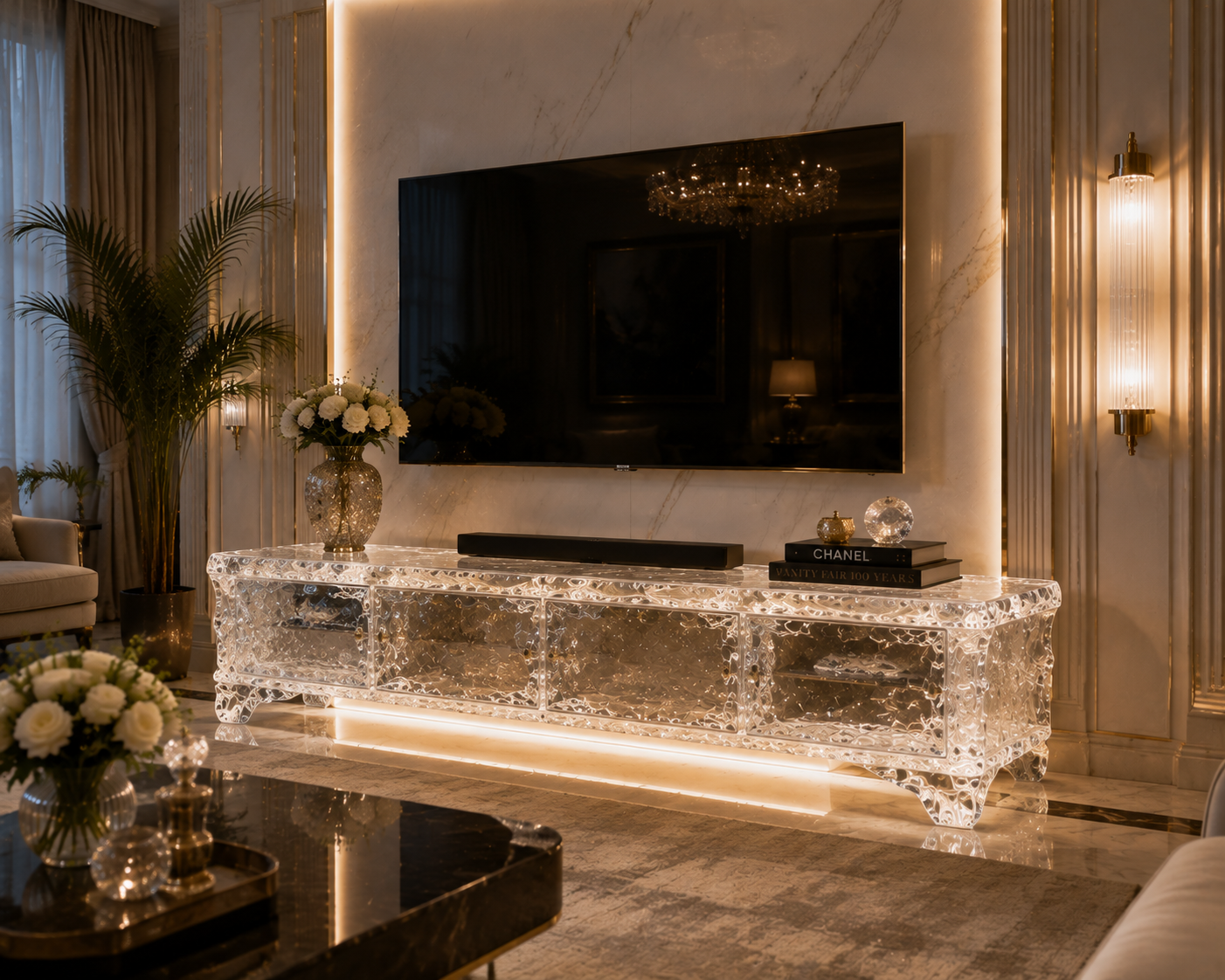
Among the materials supporting this shift, synthetic crystal is becoming particularly compelling. Its exceptional transparency, sculptural possibilities, polished appearance, and ability to interact with light make it suitable for furniture designed not merely to occupy a space, but to define it.
Luxury Buyers Are No Longer Purchasing Furniture Only for Function
Every piece of furniture has a practical role.
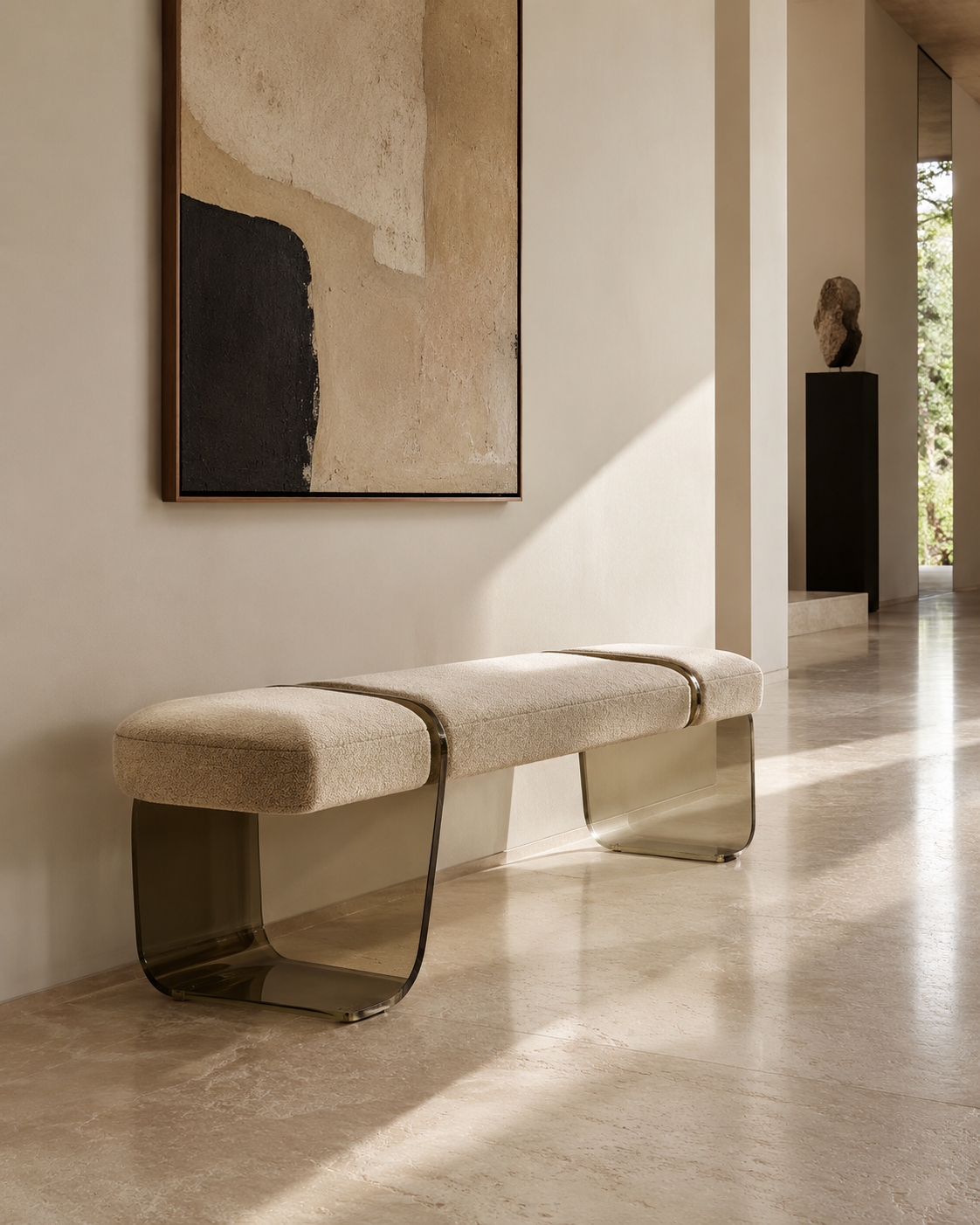
Tables provide surfaces. Chairs provide seating. Consoles organize objects. Cabinets provide storage. These functions are important, but for luxury buyers, functionality is only the starting point.
At the premium end of the market, customers expect furniture to contribute emotionally and visually to the environment.
A standard table and a sculptural statement table may provide the same basic function, yet the experience they create can be completely different.
One disappears into the room.
The other gives the room a personality.
This distinction is increasingly important in luxury residential and commercial projects. When clients invest significantly in architecture, lighting, artwork, stone surfaces, customized finishes, and carefully selected materials, ordinary furniture can weaken the overall result.
Furniture must feel intentional.
It should belong to the architecture rather than appearing as an afterthought.
For this reason, statement pieces are often selected early in the design process and used to guide decisions about lighting, surrounding furniture, color, textures, and spatial composition.
Statement Furniture Creates an Immediate Focal Point
Every successful interior needs visual hierarchy.
Without hierarchy, the eye has nowhere to rest. Too many competing objects create confusion, while too little visual emphasis can make a space feel generic.
Statement furniture solves this problem by creating a clear focal point.
In a luxury living room, it might be a large transparent synthetic crystal coffee table with striking proportions. In a hotel lobby, it may be a sculptural console positioned beneath a feature wall. In a luxury boutique, a custom display table may become the central visual anchor around which the entire merchandising concept is organized.
These objects create an immediate point of interest.
They encourage visitors to look more closely and help establish the tone of the space within seconds.
This first impression matters enormously in luxury design.
People form emotional responses to interiors very quickly. Before they consciously evaluate the quality of the flooring, finishes, or upholstery, they often respond to the overall composition.
A strong statement piece can instantly communicate refinement, creativity, and confidence.
Luxury Is Increasingly Defined by Individuality
Traditional luxury was often associated with recognizable symbols of wealth.
Today, luxury has become more personal.
Many sophisticated buyers no longer want interiors that simply look expensive. They want spaces that feel individual.
This means avoiding excessive reliance on widely available furniture collections, even when those products come from prestigious brands.
If the same table, chair, or console can be found in hundreds of other projects, it may not provide the level of distinction a high-end client expects.
Customization therefore plays a growing role in luxury furniture.
Synthetic crystal is especially suitable for this new approach because it offers considerable freedom in form, thickness, scale, geometry, and visual expression.
A custom synthetic crystal piece can be designed around a specific room, architectural condition, or aesthetic concept.
Instead of adjusting the interior around the furniture, the furniture can be developed specifically for the interior.
That difference is central to modern luxury.
Statement Pieces Turn Furniture Into Art
The boundary between furniture and sculpture is becoming increasingly fluid.
Designers are creating tables, seating, consoles, and decorative structures that function perfectly while also possessing the visual qualities of art.
Luxury buyers are attracted to this combination because it allows them to introduce artistic expression into everyday life.
A sculptural piece does not need to hang on a wall or sit behind glass. It can become part of the way people use the space.
A dining table can become an architectural centerpiece.
A side table can function as a transparent sculpture.
A console can become a dramatic composition of proportion, light, and material.
This is where synthetic crystal provides particularly interesting possibilities.
Because it can appear visually light while still having physical volume, designers can create large forms without making an interior feel excessively heavy.
Thick transparent sections can produce optical depth and dramatic edge reflections. Minimal geometric structures can feel both architectural and delicate. Curves can create softer, more fluid expressions.
The furniture becomes something people experience from multiple angles.
Synthetic Crystal Offers a Different Expression of Luxury
Luxury does not always need to look heavy.
For generations, premium furniture was often associated with solid wood, marble, brass, leather, and other visually substantial materials. These remain important, but contemporary interiors are becoming increasingly open to a lighter form of sophistication.
Synthetic crystal offers exactly that.
It provides visual purity without appearing empty.
Its transparency allows surrounding architecture, flooring, artwork, and decorative elements to remain visible, while its polished surfaces introduce refinement.
This creates an unusual balance.
The furniture can be physically substantial while appearing visually light.
In a spacious luxury residence, a large synthetic crystal coffee table can create presence without interrupting the view across the room. In a boutique hotel, a transparent console can provide function without covering architectural finishes. In a retail environment, synthetic crystal display furniture can support products while keeping the merchandise visually dominant.
This ability to combine presence with transparency gives synthetic crystal a unique role in premium interiors.
Buyers Want Pieces That Generate Conversation
Luxury statement furniture often has another important function: it creates conversation.
Guests notice unusual pieces.
They ask what they are made from, who designed them, how they were produced, or where they came from.
This social dimension is part of the value of statement furniture.
A distinctive object becomes part of the story of a home, hotel, restaurant, showroom, or commercial space.
For private clients, this can make an interior feel more personal and expressive.
For commercial environments, the same principle can reinforce brand identity.
A striking synthetic crystal table in a flagship store can become associated with the brand itself. A memorable sculptural installation in a hotel lobby can become part of how guests remember the property.
Ordinary furniture performs its function quietly.
Statement furniture gives people something to talk about.
Customization Creates Emotional Value
People tend to develop stronger connections with objects that feel specifically created for them.
This is especially true in luxury markets.
When a piece is designed according to the dimensions, proportions, materials, and aesthetic preferences of a particular project, it carries more emotional value than a generic product selected from inventory.
Customization turns furniture into a personal decision rather than a simple purchase.
A homeowner might request a synthetic crystal dining table developed around the dimensions of a specific dining room.
An interior designer may create a sculptural console that aligns precisely with a feature wall.
A luxury retailer may commission display furniture designed around the proportions of its products.
A hotel developer may require a collection of coordinated statement pieces that reflect the identity of the property.
These pieces cannot easily be separated from the environment for which they were created.
They become part of the architecture.
Statement Furniture Helps Define the Entire Interior
One exceptional furniture piece can influence many other design decisions.
For example, if a designer selects a dramatic synthetic crystal dining table, the lighting above it may be adjusted to highlight the material. Chairs may be chosen with more restrained forms to avoid competition. Flooring may be selected to create contrast. Decorative accessories may be reduced to give the table more visual space.
The statement piece becomes an organizing element.
This can actually make the overall design more coherent.
Instead of filling a room with many decorative objects, designers can create impact through fewer, stronger decisions.
This principle aligns closely with contemporary luxury design.
Sophistication is increasingly associated with editing.
The question is not how many premium objects can fit into a room, but which objects deserve to be there.
Luxury Buyers Are Paying More Attention to Craftsmanship
Statement furniture attracts close attention, which means quality becomes impossible to hide.
This is particularly true with transparent materials.
In opaque furniture, some construction details can be concealed beneath finishes, veneers, coatings, or upholstery.
Synthetic crystal is different.
Its clarity exposes edges, joints, surfaces, proportions, and internal details.
As a result, craftsmanship becomes a visible part of the design.
Precision cutting matters.
Polishing matters.
Surface consistency matters.
Bonding quality matters.
Proportion matters.
A simple transparent form may actually require extremely high manufacturing accuracy because there are fewer decorative elements available to distract from imperfections.
This is one reason premium buyers distinguish sharply between ordinary acrylic products and high-end synthetic crystal furniture.
The visual difference often comes from manufacturing quality.
Minimalism Makes Statement Pieces More Powerful
Luxury interiors increasingly favor restraint over excessive ornamentation.
This has created ideal conditions for statement furniture.
In a visually calm environment, one exceptional piece can have far more impact than several decorative objects competing for attention.
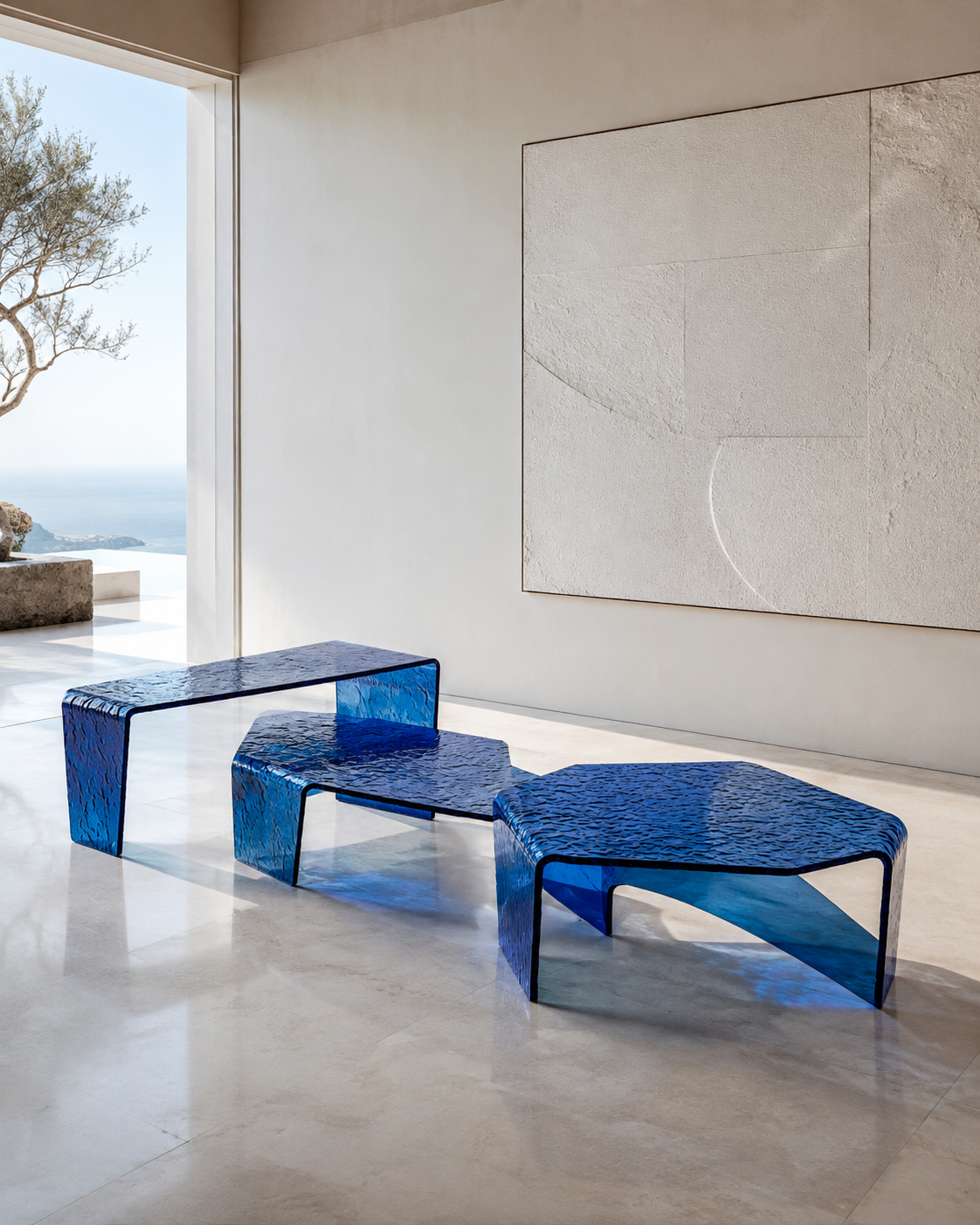
Imagine a large living room with natural stone flooring, neutral upholstery, controlled lighting, and a single sculptural synthetic crystal coffee table.
The transparency of the table preserves the minimal composition, but its scale, thickness, and optical qualities make it impossible to ignore.
This is a sophisticated form of visual contrast.
The furniture does not need bright colors or excessive ornamentation to become memorable.
The material itself creates the effect.
The Role of Light in Statement Synthetic Crystal Furniture
Light can completely transform the appearance of synthetic crystal.
During daylight, transparent furniture may appear subtle and restrained.
Under evening lighting, edges can become more pronounced. Reflections become deeper. Shadows shift. Thick sections can capture and redirect highlights.
This means the same furniture can produce different emotional effects throughout the day.
For designers, that responsiveness is valuable.
Furniture becomes part of the lighting concept rather than remaining visually static.
In hospitality environments, this can be especially effective because spaces often transition from bright daytime use to more atmospheric evening conditions.
A synthetic crystal table that appears clean and minimal in daylight may become dramatic under warm architectural lighting at night.
The material responds to the environment.
Statement Furniture Can Make a Space More Memorable
Luxury projects compete for attention.
Private residences compete with the countless interiors clients see in magazines and online. Hotels compete with other destinations. Restaurants compete for social visibility. Retail stores compete for customer attention.
Memorability therefore has real value.
People may forget a standard chair or conventional table almost immediately.
They are much more likely to remember an unusual transparent table, a sculptural reception piece, or a custom furniture installation that they have never seen elsewhere.
This is why statement furniture often delivers value beyond function.
It contributes to the identity of the space.
Luxury Hospitality Is Embracing Signature Furniture
Hotels are a natural environment for statement furniture because hospitality design is built around experiences.
The lobby must create a first impression.
The restaurant must establish atmosphere.
The suite must feel special.
The lounge must encourage guests to stay.
Furniture plays a major role in all of these environments.
Custom synthetic crystal furniture can help hospitality designers create signature elements that distinguish one property from another.
A transparent reception desk, sculptural coffee table, or customized console can become part of the hotel's visual identity.
For boutique hotels in particular, this individuality is extremely important.
Guests often choose boutique properties because they want something different from standardized hospitality design.
Distinctive furniture supports that expectation.
High-End Retail Needs Furniture That Supports the Product
Luxury retail has a unique relationship with statement furniture.
The furniture must feel premium, but it should not overpower the products being sold.
Synthetic crystal provides an elegant solution.
Because of its transparency, it can create sophisticated display structures while allowing handbags, jewelry, watches, beauty products, fashion accessories, or decorative objects to remain the focal point.
At the same time, the furniture itself contributes to the premium atmosphere.
A well-designed synthetic crystal pedestal can make a product appear almost suspended.
A transparent display table can help merchandise stand out against the architecture.
A custom console can reinforce the visual identity of a flagship store.
The furniture supports the story without stealing it.
Social Media Has Increased the Value of Distinctive Interiors
Today, interiors are often experienced twice.
First in person.
Then through photographs and videos shared online.
This has increased the value of visually distinctive environments.
Hotels, restaurants, retail stores, showrooms, and even private residences are increasingly designed with awareness of how spaces will appear through a camera.
Statement furniture naturally supports this behavior.
A sculptural synthetic crystal table can create unusual reflections and perspectives. Transparent furniture can produce visually clean compositions that photograph well. Unique customized pieces can become recognizable features of a space.
When visitors voluntarily photograph furniture, the object becomes part of the property's organic visual marketing.
For commercial buyers, this can add another layer of return on investment.
Why Ordinary Furniture Can Undermine an Exceptional Interior
An interior can contain beautiful architectural materials and still feel incomplete if the furniture lacks character.
This happens when furniture is selected too late or treated merely as a functional necessity.
Generic furniture can weaken a carefully developed architectural concept.
It introduces visual familiarity into a space that may otherwise be highly distinctive.
Luxury buyers increasingly recognize this problem.
If considerable resources have been invested in bespoke stonework, custom lighting, architectural detailing, and premium finishes, standardized furniture can feel inconsistent with the rest of the project.
Statement furniture closes that gap.
It ensures that movable objects achieve the same level of design intention as fixed architectural elements.
Premium Buyers Think in Terms of Long-Term Value
Luxury buyers do not always evaluate furniture purely through initial price.
They often consider longevity, emotional value, uniqueness, craftsmanship, and the contribution a piece makes to the overall environment.
A generic piece may eventually feel replaceable.
A carefully designed statement piece can remain relevant for many years because it has a stronger identity.
This is particularly true when the design avoids temporary decorative trends.
Synthetic crystal can support this approach because clear, sculptural forms often have a timeless quality.
The material works across multiple interior styles, from contemporary minimalism to glamorous luxury environments.
A strong piece can survive changes in surrounding upholstery, artwork, lighting, or decoration.
Statement Furniture Reflects Confidence
There is also a psychological dimension to statement furniture.
Choosing an unusual piece requires confidence.
It means accepting that the furniture will attract attention and influence the entire room.
Luxury buyers are often willing to make these decisions because they are not simply trying to create universally acceptable interiors.
They are trying to create meaningful ones.
A bold synthetic crystal table, for example, may not resemble conventional furniture at all.
That is precisely its appeal.
It communicates that the owner or designer is comfortable making deliberate, distinctive choices.
The Importance of Working With the Right Manufacturer
Creating statement furniture requires a different level of manufacturing capability than producing standard furniture.
Custom dimensions, unusual geometries, large material thicknesses, precision connections, refined polishing, and complex structural requirements all demand expertise.
This is particularly important with synthetic crystal.
A premium result depends on both the quality of the material and the quality of its fabrication.
Designers should therefore look for manufacturers capable of understanding the entire concept rather than simply producing individual parts.
Technical communication is important.
Material recommendations are important.
Production feasibility is important.
Quality control is important.
Packaging and installation considerations are important.
The manufacturer should help translate creative ambition into a finished piece without losing the original design intention.
Statement Furniture Is Becoming Part of Architectural Thinking
One of the most significant changes in high-end interiors is that furniture is increasingly considered during architectural planning rather than after construction is complete.
This is especially true for large custom pieces.
Designers may coordinate statement furniture with lighting positions, wall dimensions, circulation routes, floor patterns, or structural elements.
Synthetic crystal furniture is well suited to this integrated approach because its transparency allows it to interact closely with surrounding architecture.
Instead of blocking a feature wall, it can reveal it.
Instead of interrupting flooring patterns, it can expose them.
Instead of competing with lighting, it can amplify it.
The furniture becomes part of the spatial composition.
Why Synthetic Crystal Is Well Suited to the New Luxury Market
The luxury market is moving toward greater personalization, stronger visual storytelling, and more sophisticated material experiences.
Synthetic crystal fits naturally into this direction.
It can feel contemporary without becoming cold.
It can appear luxurious without relying on traditional ornamentation.
It can create dramatic visual effects without making a room feel crowded.
It can be customized for unique projects.
And when produced with exceptional craftsmanship, it can become a genuine statement material.
Most importantly, synthetic crystal allows designers to rethink what furniture can contribute to an interior.
A table does not need to be just a table.
A console does not need to be merely a surface.
A display does not need to disappear completely or dominate the room.
Every piece can become part of a carefully orchestrated visual experience.
Choosing Fewer Pieces With Greater Impact
One of the clearest trends in luxury design is a shift away from quantity toward significance.
Instead of filling interiors with numerous decorative furnishings, designers are increasingly selecting fewer pieces and giving each one a stronger role.
This approach creates calmer spaces.
It also raises expectations for every object that remains.
A statement piece must justify its presence through material, proportion, craftsmanship, originality, or emotional impact.
Synthetic crystal furniture performs particularly well within this philosophy because it can be visually dramatic while remaining transparent.
It occupies physical space without creating the same sense of visual congestion as many opaque materials.
This allows designers to introduce substantial furniture while preserving openness and architectural clarity.
The Future of Luxury Furniture Is About Identity
Luxury buyers have access to more products than ever before.
That abundance has created an unexpected consequence: exclusivity is increasingly difficult to achieve through conventional purchasing alone.
When anyone can order the same premium furniture collection, price no longer guarantees individuality.
Custom statement furniture offers a different solution.
It allows buyers to create objects that are connected to a specific project, identity, or design concept.
This is why statement furniture is becoming more important in luxury residences, flagship stores, high-end hotels, private clubs, showrooms, and other premium spaces.
The object becomes difficult to separate from the story of the place.
Conclusion: From Filling a Space to Defining It
Luxury buyers choose statement furniture because they expect more from their interiors than basic comfort and decoration.
They want environments with identity.
They want furniture that attracts attention without appearing excessive, creates conversation without becoming theatrical, and complements architecture while still expressing its own character.
Synthetic crystal offers an especially compelling response to these expectations. Its transparency, optical depth, customization potential, sculptural quality, and relationship with light allow designers to create furniture that feels simultaneously substantial and almost weightless.
For homeowners, designers, developers, retailers, and hospitality brands, the value of a statement piece lies not simply in what it is made from, but in what it makes people feel when they enter the space.
Ordinary furniture completes a room, but exceptional statement furniture can define how that room is remembered, and the most exciting question is this: what could your space become if the furniture people noticed first was also the piece they could never forget?
READ MORE:
- How Boutique Hotels and Luxury Spaces Use Crystal-Like Furniture to Create Memorable Experiences
- The Hidden Factors That Make Transparent Furniture Look Expensive or Cheap
- How Designers Are Redefining Acrylic as a Premium Material for Modern Commercial Spaces
- Why High-End Acrylic Furniture Is Becoming a New Choice for Luxury Interior Projects
- Il mobile non deve essere soltanto un mobile: creare un punto focale negli spazi commerciali con il cristallo sintetico
- Far risplendere lo spazio più di notte che di giorno: 3 strategie di illuminazione per gli arredi in cristallo sintetico
- Want a More Memorable Commercial Space? Try Synthetic Crystal Furniture That "Catches the Light"
- Quando si accende la luce, il mobile cambia: come gli arredi in cristallo sintetico diventano installazioni di luce e ombra?
- Come creare un senso di lusso stratificato negli spazi commerciali con luce, ombra e arredi in cristallo sintetico


