
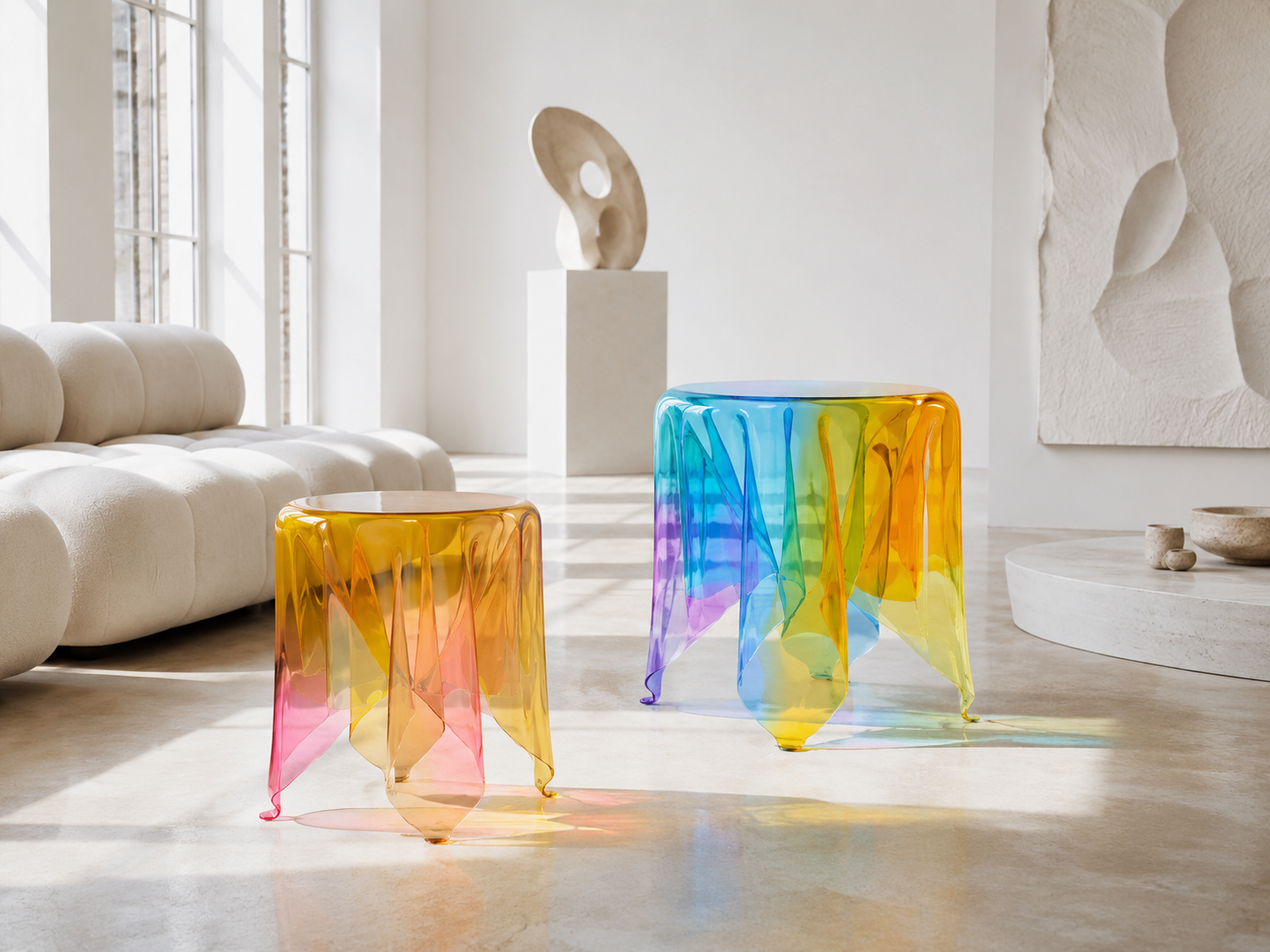
Furniture brands today face an uncomfortable reality: creating a new shape is no longer enough to create a truly different product.
Digital design tools, global sourcing networks, social media, online marketplaces, and rapid manufacturing have dramatically accelerated the circulation of design ideas. A successful curved coffee table, sculptural pedestal, fluted cabinet, or minimalist console can quickly generate dozens of visually similar products. When competitors use comparable silhouettes, colors, photography, and styling, differentiation becomes increasingly difficult.
The World Intellectual Property Organization has long emphasized that effective industrial design creates variety in a world of commodities and helps competing products build higher perceived value. WIPO specifically includes furniture within the scope of industrial design and notes that differentiation can come from three-dimensional form as well as patterns, lines, colors, and other aesthetic characteristics.
For furniture manufacturers, this suggests an important strategic shift. Instead of asking only, “How can we design another different-looking table?”, the better question may be, “How can customers recognize our material language before they even see our logo?”
Synthetic crystal, high-end resin, and premium platinum acrylic provide an interesting route. Their transparency, optical depth, color possibilities, edge effects, casting flexibility, and ability to combine with stone, metal, and timber allow material itself to become a design signature.
The opportunity is not simply to make clear furniture. It is to make material details difficult to imitate convincingly.
1. When Furniture Shapes Become Easy to Copy, Material Identity Becomes More Valuable
The furniture industry has always borrowed from successful forms. The difference today is speed.
A distinctive dining-table base or coffee-table silhouette can move from a designer's social-media feed to manufacturers, marketplaces, and sourcing catalogs extremely quickly. Once the basic shape becomes familiar, customers begin comparing products by price because they struggle to understand why one version deserves a premium.
That is where material identity can protect differentiation.
WIPO argues that attractive industrial design helps distinguish competing products and supports customization and market segmentation. The organization also connects stronger perceived design value with better pricing and stronger customer relationships.
For a synthetic crystal furniture manufacturer, this means the goal should not be merely to manufacture the same table shape in a transparent material. The material treatment itself should become recognizable.
Imagine three rectangular console tables. The geometry is almost identical. The first is ordinary clear acrylic with thin panels. The second uses a substantial synthetic crystal body with highly polished edges and visually deep transparent sections. The third combines platinum acrylic structural components with a controlled champagne-colored resin detail.
From a line drawing, the products may appear similar. In a real interior, they communicate completely different identities.
Thickness, clarity, edge geometry, tint, refraction, internal effects, joints, and the way the furniture reacts to light can collectively create something much harder to copy than a silhouette.
This is particularly useful in luxury residential, hospitality, retail, and contract projects. Designers rarely need another generic coffee table. They need materials capable of supporting the story of a specific interior.
The strongest differentiation therefore may not come from making furniture increasingly complicated. It can come from taking a simple form and making the material execution unmistakably specific.

2. Optical Character Can Become a Product Signature That Customers Recognize Immediately
Clear furniture is often treated as one category, but not all transparency looks the same.
The optical character of a synthetic crystal coffee table depends on material clarity, thickness, surface flatness, edge polishing, geometry, color tone, lighting, and surrounding finishes. Even when customers cannot describe these properties technically, they can often see the difference.
Research published in Nature Human Behaviour demonstrates how sensitive human vision is to surface reflections. Researchers found that changes in the sharpness, contrast, coverage, and structure of specular reflections can change not only how glossy an object appears but also what material people believe they are seeing.
This matters enormously for transparent furniture.
A thick polished synthetic crystal leg can create sharp highlights along its edges while developing visual depth through its body. A poorly processed clear component can appear cloudy or visually flat. The basic material category may seem identical, yet the perception of quality is not.
Premium PMMA demonstrates what technically controlled transparency can achieve. Röhm reports approximately 92% light transmission for some clear PLEXIGLAS PMMA products, alongside strong light-guiding characteristics.
A manufacturer should not simply advertise every transparent polymer as having the same specification. Synthetic crystal formulations, resin systems, and acrylic grades differ. Instead, the important commercial idea is to develop a recognizable optical signature.
Perhaps one collection emphasizes water-clear blocks and highly luminous edges. Another uses smoke-gray platinum acrylic. Another combines clear synthetic crystal with subtle amber or champagne tones. A designer collection could employ unusually thick table legs specifically to create refraction and optical mass.
Once these effects are repeated consistently across coffee tables, consoles, dining-table bases, benches, display plinths, and side tables, customers begin recognizing a material language rather than a single product.
That is a much stronger foundation for differentiation than repeatedly chasing the next fashionable shape.
3. Small Details Such as Edges, Joints, and Thickness Can Create a Bigger Difference Than Decoration
Material differentiation frequently lives in millimeters.
On transparent furniture, an edge is not merely where a panel ends. It becomes a visible optical feature. A joint is not only a construction requirement; it can determine whether the object looks monolithic or assembled. Thickness is not only structural; it changes the way light travels through the furniture.
This makes finishing quality part of the design.
The Nature Human Behaviour research on material perception is relevant here because it shows that reflection structure provides strong information about what a surface appears to be made from. A polished surface with controlled reflections communicates differently from one with uneven polishing, scratches, haziness, or inconsistent transitions.
Consider a minimalist platinum acrylic side table formed from only a few components. Because the design is visually simple, every joint becomes noticeable. If bonding lines are cloudy or alignment is slightly inaccurate, the product quickly loses its premium character. When the joints are clean and edges are consistently polished, the same simple geometry can feel architectural.
The same principle applies to synthetic crystal furniture. A 20-millimeter edge and a substantially thicker crystal-like block may produce dramatically different impressions even when the overall table shape remains unchanged. Thickness can create depth, refraction, and a sense of material generosity that cannot be communicated through shape alone.
For manufacturers, these details can become repeatable brand codes. One collection might use distinctive beveled edges. Another might feature oversized clear legs. Another may combine transparent surfaces with precisely machined stainless-steel connectors. A console could use an intentionally exaggerated polished edge that becomes recognizable when photographed from the side.
Competitors may copy the outline of a table from an image.
Reproducing the exact combination of material grade, thickness, machining tolerance, polishing method, bonding quality, and optical appearance is considerably more difficult.
That is where craftsmanship starts functioning as competitive strategy.
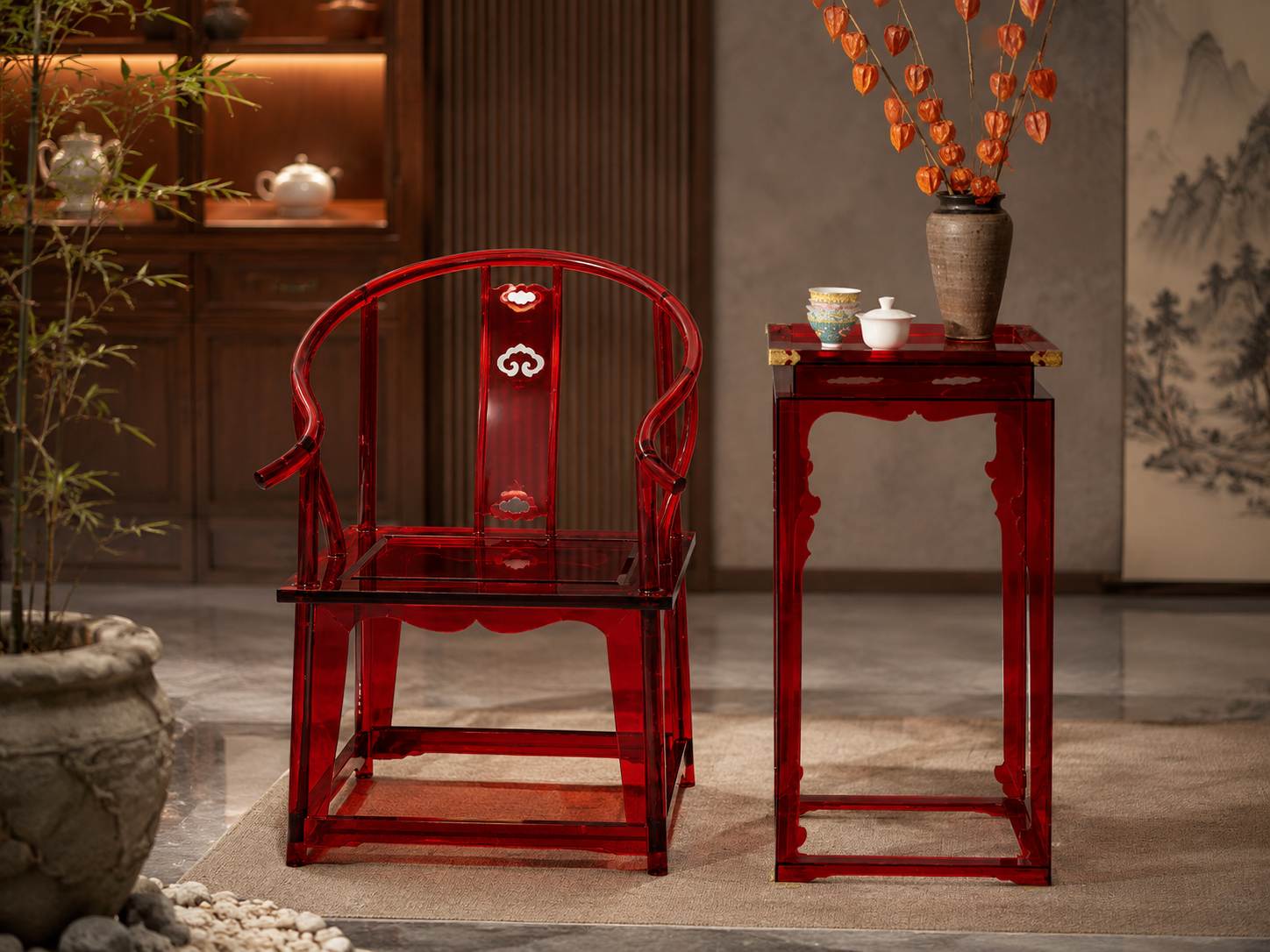
4. High-End Resin Creates Differentiation Through Controlled Effects Rather Than New Shapes
High-end resin creates another opportunity because it allows differentiation to happen inside the material itself.
Transparent casting systems can support color gradients, embedded components, smoke effects, mineral-like structures, layered transparency, metallic particles, or combinations with wood, stone, ceramics, and metal. The same basic table geometry can therefore generate many different identities without requiring an entirely new structure.
Sika's technical documentation for transparent epoxy systems demonstrates how advanced this category has become. Its portfolio includes systems specifically intended for furniture, art, decorative applications, deep transparent castings, embeddings, and river tables. Depending on the system, Sika identifies properties including high transparency, UV resistance, low viscosity, self-degassing behavior, and substantial single-pour casting depths.
The commercial opportunity, however, is not to fill resin with as many effects as possible.
Differentiation works best when the effect becomes controlled and recognizable.
A high-end resin side-table collection could use a specific smoky transition that gradually moves from transparent to graphite. A console might feature a restrained champagne tint designed to coordinate with brass interiors. A table base could contain subtle metallic inclusions suspended at a consistent visual density. Another collection might combine translucent resin with natural stone fragments in a way that becomes associated with the manufacturer.
This is much more defensible than random decorative casting.
When every piece contains unpredictable colors and effects, the products may be unique but the brand language becomes weak. When controlled parameters—color, transparency, inclusion density, gradient direction, surface finish, and casting depth—are repeatedly applied, resin becomes a design system.
For architects and interior designers, this also creates project flexibility. A successful furniture form can be adapted to hotel, residential, retail, or club environments simply by adjusting its material expression while retaining the manufacturer's recognizable craftsmanship.
5. Combining Synthetic Crystal With Other Premium Materials Creates a More Defensible Design Language
Material differentiation does not require furniture to be entirely transparent.
In many cases, synthetic crystal and platinum acrylic become more distinctive when contrasted with stone, metal, timber, leather, or high-end resin.
A transparent base beneath a heavily veined marble tabletop creates tension between visual lightness and physical mass. Synthetic crystal legs combined with brushed stainless steel can produce a cleaner contemporary character. Smoked resin paired with walnut creates warmth while maintaining depth. Champagne resin beside brass creates tonal continuity without making the furniture visually heavy.
These combinations can become a manufacturer's signature.
The wider luxury sector is already placing greater strategic emphasis on material innovation. Deloitte's Global Powers of Luxury 2026, based on responses from 420 senior executives across ten countries, found that 22.6% identified innovation in materials and production as one of the most transformative forces expected to shape luxury over the next five years.
In interior environments, material combinations also influence the experience of the entire space. Gensler's research into hospitality design argues that materiality, light, texture, color, sound, and other sensory factors need to work together to create coherent and memorable environments rather than isolated visual effects.
This makes synthetic crystal particularly relevant to project furniture.
A hotel developer may not want an acrylic table simply because acrylic is fashionable. The designer may want a transparent base because it allows a custom stone slab to remain visually dominant. A luxury boutique may use clear display pedestals because they reduce competition with merchandise. A villa may use translucent resin furniture to bridge warm stone, bronze, and timber.
Differentiation emerges when the transparent material solves a design problem while creating a recognizable aesthetic.
Instead of selling “a clear table,” manufacturers can build collections around specific material relationships: synthetic crystal plus marble, platinum acrylic plus stainless steel, high-end resin plus wood, or transparent structures with custom metal details.
That creates a system competitors cannot reproduce merely by copying one photograph.
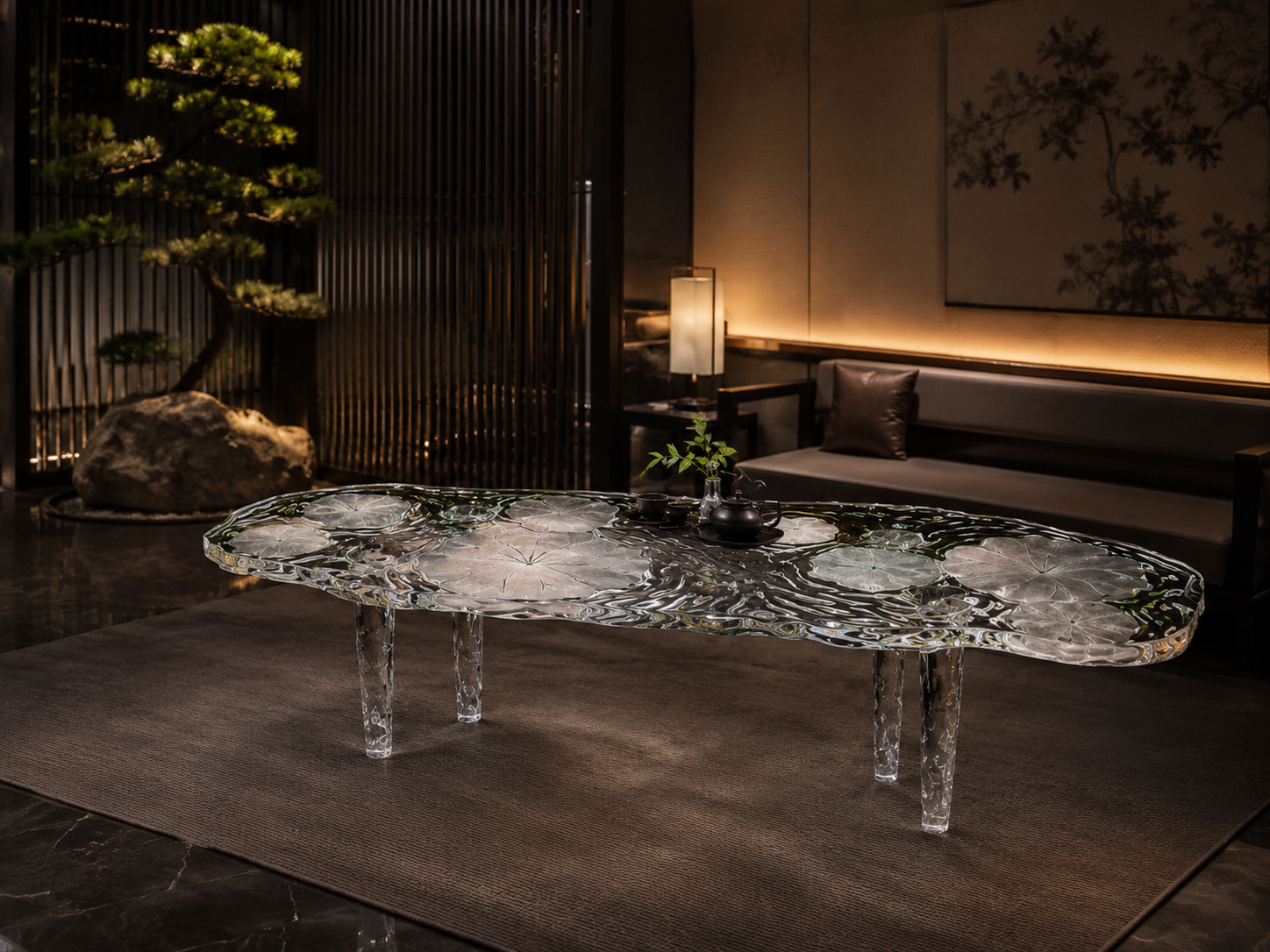
6. Material Differentiation Only Becomes a Business Advantage When It Can Be Repeated Consistently
Creating one impressive prototype is not enough.
For material details to become genuine competitive differentiation, they must survive quotations, samples, production, quality control, packaging, shipping, installation, and repeat orders.
This is especially important for project buyers. An interior designer may accept slight artistic variation in one collectible resin table, but a hotel specifying 30 side tables expects consistent dimensions, color, transparency, edge quality, and finish. A luxury retailer ordering display plinths for multiple locations needs repeatable optical appearance. An overseas distributor needs confidence that the next shipment will match the first.
Luxury-market research supports the importance of this consistency. BCG and Altagamma reported in 2025 that 89% of top-tier luxury customers consider craftsmanship and product quality major drivers of value. McKinsey's 2026 luxury research similarly describes quality and craftsmanship as the “price of entry” rather than an optional advantage.
For synthetic crystal, high-end resin, and platinum acrylic furniture manufacturers, differentiation therefore needs to be documented.
Material samples should define acceptable clarity and color. Resin recipes and pigment ratios should be controlled. Edge treatments should have repeatable standards. Bonding methods should produce consistent visual results. Product photography should include close-up details rather than hiding behind wide interior shots. Custom projects should communicate tolerances, dimensions, material behavior, maintenance requirements, and approval procedures before full production.
This transforms craftsmanship from a vague marketing phrase into evidence.
In a market filled with similar furniture silhouettes, manufacturers do not necessarily need to design increasingly complicated objects to remain distinctive. They need to make certain details unmistakably theirs—and then reproduce those details reliably.
A competitor can copy the dimensions of a coffee table.
It is much harder to copy a refined material system involving optical clarity, proprietary color effects, substantial thickness, polished edges, carefully resolved joints, controlled resin casting, complementary material combinations, and disciplined production standards.
That is the real opportunity offered by synthetic crystal furniture.
When material details become recognizable, consistent, and difficult to imitate, the material itself becomes part of the brand.
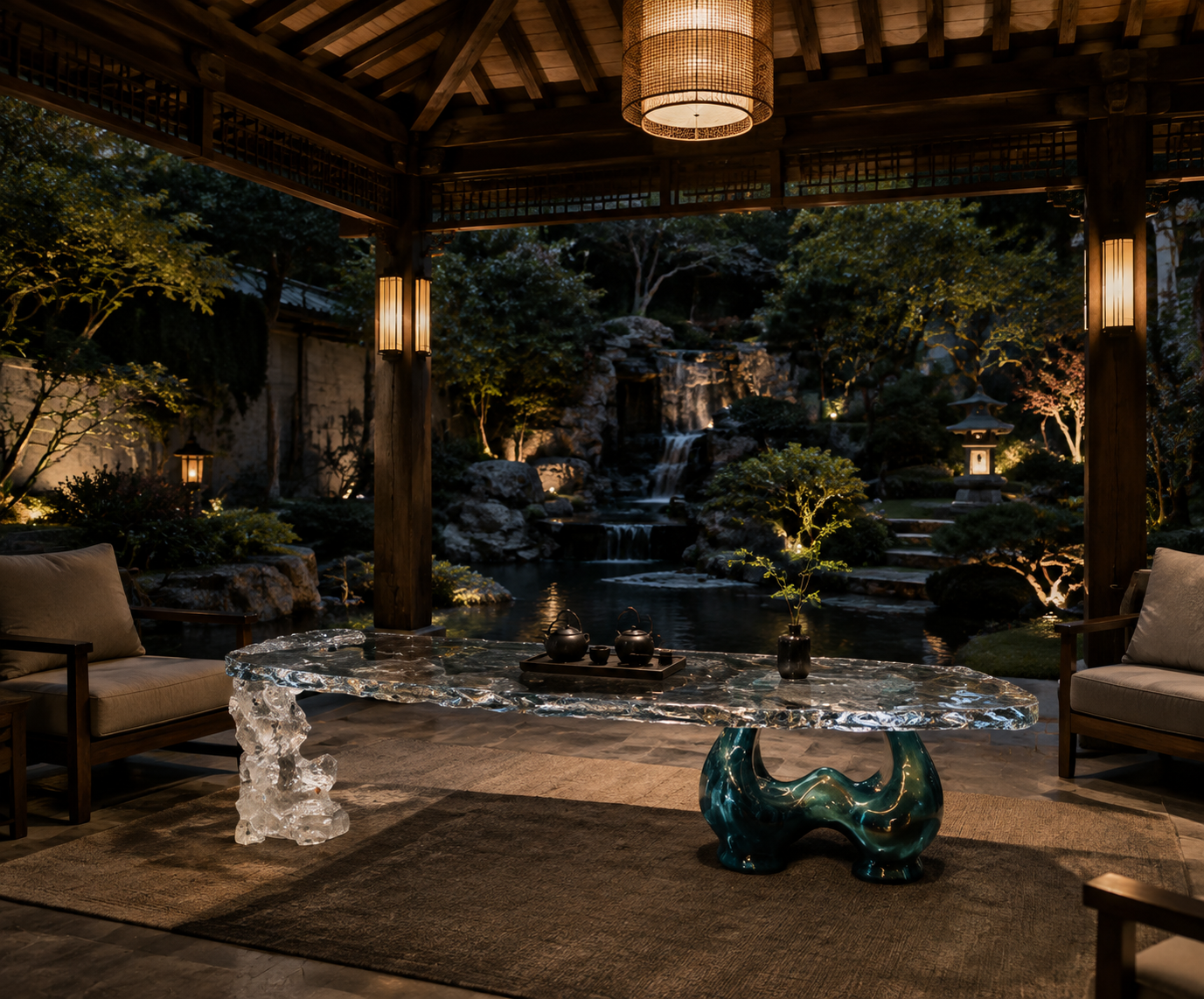
READ MORE:
- How Synthetic Crystal Furniture Uses Transparency to Create an Airy, Understated Luxury Interior
- Customers Care About More Than Furniture Form: How Synthetic Crystal Material Details Influence Purchase Decisions
- Why High-End Clients Pay for Material Quality: What Synthetic Crystal Furniture Reveals About Luxury
- The Luxury of a Space Often Hides in the Details: How Synthetic Crystal Furniture Elevates Overall Visual Quality
- Synthetic Crystal Acrylic Furniture: Building the Next Generation of High-End Living with Innovative Materials
- Why Crystal-Grade Acrylic Is Becoming an Important Direction for the Future of Furniture Design
- Synthetic Crystal Acrylic Furniture: Giving Brands a Distinctive Identity in the High-End Market
- From Material Breakthrough to Spatial Upgrade: The New Value Created by Synthetic Crystal Acrylic Furniture
- Synthetic Crystal Acrylic Furniture: Why High-End Homes Are Embracing “Transparent Luxury”


