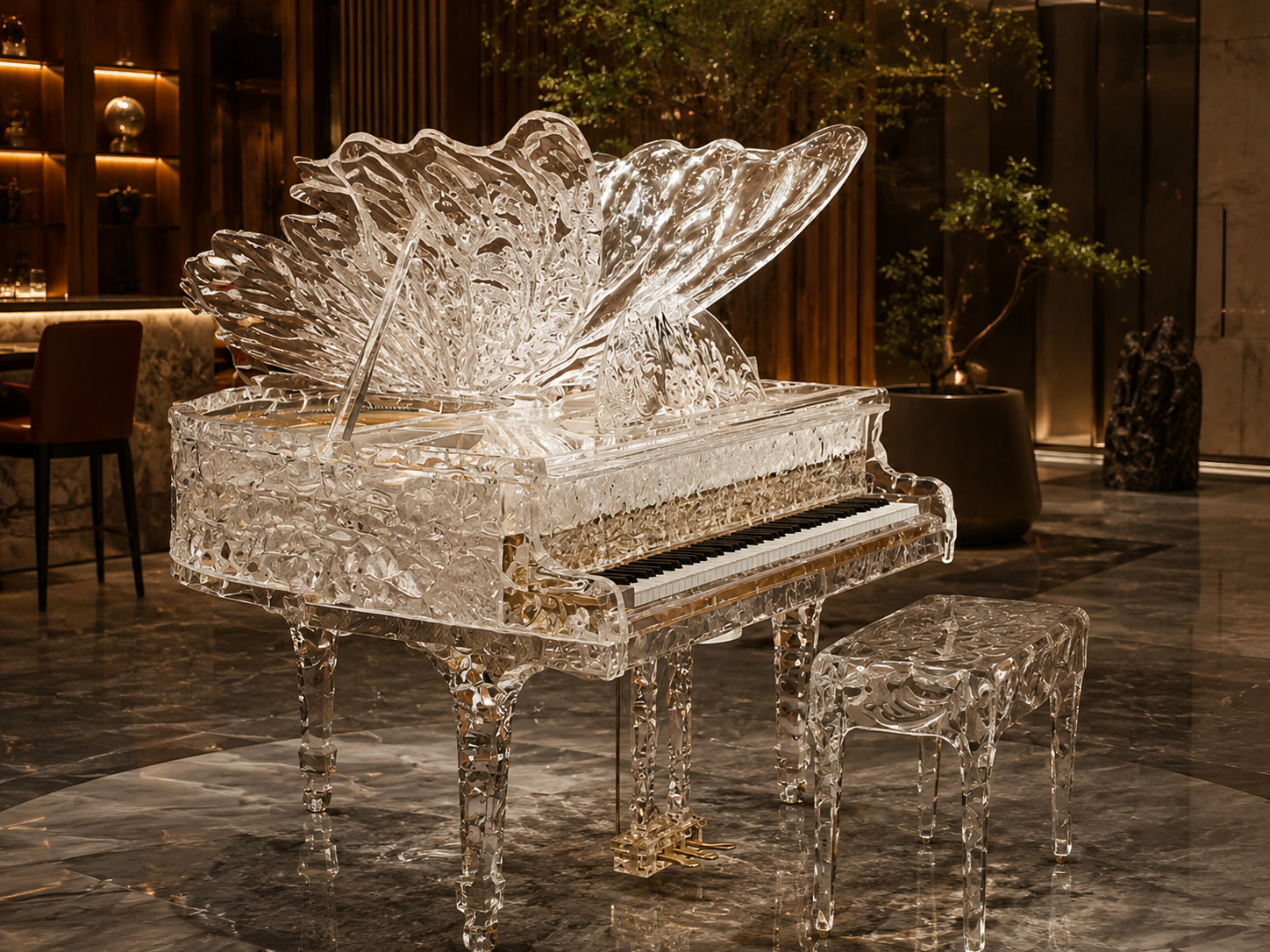
In the furniture industry, material selection has a direct influence on product appearance, manufacturing complexity, durability, positioning, and final market value. This is particularly true in the high-end custom furniture sector, where customers are not simply buying a table, chair, console, or display unit. They are buying design, craftsmanship, uniqueness, spatial identity, and brand experience.
Among the materials attracting increasing attention in premium interior projects, synthetic crystal acrylic has become especially important.
Often referred to as high-quality acrylic or PMMA, synthetic crystal acrylic can achieve exceptional transparency, smooth surfaces, polished edges, and a visual appearance similar to crystal. Unlike ordinary transparent plastic, however, premium acrylic can also be manufactured in substantial thicknesses, machined precisely, bonded into complex structures, and combined with stone, metal, wood, leather, glass, lighting, and other decorative materials.
These characteristics give acrylic furniture a unique position in the market.
At first glance, a transparent acrylic side table may look simple. But in a high-end product, what appears simple can involve carefully selected material, precision machining, repeated polishing, invisible bonding, structural engineering, strict tolerance control, and professional packaging.
This explains an important phenomenon in the furniture industry: two transparent products may appear similar in photographs, yet their final prices can differ significantly.
The difference is not created by material cost alone. It is created by the complete value chain—from raw material quality to manufacturing precision, design development, project customization, and brand presentation.
To understand why synthetic crystal acrylic furniture can achieve a strong product premium, it is necessary to examine its competitive advantages from six perspectives.
1. Material Performance: Why Synthetic Crystal Acrylic Differs from Ordinary Transparent Plastics
One of the most common misunderstandings about acrylic furniture is that all transparent plastics are essentially the same.
They are not.
The quality of the raw material has a major impact on transparency, appearance, processing performance, structural behavior, and long-term product quality.
Premium PMMA acrylic is valued for its excellent optical properties. High-quality material can provide outstanding clarity and a clean visual appearance, especially when thick sections are professionally polished.
This is extremely important in furniture. Unlike many industrial plastic components, acrylic furniture is usually viewed from multiple directions. Edges, corners, joints, thickness variations, and internal reflections are all visible.
Any material imperfection may therefore affect the overall appearance. Cloudiness, inconsistent transparency, visible internal defects, poor surface quality, color deviation, or weak edge finishing can immediately reduce the perceived grade of the product.
High-quality synthetic crystal acrylic can avoid many of these problems. When processed correctly, the material can produce a deep, transparent visual effect that resembles crystal or glass.
However, compared with glass, acrylic provides a different combination of characteristics. It is generally easier to machine into specialized furniture components. Thick blocks can be cut, drilled, engraved, milled, and shaped according to project requirements.
This flexibility is particularly valuable for custom furniture. A designer may require a table leg with a special geometry, a transparent support block with embedded metal hardware, or a curved acrylic component that would be difficult to manufacture using traditional glass processing.
The material can therefore function as both a decorative and structural element.
Thickness also contributes to perceived value. Thin transparent sheets can appear relatively ordinary, while thick acrylic components create visual depth. Light travels through the material differently, and polished edges can produce strong internal reflections.
This allows designers to create furniture that feels visually substantial without appearing heavy.
A thick acrylic table base, for example, may have significant physical mass, yet because it is transparent, it does not visually occupy the room in the same way as a solid stone or wooden base.
This combination of physical presence and visual lightness is one of the reasons premium acrylic is difficult to replace with ordinary transparent plastic.
The difference becomes even more obvious in large furniture pieces. For small accessories, lower-grade materials may still look acceptable. But when the scale increases, material quality becomes much more visible.
Large transparent surfaces expose inconsistencies. Thick polished edges reveal material quality. Complex joints demand predictable processing performance.
Therefore, in high-end acrylic furniture manufacturing, raw material selection is not merely a purchasing decision. It is the foundation of product quality.
2. Visual Value: How Crystal-Like Transparency Creates a Premium Appearance
Furniture pricing is strongly influenced by perceived value.
Perceived value is not always directly related to the quantity of material used. In luxury design, a product can command a premium because it creates a distinctive visual experience.
Synthetic crystal acrylic has a major advantage in this area.
Transparency allows furniture to interact with the environment. Instead of presenting a completely opaque surface, acrylic reflects and transmits surrounding light. It visually connects with flooring, walls, artwork, rugs, stone surfaces, decorative lighting, and architectural elements.
This creates a sense of integration.
A clear acrylic coffee table positioned above a high-end carpet allows the pattern beneath it to remain visible. A transparent console placed in front of a decorative stone wall does not hide the wall. An acrylic dining table base can support a heavy marble top while appearing almost invisible.
These effects give designers greater control over visual hierarchy.
In many luxury interiors, the furniture is not supposed to compete with every other material in the room. Sometimes the marble should dominate. Sometimes the artwork should be the main focus. Sometimes a dramatic chandelier or panoramic window should define the space.
Transparent furniture can provide function without creating unnecessary visual competition.
At the same time, acrylic does not have to disappear completely.
Thick polished acrylic can itself become a visual feature. Light entering the edges can create bright highlights. Reflections can make the material appear luminous. Carefully designed facets or bevels can increase optical complexity.
Under professional lighting, these details can give furniture a jewel-like quality.
This is where the term “synthetic crystal” becomes especially relevant. The material can create a crystal-inspired appearance without requiring natural crystal as the primary structural material.
For high-end interior designers, this opens many possibilities.
A luxury retail boutique may use thick transparent pedestals to display jewelry, watches, handbags, or fashion accessories. A hotel lobby may use acrylic side tables to maintain an open visual atmosphere. A villa may use an acrylic console to complement natural stone flooring and bronze decorative details. A premium showroom may combine acrylic with lighting to create futuristic display furniture.
These applications show how visual value contributes directly to product positioning.
Acrylic furniture is not simply transparent. Its commercial value comes from how transparency is designed, processed, and integrated into the interior.
.png)
3. Customization Capability: Turning Material Flexibility into Product Differentiation
The high-end furniture market is increasingly driven by customization.
Standard furniture can satisfy standard needs, but luxury projects often require products designed specifically for a particular space.
Architectural dimensions may be unusual. Materials may need to match a broader interior concept. Furniture may need to coordinate with a specific marble slab, metal finish, wall treatment, brand identity, or lighting system.
Synthetic crystal acrylic is highly suitable for this environment because it supports a wide range of fabrication methods.
Depending on the design, acrylic can be CNC machined, laser processed for certain applications, drilled, cut, engraved, bonded, bent, thermoformed, polished, frosted, tinted, printed, laminated, and combined with embedded decorative elements.
This means the material can support both simple and complex furniture designs.
A custom furniture project may begin with only a sketch or concept drawing. From there, the manufacturer can develop material thickness, structural connections, processing methods, hardware details, and production tolerances.
This design-to-production flexibility creates a major competitive advantage.
It allows manufacturers to move away from commodity pricing.
When products are highly standardized, customers can easily compare prices between suppliers. When a product is custom engineered for a specific project, comparison becomes more difficult because the value depends on design capability, technical understanding, communication, prototyping, and execution.
This creates room for premium positioning.
For example, a standard transparent side table may compete mainly on price.
A custom acrylic console with a specific size, polished thick-section legs, integrated brass components, invisible joints, and a custom stone top is a very different product.
Its value includes design adaptation, engineering, material coordination, precision production, finishing, assembly, quality control, project communication, and packaging.
The finished piece is no longer a generic acrylic product. It becomes a project-specific furniture solution.
This is particularly important for interior designers and architects who want exclusivity.
A luxury client may not want a piece that can be purchased easily online. They may want furniture created only for their property, hotel, showroom, boutique, or office.
Acrylic gives designers the flexibility to achieve this.
Customization can also extend to branding. Logos can be engraved. Brand colors can be incorporated through tinted acrylic. Retail display furniture can be designed around specific products. Hotel furniture can be adapted to room layouts. Restaurant furniture can coordinate with lighting and decorative materials.
In this way, acrylic becomes part of the brand experience.
4. Manufacturing Quality: Why Processing Technology Determines Product Grade
Raw material quality is important, but manufacturing technology is equally important.
Even premium acrylic can look inexpensive if it is poorly processed.
This is one of the key reasons the market contains such a wide price range.
At the lower end, furniture may have visible joints, rough edges, inconsistent polishing, weak structural details, poor alignment, or scratches.
At the high end, the goal is very different. The finished furniture should look precise, clear, refined, and intentional.
Cutting and Machining Accuracy
Acrylic furniture often relies on geometric precision. If components are not accurately cut, joints may be uneven and the furniture may not align correctly. In transparent materials, these mistakes are more visible than they would be in opaque furniture.
Edge Polishing
Edge quality has a major influence on the crystal-like appearance. A poorly finished edge can look cloudy or rough. A professionally polished edge can become almost optically clear. For thick acrylic furniture, polished edges can also create strong reflective effects that contribute to the premium aesthetic.
Bonding Technology
Joining transparent acrylic is a specialized process. The goal is often to create connections that are structurally reliable while remaining visually clean. Excess adhesive, bubbles, misalignment, or visible marks can significantly reduce perceived quality. Therefore, bonding skill is a major part of high-end acrylic furniture production.
Structural Engineering
Acrylic furniture must also be functional. Dining tables, benches, consoles, shelves, and large display units may carry substantial weight. The structure must therefore be designed according to dimensions, material thickness, load, joint configuration, and real-world usage. This is especially important when acrylic is combined with heavy materials such as marble or stone.
Hardware Integration
Luxury furniture often combines acrylic with stainless steel, brass, bronze, or other metal components. Hardware must be positioned carefully. Poorly integrated screws or brackets may interrupt the transparent appearance. High-end products often use custom inserts, concealed connections, or precisely machined interfaces.
Surface Protection
Transparent acrylic surfaces can reveal scratches more easily than many opaque materials. Protection during fabrication, assembly, inspection, packaging, and transportation is therefore essential. A furniture piece may be manufactured perfectly but still lose value if it arrives with damaged surfaces.
Professional packaging is consequently part of the product itself.
For international projects, this becomes even more important. Custom acrylic furniture may travel long distances by sea or air before reaching the final installation site.
Protective film, foam, reinforced packaging, crates, separation between components, and careful loading all contribute to successful delivery.
These manufacturing and logistical details are rarely visible in the finished product, but they are a major part of the price difference between commodity furniture and premium custom furniture.
5. Application Value: Why Acrylic Performs Especially Well in Luxury Residential and Commercial Projects
The competitive advantage of acrylic furniture becomes even stronger when examined through application scenarios.
The material performs particularly well in environments where visual openness, customization, presentation, and differentiation are important.
Luxury Residences
In villas, penthouses, and premium apartments, acrylic furniture can help maintain a spacious feeling.
Transparent coffee tables, consoles, benches, dining chairs, and side tables can provide function without blocking decorative flooring or architectural features.
This is especially valuable in interiors that already contain strong materials such as marble, natural stone, wood veneer, metal, artwork, or designer lighting.
Hotels
Hotels increasingly use interior design as part of the guest experience. Distinctive furniture can help create memorable public spaces and guestrooms.
Acrylic works well in hotel lobbies, lounges, suites, bars, reception areas, and display spaces because it can be customized according to the design theme.
Luxury Retail
Retail is one of the strongest application areas for clear acrylic.
Transparent displays allow the product being sold to remain the main focus. Jewelry, watches, fashion accessories, cosmetics, and premium consumer goods can be presented on acrylic pedestals, shelves, tables, and cases without visual distraction.
The material can also support lighting and branding.
Showrooms
Furniture, automotive, material, fashion, and design showrooms often require custom display solutions.
Clear acrylic furniture can create clean, modern presentation zones while preserving sightlines across the space.
Restaurants and Clubs
In hospitality environments, furniture must contribute to atmosphere.
Acrylic tables, decorative screens, bar furniture, and mixed-material pieces can create a modern, glamorous, or futuristic visual identity.
Executive Offices
High-end offices increasingly use furniture to communicate brand positioning.
A custom acrylic desk, meeting table, console, or display cabinet can create a distinctive executive environment.
These application scenarios demonstrate why acrylic is especially competitive in project-based furniture markets. Its value is not simply the material itself. The value comes from how well the material solves design problems.
.png)
6. Product Premium: How Material, Design, Manufacturing, and Branding Create Higher Commercial Value
The final competitive advantage of synthetic crystal acrylic furniture is its ability to support a higher product premium.
But this premium must be understood correctly.
Higher pricing is not created simply by using acrylic instead of another plastic.
It is created by combining multiple layers of value.
The first layer is material quality. Premium acrylic provides better optical performance, visual depth, and processing potential.
The second layer is design. A product that has been specifically designed for a luxury project carries more value than a generic mass-produced piece.
The third layer is manufacturing. Precision cutting, polished edges, clean bonding, structural engineering, and high-quality assembly all increase the perceived and functional value of the product.
The fourth layer is customization. Custom dimensions, finishes, mixed materials, brand elements, special shapes, and project-specific details create exclusivity.
The fifth layer is application expertise. A supplier that understands luxury residential, hospitality, retail, and commercial projects can offer more than manufacturing alone. It can help translate drawings and concepts into workable furniture.
The sixth layer is brand presentation. High-end buyers do not only purchase physical objects. They evaluate samples, communication, drawings, packaging, project coordination, quality control, and overall professionalism.
All of these elements contribute to perceived reliability.
This explains why the premium furniture market does not operate purely according to raw material price.
Consider two acrylic tables.
The first is produced in a standard size with thin material and basic finishing.
The second uses thick premium PMMA, custom machining, polished edges, carefully engineered connections, metal details, and project-specific dimensions.
Both may be called “acrylic tables,” but they belong to completely different market categories.
The second product can command a higher price because the customer is buying a higher level of design, engineering, finish, and exclusivity.
For manufacturers, this is an important strategic opportunity.
Competing only on low price can place acrylic furniture into a commodity market. Competing on quality, customization, project expertise, and design capability creates a more sustainable premium position.
This is particularly relevant for B2B clients.
Interior designers, architects, contractors, hotels, furniture brands, and developers are often less interested in finding the cheapest transparent table. They are interested in finding a supplier capable of delivering the correct product for a specific project.
Reliability becomes part of the premium. So does consistency.
A luxury hotel project may require dozens of furniture pieces with consistent dimensions, polishing, color, hardware, and packaging. A retail project may require repeated production across multiple stores. A furniture brand may need a manufacturer capable of maintaining quality over multiple orders.
These requirements raise the value of professional production systems.
From Material to Market Position
The competitive advantage of synthetic crystal acrylic furniture can therefore be understood as a chain.
High-quality material enables better transparency. Better transparency creates stronger visual impact. Strong visual impact supports luxury design. Material flexibility enables customization. Customization creates differentiation. Precision manufacturing turns design into a premium finished product. Project adaptability expands application opportunities. And all of these factors together create product premium.
This is why the most successful acrylic furniture products are rarely positioned simply as transparent furniture.
They are positioned as design solutions.
They may be described as bespoke furniture, architectural furniture, luxury furniture, custom hospitality furniture, premium retail display furniture, or designer furniture.
The material is only the beginning. The real competitive advantage comes from what can be created with it.
How Buyers Can Identify High-Value Acrylic Furniture
For buyers, distinguishing premium acrylic furniture from lower-grade alternatives requires examining more than product photographs.
Several factors are worth checking.
First, examine the transparency and surface quality of the material.
Second, look closely at edge polishing.
Third, inspect joint quality and alignment.
Fourth, confirm material thickness and structural design.
Fifth, ask how metal, stone, wood, or other materials are integrated.
Sixth, review previous custom projects.
Seventh, evaluate the manufacturer's ability to interpret drawings.
Eighth, confirm packaging standards.
Ninth, ask about quality control procedures.
Tenth, consider communication quality.
These factors are particularly important when ordering custom products internationally.
A low quotation may appear attractive initially, but if the furniture requires reworking, replacement, or repair after arrival, the final project cost can become much higher.
For luxury projects, quality risk often matters more than small differences in unit price.
The Future of Synthetic Crystal Acrylic Furniture
The future potential of acrylic furniture is closely connected to broader changes in interior design.
Contemporary interiors are becoming more customized.
Clients increasingly want unique furniture instead of standardized products.
Designers are combining more materials within a single piece.
Commercial environments are becoming more visually driven.
Retail, hospitality, and residential projects are increasingly designed for both physical experience and digital photography.
In this environment, acrylic has several advantages.
It is visually distinctive. It works well with lighting. It can be highly customized. It combines effectively with premium materials. It can reduce visual weight. It can support both decorative and functional applications.
Most importantly, it gives designers a way to create furniture that appears technically sophisticated without becoming visually heavy.
This balance is difficult to achieve with many conventional furniture materials.
Conclusion
The competitive advantage of synthetic crystal acrylic furniture cannot be explained by transparency alone.
Its real strength comes from the interaction between material quality, visual performance, customization, precision manufacturing, project adaptability, and premium positioning.
Compared with ordinary transparent plastics, high-quality acrylic offers greater optical clarity, stronger visual depth, better processing possibilities, and more sophisticated furniture applications.
Compared with many traditional opaque materials, it provides visual lightness and spatial openness.
Compared with standardized furniture, it offers greater customization and design freedom.
These differences create commercial value.
For high-end residential, hotel, retail, showroom, restaurant, office, and luxury commercial projects, custom acrylic furniture can serve both functional and aesthetic purposes.
It can support heavy materials while appearing light. It can occupy space without visually closing the room. It can become a statement piece while allowing the surrounding architecture to remain visible. And it can be engineered specifically for a project's dimensions, materials, brand identity, and design language.
This is ultimately where the product premium comes from.
The value of synthetic crystal acrylic furniture does not lie simply in the cost of a transparent material. It lies in the ability to transform that material into a precise, customized, visually memorable, and commercially differentiated furniture product.
For manufacturers and brands that can combine high-quality PMMA, strong design capability, skilled fabrication, engineering expertise, and professional project service, synthetic crystal acrylic furniture offers a clear opportunity to move beyond commodity competition and enter the premium custom furniture market.
READ MORE:
- Synthetic Crystal Acrylic Furniture: Using Futuristic Materials to Create Modern Luxury Spaces
- Why Is High-End Furniture Paying More Attention to the Dual Experience of Touch and Vision?
- Synthetic Crystal Acrylic Furniture: Helping Designers and Brands Find New Breakthrough Directions
- Synthetic Crystal Acrylic Furniture: Why Is It Becoming a New Favorite in High-End Custom Projects?
- Why Luxury Buyers Are Looking Beyond Traditional Furniture Materials
- Un processo di progetto più efficiente: prima si definisce il cristallo sintetico, poi si sviluppano dimensioni e struttura del mobile
- Dal campione approvato alla messa in produzione: come ridurre il tempo perso in continue revisioni nei progetti di mobili in cristallo sintetico?
- Colore, dimensioni, spessore e struttura: quali dettagli confermare prima di ordinare mobili in cristallo sintetico?
- Hotel, ville e spazi commerciali: come pianificare in anticipo materiali e tempi di consegna dei mobili in cristallo sintetico?


