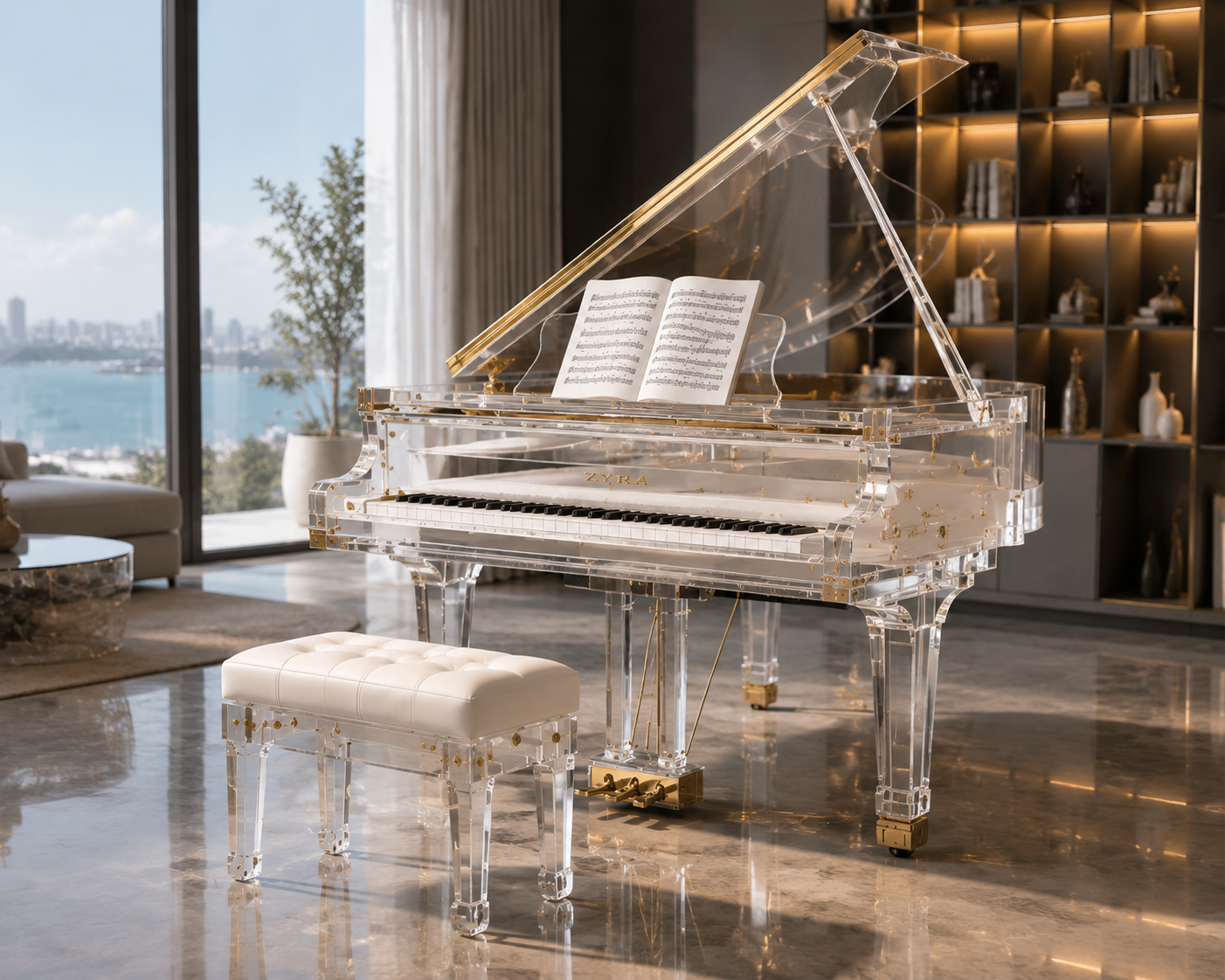
For many years, furniture design has been dominated by familiar materials.
Wood brings warmth and tradition. Metal provides strength and an architectural character. Marble communicates luxury and permanence. Glass creates transparency and elegance. Upholstery offers comfort and softness.
All of these materials remain important, but the high-end furniture market is changing.
Designers, furniture brands, architects, hospitality groups, retailers, and developers are increasingly searching for materials that can create stronger differentiation.
The challenge is no longer simply to make another attractive chair, table, console, or cabinet.
The challenge is to create something recognizable.
Something that can immediately communicate a design idea.
Something that can become part of a brand's visual identity.
Something that feels contemporary but not generic.
Something capable of connecting furniture, architecture, light, material, and spatial experience.
This is one reason synthetic crystal acrylic furniture is receiving increasing attention.
High-quality acrylic, also known as PMMA, has long been used in displays, signage, decoration, and industrial applications. However, advances in material quality, machining, bonding, polishing, engineering, and customization have significantly expanded its role in furniture design.
Today, acrylic can be used to create dining tables, coffee tables, consoles, chairs, benches, cabinets, shelving, decorative screens, table bases, furniture legs, retail displays, sculptural pieces, and custom architectural furniture.
More importantly, it gives designers and brands a material language that differs significantly from conventional furniture.
Its transparency can reduce visual weight.
Its polished thickness can resemble crystal.
Its machining flexibility supports complex shapes.
Its compatibility with metal, stone, wood, leather, lighting, and other premium materials gives designers enormous creative freedom.
For designers, acrylic can open new directions in form and visual expression.
For furniture brands, it can provide new opportunities for product differentiation and premium positioning.
For commercial projects, it can create memorable furniture that contributes to brand experience.
The competitive value of synthetic crystal acrylic furniture therefore goes far beyond transparency.
It is becoming a platform for innovation.
The following six areas explain why.
1. Breaking Away from Conventional Materials and Visual Languages
One of the biggest challenges facing furniture designers today is familiarity.
Many products are beautifully made, but the market contains countless versions of similar ideas.
Wooden dining tables. Marble coffee tables. Metal-framed consoles. Glass side tables. Upholstered lounge chairs.
These categories remain commercially important, but differentiation becomes increasingly difficult when the same materials, forms, and design languages are used repeatedly.
Synthetic crystal acrylic offers a different starting point.
The most obvious characteristic is transparency.
Transparent furniture behaves very differently from opaque furniture.
A solid wooden table base visually occupies a room. A marble pedestal creates a strong sense of mass. A black metal structure defines clear lines within the interior. A transparent acrylic structure can perform the same physical function while appearing visually lighter.
This creates a unique design contradiction.
The furniture exists, but part of it seems to disappear.
For designers, this can fundamentally change the relationship between furniture and space.
A transparent acrylic coffee table may allow a patterned carpet to remain completely visible. An acrylic console positioned in front of a decorative wall can provide function without covering the wall. A thick acrylic base underneath a marble tabletop can make the stone appear to float. Clear acrylic chairs around a dining table can reduce visual congestion.
This is especially useful in luxury interiors where the architecture and surrounding materials already have a strong visual identity.
Instead of adding another dominant surface, acrylic can support the space.
At the same time, thick acrylic can also become a statement material.
When edges are precisely polished, thick acrylic blocks can develop an appearance similar to crystal.
Light entering the material can create reflections and highlights.
Beveled edges can introduce additional optical effects.
Tinted acrylic can produce subtle color transitions.
This gives designers an opportunity to create furniture that is transparent but still visually memorable.
For brands trying to develop a recognizable aesthetic, this matters.
Material choice can become part of brand identity.
A brand known for transparent architectural furniture can occupy a different position from one competing primarily in conventional wood or metal products.
This does not mean acrylic should replace traditional materials.
Its greatest potential often comes from contrast.
Acrylic next to walnut. Acrylic supporting marble. Acrylic combined with brushed brass. Acrylic beside leather upholstery. Acrylic integrated with stainless steel.
These combinations make familiar luxury materials feel new.
The breakthrough therefore comes not only from using a new material, but from creating new relationships between materials.
2. Turning Material Characteristics into New Design Possibilities
A material becomes valuable to designers when it can support creative ideas.
Synthetic crystal acrylic has a broad range of fabrication possibilities.
Depending on thickness, structure, and production requirements, acrylic can be cut, CNC machined, drilled, engraved, polished, bonded, bent, thermoformed, frosted, printed, tinted, laminated, and integrated with hardware or lighting.
Each processing method creates different design opportunities.
Thickness as a Design Element
In ordinary furniture, thickness is often primarily structural.
With acrylic, thickness can also become visual.
A thin transparent panel has a minimal appearance. A thick acrylic slab creates depth. Very thick acrylic blocks can feel almost sculptural.
Polished thick edges can catch light and produce bright reflections, giving furniture a crystal-inspired character.
This means designers can use thickness not only to support weight but also to control how the furniture appears.
CNC Machining and Sculptural Form
Precision machining allows acrylic components to move beyond simple rectangular sheets.
Curves, grooves, recesses, channels, holes, facets, and decorative details can be integrated into the material.
This opens the door to more sculptural products.
A table leg does not need to be a simple vertical block. A bench support does not need to follow a conventional profile. A retail display can be developed around the geometry of a specific product. A furniture component can include channels for metal hardware, lighting, or decorative inserts.
For designers who want custom forms, this flexibility is particularly attractive.
Bending and Forming
Certain acrylic components can be bent or thermoformed into curved shapes.
Curves can soften the visual character of transparent furniture.
Instead of relying only on sharp architectural geometry, designers can introduce fluid forms.
This may be useful for chairs, stools, side tables, screens, display furniture, and decorative components.
Color as a New Design Layer
Acrylic is often associated with complete transparency, but clear material is only one possibility.
Tinted acrylic can introduce color while preserving translucency.
Smoke gray, amber, blue, green, bronze, red, or customized colors can create different moods.
A furniture brand can use color to develop a recognizable collection. A retail company can match display furniture to brand colors. A hotel can use tinted acrylic to coordinate with the interior palette.
This allows furniture to become more deeply integrated with branding and spatial identity.
Engraving and Branding
Acrylic can also support engraving, printing, logo integration, and decorative surface treatments.
For commercial environments, this has significant value.
Acrylic furniture can become part of a branded experience rather than simply a neutral object.
Logos can be integrated subtly into transparent panels. Patterns can be engraved into surfaces. Lighting can emphasize branded details.
For designers and brands, these capabilities create a much larger creative vocabulary than conventional transparent furniture might suggest.
.png)
3. Creating Stronger Brand Differentiation Through Bespoke Furniture
Brands compete through more than logos.
Products, materials, stores, packaging, photography, showrooms, hotels, restaurants, exhibitions, and physical environments all contribute to brand recognition.
Furniture can play an important role in this system.
A distinctive furniture collection can communicate what a brand represents before customers read any marketing message.
For this reason, custom acrylic furniture can be particularly valuable.
Unlike standardized furniture purchased from a catalog, bespoke acrylic pieces can be developed around specific brand requirements.
Dimensions can be customized. Material thickness can be customized. Colors can be customized. Metal finishes can be customized. Logos can be incorporated. Shapes can be developed specifically for the project. Stone, wood, upholstery, or lighting can be integrated according to the overall brand identity.
This makes it possible to create furniture that belongs to one brand rather than to the entire market.
For a furniture company, this may mean developing a signature collection.
A brand might become recognized for thick transparent acrylic bases combined with natural stone tops. Another might specialize in colorful acrylic furniture with sculptural forms. Another may combine clear acrylic with brass detailing to create a glamorous luxury identity.
The material does not define the brand by itself.
The way the material is used creates differentiation.
This also applies to hospitality and retail brands.
Imagine a luxury fashion store using generic display tables. The store may still look attractive, but the furniture does not necessarily contribute strongly to brand memory.
Now imagine custom display furniture designed specifically around the brand's product proportions, signature color, lighting concept, and architectural language.
The result becomes more recognizable.
Acrylic is well suited to this kind of customization because it can remain visually light while carrying very specific brand details.
The same principle applies to hotels.
A boutique hotel may develop custom acrylic side tables and consoles for its guestrooms. The lobby may use related acrylic furniture with the same edge details and metal accents. VIP areas may include more sculptural versions of the same material language.
Together, these pieces create visual consistency.
This is one of the most important advantages of bespoke furniture.
It can transform individual products into a system.
For brands, systems are more powerful than isolated objects.
4. Connecting Furniture Design with Architecture, Art, and Spatial Experience
Modern furniture increasingly operates within a larger design environment.
It is not simply placed inside architecture.
It interacts with architecture.
This is particularly true in high-end projects.
Interior designers consider sightlines, circulation, lighting, materials, reflections, views, artwork, ceiling height, flooring, wall treatments, and spatial transitions.
Furniture needs to support all of these elements.
Transparent acrylic is especially interesting because it can reduce the visual barrier between objects and space.
Consider a luxury residence with floor-to-ceiling windows. A heavy opaque table positioned near the window may interrupt the visual connection to the exterior. A clear acrylic table can provide function while allowing the view to remain dominant.
In a hotel lobby with large-scale artwork, transparent side tables may support seating without competing with the artwork.
In a retail store, acrylic display furniture can present products while maintaining visual continuity across the store.
In a gallery-inspired interior, acrylic pedestals can provide support while appearing almost invisible.
This relationship between presence and absence is difficult to achieve with most conventional furniture materials.
Acrylic can also interact strongly with lighting.
Under natural daylight, clear surfaces may appear extremely subtle.
Under focused artificial lighting, polished edges can become bright and dramatic.
Colored lighting can pass through or reflect within the material.
Integrated LED systems can make acrylic components appear illuminated from within.
This makes the material especially suitable for experiential spaces.
Luxury boutiques, restaurants, clubs, exhibitions, showrooms, and hospitality environments increasingly compete through experience.
Customers do not only remember what they purchased.
They remember how the space felt.
Furniture contributes to this memory.
A sculptural acrylic table may become a photographic focal point. An illuminated acrylic display may attract attention to a premium product. A transparent console may emphasize the architecture behind it.
Furniture therefore becomes part of spatial storytelling.
For designers, this is a significant breakthrough direction.
Instead of designing furniture as an isolated object, they can design furniture as part of light, movement, architecture, and visual experience.
5. Expanding Commercial Opportunities Across High-End Project Markets
The value of synthetic crystal acrylic furniture is not limited to one product category or one customer group.
Its adaptability creates opportunities across multiple high-end markets.
Luxury Residential Projects
In villas, penthouses, private residences, and premium apartments, acrylic furniture can create a sophisticated contemporary atmosphere.
Coffee tables, dining tables, consoles, side tables, benches, desks, and decorative pieces can be customized to match the architectural concept.
Transparent furniture is particularly useful in interiors that already include strong decorative materials.
Instead of covering marble flooring, rugs, stone walls, or panoramic views, acrylic allows these features to remain visible.
Hospitality Projects
Hotels, resorts, restaurants, lounges, bars, and private clubs depend heavily on atmosphere.
Furniture must be functional, but it must also support the identity of the property.
Custom acrylic furniture can be adapted to guestrooms, lobbies, reception spaces, lounges, bars, restaurants, and VIP areas.
By combining acrylic with stone, metal, upholstery, or lighting, designers can create pieces suited to different hospitality styles.
Luxury Retail
Retail environments are one of the strongest markets for transparent acrylic.
Luxury products often require display furniture that supports presentation without becoming visually dominant.
Jewelry, watches, cosmetics, fashion accessories, handbags, shoes, and collectible products can be displayed on transparent pedestals, shelves, counters, and tables.
Acrylic can also be customized around product dimensions and brand identity.
Showrooms
Furniture showrooms, material galleries, automotive spaces, property sales centers, and fashion showrooms often need flexible visual presentation.
Acrylic furniture can create clean and contemporary spaces while preserving sightlines.
It can also be adapted to temporary exhibitions and product launches.
Offices and Corporate Spaces
Premium corporate environments increasingly use design to communicate brand values.
Executive offices, reception areas, conference rooms, and client lounges can incorporate custom acrylic furniture to create a modern, innovative image.
Technology, fashion, beauty, design, and creative companies may find the material particularly suitable for this purpose.
Exhibitions and Events
Acrylic can also play an important role in temporary environments.
Exhibition booths, product launches, art events, fashion presentations, and luxury brand activations often require visually distinctive furniture.
Because the material photographs well and works effectively with lighting, it can contribute strongly to short-term branded experiences.
For furniture manufacturers and suppliers, these varied markets create opportunities to move beyond standard product sales.
Instead of selling only furniture pieces, they can participate in complete project solutions.
This changes the commercial model.
The value moves from quantity alone toward design support, customization, technical execution, project management, and long-term cooperation.
.png)
6. From Product Innovation to Long-Term Brand Value
Acrylic furniture can create an immediate visual effect, but its greater strategic value lies in what designers and brands can build around it.
A successful material direction can become the basis for an entire product family.
For example, a brand may begin with one acrylic console.
If the design receives a strong market response, the same visual language can expand into coffee tables, side tables, dining tables, benches, shelving, desks, and display furniture.
Common design details can connect the collection.
The same acrylic thickness. The same bevel profile. The same metal finish. The same color treatment. The same joint language.
This creates consistency.
Consistency creates recognition.
Recognition creates brand value.
For custom furniture manufacturers, acrylic can also help create a stronger competitive position.
Many factories can produce simple furniture. Fewer can handle thick acrylic, advanced polishing, clean bonding, precise machining, material combinations, structural engineering, and project customization at a consistently high level.
Specialization can therefore become a competitive advantage.
Instead of competing only through price, a manufacturer can compete through capability.
This is particularly important in the high-end B2B market.
Architects and designers often need suppliers who can solve problems.
They may send drawings that require engineering adjustments. They may need samples before production. They may require specific color matching. They may need acrylic combined with marble, brass, wood, or stainless steel. They may have installation or transportation constraints.
A supplier capable of handling these requirements becomes more than a factory.
It becomes a project partner.
That relationship can produce long-term value.
Furniture brands may develop exclusive collections with the manufacturer. Design studios may return for additional projects. Hotels may repeat furniture designs across multiple properties. Retail brands may reproduce display systems across different stores. Developers may use related furniture across different luxury residential projects.
These repeat opportunities are more valuable than one isolated transaction.
They also explain why the future of acrylic furniture may depend less on generic transparent products and more on specialized custom solutions.
A New Breakthrough Direction for Designers
For designers, synthetic crystal acrylic provides three major opportunities.
The first is visual experimentation.
Transparency changes the relationship between furniture and space.
The second is structural experimentation.
Thickness, machining, bending, and mixed materials allow furniture to move beyond conventional forms.
The third is experiential design.
Acrylic can interact with light, reflection, architecture, and branding in ways that create stronger spatial experiences.
This allows designers to think beyond the traditional question: “What should this table look like?”
Instead, they can ask: “How should this object interact with the room?” “How should light move through the material?” “What elements should remain visible behind the furniture?” “Can the support structure become visually invisible?” “Can the product appear to float?” “Can the furniture reinforce a brand's identity?”
These questions create new design directions.
A New Breakthrough Direction for Brands
For brands, the opportunity is equally significant.
In a competitive market, differentiation is difficult to achieve through marketing language alone.
Customers need to see and feel the difference.
Distinctive furniture provides physical evidence of brand positioning.
A luxury furniture company can develop signature transparent products. A hotel can create a recognizable interior language. A fashion brand can use acrylic display furniture as part of its retail identity. A property developer can make show apartments more memorable. A restaurant can create furniture that guests want to photograph. A showroom can use transparent furniture to emphasize products and architecture.
These applications generate both aesthetic and commercial value.
The most important point is that acrylic should not be treated merely as a transparent replacement for another material.
Its strongest potential appears when brands use its unique characteristics intentionally.
Transparency. Optical depth. Thickness. Light interaction. Precision machining. Color. Mixed-material construction. Customization.
These elements can become part of a complete brand language.
What Determines the Success of High-End Acrylic Furniture?
The material alone does not guarantee a premium result.
Several factors are essential.
High-quality PMMA must be selected. Thickness should be appropriate for the design and load. Machining needs to be precise. Polishing must be consistent. Bonding should be clean and structurally reliable. Hardware integration should be carefully planned. Material combinations should be engineered correctly. Surfaces must be protected throughout production and transportation. Packaging should be appropriate for the finished value of the furniture.
Most importantly, communication between designer and manufacturer needs to be strong.
High-end custom furniture often evolves during development.
Dimensions may change. Material combinations may require adjustment. Samples may reveal opportunities for improvement. Structural details may need optimization.
A capable manufacturer should be able to translate creative concepts into practical production solutions.
This is where design ambition and manufacturing expertise meet.
Conclusion
Synthetic crystal acrylic furniture is giving designers and brands a new way to think about furniture innovation.
Its value does not come from transparency alone.
Its value comes from its ability to challenge conventional material language, support custom forms, interact with architecture and lighting, create branded experiences, and open new commercial opportunities.
For designers, acrylic offers a material with unusual visual and structural possibilities.
It can reduce visual weight while maintaining physical presence. It can create crystal-like depth. It can be machined into precise architectural forms. It can be bent into curves. It can be tinted, engraved, polished, illuminated, and combined with premium materials.
For brands, acrylic provides an opportunity to develop recognizable products and spaces.
Custom furniture can become part of brand identity. A single successful design can develop into a complete collection. A retail display concept can be reproduced across multiple stores. A hotel furniture language can extend from guestrooms to public spaces. A furniture manufacturer can build a specialized reputation around advanced acrylic craftsmanship.
These possibilities create a path beyond traditional product competition.
Instead of asking how to make another conventional piece of furniture slightly different, designers and brands can explore an entirely different material language.
That is the real breakthrough.
Synthetic crystal acrylic allows furniture to become lighter visually, stronger conceptually, and more deeply connected with the surrounding environment.
It can disappear when the architecture should dominate. It can shine when the product needs to become a focal point. It can support other luxury materials without competing with them. It can transform lighting into part of the furniture. It can turn customization into commercial differentiation.
As premium residential, hospitality, retail, corporate, and lifestyle projects continue to demand stronger individuality, materials that offer both design freedom and brand value will become increasingly important.
Synthetic crystal acrylic is well positioned within this trend.
For designers seeking new creative possibilities and brands looking for stronger differentiation, it is no longer simply an alternative transparent material.
It is becoming a new direction for product development, spatial design, and long-term brand growth.
READ MORE:
- Synthetic Crystal Acrylic Furniture: Using Futuristic Materials to Create Modern Luxury Spaces
- Why Is High-End Furniture Paying More Attention to the Dual Experience of Touch and Vision?
- From Material Differences to Product Premium: An Analysis of the Competitive Advantages of Synthetic Crystal Acrylic Furniture
- Synthetic Crystal Acrylic Furniture: Why Is It Becoming a New Favorite in High-End Custom Projects?
- Why Luxury Buyers Are Looking Beyond Traditional Furniture Materials
- Un processo di progetto più efficiente: prima si definisce il cristallo sintetico, poi si sviluppano dimensioni e struttura del mobile
- Dal campione approvato alla messa in produzione: come ridurre il tempo perso in continue revisioni nei progetti di mobili in cristallo sintetico?
- Colore, dimensioni, spessore e struttura: quali dettagli confermare prima di ordinare mobili in cristallo sintetico?
- Hotel, ville e spazi commerciali: come pianificare in anticipo materiali e tempi di consegna dei mobili in cristallo sintetico?


