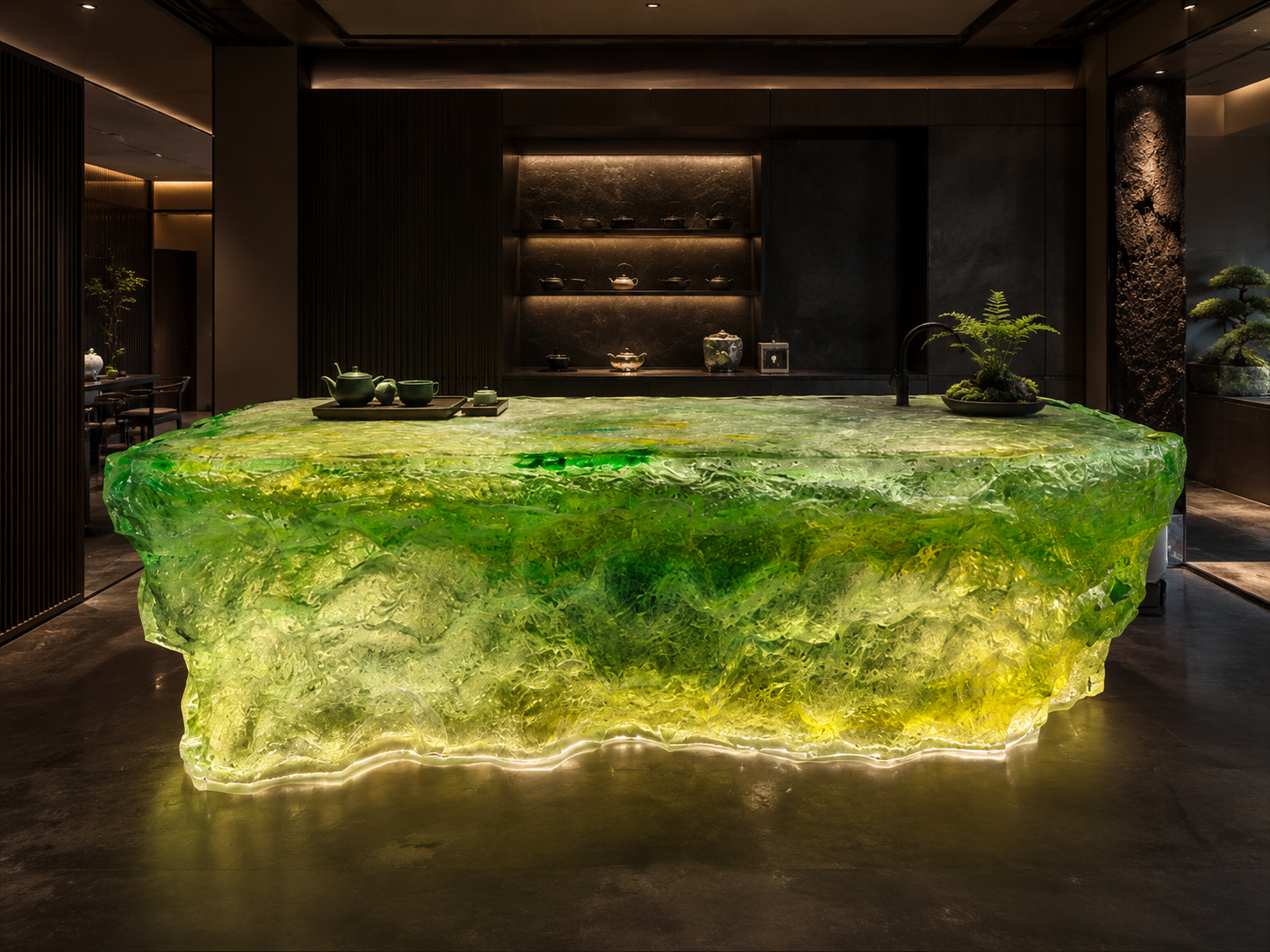
In luxury interiors, designers are often asked to achieve three things that do not naturally seem compatible. Furniture should feel visually light, yet substantial enough to become a focal point. It should express artistic individuality, yet remain functional. And it should look delicate and crystal-like while surviving years of real use.
Traditionally, these requirements have been divided among different materials. Glass provides transparency. Stone offers permanence. Metal supplies structural precision. Wood contributes warmth and craftsmanship. Yet contemporary materials are allowing designers to reconsider whether these qualities always need to come from separate objects.
Synthetic crystal, high-end casting resin, premium PMMA acrylic, and premium acrylic products sometimes marketed within the furniture industry as “platinum acrylic” are increasingly being used for coffee tables, dining-table bases, consoles, side tables, display pedestals, reception furniture, benches, and sculptural installations.
Their appeal is not simply that they look transparent. Their real design advantage lies in the possibility of combining optical lightness, artistic depth, and practical performance within a single furniture language.
1. Transparency Changes More Than the Furniture—It Changes the Perception of the Room
Transparency is often treated as a decorative effect, but in interior design it can directly influence how large, open, or visually complicated a space feels.
An opaque coffee table interrupts the view of the rug and floor below it. A solid console creates a horizontal block against a wall. A dark dining-table base introduces another visual mass between the chairs. None of these effects is necessarily undesirable, but when several opaque pieces occupy the same room, the interior can begin to feel heavier than its actual dimensions suggest.
Transparent furniture works differently.
Architectural Digest has highlighted clear acrylic and Lucite furniture as a way to reduce visual clutter because flooring, color, textiles, and other decorative elements remain visible through the object. In one documented interior, designer Matthew Bees explained that he commissioned a small acrylic table specifically so that it could appear to “float” within a visually rich room rather than add another layer of clutter.
That principle is especially valuable in high-end projects.
Imagine a luxury residence where the designer has invested in a hand-knotted rug, book-matched stone flooring, sculptural seating, and panoramic glazing. A conventional opaque table may conceal a significant portion of those features. A clear synthetic crystal coffee table or platinum acrylic console can provide physical function while allowing the surrounding materials to remain visually active.
The optical potential of engineered acrylic helps explain the effect. Technical information for PLEXIGLAS Optical 0Z024, a specific PMMA product, reports light transmission of 92% at a thickness of 3 mm, haze below 1%, and a refractive index of 1.49. Those figures apply only to that particular grade and should not be generalized to every acrylic or synthetic crystal product, but they demonstrate what a professionally engineered transparent polymer can achieve.
For designers, this creates an unusual possibility: furniture can have significant physical volume without producing equivalent visual weight.
A thick transparent table base may be sculpturally powerful while still allowing the eye to travel through the room.
2. Synthetic Crystal Makes the Interior of the Material Part of the Design
Transparency becomes even more interesting when designers stop treating it as emptiness.
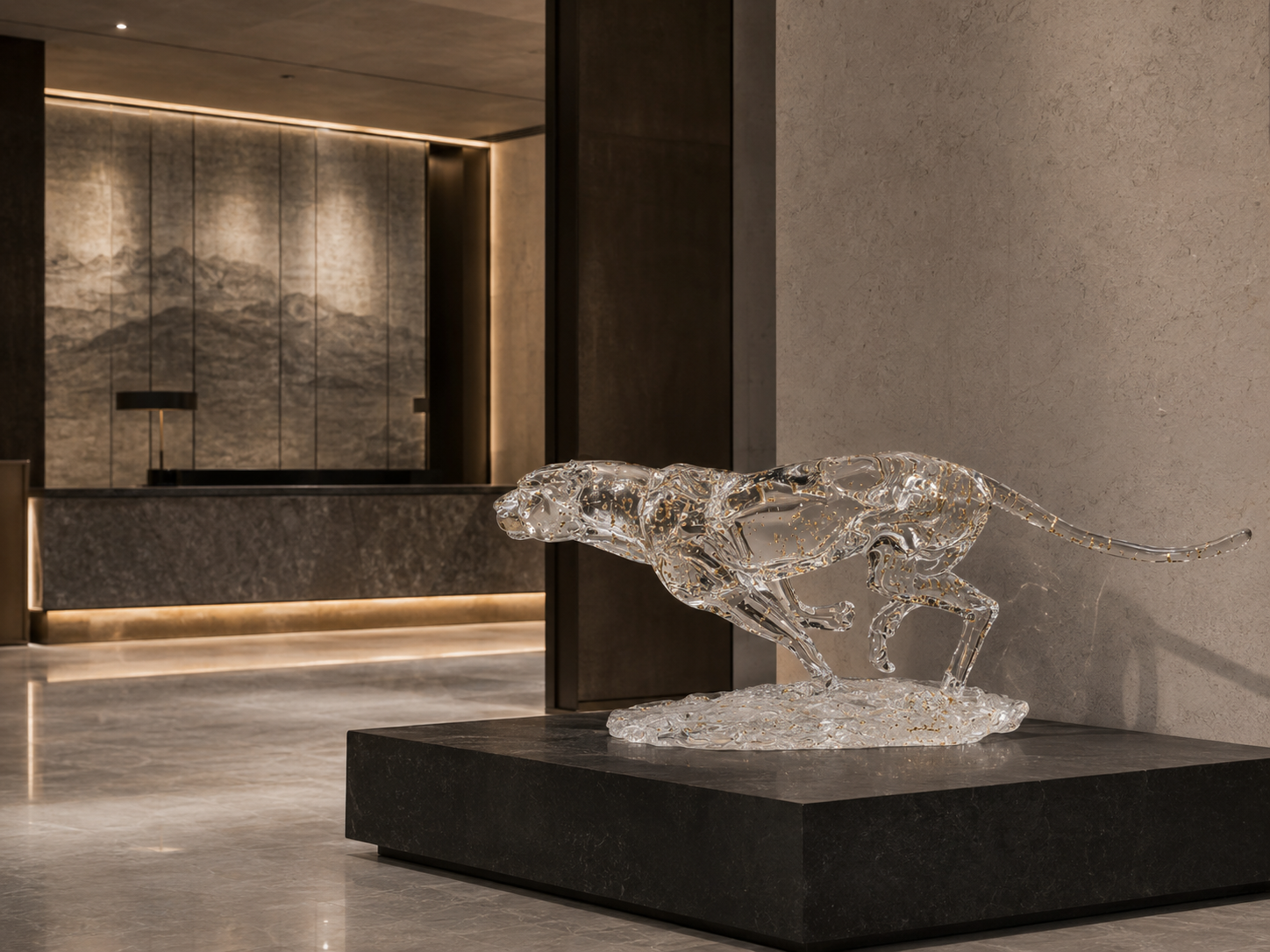
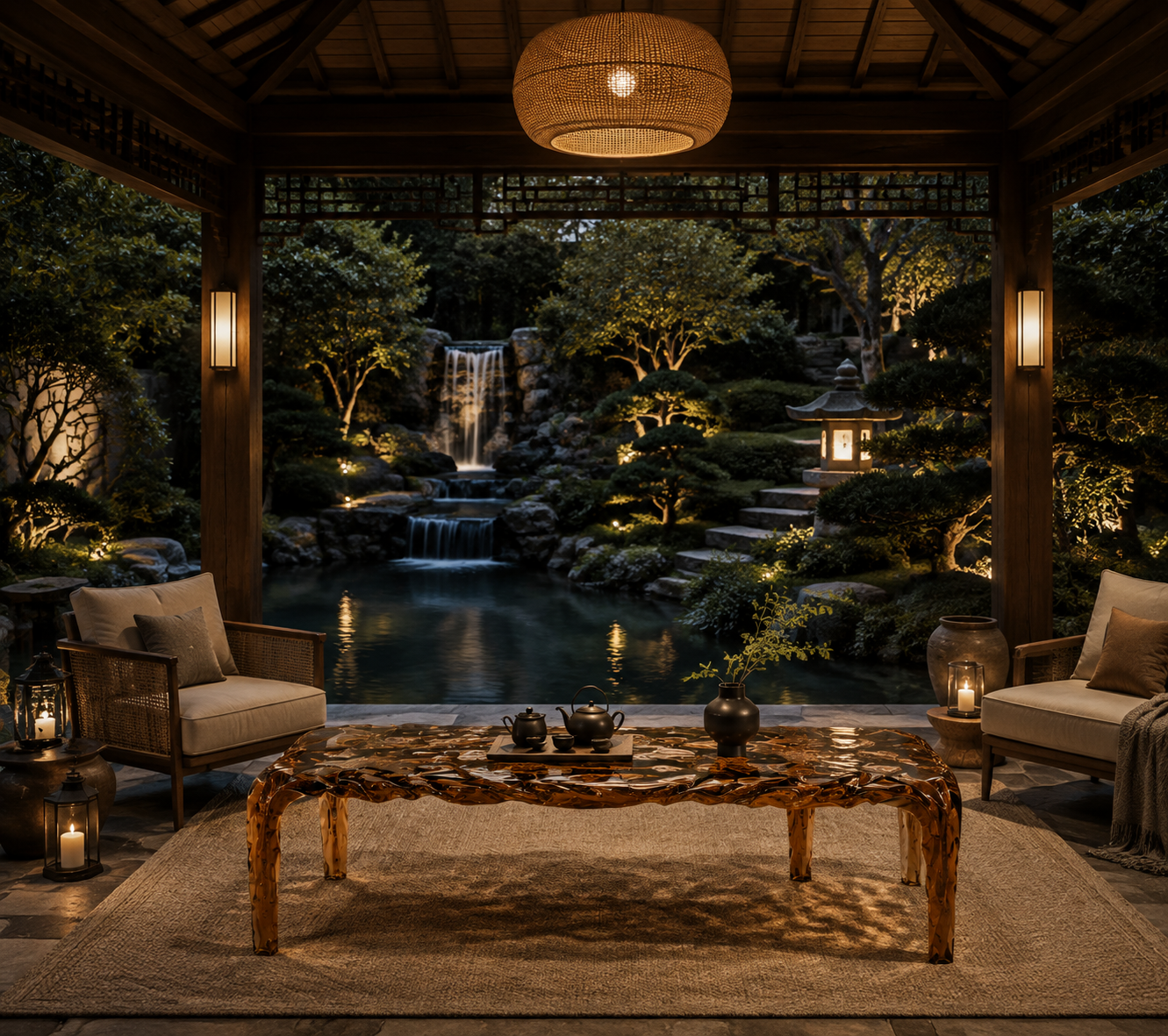
Unlike an opaque material, a transparent casting allows the interior of the furniture itself to become a creative space. Pigments, gradients, bubbles, metallic details, natural elements, decorative aggregates, fabrics, or artistic objects can potentially be suspended inside high-end resin or synthetic crystal, depending on the chemistry and manufacturing process.
This gives furniture designers a three-dimensional canvas.
One of the most important historical examples is Shiro Kuramata's 1988 Miss Blanche Chair, held in the permanent collection of the Museum of Modern Art in New York. The chair uses acrylic resin, aluminum, and artificial roses suspended within the transparent body. MoMA describes the work as an icon of postmodern design and documents the demanding production process in which the flowers were carefully held in position while the surrounding resin hardened.
The importance of Miss Blanche is not simply that it is transparent.
Kuramata transformed the internal volume of the material into part of the furniture's visual composition.
That idea has direct relevance to contemporary synthetic crystal furniture. Instead of adding decoration only to the surface, designers can explore depth. A hotel console could incorporate a controlled amber gradient. A jewelry boutique might use transparent resin pedestals containing fine metallic elements that complement the merchandise. A private residence could commission a side table in which decorative stone fragments appear suspended inside a clear volume.
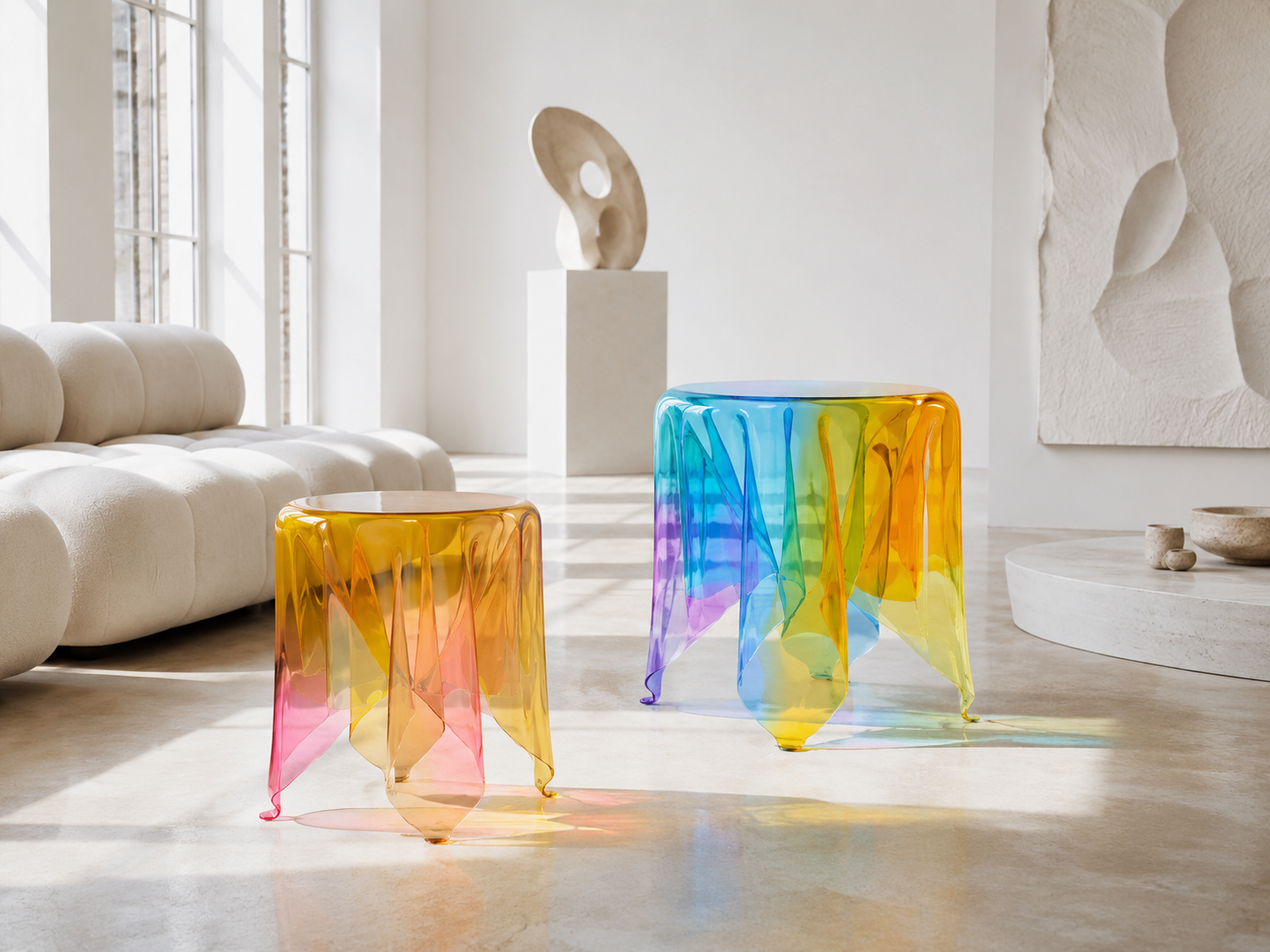
High-end resin also allows different degrees of transparency. Furniture does not always need to be completely colorless. Smoke grey, champagne, bronze, pale blue, soft green, or controlled translucency can create more emotional interiors while retaining the visual depth associated with crystal-like materials.
Lighting makes these effects even stronger. During the day, a synthetic crystal table may reflect the colors of the surrounding architecture. At night, carefully positioned lighting can emphasize polished edges, internal inclusions, and changes in thickness.
The material therefore does not simply sit inside the design.
It can become an active participant in the design.
3. Durability Is Possible, but It Must Be Engineered Rather Than Assumed
The word “crystal” naturally suggests delicacy. For furniture, however, visual delicacy and physical fragility do not have to be the same thing.
Modern transparent polymers can offer significant mechanical performance, but designers and buyers must distinguish carefully between different materials. PMMA acrylic, polycarbonate, casting resins, epoxy systems, polyester resins, and other materials marketed as synthetic crystal do not have identical properties.
For example, PLEXIGLAS technical information for its Optical 0Z024 PMMA sheet describes the specific product as approximately half the weight of glass and reports impact resistance significantly higher than glass under its stated test conditions. The same technical document lists a Charpy impact strength of 15 kJ/m².
This does not mean every acrylic dining table is automatically stronger than every glass table. Furniture performance also depends on thickness, geometry, joints, stress concentration, support structure, machining, bonding, and load conditions.
The famous Louis Ghost chair designed by Philippe Starck for Kartell provides a useful comparison from another transparent polymer category. It is made from injection-molded polycarbonate rather than PMMA or casting resin. Kartell describes the chair as stable, impact resistant, weather resistant, and stackable despite its visually crystalline appearance.
The lesson is not that polycarbonate, acrylic, and synthetic crystal are interchangeable. The lesson is that transparency itself does not determine fragility.
Long-term optical stability must also be considered. Röhm states that qualifying clear PLEXIGLAS sheet products carry a 30-year guarantee against visible yellowing and for retention of a high level of light transmission under the conditions of its guarantee.
Again, this claim belongs to those specified PLEXIGLAS products, not automatically to every transparent resin.
For a synthetic crystal furniture manufacturer, durability should therefore be communicated through actual specifications: resin chemistry, UV resistance, yellowing tests, load calculations, surface performance, bonding technology, temperature limits, and quality-control standards.
High-end clients do not simply need the word “durable.”
They need to understand why the furniture will remain durable in their particular application.
4. Surface Care and Repairability Are Part of Real Durability
Furniture durability is often discussed as resistance to catastrophic failure, but most luxury furniture is replaced for much less dramatic reasons.
It becomes scratched. The surface loses clarity. Edges are damaged. Cleaning chemicals create clouding. Polishing marks become visible under architectural lighting.
This is particularly important for transparent furniture because imperfections are easy to see.
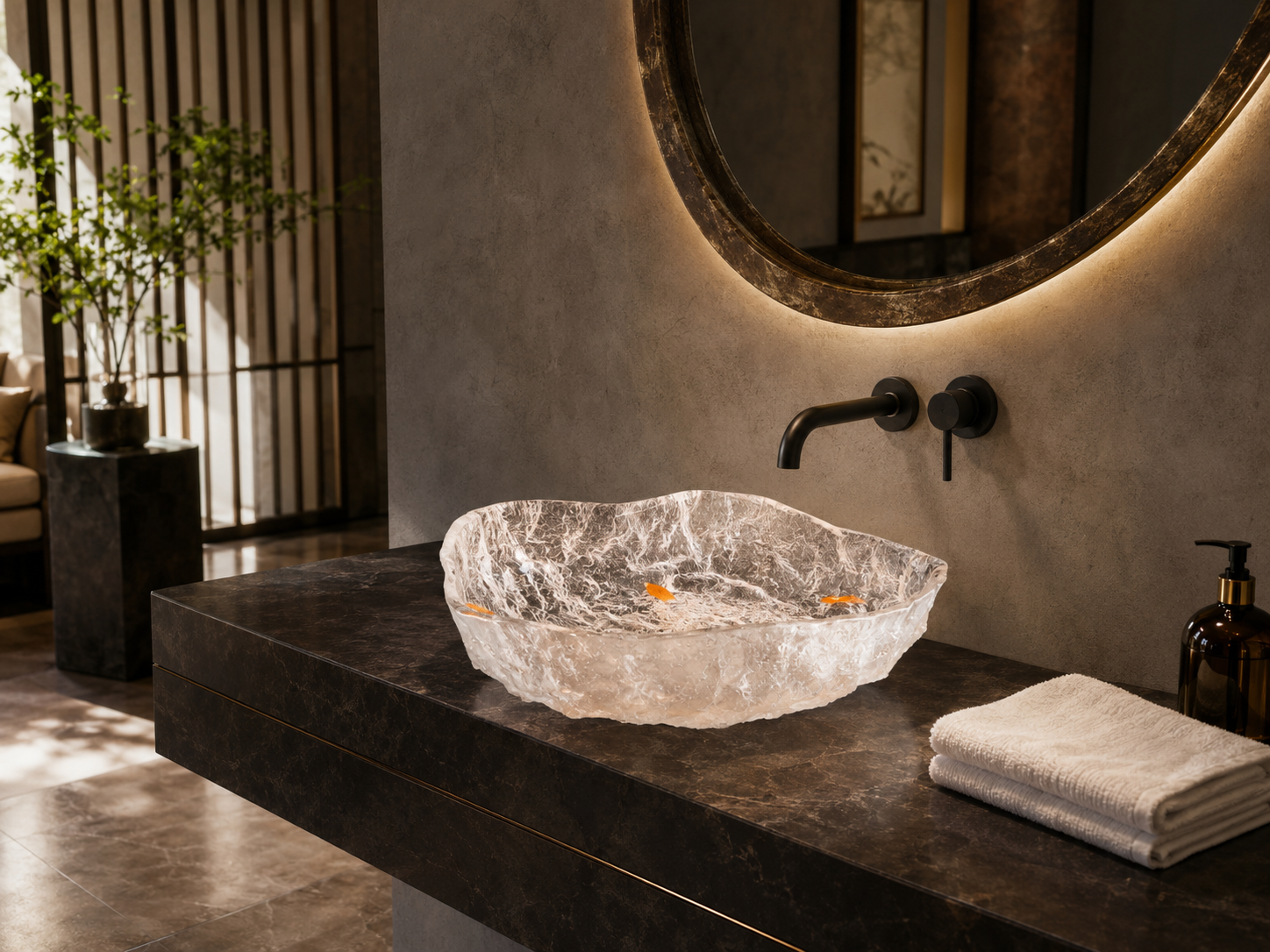
Premium acrylic is not scratch-proof, and responsible specification should never suggest otherwise. Architectural Digest's guidance on acrylic and Lucite furniture recommends microfiber cloths and cleaners suitable for plastics, while warning against inappropriate household products that may damage or cloud the surface. It also notes that minor scratches may be polished, while deeper damage may require professional treatment.
Repairability is therefore an important advantage when the material and damage allow it.
PLEXIGLAS provides technical guidance showing that scratches and scuffed areas can be sanded and subsequently polished, with the process capable of restoring a high-gloss transparent finish in appropriate cases. The manufacturer also warns that localized sanding removes material and can remain visually noticeable, which is why professional refinishing matters.
This has practical consequences for hospitality and residential furniture.
Consider a synthetic crystal coffee table in a hotel suite. After several years, the table may have superficial scratches from luggage, decorative objects, or repeated cleaning. If the entire table must be replaced every time the surface becomes imperfect, its lifetime cost becomes difficult to justify. If appropriate refinishing can restore the surface, the ownership calculation changes.
The same principle applies to platinum acrylic consoles and transparent display furniture in retail environments.
Durability should therefore include maintainability.
For manufacturers, supplying cleaning instructions, approved product recommendations, protection guidelines, and refinishing advice can be almost as important as the original polish. For designers, understanding how a piece will age is part of responsible specification.
A material that looks perfect on installation day but is impossible to maintain is not truly a premium furniture material.
5. The Strongest Designs Often Combine Synthetic Crystal with Traditional Materials
Synthetic crystal furniture does not need to replace marble, wood, metal, or glass.
In many cases, its greatest design advantage appears when it is combined with them.
A marble tabletop supported by transparent synthetic crystal legs creates a deliberate contrast between geological weight and optical lightness. A walnut console with platinum acrylic supports combines warm grain with contemporary transparency. A clear resin side table containing brushed brass elements can make metal appear to float inside the furniture rather than simply being attached to its surface.
This creates more than aesthetic variety. It allows designers to assign different jobs to different materials.
Stone can provide a tactile work surface. Metal can reinforce structural connections. Wood can introduce warmth. Synthetic crystal can reduce visual weight. High-end resin can provide sculptural thickness, color, or internal artistic effects. Premium PMMA acrylic can provide clean geometry and high optical clarity.
This approach is particularly effective in luxury hospitality and retail environments.
A boutique does not necessarily need every display fixture to become visually dominant. Transparent pedestals can support products while preserving sightlines through the store. A hotel lobby may use a stone floor as a major architectural feature; synthetic crystal coffee tables can provide generous surfaces without covering that investment visually. A high-end dining room may use a dramatic stone top while clear bases make the entire table appear lighter.
Material combination also creates opportunities for customization without turning every piece of furniture into a complicated sculptural commission.
The designer can concentrate artistic expression in one component: a colored resin leg, a transparent table base, an embedded decorative panel, or a polished crystal-like volume.
This is where synthetic crystal becomes particularly useful as a design material.
Its purpose is not to imitate natural crystal or replace every traditional material.
Its purpose is to create effects that become difficult, heavy, visually dense, or technically different when produced entirely in stone, wood, metal, or glass.
6. Transparency, Artistry, and Durability Must Be Designed as One System
The most successful synthetic crystal furniture is not created by maximizing one property.
Extreme transparency without surface durability can lead to disappointing long-term appearance. Artistic inclusions without controlled casting can create unwanted bubbles, distortion, internal stress, or inconsistent color. A structurally strong object without refined polishing may perform well but fail to communicate luxury.
The three goals—transparency, artistry, and durability—must therefore be designed together.
This begins with understanding the application. A decorative resin pedestal carrying a handbag has different requirements from a three-meter dining table. A residential console faces different wear from a hotel coffee table. Indoor furniture has different UV and weather exposure from outdoor furniture.
Material terminology also matters. “Synthetic crystal” is generally a design or commercial description rather than one universal international material specification. High-end casting resin, PMMA acrylic, and other transparent polymer systems can differ significantly in hardness, UV stability, impact behavior, temperature resistance, chemical resistance, and repairability.
Terms such as “platinum acrylic” should therefore be supported by technical information rather than used as a substitute for specifications.
This is consistent with a broader principle in responsible product design. The Ellen MacArthur Foundation recommends considering material durability, expected service life, maintenance, repair, and the ability to retain product value over time. Its circular-design guidance also distinguishes physical durability from emotional durability—the ability of a product to remain desirable rather than merely functional.
That idea is particularly relevant to high-end furniture.
A table that remains structurally intact for twenty years but looks dated after three is only partly durable. A visually timeless synthetic crystal console that can be maintained, refinished when appropriate, and integrated into changing interiors has another type of longevity.
Transparency can help achieve that longevity because it allows surrounding materials to change without necessarily making the furniture obsolete. Artistry can create emotional attachment and individuality. Proper engineering can protect the object's physical service life.
That is the real design advantage of synthetic crystal furniture.
It is not simply transparent furniture.
At its best, it combines the spatial lightness associated with glass, the creative freedom of a cast artistic medium, and the engineered performance expected from contemporary furniture materials.
For architects, interior designers, hotel developers, retailers, and private clients, that combination opens new possibilities: crystal-clear coffee tables that preserve expensive flooring, sculptural resin consoles that interact with light, platinum acrylic dining-table bases that make stone appear to float, and customized transparent furniture that functions simultaneously as an object, a material, and a piece of art.
When transparency, artistic expression, manufacturing quality, and long-term performance are considered together, synthetic crystal can do something more valuable than imitate crystal.
It can create an entirely different way for furniture to occupy space.
READ MORE:
- Trasparenza di lusso: perché i mobili ispirati al cristallo stanno diventando una nuova scelta per gli interni premium
- From Maintenance Costs to Visual Impact: How One Material Can Shape the Entire Spatial Experience
- Clients Want a Unique Design but Have a Limited Budget? Synthetic Crystal Furniture Offers a Balanced Solution
- Why Are More Designers Moving Away from Traditional Materials? How Synthetic Crystal Furniture Is Changing Interior Space
- How to Choose the Right Furniture Materials for High-End Spaces: Why Synthetic Crystal Furniture Is Becoming a New Design Solution
- How Modern Commercial Spaces Use Artistic Furniture to Influence Customer Perception
- Why Durability and Maintenance Matter More in Premium Furniture Investments
- How Luxury Furniture Trends Are Shifting from Decoration to Experience
- The Hidden Value of Custom-Made Acrylic Furniture for Premium Interior Projects


