
Introduction
Luxury interior design is changing.
For many years, high-end spaces were commonly associated with heavy materials, decorative surfaces, dark woods, marble, brass, leather, and highly visible craftsmanship. These materials still play an important role in premium interiors, but the definition of luxury has gradually expanded. Today, many designers, architects, hospitality brands, luxury retailers, and homeowners are looking for something different: spaces that feel refined without appearing crowded, sophisticated without becoming visually heavy, and distinctive without relying on excessive decoration.
This shift has created new opportunities for synthetic crystal acrylic furniture.
With its exceptional transparency, polished surface, sculptural possibilities, and crystal-like visual effect, acrylic furniture offers a completely different way to create a premium atmosphere. Instead of dominating a room through mass and weight, it enhances the environment through light, reflection, transparency, proportion, and subtle material presence.
Acrylic tables, chairs, consoles, display units, side tables, benches, shelving systems, pedestals, and decorative furniture can visually “disappear” while still making a strong design statement. In luxury homes, hotels, boutiques, restaurants, galleries, offices, and showrooms, this combination is increasingly valuable.
Synthetic crystal acrylic furniture is therefore no longer viewed simply as transparent furniture. It is becoming a texture upgrade solution for high-end spaces—a material and design strategy that can improve visual clarity, enhance lighting, highlight surrounding finishes, and create a more contemporary expression of luxury.
So why is acrylic furniture gaining more attention in premium interior projects?
The answer lies in six major advantages.
1. A New Definition of Luxury: From Heavy Decoration to Visual Purity
One of the most important changes in high-end interior design is the transition from visible extravagance to controlled sophistication.
Modern luxury does not always need to look expensive in an obvious way. Instead, it often communicates value through proportion, material quality, spatial balance, craftsmanship, lighting, and carefully selected details.
This is exactly where synthetic crystal acrylic furniture becomes relevant.
Visual Lightness Creates More Sophisticated Spaces
Traditional furniture materials such as solid wood, stone, metal, and upholstered structures naturally create visual weight. In a large interior, that weight can provide stability and richness. However, when too many heavy materials are used together, the space may feel crowded.
Transparent acrylic changes this relationship.
Because light passes through the material, acrylic furniture occupies physical space without creating the same level of visual obstruction. A thick acrylic coffee table, for example, can have a substantial architectural form while still allowing the floor, rug, and surrounding furniture to remain visible.
This creates a feeling of openness.
In high-end interiors, openness itself can become a form of luxury. When a room feels spacious, controlled, and calm, individual materials become easier to appreciate. A marble floor appears more continuous. A designer rug remains visually complete. A sculptural sofa becomes the focal point instead of competing with an opaque coffee table.
Acrylic furniture supports the space rather than interrupting it.
Minimalism Without Emptiness
Minimalism can sometimes appear cold when it relies only on plain surfaces and reduced decoration. Synthetic crystal acrylic furniture offers an alternative.
Its transparency keeps the space visually minimal, while its polished edges, thickness, reflections, and light interaction add depth.
The result is a form of minimalism that still feels luxurious.
A well-made acrylic console can appear almost architectural. A transparent dining chair can create elegant repetition without blocking sightlines. A thick acrylic side table can catch natural light and produce subtle reflections throughout the day.
These effects introduce visual richness without adding clutter.
Luxury Through Restraint
In premium design, restraint is often more difficult to achieve than decoration.
Every visible object needs a purpose. Every material must contribute to the overall atmosphere.
Acrylic furniture fits naturally into this design philosophy because it does not demand attention through ornamentation. Instead, it rewards closer observation.
From a distance, the furniture may appear almost invisible. As the viewer approaches, the thickness of the acrylic, the precision of the joints, the polished surfaces, and the interaction with light become more noticeable.
This gradual visual discovery is one reason synthetic crystal acrylic furniture feels appropriate in sophisticated interiors.
Luxury becomes less about “showing more” and more about “choosing better.”
2. The Crystal-Like Appeal of Acrylic: Transparency, Light, and Material Depth
The phrase “synthetic crystal” is especially suitable for premium acrylic furniture because its strongest visual characteristic is its relationship with light.
High-quality clear acrylic can produce an elegant crystal-like appearance, particularly when the material is thick, carefully machined, polished, and integrated into a well-designed furniture form.
Transparency as a Design Material
Transparency is not simply the absence of color.
In interior design, transparency can influence how people perceive space, depth, scale, and movement.
A transparent acrylic coffee table allows several visual layers to exist at the same time:
the tabletop,
the floor beneath it,
objects displayed on the surface,
nearby furniture,
and reflected light.
This layered effect adds complexity without introducing additional colors or patterns.
It is particularly useful in luxury spaces where the designer wants to protect important visual elements. For example, if a custom carpet is one of the main features of a living room, an opaque table may cover a large part of the design. An acrylic table allows the carpet to remain visible.
Similarly, in a hotel lobby with premium stone flooring, transparent furniture allows the architectural material to continue visually across the space.
Light Becomes Part of the Furniture
One of the most attractive qualities of acrylic is the way it interacts with both natural and artificial lighting.
During the day, sunlight can pass through transparent furniture and create reflections along polished edges.
At night, carefully positioned architectural lighting can produce a completely different effect. Warm lighting may create softer highlights, while cooler lighting can emphasize the contemporary, crystal-like nature of the material.
This means the appearance of acrylic furniture can change depending on the time of day and the lighting environment.
Instead of being visually static, the furniture becomes part of the lighting composition.
This is particularly valuable in high-end hotels, restaurants, entertainment spaces, luxury retail environments, and modern residences where lighting design plays a central role in creating atmosphere.
Thickness Creates Material Depth
Thin transparent plastic may look ordinary.
Thick, precisely finished acrylic can look architectural and luxurious.
This difference is extremely important.
When designers use substantial acrylic sections, the edges create greater optical depth. Light travels through the material, reflections become more visible, and the object develops a stronger sculptural presence.
A thick acrylic furniture leg can look almost like a transparent structural column. A large solid acrylic base can feel similar to a carved crystal block. Layered acrylic panels can create interesting optical effects when viewed from different angles.
The material therefore offers designers an unusual combination:
visual lightness and physical substance at the same time.
This contradiction is one of the reasons it works so effectively in premium spaces.
Polished Edges Matter
In high-end acrylic furniture, finishing quality has a direct impact on perceived value.
Clean edges, smooth transitions, carefully bonded joints, balanced proportions, and highly polished surfaces help create the crystal-like appearance associated with luxury acrylic furniture.
If finishing quality is poor, transparency can reveal imperfections rather than hide them.
This is why premium acrylic furniture depends strongly on manufacturing precision.
With opaque furniture, paint or veneer may conceal internal connections. With transparent furniture, almost everything remains visible.
For manufacturers, this creates a higher technical challenge.
For customers and designers, however, it creates an advantage: good craftsmanship becomes part of the visual identity of the product.
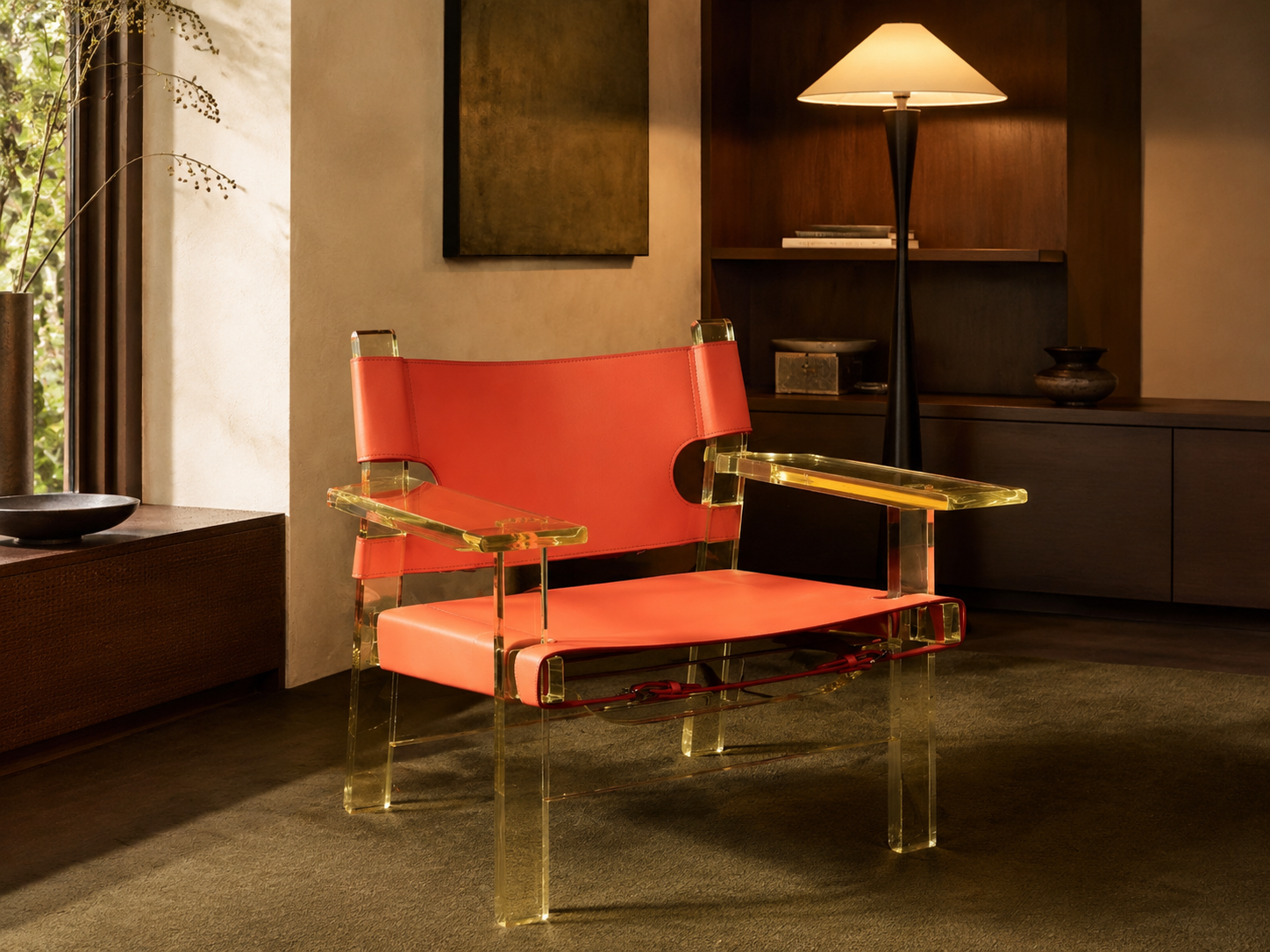
3. How Acrylic Furniture Elevates High-End Residential and Commercial Spaces
Synthetic crystal acrylic furniture is particularly useful because it can adapt to different premium environments without overwhelming them.
Its neutral visual character allows it to work alongside many materials, including marble, wood, leather, stainless steel, brass, glass, fabric, stone, and decorative wall finishes.
Luxury Residential Interiors
In luxury homes, acrylic furniture is often used to improve openness while maintaining functionality.
In a living room, a transparent coffee table can provide a generous surface without making the center of the room feel crowded.
In a bedroom, an acrylic bench or side table can create a lighter appearance than a traditional upholstered or wooden piece.
In a dressing room, acrylic chairs, stools, or display units can complement mirrors, lighting, polished metal, and premium cabinetry.
In a dining area, transparent chairs can reduce visual density around a large dining table.
This is especially useful when the interior already includes strong decorative elements such as patterned stone, sculptural lighting, artwork, or custom wall panels.
Acrylic becomes the supporting material that allows these elements to remain dominant.
Luxury Hotels
Hotel interiors must balance visual impact with functionality.
Lobbies, suites, lounges, bars, and reception areas need furniture that contributes to the brand experience while maintaining a sense of space.
Synthetic crystal acrylic furniture can help create this balance.
Acrylic side tables can support seating areas without blocking visual connections across a lobby. Sculptural acrylic consoles can create premium display surfaces. Transparent pedestals can showcase artwork, floral arrangements, luxury objects, or decorative installations.
In suites, acrylic furniture can help make rooms appear more spacious while maintaining a refined look.
For boutique hotels and design-focused hospitality projects, custom acrylic furniture can also become part of the hotel's visual identity.
Luxury Retail and Fashion Boutiques
Retail environments benefit greatly from transparent materials because the products need to remain the focus.
Acrylic display tables, risers, pedestals, shelves, and furniture pieces can support merchandising without competing with handbags, jewelry, clothing, cosmetics, watches, or accessories.
The transparency of the material allows lighting and product presentation to remain dominant.
For luxury brands, this is important.
The furniture should reinforce the atmosphere, but the merchandise must attract the most attention.
Synthetic crystal acrylic performs this supporting role very effectively.
Showrooms and Galleries
In galleries and showrooms, visual neutrality can be an advantage.
A transparent pedestal appears lighter than a solid display block. Acrylic benches provide seating without introducing unnecessary visual mass. Clear display furniture allows visitors to see the architecture, flooring, artworks, and exhibits more continuously.
This can make the entire environment feel cleaner and more curated.
Premium Offices and Reception Areas
Modern executive offices increasingly combine professionalism with hospitality.
Reception areas are no longer simply functional waiting spaces. They often serve as an introduction to the company’s design language and brand identity.
Acrylic furniture can add a contemporary and premium impression without making the space look overly decorative.
A clear console, side table, meeting table detail, reception accessory, or sculptural acrylic installation can create a subtle point of distinction.
For creative companies, luxury property firms, fashion businesses, beauty brands, and design studios, this material can communicate modernity and attention to detail.
4. Customization and Design Freedom: Why Designers Are Choosing Acrylic
Another major reason for the growing popularity of synthetic crystal acrylic furniture is design flexibility.
Acrylic can be used in many forms, from extremely simple geometric furniture to complex sculptural pieces.
This makes it attractive for custom interiors.
Custom Dimensions for Specific Spaces
High-end projects often require furniture that fits a precise architectural environment.
Standard furniture dimensions may not always be suitable.
A console may need to align perfectly with a wall panel.
A display table may need to match the dimensions of a retail merchandising zone.
A coffee table may need to work around an oversized sectional sofa.
A pedestal may need to support a specific artwork.
Acrylic furniture can be customized in terms of width, length, height, thickness, proportion, and configuration.
For designers, this means the furniture can respond directly to the architecture rather than forcing the architecture to adapt to the furniture.
Different Shapes and Structural Expressions
Acrylic furniture does not have to be limited to simple transparent boxes.
Designers can explore:
curved forms,
layered structures,
geometric bases,
cantilevered appearances,
thick slab construction,
rounded corners,
sculptural silhouettes,
nested furniture,
mixed-material combinations,
and integrated decorative elements.
This flexibility makes acrylic suitable for both minimalist and expressive interiors.
In a quiet modern residence, the furniture may use simple forms and almost disappear.
In a luxury boutique, the same material may be shaped into a dramatic display structure.
The material can therefore support very different design languages.
Color and Transparency Options
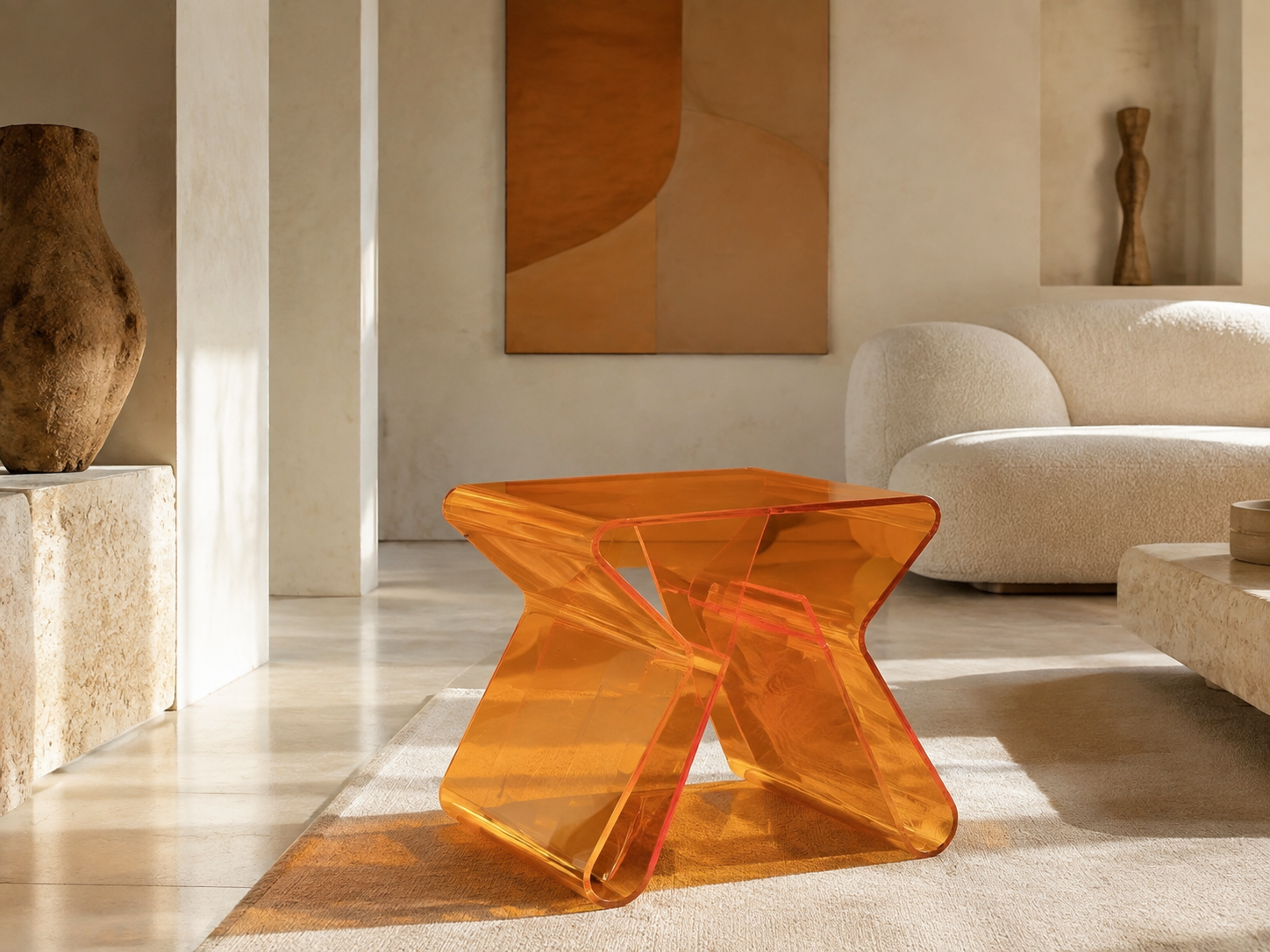
Although clear acrylic is the most recognizable choice, acrylic furniture can also use tinted, translucent, frosted, colored, or partially opaque effects.
Smoked acrylic can create a darker, more mysterious appearance.
Warm tinted acrylic can complement brass, beige stone, and warm wood.
Colored transparent acrylic can create a more artistic or fashion-forward atmosphere.
Frosted surfaces can soften transparency and introduce privacy or diffusion.
These options allow designers to control how strongly the furniture interacts with the surrounding interior.
Combining Acrylic With Other Premium Materials
One of the most effective design strategies is combining acrylic with contrasting materials.
Acrylic and marble create a balance between transparency and weight.
Acrylic and brass combine modern clarity with decorative warmth.
Acrylic and stainless steel create a clean contemporary expression.
Acrylic and wood bring together natural texture and modern transparency.
Acrylic and upholstery can create visually light seating with soft comfort.
These combinations help designers avoid interiors that feel too uniform.
Instead of using acrylic everywhere, they can use it strategically as a visual transition between heavier materials.
Bespoke Furniture as a Brand Signature
For hotels, retailers, luxury residences, and corporate spaces, customization is not only about dimensions.
It is also about identity.
A specially designed acrylic console, reception table, display installation, or sculptural furniture piece can become part of the project's signature.
Because transparent furniture interacts strongly with lighting and surrounding architecture, even a relatively simple custom design can appear unique in a specific environment.
This makes acrylic particularly valuable for projects where designers want originality without excessive ornament.
5. Beyond Appearance: Durability, Maintenance, and Long-Term Practical Value
Acrylic furniture attracts attention because of its appearance, but visual appeal alone is not enough for premium projects.
Furniture must also function in daily use.
When properly designed, manufactured, installed, and maintained, acrylic furniture can offer practical advantages in residential and commercial interiors.
A Strong Material for Interior Applications
Acrylic is widely valued for its combination of transparency and structural capability.
Furniture manufacturers can use appropriate material thicknesses and construction methods to create tables, chairs, stools, benches, shelving, pedestals, and decorative pieces suitable for normal interior use.
The key is correct engineering.
The thickness of the acrylic, the span of the furniture, the connection method, the load requirement, and the intended environment all need to be considered during product development.
Premium acrylic furniture should not simply look beautiful.
It should be designed according to how the customer will actually use it.
Easier Visual Integration Over Time
Interior trends change.
Wall colors may change. Rugs may be replaced. Artwork may move. Sofas may be reupholstered.
Transparent acrylic furniture has an advantage because it is visually neutral.
A clear acrylic side table that works in a warm beige interior may also work after the space is redesigned with gray, green, blue, or darker tones.
This flexibility can increase the long-term usefulness of the furniture.
Instead of being strongly connected to one color palette, transparent furniture adapts to the environment around it.
For high-end homeowners and commercial projects that periodically refresh interiors, this can be valuable.
Maintenance Requires the Right Approach
Acrylic furniture is relatively straightforward to maintain, but it should be treated correctly.
Regular dust removal and gentle cleaning help preserve clarity.
Soft microfiber cloths are generally preferable to rough materials.
Cleaning products should be selected carefully to avoid aggressive chemicals that may affect the surface.
Owners should also avoid unnecessary abrasive contact.
Like many premium surfaces, acrylic furniture benefits from proper care.
The important point is that maintenance is predictable.
When clients understand how to clean and handle the material, its polished appearance can be preserved more effectively.
Repair and Refinishing Possibilities
Depending on the type and depth of surface marks, some acrylic surfaces may be professionally refinished or polished.
This can be an advantage compared with certain decorative coatings or laminated finishes that may be more difficult to restore once damaged.
However, the exact repair method depends on the construction, surface finish, and condition of the furniture.
For premium installations, professional evaluation is recommended before attempting significant refinishing.
Quality Matters More Than Ever
Transparent furniture immediately reveals its manufacturing standard.
For this reason, buyers should evaluate more than price.
Important considerations include:
material clarity,
surface quality,
edge polishing,
joint precision,
structural design,
proportion,
stability,
packaging,
installation,
and supplier experience.
High-quality synthetic crystal acrylic furniture should feel intentional from every angle.
A poorly finished joint can reduce the luxury impression of an otherwise attractive design.
A beautifully polished edge, by contrast, can significantly enhance the way the furniture reflects light.
For high-end projects, manufacturing details are therefore not secondary details.
They are part of the design.
6. Why Synthetic Crystal Acrylic Furniture Is Becoming a Premium Interior Trend
The increasing interest in acrylic furniture is connected to larger changes in architecture, hospitality, retail, and luxury lifestyle design.
Several trends are developing at the same time.
High-End Spaces Are Becoming Visually Lighter
Many contemporary interiors are moving toward larger visual openings, cleaner architectural lines, softer palettes, and more carefully controlled furniture layouts.
Designers want rooms to feel spacious even when they contain multiple functional areas.
Transparent furniture supports this objective.
It allows a space to remain furnished without appearing overfilled.
This is particularly useful in urban luxury residences, boutique hospitality projects, high-end apartments, and compact premium retail environments where every square meter has visual importance.
Lighting Has Become More Important
Modern interior design increasingly uses lighting as an architectural tool.
Indirect lighting, concealed LED systems, decorative pendants, wall washers, display lighting, and layered lighting scenes can transform the same space throughout the day.
Acrylic furniture interacts with this environment more dynamically than many opaque materials.
Edges can catch light.
Surfaces can reflect nearby objects.
Transparent volumes can visually connect different lighting zones.
As lighting design becomes more sophisticated, materials that respond beautifully to light become more valuable.
Clients Want Distinctive Materials
Luxury clients often look for details that distinguish their projects from standard interiors.
Using expensive materials everywhere does not automatically create originality.
Sometimes a single unexpected material can create greater impact.
Synthetic crystal acrylic can provide that contrast.
Placed next to travertine, walnut, leather, stainless steel, or textured fabric, transparent acrylic can make familiar materials feel more contemporary.
It creates visual tension between solid and transparent, natural and synthetic, heavy and light.
This contrast can make a room feel more carefully designed.
Social Media Has Increased the Importance of Visual Impact
Hotels, restaurants, boutiques, showrooms, and luxury residences are increasingly viewed through photography and video.
Interior details must therefore work not only in person but also on camera.
Transparent furniture can create striking photographic effects because it reflects light, reveals background layers, and changes appearance from different angles.
In commercial environments, visually memorable furniture can contribute to the overall identity of the space.
It can encourage visitors to photograph interiors, share experiences, and remember the design.
Customization Is Becoming a Core Luxury Expectation
Premium customers increasingly expect personalized products.
They want furniture that suits a particular room, brand concept, architectural detail, or lifestyle.
Synthetic crystal acrylic furniture responds well to this demand because it can be developed in customized dimensions, shapes, thicknesses, colors, and mixed-material combinations.
This makes it suitable for designers who want to move beyond standard catalogs.
Customization transforms acrylic from a simple furniture material into a design platform.
Choosing the Right Acrylic Furniture for a High-End Project
To achieve a truly premium result, acrylic furniture should be selected strategically.
First, consider what should remain visually dominant in the room.
If the space contains beautiful flooring, a strong rug, architectural wall treatments, or sculptural seating, transparent furniture can help protect those visual features.
Second, consider the thickness and proportions of the acrylic.
A substantial, well-balanced design usually creates a stronger luxury impression than furniture that appears too thin or lightweight for its scale.
Third, evaluate craftsmanship closely.
Polishing, joints, edges, surface clarity, and structural stability all influence the final appearance.
Fourth, think about lighting.
Acrylic furniture can look dramatically different under natural daylight, warm decorative lighting, or cooler architectural illumination.
Finally, avoid using transparent furniture simply because it is transparent.
The best applications are intentional.
Acrylic should solve a visual problem, support the architecture, highlight another material, improve openness, or create a specific focal point.
When used with purpose, the material becomes far more powerful.
Conclusion
Synthetic crystal acrylic furniture represents a different approach to luxury.
It does not rely on visual heaviness to communicate value.
Instead, it uses transparency, precision, light interaction, material depth, customization, and spatial openness to create a sophisticated environment.
This is why it is increasingly relevant in luxury residences, hotels, fashion boutiques, galleries, offices, restaurants, showrooms, and other high-end spaces.
Acrylic furniture can preserve sightlines, highlight flooring and decorative materials, interact beautifully with lighting, adapt to customized dimensions, and work alongside both traditional and contemporary finishes.
Most importantly, it gives designers a way to add furniture without adding unnecessary visual weight.
That quality is becoming increasingly valuable.
As premium interior design moves toward cleaner spaces, more personalized furniture, sophisticated lighting, and carefully balanced material combinations, synthetic crystal acrylic furniture is likely to play an increasingly important role.
It is no longer simply an alternative to glass or conventional furniture materials.
When designed and manufactured at a high standard, it becomes an architectural element in its own right—a transparent structure that can organize space, enhance surrounding materials, and introduce a distinctive crystal-like quality.
For homeowners, designers, developers, hospitality brands, and luxury retailers searching for a subtle but noticeable upgrade, synthetic crystal acrylic furniture offers a compelling solution.
It can make a room feel lighter without making it feel empty.
It can look minimal without appearing ordinary.
It can support surrounding materials without competing with them.
And it can create a premium visual impression without relying on excessive decoration.
That balance is exactly why synthetic crystal acrylic furniture is becoming one of the most effective “texture upgrade solutions” for high-end spaces.
READ MORE:
- From Acrylic to Synthetic Crystal: How Can Transparent Furniture Create More Depth and Stronger Product Differentiation?
- How Can Furniture Feel Lighter in Small Spaces? Design Strategies Using Transparent Materials and Synthetic Crystal Elements
- Where Does Synthetic Crystal Furniture Work Best? Applications for Living Rooms, Hotels, Weddings and Commercial Spaces
- How Can Ordinary Furniture Look More Premium? Three Upgrade Directions from Hardware and Materials to Crystal Elements
- Why More Designers Are Paying Attention to Transparent Furniture: From Spatial Perception to Product Premium
- Synthetic Crystal Acrylic Furniture: An Innovative Direction Worth Watching in the Future High-End Furniture Market
- Why Are More High-End Design Projects Choosing Crystal-Grade Acrylic as a Core Material?
- Synthetic Crystal Acrylic Furniture: Creating Brand Differentiation Through a Distinctive Visual Language
- From Transparent Material to Premium Experience: How Synthetic Crystal Acrylic Furniture Enhances Product Value


