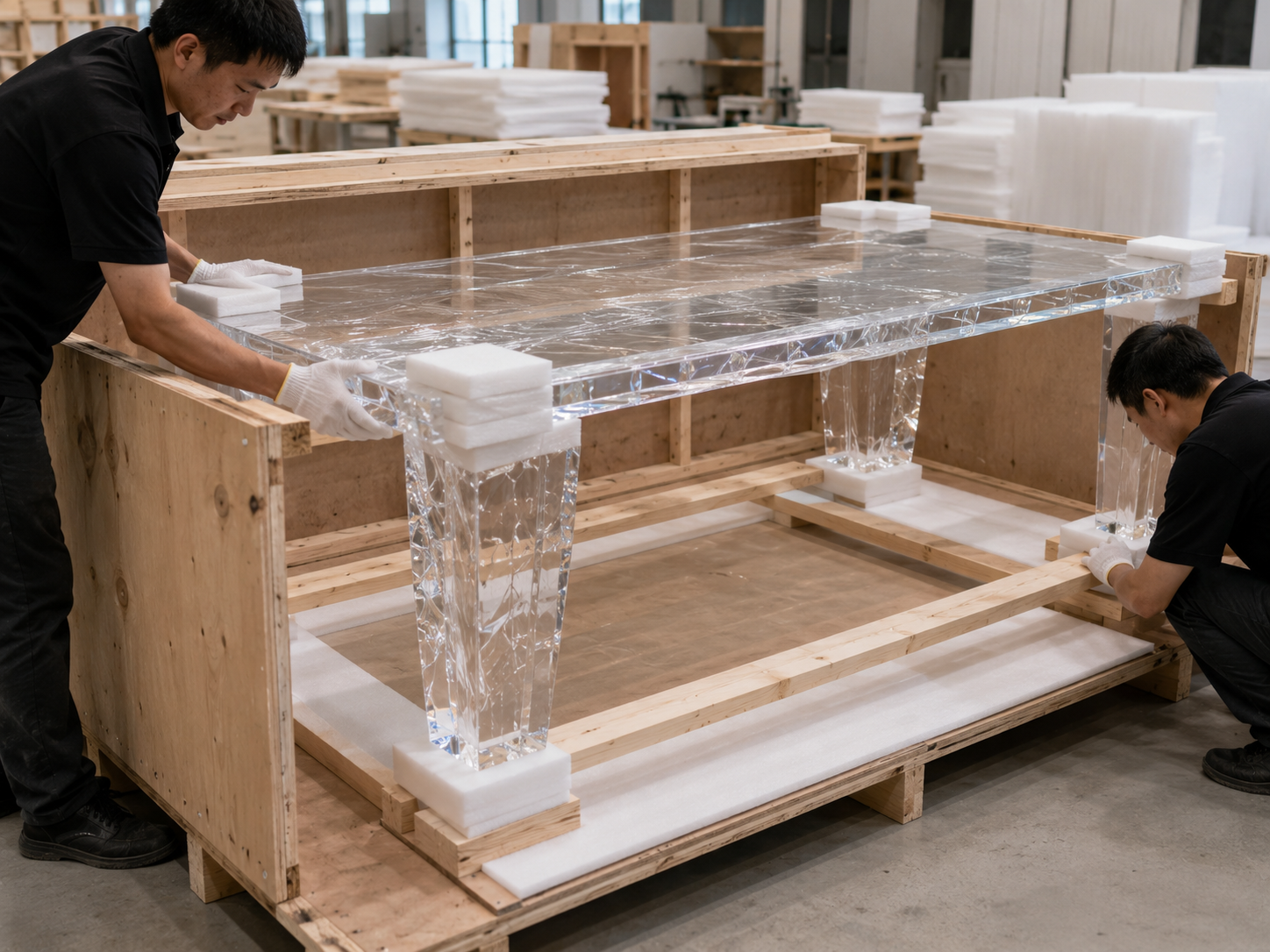
Transparent furniture has a differentiation problem.
A clear coffee table photographed against a white wall can look remarkably similar to dozens of other clear coffee tables online. A transparent console may be beautifully made, yet customers who cannot immediately see the difference between material grades may compare it mainly by dimensions and price.
Transparency alone, therefore, is no longer enough.
Kartell provides a useful indication of how firmly transparent furniture has entered mainstream design culture. The company reports that Philippe Starck's Louis Ghost chair, launched in 2002, sold more than 1.5 million units, while its transparency program expanded across chairs, tables, cabinets and lighting. Transparent polymer furniture has clearly moved far beyond novelty.
For today's furniture manufacturers, the question is consequently changing. It is no longer simply, “How clear can we make this product?”
The more important question is: How can we use transparency to create visible depth, recognizable character and a reason for customers to pay more?
This is where the differences among high-clarity acrylic, premium resin and synthetic-crystal furniture become strategically important.
In this article, “synthetic crystal” refers broadly to engineered crystal-like transparent or translucent materials used for furniture and decorative components. Exact chemistry, optical performance and durability vary by manufacturer, so professional specifications should always be based on the actual material rather than the marketing name alone.
1. The First Step Is to Stop Treating Transparency as a Single Visual Effect
Many transparent furniture collections begin with one basic idea: make an existing table, chair or console clear.
That creates transparency, but not necessarily depth.
A more sophisticated product treats transparency as a spectrum. A furniture piece can contain completely clear areas, translucent areas, concentrated color, reflective edges and internal layers within the same overall form.
Academic research helps explain why this approach works. A 2025 study published in the Journal of the Korea Furniture Society surveyed 180 participants about the visual effects of transparent materials. Researchers identified effects including visual ambiguity, distortion and illusion, spatial expansion and depth. Importantly, they found that transparency by itself did not always create a strong perceptual effect. Light interaction, structural layering and environmental integration played important roles.
That conclusion is highly relevant to furniture development.
Consider two console tables. The first uses the same perfectly clear material for its top, legs and supports. It may look clean, but visually it is relatively one-dimensional. The second uses a high-clarity acrylic top, thicker synthetic-crystal legs and a lightly tinted resin connection between the two. The furniture remains transparent overall, yet the eye can now distinguish foreground, background and structural depth.
The same idea works with a coffee table. Instead of producing one completely colorless block, the tabletop might remain clear while the base contains a subtle smoke gradient. Alternatively, the outside surface can appear almost colorless while polished edges reveal a stronger tone when viewed from an angle.
This is the first major route to differentiation: stop using transparency as the final design decision.
Use it as the starting material from which different optical layers can be built.
2. Acrylic, Synthetic Crystal and Premium Resin Should Perform Different Design Jobs
One reason transparent furniture becomes visually repetitive is that manufacturers sometimes use different transparent materials as though they were interchangeable.
They are more valuable when they are assigned different roles.
High-quality acrylic is particularly effective when the design depends on precision, clean geometry and optical clarity. Röhm states that clear PLEXIGLAS products can achieve visible-light transmission of up to approximately 92%. The company also says certain clear grades are guaranteed to retain very high light transmission over extended periods because of the material's inherent UV stability. Those figures relate to Röhm's specific PMMA products and should not automatically be attributed to every acrylic sheet, but they illustrate the level of optical performance premium PMMA can achieve.
For a manufacturer selling what is described commercially as platinum-grade acrylic, this distinction is important. “Platinum-grade” sounds premium, but designers and professional buyers will eventually want measurable evidence: resin or PMMA grade, clarity, thickness tolerances, UV performance, color consistency, fabrication method and edge quality.
The material performs best in products where visual precision is important—minimalist consoles, dining-table legs, transparent shelving, geometric coffee tables and architectural display furniture.
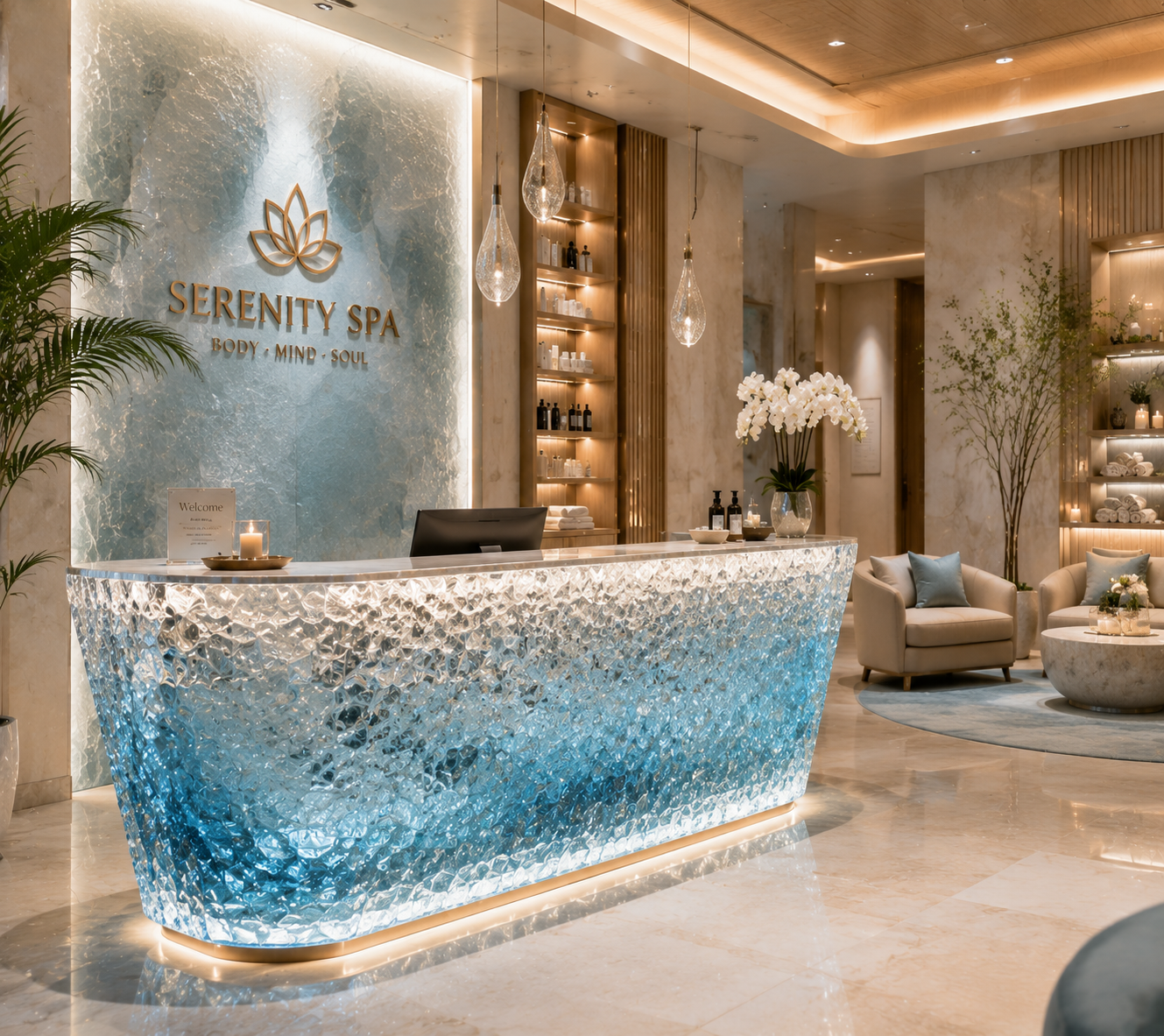
Synthetic crystal can occupy a different position. Rather than competing only on maximum transparency, it can emphasize substantial volume and jewel-like optical character. Thick table legs, pedestal bases, sculptural side tables and decorative furniture components provide enough material depth for light to become part of the visual experience.
Premium resin creates another language. Casting allows greater freedom with translucency, pigments, gradients, suspended elements and deliberate internal effects. The visual value comes less from perfect invisibility and more from what is happening inside the material.
The strongest transparent furniture collection therefore does not ask which material is universally “better.”
It asks which material gives each design the most convincing visual identity.
3. Thickness, Edge Treatment and Geometry Can Turn Transparency into Three-Dimensional Depth
A transparent surface may almost disappear when viewed directly from the front.
Its edge behaves very differently.
This is one of the simplest ways to create hierarchy without introducing another material.
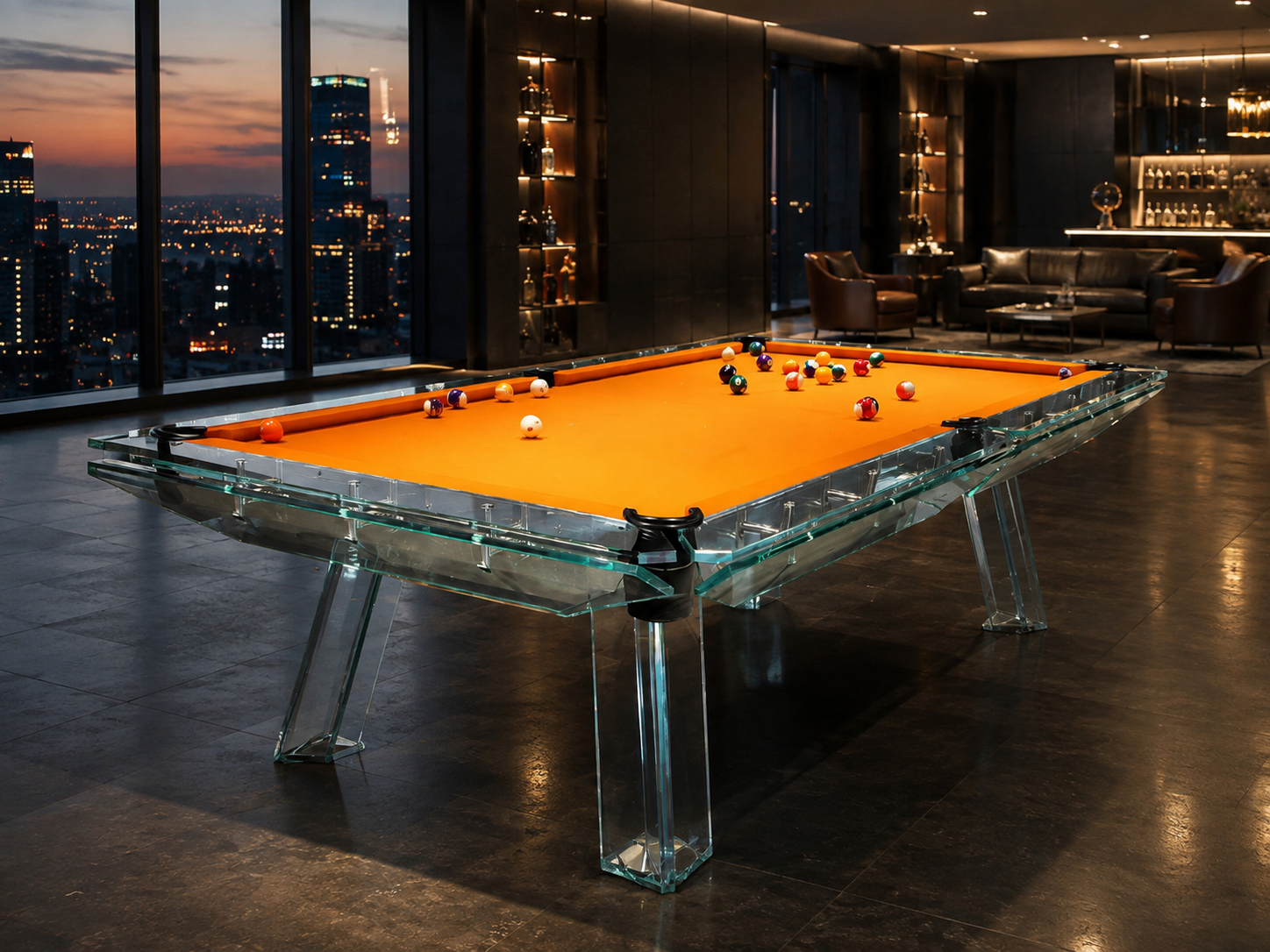
When light travels through a thick transparent component, polished edges can appear brighter and visually denser than the center of the piece. Beveled edges, rounded corners, faceted surfaces and varying thicknesses can therefore create changing optical effects as the viewer moves around the furniture.
Thickness is particularly important.
A thin acrylic panel can look precise and architectural. A much thicker transparent leg or table support begins to feel more like an optical object. The material acquires physical presence even though the viewer can still see through it.
This means thickness should become a design variable rather than simply an engineering requirement.
For example, a high-clarity acrylic console might use a relatively thin top to maintain visual lightness but substantially thicker vertical supports to create stronger edge reflections. A synthetic-crystal side table could combine a broad clear center with beveled corners that capture light. A dining-table base could alternate between flat transparent planes and rounded components, producing different refraction as the viewing angle changes.
Manufacturing quality becomes extremely important here.
As transparent sections become thicker, scratches, internal haze, bubbles, bonding marks and polishing inconsistencies become easier to see. The same transparency that creates the premium effect also exposes poor workmanship.
This is why the difference between inexpensive transparent furniture and premium transparent furniture often becomes most obvious at the edges, joints and transitions rather than in the middle of the surface.
The product should reward closer inspection.
4. Color Gradients, Layering and Embedded Elements Give Resin and Synthetic Crystal a Stronger Story
One of the greatest opportunities in transparent furniture is to move beyond “clear.”
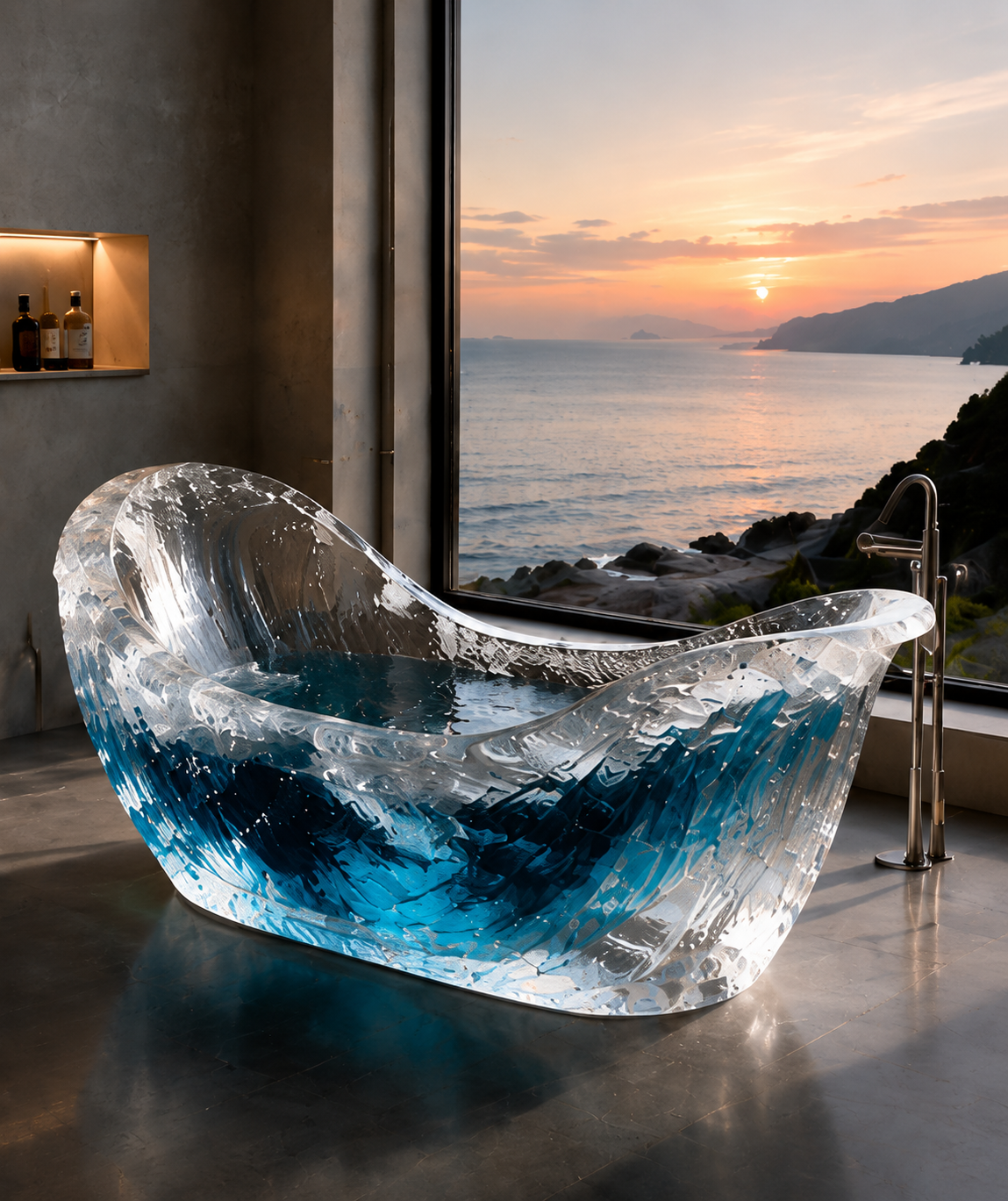
Colored transparency can create dramatically more differentiation without sacrificing the optical qualities that make these materials attractive in the first place.
Italian design studio Draga & Aurel provides a useful professional example. Wallpaper* reported that the studio's Transparency Matters collection used resin partly because of its flexibility in color and opacity. Resin tables appeared in mineral-like jade, amber and amethyst tones, while cast-resin screens achieved uneven saturation through a multi-stage production process lasting approximately a week.
The studio has continued exploring this direction. Wallpaper* reported in 2026 that Draga & Aurel's resin furniture uses layered pigments that interact with changing light, creating pieces positioned between functional furniture and art.
For commercial furniture manufacturers, the lesson is not to copy those products. It is to recognize how much design territory exists between completely clear and completely opaque.
A premium-resin side table could transition from transparent champagne to deeper amber. A synthetic-crystal coffee table could contain controlled metallic inclusions. A console could use a nearly colorless body with concentrated pigment only in the legs. A furniture collection could use several related translucent colors while maintaining the same structural language.
Embedded elements can create even stronger differentiation.
Shiro Kuramata's Miss Blanche chair remains one of the most influential examples. MoMA's collection describes the 1988 chair as acrylic resin containing artificial roses, painstakingly positioned while the resin hardened so that they appeared to float within the transparent structure.
Phillips provides additional production detail: the chair used approximately 60 mm-thick acrylic resin sections, and its makers poured resin in stages while positioning the flowers. Only 56 examples were ultimately produced. One example sold at Phillips in 2022 for $516,600. That result reflects Kuramata's historical importance, provenance, rarity and collectible-design status—not the raw value of resin—but it demonstrates how an industrial transparent material can become a precious object when material, concept and craftsmanship are inseparable.
For contemporary manufacturers, embedded metal mesh, decorative films, fibers, pigments or custom motifs can serve a similar differentiation purpose when technically appropriate. The objective is to create a controlled visual narrative inside the material rather than random decoration.
5. Stronger Differentiation Often Comes from Combining Transparent and Opaque Materials
A common mistake is assuming that a premium transparent furniture collection should maximize the percentage of transparent material.
In reality, contrast often makes transparency more visible.
Place a perfectly clear acrylic base beside polished stainless steel and the transparency immediately feels sharper. Combine a synthetic-crystal leg with walnut and its cool optical depth becomes more noticeable. Put a translucent resin tabletop on a textured bronze base and both materials become more expressive.
Contemporary interiors demonstrate this strategy effectively. In the Dreamscape Apartment by Red5studio, published by ArchDaily, green acrylic was combined with stainless steel, while a resin dining table was designed around a water-inspired light effect. Transparency was not treated as an isolated material language; it interacted with color, metal and surrounding illumination.
A more recent retail example is the PLEATSMAMA store covered by ArchDaily. The project combined translucent polycarbonate, brushed metal, natural wood veneer and transparent acrylic. ArchDaily specifically describes how layered textures and reflections created visual depth, while transparent acrylic drawers reinforced the appearance of the products through light and reflection.
The same logic works at furniture scale.
A premium dining table could combine a stone top with platinum-grade high-clarity acrylic legs. A cabinet might use natural wood for the main body and premium resin for sliding doors. A console could combine brushed brass with synthetic-crystal columns. A coffee table could use clear acrylic structurally while reserving a colored resin volume as the signature visual element.
These combinations also make commercial differentiation easier.
Instead of competing directly with thousands of fully transparent acrylic tables, the manufacturer can create a recognizable hybrid material language that becomes associated with the brand.
The transparent component no longer has to carry the entire design.
It becomes the element that makes the other materials look more valuable.
6. Real Product Differentiation Must Be Visible, Customizable and Difficult to Compare by Price Alone
The final objective is commercial rather than purely aesthetic.
If two transparent coffee tables look almost identical in an online photograph, the buyer has little reason not to compare them by price.
Differentiation therefore has to produce something customers can recognize.
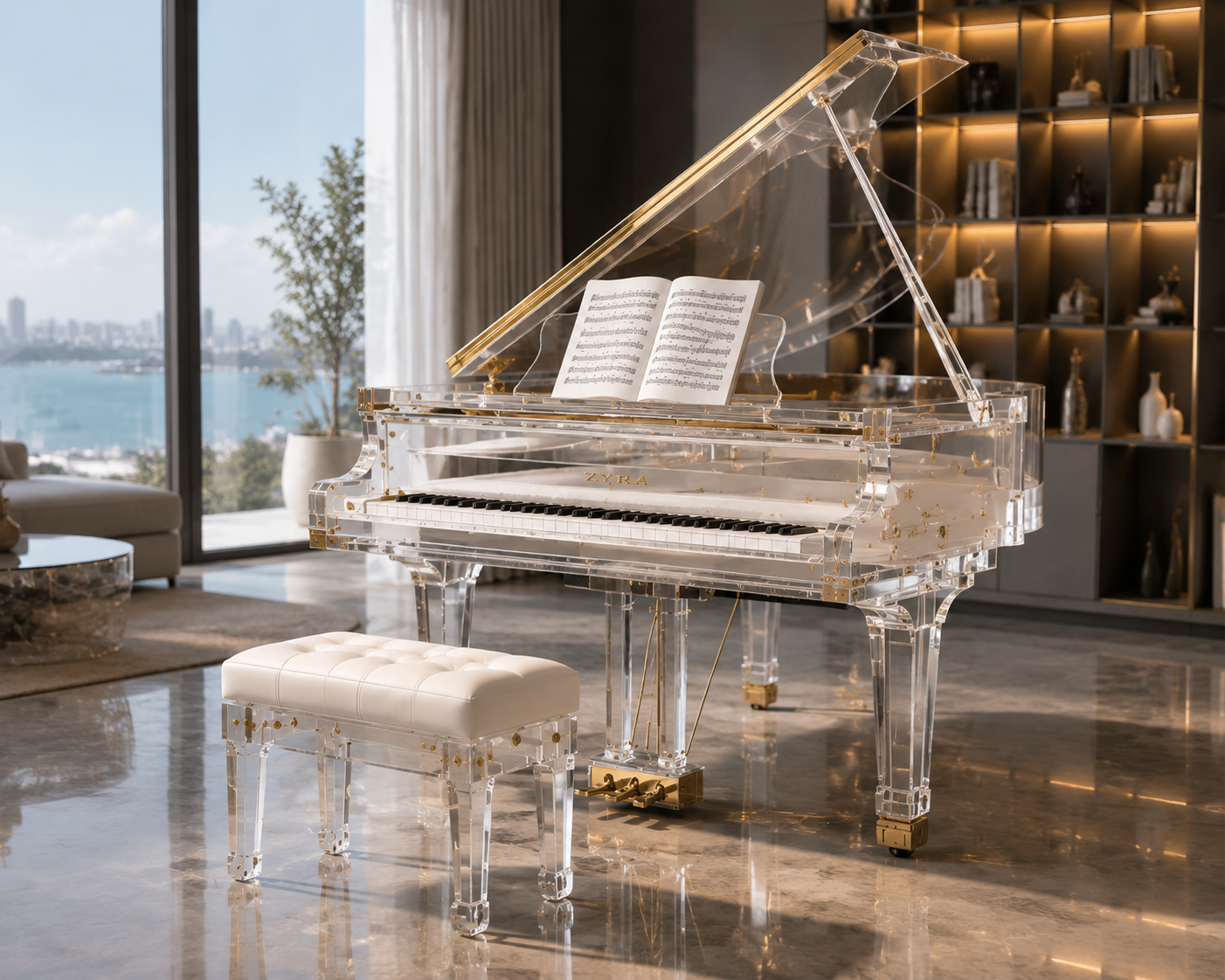
For an entry-level transparent furniture range, that might be extremely clean geometry and consistent high-clarity acrylic. A more premium range could introduce thicker components, more complex edge profiles and custom tints. A higher collection might use synthetic-crystal structures, premium cast resin, gradients, embedded elements and custom color development.
This creates a genuine product hierarchy rather than simply attaching different prices to similar-looking furniture.
Customization strengthens that hierarchy. Designers working on luxury residential, hotel or commercial projects often need nonstandard dimensions, project-specific colors and material combinations. Transparent furniture becomes much harder to commoditize when a manufacturer can control custom thickness, gradient position, transparency level, edge treatment, embedded elements and the relationship between resin, acrylic, metal, wood and stone.
Quality control should become part of the differentiation story as well.
A serious supplier should be able to communicate sample approval procedures, acceptable bubble or inclusion standards, color-tolerance expectations, polishing quality, joint appearance, structural requirements and packaging methods. For “platinum-grade acrylic,” synthetic crystal and premium resin, technical documentation is more convincing than luxury terminology alone.
The wider design market demonstrates why distinctiveness matters. Christie's June 2026 New York Design sale realized approximately $20.16 million with an 89% sell-through rate by lot. This does not mean commercial transparent furniture should be valued like collectible design, but it does demonstrate sustained demand for furniture and design objects whose value extends beyond basic function.
That is ultimately the direction transparent furniture manufacturers should pursue.
Acrylic can provide precision and extraordinary clarity. Synthetic crystal can introduce volume, optical density and a jewel-like character. Premium resin can contribute color, gradients, internal layers and artistic experimentation.
But none of those materials creates differentiation automatically.
The difference comes from how deliberately they are combined.
The next generation of transparent furniture should therefore not simply be clearer. It should offer more to discover from different distances and different angles: a polished edge that catches light, a gradient that becomes visible only from the side, an embedded detail suspended inside a resin volume, or a transparent structural element that makes stone or wood appear to float.
When those decisions are controlled carefully, transparency stops being a material trend.
It becomes a recognizable product language—and a much stronger foundation for premium positioning.
READ MORE:
- How Can Furniture Feel Lighter in Small Spaces? Design Strategies Using Transparent Materials and Synthetic Crystal Elements
- Where Does Synthetic Crystal Furniture Work Best? Applications for Living Rooms, Hotels, Weddings and Commercial Spaces
- How Can Ordinary Furniture Look More Premium? Three Upgrade Directions from Hardware and Materials to Crystal Elements
- Why More Designers Are Paying Attention to Transparent Furniture: From Spatial Perception to Product Premium
- Synthetic Crystal Acrylic Furniture: An Innovative Direction Worth Watching in the Future High-End Furniture Market
- Why Are More High-End Design Projects Choosing Crystal-Grade Acrylic as a Core Material?
- Synthetic Crystal Acrylic Furniture: Creating Brand Differentiation Through a Distinctive Visual Language
- From Transparent Material to Premium Experience: How Synthetic Crystal Acrylic Furniture Enhances Product Value
- Synthetic Crystal Acrylic Furniture: Why Is It Becoming the “Texture Upgrade Solution” for High-End Spaces?


