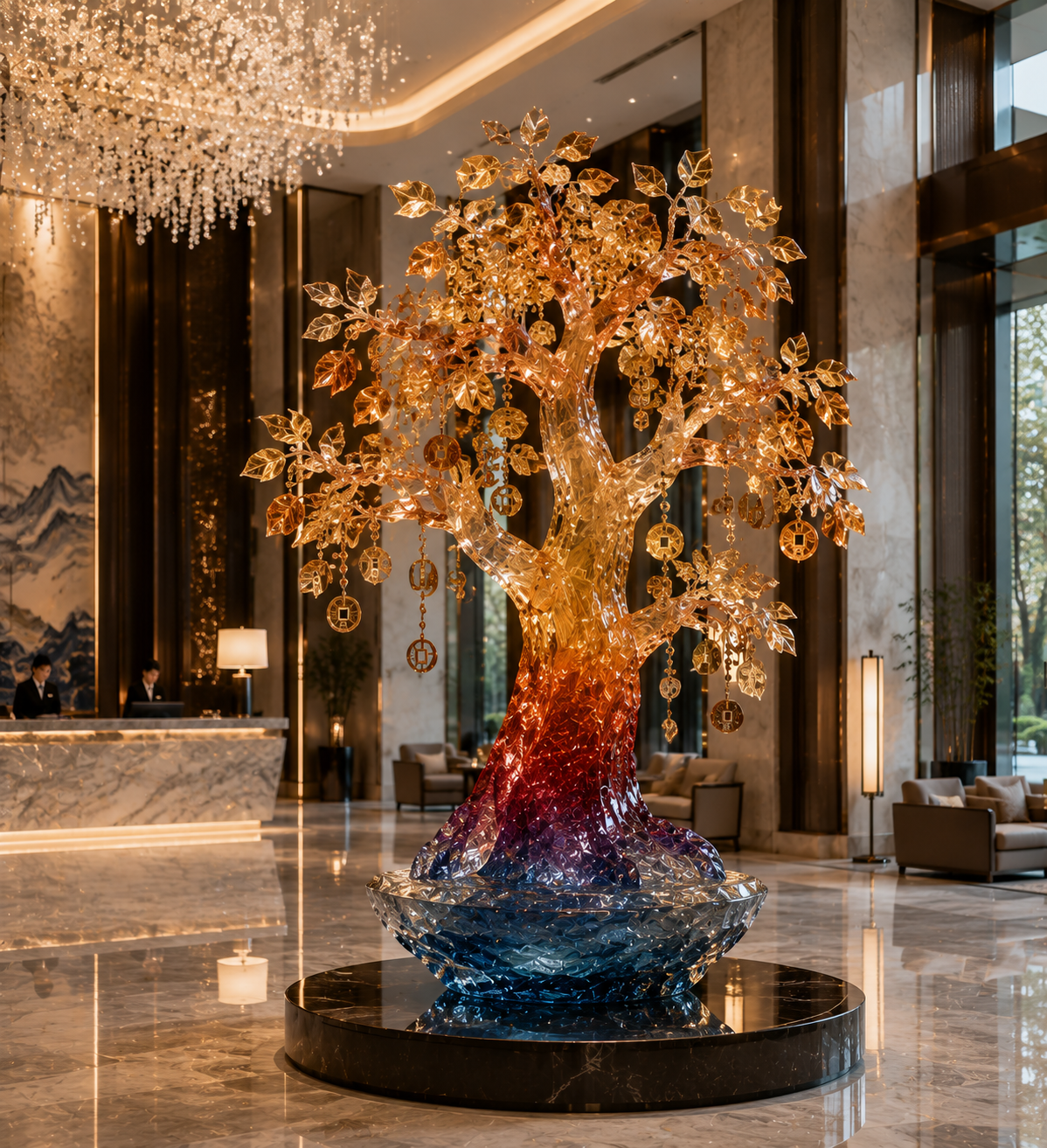
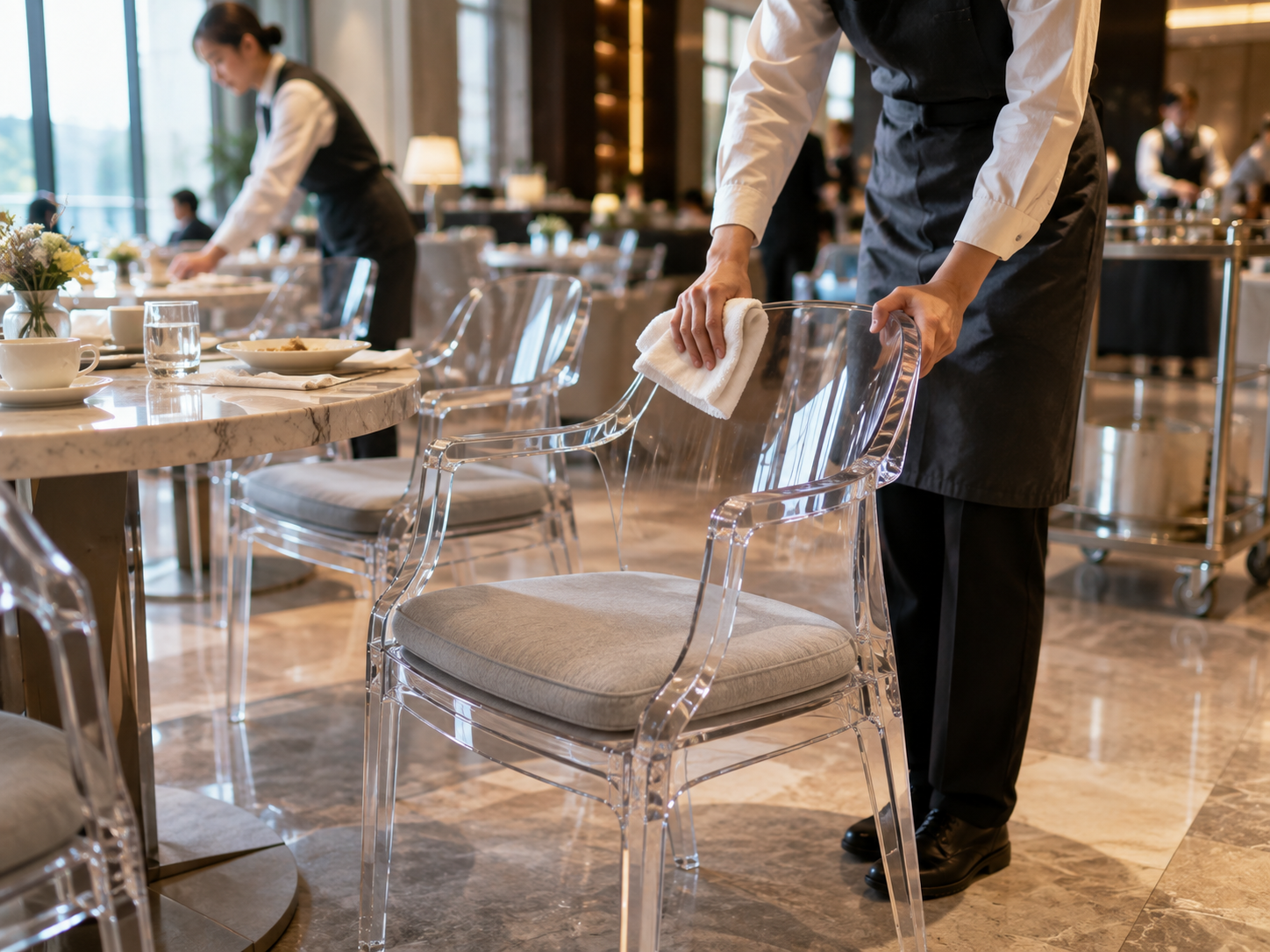
Synthetic crystal furniture occupies an unusual position in contemporary interiors. It can appear almost invisible in one setting and become the strongest visual focal point in another. That flexibility is precisely why designers are increasingly interested in transparent and translucent materials for residential, hospitality, event and commercial projects.
For clarity, “synthetic crystal” in this article refers to engineered crystal-like transparent or translucent components used in furniture, rather than naturally mined crystal. Depending on the intended effect, these pieces may be combined with premium casting resin, high-clarity acrylic, metal, stone, wood or upholstery.
The appeal is not simply transparency.
Research published in the Journal of the Korea Furniture Society in 2025 examined the visual effects of transparent materials with 180 respondents. The study identified perceptual effects including visual ambiguity, refraction and illusion, spatial expansion and depth. It also found that transparency becomes most effective when combined with lighting, structural layering and its surrounding environment.
This finding provides a useful framework for selecting applications. Synthetic crystal furniture works best when transparency performs a specific job: reducing visual weight, interacting with light, emphasizing another material, supporting products without competing with them, or creating a memorable centerpiece.
The following six applications show where those advantages can create the greatest design and commercial value.
1. In Living Rooms, Synthetic Crystal Furniture Can Reduce Visual Weight Without Reducing Function
Living rooms are one of the most natural environments for synthetic crystal furniture because coffee tables, side tables and consoles frequently occupy important sightlines.
A traditional solid coffee table visually covers part of a rug or flooring surface and creates a strong object in the center of the seating area. A transparent coffee table can provide almost exactly the same functional surface while allowing the floor, rug and furniture behind it to remain visible.
Research on perceived spaciousness supports the importance of visual occupation. A PLOS ONE study by researchers at Johannes Gutenberg University Mainz found that, in one physical model-room experiment, furnished rooms were perceived as less spacious than unfurnished ones. A second virtual-reality experiment did not reproduce the same effect, showing that perceived spaciousness depends on context and viewing conditions rather than following a simple universal rule.
For designers, the practical implication is still useful: furniture does more than occupy square meters; it creates visual boundaries.
That makes transparent coffee tables particularly effective in compact apartments, contemporary villas and luxury living rooms where an expensive rug, stone floor or architectural feature deserves to remain visible.
A synthetic-crystal coffee table, for example, can introduce substantial thickness and jewel-like edge reflections without creating the visual heaviness of a solid stone block. A platinum-grade high-clarity acrylic console can provide cleaner geometry and sharper structural lines. Premium resin can be used when the designer wants a softer optical effect, such as smoke gray, amber, blue or a controlled color gradient.
Mixed-material designs can be even stronger. A marble tabletop supported by clear synthetic-crystal legs creates contrast between visual weight and transparency. Walnut combined with high-clarity acrylic creates warmth without making the room feel overly heavy. A premium-resin side table can act almost like a small sculpture while maintaining a degree of transparency.
The goal is not to make every piece disappear. In sophisticated residential interiors, transparency works best when it gives heavier materials more room to breathe.
2. Hotels Can Use Crystal-Like Furniture to Create Memorable “Wow” Moments Without Overloading the Interior
Hospitality interiors have a different requirement from residential spaces. Furniture must not only look attractive; it also contributes to the guest's first impression of the brand.
This is especially important in hotel lobbies.
Hospitality Design reported in its 2025 hotel design trends coverage that hotel lobbies are increasingly becoming multifunctional areas where guests eat, drink, work, meet and socialize rather than simply check in. Gensler's Lori Mukoyama also noted that carefully positioned “wow” items can become focal points while preventing richly designed spaces from turning into sensory overload.
That is almost an ideal brief for synthetic-crystal furniture.
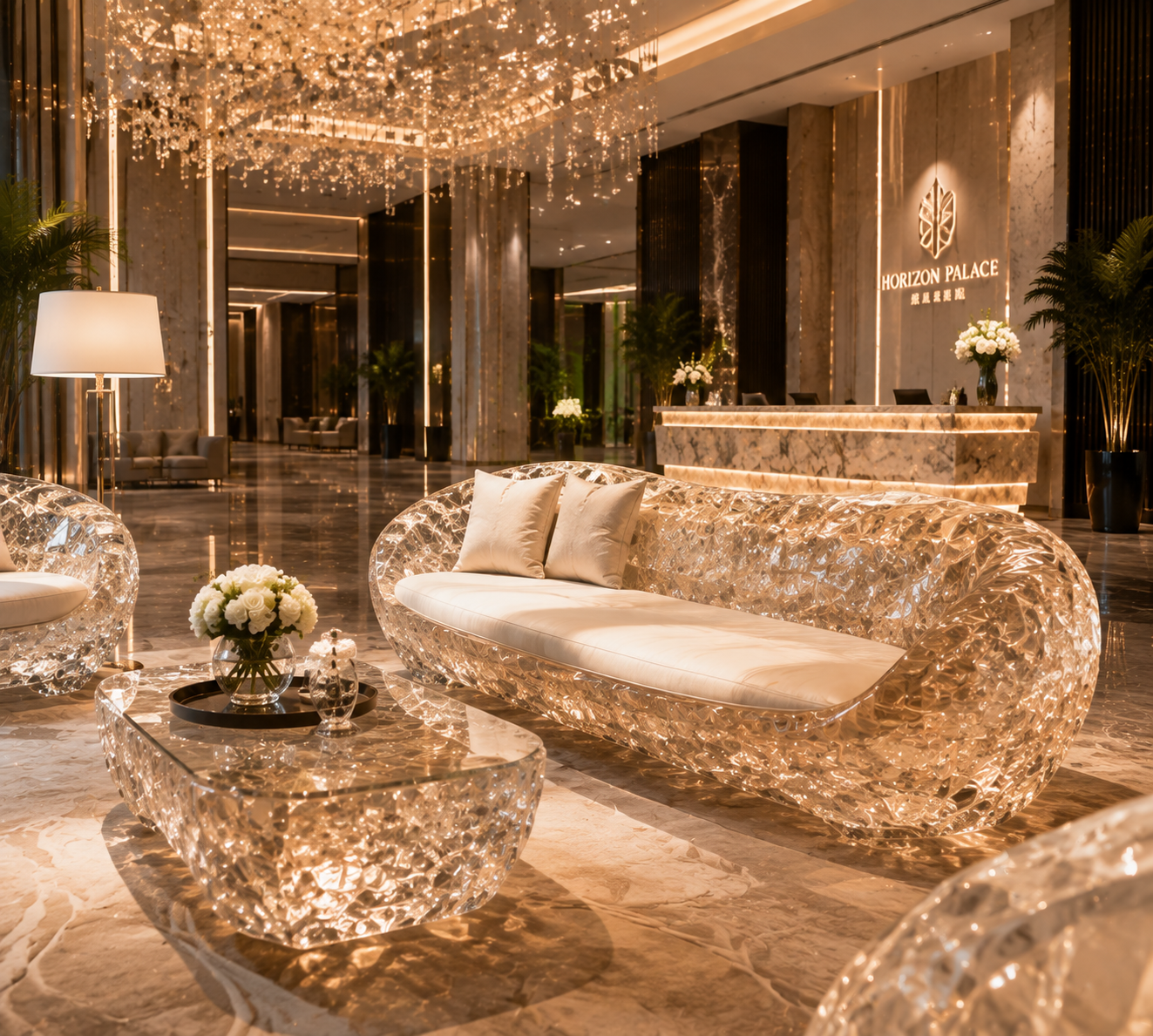
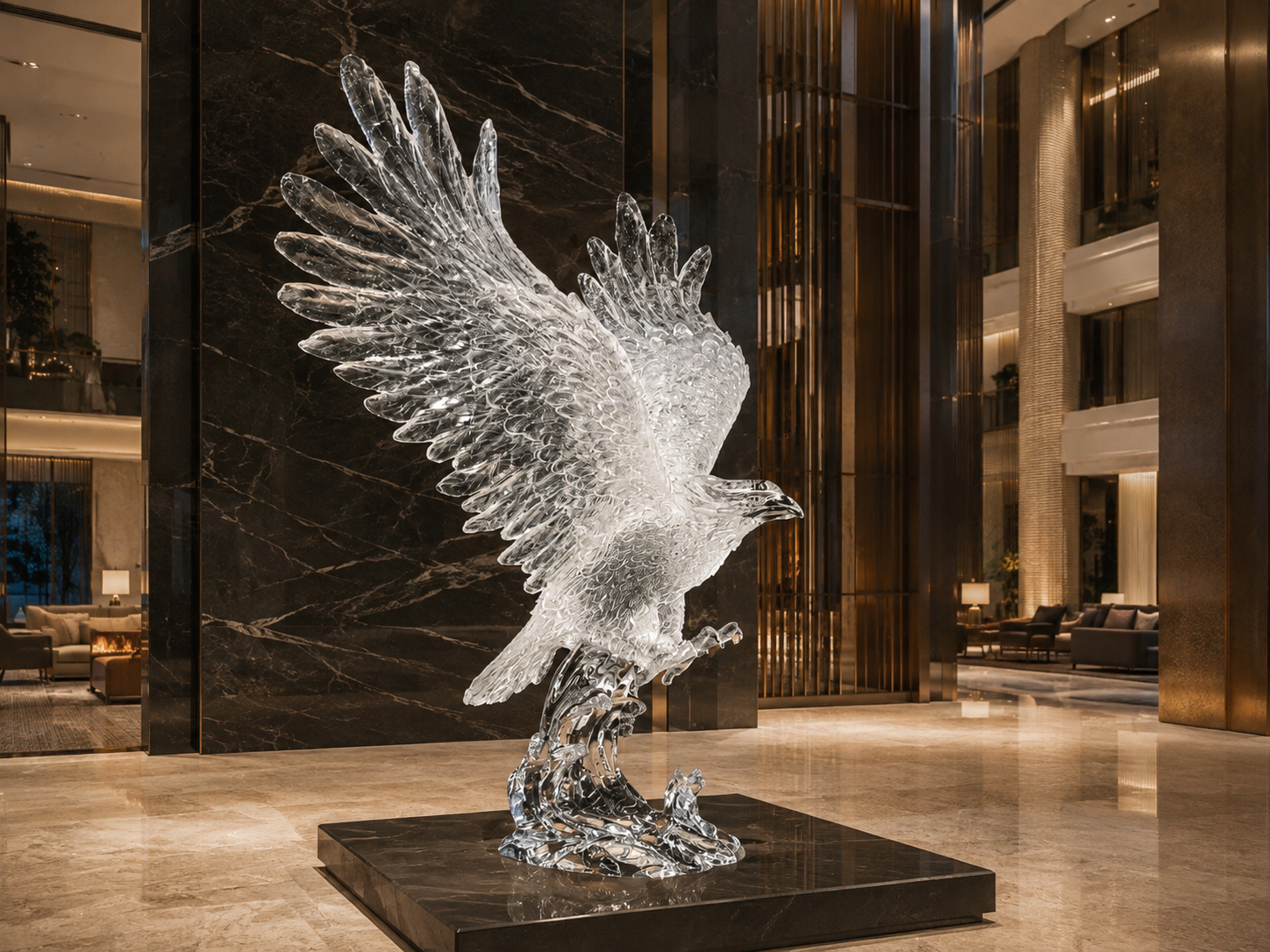
A hotel does not necessarily need an entire lobby filled with transparent furniture. One substantial crystal-like console, sculptural resin table or pair of highly polished transparent side tables may be enough to establish a recognizable visual identity.
A synthetic-crystal reception-side table can catch architectural lighting without blocking views across the lobby. A premium-resin communal table can introduce a distinctive color or embedded pattern. A platinum-grade high-clarity acrylic console positioned against stone, textured plaster or timber allows the background material to remain part of the visual composition.
Current hospitality thinking also favors restraint rather than spectacle for its own sake. In a 2026 review of design movements that shaped 2025, Hospitality Design reported a move toward experience-driven environments focused on comfort, personalization and longevity. Designers interviewed by the publication emphasized that successful hospitality spaces increasingly depend on how guests feel, not simply how loudly the interior attracts attention.
This is why transparent furniture can be particularly useful. It can be visually distinctive without becoming physically overwhelming.
Hotels also create opportunities for custom production. Lobby tables can be produced in brand colors; resin can incorporate gradients or embedded effects; synthetic-crystal furniture can be coordinated with lighting; and acrylic components can be fabricated to precise architectural dimensions.
However, hospitality projects require technical discipline. Scratch resistance, cleaning procedures, stability, edge design, structural loads and applicable fire or building requirements must all be evaluated for the specific project.
Luxury appearance alone is not enough. In hotels, premium materials must also survive real guest use.
3. Weddings and Events Are Natural Environments for Transparent Furniture Because the Furniture Should Support the Scene
Wedding design creates an interesting challenge: furniture is necessary, but it is rarely supposed to become the most important visual element in every photograph.
Flowers, lighting, the ceremony backdrop, architecture, table settings and, most importantly, the couple are usually the real focus.
This explains the long-standing popularity of transparent seating. The Knot includes translucent “ghost chairs” among its major wedding chair styles and describes clear acrylic versions as a favorite for ultra-modern celebrations. It also notes that these chairs are available not only in clear finishes but in colors ranging from cobalt and orange to blush and lilac.
The Knot's own real-wedding archive shows transparent ghost chairs used in both a hotel ballroom reception and an atrium ceremony at Detroit's Shinola Hotel, illustrating how transparent furniture can adapt to formal indoor settings as well as light-filled architectural environments.
Synthetic-crystal and premium-resin furniture can extend this concept beyond seating.
A transparent cake table allows floral installations and flooring to remain visible. Synthetic-crystal pedestals can support flower arrangements without introducing another opaque block into the scene. Clear or tinted acrylic bars can visually integrate with lighting. Premium-resin signing tables, sweetheart tables or display plinths can be customized to the event's palette.
The commercial advantage is customization.
Wedding designers frequently work around specific themes and colors. Premium resin can incorporate blush, champagne, amber, smoke or other translucent tones. Synthetic-crystal pieces can provide a more jewel-like effect for luxury weddings. Platinum-grade high-clarity acrylic can work better when the brief requires clean, almost invisible modern geometry.
There is also an important photographic benefit. Because transparent furniture allows more of the background to remain visible, it can preserve floral installations, architectural details and decorative floors in event photography.
The most successful application therefore is not “more crystal equals more luxury.”
Instead, transparent furniture acts as a supporting layer. It provides function while allowing everything that the client has invested in—the flowers, lighting, venue and styling—to remain visually dominant.
4. Retail and Commercial Spaces Can Use Transparency to Keep Attention on the Product
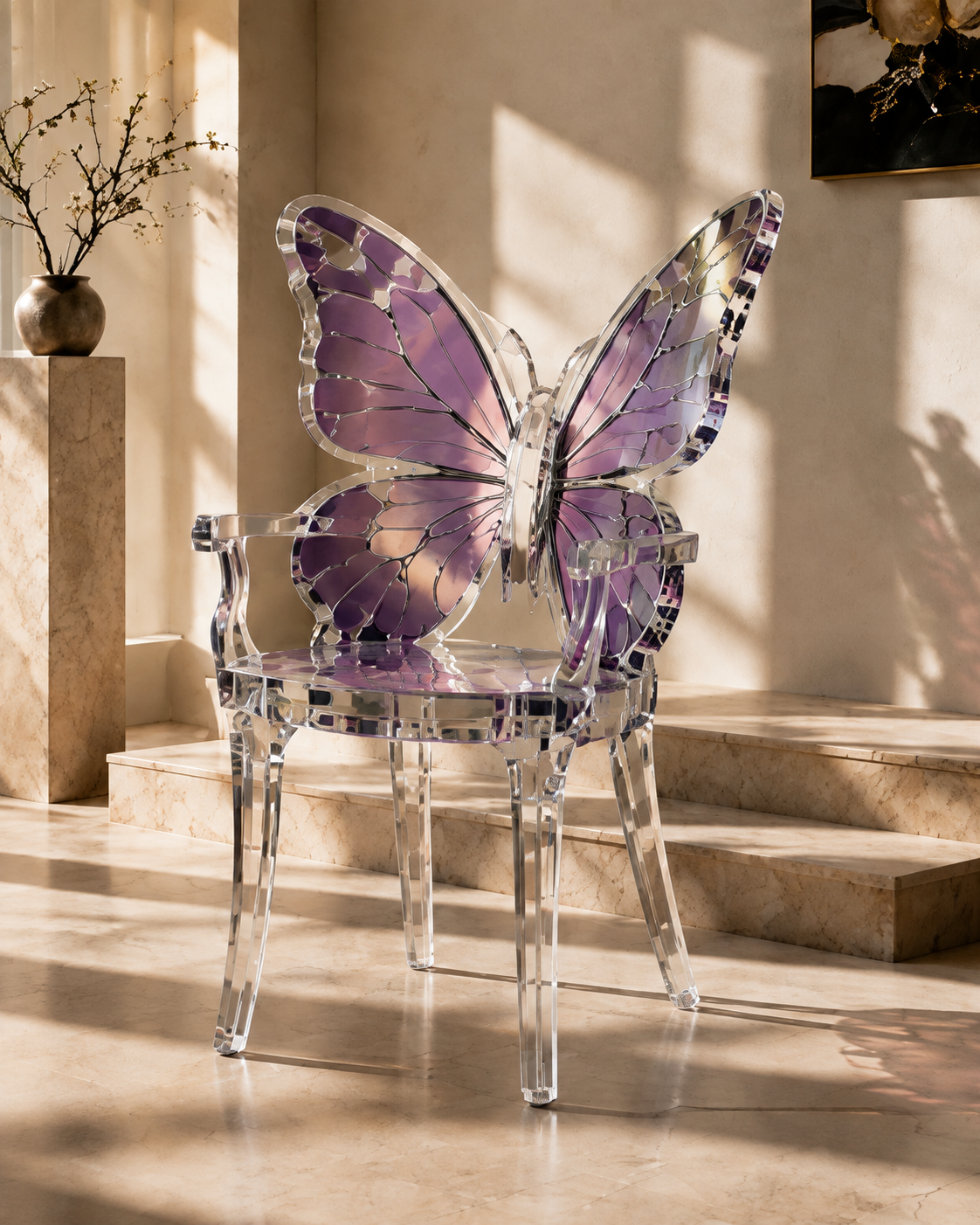
Commercial interiors introduce another strong application because the furniture often has a supporting role: display the merchandise without visually competing with it.
Several published retail projects demonstrate this strategy.
In OMA's Coach Omotesando flagship project, transparent acrylic display units were arranged so that products appeared to float while views toward the retail space beyond were maintained. The modular system combined display function with visual openness rather than creating conventional heavy shelving.
ArchDaily described a similar principle in Office AIO's Big Small Coffee + B&B project, noting directly that the transparency of acrylic shelving diminished its visual weight and allowed greater focus on the displayed objects.
The concept remains relevant in newer retail design. In the SIDIZ flagship store, transparent shelving was specifically used to enhance the form of the chairs being displayed. Meanwhile, the 2025 LMOOD flagship used hand-finished acrylic and brushed metal as part of a restrained material language connected to brand identity and craftsmanship.
These cases show why synthetic-crystal, resin and acrylic furniture can be commercially valuable.
For jewelry stores, transparent pedestals can support products without creating a bulky base. For fashion boutiques, acrylic shelves and resin tables can maintain long sightlines. For beauty brands, synthetic-crystal display blocks can create associations with purity, light and precious materials.
ArchDaily's coverage of an Estée Lauder Companies exhibition pavilion is particularly relevant. The project used transparent and translucent acrylic to create an environment described visually as a multifaceted crystal, connecting transparency directly with the brand's prestige positioning.
In commercial spaces, transparent furniture therefore does two jobs simultaneously: it supports merchandise physically while supporting the brand psychologically.
That is a much stronger value proposition than simply selling “clear display furniture.”
5. The Material Should Change According to the Space: Synthetic Crystal, Premium Resin and High-Clarity Acrylic Are Not Interchangeable
Although these materials may appear similar in photographs, they should not automatically be specified for the same purpose.
Synthetic-crystal furniture is particularly suitable when the design requires visual depth, substantial transparent volume and a jewel-like impression. Thick table legs, sculptural coffee tables, decorative pedestals and statement consoles can benefit from this character.
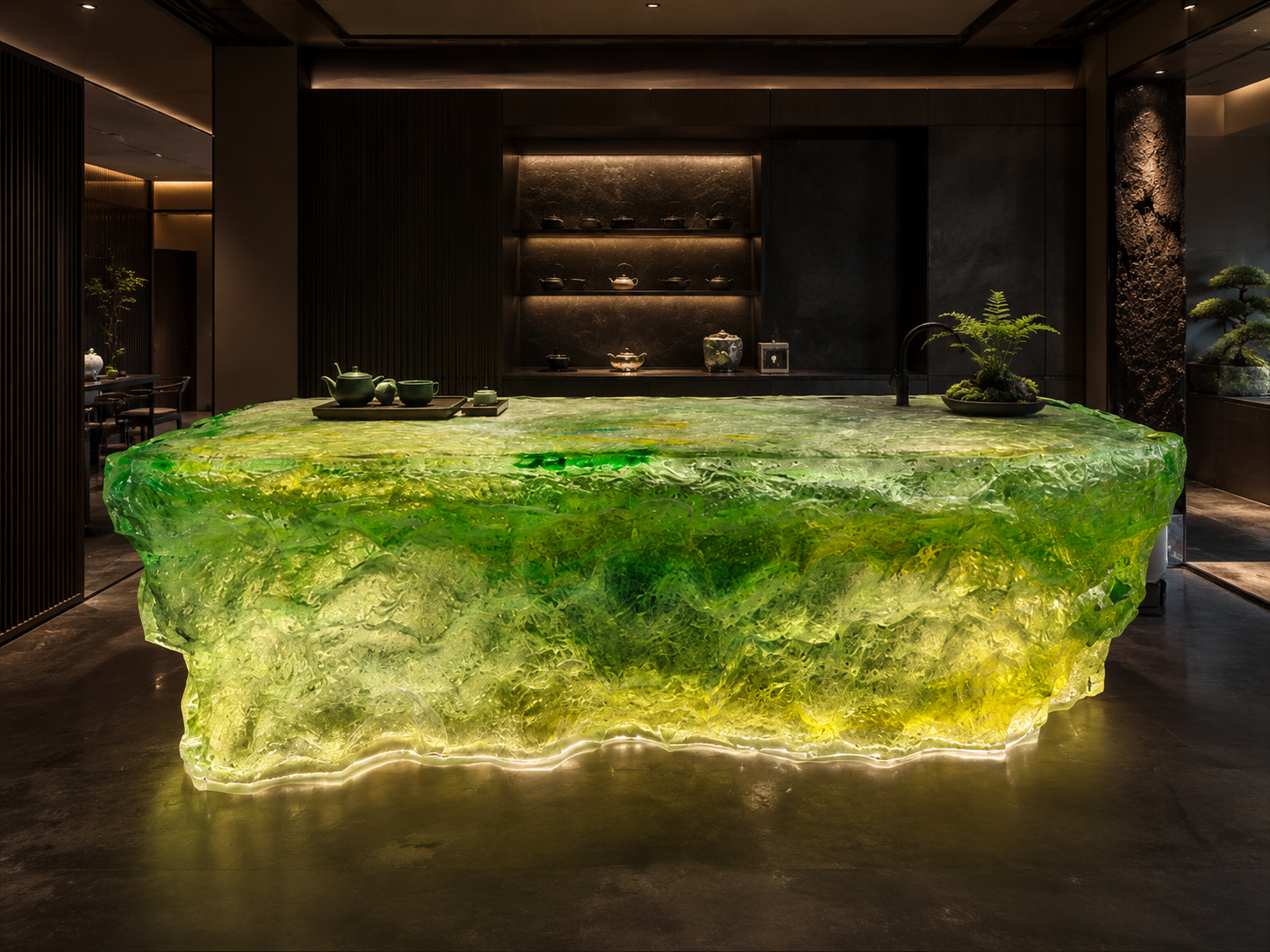
Premium resin provides greater opportunities for artistic effects. Pigments, gradients, embedded elements and intentionally translucent or cloudy structures can turn a side table or pedestal into an expressive object.
The historical importance of resin furniture is illustrated by Shiro Kuramata's 1988 Miss Blanche chair in the Museum of Modern Art collection. Kuramata embedded artificial roses within acrylic resin, creating the impression that the flowers were floating inside the structure. MoMA describes the chair as an icon of postmodern design and notes the painstaking process required to position the flowers while the resin hardened.
High-clarity acrylic serves a somewhat different role. It is especially effective when the project requires clean geometry, precise fabrication and very high transparency.
Röhm reports that colorless clear PLEXIGLAS products can achieve visible-light transmission of up to approximately 92 percent. The company also states that certain clear grades are guaranteed to retain high light transmission for decades. These figures apply to Röhm's specific PMMA products and should not automatically be claimed for every acrylic product, but they demonstrate the optical performance achievable from high-quality acrylic.
For manufacturers describing their own product as “platinum-grade acrylic,” technical claims should therefore be supported by the actual material specification rather than by the marketing term alone.
That credibility matters in professional projects.
Designers are not only buying transparency. They are buying predictable clarity, color, polishing, dimensions, structural performance and consistency between samples and final production.
6. The Best Spaces for Synthetic Crystal Furniture Are Those Where Transparency Creates a Reason to Pay More
The final question for a manufacturer is commercial.
Where can synthetic-crystal furniture generate real premium value rather than simply becoming a more expensive substitute for ordinary furniture?
The answer is where the material creates something visible that conventional furniture cannot easily provide.
In a living room, that may mean preserving an expensive rug or marble floor visually. In a hotel, it may mean creating a memorable focal table without making the lobby feel congested. At a wedding, it may mean allowing floral installations and architectural backgrounds to dominate photographs. In a luxury boutique, it may mean making merchandise appear to float.
These are benefits that clients can understand.
The broader luxury furniture market also suggests room for differentiated products. Grand View Research estimated the global luxury furniture market at approximately $31.1 billion in 2024 and projects it to reach about $39.8 billion by 2030, representing a 4.2% compound annual growth rate. The firm's analysis also highlights demand for individuality, exclusivity and innovative design as contributors to luxury furniture consumption.
At the collectible end of the spectrum, the value of distinctive furniture becomes even clearer. Christie's June 2026 New York Design sale totaled more than $20.15 million and achieved an 89% sell-through rate by lot. Auction results cannot be used as evidence that ordinary synthetic-crystal furniture will appreciate in value, but they do illustrate a broader principle: design buyers can assign substantial value to furniture when material, authorship, craftsmanship and distinctiveness come together.
For manufacturers of synthetic crystal, premium resin and platinum-grade high-clarity acrylic furniture, this is the positioning opportunity.
Do not simply ask, “Where can we put a crystal table?”
Ask what the material contributes to that environment.
When transparency preserves sightlines, when resin carries color through the material rather than only on its surface, when a polished synthetic-crystal edge becomes part of the lighting experience, and when acrylic supports a product without visually competing with it, the furniture gains a clear reason to exist.
That is why synthetic-crystal furniture can work across such different environments—from private living rooms to five-star hotel lobbies, wedding receptions and luxury retail stores.
The material is not tied to one style.
Its strongest advantage is that it can be quiet when the space needs visual openness and dramatic when the project needs a focal point.
Used intelligently, transparency does more than make furniture look luxurious.
It makes the surrounding space more valuable.
READ MORE:
- From Acrylic to Synthetic Crystal: How Can Transparent Furniture Create More Depth and Stronger Product Differentiation?
- How Can Furniture Feel Lighter in Small Spaces? Design Strategies Using Transparent Materials and Synthetic Crystal Elements
- How Can Ordinary Furniture Look More Premium? Three Upgrade Directions from Hardware and Materials to Crystal Elements
- Why More Designers Are Paying Attention to Transparent Furniture: From Spatial Perception to Product Premium
- Synthetic Crystal Acrylic Furniture: An Innovative Direction Worth Watching in the Future High-End Furniture Market
- Why Are More High-End Design Projects Choosing Crystal-Grade Acrylic as a Core Material?
- Synthetic Crystal Acrylic Furniture: Creating Brand Differentiation Through a Distinctive Visual Language
- From Transparent Material to Premium Experience: How Synthetic Crystal Acrylic Furniture Enhances Product Value
- Synthetic Crystal Acrylic Furniture: Why Is It Becoming the “Texture Upgrade Solution” for High-End Spaces?


