For years, outdoor furniture has been dominated by a familiar material vocabulary: teak, aluminum, stainless steel and woven rattan. There are good reasons for their popularity. They are recognizable, relatively easy to specify and supported by mature manufacturing systems.
But outdoor spaces are changing.
A terrace is no longer treated as a secondary area furnished with whatever can survive the weather. Homeowners, hotel operators and designers increasingly expect outdoor spaces to have the visual sophistication of an interior.
The 2026 U.S. Houzz Outdoor Trends Study, based on 1,191 homeowners undertaking, planning or recently completing outdoor projects, found that 83% of renovated outdoor spaces contain lounge or seating areas. Fifty-five percent of those lounge areas include a coffee or side table, while 66% incorporate outdoor lighting. Professional involvement has also reached a new high: 71% of respondents hired professionals for outdoor renovation projects, compared with 65% in 2024.
That creates an opportunity for more distinctive materials.
At the 2026 Maison & Objet fair, Houzz reported an outdoor category featuring 50 international brands, while the latest ICFF and High Point Market introductions showed increasing experimentation with advanced manufacturing, indoor-inspired forms and unconventional materials. Architectural Digest's 2026 outdoor coverage similarly describes a market moving well beyond conventional patio furniture.
For designers seeking something more memorable than another timber table or aluminum frame, the following six material directions are especially worth considering.
1. Synthetic Crystal and Platinum Acrylic Can Make Outdoor Furniture Visually Weightless
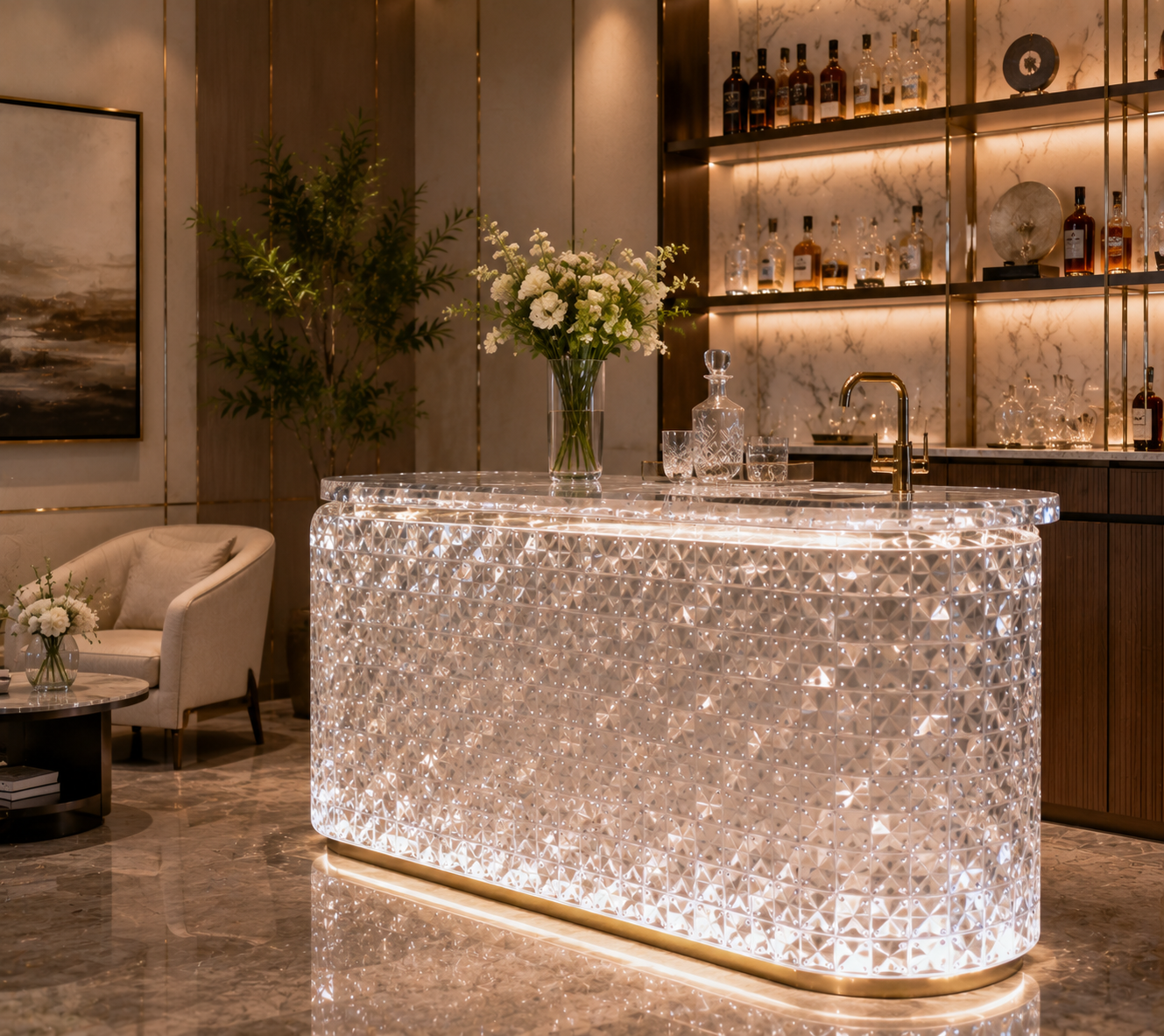
One of the most distinctive alternatives to conventional outdoor furniture is transparent or translucent furniture made from premium acrylic-based materials.
The attraction is immediately visible.
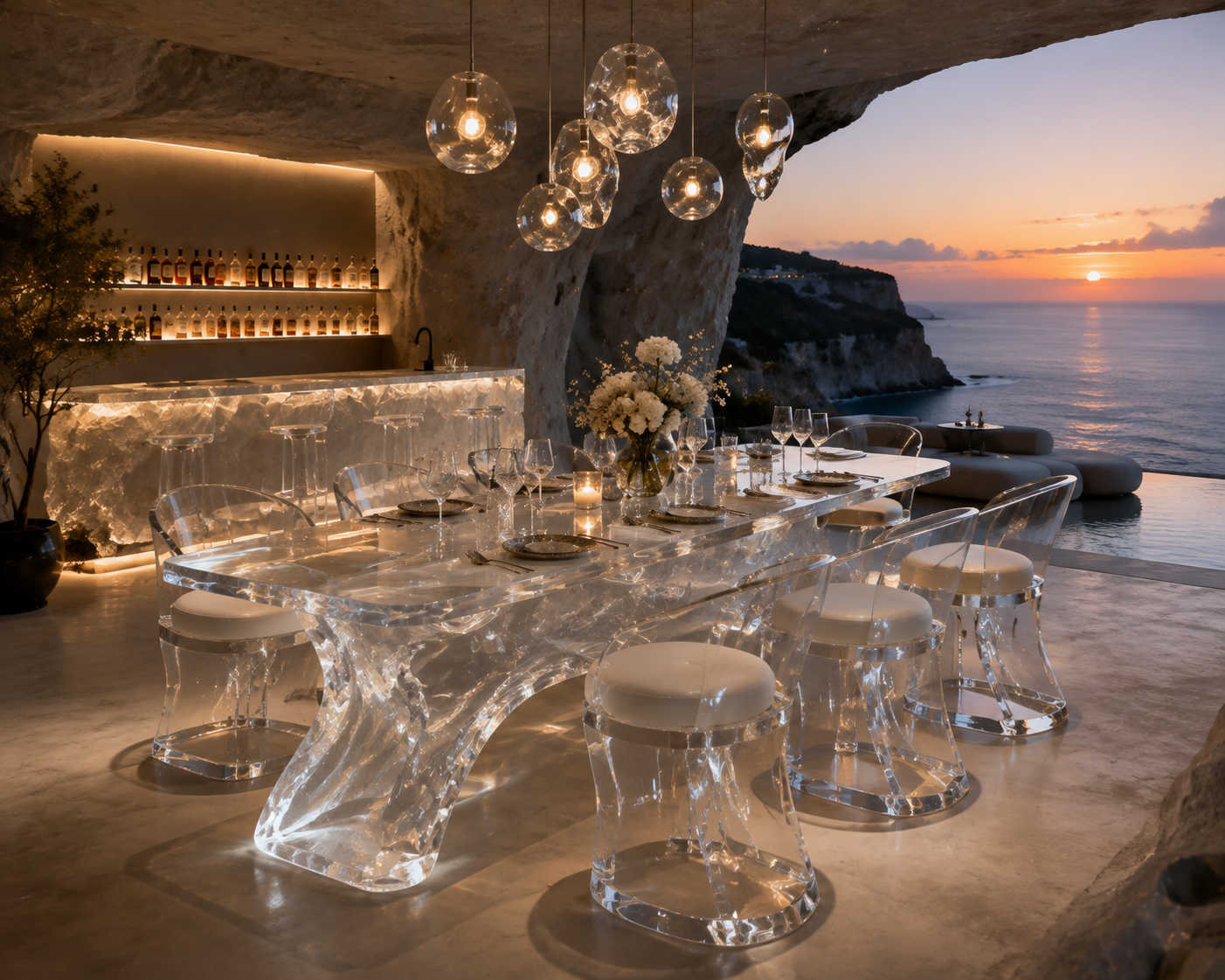
A solid stone coffee table creates a strong visual block. A timber table introduces color and grain. A metal table adds a clearly defined structural outline. A transparent synthetic-crystal or platinum acrylic coffee table, by contrast, can occupy the same physical footprint while allowing paving, planting, water and landscape views to remain visible through it.
This is particularly valuable around swimming pools, rooftop terraces and coastal properties where the landscape is already the most important element of the design.
Imagine a thick, crystal-clear side table beside an ivory outdoor sofa overlooking the Mediterranean. Rather than introducing another dark object into the composition, the furniture catches sunlight along its polished edges and reflects the changing colors of the sky and water.
Premium PMMA demonstrates why material specification is important in these applications. POLYVANTIS states that clear PLEXIGLAS® products can achieve visible-light transmission of up to 92%. The manufacturer also guarantees that almost all of its clear-transparent PLEXIGLAS® products retain high transparency and resist visible yellowing for 30 years, depending on the relevant product and warranty conditions.
Its outdoor performance is not theoretical. PMMA systems are used in demanding architectural applications including roofs, façades and swimming pools. POLYVANTIS specifically cites high UV and weather resistance for its swimming-pool PMMA systems and provides a 30-year guarantee relating to transparency for those applications.
These specifications should not be automatically applied to every acrylic product on the market. “Acrylic” is a broad commercial description, and grades, additives, fabrication quality and long-term performance can differ significantly.
That distinction creates an important opportunity for manufacturers of platinum acrylic furniture.
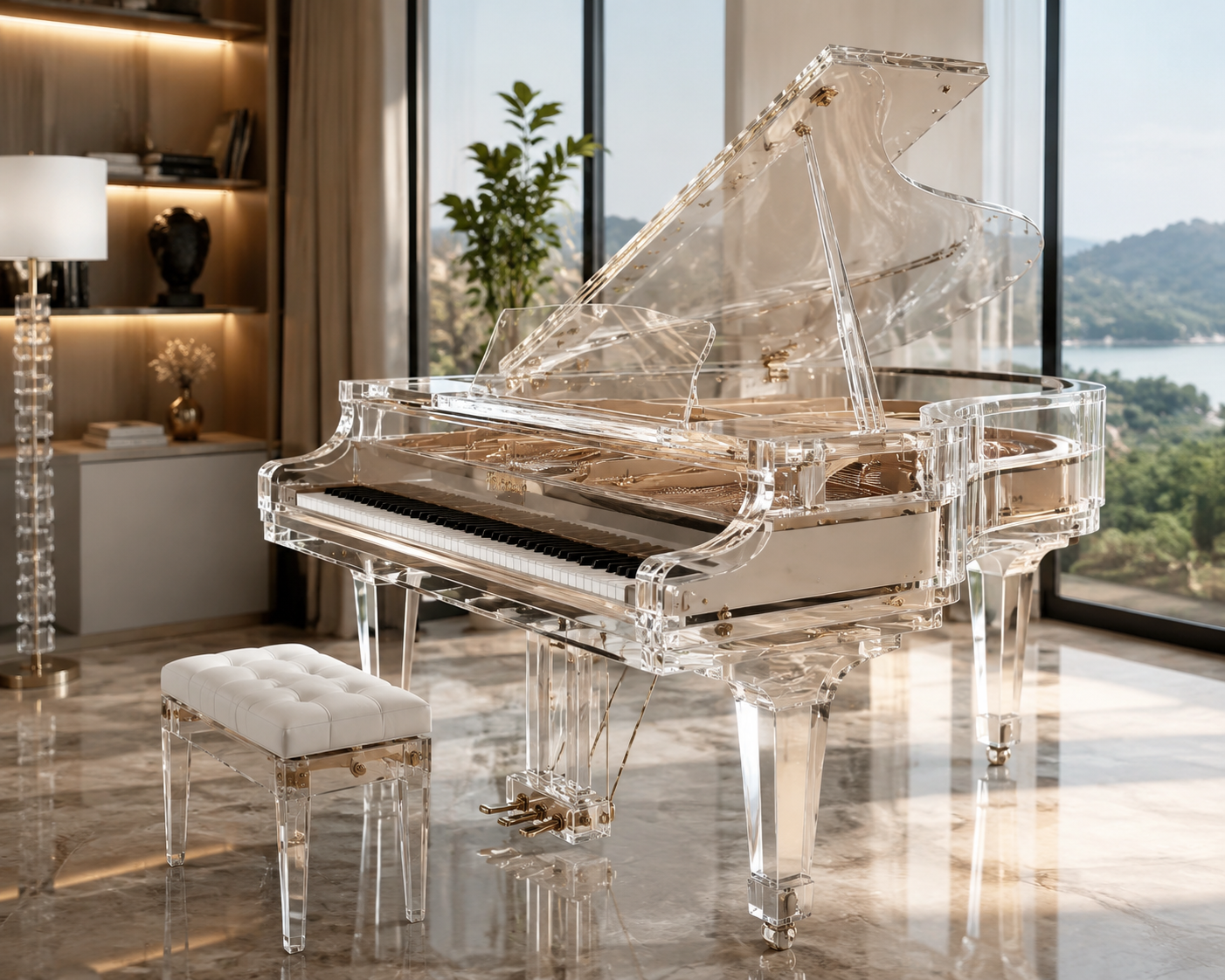
Instead of competing with inexpensive clear plastic tables, premium furniture can emphasize optical purity, substantial material thickness, carefully polished edges, controlled coloration, precision bonding and documented outdoor suitability.
A platinum acrylic console in smoke gray, champagne or pale blue can become almost architectural. A transparent dining-table base can make a large stone top appear to float. A synthetic-crystal bench beside a pool can interact with water and sunlight in ways that wood and metal simply cannot reproduce.
The result is not merely weather-resistant furniture.
It is furniture that actively changes the visual perception of the outdoor space.
2. High-End Resin Offers Color and Sculptural Freedom That Natural Materials Cannot Easily Replicate
If acrylic is particularly effective when designers want optical clarity and precision, high-end cast resin offers another advantage: creative freedom.
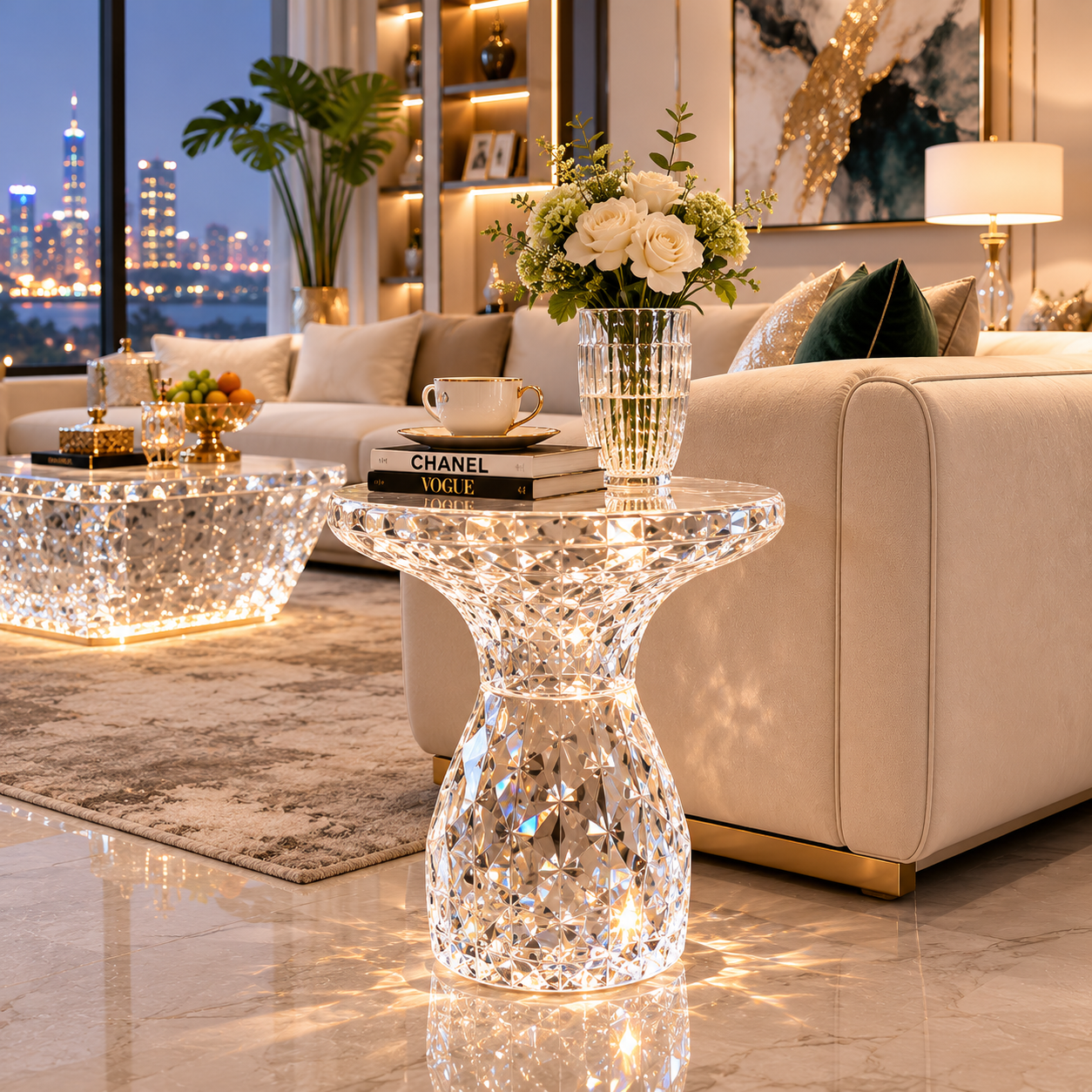
Resin can be transparent, translucent or opaque. Pigment can be suspended throughout the material instead of simply applied to the surface. Different colors can transition gradually through a single casting. Intentional bubbles, clouding, layers and embedded textures can create visual depth that resembles ice, minerals, water or gemstones.
This makes resin especially useful for outdoor furniture intended to become a focal point.
A conventional teak side table may complement a garden beautifully, but its visual language is familiar. A monolithic amber resin table glowing under evening landscape lighting produces a completely different experience. Similarly, a translucent cobalt pedestal beside a swimming pool can visually connect the furniture to the water without literally imitating it.
Advanced polymer manufacturing also gives designers considerable freedom in form. Soft curves, oversized blocks and irregular sculptural geometries can be produced without following the same structural vocabulary required by traditional joinery.
This direction corresponds with broader furniture trends. Houzz's 2026 Emerging Summer Trends Report found growing interest in curved and wave-like forms; searches for “scalloped tile” had increased more than threefold, while searches related to several other curved architectural elements also rose sharply.
The important qualification is that not every resin formulation should be used outdoors.
A study published in the peer-reviewed journal Polymer Testing examined epoxy and vinyl-ester resins exposed to UV, thermal and natural aging. The researchers found that oxidation can create chromophores responsible for yellowing and that different resin systems have different resistance to aging.
For outdoor furniture manufacturers, this is a crucial distinction.
A high-end resin table intended for an interior gallery is not automatically suitable for an uncovered terrace in Dubai, Miami or Singapore. Outdoor performance must come from the specific resin chemistry, pigments, UV-stabilization strategy, casting method and testing.
This is actually where premium manufacturers can differentiate themselves.
Rather than simply describing a product as “resin furniture,” a supplier can develop application-specific formulations and provide designers with information about UV exposure, color stability, maintenance and recommended environments.
When properly specified, synthetic crystal and premium resin can deliver something traditional outdoor materials struggle to provide: deep color combined with light transmission and sculptural mass.
3. Architectural Concrete and GFRC Turn Furniture Into Part of the Landscape
At the opposite end of the visual spectrum from transparent acrylic is concrete.
Rather than disappearing into the landscape, concrete furniture anchors it.
Architectural Digest highlighted concrete as one of the notable outdoor furniture directions in 2026, describing the material as both sculptural and resilient. Designers interviewed by the publication emphasized pairing concrete with vegetation and contrasting textures so that the result feels organic rather than excessively severe.
Concrete is particularly effective in contemporary villas, desert landscapes, resort projects and brutalist architecture because furniture can appear almost as if it were formed from the building itself.
A low concrete bench can continue the language of an architectural wall. Rounded concrete coffee tables can resemble stones within a landscape. An oversized pedestal can create a permanent focal point beside a reflecting pool.
Weight, however, is both concrete's strength and weakness.
Its mass is useful in windy environments and creates a sense of permanence, but transporting and repositioning large pieces can become difficult. This is one reason GFRC—glass-fiber-reinforced concrete—has become relevant to architectural and furniture applications.
A 2026 review published by Springer Nature examined the role of glass fiber in concrete, noting its ability to improve important mechanical characteristics. Glass reinforcement can help designers create thinner or more complex cementitious forms than would be practical with conventional unreinforced concrete.
For furniture, this opens the door to shells, curved benches and sculptural tables that maintain the mineral character of concrete while reducing some of its visual and physical bulk.
Concrete also creates an effective contrast with transparent materials.
For example, a hotel terrace might combine GFRC seating bases with a clear synthetic-crystal coffee table. The concrete visually anchors the arrangement, while the transparent table prevents the entire composition from becoming too heavy.
That balance between mass and transparency is often more sophisticated than relying on one material throughout the project.
4. Porcelain and Sintered Surfaces Bring Architectural Finishes Into Furniture
Another increasingly useful alternative is the family of high-performance porcelain and sintered surfaces.
These materials are particularly attractive to architects because they can create continuity between architecture and furniture.
The same stone-look or mineral-patterned surface used on an outdoor kitchen, wall or floor can potentially appear on a dining table, cabinet front, bench or bar. Instead of furniture looking like something placed onto the architecture later, it becomes visually integrated with it.
Ultracompact sintered products illustrate the technical potential.
Cosentino states that its Dekton surfaces are designed for exterior use and offer resistance to UV exposure, thermal shock and freezing conditions. The company's technical data reports extremely low water absorption for tested product families and documents thermal-shock performance under standardized testing.
Cosentino now promotes the material specifically for outdoor furniture, including tabletops, bench cladding, shelves, cabinet doors and other furniture surfaces. Its 4-millimeter Slim format, for example, is positioned for furniture fronts and cladding where relatively thin material can reduce unnecessary mass.
The design advantage is significant.
A designer can achieve the appearance of marble, concrete or oxidized stone while gaining a highly controlled industrial surface. Large formats can also reduce visual joints and create cleaner contemporary furniture.
These materials work especially well for dining tables, outdoor kitchens and hospitality installations where food, drinks and frequent cleaning create more demanding maintenance requirements.
They can also be paired effectively with crystal-like materials.
Consider a dining table with a veined sintered-stone top supported by platinum acrylic bases. The stone provides texture and solidity; the transparent base reduces visual mass. Alternatively, a clear synthetic-crystal side table placed beside a sintered-stone bench can prevent an architectural terrace from becoming visually monotonous.
Distinctive outdoor furniture often comes not from selecting the most unusual material in isolation, but from creating an unexpected relationship between two well-chosen materials.
5. Molded Polymers and Composite Materials Allow Outdoor Furniture to Take Shapes Traditional Construction Cannot
Another important category is molded polymer and composite furniture.
This category is sometimes dismissed because inexpensive plastic outdoor furniture has existed for decades. But industrial molding technologies can produce highly sophisticated contemporary forms that would be extremely difficult to manufacture economically in timber, sheet metal or stone.
At Maison & Objet 2026, Houzz highlighted Vondom's Mel collection by Ramón Esteve, whose seating uses rotational molding to create continuous flowing forms without conventional visible joints.
That manufacturing logic changes the design possibilities.
Instead of building a chair from legs, rails, seat and back, a designer can create a continuous volume. Furniture can become rounded, inflated, architectural or almost cartoon-like while remaining suitable for outdoor environments when the correct polymer system is selected.
Architectural Digest has also previously documented designers using engineered and recycled plastics in coastal hospitality settings precisely because humid, salty environments can be challenging for certain natural materials.
For high-end projects, however, the distinction between commodity plastic and engineered polymer should remain clear.
Material composition, UV stability, recycled content, pigmentation, surface quality and repairability all matter. The material should be selected according to its actual performance rather than the generic assumption that “plastic is waterproof.”
This category can also coexist with premium acrylic and resin rather than compete with them.
Rotationally molded seating may provide comfort, curves and durability, while a high-end resin coffee table or synthetic-crystal side table delivers the visual focal point. The designer uses each polymer technology for what it does best instead of forcing one material to solve every problem.
This approach is particularly effective in resorts, restaurants and pool environments where a collection may require dozens of durable seating pieces but only a few highly distinctive statement tables.
The result is both practical and memorable.
6. The Most Distinctive Outdoor Spaces Will Combine Materials Rather Than Depend on One
Ultimately, the question is not which single material will replace wood or metal.
There probably will not be one.
The more important shift is toward a richer outdoor material palette.
Wallpaper*'s coverage of 2026 outdoor collections already shows this diversification. New collections from leading European brands combine materials such as rope, marine plywood, recycled components, travertine and enamelled glass alongside more familiar structural materials.
Houzz's report from the 2026 Milan furniture fair similarly identified an increasingly strong indoor-outdoor dialogue and greater experimentation with material combinations.
For luxury projects, this mixed-material approach is often the most convincing.
Imagine a rooftop terrace where soft performance upholstery provides comfort, architectural concrete defines large seating zones, sintered surfaces form the outdoor dining table, and several champagne-colored synthetic-crystal side tables catch the sunset.
Or consider a resort pool deck where molded seating provides practical durability while transparent platinum acrylic tables preserve views toward the water. In a covered restaurant terrace, a sculptural high-end resin console can introduce deep emerald or amber color without another decorative pattern.
In each example, the distinctive material is not required to dominate the entire space.
It needs to create the moment people remember.
That is particularly important as outdoor spaces become more design-driven. Houzz's 2026 data shows not only that 83% of renovated outdoor spaces now include lounge areas, but that 71% of homeowners undertaking these projects are hiring professionals.
Professional projects demand more than appearance. Designers need to understand UV stability, thermal expansion, water exposure, structural loads, cleaning requirements and long-term color performance.
This is why manufacturers of synthetic crystal, high-end resin and platinum acrylic should resist competing only on transparency or price.
The stronger proposition is material specialization.
Can a manufacturer create unusually thick crystal-like forms? Can it control a custom smoke, amber or ocean-blue tint? Can it produce large resin castings without unwanted optical defects? Can it engineer an acrylic dining base around a stone tabletop? Can it explain exactly which material system is suitable for covered outdoor use and which has been developed for direct exposure?
Those capabilities transform furniture from a commodity into a specification.
Wood and metal will remain fundamental outdoor materials. They are proven, familiar and extremely versatile.
But today's high-end outdoor spaces do not need to be limited to them.
Synthetic crystal can make furniture appear visually weightless. Platinum acrylic can deliver precision and optical clarity. High-end resin can introduce sculptural color and depth. GFRC can create monolithic architectural forms. Sintered surfaces can extend the language of the building into the furniture. Molded polymers and composites can create shapes that traditional construction cannot efficiently reproduce.
The next generation of outdoor furniture will therefore be defined less by one dominant material and more by how intelligently designers combine performance, identity and experience.
For a luxury terrace, resort or poolside environment, durability answers one question: can the furniture remain outside?
Distinctive material design answers a more important one:
Will anyone remember it?
READ MORE:
- From Living Room to Terrace: How Crystal-Like Furniture Works Across Indoor and Outdoor Design
- 2026 Design Inspiration: Where Synthetic Crystal Furniture Works Best in Commercial and Residential Spaces
- Why More Designers Are Bringing "Crystal-Like Furniture" Into Modern Interiors
- High-End Spaces Do Not Have to Be Complicated: How Transparent Materials Elevate Interior Design
- Synthetic Crystal Acrylic Furniture: Giving Modern Spaces Stronger Visual Impact
- Why Crystal-Grade Acrylic Is Becoming an Innovative Material in the Eyes of Designers
- Synthetic Crystal Acrylic Furniture: A New Breakthrough for High-End Product Differentiation
- From Transparent Aesthetics to Commercial Competitiveness: Future Opportunities for Synthetic Crystal Acrylic Furniture
- Synthetic Crystal Acrylic Furniture: Why High-End Customers Increasingly Value the “Sense of Worth” Created by Materials


