Interior design is often celebrated for its visual impact, but the success of a project is rarely determined by aesthetics alone. Behind every luxury hotel lobby, signature restaurant, premium retail store, or high-end residential space lies a series of strategic decisions made long before furniture is installed or decorative elements are selected. Among these, material selection is one of the most influential.
Too often, materials are treated as finishing touches rather than fundamental design components. In reality, choosing the right material early in the design process affects everything from creative freedom and manufacturing feasibility to construction timelines, project budgets, and long-term maintenance. When designers, manufacturers, and project stakeholders align on materials from the beginning, they reduce uncertainty while creating spaces that perform as beautifully as they look.
For projects that demand distinctive visual identities and exceptional craftsmanship, materials should never be an afterthought. They should be the starting point.
.png)
Materials Define More Than Appearance
Many people associate materials primarily with texture, color, or surface finish. While these qualities certainly influence visual perception, materials also determine structural performance, fabrication possibilities, durability, and maintenance requirements.
A designer may imagine a seamless reception desk, a sculptural dining table, or a dramatic illuminated feature installation. Whether these concepts can actually be manufactured depends largely on the chosen material.
Every material comes with its own opportunities and limitations. Some offer exceptional strength but restrict complex shaping. Others provide design flexibility but struggle under commercial use. Selecting the wrong material can force redesigns, increase engineering challenges, or compromise the original design intent.
When material decisions are made early, designers gain a realistic understanding of what can be achieved without sacrificing creativity.
Early Decisions Reduce Costly Design Changes
One of the most common reasons interior projects exceed budgets or deadlines is late-stage material replacement.
A material that initially appears suitable may later reveal limitations during prototyping or fabrication. Designers may discover that certain curves cannot be produced, joints become visible, weight exceeds structural requirements, or installation becomes significantly more complicated than expected.
Each adjustment creates a chain reaction.
Construction drawings require revision. Production schedules shift. Procurement teams must source alternatives. Installers face unexpected challenges on site.
These changes consume time and increase costs far beyond the price difference between materials.
By evaluating material performance during the conceptual stage, project teams identify potential risks before they become expensive problems.
Material Selection Shapes Manufacturing Efficiency
Manufacturing begins long before production equipment starts operating.
Every production process is influenced by the characteristics of the selected material. Machining precision, polishing quality, bonding methods, structural reinforcement, transportation safety, and installation all depend on material properties.
Designers who collaborate with manufacturers early benefit from valuable production insights.
Instead of modifying finished drawings later, they can optimize designs while creative flexibility remains high.
For example, understanding achievable panel sizes, connection methods, or lighting integration early allows designers to maintain clean visual lines without introducing unnecessary complexity.
This collaborative approach shortens production cycles while improving overall project quality.
.png)
Complex Projects Require Predictable Materials
Luxury hospitality and commercial projects often involve hundreds of customized components that must work together seamlessly.
Furniture, decorative installations, reception counters, lighting features, partitions, and architectural details all contribute to one coherent visual language.
Inconsistent material performance introduces unnecessary risks.
Color variation between production batches, inconsistent transparency, uneven polishing quality, or unstable dimensional accuracy can disrupt the entire design.
Reliable materials provide consistency across multiple production runs, allowing manufacturers to reproduce complex pieces while maintaining identical appearance and quality.
This level of predictability becomes increasingly important as project size grows.
Designers Need Materials That Expand Creative Possibilities
The most memorable interiors are rarely built around ordinary products.
Instead, they are defined by unique forms, sculptural furniture, dramatic lighting effects, and carefully crafted visual experiences.
Innovative materials allow designers to move beyond conventional geometric limitations.
Large seamless surfaces, fluid organic curves, embedded lighting, translucent structures, and artistic statement furniture become achievable when materials support advanced fabrication techniques.
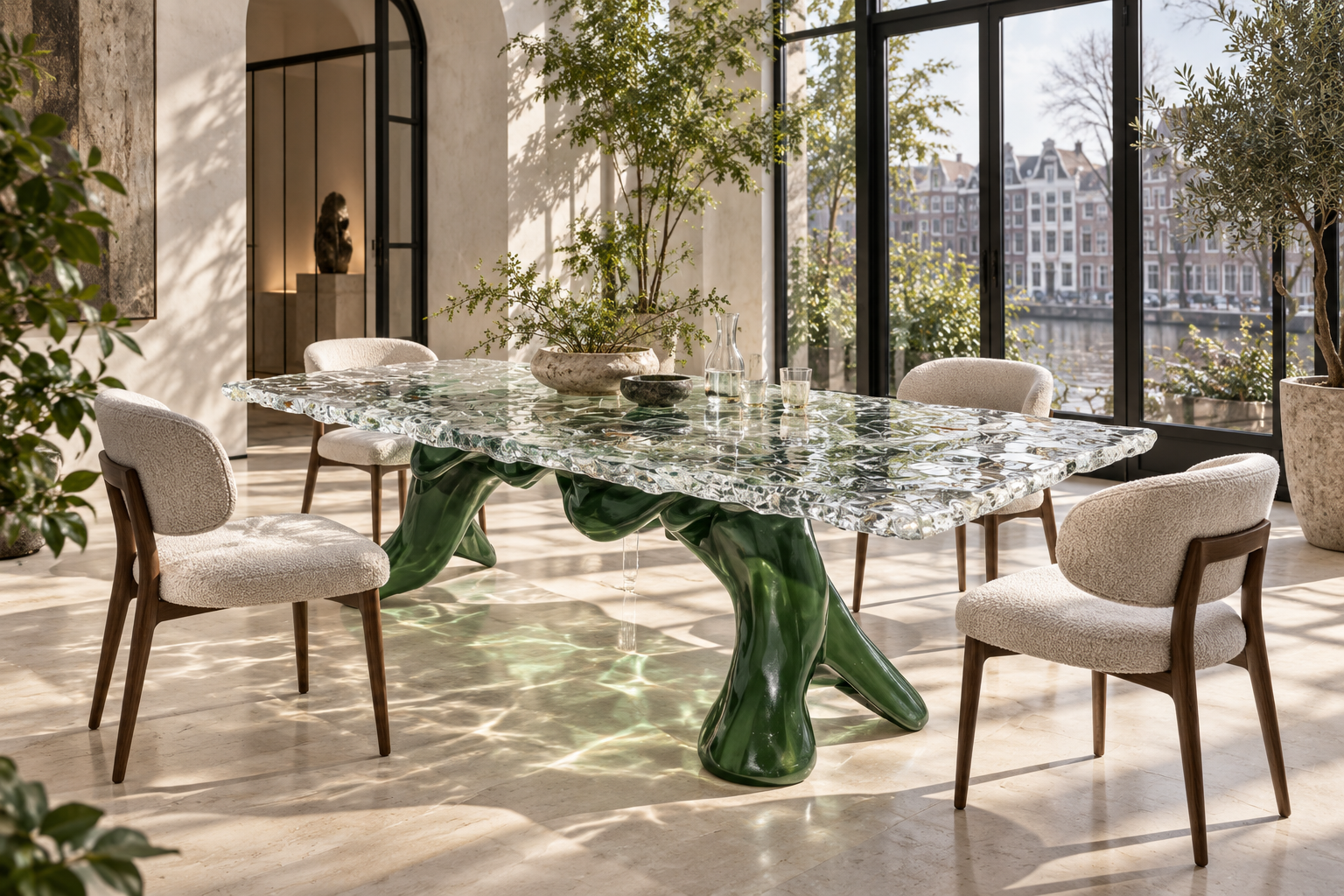
This is one reason why synthetic crystal continues to gain attention among designers creating premium commercial spaces.
Its exceptional clarity, sculptural flexibility, and luxurious visual depth enable concepts that traditional materials often struggle to achieve without excessive structural complexity.
Rather than limiting creativity, the material becomes part of the design language itself.
Long-Term Performance Matters as Much as First Impressions
Interior spaces are designed to create memorable experiences, but they must also withstand years of daily use.
Hotels welcome thousands of guests every month.
Luxury retail environments experience continuous customer traffic.
Restaurants require furniture that maintains its appearance despite constant cleaning and heavy use.
Early material selection allows project teams to evaluate durability alongside aesthetics.
Scratch resistance, structural stability, moisture resistance, UV performance, repairability, and maintenance requirements all influence long-term operational costs.
Choosing durable materials from the beginning reduces future replacement expenses while preserving the original design intent over time.
This life-cycle perspective is increasingly important for clients seeking lasting value rather than short-term visual impact.
Collaboration Produces Better Results
The most successful interior projects are rarely created by designers working independently.
Instead, they emerge from collaboration between architects, interior designers, engineers, manufacturers, and installers.
When manufacturers participate during early design development, they contribute practical expertise that complements creative vision.
They can recommend optimized fabrication methods, identify engineering challenges, improve structural performance, and propose more efficient production solutions without compromising aesthetics.
This collaborative process transforms manufacturing from a production service into a design partnership.
As projects become more ambitious, this partnership becomes increasingly valuable.

Material Consistency Strengthens Brand Identity
For hospitality brands, luxury retailers, and premium residential developers, interior spaces communicate more than functionality.
They express brand identity.
Every material contributes to the emotional atmosphere visitors experience.
Consistent transparency, refined finishes, balanced lighting effects, and carefully coordinated textures help establish an environment that feels intentional and memorable.
When materials vary unexpectedly, even subtle inconsistencies can weaken the overall perception of quality.
High-end projects depend on visual consistency across every detail.
Choosing reliable materials early helps maintain that consistency from concept sketches through final installation.
For many signature furniture and feature installations, synthetic crystal offers designers a refined balance between artistic expression and production reliability, making it easier to achieve a unified visual language throughout the space.
Sustainability Begins with Smarter Decisions
Sustainability is often associated with recycled materials or energy-efficient buildings, but project planning itself plays an equally important role.
Poor material decisions frequently generate unnecessary waste.
Late design revisions lead to discarded prototypes, unused inventory, repeated transportation, and additional manufacturing.
By selecting appropriate materials at the beginning, teams minimize redesigns and improve resource efficiency throughout the project lifecycle.
Well-planned manufacturing also reduces production waste while improving delivery accuracy.
Sustainable design is not only about choosing environmentally responsible materials—it is also about making informed decisions that prevent unnecessary consumption.
Why Premium Projects Prioritize Material Strategy
Luxury interiors demand more than beautiful furniture.
They require confidence that every design element can be manufactured accurately, delivered on schedule, installed efficiently, and maintained over time.
This confidence begins with material strategy.
When designers evaluate materials early, they preserve creative intent while reducing technical uncertainty.
Manufacturers gain sufficient time to refine production methods.
Contractors benefit from clearer installation planning.
Clients experience smoother project execution with fewer unexpected costs.
Rather than reacting to problems during construction, successful teams prevent them during design.
This proactive mindset distinguishes exceptional projects from ordinary ones.
As more architects and designers pursue customized spaces that blend artistic expression with engineering precision, synthetic crystal continues to demonstrate its value as a material capable of supporting both creative ambition and practical execution.
Looking Beyond Products to Project Success
Outstanding interior projects are not defined solely by exceptional furniture or impressive finishes. They succeed because every decision supports the next, creating a seamless connection between design vision, manufacturing capability, installation efficiency, and long-term performance.
Material selection sits at the center of that process.
When treated as a strategic design decision rather than a purchasing decision, materials become powerful tools that improve creativity, reduce project risk, and strengthen the overall quality of the finished space.
For designers, developers, hospitality brands, and custom furniture manufacturers alike, investing time in material planning at the beginning is one of the smartest decisions any project can make.
As demand grows for distinctive interiors that combine craftsmanship, innovation, and lasting value, synthetic crystal is helping redefine what is possible in contemporary furniture and architectural applications. The next iconic space may not begin with a sketch—it may begin with choosing the right material.


