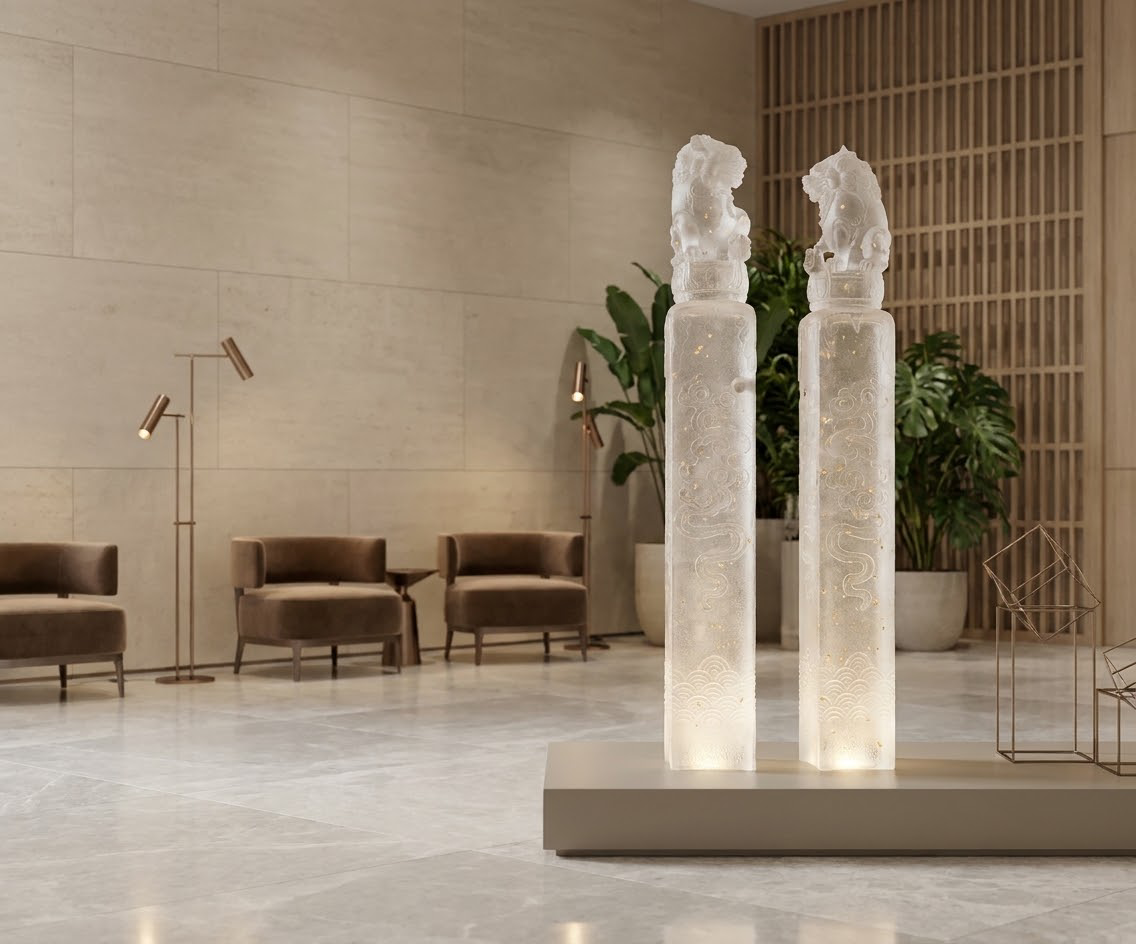
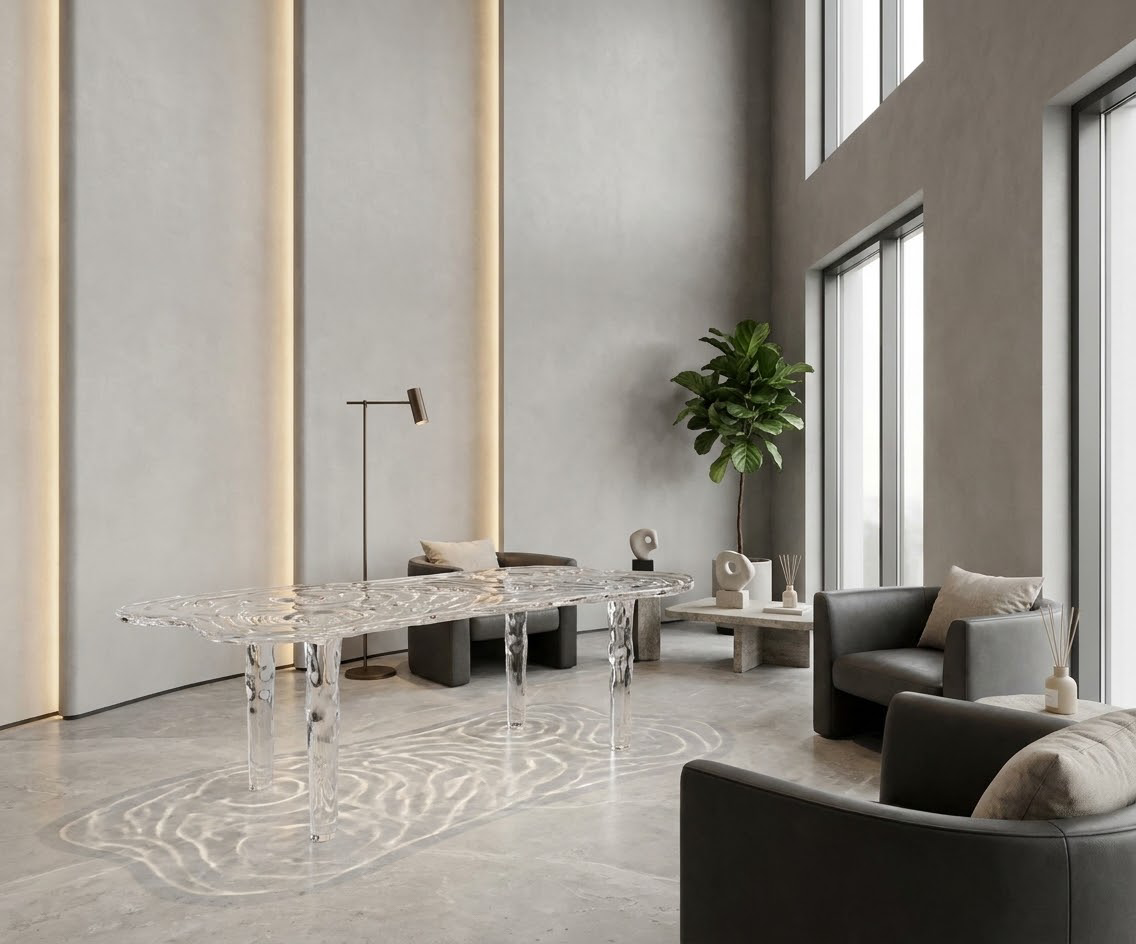
For luxury hotel brands competing in 2026’s saturated hospitality market, synthetic crystal furniture has emerged as a defining element of high-end FF&E (furniture, fixtures, and equipment) strategies.
This guide breaks down how interior designers and hotel operators can balance one-of-a-kind design, manufacturing precision, and long-term quality stability when commissioning custom pieces.
1. Design Innovation: Translating Hotel Brand Identity Into Synthetic Crystal Furniture
The first step in successful custom projects is aligning every design detail with the hotel’s unique brand narrative.
1.1 Custom Design Frameworks for Boutique and 5-Star Properties
Luxury hotels require furniture that acts as both functional decor and a brand storytelling tool.
Brand DNA integration: Map core brand values (e.g., minimalist luxury, art deco opulence) to crystal form, transparency, and edge detailing.
Space-specific customization: Adjust dimensions of synthetic crystal tables for lobby focal points vs. intimate restaurant settings.
Lighting synergy: Design pieces to complement natural light patterns and custom LED installations for dramatic after-dark effect.
In 2026, leading design studios are experimenting with gradient transparency effects, where crystal pieces shift from fully clear at the base to frosted at the surface.
This technique adds depth to open-plan lobbies without overwhelming surrounding architectural features.
1.2 Collaborative Design Processes With Interior Designers
Effective collaboration between furniture manufacturers and interior designers is critical to avoiding costly design revisions.
Initial concept workshops: 3D renderings and physical crystal sample reviews to finalize material and finish selections.
Prototype iteration: Small-scale functional prototypes to test ergonomics, especially for synthetic crystal chairs intended for high-traffic dining areas.
On-site mockups: Full-scale installations in sample hotel rooms to validate scale and visual impact before full production.
Many 2026 projects use digital twin technology to simulate how crystal furniture will interact with different lighting conditions throughout the day.
This reduces design approval timelines by up to 30% compared to traditional 2D presentation methods.
2. Material Science: High-Purity Optical Grade Materials and Performance Standards
The quality of raw materials directly determines the final appearance, durability, and long-term value of synthetic crystal furniture.
2.1 Core Material Properties of Premium Synthetic Crystal
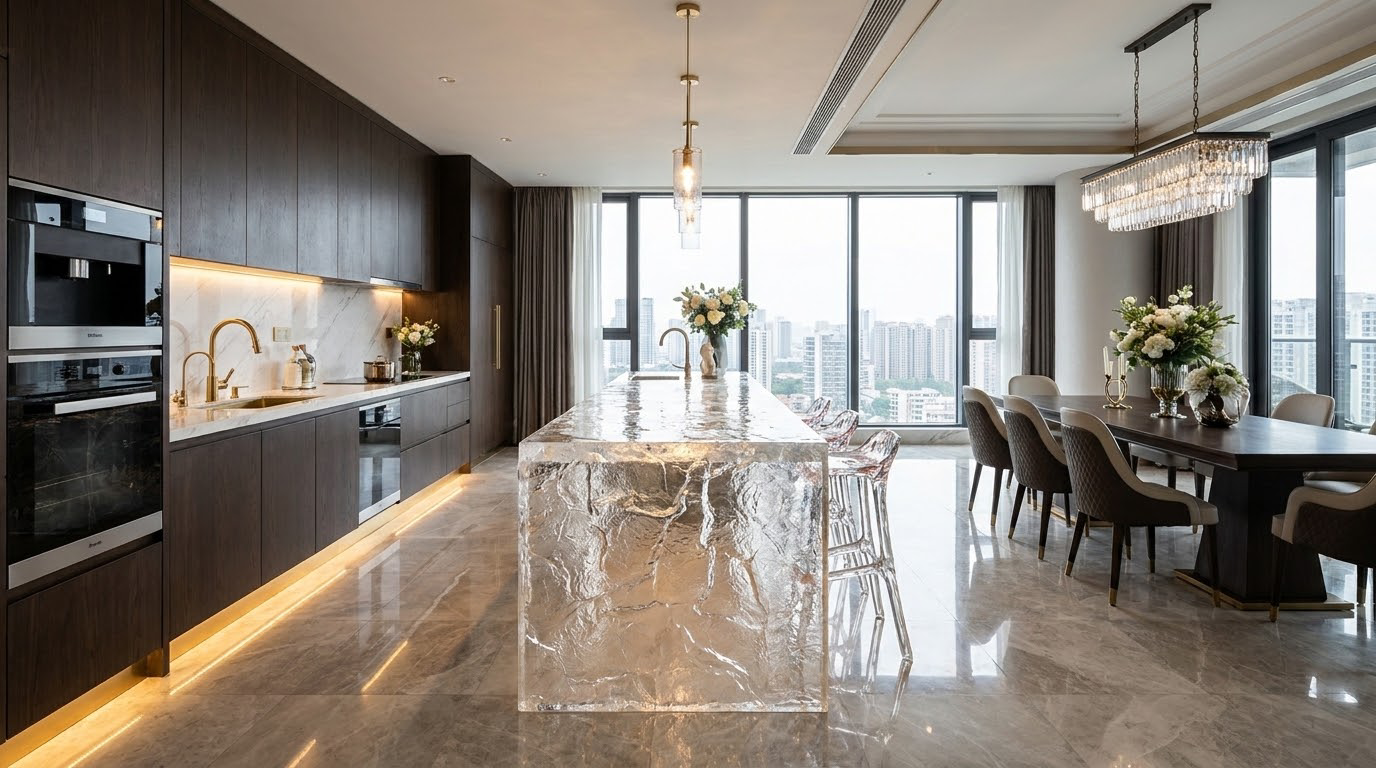
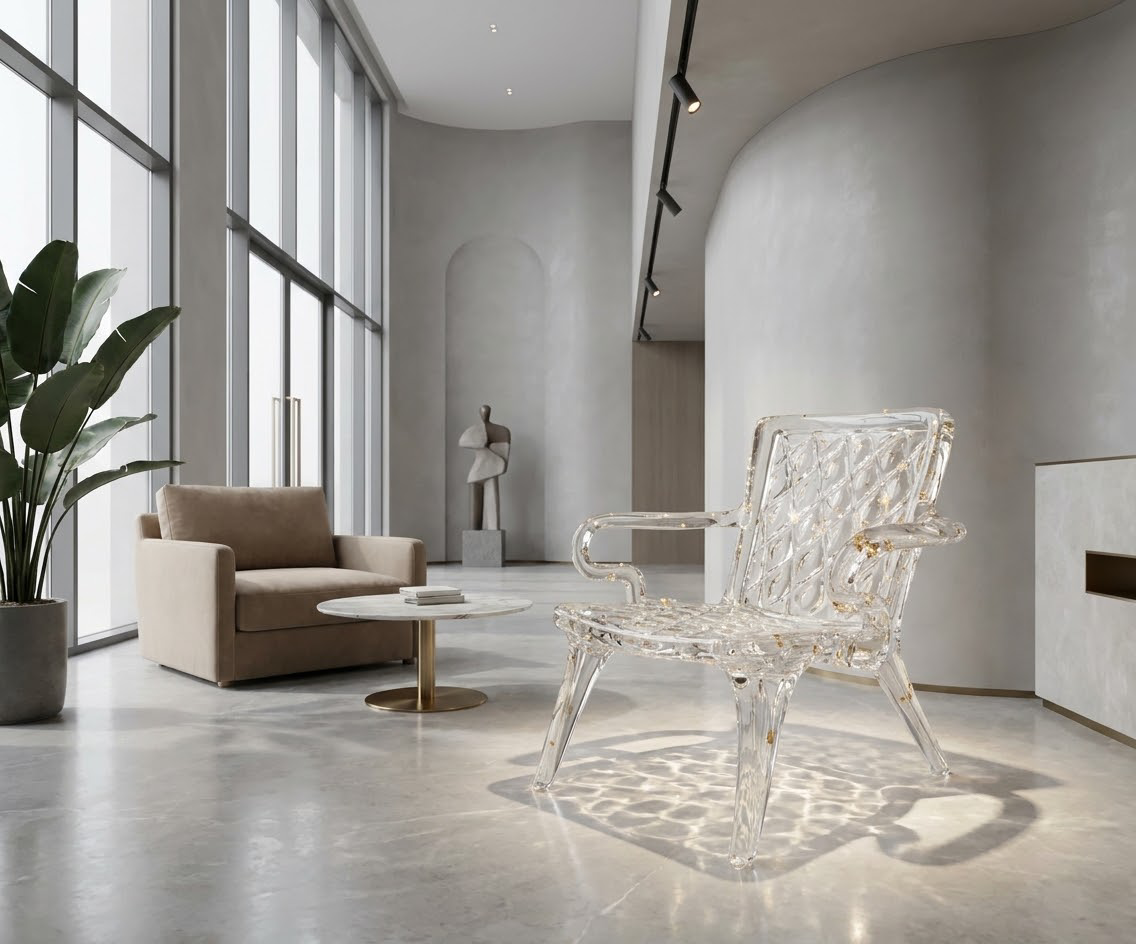
Premium artificial crystal furniture is manufactured using high-purity optical grade materials, which deliver superior clarity and structural integrity compared to standard acrylic or glass alternatives.
Clarity rating: 99.9% light transmission, eliminating the green tint common in lower-quality glass products.
High surface hardness: 7 Mohs hardness rating, making pieces resistant to scratches from daily use in busy hotel environments.
UV stability: Formulated to resist yellowing even after 10+ years of exposure to natural sunlight in lobby and atrium spaces.
In 2026 independent lab tests, high-purity optical grade materials showed 60% less surface wear after 5 years of simulated hotel use compared to standard crystal alternatives.
This makes the material a cost-effective long-term investment for luxury properties.
2.2 Material Certification and Quality Verification
Hotel procurement teams should require third-party material certifications to ensure consistency across large furniture orders.
ISO 14644 cleanroom manufacturing certification: Verifies production environments are free of dust particles that can cause internal crystal defects.
ASTM C1048 standard compliance: Confirms heat-treated crystal meets safety requirements for commercial hospitality use.
Sustainability certifications: Look for GREENGUARD Gold certification for low VOC emissions, critical for indoor air quality in guest rooms.
Many 2026 hotel projects prioritize recycled crystal feedstock, with up to 40% of raw material coming from post-industrial optical waste streams.
This aligns with growing luxury traveler demand for environmentally responsible hospitality brands.
3. Manufacturing Precision: Ensuring Consistent Quality Across Custom Orders
Even the most innovative design fails if manufacturing precision does not meet luxury hotel standards.
3.1 Advanced Cutting and Polishing Technologies
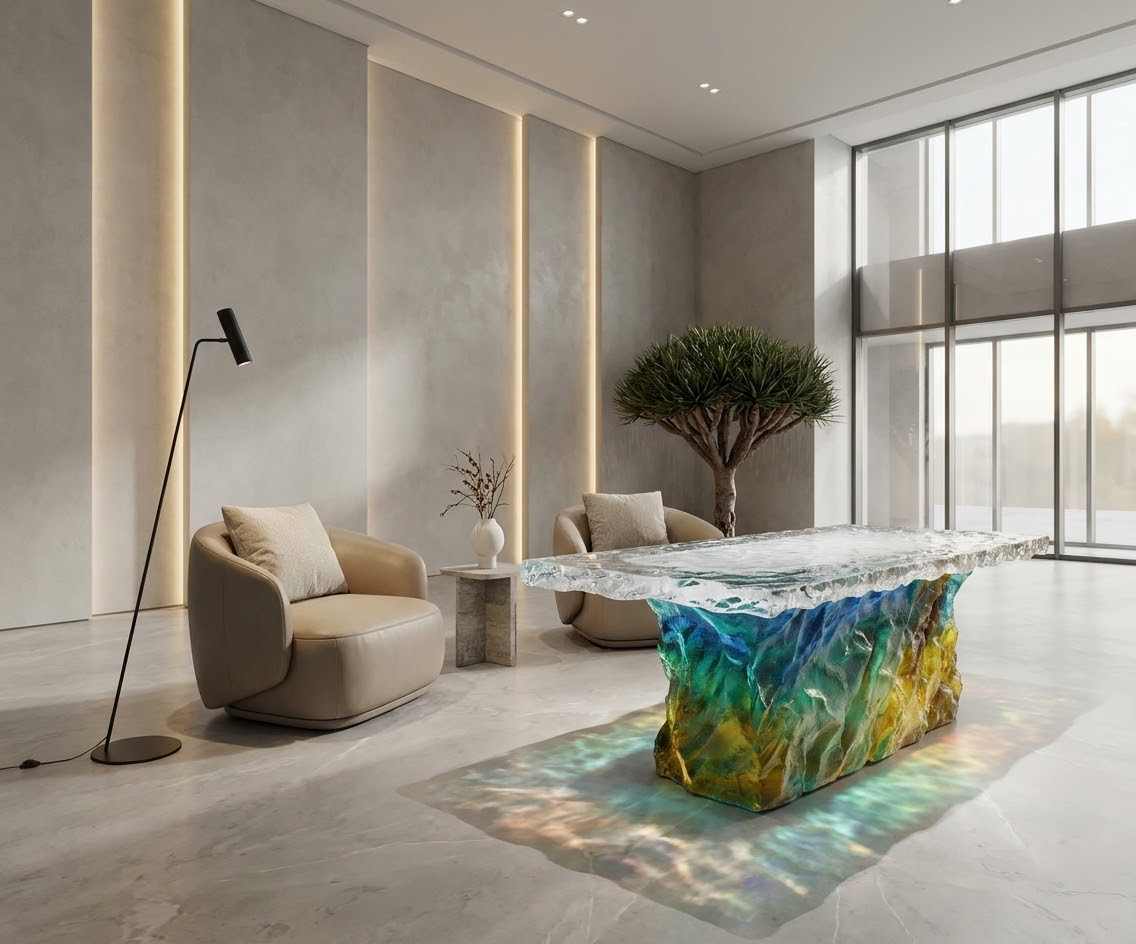
Modern CNC cutting and robotic polishing systems deliver micron-level accuracy for custom synthetic crystal furniture.
5-axis CNC cutting: Enables complex geometric shapes and seamless joint connections for large synthetic crystal tables.
Diamond slurry polishing: Creates a flawless, distortion-free surface that enhances the crystal’s natural light-refracting properties.
Laser edge finishing: Produces chip-resistant edges that maintain their appearance even in high-traffic hotel areas.
For large hotel orders requiring 50+ matching pieces, computerized cutting ensures every unit matches design specifications within ±0.1mm tolerance.
This level of precision is impossible to achieve with traditional hand-crafting methods alone.
3.2 Quality Control Protocols for Commercial Production
Rigorous multi-stage quality control prevents defective pieces from reaching hotel installation sites.
Raw material inspection: Each crystal slab is scanned for internal bubbles, striations, and color inconsistencies before cutting.
In-process checks: Dimensional verification after cutting, polishing, and assembly stages to catch errors early.
Final performance testing: Load testing for chairs (minimum 150kg capacity), scratch resistance testing, and light transmission verification.
In 2026, leading manufacturers use AI-powered visual inspection systems that detect 98% of surface defects, compared to 82% detected by human inspectors.
This reduces post-installation replacement rates for luxury hotel projects by up to 45%.
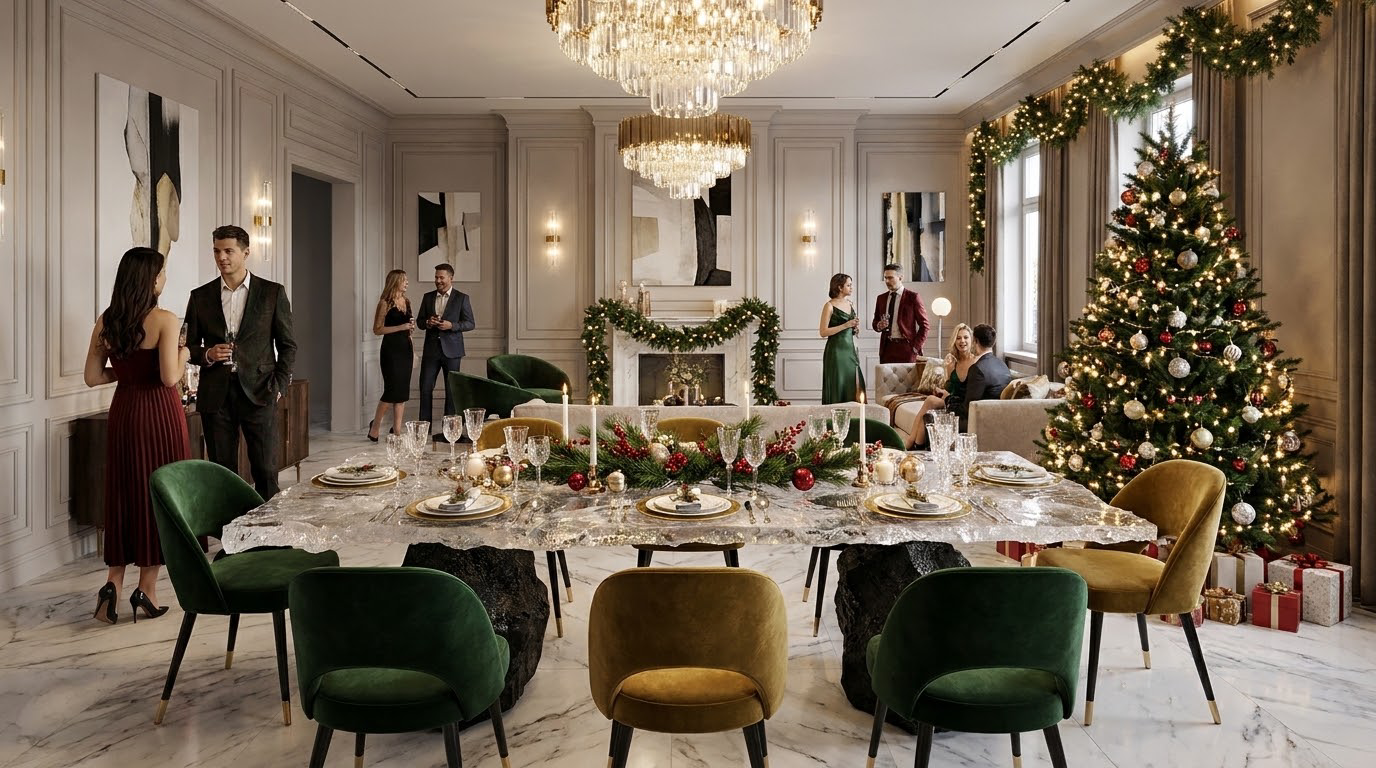
4. Long-Term Durability: Maintaining Quality in High-Traffic Hotel Environments
Luxury hotel furniture must withstand years of heavy use while retaining its premium appearance.
4.1 Durability Features for Hospitality Applications
Synthetic crystal furniture designed for hotel use includes specific features to extend its service life.
Reinforced base structures: Stainless steel or solid brass support frames for synthetic crystal tables to distribute weight evenly.
Protective surface coatings: Nano-coatings that repel water, oil, and fingerprints, reducing daily cleaning requirements.
Impact-resistant edges: Slightly beveled edge designs that minimize chipping risk from luggage carts and cleaning equipment.
The high surface hardness of premium crystal means it maintains its polished appearance 3x longer than high-end acrylic furniture alternatives.
This reduces long-term refurbishment costs for hotel operators.
4.2 Maintenance and Restoration Guidelines
Proper maintenance protocols help preserve crystal furniture’s appearance for 15+ years in commercial settings.
Daily cleaning: Use microfiber cloths and pH-neutral cleaning solutions to avoid surface damage.
Annual professional inspection: Technicians check for loose fittings, minor scratches, and structural integrity.
Restoration services: Professional polishing can remove light surface scratches and restore original clarity without full replacement.
For hotels in coastal locations, anti-corrosion treatments for metal hardware are critical to prevent damage from salt air exposure.
Many 2026 furniture contracts include 10-year limited warranties covering structural defects and material degradation.
5. 2026 Market Trends and Project ROI Considerations
Understanding current market trends helps hotel brands make furniture investments that deliver long-term competitive value.
5.1 Emerging Design and Technology Trends
Three key trends are shaping the 2026 luxury hotel furniture market:
Smart integration: Crystal tables with embedded wireless charging pads and hidden LED accent lighting.
Biophilic design fusion: Crystal pieces paired with natural stone and wood elements to create balanced, calming spaces.
Modular customization: Interchangeable crystal components that allow hotels to refresh lobby designs without full furniture replacement.
Interior designers are increasingly using synthetic crystal furniture as a focal point for Instagram-worthy hotel moments.
In 2026 social media data, hotel lobbies with custom crystal installations see 2.3x more user-generated content shares than traditional luxury lobbies.
5.2 ROI Analysis for Luxury Hotel Investments
While synthetic crystal furniture has higher upfront costs than traditional wood or metal options, it delivers strong long-term ROI.
Longer service life: 15-20 year lifespan vs. 7-10 years for standard hotel furniture.
Brand differentiation: Unique crystal designs help hotels command 12-18% higher average daily rates (ADR) according to 2026 hospitality industry data.
Lower replacement costs: Durable materials reduce annual FF&E replacement budgets by up to 35%.
For boutique luxury hotels, investing in signature crystal pieces can also increase property valuation by enhancing brand equity.
Many 2026 hotel development projects allocate 8-12% of their total FF&E budget to custom crystal feature pieces.
In conclusion, successful synthetic crystal furniture customization for luxury hotels requires careful alignment of design vision, material quality, manufacturing precision, and long-term durability planning.
By prioritizing high-purity optical grade materials, partnering with experienced manufacturers, and following structured quality control processes, interior designers and hotel operators can create stunning pieces that elevate guest experiences while delivering strong return on investment.
As the 2026 hospitality market continues to evolve, custom crystal furniture will remain a key differentiator for brands seeking to stand out in the luxury segment.
READ MORE:
- How to Reduce Customization Risks for High-End Synthetic Crystal Furniture Projects: Full Solutions from Design to Delivery
- How Synthetic Crystal Furniture Brands Build Reliable Delivery Systems for Large Hotel & Commercial Projects
- How Architects Transform Creative Visions Into Manufacturable Synthetic Crystal Furniture: Key Challenges in Structural Design and Material Processing
- Synthetic Crystal Furniture: How to Balance Aesthetics, Function and Project Efficiency in Interior Design
- How Can Design Trends Translate into Commercial Value? Creating a Competitive Edge Through Luxury Furniture
- From Hotel Lobbies to Private Clubs: How to Select Statement Furniture for Different Spaces
- Why Is Structural Design Just as Important in Furniture? The Stability and Functional Logic Behind Aesthetics
- Where Traditional Materials Meet Modern Design: How Can Transparent Furniture Redefine Classic Interiors?
- How Does Furniture Shape Spatial Perception? Design Innovation from Visual Experience to Spatial Function


