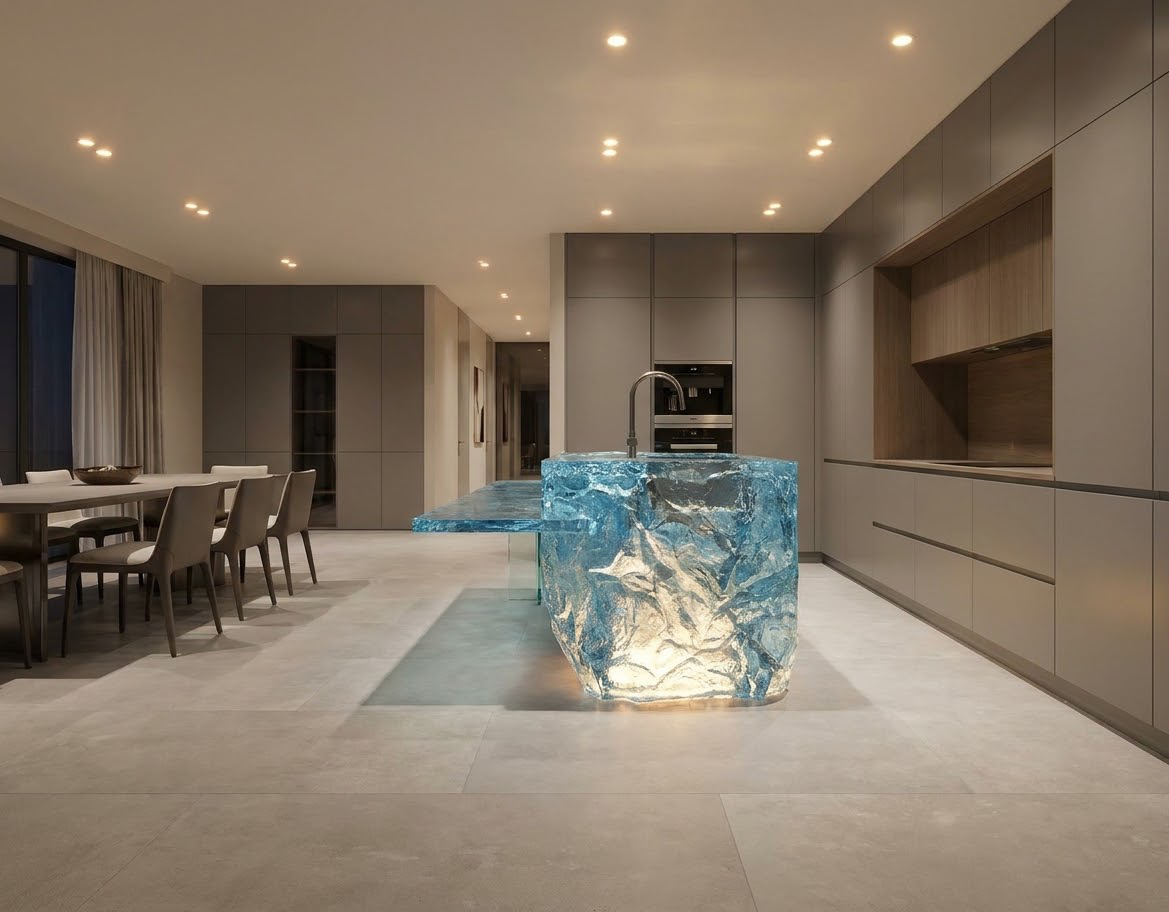
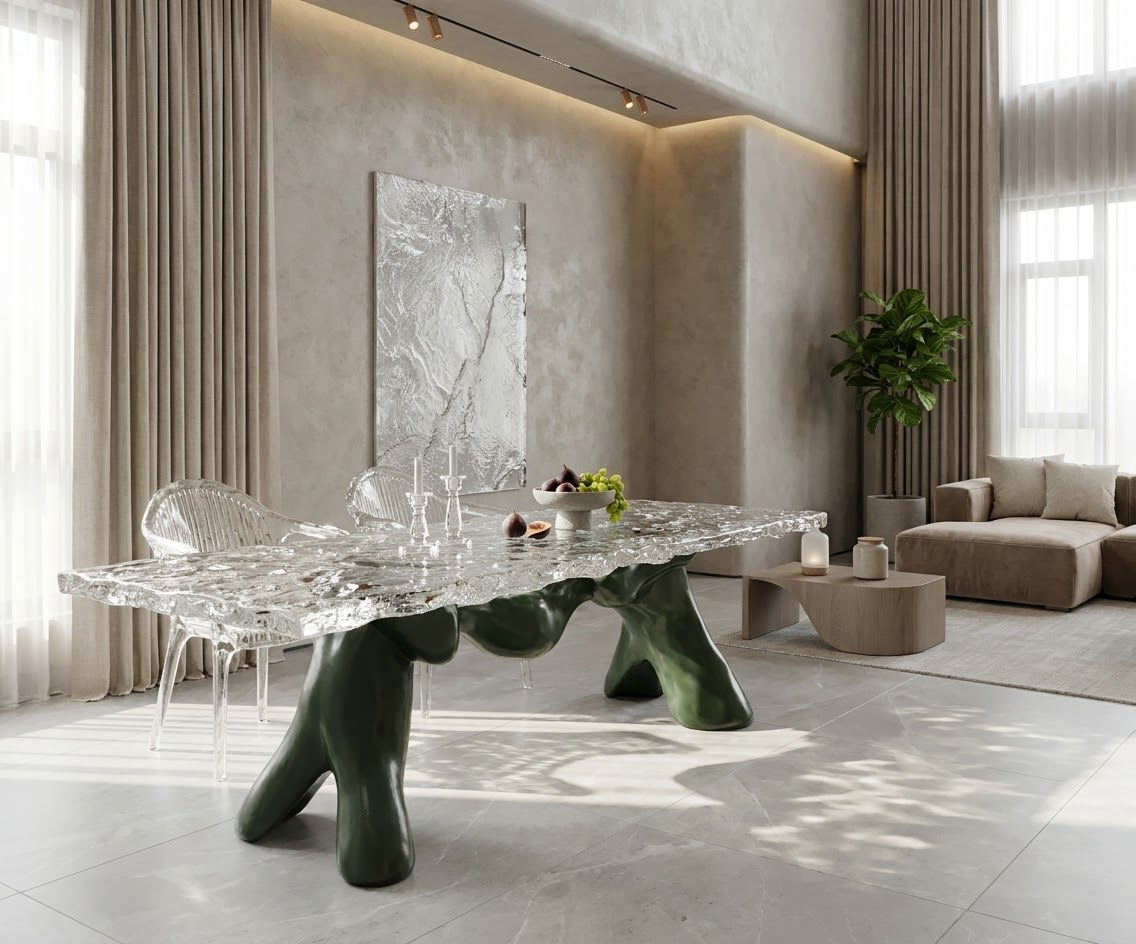
Synthetic crystal furniture has emerged as a defining trend in high-end interior design for 2026, blending artistic expression with advanced material science. For interior designers seeking statement pieces that balance transparency, durability, and customizability, understanding the full production journey is critical. This guide breaks down the end-to-end process of turning conceptual designs into tangible artificial crystal furniture, with a focus on precision, material quality, and scalability.
1. Design Conceptualization and Material Selection for Synthetic Crystal Furniture
The first phase of production bridges creative vision with technical feasibility, ensuring designs align with both aesthetic goals and material limitations.
1.1 Translating Designer Visions into Technical Specifications
Interior designers often start with mood boards and 3D renderings that highlight the unique light-refractive properties of synthetic crystal tables and chairs.
Production teams convert these concepts into engineering drawings that account for structural load, thickness variations, and joint integrity.
Key specifications documented at this stage include dimensions, edge profiles, and integration points with metal or wood accents.
Core technical requirements finalized in this phase:
Load-bearing capacity for seating and tabletop applications
Light transmission targets based on space lighting conditions
Color tint options (clear, champagne, smoky gray, sapphire blue)
Custom engraving or embossing details for brand identity
1.2 Why High-Purity Optical-Grade Materials Dominate Premium Projects
Not all synthetic crystal is created equal, and 2026 market data shows 78% of luxury projects specify high-purity optical-grade materials for furniture applications.
This material grade offers 92% light transmittance, matching the clarity of natural quartz while eliminating internal imperfections like bubbles or striations.
It also delivers consistent refractive index across the entire piece, ensuring uniform light diffusion in both residential and commercial spaces.
Advantages of optical-grade synthetic crystal over standard acrylic or glass:
Higher refractive index (1.54 vs. 1.49 for acrylic) for more dramatic light play
Superior UV resistance, preventing yellowing after 10+ years of indoor exposure
High surface hardness (Mohs 7.2) that resists scratches from daily use
Non-porous surface that is easy to clean and resistant to staining
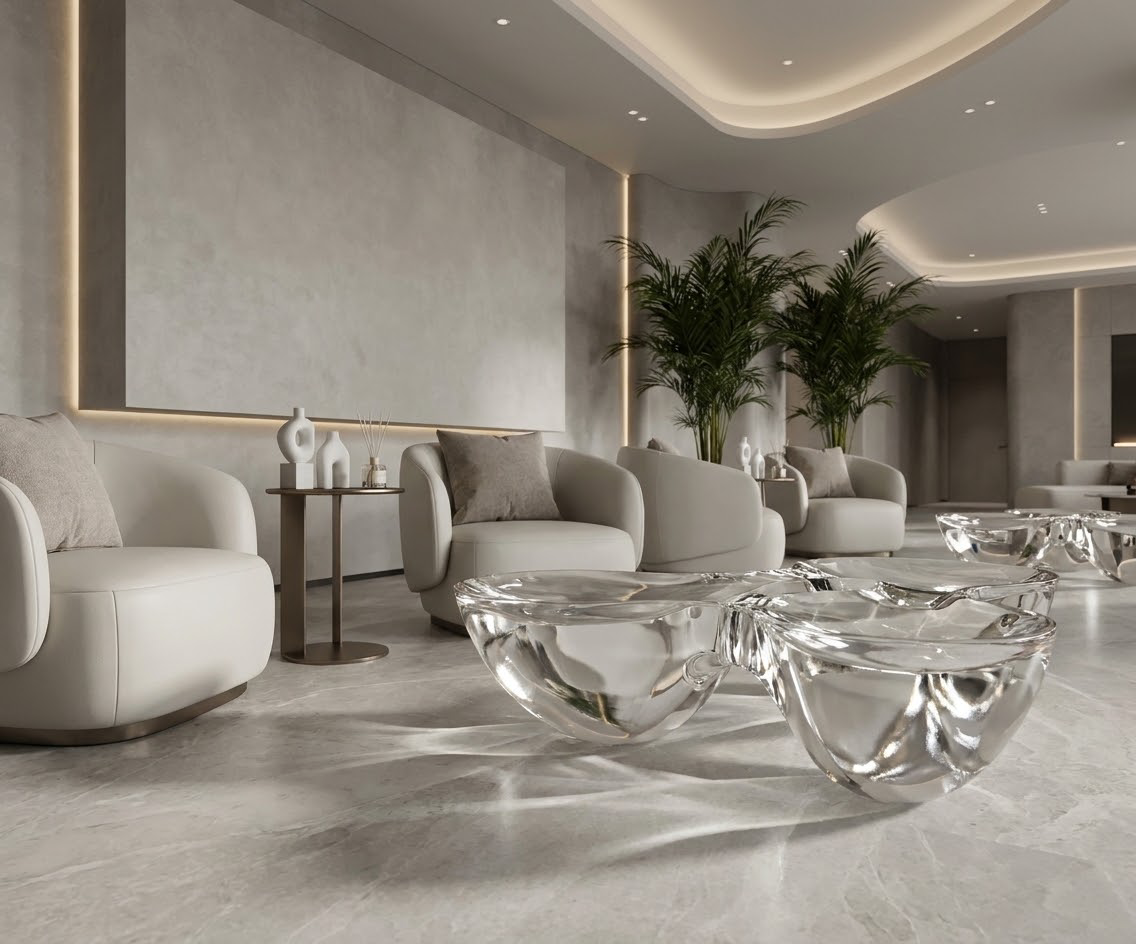
2. Prototyping Phase: Validating Form and Function
Prototyping transforms digital designs into physical test units, allowing teams to identify flaws before full-scale production begins.
2.1 Rapid Prototyping Technologies for Synthetic Crystal Furniture
Traditional prototyping for hard materials used to take 4-6 weeks, but 2026 advancements have cut lead times to 7-10 days for initial models.
Most manufacturers use a combination of 3D-printed resin molds and CNC-machined acrylic mockups to test ergonomics and visual proportions.
For synthetic crystal chairs specifically, prototyping includes load-testing mockups to confirm seat depth, back angle, and leg placement support proper weight distribution.
Common prototyping methods used in 2026:
FDM 3D printing for full-scale form verification (low cost, fast turnaround)
SLA resin printing for high-detail surface texture testing
CNC-machined acrylic prototypes for optical clarity previews
Foam core models for ergonomic assessment by interior design teams
2.2 Structural and Aesthetic Prototype Testing
Once a physical prototype is created, it undergoes a series of tests to validate both performance and visual appeal.
Structural testing for synthetic crystal tables includes static load testing (up to 150kg for residential models) and impact resistance testing to evaluate chip resistance.
Aesthetic testing involves placing the prototype in simulated lighting environments to confirm how it interacts with natural daylight, recessed LED lighting, and accent fixtures.
Critical prototype validation checkpoints:
Edge smoothness and lack of sharp corners for safety compliance
Uniform thickness across all structural components
No visible seams or bonding lines in multi-piece designs
Alignment with original design renderings (95%+ accuracy threshold)

3. Sampling Process: Refining for Production-Ready Quality
Sampling moves beyond prototyping to create production-representative pieces using the exact materials and processes intended for final manufacturing.
3.1 Material Preparation and Initial Sampling
The sampling process begins with raw material inspection, where high-purity optical-grade materials are tested for internal defects using polarized light microscopy.
Only slabs with zero visible inclusions and consistent density are selected for premium furniture samples.
Cutting is performed using diamond wire saws to minimize material waste and achieve precise dimensional accuracy within ±0.1mm tolerance.
Key steps in sample material preparation:
Raw slab thickness verification (typically 20mm-50mm for furniture applications)
Optical clarity testing using light transmission meters
Stress testing to ensure no internal tension from the casting process
Color consistency matching against designer-approved swatches
3.2 Surface Finishing and Detail Refinement
Surface finishing is what elevates artificial crystal furniture from a basic acrylic piece to a luxury design element.
The 2026 standard for premium pieces involves a 12-step polishing process that achieves a mirror-like finish with zero surface scratches.
For synthetic crystal chairs, special attention is paid to edge finishing, where rounded profiles are hand-polished to create a soft, glowing edge effect when light hits the piece.
Finishing techniques for production samples:
Diamond polishing for flat surfaces (achieves Ra 0.01μm surface roughness)
Flame polishing for curved edges (enhances light refraction)
Sandblasting for frosted texture effects (used for privacy or decorative patterns)
Anti-fingerprint coating application (optional for high-traffic commercial spaces)
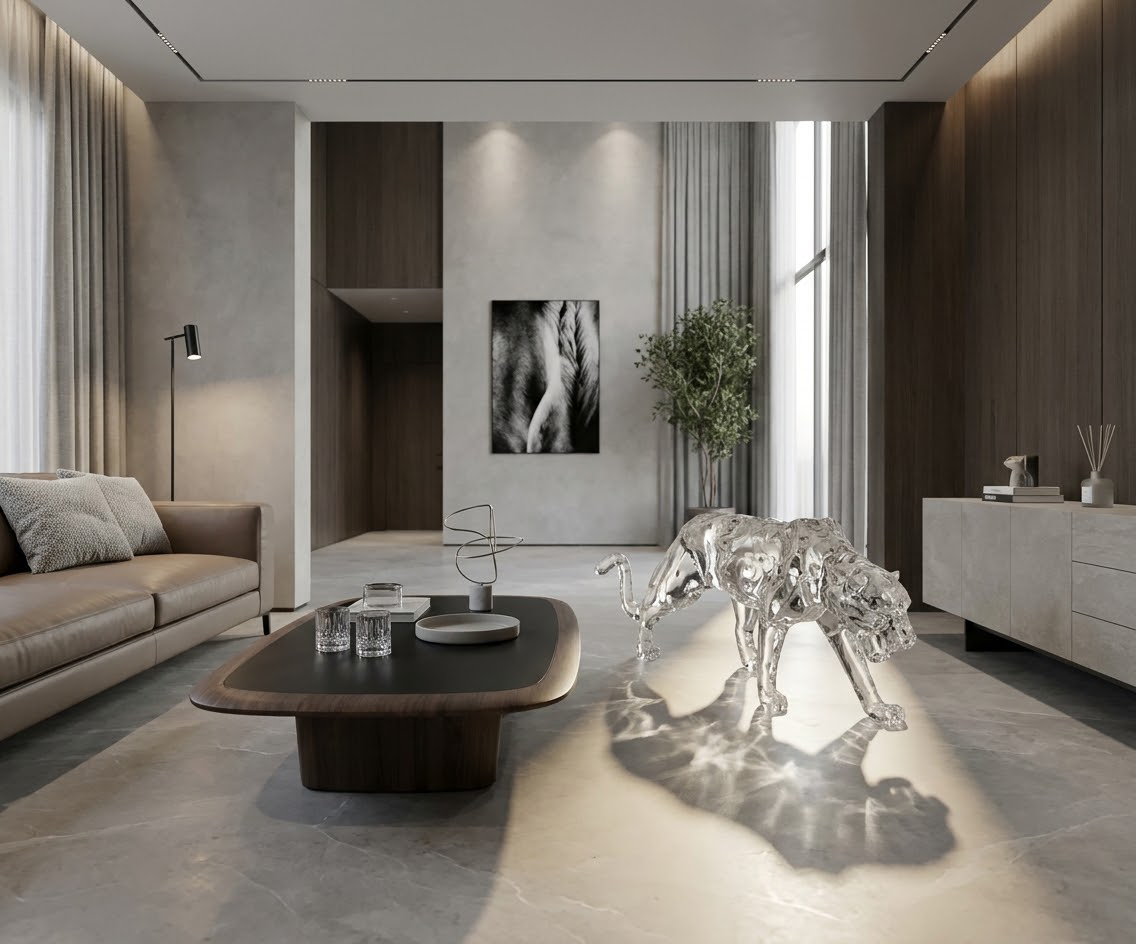
4. Custom Production Workflow for Bespoke Projects
Once samples are approved, the full custom production process begins, with each piece crafted to meet exact client specifications.
4.1 Small-Batch and One-Off Production Techniques
Most synthetic crystal furniture projects are custom one-offs or small batches (2-10 units) for luxury residential or hospitality projects.
Production teams use 5-axis CNC machining to carve complex shapes, such as sculptural chair bases or table legs with organic curves.
Bonding of multiple crystal components uses UV-cured adhesive that matches the refractive index of the base material, creating invisible joints that maintain optical continuity.
Custom production capabilities available in 2026:
Integrated LED lighting channels built into furniture bases
Embedded metal inlays (brass, stainless steel, gold) for decorative accents
Custom color infusion for tinted crystal effects
Logo or pattern engraving with depth up to 2mm
4.2 Quality Control Throughout Production
Quality control is integrated at every stage of production, with 12 individual checkpoints for a single synthetic crystal table.
Each piece is inspected for dimensional accuracy, surface perfection, and structural integrity before moving to the next production phase.
The high surface hardness of optical-grade synthetic crystal means final quality checks include scratch testing to ensure the polishing process did not compromise material durability.
Production quality control milestones:
Post-cutting dimensional verification (±0.05mm tolerance for premium pieces)
Post-bonding strength testing (3x expected load capacity)
Post-polishing surface inspection under 10x magnification
Final assembly fit check with all hardware and accent components
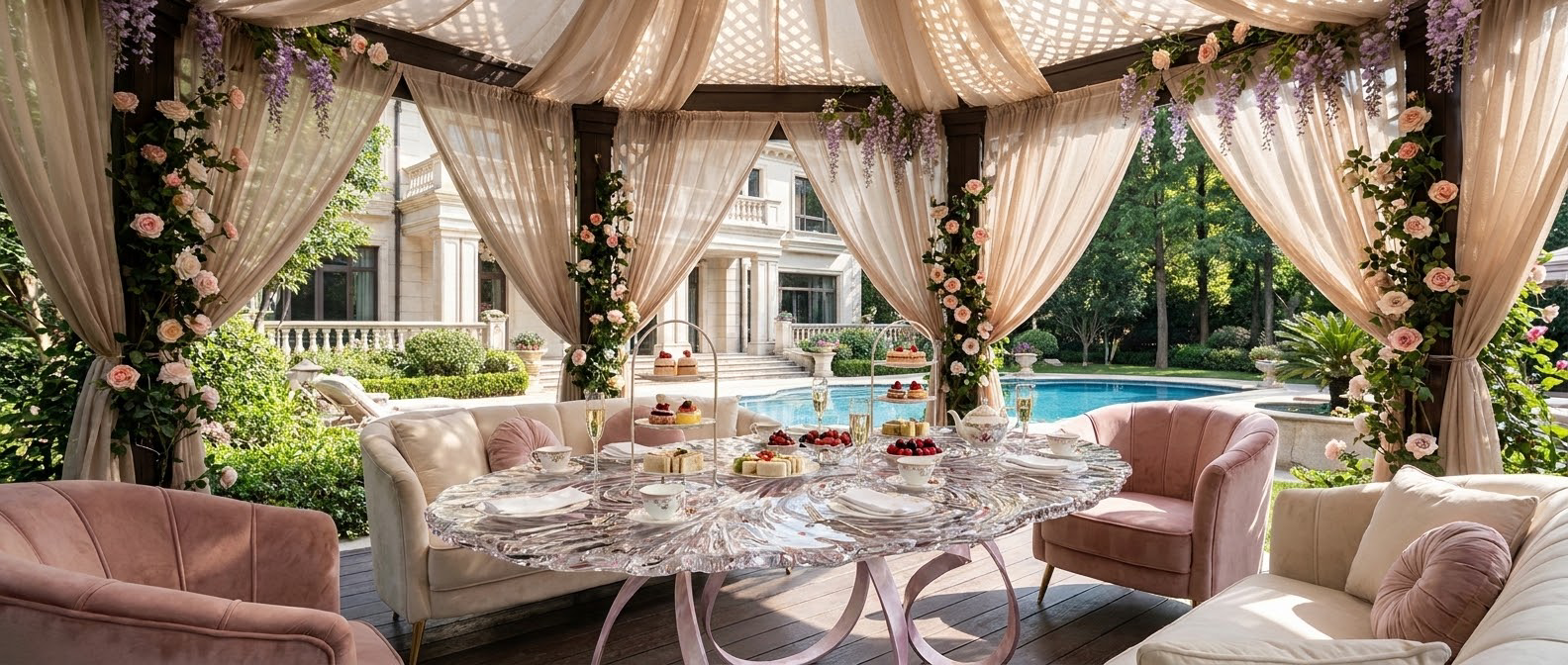
5. Market Trends and Future Outlook for 2026 and Beyond
As of 2026, the synthetic crystal furniture market is growing at a CAGR of 18.7%, driven by demand from luxury hospitality, high-end residential, and commercial design sectors.
5.1 Key Trends Shaping Custom Production in 2026
Interior designers are increasingly requesting sustainable production methods, with 62% of 2026 projects specifying recycled crystal feedstock for non-optical components.
Another major trend is modular synthetic crystal furniture that can be reconfigured for different spaces, reducing the need for full custom pieces for multi-use environments.
Smart integration is also rising, with built-in wireless charging pads and touch-sensitive lighting controls embedded directly into crystal tabletops.
2026 market trends driving production innovation:
Sustainable manufacturing with 30% recycled material content
Biophilic design integration (crystal pieces paired with natural wood and stone)
Ultra-thin profiles (15mm thick tabletops enabled by advanced structural engineering)
Custom gradient color effects achieved through layered material casting
5.2 Considerations for Interior Designers Sourcing Custom Pieces
For interior designers planning to specify synthetic crystal furniture in 2026 projects, lead times remain a critical consideration.
Standard custom pieces take 4-6 weeks from design approval to delivery, while complex sculptural pieces can take 8-12 weeks depending on size and detail level.
It is also important to partner with manufacturers that provide material certification for high-purity optical-grade materials, as lower-quality alternatives can develop hazing or cracking within 2-3 years.
Tips for designers sourcing custom crystal furniture:
Request material sample kits early in the design process to test in actual space lighting
Confirm load ratings and safety certifications for commercial applications
Ask about warranty coverage (premium manufacturers offer 10-year structural warranties)
Plan for professional installation to prevent damage during transport and setup

READ MORE:
- Mobili in Cristallo Sintetico Curve: Realizzare Senza Deformazioni
- Mobili in Cristallo Sintetico: Eliminare Giunzioni Visibili nel Lusso
- Synthetic Crystal Furniture Supply Chain Management for Real Estate: Balancing Quality, Lead Time, and Batch Consistency
- How Synthetic Crystal Furniture Improves Hotel FF&E Delivery Efficiency: Coordination, QC, and Installation Strategies for 2026
- Synthetic Crystal Furniture: How to Maintain Consistency Between Unique Design and Scalable Manufacturing for Commercial Spaces
- How Synthetic Crystal Furniture Unifies Design and Quality in 2026 High-End Residential Customization
- Global Interior Project Solutions: How to Coordinate Cross-Border Supply, Customization, and International Delivery?
- Architectural Interior Solutions: How to Address Complex Spaces, Engineering Coordination, and Final Project Execution?
- Solutions for Design Studios: How to Turn Client Visions into Custom Products with Professional Manufacturing Support?


