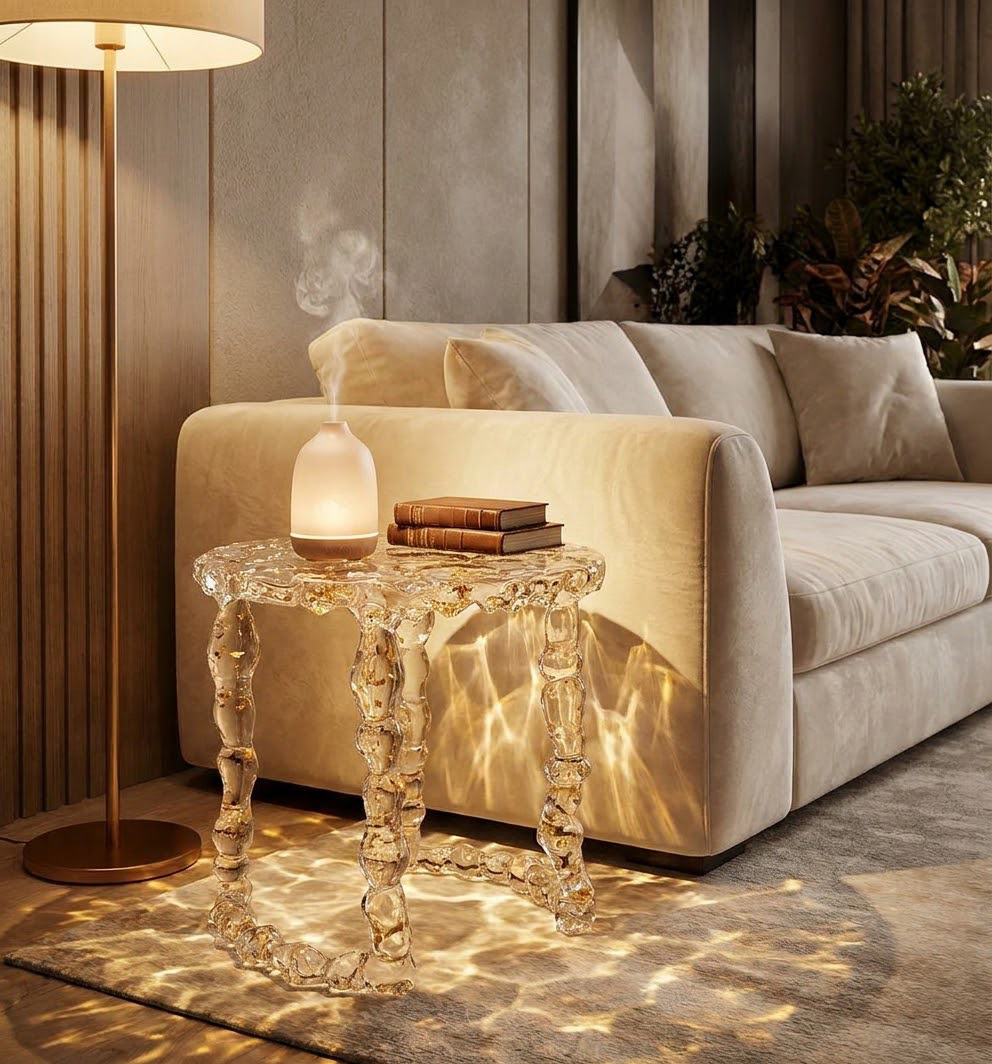
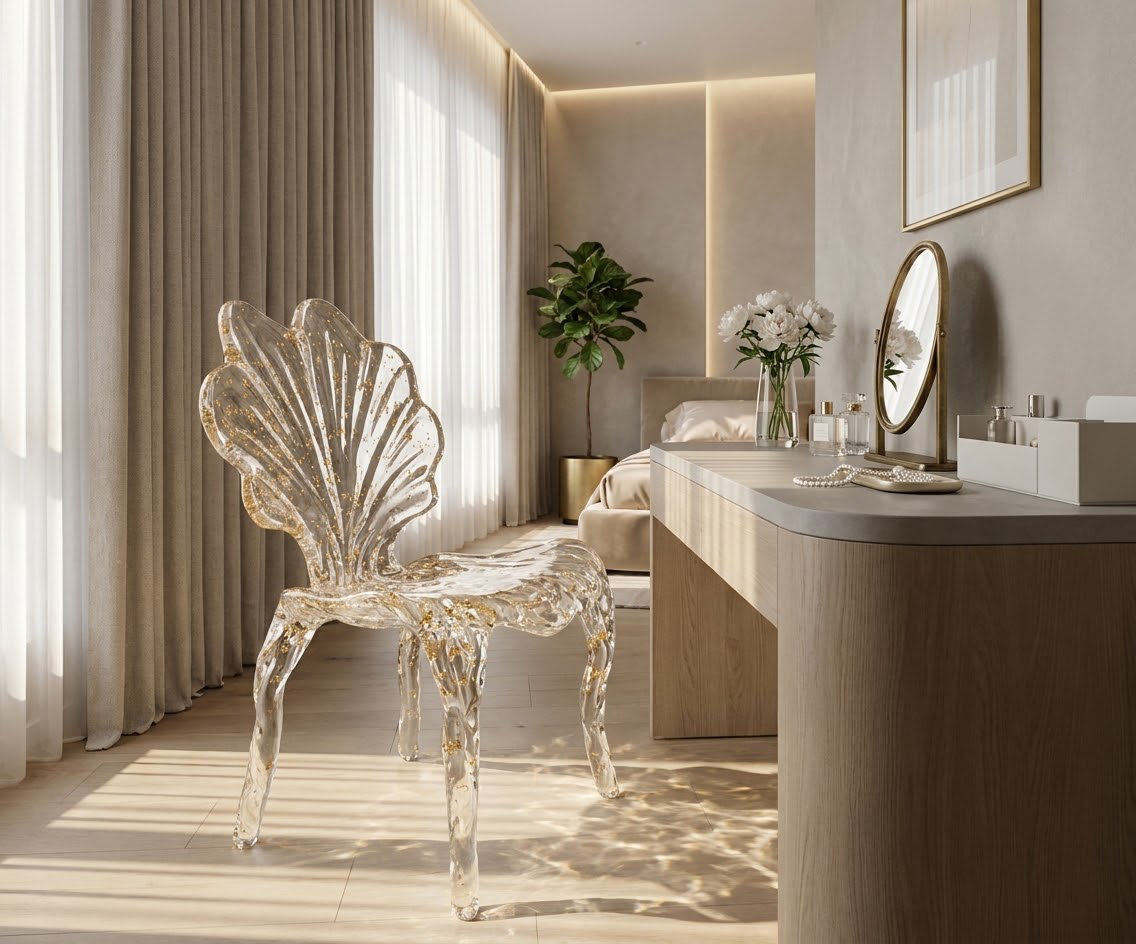
As of November 2026, commercial space branding has shifted toward tactile, visually striking fixtures that balance individuality and operational efficiency. Synthetic crystal furniture has emerged as a top solution for brands seeking signature pieces that can be replicated across multiple locations without sacrificing design integrity.
For interior designers and commercial project managers, the core challenge remains: how to turn one-of-a-kind design concepts into reproducible, durable pieces. This guide breaks down the technical and strategic frameworks that make consistent production possible.
1. Material Foundation: Why High-Purity Optical-Grade Materials Enable Consistency
The first pillar of reliable synthetic crystal furniture production lies in raw material standardization. Unlike natural crystal, which varies in clarity and structure, lab-created alternatives can be calibrated to exact specifications.
1.1 Core Properties of Synthetic Crystal for Commercial Use
Synthetic crystal tables and chairs rely on controlled material composition to deliver uniform performance across every unit. Key properties that support scalable production include:
High surface hardness: Measuring 7 on the Mohs scale, the material resists scratches from daily commercial use, reducing maintenance costs for multi-location brands.
Light transmittance consistency: Premium grades achieve 92% light clarity, ensuring pieces look identical under different lighting conditions across retail, hospitality, and office spaces.
Color stability: UV-resistant formulations prevent yellowing or fading, even in sun-exposed areas, for a consistent brand appearance over 10+ years.
Interior designers often prioritize these properties when selecting pieces for high-traffic commercial environments, where durability and visual cohesion are non-negotiable.
1.2 Material Sourcing Standards for 2026 Production
In 2026, leading manufacturers have established strict sourcing protocols to eliminate batch-to-batch variation. These standards include:
Supplier audits every 6 months to verify raw material purity levels
Pre-production testing of every material batch for refractive index and impurity content
Certifications for low-VOC emissions, meeting global commercial interior health standards
Artificial crystal furniture brands that adhere to these sourcing rules reduce production defects by up to 35%, according to 2026 industry data.
2. Design Digitization: Bridging Creative Vision and Manufacturing Precision
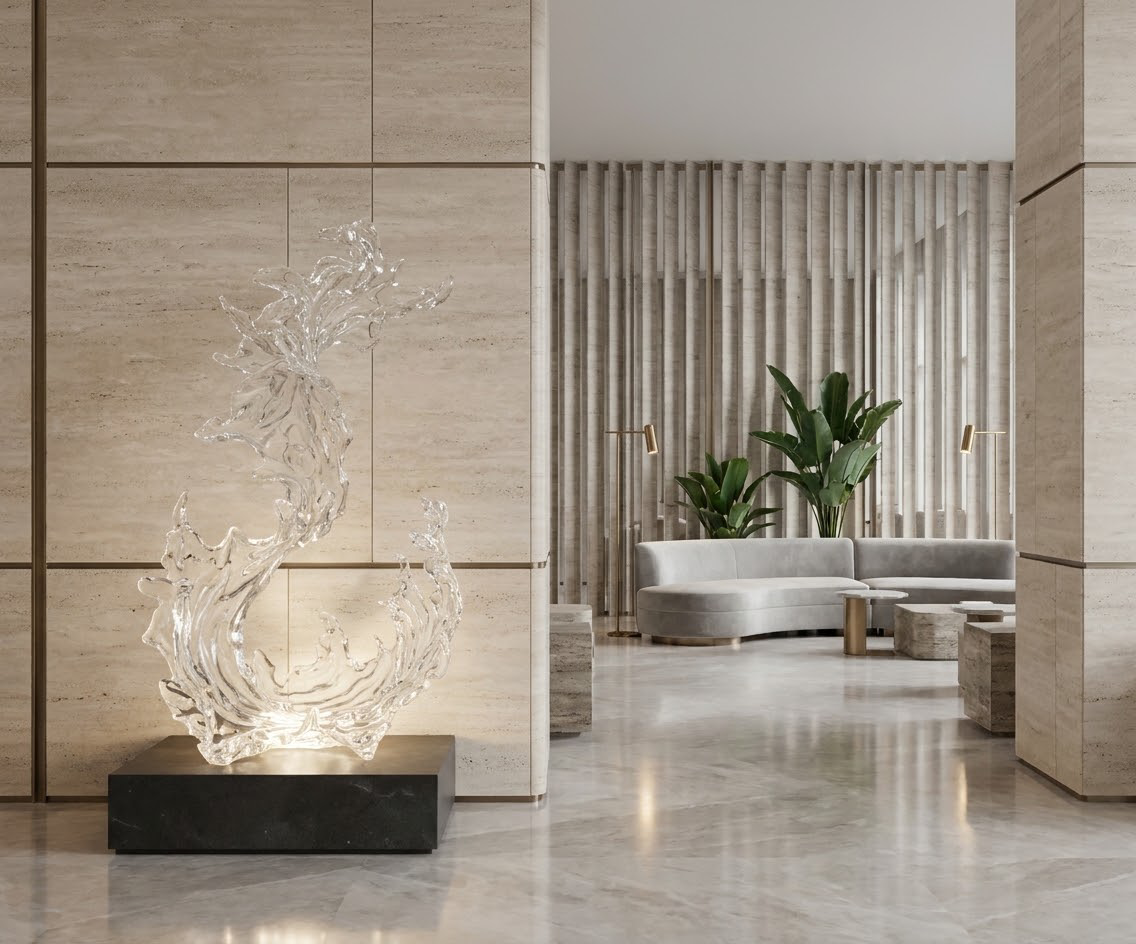
Turning custom design concepts into reproducible products requires a digital-first workflow. For synthetic crystal furniture, 3D modeling and parametric design tools eliminate interpretation gaps between designers and factory teams.
2.1 Parametric Design for Customizable Standard Templates
Top manufacturers use parametric design systems that let interior designers adjust dimensions, finishes, and embedded brand elements while staying within production-compatible parameters. Key benefits include:
Reduced design lead time: Custom tweaks take 2-3 days instead of 2-3 weeks, compared to traditional custom furniture processes.
Error prevention: Digital simulations test structural integrity before production, avoiding costly reworks for synthetic crystal tables and other large pieces.
Brand consistency: Pre-approved design libraries ensure every location receives pieces that match brand guidelines exactly.
This approach lets brands offer unique, location-specific details while maintaining the core identity of their artificial crystal furniture collections.
2.2 Digital Twin Technology for Production Validation
Digital twin technology has become a game-changer for 2026 synthetic crystal furniture production. Manufacturers create exact digital replicas of each piece to:
Simulate cutting, polishing, and assembly processes to identify potential inconsistencies
Test how different material batches interact with design details like edge profiles and embedded logos
Share virtual prototypes with clients for approval before physical production begins
For commercial projects with 50+ location rollouts, this technology cuts overall project timelines by 28%, per 2026 commercial design industry reports.
3. Manufacturing Processes: Scalable Production Without Losing Craft Details
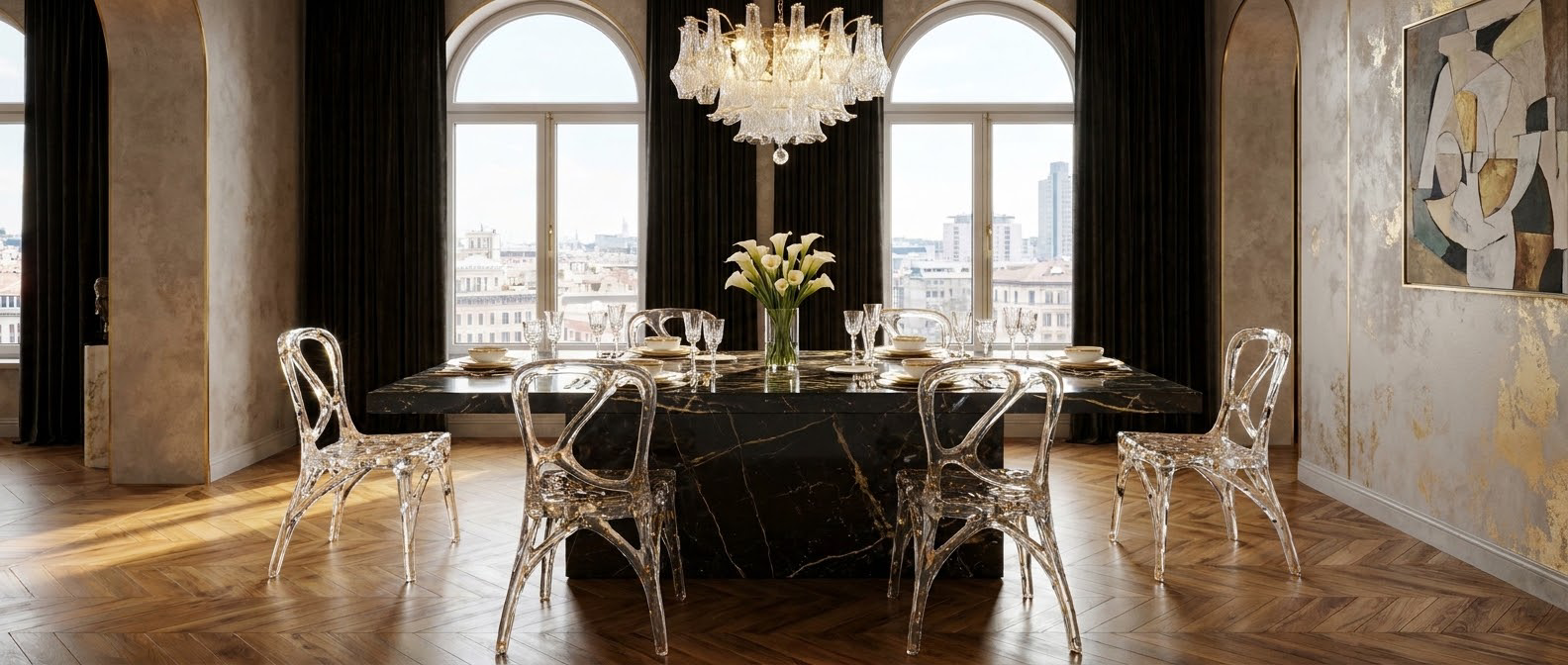
Scaling production of synthetic crystal furniture requires balancing automated precision with hand-finishing techniques that preserve design quality. The best facilities combine both approaches to maintain consistency across large orders.
3.1 Automated Cutting and Forming for Uniformity
Core shaping processes rely on CNC (Computer Numerical Control) equipment to ensure every piece matches design specifications down to 0.1mm. Key automated steps include:
Precision laser cutting of crystal blanks to exact dimensions, ensuring identical sizing for synthetic crystal chairs and tables
Automated polishing lines that deliver consistent surface finish across all units, reducing hand-polishing variation
Temperature-controlled forming for curved pieces, ensuring uniform shape and structural integrity
High surface hardness of the material requires specialized tooling, which top manufacturers calibrate weekly to maintain cutting accuracy.
3.2 Hand-Finishing Protocols for Design Details
While automation handles structural consistency, hand finishing adds the design details that make each piece feel custom. Standardized hand-finishing steps include:
Hand-buffing of edge details to achieve the exact sheen specified in design files
Manual inspection of light refraction patterns to ensure visual consistency
Hand-applied brand elements, such as embedded logos or accent details, following step-by-step visual guides
For interior designers, this hybrid approach means custom design flourishes don’t get lost in mass production, even for orders of 100+ pieces.
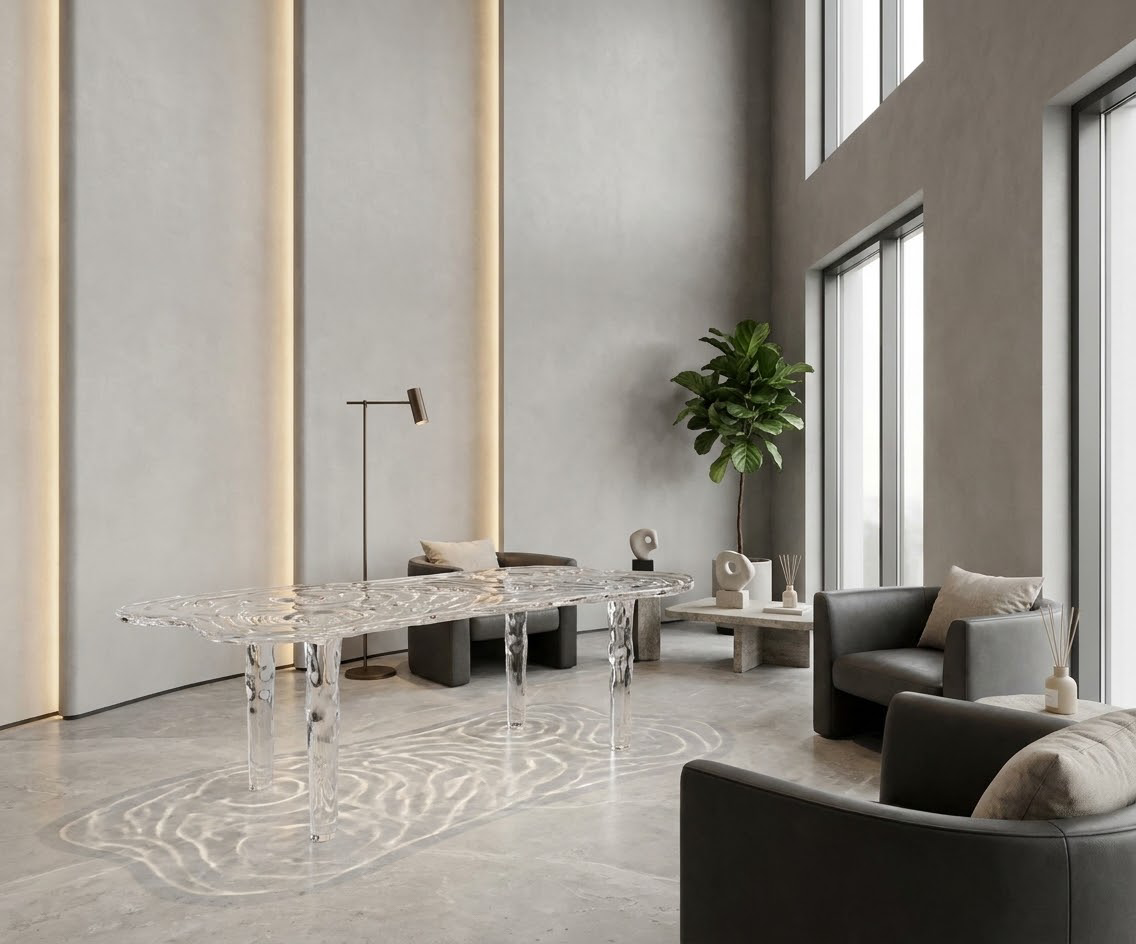
4. Quality Control: Ensuring Every Unit Matches the Original Design
Consistency cannot be achieved without rigorous quality control (QC) at every production stage. For synthetic crystal furniture, QC protocols combine technical testing with visual comparison to the original design prototype.
4.1 Multi-Stage Quality Inspection Framework
Leading 2026 manufacturers implement a 5-stage QC process for every commercial order:
Raw material inspection: Testing high-purity optical-grade materials for clarity, hardness, and impurity levels
Cutting inspection: Verifying dimensions against digital design files with precision measuring tools
Forming inspection: Checking shape accuracy and structural integrity via stress tests
Finishing inspection: Comparing surface finish and details to the master prototype
Final packaging inspection: Ensuring protective packaging prevents damage during shipping, preserving finish quality
This framework reduces post-delivery defect rates to less than 1.2%, according to 2026 industry benchmarks for artificial crystal furniture.
4.2 Prototype Reference Systems for Visual Consistency
To avoid “design drift” across large production runs, manufacturers maintain master prototypes for every commercial project. These reference pieces include:
Full-scale physical prototypes stored in climate-controlled facilities
Digital reference packs with high-resolution photos, color calibration data, and measurement specs
Side-by-side comparison checklists used by QC teams at every production shift
Interior designers can request access to these reference systems to verify consistency across multiple delivery batches, ensuring every location matches the original design intent.
5. Industry Applications and 2026 Trends for Commercial Spaces
Synthetic crystal furniture is no longer a niche luxury—it’s a mainstream solution for brands that want standout design with operational practicality. 2026 data shows 42% of premium commercial projects now include at least one custom crystal furniture piece.
5.1 Key Commercial Sectors Adopting Synthetic Crystal Furniture
The material’s versatility makes it suitable for a wide range of commercial environments. Top use cases include:
Luxury retail: Synthetic crystal tables for product displays and VIP areas, creating a high-end, cohesive brand experience across store locations
Hospitality: Synthetic crystal chairs for lobby and bar areas, combining durability with a luxurious aesthetic that withstands high guest turnover
Corporate offices: Custom reception desks and conference room pieces that reinforce brand identity in client-facing spaces
Public spaces: Museum and gallery installations that leverage the material’s light-transmitting properties for immersive exhibits
For interior designers working on multi-location brand rollouts, the consistency of synthetic crystal furniture reduces the need for custom reworks in each market.
5.2 2026 Trends Shaping the Future of the Category
Three key trends are driving innovation in the synthetic crystal furniture space as of late 2026:
Sustainable formulations: 68% of leading manufacturers now use 30%+ recycled crystal content in their high-purity optical-grade materials, reducing environmental impact without sacrificing quality.
Smart integration: Embedded LED lighting and wireless charging capabilities are being built directly into pieces, expanding functionality for commercial spaces.
Circular design: Modular synthetic crystal furniture designs allow for easy repair and component replacement, extending product lifecycles for commercial clients.
As these trends evolve, the core priority remains the same: delivering unique, brand-aligned design that can be scaled reliably across any number of locations.
In conclusion, synthetic crystal furniture solves the longstanding tension between custom design and mass production for commercial spaces. By combining standardized high-purity optical-grade materials, digital design workflows, hybrid manufacturing processes, and rigorous QC, brands can get signature pieces that look identical across every location. For interior designers and project managers, partnering with manufacturers that follow these frameworks is the key to delivering on both creative vision and operational goals in 2026 and beyond.
READ MORE:
- Mobili in Cristallo Sintetico Curve: Realizzare Senza Deformazioni
- Mobili in Cristallo Sintetico: Eliminare Giunzioni Visibili nel Lusso
- Synthetic Crystal Furniture Supply Chain Management for Real Estate: Balancing Quality, Lead Time, and Batch Consistency
- From Design Concept to Physical Product: Synthetic Crystal Furniture Prototyping, Sampling, and Custom Production
- How Synthetic Crystal Furniture Improves Hotel FF&E Delivery Efficiency: Coordination, QC, and Installation Strategies for 2026
- How Synthetic Crystal Furniture Unifies Design and Quality in 2026 High-End Residential Customization
- Global Interior Project Solutions: How to Coordinate Cross-Border Supply, Customization, and International Delivery?
- Architectural Interior Solutions: How to Address Complex Spaces, Engineering Coordination, and Final Project Execution?
- Solutions for Design Studios: How to Turn Client Visions into Custom Products with Professional Manufacturing Support?


