In 2026’s luxury residential market, synthetic crystal furniture has emerged as a top choice for clients seeking both artistic uniqueness and long-lasting performance. As interior designers navigate demands for bespoke pieces that blend visual impact with structural reliability, the challenge of aligning custom design concepts with consistent mass production remains a core industry pain point. This guide breaks down the end-to-end process of delivering high-end custom crystal furniture that meets both creative and functional standards.
1. Material Foundation: Core Properties That Enable Design-Quality Synergy
The first step to unifying design and quality lies in selecting the right base material, which directly shapes both aesthetic potential and functional durability. For synthetic crystal furniture, material purity and structural characteristics determine how far designers can push creative boundaries without compromising long-term use.
1.1 Advantages of High-Purity Optical-Grade Material in Custom Applications
High-purity optical-grade material is the gold standard for premium synthetic crystal furniture, as it delivers unmatched clarity and light refraction that mimics natural crystal at a more accessible price point. Unlike lower-grade alternatives, this material allows for intricate shaping and color customization while maintaining consistent structural integrity across large or irregularly shaped pieces.
Key benefits for custom projects include:
Uniform light transmission that eliminates clouding or internal imperfections, even in thick slab formats
Compatibility with precision cutting, carving, and edge polishing techniques for complex design details
Resistance to yellowing from UV exposure, ensuring long-term aesthetic consistency for sunlit residential spaces
Lower environmental impact compared to natural crystal mining, aligning with 2026 sustainable luxury trends
1.2 High Surface Hardness: Balancing Visual Delicacy and Daily Use
A common misconception about crystal furniture is that it is fragile and unsuitable for daily residential use. In reality, modern synthetic crystal furniture engineered with high surface hardness (reaching Mohs 6.5-7 in 2026 formulations) offers durability comparable to many hardwood furniture options, making it practical for high-traffic luxury homes.
This hardness delivers practical value for custom pieces:
Resistance to scratches from daily items like tableware, books, or decorative objects
Easier maintenance, as surface stains can be wiped away without damaging the finish
Stability for load-bearing pieces such as synthetic crystal tables, which can support up to 150kg evenly distributed
Compatibility with edge detailing like beveling or chamfering without chipping during production or use
2. Personalized Design Phase: Translating Client Visions Into Production-Ready Concepts
The design phase is where creative ambition often clashes with manufacturing feasibility. For interior designers collaborating with custom furniture studios, bridging this gap requires a structured co-creation process that accounts for both aesthetic goals and production limitations from the very first sketch.
2.1 Co-Creation Workflow Between Designers and Manufacturers
Successful custom synthetic crystal furniture projects rely on early collaboration between interior designers and production engineering teams, rather than handing off a finished design for manufacturing after the fact. In 2026, leading studios have integrated cross-functional review sessions into every stage of the design process to reduce rework and ensure design intent is preserved.
A standard co-creation workflow includes:
Initial concept alignment: Reviewing client lifestyle needs, space dimensions, and design style preferences
Material feasibility check: Testing if proposed shapes, thicknesses, and finishes work with high-purity optical-grade material properties
3D prototyping: Creating digital renderings and small-scale physical samples to validate light refraction and structural balance
Cost and timeline estimation: Adjusting design details to fit project budget and delivery schedules before full production begins
2.2 Design Adaptations for Synthetic Crystal Tables and Chairs
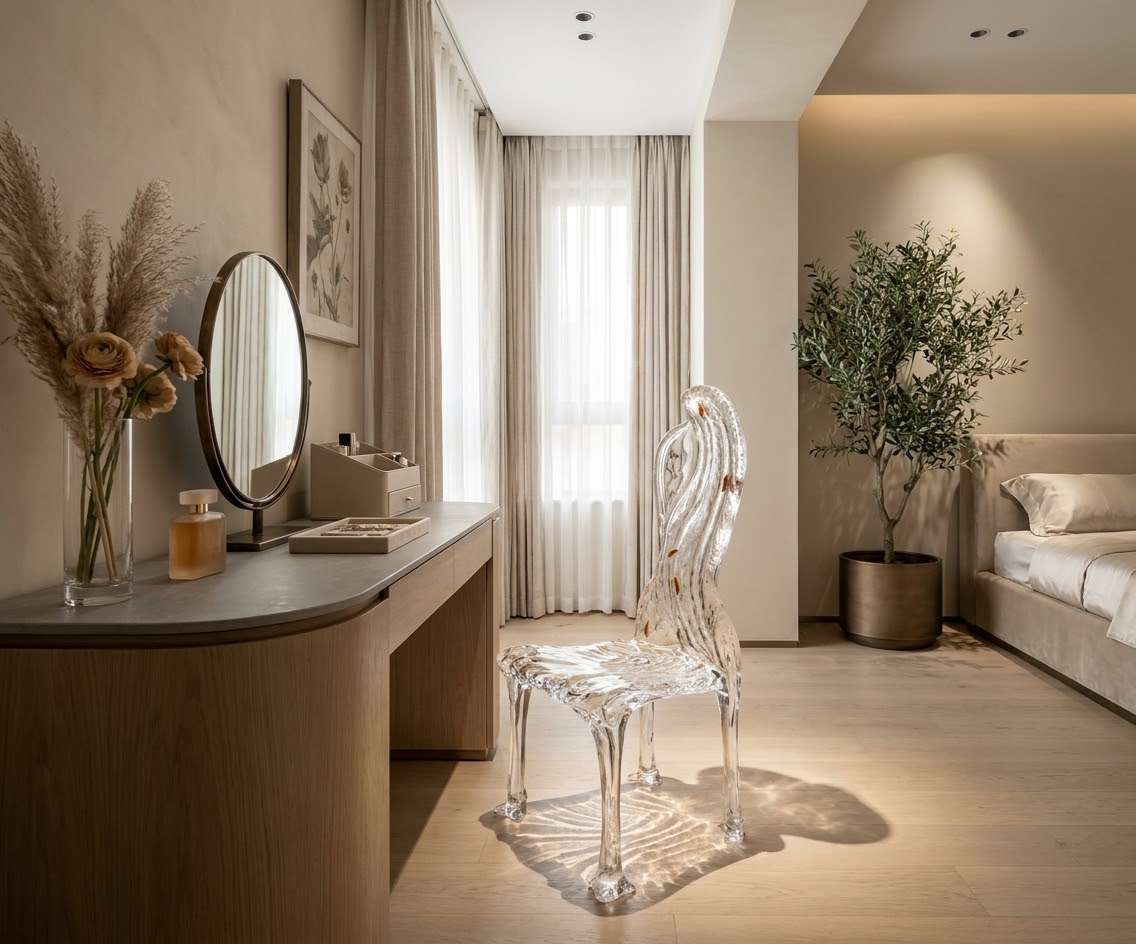
Synthetic crystal tables and chairs are among the most requested custom pieces, as they serve as focal points in dining rooms, living rooms, and home offices. Unlike decorative crystal objects, these functional pieces require specific design adjustments to ensure they are both visually striking and safe for daily use.
Critical design adaptations for functional pieces include:
Base structure reinforcement: Pairing crystal tabletops with weighted metal or stone bases to prevent tipping, especially for tall console tables
Edge rounding: Adding 2-5mm rounded edges to synthetic crystal chair seats and table corners to reduce chipping risk and improve user safety
Thickness optimization: Using 20-30mm thick slabs for tabletops to balance visual lightness with load-bearing capacity
Anti-slip padding: Integrating hidden rubber pads at contact points to protect both the crystal surface and adjacent furniture components
3. Precision Production: Ensuring Consistency Across Custom Batches
Even the most well-designed concept fails if production quality varies from piece to piece. For high-end residential projects that often include multiple matching pieces, maintaining consistency in clarity, finish, and dimensions is non-negotiable. 2026 manufacturing technologies have significantly reduced production variability for artificial crystal furniture.
3.1 Automated Cutting and Forming Technologies
Gone are the days of hand-cut crystal that leads to slight dimensional differences between identical pieces. Modern synthetic crystal furniture production relies on computer numerical control (CNC) cutting and precision molding that delivers accuracy within 0.1mm, ensuring every custom piece matches the original design exactly.
Key production technologies driving consistency:
5-axis CNC cutting machines that carve complex 3D shapes from solid crystal blocks without manual adjustment
Vacuum forming techniques for curved pieces, which eliminate internal air bubbles that would compromise clarity
Automated polishing lines that deliver uniform surface shine across all edges and faces of each piece
Real-time thickness monitoring systems that adjust cutting depth to account for minor material slab variations
3.2 Quality Control Checkpoints Throughout Production
Quality control (QC) is not a single final step but an integrated process that happens at every stage of production. For premium synthetic crystal furniture, studios implement multi-point QC checks to catch defects early, reducing waste and ensuring only flawless pieces reach clients.
Standard QC checkpoints include:
Raw material inspection: Verifying high-purity optical-grade material clarity and rejecting slabs with visible internal flaws
Post-cutting inspection: Measuring dimensions and checking edge smoothness against design specifications
Finish inspection: Testing high surface hardness uniformity and confirming no surface scratches or polishing marks
Final assembly check: Verifying structural stability and alignment for pieces with mixed material components
4. Case Study: A 2026 High-End Residential Project Success Story
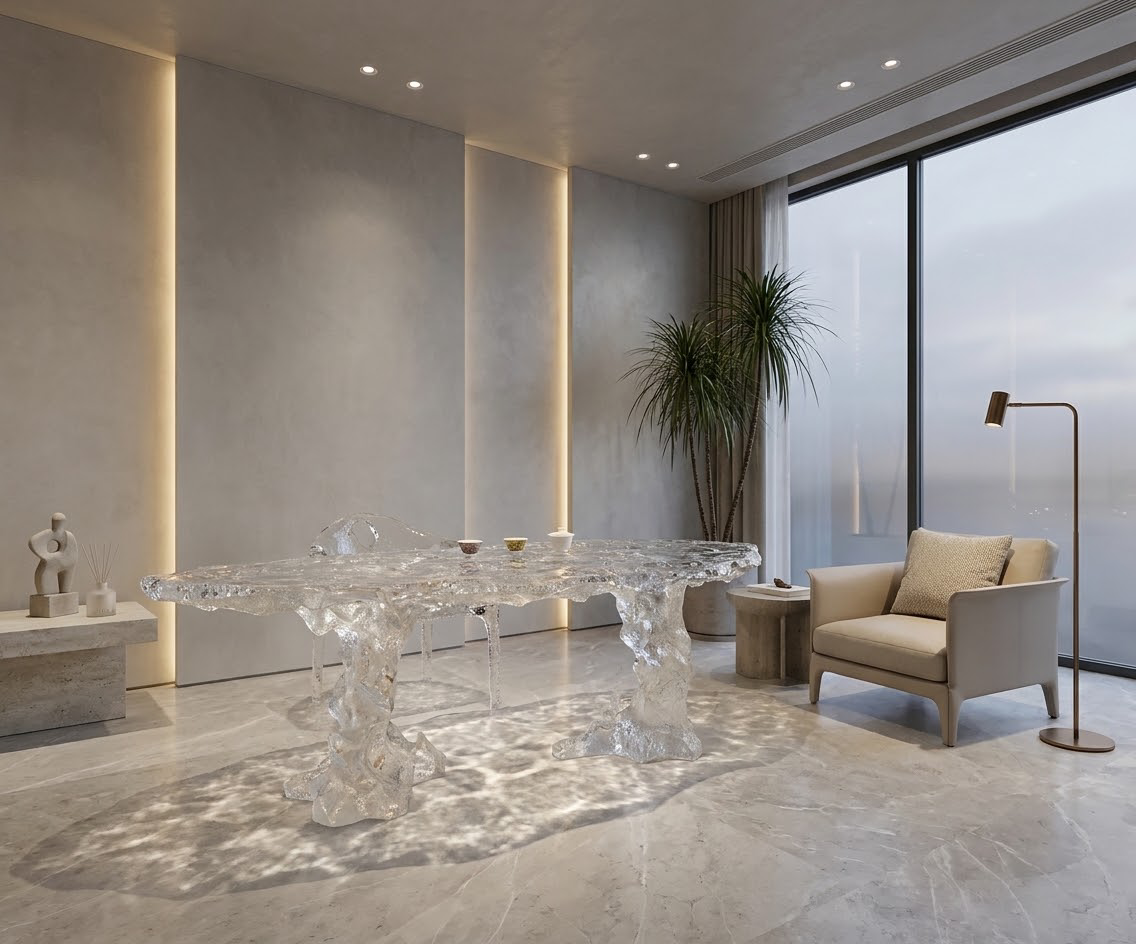
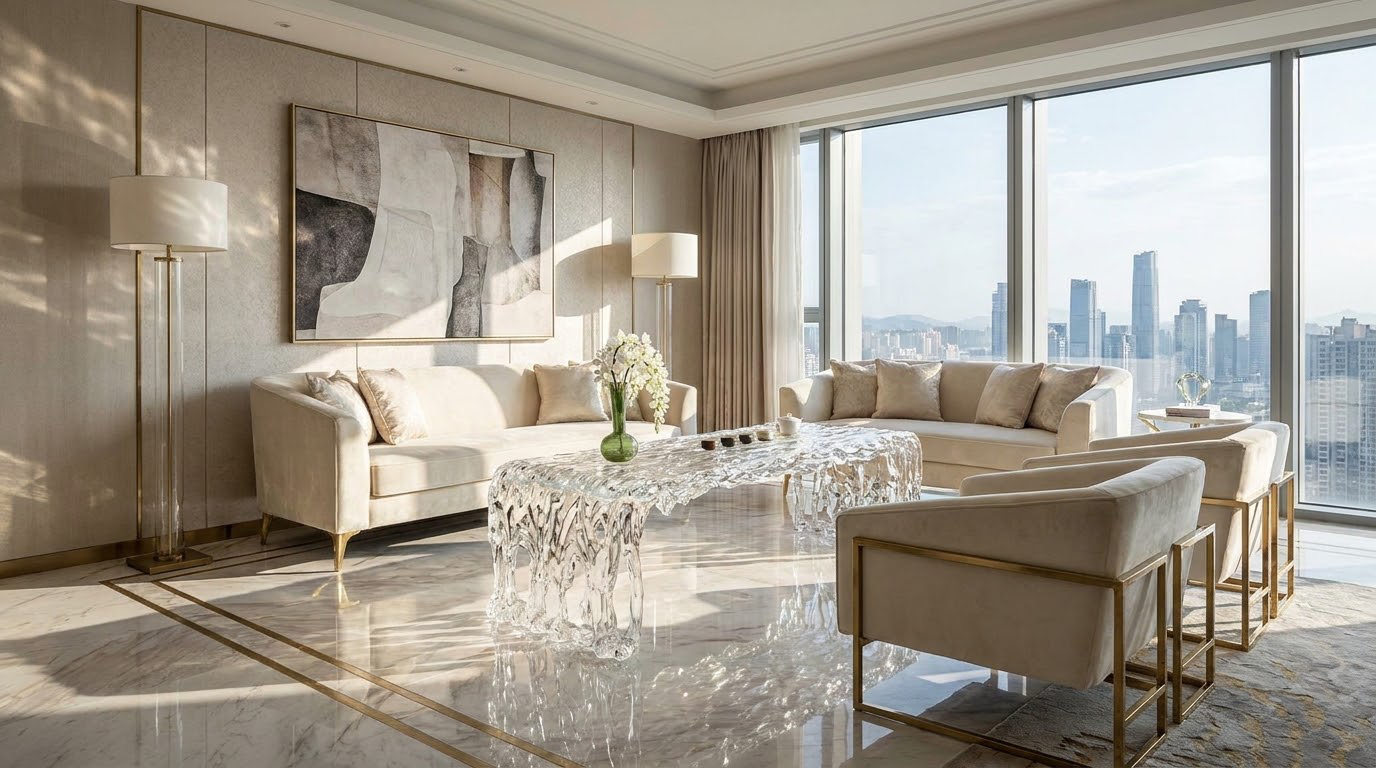
To illustrate how design and quality alignment works in practice, let’s examine a completed 2026 project in Beverly Hills, where an interior design studio commissioned a full set of custom artificial crystal furniture for a 12,000-square-foot modern villa. The project included a 10-seat dining table, eight dining chairs, and a living room coffee table, all with custom gold-leaf inlay details.
4.1 Design Challenges and Solutions
The client requested pieces that felt “light as glass but sturdy enough for family use,” a common tension in luxury crystal furniture design. The initial design concept featured ultra-thin 15mm tabletops and intricately carved chair legs, which the production team flagged as high risk for breakage and inconsistent light refraction.
Solutions implemented to balance design and quality:
Increased tabletop thickness to 22mm with a beveled edge that creates the visual illusion of thinness while maintaining structural strength
Replaced fully carved chair legs with a hybrid design: solid crystal upper sections and reinforced stainless steel lower cores hidden within the crystal
Used gradient tinting on the synthetic crystal chair backs to add visual depth without adding material thickness
Integrated hidden LED lighting under the dining table to enhance the crystal’s light refraction properties without visible wiring
4.2 Production Outcomes and Client Feedback
The full furniture set was delivered in 14 weeks, two weeks ahead of the initial timeline, thanks to early design feasibility reviews. Third-party quality testing confirmed all pieces met 2026 residential furniture safety standards, with high surface hardness measurements consistent across every component.
Key project results:
0 production defects identified during final client inspection
Client reported 30% higher perceived home value following the furniture installation
The design studio used the project as a portfolio piece, leading to 4 new high-end residential commissions in 2026
The synthetic crystal table became the most photographed feature of the home, featured in two luxury design publications
5. Future Outlook: Evolving Standards for 2027 and Beyond
As the luxury custom furniture market continues to grow, synthetic crystal furniture will see further innovations that narrow the gap between creative possibility and production reliability. For interior designers and furniture studios, staying ahead of these trends will be key to delivering exceptional value to discerning residential clients.
5.1 Emerging Material and Production Innovations
By 2027, manufacturers are expected to launch next-generation high-purity optical-grade material formulations that offer even higher surface hardness (reaching Mohs 7.5) while reducing production energy use by 25%. These advancements will expand the range of possible custom designs, making crystal furniture viable for even more high-use residential spaces.
Upcoming innovations to watch:
Self-healing crystal coatings that repair minor surface scratches automatically with light exposure
3D printing technology for small-batch custom crystal components, reducing lead times for intricate details
Bio-based crystal material alternatives that lower the carbon footprint of synthetic crystal furniture production
Smart crystal integration with embedded temperature sensors and wireless charging capabilities for tabletops
5.2 Best Practices for Designers Sourcing Custom Crystal Furniture
For interior designers working on 2027 and beyond projects, establishing strong partnerships with specialized synthetic crystal furniture manufacturers will be the most reliable way to ensure design-quality alignment. Choosing a manufacturer that offers end-to-end design support, transparent QC processes, and material performance guarantees reduces project risk and ensures client satisfaction.
Top best practices for designers:
Request material sample sets before finalizing designs to test clarity, weight, and scratch resistance in actual project lighting
Ask manufacturers for recent project references and third-party quality test reports to verify production consistency
Include detailed material specifications (including high surface hardness requirements) in all project contracts
Schedule mid-production design reviews to catch any deviations from the original concept before final finishing
In conclusion, achieving unity between design and quality in high-end custom synthetic crystal furniture is not a matter of luck, but of structured collaboration, material expertise, and rigorous production control. By prioritizing material quality early in the design process, working closely with manufacturing teams, and leveraging 2026’s advanced production technologies, interior designers can deliver custom pieces that are both visually breathtaking and built to last for decades.
READ MORE:
- Mobili in Cristallo Sintetico Curve: Realizzare Senza Deformazioni
- Mobili in Cristallo Sintetico: Eliminare Giunzioni Visibili nel Lusso
- Synthetic Crystal Furniture Supply Chain Management for Real Estate: Balancing Quality, Lead Time, and Batch Consistency
- From Design Concept to Physical Product: Synthetic Crystal Furniture Prototyping, Sampling, and Custom Production
- How Synthetic Crystal Furniture Improves Hotel FF&E Delivery Efficiency: Coordination, QC, and Installation Strategies for 2026
- Synthetic Crystal Furniture: How to Maintain Consistency Between Unique Design and Scalable Manufacturing for Commercial Spaces
- Global Interior Project Solutions: How to Coordinate Cross-Border Supply, Customization, and International Delivery?
- Architectural Interior Solutions: How to Address Complex Spaces, Engineering Coordination, and Final Project Execution?
- Solutions for Design Studios: How to Turn Client Visions into Custom Products with Professional Manufacturing Support?


