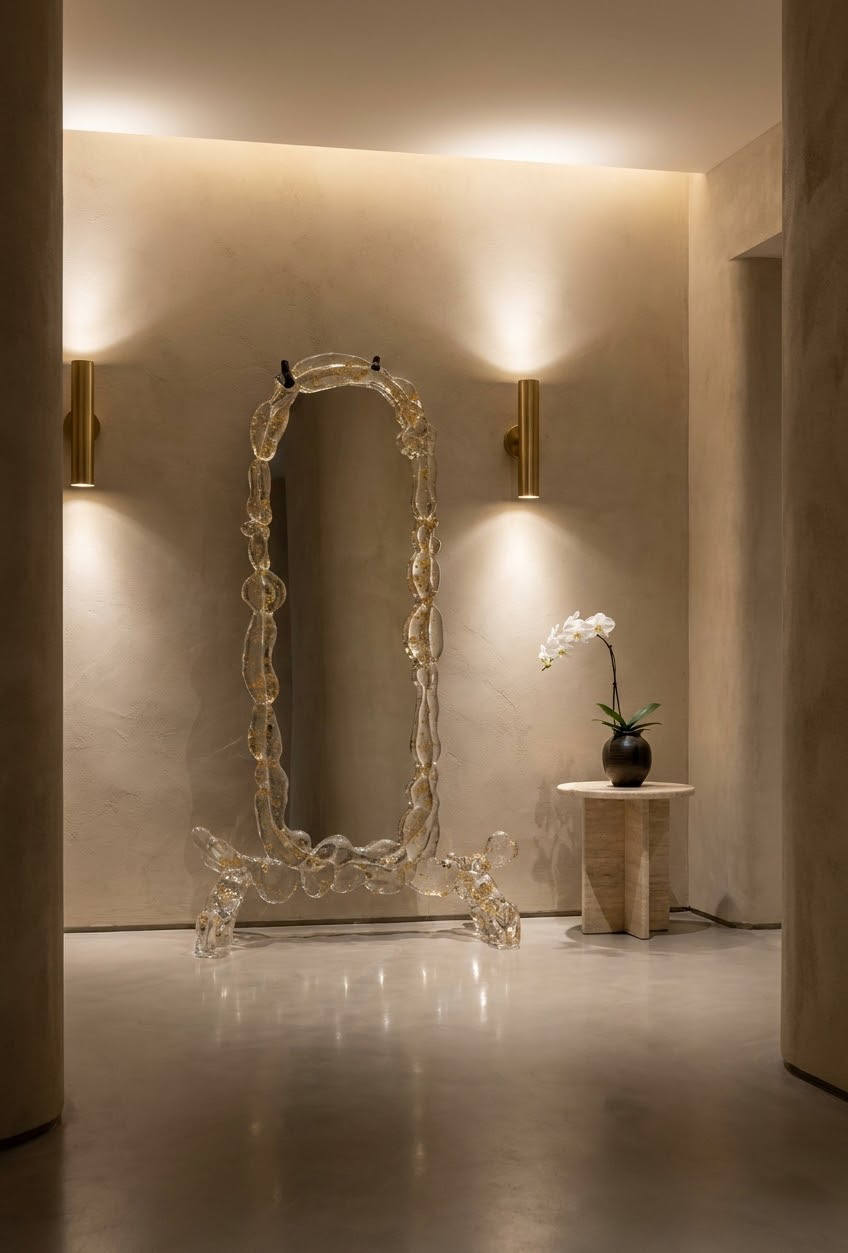
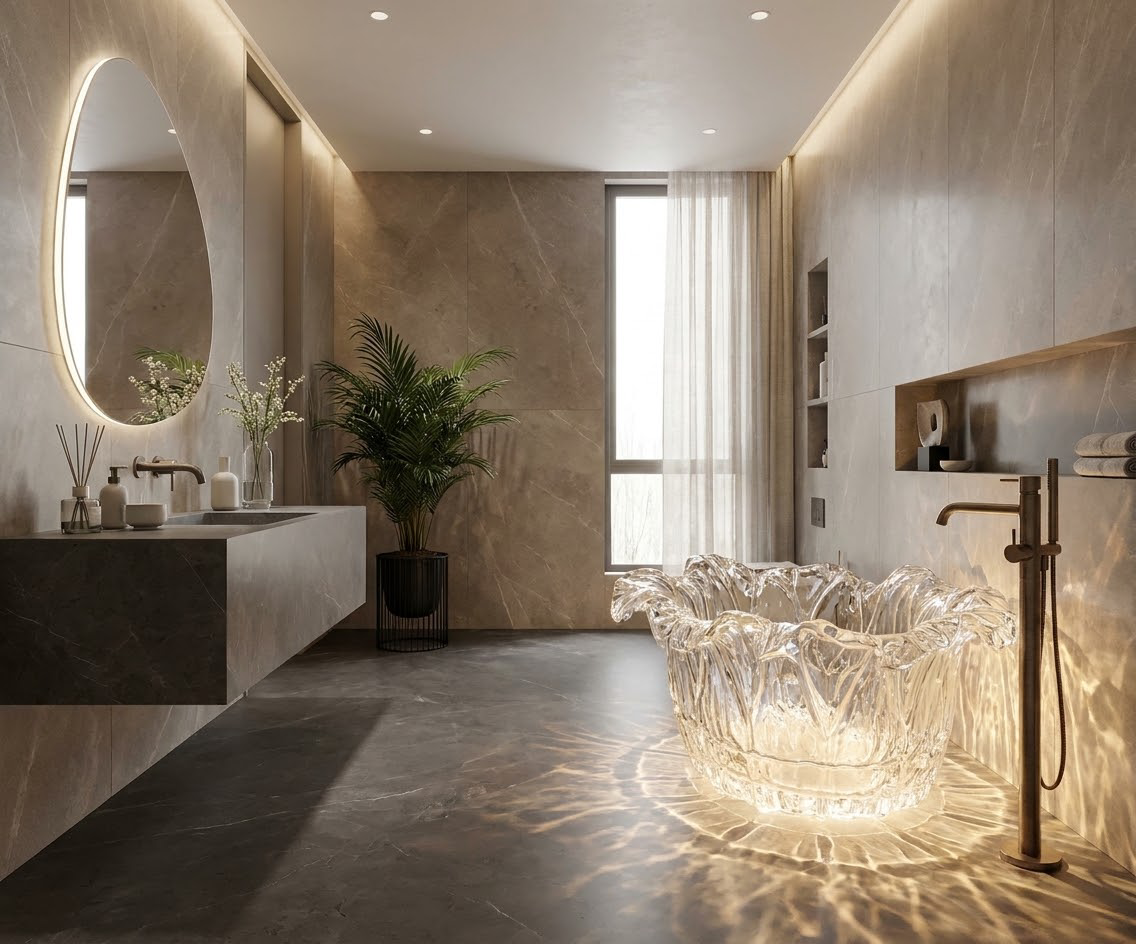
For interior designers pushing the boundaries of luxury spatial design, synthetic crystal furniture has emerged as a 2026 standout material category that blends artistic expression with technical performance. Unlike natural crystal, which carries inherent flaws and supply limitations, lab-created alternatives deliver consistent quality for bespoke residential and commercial projects. This guide breaks down the end-to-end workflow designers use to move from initial sketches to finished, installation-ready pieces.
1. Conceptualization: Translating Creative Vision Into Feasible Synthetic Crystal Furniture Designs
The first phase of developing synthetic crystal furniture bridges abstract creative ideas and technical practicality. Designers start by defining core functional and aesthetic goals, then validate whether crystal materials can support the intended form.
1.1 Defining Design Intent and Material Suitability for Artificial Crystal Furniture
Before drafting detailed plans, designers align project goals with the unique properties of artificial crystal furniture. This includes assessing load requirements, spatial context, and desired light interaction effects.
Key considerations during this stage include:
Functional purpose: Will the piece serve as a focal point, a functional surface, or a decorative accent?
Lighting conditions: How will natural and artificial light interact with the crystal’s refractive properties?
Environmental factors: Will the piece be exposed to direct sunlight, heavy use, or temperature fluctuations?
Budget parameters: How do material grades and fabrication complexity align with project budgets?
For high-traffic spaces, designers prioritize high surface hardness ratings to resist scratches and wear over time. For gallery or residential focal pieces, they prioritize optical clarity for maximum light refraction.
1.2 Sketching and 3D Modeling for Custom Synthetic Crystal Tables and Chairs
Once design intent is clear, designers move from hand sketches to precise 3D models. For synthetic crystal tables and chairs, this step is critical for identifying structural weak points and refining visual proportions.
Common 2026 tools used in this phase include:
Parametric design software for generating complex organic shapes
Photorealistic rendering tools to simulate crystal light refraction
Structural analysis plugins to test load-bearing capacity
AR visualization tools to preview pieces in actual spatial contexts
Designers often create 3-5 iterative versions of a design before moving to prototyping, adjusting thickness, curvature, and support structures based on structural feedback.
2. Material Selection: Matching High-Purity Optical-Grade Materials to Project Requirements
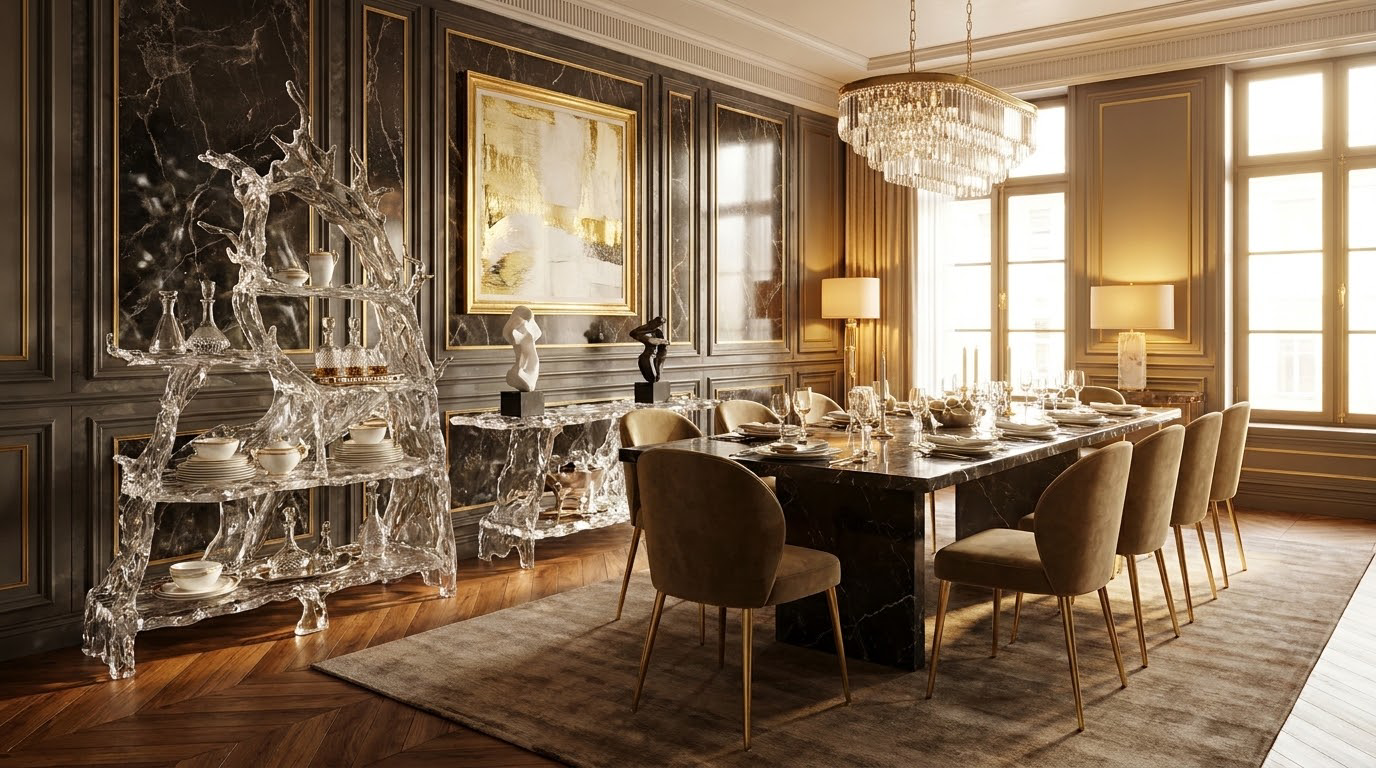
Material selection directly impacts both the aesthetic and performance of finished synthetic crystal furniture. As of 2026, manufacturers offer multiple material grades tailored to different use cases.
2.1 Comparing Material Grades for Synthetic Crystal Furniture Production
Not all synthetic crystal materials are created equal. Designers evaluate multiple grades based on clarity, durability, and machinability.
Primary material categories available in 2026 include:
Standard commercial grade: 95% purity, suitable for decorative pieces with lower clarity requirements
Premium grade: 99% purity, balanced clarity and durability for most furniture applications
High-purity optical-grade materials: 99.99% purity, maximum light transmission for high-end luxury pieces
Reinforced composite grade: crystal matrix with fiber additives for improved impact resistance
For pieces intended for daily use, designers often balance clarity with high surface hardness ratings of 6.5-7 on the Mohs scale, comparable to natural quartz.
2.2 Color and Finish Customization Options for Bespoke Pieces
Beyond material grade, designers can customize nearly every visual aspect of synthetic crystal furniture. 2026 manufacturing advances have expanded customization possibilities significantly.
Available customization options include:
Color infusion: Full-spectrum solid colors, gradient effects, and iridescent coatings
Surface finishes: Polished, matte, frosted, textured, or patterned surfaces
Inclusion effects: Encapsulated metals, botanicals, or decorative elements within the crystal matrix
Edge profiles: Beveled, rounded, chamfered, or custom sculpted edges
Interior designers often pair custom finishes with specific lighting designs to maximize the material’s visual impact in residential and hospitality spaces.
3. Prototyping: Validating Form, Fit, and Function Before Full Production
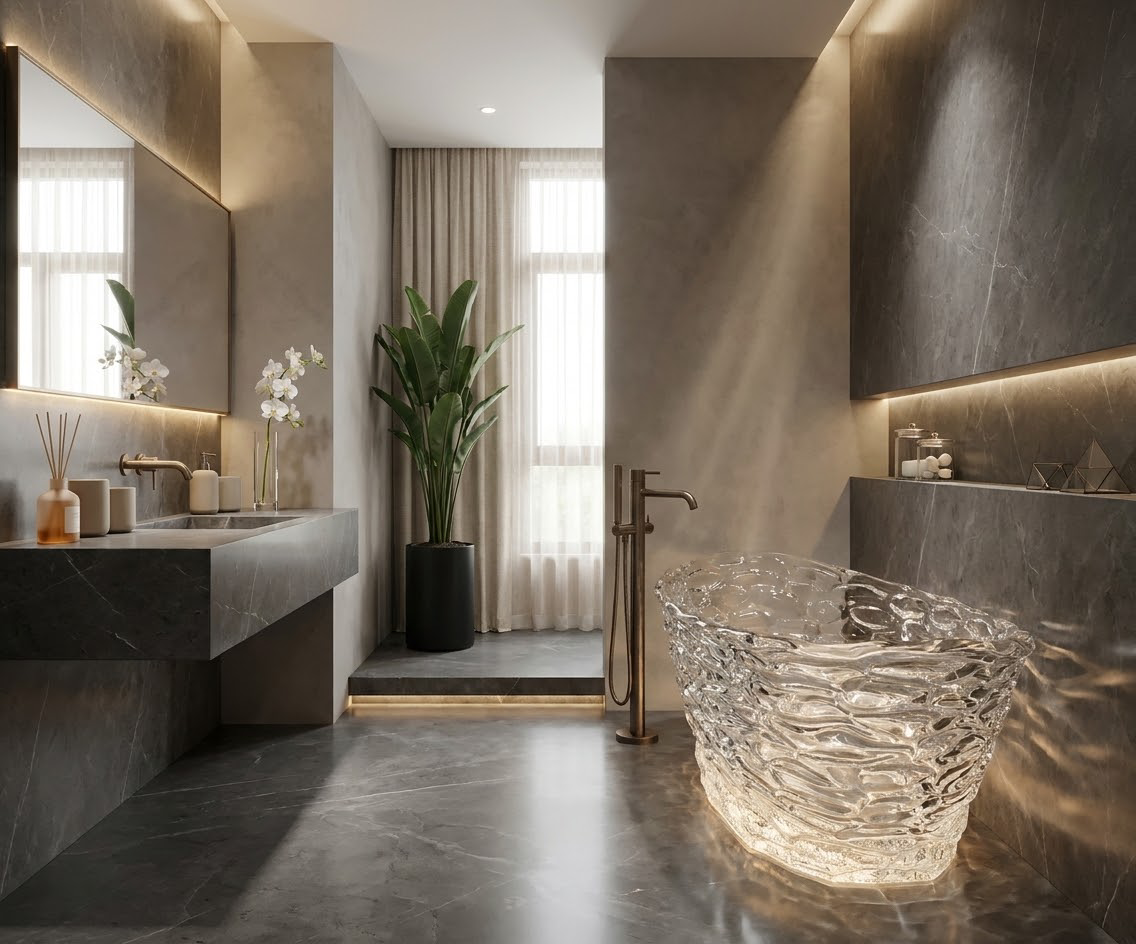
Prototyping is a critical step that reduces production risk and ensures final pieces meet design specifications. For synthetic crystal furniture, prototyping has become faster and more accurate in 2026 thanks to advanced manufacturing technologies.
3.1 Rapid Prototyping Techniques for Synthetic Crystal Tables and Chairs
Designers use multiple prototyping methods depending on project complexity and budget. For synthetic crystal tables and chairs, scaled models and full-scale test pieces are both common.
Widely used 2026 prototyping methods include:
3D printed resin models: Low-cost scaled models for visual proportion testing
CNC-machined acrylic prototypes: Full-scale functional test pieces for ergonomic validation
Small-batch crystal test samples: Material-specific samples for finish and clarity verification
Virtual reality prototyping: Immersive reviews of digital models at full scale
Prototyping typically takes 2-4 weeks for standard designs, with complex organic shapes requiring additional iteration time.
3.2 Structural and Performance Testing Prototypes
Beyond visual validation, prototypes undergo rigorous testing to ensure they meet safety and durability standards. This is especially critical for load-bearing pieces like tables and chairs.
Key performance tests conducted in 2026 include:
Load capacity testing: Verifying the piece can support 2-3 times its intended maximum load
Impact resistance testing: Assessing resistance to accidental impacts and drops
Scratch resistance testing: Confirming high surface hardness ratings match real-world use
Temperature stability testing: Evaluating performance under extreme temperature conditions
Test results are documented and shared with clients to demonstrate compliance with industry safety standards.

4. Precision Manufacturing: The Custom Processing Workflow for Synthetic Crystal Furniture
Once prototypes are approved, full production begins using specialized fabrication equipment. 2026 manufacturing techniques enable extremely precise shaping of synthetic crystal materials.
4.1 Core Fabrication Processes for Artificial Crystal Furniture
The production of artificial crystal furniture involves multiple sequential processing steps, each requiring specialized equipment and skilled technicians.
The core fabrication workflow includes:
Raw material preparation: Cutting large crystal blocks into rough blanks matching the design dimensions
CNC milling: Precision shaping of the primary form using computer-controlled milling machines
Fine grinding: Smoothing milled surfaces and refining details with diamond abrasive tools
Polishing: Multi-stage polishing to achieve optical clarity and desired surface finishes
Quality inspection: Dimensional and visual checks at every production stage
For high-purity optical-grade materials, additional processing steps are required to eliminate surface imperfections and maximize light transmission.
4.2 Advanced Customization Techniques for Complex Designs
For highly complex or artistic designs, standard fabrication processes are supplemented with advanced techniques. 2026 technology has made previously impossible designs achievable.
Advanced customization methods include:
Laser engraving: Intricate internal patterns and designs etched within the crystal material
Thermal forming: Shaping crystal into curved or organic forms using controlled heating
Lamination: Bonding multiple crystal layers with different colors or properties
Metal integration: Embedding metal structural elements or decorative accents within the crystal
These advanced techniques are often used for statement pieces in luxury hotels, high-end retail spaces, and private art collections.
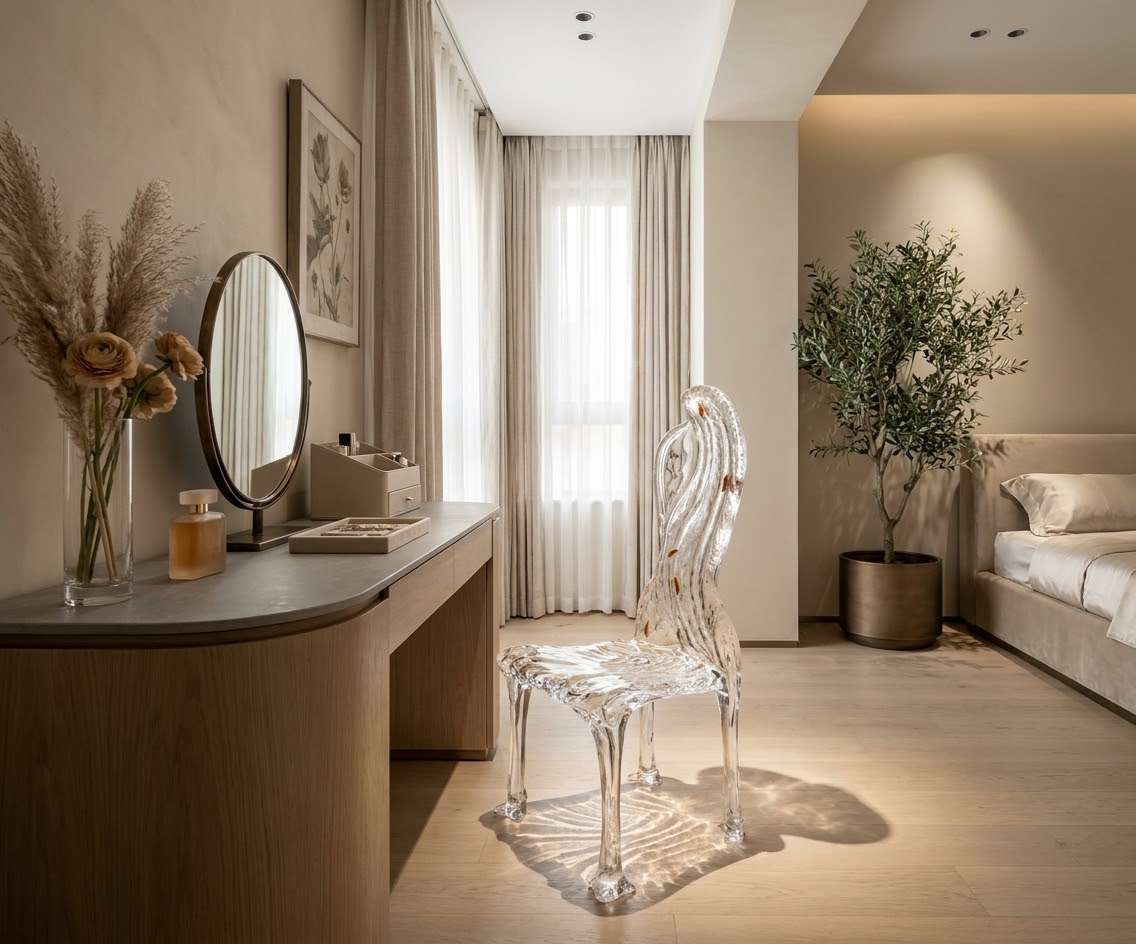
5. Final Assembly and Installation: Delivering Finished Synthetic Crystal Furniture to Clients
The final phase of the process involves assembly, quality assurance, and professional installation. Proper installation is critical for ensuring the longevity and safety of synthetic crystal furniture.
5.1 Quality Assurance and Final Finishing Touches
Before delivery, every piece undergoes a comprehensive quality inspection to ensure it meets design specifications and quality standards.
2026 quality assurance protocols include:
Dimensional verification: Confirming all measurements match design files within 0.1mm tolerance
Visual inspection: Checking for bubbles, scratches, or other material imperfections
Structural assessment: Verifying all joints and support elements are secure
Function testing: Testing moving parts, load-bearing components, and integrated features
Interior designers often participate in final inspections to ensure pieces match their original creative vision exactly.
5.2 Professional Installation and Post-Installation Care Guidance
Due to the weight and fragility of synthetic crystal furniture, professional installation is always recommended. Proper care guidance helps clients maintain their pieces for decades.
Key installation and care considerations include:
Site preparation: Ensuring floors are level and can support the weight of the piece
Specialized handling: Using suction cups, lifting equipment, and protective padding during transport
Installation alignment: Precise positioning and leveling to avoid stress on the material
Care instructions: Guidance on cleaning, scratch prevention, and long-term maintenance
For pieces with high surface hardness, simple microfiber cloth cleaning is sufficient for daily maintenance, while periodic professional polishing restores original clarity.
As of 2026, the global synthetic crystal furniture market continues to grow at a 12.7% annual rate, driven by demand from luxury residential, hospitality, and commercial sectors. For designers, mastering the full workflow from concept to installation is key to delivering exceptional pieces that stand out in a competitive market.
READ MORE:
- Complete Interior Solutions: How to Integrate Design Development, Custom Manufacturing, and Project Coordination for Efficient Project Delivery?
- Luxury Space Solutions: How to Coordinate Custom Design, Material Expression, and Final Installation to Realize a Complete Design Vision?
- Exclusive Interior Solutions: How Can Distinctive Design Elements and Professional Project Execution Shape Unique High-End Spaces?
- Synthetic Crystal Furniture: A New Approach to Hotel Engineering Furniture Procurement and Supplier Collaboration
- Synthetic Crystal Furniture: Custom Design & Multi-Material Fusion for High-End Spaces
- Synthetic Crystal Furniture: Integrating Material Design, Structural Engineering, and Manufacturing in 2026
- Synthetic Crystal Furniture: Ensuring Consistency, Quality, and Delivery Efficiency for Large-Scale Custom Projects
- Commercial Interior Solutions: How to Transform Business Space Concepts into Design Results and High-Quality Custom Manufacturing?
- Residential Interior Solutions: How Can Personalized Space Design, Custom Furniture, and Material Integration Create Exceptional Living Environments?


