In high-end residential design, a sense of “light luxury” is not achieved simply by using expensive materials, nor by relying on complex forms or excessive decoration. A truly refined residential space often emphasizes the balance between restraint, transparency, sophistication, and comfort. It must meet the homeowner’s pursuit of quality living while presenting a natural, understated, yet highly tasteful spatial atmosphere.
Transparent materials have therefore become an increasingly important design element in high-end residences. Whether acrylic furniture, glass partitions, crystal lighting, transparent display cabinets, transparent dining chairs, or transparent stair railings, these materials can bring lightness, brightness, and refinement to a space through light transmission, visual extension, and material reflection. Compared with heavy solid wood, stone, or metal, transparent materials represent a kind of invisible luxury. They do not compete for visual dominance, yet they subtly elevate the depth and elegance of the home.
1. In High-End Residential Design, Light Luxury Is Not About Excess, but Precise Spatial Expression
In the past, people often associated luxury homes with large areas of stone, elaborate ceilings, heavy furniture, and gold accents. However, as aesthetic preferences evolve, high-end residential design is shifting from visible luxury to subtle refinement. Homeowners now care more about whether a space is comfortable, open, and enduringly beautiful, rather than focusing only on the price of the materials.
The essence of a light-luxury space lies in expressing quality through simplicity and refinement through restraint. It does not reject luxurious materials, but it places greater emphasis on material proportion, the relationship between light and shadow, and the overall harmony of the space. For example, a simply shaped transparent acrylic coffee table paired with a light-colored sofa and natural marble flooring may not be more expensive than a heavy carved furniture piece, but it can make the entire living room appear more modern, light, clean, and sophisticated.
The value of transparent materials in light-luxury residences lies precisely in this understated design language. They can weaken the visual weight of furniture and decoration, keeping the space open; they can also create delicate visual layers through refraction, reflection, and glossy edges. Transparent materials are not meant to show off their presence. Instead, by reducing visual pressure, they make the space itself feel more refined.
2. How Transparent Materials Enhance Openness and Sophistication
High-end residences often have larger spatial dimensions, but a large space does not automatically feel luxurious. If the furniture is too heavy, there are too many partitions, or the colors and materials are overly dark, the space can easily feel dull and oppressive. The advantage of transparent materials is that they preserve functionality while reducing visual obstruction, making the space appear more open.
For example, using a transparent coffee table or side table in the living room maintains daily usability without disrupting the visual continuity between the rug, sofa, and flooring. Transparent furniture allows the eye to pass through naturally, creating a more continuous sense of spatial layering. This is especially important for open-plan living and dining areas, as it keeps different functional zones connected rather than visually fragmented by furniture.
Light is another key factor in how transparent materials enhance light luxury. Glass, acrylic, and crystal all possess strong light-transmitting and reflective qualities. When natural light enters the interior, transparent materials allow it to continue spreading instead of being blocked by solid furniture. At night, under artificial lighting, the edges, cut surfaces, and planes of transparent materials produce subtle highlights, adding richer details to the space.
This sense of sophistication does not come from strong visual impact, but from refined changes in detail. Transparent materials make the space brighter and the furniture lighter. They balance the weight of stone, metal, wood veneer, and other materials commonly used in high-end residences, creating an overall atmosphere that is softer, more modern, and more relaxed.
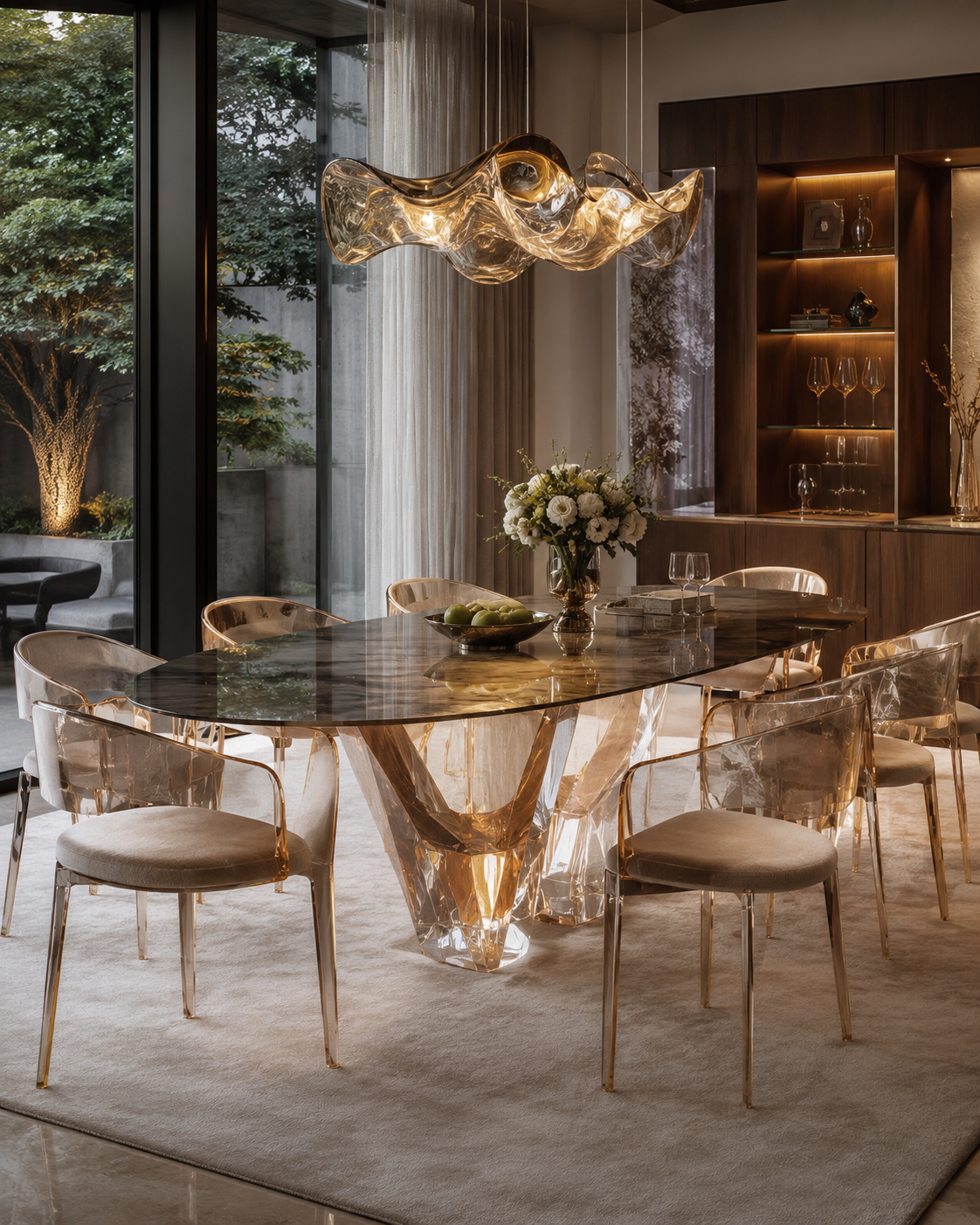
3. Applications of Acrylic, Glass, Crystal, and Other Transparent Materials in High-End Homes
In high-end residential design, transparent materials are not limited to a single form. They can be flexibly applied according to the function of different spaces.
The living room is the core area that best reflects the character of a home. Transparent acrylic coffee tables, glass side tables, and transparent display shelves can create refined focal points without visually dominating the room. Acrylic, in particular, is lighter and safer than ordinary glass while offering a clear, crystal-like visual effect, making it well suited for modern light-luxury living rooms. When paired with soft neutral furnishings, metal lighting, and artistic accessories, it gives the space a stronger artistic quality.
In the dining room, transparent materials can enhance the sense of ceremony. Transparent dining chairs paired with a marble dining table create a compelling material contrast: stone feels stable and substantial, while transparent chairs feel light and agile. Together, they create both luxury and ease, avoiding a heavy appearance. In smaller dining rooms, transparent chairs can also reduce the feeling of crowding and make the space look more spacious.
Bedrooms and walk-in closets are ideal for transparent storage, transparent dressing tables, and glass cabinet doors. Transparent materials make storage areas more display-oriented, allowing clothing, handbags, perfume, and accessories to become part of the interior composition. In a high-end residence, a walk-in closet is not merely a storage area but also a display of lifestyle. Transparent cabinet doors combined with soft lighting can create a refined atmosphere similar to that of a luxury boutique.
Transparent materials are also frequently used in staircases, partitions, screens, and handrails. Glass partitions can divide functional zones while maintaining visual continuity; transparent screens create subtle layers without closing off the space. In villas, large flats, and duplex residences, these applications strengthen the depth and modernity of the architectural space.
4. Combining Transparent Materials with Metal, Stone, and Wood to Create Light-Luxury Layers
Transparent materials have a strong neutral character. They do not carry an obvious stylistic direction like dark wood, nor do they feel as sharp as metal. As a result, they are highly suitable as transitional elements between different materials, helping balance warmth and coolness, lightness and weight, brightness and darkness.
The combination of transparent materials and metal is very common in modern light-luxury homes. Metal conveys refinement, sharpness, and sophistication, while transparent materials soften its cold and rigid qualities. For instance, a transparent acrylic tabletop with champagne-gold legs feels polished and elegant without becoming overly ornate. Transparent glass combined with black metal frames is more suitable for modern minimalist or high-end gray-toned interiors.
Transparent materials paired with marble can better express the luxurious character of a residence. Marble has natural veining and a strong sense of texture, but if used extensively, it can make a space feel heavy. Transparent materials can ease this sense of weight while preserving the luxurious feel of stone and adding breathing room to the space. For example, placing a transparent display cabinet in front of a marble feature wall allows the stone pattern to remain visible while adding display functionality.
When paired with wood veneer, transparent materials create a balance between warmth and modernity. Wood represents nature, warmth, and stability, while transparent materials represent lightness, purity, and fashion. Together, they prevent high-end residences from feeling too cold, while also avoiding an overly traditional atmosphere. In bedrooms, studies, and leisure areas, transparent furniture combined with dark wood veneer can create a calm, composed, yet not dull sense of refinement.
However, proportional control among different materials is essential. Transparent materials are visually appealing, but they are not suitable for excessive or uncontrolled use. They work best as accent elements, complementing stone, wood, leather, fabric, and metal. A truly successful high-end residential design does not allow one material to dominate completely; instead, each material plays its role in the right place.
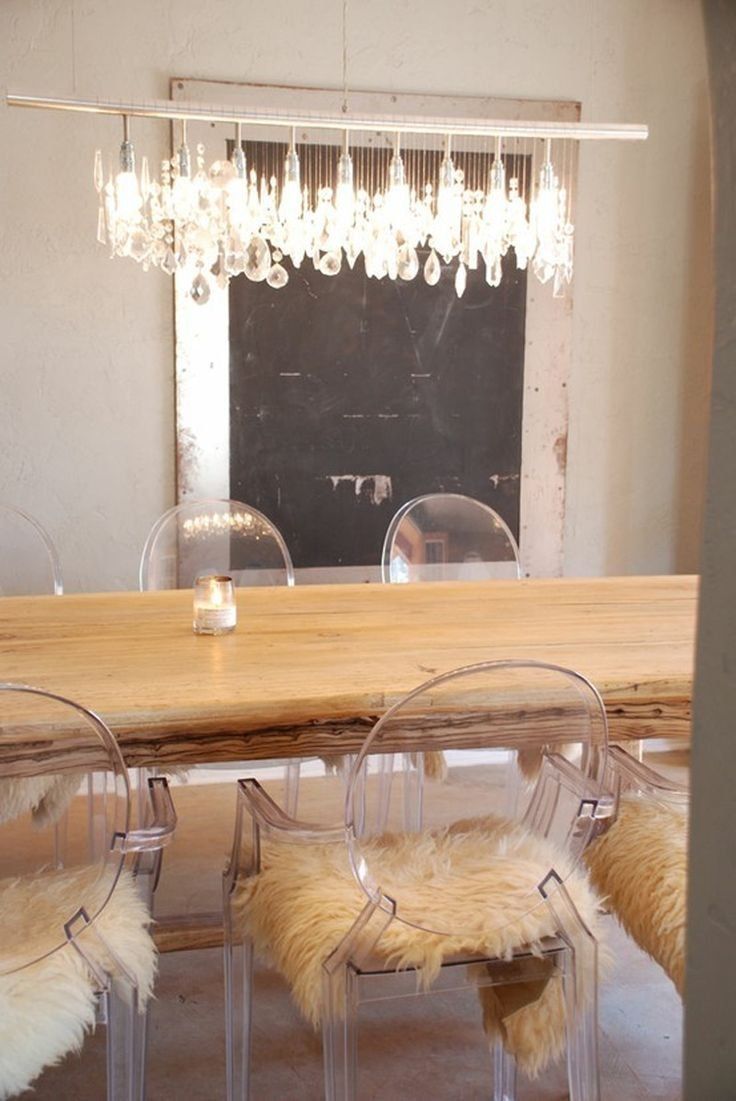
5. Key Design Principles for Using Transparent Materials to Enhance Light Luxury
Transparent materials can elevate spatial quality, but if used improperly, they may also create a cheap impression. Therefore, their selection and application in high-end residential design must follow certain principles.
First, the area of use should be controlled. Transparent materials are suitable for local accents rather than replacing all furniture and decoration. For example, a living room can use one transparent coffee table as a visual highlight, rather than using a transparent sofa, transparent cabinet, and transparent decorative elements all at once. Excessive transparency can make a space feel unstable and weaken the sense of quality that a high-end residence should have.
Second, material thickness and craftsmanship details matter. High-quality transparent acrylic or glass usually has better clarity, edge finishing, and surface gloss. Whether the edges are rounded, whether the joints are smooth, and whether the surface is prone to scratches will directly affect the final result. Transparent furniture in a luxury home should not only look clear; it should also reflect precision craftsmanship in its details.
Third, lighting design should be integrated. Transparent materials have a natural interaction with light. Soft linear lights, concealed light strips, and focused spotlights can all enhance the refractive effects of transparent materials. For example, adding warm lighting inside a transparent display cabinet can give collectibles more depth; placing wall light strips beside a glass partition can transform the partition from a functional element into a spatial feature.
Fourth, suitable materials should be selected according to space function. Glass is suitable for partitions, doors, and large vertical surfaces because it is flat, transparent, and architectural. Acrylic is suitable for furniture, display shelves, and decorative pieces because it is light, safe, and flexible in form. Crystal is better suited for lighting and local decoration because it has stronger gloss and ornamental quality. Different transparent materials have different characteristics and should not be used interchangeably without consideration.
Finally, daily maintenance should be considered. A high-end residence must not only look beautiful but also support long-term living. Transparent materials can easily show dust, fingerprints, and scratches, so usage frequency and cleaning convenience should be considered during the design stage. For high-use areas, materials with stronger wear resistance and easier cleaning are recommended. For display-oriented areas, materials with higher gloss and stronger visual impact can be selected.
6. Future Trends and Value of Transparent Materials in High-End Residential Design
As residential design concepts continue to evolve, the role of transparent materials in high-end homes is also changing. They are no longer merely decorative materials; they are gradually becoming important media for shaping spatial experience. Transparent materials can change the relationship between people and space, making interiors more open, lighter, and more aligned with modern expectations for comfortable living.
In the future, high-end residences will place greater emphasis on customized transparent furniture. Compared with standardized finished furniture, custom transparent furniture can better fit spatial dimensions, style, and functional requirements. For example, a custom acrylic display cabinet can be designed with shelf heights based on the size of collectibles; a transparent coffee table can be adjusted in thickness and form according to the proportions of the living room; a transparent screen can incorporate curved shapes, frosted effects, gradients, or partial engraving based on the homeowner’s preferences. This level of personalization is an important way in which high-end residences differ from ordinary homes.
At the same time, environmental performance, durability, and ease of maintenance will become increasingly important to homeowners. High-end residential design no longer pursues visual effect alone; it must also consider long-term material stability, safety, and sustainability. High-quality acrylic, laminated glass, and low-iron glass will gain broader applications in future residential design because of their improved transparency, safety, and user experience.
From an aesthetic perspective, transparent materials will continue to push high-end residential design toward lightness, artistry, and livability. They can make spaces brighter, furniture more understated, and material relationships richer. Especially in modern light-luxury homes, minimalist luxury residences, art-inspired interiors, and urban large flats, transparent materials will remain an important way to express sophistication.
Conclusion
Transparent materials can enhance the light-luxury quality of high-end residences not because they are visually dominant, but because they make spaces more open, pure, refined, and layered. They reduce the oppressive feeling caused by heavy furniture, strengthen the flow of light within the space, and create a more elegant balance among different materials.
In high-end residential design, true luxury does not always need to be directly visible. It can exist in the clarity of a material, in the details of edge craftsmanship, and in the subtle interaction between light and transparent surfaces. Transparent materials are precisely this kind of understated yet highly expressive design language.
When transparent acrylic, glass, crystal, and similar materials are used properly, they not only improve the visual appeal of a space but also shape a light, calm, and refined lifestyle. This unforced, uncomplicated, and weightless sense of sophistication is one of the most valuable expressions of light luxury in contemporary high-end residential design.
Contact
LinkedIn: https://www.linkedin.com/in/adtender-zyra/?locale=zh_CN
Facebook: https://www.facebook.com/profile.php?id=61586259131631
Instagram: https://www.instagram.com/zzzzyyrraa4/
YouTube: https://www.youtube.com/@ZZZZyra-k7w
Office: (904) 258-3290
WhatsApp/Wechat: +86 18923188839


