In high-end villa customization projects, many people initially assume that the higher the budget, the more luxurious the final result will be. Expensive natural stone, imported wood veneer, metal trims, leather upholstery, artistic lighting, and complex decorative forms may all seem capable of quickly creating a luxury-home atmosphere. However, in truly mature high-end projects, designers, homeowners, and custom suppliers are paying increasing attention not simply to “how much money is spent,” but to whether the materials are differentiated, whether they match the character of the space, whether they support long-term value, and whether they help the entire project develop a unique identity.
A high-end villa is not just a collection of products. It is a complete living system. The living room, dining room, bedrooms, walk-in closets, home theater, wine cellar, staircase area, and outdoor leisure zones all have different requirements for material function, texture, light performance, and maintenance. Therefore, material selection should not be judged only by price. More importantly, it should be evaluated based on how well it matches the spatial positioning, design language, and usage scenario.
1. The Core of High-End Villa Customization Is No Longer “Expensiveness,” but “Suitability”
In the past, some villa projects tended to define “high-end” as a concentrated display of expensive materials. For example, large areas of natural stone, complex metal decorations, heavy wood structures, or layers of luxury elements were often used to create a sense of status. However, as the aesthetic standards of high-end clients continue to improve, truly valuable villa customization has shifted from being price-oriented to experience-oriented.
An experience-oriented approach means that the space must fit the homeowner’s lifestyle. A family that often receives guests may need to emphasize the display quality of public areas, comfortable circulation, and a strong social atmosphere. A family that values privacy may focus more on the comfort of bedrooms, studies, closets, and relaxation areas. A homeowner who collects artwork, wine, or luxury furniture may pay closer attention to how materials work with lighting, display, protection, and visual order.
Materials play a decisive role in this process. Different materials affect the temperature, touch, visual weight, and psychological feeling of a space. Natural stone brings stability and strength. Wood veneer creates warmth and softness. Metal expresses refinement and structure. Glass emphasizes transparency and modernity. Acrylic materials, through transparent, translucent, colored, thick-sheet, and custom-shaped processing, can bring a sense of lightness, artistry, and modern customization to villa interiors.
Therefore, high-end villa customization is not about investing the entire budget in the most expensive materials. It is about determining which material is most suitable for a specific area, which material combination best reflects the owner’s taste, and which craftsmanship can support the final result. The suitability of materials is often more important than the price of the materials themselves.
2. “Material Differentiation” Is an Important Source of Sophistication in Villa Spaces
Sophistication does not come entirely from expense. It comes from details, proportion, layering, and uniqueness. Material differentiation is one of the key foundations for shaping these qualities.
In villa interiors, the same piece of furniture or decorative component can create completely different effects when made with different materials. For example, a wooden coffee table feels warm and stable. A metal-and-glass coffee table appears more modern and luxurious. A highly transparent acrylic coffee table makes the space feel lighter and more open while reducing visual pressure. For large villa spaces, contrast and coordination between materials can create a richer spatial expression.
Material differentiation is not about pursuing novelty for its own sake. Its real purpose is to avoid homogeneity. Many high-end projects rely too heavily on popular design elements, resulting in similar-looking spaces: similar feature walls, similar metal trims, similar stone patterns, and similar lighting layouts. Although such spaces may be expensive, they often fail to leave a strong impression.
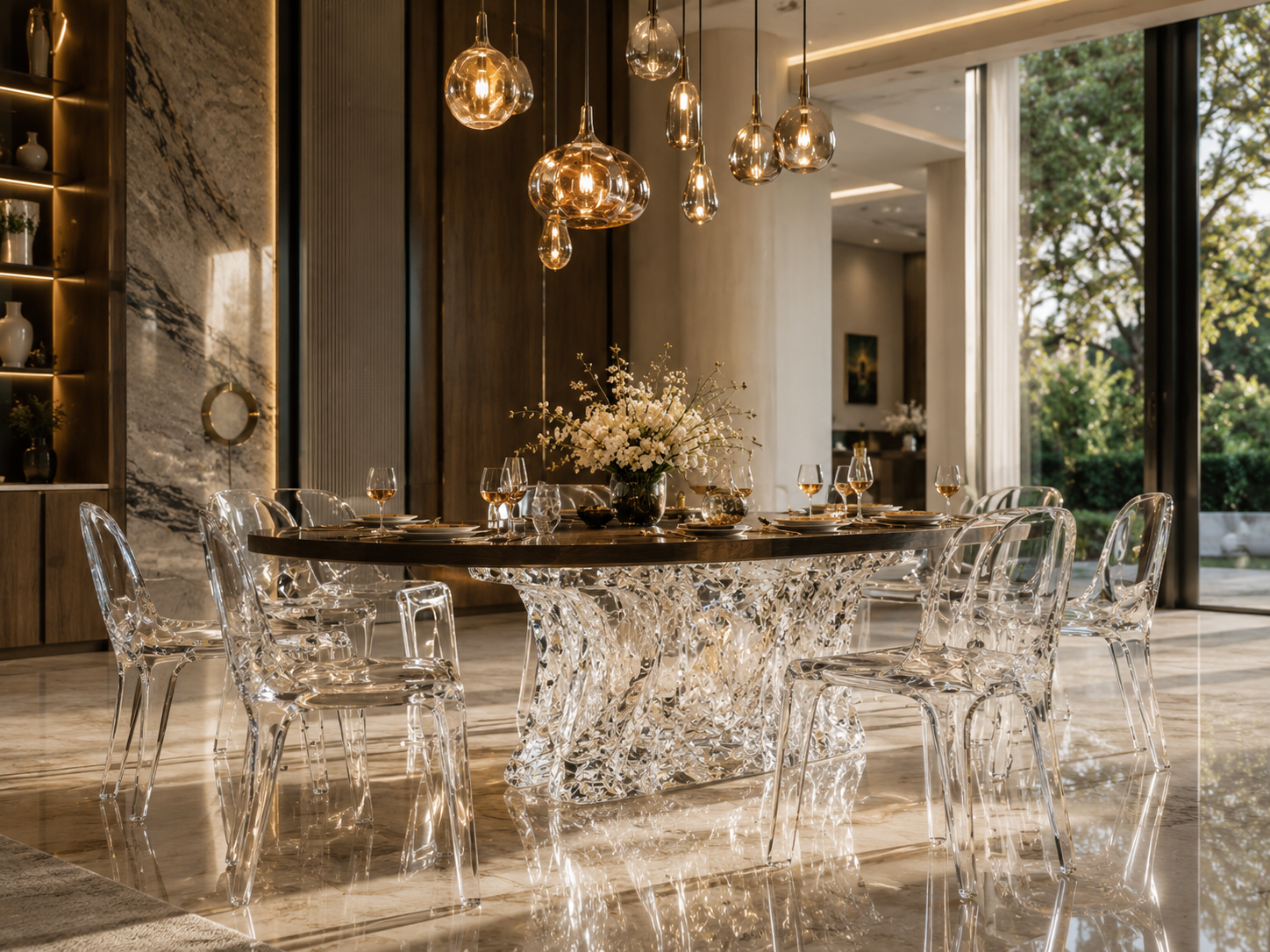
A truly outstanding villa customization project creates exclusive visual memories through material differentiation. For example, transparent acrylic furniture can be used in the reception area to reduce heaviness. Acrylic display stands can enhance the visual effect of collections in wine cellars or display areas. Special-colored acrylic can create light-and-shadow effects in staircases or art installation areas. In walk-in closets or boutique-style display cabinets, acrylic can be combined with metal and lighting to create the refined atmosphere of a luxury retail space.
These material strategies are not simple decoration. They use the transparency, gloss, thickness, plasticity, and processing precision of the material itself to create a unique character that distinguishes the space from ordinary luxury homes.
3. Budget Stacking Can Create an “Expensive Look,” but Not Necessarily a “Sophisticated Feel”
In high-end villa projects, a sufficient budget is certainly important. Without enough budget, many complex techniques, custom materials, and high-standard construction details cannot be realized. However, budget is only a basic condition. It does not equal final quality.
Without a clear material strategy, the higher the budget, the easier it is to create visual overload. For example, if the living room feature wall already uses a large area of luxury stone, the furniture uses heavily textured wood, and the soft furnishings add shiny metal and complex patterns, the final result may not feel sophisticated. Instead, it may feel cluttered, heavy, or overly showy. Each material may be expensive, but together they may not create a comfortable space.
High-end design requires restraint. Restraint does not mean simplicity. It means knowing when to emphasize, when to leave space, when to use heavy materials to create presence, and when to use lighter materials to release visual pressure. The value of material differentiation lies in creating rhythm between different areas.
For example, in the main living room of a villa, natural stone can be used to establish a strong spatial focal point, while transparent acrylic can be used for side tables, display shelves, or decorative installations to make the space feel lighter. In the dining room, wood veneer can add warmth, while acrylic or glass elements can enhance transparency. In children’s activity areas or leisure spaces, materials with better safety, color expression, and easy-clean properties may be more suitable than expensive but difficult-to-maintain materials.
Therefore, budget is not the final answer for high-end projects. What truly determines project quality is how the budget is allocated, how materials are combined, how craftsmanship is executed, and whether the space forms a unified and layered design logic.
4. Material Differentiation Strengthens the Exclusivity and Identity of Custom Projects
One of the biggest differences between high-end villa projects and ordinary residential projects is the emphasis on exclusivity. Homeowners do not want their homes to be copies of showrooms or simple imitations of popular styles. They want the space to reflect their personal taste, family structure, interests, and social lifestyle.
Material differentiation effectively strengthens this sense of exclusivity. Especially in custom furniture, art installations, display systems, and functional spaces, material selection directly determines whether the project has a recognizable identity.
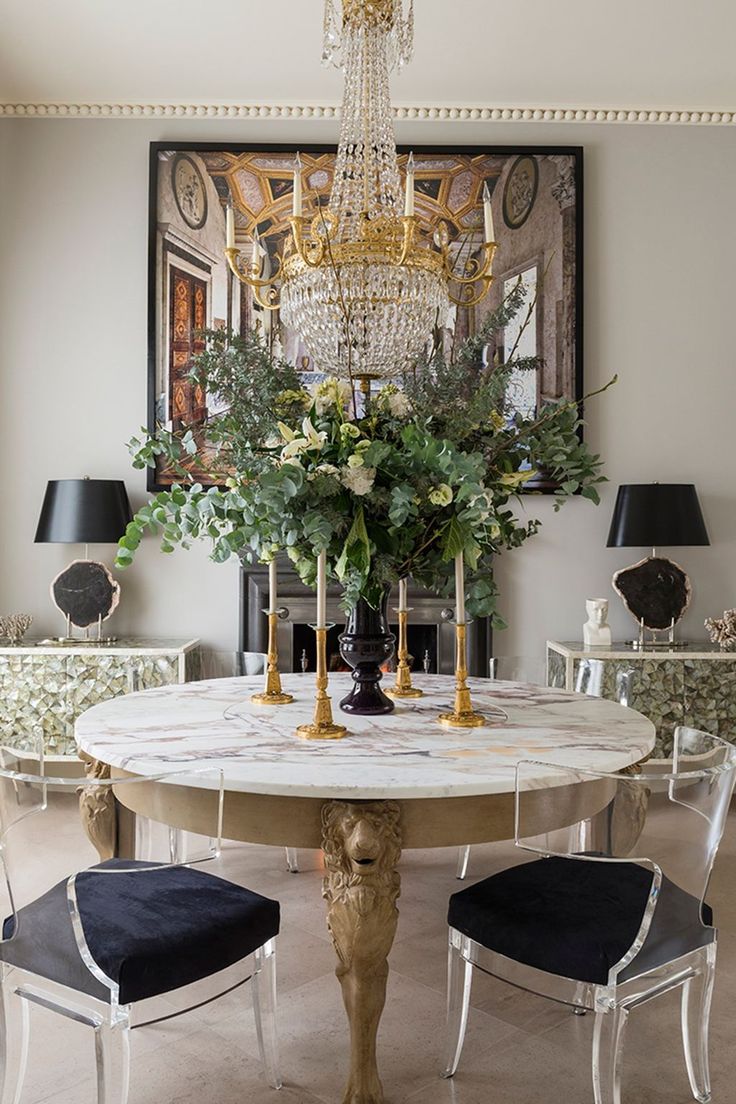
For example, custom acrylic furniture can be used in high-end villas for coffee tables, side tables, display shelves, wine cabinet accessories, art pieces, partitions, lighting installations, and collection display platforms. Compared with traditional materials, acrylic offers greater visual lightness and design flexibility. It can be customized with transparent, frosted, colored, gradient, thick-sheet, thermoformed, engraved, and bonded finishes. It can serve as a main visual material or as a supporting material used together with metal, wood, stone, leather, and lighting systems.
For designers, this type of material provides greater creative freedom. For homeowners, it gives the villa stronger personal recognition. A space with a distinctive material language often does not need excessive decoration to communicate its custom value.
This is why more and more high-end projects pay attention to the customization capabilities of material suppliers. Not every supplier can complete special sizes, special colors, irregular structures, and high-precision surface treatments. Whether material differentiation can truly be realized depends on complete coordination among design, technical development, sampling, production, and installation.
5. Villa Projects Focus More on Long-Term Value, Making Material Performance More Important Than Price
High-end villas usually have large areas, complex functions, and long usage cycles. Therefore, material selection must consider long-term value. A material may look beautiful when first installed, but if it easily deforms, cracks, yellows, scratches, becomes difficult to clean, or requires high maintenance costs, it will eventually affect the overall user experience.
Different spaces require different material performance. Living rooms and dining rooms place more emphasis on visual effect, wear resistance, and ease of cleaning. Bedrooms focus more on touch, environmental safety, and comfort. Bathrooms and humid areas require moisture resistance and stability. Wine cellars and collection spaces need display quality, structural safety, and lighting compatibility. Outdoor transition areas require anti-aging performance, weather resistance, and easy maintenance.
Therefore, material differentiation is not about simply pursuing rarity or high price. It is about choosing the most reasonable material according to each usage scenario. Some areas are not suitable for overly delicate natural materials because later maintenance may be complicated. Some display areas may lose the visual focus of the collection itself if heavy wood structures are used. Some modern-style spaces may lose their lightness if too many traditional heavy materials are applied.
In this context, the combination of acrylic, glass, metal, wood veneer, and stone has strong strategic value. Acrylic provides transparent, lightweight, and highly customizable visual effects. Metal offers structural refinement. Stone establishes stability. Wood adds natural warmth. Glass enhances openness and transparency. A mature villa project allows each material to play its most suitable role according to the functional needs of different spaces.
The essence of high-end customization is not spending the budget all at once. It is about ensuring that the space remains beautiful, practical, and easy to maintain for many years.
6. From Design Firms to Suppliers, Material Integration Capability Determines Project Execution Quality
In villa customization projects, the design proposal is only the first step. The real challenge lies in execution. Many concepts look stunning in renderings, but once they enter the production and construction stage, if material supply, processing techniques, on-site installation, and detail finishing cannot keep up, the final result will be greatly compromised.
Material differentiation often means higher execution requirements. For example, custom acrylic furniture requires strict control over sheet thickness, transparency, edge polishing, bonding marks, load-bearing structure, and transportation protection. Irregular components require consideration of molds, thermoforming accuracy, and installation methods. When combined with lighting, uniform light transmission, reflection effects, and color temperature coordination must also be considered. Without early technical development, problems such as dimensional errors, inconsistent texture, or poor installation results may easily appear on site.
Therefore, when selecting material partners for high-end villa projects, it is not enough to look only at product price. It is more important to evaluate whether the supplier has systematic capabilities. These include understanding the design intent, providing samples, completing non-standard customization, understanding the connection methods between different materials, cooperating with the project schedule, and maintaining stable quality throughout production and installation.
For design firms, an excellent material supplier is not only a product provider but also a project execution partner. For homeowners, strong material integration capability can reduce communication costs, lower the risk of rework, and ensure that the final result is close to or even better than the original design vision.
Conclusion
High-end villa customization projects are paying more attention to “material differentiation” because true sophistication no longer depends on simply increasing the budget. A budget can buy expensive materials, but it cannot automatically create aesthetics, proportion, experience, or exclusivity. Material differentiation helps a space build layers, create memorable details, meet different usage scenarios, and ultimately reflect the homeowner’s unique lifestyle.
For high-end villa projects, materials are not isolated products. They are part of the design language. Stone, wood, metal, glass, acrylic, and other materials can truly enhance spatial value only when they are used in the right place, in the right proportion, and with the right craftsmanship.
Therefore, what is truly worth investing in for high-end customization is not only a higher budget, but also more professional material judgment, more mature custom craftsmanship, and stronger execution capability. Only in this way can a villa space move beyond “looking expensive” and become truly sophisticated, unique, and able to stand the test of time.
Contact
LinkedIn: https://www.linkedin.com/in/adtender-zyra/?locale=zh_CN
Facebook: https://www.facebook.com/profile.php?id=61586259131631
Instagram: https://www.instagram.com/zzzzyyrraa4/
YouTube: https://www.youtube.com/@ZZZZyra-k7w
Office: (904) 258-3290
WhatsApp/Wechat: +86 18923188839


