In a commercial project, furniture is not truly “finished” when it leaves the factory. Its real test begins after delivery: under air conditioning, sunlight, heavy foot traffic, cleaning chemicals, humidity swings, and constant use by people who do not treat the space like a private home. Cracking, yellowing, color fading, edge lifting, warped panels, sticky coatings, and loose joints rarely happen because of one single mistake. More often, they are the result of early specification gaps: the wrong substrate for the environment, insufficient UV protection, unclear coating requirements, weak joinery, poor emissions documentation, or no pre-delivery test standard.
For designers, contractors, procurement managers, hotel owners, retail operators, and commercial furniture buyers, material selection is therefore not a purely aesthetic decision. It is a risk-control decision. A beautiful table, reception counter, display fixture, acrylic chair, or wall-mounted storage system can become a maintenance problem if the material has not been matched to the real operating conditions of the space. The following six checks help reduce post-delivery cracking and discoloration while making the specification more measurable, defendable, and easier to inspect before mass production.
1. Start with the real environment, not the rendering
The first mistake in commercial furniture sourcing is choosing materials from a rendering, mood board, or small showroom sample without mapping the furniture’s actual service environment. Commercial interiors are full of microclimates. A hotel lobby sofa may sit near a glass facade for eight hours of indirect sun. A retail display cabinet may be next to high-output lighting. A café table may be wiped dozens of times per day with disinfectant. A mall kiosk may be exposed to air-conditioning outlets from above and humid air from nearby entrances. These differences decide whether a material remains stable or starts to move, crack, fade, or yellow.
Wood and wood-based products are especially sensitive to moisture. The USDA Forest Products Laboratory’s Wood Handbook, a long-standing engineering reference for wood properties, explains that wood is an engineering material whose properties are affected by moisture and that designers must account for wood movement, swelling, and shrinkage in use. In practical furniture terms, this means a beautiful veneer panel or painted MDF component may behave differently in a dry, air-conditioned office than in a coastal restaurant or a shopping center with frequent temperature swings.
Before selecting boards, veneers, lacquer systems, acrylic sheets, solid surfaces, metals, or laminates, define the use scene in writing. Is the product for an indoor air-conditioned area, a semi-outdoor terrace, a window display, a spa, a restaurant, a clinic, or a high-traffic retail store? Will the furniture touch water, alcohol, coffee, cosmetics, cleaning agents, hand sanitizer, or food oil? Will the surface receive direct sunlight or only indoor lighting? Will the item be fixed in place, moved weekly, or handled constantly by customers? These questions should appear before the quotation stage, not after a defect claim.
The answer can change the entire specification. A standard clear acrylic used in a low-sun indoor display may not be suitable for a window-facing installation unless UV-stabilized material and appropriate fabrication methods are specified. A veneered panel that looks premium in a showroom may need a more stable engineered core, balanced construction, sealed edges, and controlled moisture content for a humid location. A painted wooden counter may need high-pressure laminate, compact laminate, or solid surface in areas exposed to repeated cleaning. When the environment is written into the specification, suppliers can select materials more responsibly and buyers can judge quotations on performance rather than only on price.
A useful rule is simple: every commercial furniture item should have an “exposure profile.” This profile should describe moisture, sunlight, cleaning frequency, traffic level, expected load, and contact chemicals. Without it, the supplier is guessing. With it, the design team can decide whether the material is decorative, moderate-duty, or heavy-duty. Many post-delivery disputes begin because the buyer expected heavy-duty performance while the supplier priced a decorative-grade material.
2. Check substrate stability before discussing the finish
Cracking often appears on the surface, but the cause is frequently underneath. Paint cracking, veneer checking, laminate lifting, edge banding failure, and panel warping can all start with substrate movement. In commercial spaces, substrate stability is more important than a perfect finish sample because the finish can only perform as well as the base material allows.
For wood-based commercial furniture, the key questions are moisture content, board grade, density, screw-holding strength, dimensional stability, and edge sealing. Plywood, MDF, particleboard, blockboard, and solid wood all behave differently. Solid wood gives a natural premium look, but it expands and contracts across the grain. MDF provides a smooth painting surface, but weak edges and poor moisture resistance can become problems if the furniture is exposed to wet cleaning or humid air. Plywood can offer better structural behavior, but the quality of veneers, glue line, and core gaps matters. Particleboard may be economical for low-risk zones, but it is not the best choice where edges are exposed to impact or moisture.
The USDA Wood Handbook is useful here because it treats wood not as a decorative material but as an engineering material. In real projects, this mindset prevents many failures. A designer may specify “oak veneer counter” or “painted white reception desk,” but the manufacturer must translate that into a layered structure: core board, balance layer, adhesive, veneer or laminate, edge system, coating, and installation method. If the layers have different movement rates or the back side is not balanced, stress can build inside the panel. That stress may show up months later as cracks, uneven seams, or warped doors.
Substrate selection should also be connected to the size of the component. Large panels need stronger dimensional control than small decorative blocks. Long counters, floor-to-ceiling wall units, and large cabinet doors require panel thickness, reinforcement, expansion gaps, and installation tolerances. A 3-meter countertop or wall cladding panel should not be evaluated like a small sample chip. Samples show color and texture; shop drawings and material data show whether the structure can survive installation and use.
For acrylic furniture and display fixtures, substrate stability means sheet grade, thickness, stress level, fabrication method, and edge finishing. Acrylic can deliver excellent optical clarity and a modern commercial look, but poor cutting, overheating, aggressive solvents, or sharp internal corners can create stress points. These stress points may later become crazing or fine cracks, especially when the item is cleaned with incompatible chemicals. For acrylic chairs, tables, shelves, and display units, buyers should confirm whether the sheet is cast or extruded, whether the thickness is appropriate for the span and load, whether edges are polished correctly, and whether the design avoids unnecessary stress concentration.
A practical procurement checklist should require the supplier to declare the substrate, not only the visible finish. The line item should not say merely “white display cabinet” or “clear acrylic table.” It should state the core material, grade, thickness, finish system, edge treatment, hardware type, and expected application. When the substrate is vague, the risk is hidden. When the substrate is defined, quality control becomes possible.
3. Treat UV resistance and color stability as measurable requirements
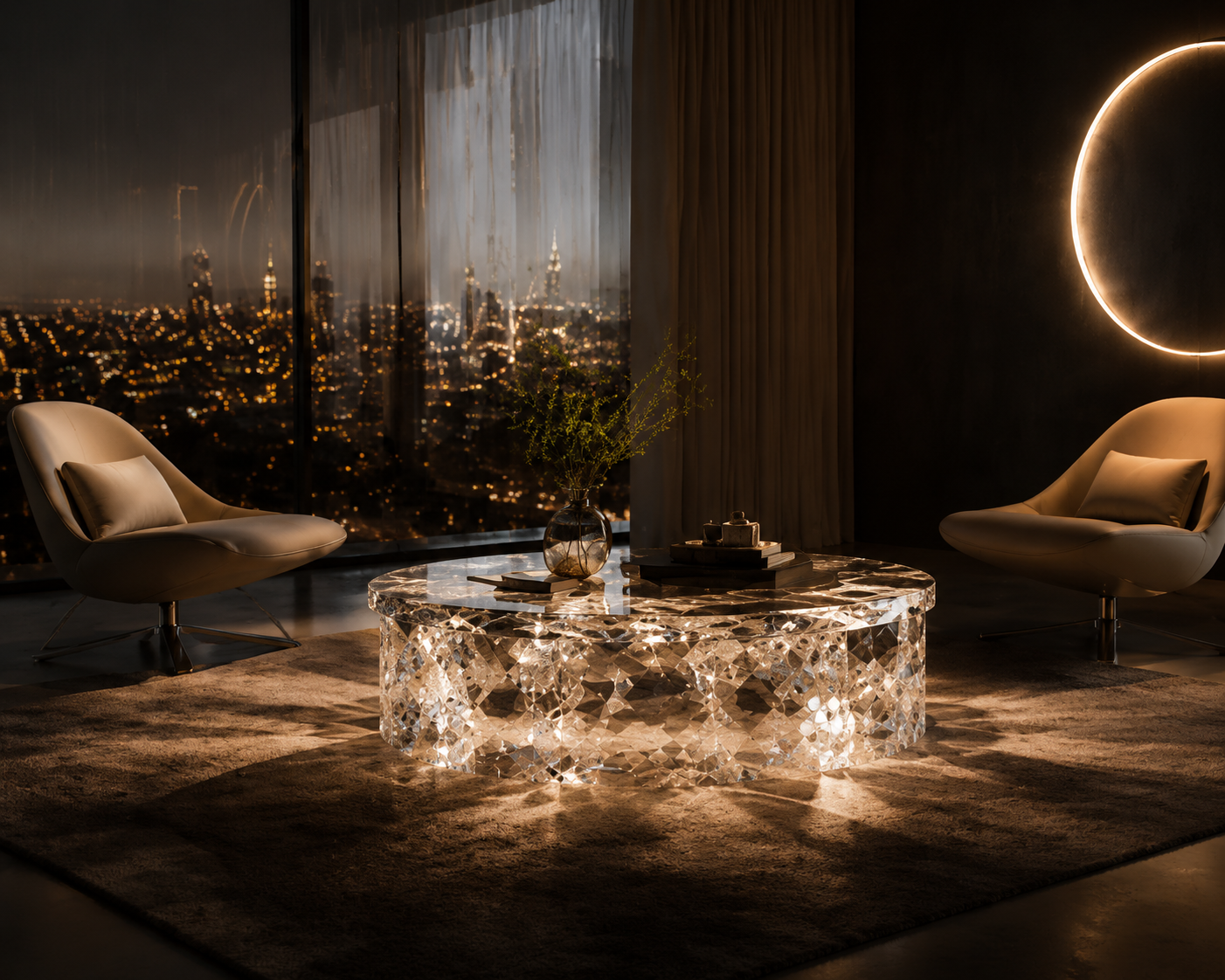
Discoloration after delivery is one of the most frustrating commercial furniture problems because it directly affects brand image. In hotels, retail stores, clinics, restaurants, and offices, customers notice yellowing acrylic, faded panels, patchy veneer, oxidized coatings, and mismatched replacement parts immediately. The problem is often blamed on “poor quality,” but the deeper issue is usually that UV resistance and color stability were never specified or tested.
Ultraviolet light and heat can change many furniture materials. NIST research on UV exposure and polymer degradation has shown that UV intensity and temperature can affect polymer performance, including a faster reduction in tensile elongation-at-failure under stronger UV and temperature conditions for high-density polyethylene. While each polymer behaves differently, the lesson for furniture is clear: plastics and coatings should not be assumed to be permanently stable under light and heat. They need suitable additives, surface protection, material grade selection, and exposure testing for the intended application.
International and industry testing frameworks also reinforce this point. ISO 4892 provides methods for exposing plastics to laboratory light sources, and ISO 4892-3 specifically addresses fluorescent UV lamp radiation, heat, and water to simulate weathering effects from solar radiation or window-glass-filtered solar radiation. ASTM D2565 covers xenon-arc exposure practices for plastics intended for outdoor applications, with attention to controlled test conditions such as temperature and humidity. These standards do not mean every indoor chair needs outdoor-level testing, but they show that color stability can be evaluated scientifically rather than discussed as a vague promise.
For commercial furniture, the specification should distinguish between ordinary indoor use, window-facing indoor use, and semi-outdoor use. A restaurant near a sunny street window, a retail display in a glass storefront, or a hotel atrium under skylights may need stronger UV protection than an internal meeting room. Acrylic furniture should be specified with UV-stabilized PMMA when light exposure is expected, and the buyer should request information on anti-yellowing performance, light transmission stability, and recommended cleaning methods. Coated metal should be specified with a suitable powder coating or finish system for the exposure level. Wood veneer should be protected with a finish that reduces fading, but buyers must also understand that natural materials may change tone over time.
Color control should also be managed through approved master samples. A small sample photographed under warm lighting is not enough. The project should approve physical color standards, gloss range, texture, and acceptable tolerance. For multi-store rollouts, replacement parts should be compared against a retained master sample, not against memory. If a brand’s visual identity depends on exact color consistency, the procurement documents should require batch control and a documented approval process.
Cleaning compatibility is another overlooked cause of discoloration. After delivery, furniture may be cleaned with alcohol, bleach-based products, ammonia, abrasive pads, or strong degreasers. These chemicals can damage coatings, acrylic, lacquer, leather alternatives, and edge seals. Before production, request a care and maintenance guide from the supplier and compare it with the cleaning protocol used by the facility team. A material that survives showroom handling may fail quickly if the housekeeping team uses the wrong chemical twice a day.
4. Specify surface systems, edges, and joints as a complete assembly
Commercial furniture failures often happen at edges, joints, corners, and cutouts. Flat surfaces get the attention, but edges receive impact, moisture, cleaning liquid, and hand contact. Joints receive vibration, load, and movement. Corners concentrate stress. If the surface system is specified without the edge and joint system, the product is only half specified.
For wood-based furniture, edge sealing is critical. Moisture enters more easily through exposed or poorly sealed edges than through a finished face. In a café, restaurant, hotel bathroom vanity, salon counter, or healthcare waiting area, edge banding and sealant quality can decide whether the panel survives. PVC, ABS, veneer, solid wood lipping, and laser edge systems all have different durability levels. The right choice depends on the environment and the expected maintenance. A low-cost edge may look fine at handover but open after repeated cleaning, creating dark lines, swelling, or peeling.
For acrylic furniture, edge quality is both visual and structural. Flame polishing, diamond polishing, CNC cutting, laser cutting, bonding, bending, and mechanical fastening can each affect stress and clarity. Over-polishing or overheating can create internal stress, while poorly bonded joints can produce bubbles, whitening, or weak seams. If a clear acrylic product is part of a luxury retail display or hotel lobby feature, joint quality should be inspected under proper lighting, not only in packaging. The specification should define acceptable bubbles, scratches, edge chips, glue marks, and visual distortion.
For metal commercial furniture, the coating is not just color. Powder coating thickness, pretreatment, corrosion resistance, and scratch resistance affect long-term appearance. Stainless steel grade matters where moisture or cleaning chemicals are present. Aluminum may require anodizing or a suitable coating system depending on the look and exposure. Hardware should be matched to the base material: screws, inserts, brackets, hinges, casters, and glides all need the right corrosion resistance and load capacity. A strong tabletop with weak fasteners is still a weak product.
This assembly mindset also matters for mixed-material furniture. Commercial designs increasingly combine acrylic, metal, stone, wood veneer, laminate, LED lighting, glass, and upholstery. Each material expands, contracts, scratches, and ages differently. A long acrylic panel fixed rigidly into a metal frame without movement allowance can develop stress. A stone top placed on a weak cabinet can create sagging. An LED-lit display case may generate heat that affects adhesives or acrylic clarity. When different materials are combined, the detail drawing should show how each material is allowed to move, how it is supported, and how heat or moisture is managed.
The buyer should request production drawings, not only renderings. Drawings should show panel thickness, edge details, fixing methods, hardware positions, reinforcement, ventilation openings, and service access. For high-value projects, a first article inspection or pre-production sample is worth the cost. It is much cheaper to correct an edge detail before mass production than to replace a full store package after opening.
5. Use commercial standards and emissions documents to filter suppliers
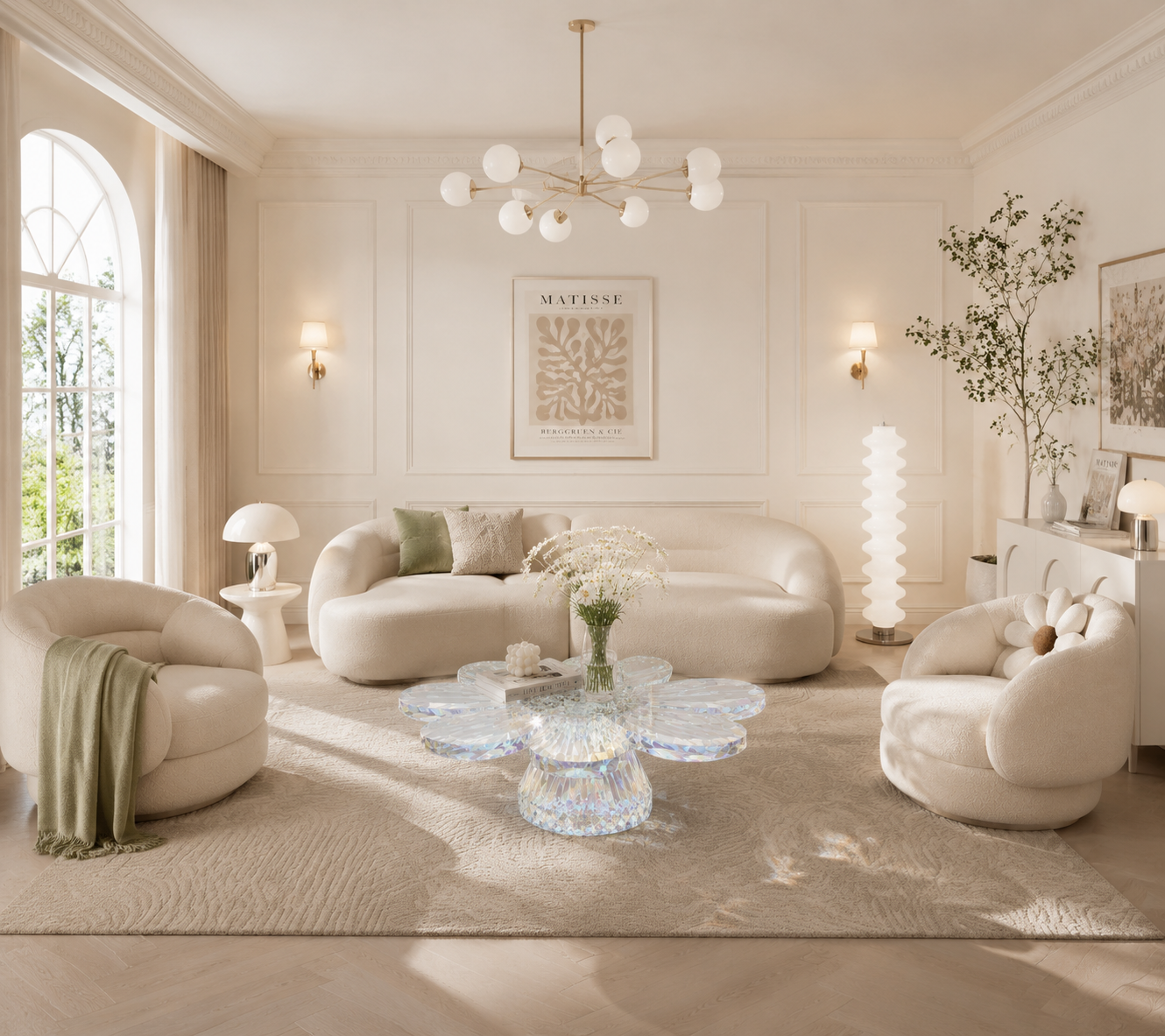
In commercial projects, furniture is part of a public or semi-public environment. It must look good, but it also needs to be safe, durable, and appropriate for indoor air quality expectations. This is where recognized standards and third-party documentation help separate marketing claims from measurable performance.
BIFMA explains that commercial furniture safety, performance, and sustainability standards are used across the business and institutional furniture industry, and that these voluntary standards support expectations for products such as seating, casters, drawers, storage, and workplace furniture. The ANSI/BIFMA e3 Furniture Sustainability Standard, first published in 2008, is described by BIFMA as a leading standard for assessing environmental, health and wellness, and social impacts relevant to furniture products. For procurement teams, this is useful because it shows that commercial furniture evaluation should include durability, emissions, materials, and sustainability, not only appearance.
Indoor air quality is another major concern, especially in offices, hotels, schools, healthcare spaces, and retail environments where people stay for long periods. The U.S. Environmental Protection Agency states that volatile organic compounds are emitted as gases from certain solids or liquids and that concentrations of many VOCs are consistently higher indoors than outdoors. The EPA also notes that pressed wood products made with adhesives containing urea-formaldehyde resins can be significant sources of formaldehyde in indoor environments. For furniture buyers, this means board selection, adhesives, coatings, and certification documents should be checked before installation, not after occupants complain about odor.
UL GREENGUARD Certification is another practical reference in this area. UL Solutions states that GREENGUARD Gold Certified products must meet requirements related to more than 360 VOCs and total chemical emissions, and must also comply with the California Department of Public Health Standard Method for testing and evaluating VOC emissions from indoor sources. A project does not always require GREENGUARD, but low-emitting documentation can be important for schools, healthcare, offices, hospitality projects, and buildings pursuing green certification.
For buyers, the point is not to overload every project with unnecessary certificates. The point is to match documentation to risk. A decorative display in a temporary pop-up store may need a different documentation package from fixed furniture in a school, clinic, hotel, or office headquarters. However, every commercial buyer should at least ask for material safety information, emissions documentation where relevant, coating information, and test reports for critical performance claims such as UV resistance, abrasion resistance, scratch resistance, stain resistance, and load capacity.
Standards also improve communication. Instead of saying “make it strong,” the specification can reference intended load, usage level, commercial durability expectations, and relevant test methods. Instead of saying “low odor,” the buyer can request low-emitting materials or a recognized emissions certification. Instead of saying “no yellowing,” the buyer can request UV-stabilized material, accelerated weathering data, or a retained master sample comparison. Clear standards reduce interpretation gaps and make quotations easier to compare.
6. Build quality control into the project before mass production
The final material check is not a material at all; it is the quality-control process. Many cracks and discoloration issues are preventable when the project includes sample approval, test evidence, supplier declarations, inspection points, and maintenance handover before production begins.
A strong process starts with a written specification. The specification should include the service environment, substrate, visible finish, edge treatment, hardware, cleaning assumptions, emissions requirements, color standard, gloss range, acceptable tolerances, packaging method, and inspection criteria. For custom commercial furniture, the specification should also include shop drawings and sign-off samples. If the product will be installed across many stores, hotels, clinics, or offices, the first batch should be treated as a pilot run. Any problem found in the pilot should be corrected before rollout.
Pre-production samples should be tested like real furniture, not treated as photography props. Place the sample under the lighting conditions expected on site. Wipe it with the actual cleaning product used by the facility. Check edges, joints, drawers, hinges, casters, shelves, and load-bearing parts. For acrylic products, inspect clarity, edge finish, bonding, scratches, and stress marks. For wood veneer or painted panels, inspect moisture protection, color uniformity, orange peel, cracking, pinholes, and edge sealing. For metal parts, inspect coating uniformity, weld quality, sharp edges, and hardware alignment.
Packaging and logistics should also be part of material protection. A well-made acrylic table can be scratched by poor packaging. A painted panel can be damaged by plastic film reacting with uncured coating. A veneer cabinet can absorb moisture during storage if packaging traps condensation. Long-distance shipping, warehouse storage, and site handling are real parts of the delivery environment. Specify corner protection, surface film compatibility, desiccants where needed, stacking limits, and site storage conditions. For high-gloss acrylic furniture, retail display fixtures, or luxury hotel furniture, packaging standards can be as important as production standards.
Maintenance handover is often ignored, but it determines whether the furniture keeps its appearance. The supplier should provide a care guide stating approved cleaners, prohibited chemicals, recommended cloths, maximum exposure warnings, repair methods, and replacement part procedures. This guide should be shared not only with the purchasing department but also with store staff, hotel housekeeping, restaurant cleaners, or facility managers. Many surfaces fail because the people maintaining them never saw the care instructions.
Finally, define acceptance criteria at delivery. Do not rely only on general statements such as “good quality” or “no defects.” State what counts as an unacceptable crack, scratch, color difference, edge gap, glue mark, wobble, odor, or deformation. Define inspection distance and lighting. Clarify whether minor natural variation is acceptable for veneer or stone. Clarify whether color differences between batches are allowed and how replacements will be matched. Clear acceptance criteria protect both the buyer and the supplier.

Conclusion: good material selection is early risk management
Commercial furniture cracking and discoloration are not random accidents. They are usually the visible result of early decisions that were either made carefully or left undefined. A project that chooses materials only by appearance and price may save money at quotation stage but lose far more through repairs, replacements, delayed openings, brand damage, and customer complaints. A project that defines environment, substrate, UV resistance, surface systems, standards, and quality control creates a much stronger chance of stable performance after delivery.
The best commercial furniture specification does not ask, “Does this look good today?” It asks, “Will this still look acceptable after sunlight, cleaning, traffic, humidity, and real daily use?” That question changes the buying process. It pushes buyers to request UV-stabilized acrylic where needed, moisture-stable boards where required, low-emitting materials for occupied spaces, stronger edge systems for wet or high-impact zones, and test evidence for performance claims. It also helps suppliers quote responsibly, because the expected use is clear.
For commercial spaces, material selection is not just a design detail. It is a long-term operating decision. Check it early, document it clearly, and inspect it before mass production. That is the most reliable way to reduce cracking, discoloration, and avoidable after-sales disputes.


