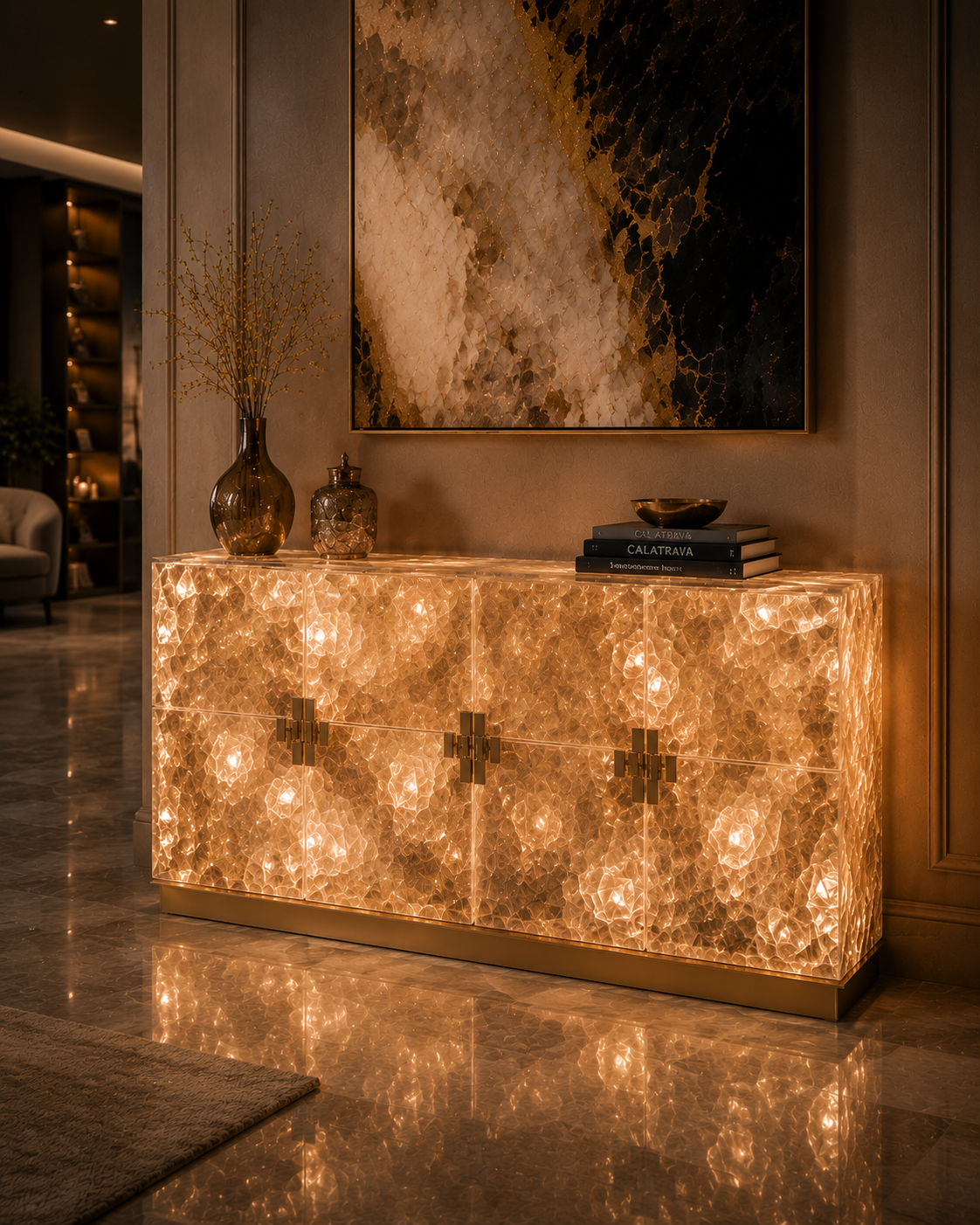
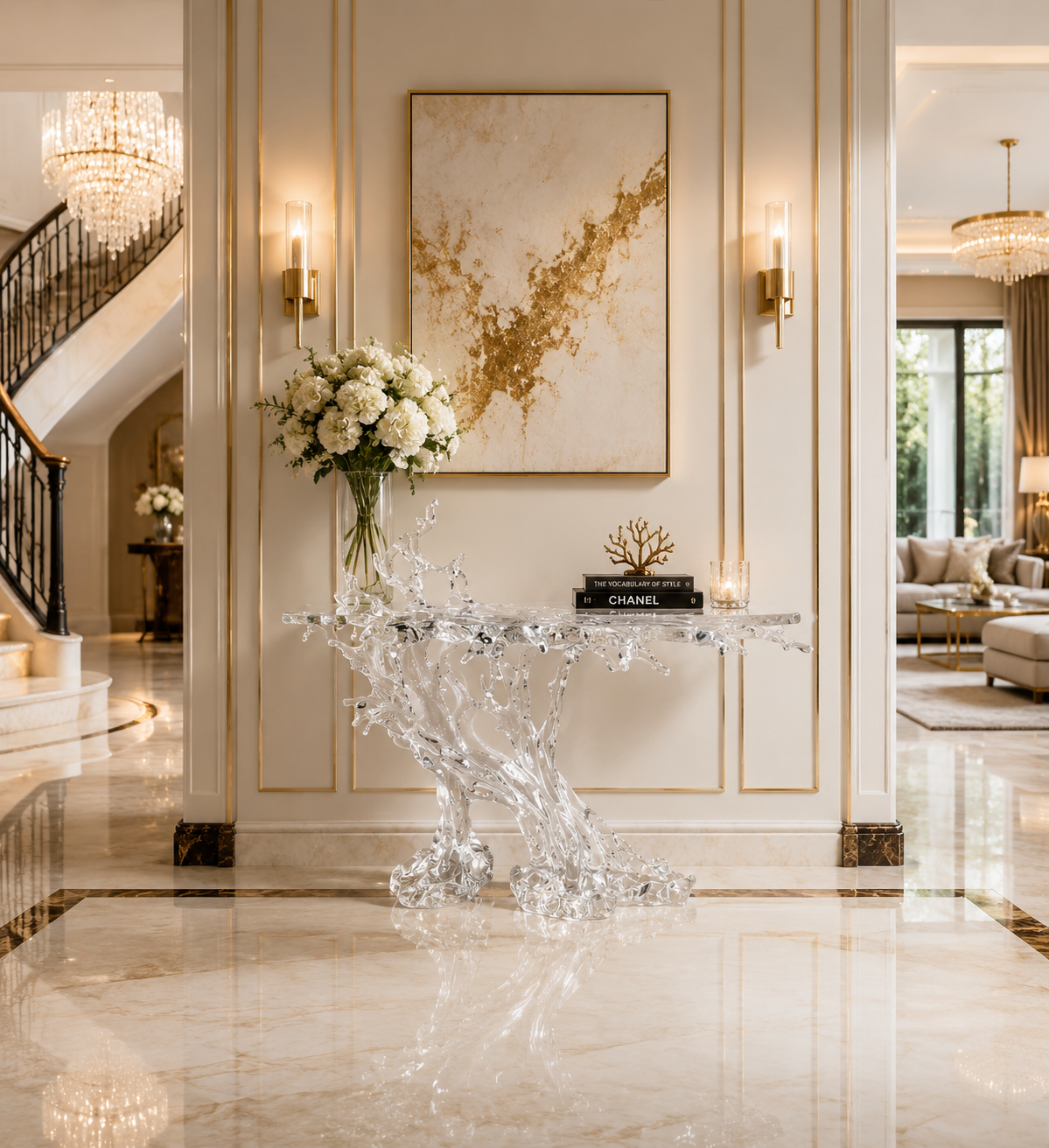
In high-end interior design, furniture is no longer viewed as a simple functional object. A sofa is not only for sitting, a table is not only for placing items, and a reception desk is not only a working surface. In luxury environments, carefully designed furniture has become a connection between architecture, brand identity, and human emotion.
A single statement furniture piece can completely change how people perceive a space. It can define the atmosphere, guide visual attention, and create a memory that remains long after visitors leave.
This is why more luxury residential projects, boutique hotels, premium commercial spaces, and flagship stores are moving away from ordinary furniture solutions and investing in furniture that has artistic value.
The purpose of statement furniture is not to fill an empty area. Its purpose is to give the space a center of attention.
Through our experience developing high-end synthetic crystal furniture, we have observed that the strongest interiors are often not the ones with the most decorative elements. They are the ones where one carefully selected furniture piece creates a clear visual identity and allows the rest of the space to support that idea.
A well-designed statement piece does not compete with the environment.
It transforms the environment.
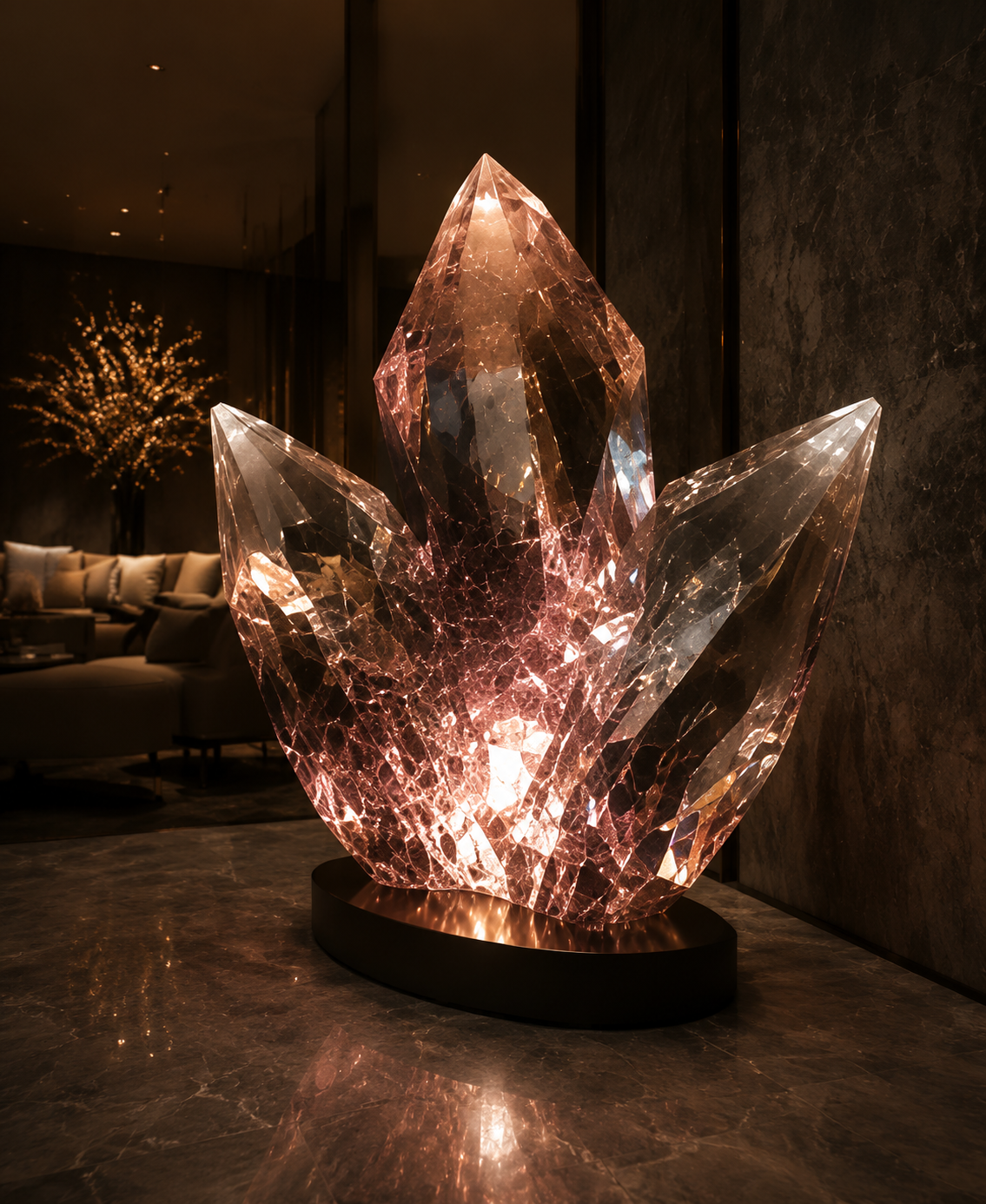
Why Statement Furniture Has Become More Important in Luxury Interiors
Traditional furniture was mainly evaluated by practical factors: comfort, durability, size, and function.
These factors remain important, but luxury projects now require more.
Clients want spaces that communicate personality and create emotional experiences. They want furniture that represents their taste, lifestyle, and brand values.
A standard table may perform its function perfectly, but it may not create any lasting impression.
A sculptural synthetic crystal table, on the other hand, can become the element that visitors remember when they describe the space.
This change reflects a broader movement in luxury design.
The question is no longer:
“What furniture should we put in this room?”
The question has become:
“What furniture can define this room?”
A successful statement piece becomes part of the architecture. It influences how people move through the space, where they look, and how they emotionally connect with the environment.
Furniture Has Evolved From Functional Product to Spatial Expression
In the past, furniture was often selected after the main architectural decisions were completed.
Walls, flooring, lighting, and decoration created the environment, and furniture was added afterward.
Today, high-end projects increasingly take a different approach.
Furniture is becoming an important design element from the beginning.
Architects and designers consider:
How will people experience this space?
Where should attention naturally move?
Which object should create the strongest impression?
What element represents the identity of the project?
This shift has created more opportunities for artistic furniture.
Materials such as synthetic crystal, premium resin, and advanced acrylic allow designers to create pieces that are closer to functional art.
A transparent crystal dining table, sculptural coffee table, or customized reception desk can become the visual signature of an entire project.
Five Major Trends Behind the Rise of Statement Furniture
1. Furniture Is Becoming More Artistic
One of the biggest changes in luxury interiors is the movement from standard furniture production toward artistic furniture creation.
Clients are increasingly interested in pieces that have:
• Unique forms
• Special materials
• Handcrafted details
• Strong visual character
The furniture itself becomes part of the design story.
A statement piece does not need excessive decoration. Its value comes from the relationship between shape, material, craftsmanship, and space.
2. Demand for Focal Furniture Is Increasing
Luxury spaces are becoming more carefully controlled.
Instead of placing many expensive objects throughout a room, designers are creating one or two powerful focal points.
This approach creates stronger visual impact.
For example, in a luxury living room, a customized synthetic crystal coffee table placed at the center can attract attention while maintaining the feeling of openness.
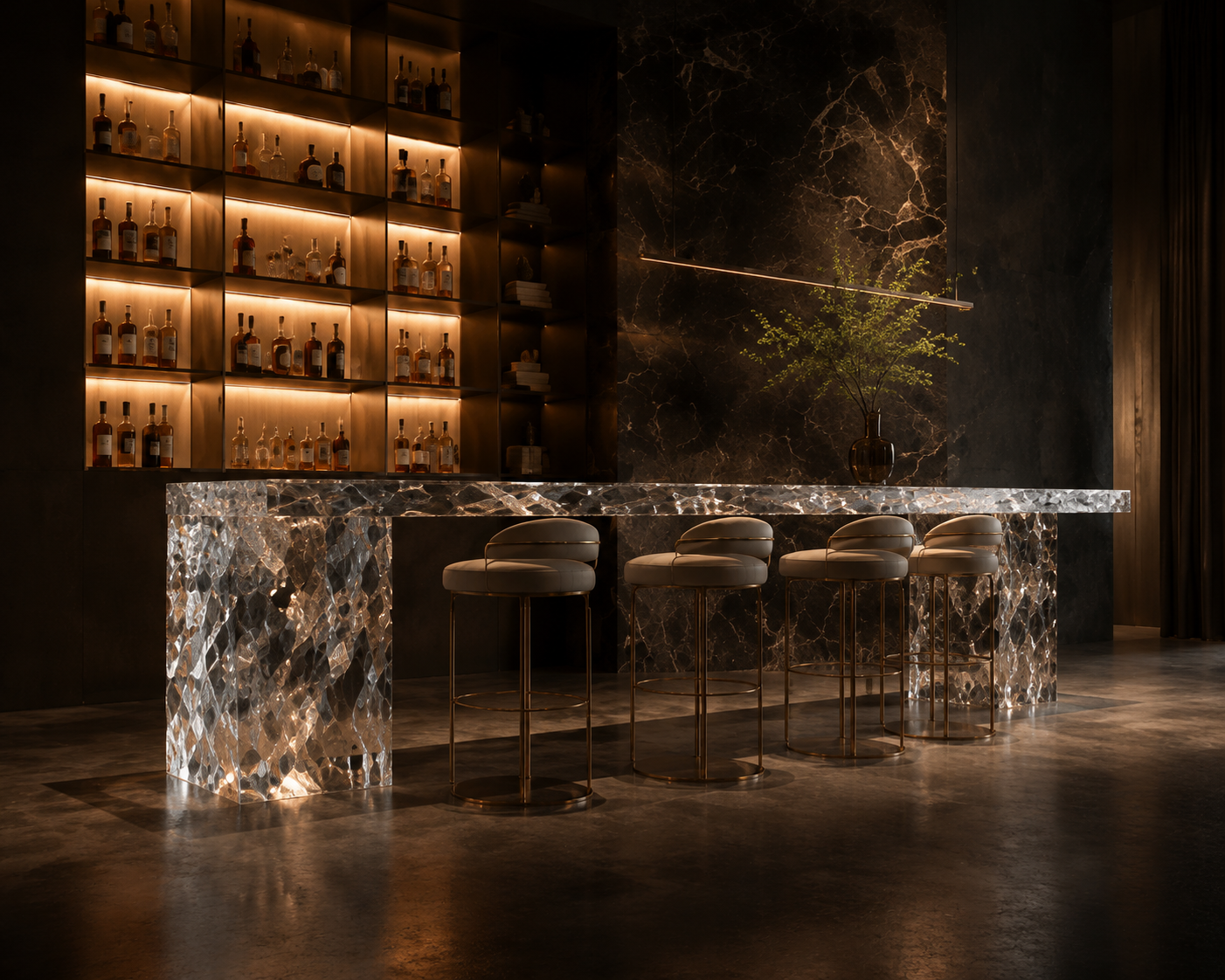
In a hotel lobby, a unique reception counter can immediately communicate quality and sophistication.
The goal is not to make every object impressive.
The goal is to make the right object unforgettable.
3. Spatial Storytelling Is Becoming More Important
Modern luxury design is increasingly focused on storytelling.
A space should communicate something.
A hotel lobby may want to express elegance and calmness.
A fashion showroom may want to express creativity and exclusivity.
A private residence may want to express personality and lifestyle.
Furniture plays an important role because people interact with it directly.
The shape, material, and placement of a furniture piece can influence how visitors understand the space.
4. Function and Art Are Being Combined
Statement furniture is not only decorative.
The most successful pieces combine artistic value with practical use.
A dining table still needs to support daily activities.
A reception desk still needs to serve staff functions.
A coffee table still needs to work within the living environment.
The challenge is creating furniture that performs well while maintaining a strong visual identity.
This balance is where craftsmanship becomes important.
5. Furniture Is Becoming a Brand Memory Point
For commercial spaces, furniture can become part of brand recognition.
Customers may not remember every wall finish or lighting detail, but they often remember a distinctive furniture piece.
A unique reception desk in a hotel.
A signature table in a showroom.
A sculptural display structure in a flagship store.
These elements create visual associations between the space and the brand.
How Client Expectations Are Changing
High-end clients today are becoming more selective.
Luxury residential owners, hotel developers, and commercial brands are no longer satisfied with furniture that only matches a design style.
They want furniture that creates an experience.
They ask:
Does this piece make the space unique?
Does it represent our identity?
Will visitors remember it?
Can it maintain value over time?
This change means furniture selection has become more strategic.
The right statement piece can increase the perceived value of the entire environment.
A carefully designed table or furniture installation can influence how people evaluate the quality of the surrounding space.
What Makes a Successful Statement Furniture Piece?
Creating a statement piece requires more than an attractive appearance.
During high-end furniture development, we consider multiple factors before production begins.
A successful piece needs to balance design ambition with real-world requirements.
Ten Challenges Behind Luxury Statement Furniture Design
1. Furniture Form and Shape
The first challenge is creating a form that attracts attention without becoming visually overwhelming.
The shape needs to communicate personality while remaining suitable for the environment.
Complex curves, transparent structures, and artistic forms require careful engineering to achieve the intended appearance.
2. Space Proportion
Even the most beautiful furniture can fail if the scale is incorrect.
A large crystal table in a small room may reduce comfort.
A small statement piece in a large lobby may lose its impact.
The relationship between furniture size and surrounding space determines whether the piece feels powerful or misplaced.
3. Visual Focus
A statement piece needs the correct position.
Designers carefully consider:
• Viewing angles
• Walking paths
• Lighting direction
• Surrounding elements
Placement is just as important as design.
4. Material Performance
Materials determine how the furniture communicates.
Synthetic crystal, for example, creates a unique relationship with light because of its transparency and depth.
However, achieving a premium appearance requires attention to:
• Thickness
• Edge finishing
• Surface polishing
• Internal clarity
5. Comfort and Practicality
Luxury furniture still needs to be used.
A beautiful product that ignores comfort will not succeed in real environments.
Designers need to balance visual impact with human interaction.
6. Lighting Interaction
Statement furniture is strongly influenced by lighting.
Transparent materials can create completely different effects under different conditions.
A carefully designed lighting environment can enhance depth and reflection.
Poor lighting can reduce the impact of even excellent materials.
7. Brand Style Matching
A statement piece must support the identity of the project.
A futuristic crystal structure may suit a technology showroom but feel unsuitable in a traditional luxury residence.
The furniture must belong to the story of the space.
8. Functional Requirements
Commercial projects often require additional considerations.
Furniture must support:
• Daily operation
• Customer interaction
• Staff requirements
• Safety standards
9. Maintenance Convenience
Luxury spaces need long-term solutions.
Transparent and polished surfaces require appropriate cleaning methods and maintenance planning.
A successful design considers ownership experience.
10. Long-Term Value
The best statement furniture pieces remain attractive over time.
They are not based only on temporary trends.
They combine timeless design, quality materials, and strong craftsmanship.
The Evolution From Traditional Furniture to Artistic Custom Furniture
The furniture industry has changed significantly.
Traditional manufacturing focused mainly on efficiency and repeatable products.
Luxury furniture development focuses more on customization and artistic expression.
Advanced materials have expanded these possibilities.
High-end synthetic crystal furniture, sculptural tables, and artistic installations allow designers to create pieces that are both functional and visually powerful.
Synthetic crystal is particularly valuable because it offers:
• Transparency
• Light interaction
• Custom shapes
• Modern elegance
Unlike ordinary furniture materials, it allows the piece to become part of the atmosphere.
The furniture does not simply sit inside the space.
It changes how the space feels.
Why Synthetic Crystal Furniture Works Well as a Statement Piece
Synthetic crystal has unique characteristics that make it suitable for luxury interiors.
Its transparent appearance creates visual openness.
Its reflective qualities allow it to interact with lighting.
Its customizable nature gives designers more freedom.
For example, a large crystal dining table in a luxury residence can become the connection point between architecture, lighting, and social interaction.
A crystal reception desk in a hotel can create an immediate sense of sophistication.
A custom crystal display structure can help a brand present products in a more memorable way.
However, the material itself is only one part of success.
The final result depends on design, craftsmanship, and placement.
Practical Strategy: Using One Strong Visual Element to Transform a Space
The most effective approach for luxury interiors is often strategic placement.
Instead of filling every area with expensive furniture, designers focus on key locations.
Living Room Center
A statement coffee table or artistic furniture piece can become the visual heart of a luxury home.
Hotel Lobby
The reception area is where guests create their first impression.
A unique furniture element can define the entire atmosphere.
Lounge Areas
Private clubs and hospitality spaces can use statement furniture to create comfort and exclusivity.
Display Spaces
Luxury brands can use distinctive furniture pieces to enhance product presentation and customer engagement.
The principle is simple:
One powerful visual element can often create more impact than many average decorative pieces.
The Future of Luxury Interiors Will Be Defined by Signature Furniture
As luxury design continues evolving, furniture will play an increasingly important role in shaping how people experience spaces.
The future of high-end interiors will not only focus on architecture, decoration, or materials separately.
It will focus on how every element works together to create a meaningful environment.
Statement furniture represents this new direction because it combines function, craftsmanship, and artistic expression.
Synthetic crystal furniture, sculptural tables, and customized installations provide designers with new opportunities to create spaces that feel unique and memorable.
The most successful luxury interiors will not be remembered because they contained the most expensive objects, but because one carefully designed piece gave the entire space a personality that people could instantly recognize — and that single piece may become the reason visitors remember the space long after they leave.
READ MORE:
- How Unique Furniture Helps Luxury Spaces Stand Out in a Competitive Market
- What Designers Should Consider When Choosing Furniture for Luxury Projects
- Why High-End Brand Spaces Need Customized Materials
- Why Some Designs Look More Premium at First Sight?
- Dal punto di vista del designer: quali materiali sono più adatti ai progetti di hotel di fascia alta?
- The Texture of High-End Hotel Spaces Often Lives in Material Details
- Perché i designer danno sempre più importanza all’eseguibilità dei materiali?
- Nel design degli hotel di alta gamma, la scelta dei materiali incide più della forma sulla qualità finale
- Un progetto alberghiero di alta gamma: come elevare la qualità dello spazio attraverso la scelta dei materiali
READ MORE:
- Dal materiale trasparente al valore del brand: il potenziale commerciale dei mobili in cristallo sintetico acrilico
- Perché l’arredamento di alta gamma sta passando dal “design accumulativo” al “design puro”?
- Mobili in cristallo sintetico acrilico: un’espressione leggera di eleganza e lusso negli spazi moderni
- Mobili in cristallo sintetico acrilico: la nuova direzione di crescita del mercato dell’arredamento di alta gamma del futuro
- High-End Space Material Selection: The Customer Experience Is Not Defined by Price, but by These Three Details
- How Unique Furniture Helps Luxury Spaces Stand Out in a Competitive Market
- What Designers Should Consider When Choosing Furniture for Luxury Projects
- Why High-End Brand Spaces Need Customized Materials
- Why Some Designs Look More Premium at First Sight?


