In the past, furniture was primarily viewed as a functional element that filled a space. People focused on whether it was practical, durable, and compatible with the overall interior design style. However, as consumers’ aesthetic expectations continue to evolve, furniture is no longer simply a household necessity. It has become an important expression of lifestyle, personal taste, and the overall value of a space.
In recent years, transparent furniture has gradually entered high-end residences, commercial spaces, luxury hotels, art galleries, and designer projects, becoming one of the most influential trends in modern interior design. The growing popularity of transparent furniture is not simply because of its unique appearance, but because it responds to the modern demand for lightness, elegance, openness, and sophistication.
By breaking the visual barriers created by traditional furniture, transparent furniture creates a sense of freedom and spaciousness while providing designers with greater creative possibilities. It is redefining luxury space aesthetics by transforming furniture from a simple functional object into an essential element of artistic and spatial expression.
1. Transparent Furniture Meets the Modern Demand for Visual Lightness
As urban living spaces become increasingly limited, more consumers are seeking ways to maximize both functionality and visual comfort. Traditional furniture often features solid structures and heavy materials. While these designs can create a sense of stability and quality, excessive use of bulky furniture can make a room feel crowded, especially in apartments, high-rise residences, and open-plan spaces.
The greatest advantage of transparent furniture is its ability to reduce visual heaviness. Because of its transparent characteristics, the furniture remains physically present while visually blending into the surrounding environment. It allows light to pass through freely, making the entire space appear larger, brighter, and more open.
For example, in a modern living room, a transparent acrylic coffee table paired with a minimalist sofa does not create a strong visual barrier like a traditional solid coffee table. Instead, it allows the flooring, lighting, and surrounding decorative elements to remain visually connected, creating a smoother and more spacious atmosphere.
Many high-end residential projects incorporate transparent chairs, side tables, and display cabinets not because they want the furniture to disappear, but because they want to reduce visual clutter and highlight architectural features, artwork, and lighting effects.
This design philosophy reflects the modern pursuit of minimalist living and represents a shift in luxury interior design—from accumulating expensive elements to creating meaningful experiences.
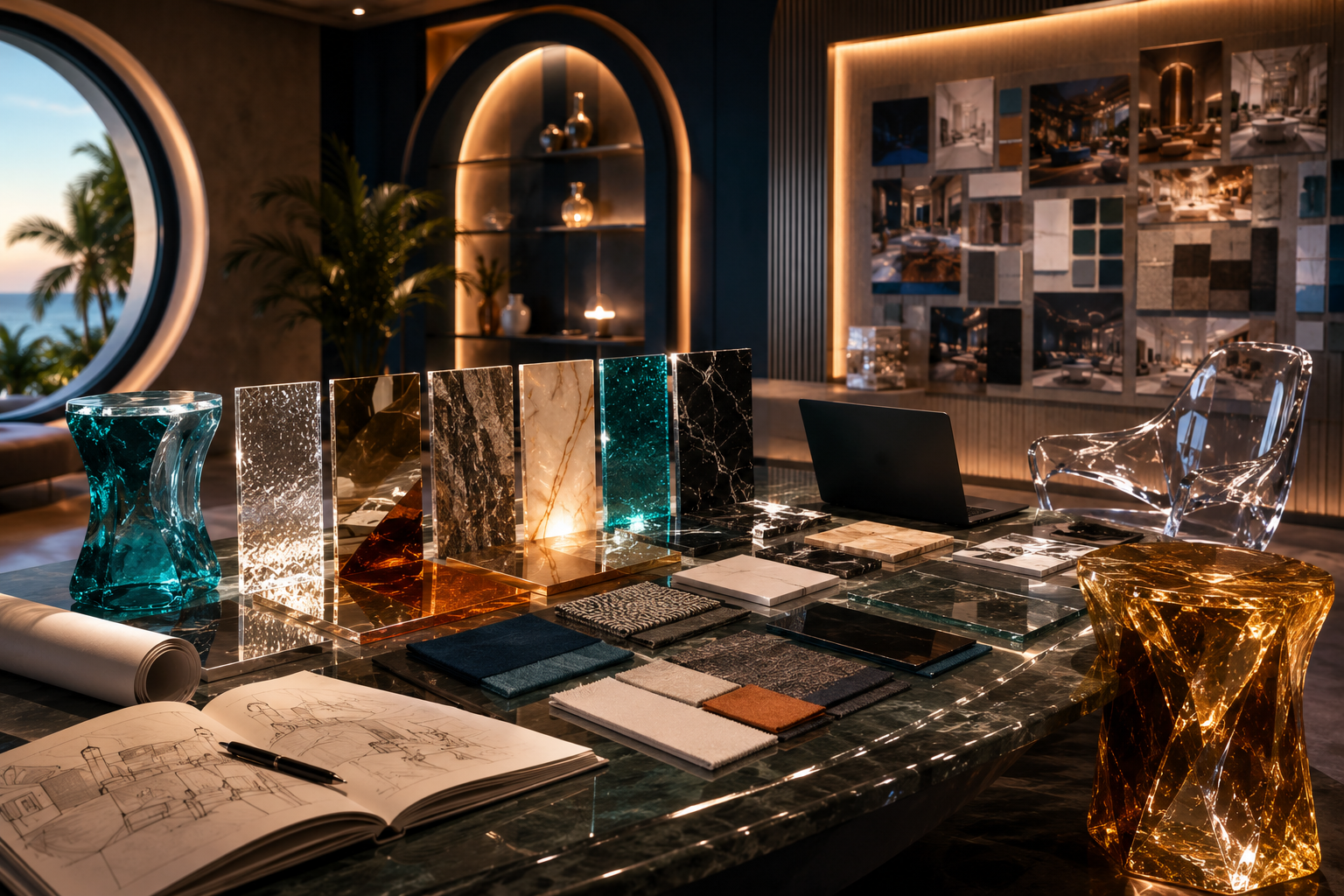
2. Transparent Furniture Satisfies the Desire for Unique and Artistic Design
The luxury market has always placed great importance on uniqueness and design value. High-end homeowners, boutique hotels, and premium commercial spaces are no longer satisfied with furniture that only serves a practical purpose. They expect furniture to become part of the overall design story.
Transparent furniture has gained popularity because it offers a stronger sense of modernity and artistic expression compared with traditional furniture. Designers can use transparent materials to create floating effects, dynamic reflections, and layered spatial experiences, allowing furniture itself to become a piece of art.
In many internationally recognized interior design projects, transparent chairs, transparent sculptures, and transparent display furniture are used to create a seamless relationship between furniture and architecture. Transparent materials reduce the visual weight of furniture, allowing designs to appear more elegant, fluid, and refined.
For consumers, choosing transparent furniture is not merely purchasing a product. It represents a lifestyle choice and an appreciation for modern design, sophistication, and attention to detail. This is why transparent furniture has become an important element in luxury projects that seek individuality and differentiation.
3. Transparent Furniture Is Changing the Perception of Material Value
Traditionally, furniture value was often associated with premium natural materials such as rare wood, imported stone, or precious metals. The rise of transparent furniture has changed the way people understand material quality and design value.
Modern transparent furniture is commonly made from high-quality acrylic, transparent resin, tempered glass, and advanced composite materials. Through precision manufacturing, these materials can achieve a crystal-clear appearance while offering advantages in safety, durability, and design flexibility.
High-quality acrylic, for example, provides excellent transparency while being lightweight and highly adaptable. Designers can use cutting, bending, polishing, and engraving techniques to create complex structures that would be difficult to achieve with traditional materials.
As a result, transparent furniture is no longer simply about being “clear.” It represents the combination of advanced materials, technology, and artistic craftsmanship.
At the same time, growing consumer awareness of sustainability has also contributed to the popularity of transparent furniture. Modern buyers increasingly value products that offer long-term usability, timeless design, and adaptability rather than simply choosing expensive materials.
Transparent furniture achieves a balance between aesthetic appeal, practical value, and modern design philosophy.
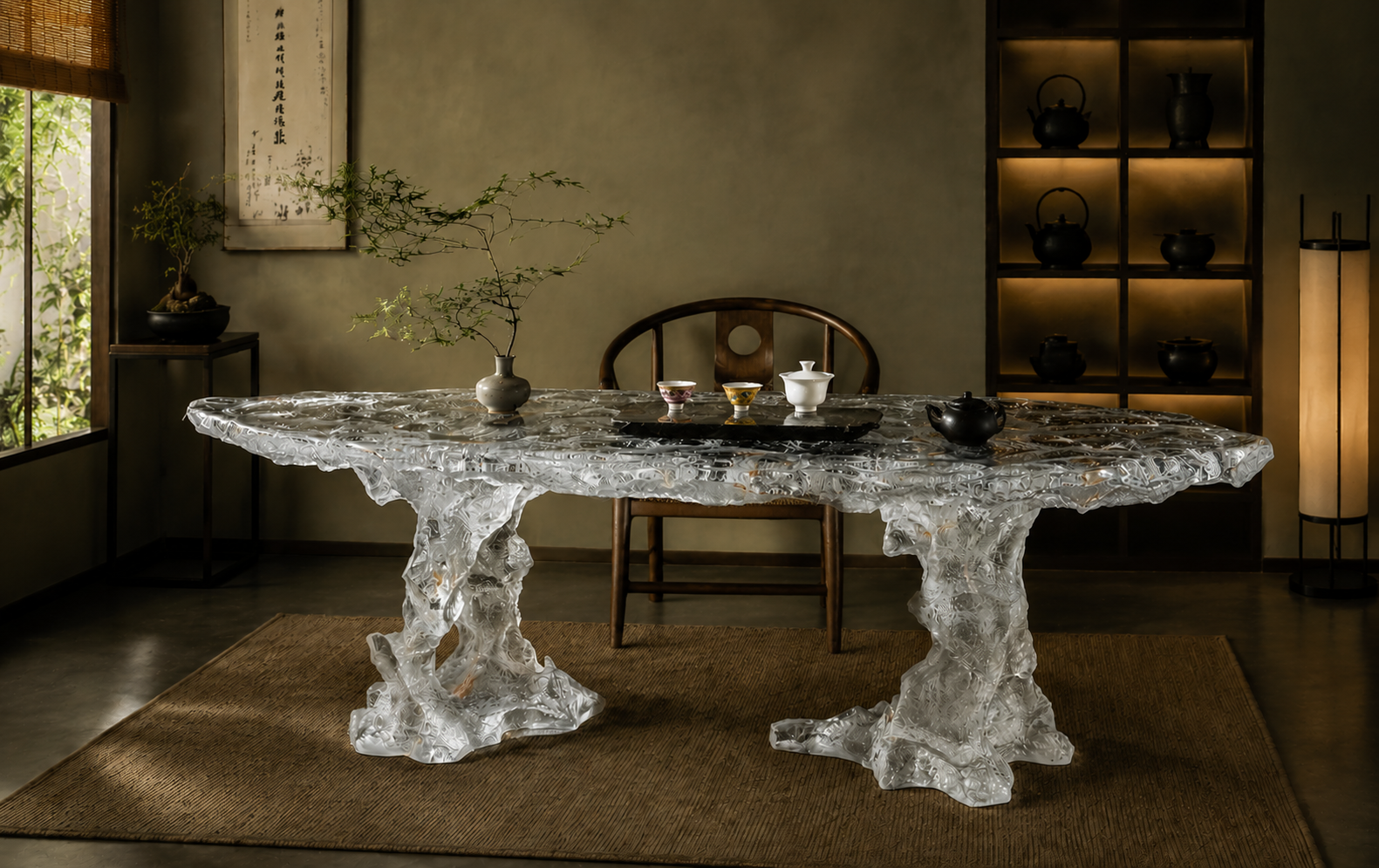
4. Transparent Furniture Enhances the Premium Image of Commercial Spaces
The popularity of transparent furniture extends beyond residential interiors. It is increasingly being used in luxury restaurants, hotels, beauty salons, brand showrooms, and modern offices.
Commercial spaces have higher design requirements because they must not only provide functionality but also communicate brand identity. Transparent furniture creates a strong visual impression while allowing the surrounding environment and products to remain the focus.
For example, luxury brand showrooms often use transparent display cabinets to showcase products without distracting attention from the merchandise itself. Boutique hotels use transparent chairs and decorative furniture to create a modern, elegant atmosphere. Technology companies may incorporate transparent conference tables to reinforce a sense of openness and innovation.
From a business perspective, interior design has become an important part of brand communication. A well-designed environment can influence customers’ perception of a brand’s quality and value. Transparent furniture provides an effective way to create a sophisticated and memorable space.
5. Transparent Furniture Matches the Changing Preferences of Younger Consumers
The changing consumer landscape is another major factor driving the growth of transparent furniture. Younger generations have grown up in a highly visual digital environment and have developed stronger sensitivity toward design, aesthetics, and personal expression.
Traditional furniture often emphasizes durability, solidity, and heritage. In contrast, younger consumers are increasingly attracted to designs that feel flexible, modern, and futuristic. Transparent furniture perfectly matches this shift in aesthetic preference.
In the era of social media, interior spaces have become a way for people to showcase their lifestyle. Transparent furniture creates clean, stylish, and visually appealing compositions in photos and videos, which explains why it has become increasingly popular in designer homes, boutique hotels, creative studios, and lifestyle spaces.
Furthermore, transparent furniture offers exceptional versatility. It can complement minimalist, contemporary, industrial, artistic, and even vintage-inspired interiors. Its ability to adapt to different styles makes it highly valuable in a constantly changing design environment.
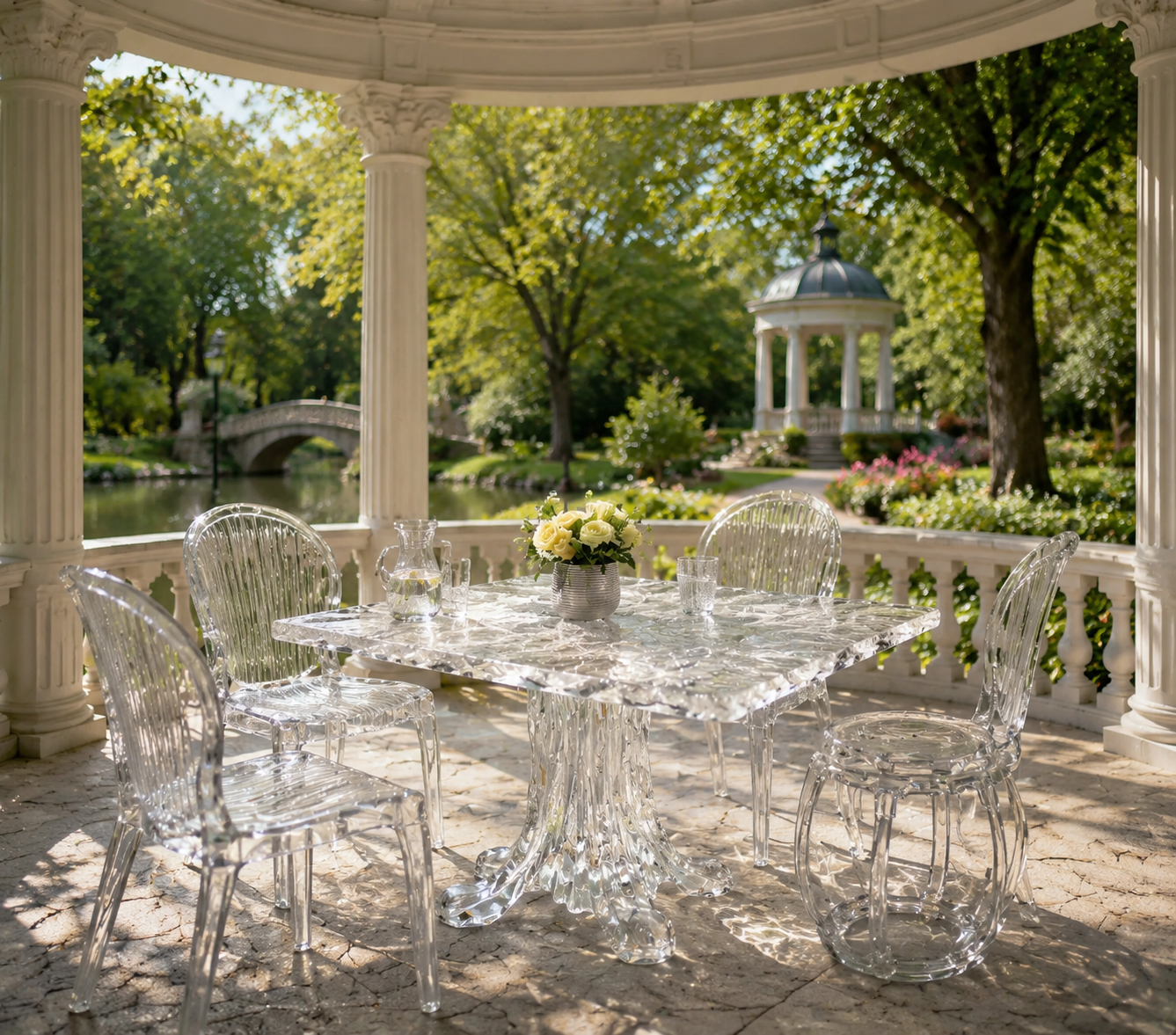
6. Transparent Furniture Will Become an Important Trend in Future Luxury Interior Design
From an industry perspective, the popularity of transparent furniture is not simply a temporary trend. It reflects a deeper transformation in the way people understand space, design, and lifestyle.
Future consumers will increasingly move away from the idea of owning more furniture and toward creating better spatial experiences. Transparent furniture represents a new design philosophy: reducing visual barriers, enhancing spatial flow, and creating a natural relationship between furniture and its surroundings.
Rather than demanding attention, transparent furniture creates value through subtlety. Through innovative materials, refined craftsmanship, and unique visual language, it enhances the overall experience of a space.
With continued advancements in material technology, transparent furniture will likely evolve further in areas such as color variation, surface textures, smart functions, and environmentally friendly materials. Innovations such as smart transparent surfaces, adaptive materials, and sustainable manufacturing processes may shape the next generation of transparent furniture.
True luxury is not simply about filling a space with expensive objects. It is about creating a unique atmosphere and emotional experience. Transparent furniture achieves this through simplicity, innovation, and artistic expression.
The growing popularity of transparent furniture reflects a broader change in how modern consumers define quality living. It transforms furniture from a physical object within a space into an artistic element that enhances the environment. In the future of luxury interior design, transparent furniture will continue to play a significant role, inspiring new perspectives on aesthetics, materials, and lifestyle.


