High-end commercial interiors are not designed only to look beautiful.
They are designed to influence perception.
A hotel lobby needs to communicate quality within seconds. A showroom needs to direct attention toward the product without overwhelming it. A luxury retail space must create a memorable environment while keeping the merchandise at the center of the experience.
Every material, piece of furniture, and visual element plays a role in that process.
This is why transparent furniture can be especially valuable in high-end commercial spaces.
Furniture commonly described as acrylic furniture offers a combination of clarity, visual lightness, and contemporary appeal. But in premium environments, high-quality synthetic crystal furniture can provide something more significant: a way to create strong visual identity without introducing excessive visual weight.
Synthetic crystal can appear substantial and refined while remaining transparent. It can interact with light, reveal architecture behind it, preserve sight lines, and introduce sculptural form without blocking the surrounding environment.
But not every area of a hotel, showroom, or retail space benefits equally from this material.
The greatest value comes from using synthetic crystal furniture in places where transparency, light, visibility, and spatial control are already important.
The question is not simply where transparent furniture can be placed.
The real question is where it can perform a role that other materials cannot perform as effectively.
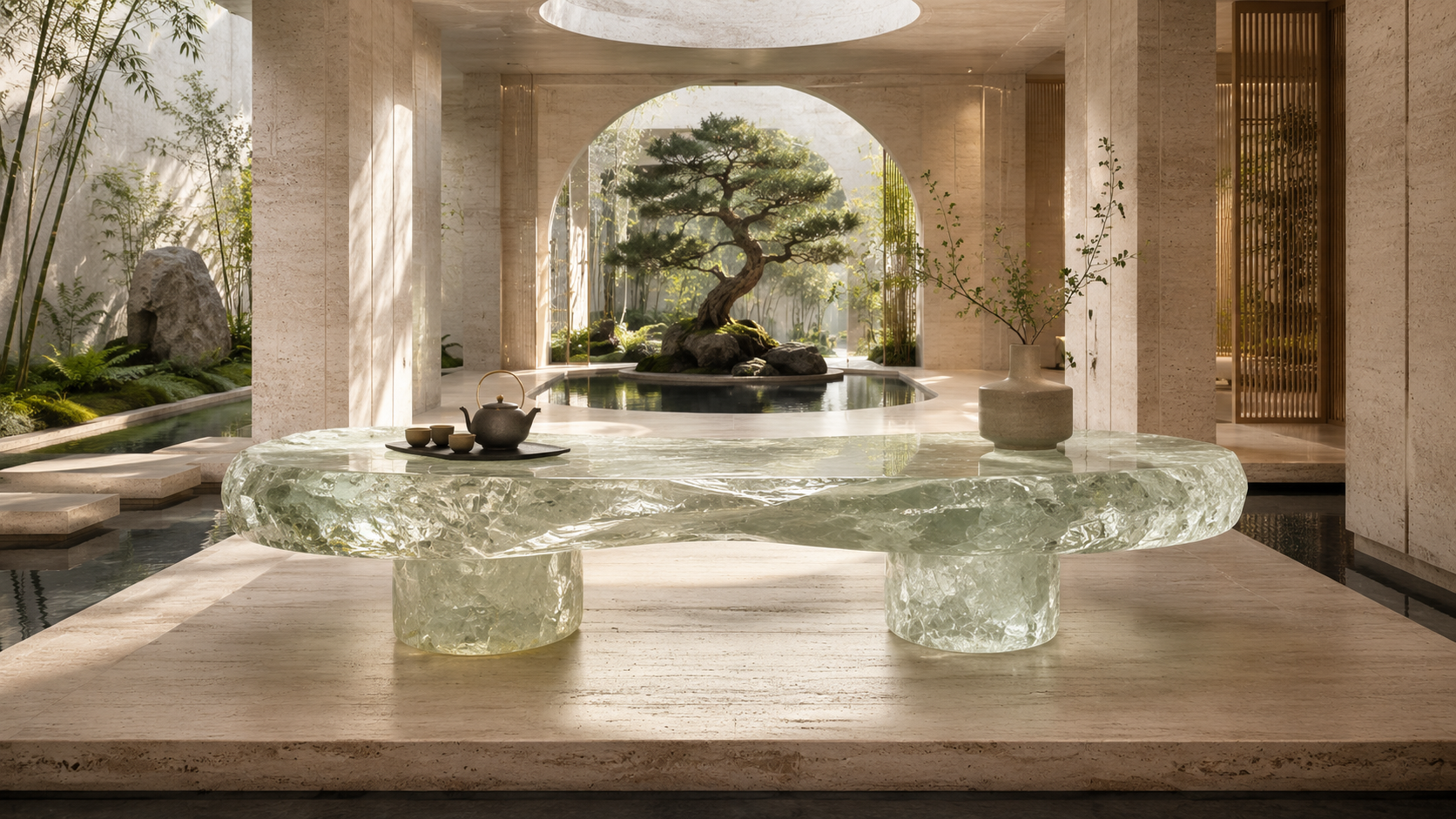
In Hotel Lobbies, First Impressions Matter Most
Hotel lobbies are one of the strongest environments for statement synthetic crystal furniture.
The lobby is the first major interior experience a guest encounters.
Before they enter the room, visit the restaurant, or interact with most hotel services, the lobby establishes expectations.
It communicates the level of luxury.
It reveals the design language.
It influences whether the space feels contemporary, formal, warm, dramatic, or restrained.
Because of this, furniture in a hotel lobby needs to do more than provide function.
It needs to support the identity of the property.
A synthetic crystal console, coffee table, pedestal, or sculptural side table can create a memorable visual moment without competing heavily with the architecture.
This is particularly useful in lobbies with large-scale stone surfaces, custom lighting, dramatic ceilings, or art installations.
A heavy piece of furniture can introduce another solid visual mass.
A transparent piece can create presence while preserving the architecture around it.
The result is often more balanced.
Reception Areas Benefit From Visual Lightness
Reception desks naturally carry visual weight.
They are often large, architecturally important, and positioned in prominent locations.
Adding equally heavy furniture around them can make the entrance feel dense.
Synthetic crystal furniture can reduce that effect.
A transparent side table near lounge seating can provide function without visually expanding the reception zone.
A crystal console can support decorative objects, floral arrangements, or lighting while remaining secondary to the desk.
A sculptural pedestal can hold artwork without creating another opaque block in the room.
This visual lightness is valuable because reception areas often need to remain open and easy to navigate.
Guests should immediately understand where to go.
Furniture should support orientation rather than create visual obstacles.
Lobby Seating Areas Are Ideal for Statement Coffee Tables
Hotel lobby seating groups often need a strong central anchor.
The seating may include large sofas, lounge chairs, rugs, and decorative lighting.
Without a central element, the composition can feel incomplete.
A synthetic crystal coffee table can provide that anchor while keeping the arrangement visually open.
This is especially useful when the seating is substantial.
Large upholstered sofas can already create significant visual weight.
Adding a heavy stone or dark timber coffee table may make the center of the composition feel overly dense.
A transparent table allows the rug beneath it to remain visible and creates a visual pause between the surrounding seating.
This is one of the clearest examples of where high-end transparent furniture can create real value.
It does not simply decorate the room.
It improves the balance of the entire seating composition.
Luxury Suites Can Use Synthetic Crystal More Selectively
In hotel suites, the role of transparent furniture changes.
The space is more private.
The scale is smaller.
The experience needs to feel comfortable rather than theatrical.
This makes placement especially important.
A synthetic crystal side table beside a lounge chair can add sophistication without making the room feel crowded.
A transparent console behind a sofa can provide a functional surface while maintaining visual continuity.
A carefully proportioned coffee table can create a premium feeling without dominating the living area.
In suites with panoramic views, transparent furniture becomes particularly effective.
A solid piece placed near a window may interrupt the visual relationship between the interior and the landscape.
Synthetic crystal can preserve the view.
The furniture remains physically present, but the eye is able to travel beyond it.
This makes it ideal for luxury rooms where the exterior view is part of the experience.
Hotel Bars and Lounges Can Use Transparency to Control Density
Hotel bars and lounges often contain many visual layers.
Lighting.
Upholstery.
Decorative screens.
Artwork.
Mirrors.
Metal details.
Stone surfaces.
Glassware.
This richness can create atmosphere, but it can also become visually crowded.
Synthetic crystal furniture can help control that density.
A transparent side table between lounge chairs can provide function without adding another strong visual element.
A crystal console along a wall can support lamps or decorative objects while allowing wall finishes to remain visible.
Small transparent tables can work particularly well in intimate seating arrangements because they maintain openness between guests.
This is a subtle but important commercial advantage.
The space can include more functional surfaces without feeling overfurnished.
In Showrooms, Furniture Should Support the Product
Showrooms have a different priority from hotels.
The product must remain central.
Whether the showroom displays furniture, lighting, stone, interiors, fashion, vehicles, or luxury materials, every supporting element needs to avoid unnecessary competition.
This is where synthetic crystal furniture can be especially effective.
Transparent furniture can create functional zones without visually blocking the product being displayed.
A crystal consultation table can provide a working surface while maintaining sight lines across the showroom.
A transparent pedestal can support a product while minimizing the visual presence of the support itself.
A console can display samples without introducing another heavy material.
In this context, transparency becomes more than an aesthetic choice.
It becomes a merchandising tool.
Pedestals Are One of the Highest-Value Applications
One of the strongest uses of synthetic crystal in showrooms and luxury retail is the display pedestal.
A pedestal has an unusual responsibility.
It must support the object while remaining visually secondary to it.
Traditional pedestals can become part of the display whether the designer wants them to or not.
A dark pedestal creates weight.
A white pedestal creates a strong graphic block.
A stone pedestal introduces another material.
A synthetic crystal pedestal can create support with much less visual interruption.
The displayed product appears more isolated.
The surrounding space remains visible.
Light can pass through the support.
This can make the object feel more important.
For jewelry, sculpture, decorative objects, accessories, and collectible products, this effect can be particularly powerful.
The pedestal becomes present enough to feel intentional, but quiet enough to let the product dominate.
Product Display Tables Can Feel More Premium With Transparency
Display tables are common in luxury retail.
They are also difficult to design well.
A large opaque table may hide too much of the floor and create a heavy center in the room.
A transparent synthetic crystal display table can provide the same surface area while reducing visual mass.
This is useful in stores where products need to be displayed from multiple angles.
Customers can see the merchandise without feeling as though they are approaching a large visual barrier.
The transparent material also allows the floor design to remain part of the retail environment.
This is especially valuable when the flooring itself is part of the brand's luxury identity.
Marble, decorative stone, custom rugs, or patterned surfaces can remain visible through the furniture.
Luxury Retail Entrances Need Strong but Controlled Statements
The entrance to a luxury retail space is a highly sensitive design zone.
It needs to attract attention.
But it cannot reveal everything at once.
The best luxury entrances create curiosity.
They establish quality while encouraging the visitor to move deeper into the store.
A sculptural synthetic crystal console or display table can work well here because it creates a strong material impression without acting like a visual wall.
The piece can catch light.
Its edges can produce subtle reflections.
Its form can become memorable.
But the customer can still see into the space beyond it.
This maintains depth.
A large opaque object at the entrance may unintentionally shorten the perceived space.
A transparent one can create drama while preserving the invitation to continue forward.
Window Displays Can Benefit From Transparent Supports
Window displays are another high-value area.
The objective of a window display is to make the product immediately readable from outside.
Supporting furniture should therefore be carefully controlled.
Transparent synthetic crystal stands, pedestals, or tables can allow products to appear almost suspended.
This effect can make the composition feel lighter and more refined.
It can also help preserve visibility through the window.
Instead of creating a solid barrier between the street and the store interior, transparent furniture maintains visual depth.
This can make the display feel more sophisticated, especially when combined with focused lighting.
The product appears prominent.
The support recedes.
The store remains visible.
These are valuable qualities in luxury merchandising.
Jewelry and Accessories Retail Can Use Synthetic Crystal Especially Well
Small luxury products often benefit from highly controlled displays.
Jewelry, watches, eyewear, handbags, and accessories need to feel important without being visually overwhelmed by their surroundings.
Synthetic crystal can support this type of presentation because it creates a sense of precision.
Its clarity can complement polished metal, gemstones, glass, leather, and fine detailing.
A transparent pedestal or riser can make a product appear isolated in space.
A crystal display surface can reflect light subtly without introducing another strong color.
Small-scale transparent furniture can also create a gallery-like atmosphere.
This helps shift the perception of the product from commodity to object of value.
Fashion Retail Can Use Transparency to Reduce Visual Competition
Fashion retail spaces often contain many colors, textures, and forms.
Clothing itself provides significant visual information.
Furniture therefore needs to be selected carefully.
A dark table may visually compete with garments.
A strongly patterned surface may interfere with product presentation.
A synthetic crystal table can offer a more neutral support.
It allows the merchandise to remain visually dominant.
Transparent side tables, benches, display platforms, and consultation surfaces can provide function without adding unnecessary visual noise.
This is particularly useful in stores with seasonal product changes.
The transparent furniture does not strongly belong to one color palette.
It can adapt as merchandise changes.
That flexibility creates long-term value.
Cosmetics and Beauty Spaces Can Use Light as Part of the Furniture
Beauty retail is highly dependent on lighting.
Products need to appear clean, precise, and attractive.
Transparent synthetic crystal furniture can work well in this environment because it interacts naturally with illumination.
Edges can catch highlights.
Polished surfaces can create subtle reflections.
Transparent forms can feel hygienic and contemporary.
However, the lighting needs to be carefully controlled.
Too much reflection can create visual clutter.
The goal is not to turn every surface into a light effect.
The goal is to let the material support the atmosphere.
Used correctly, synthetic crystal can make consultation tables, display surfaces, or product stands feel highly refined.
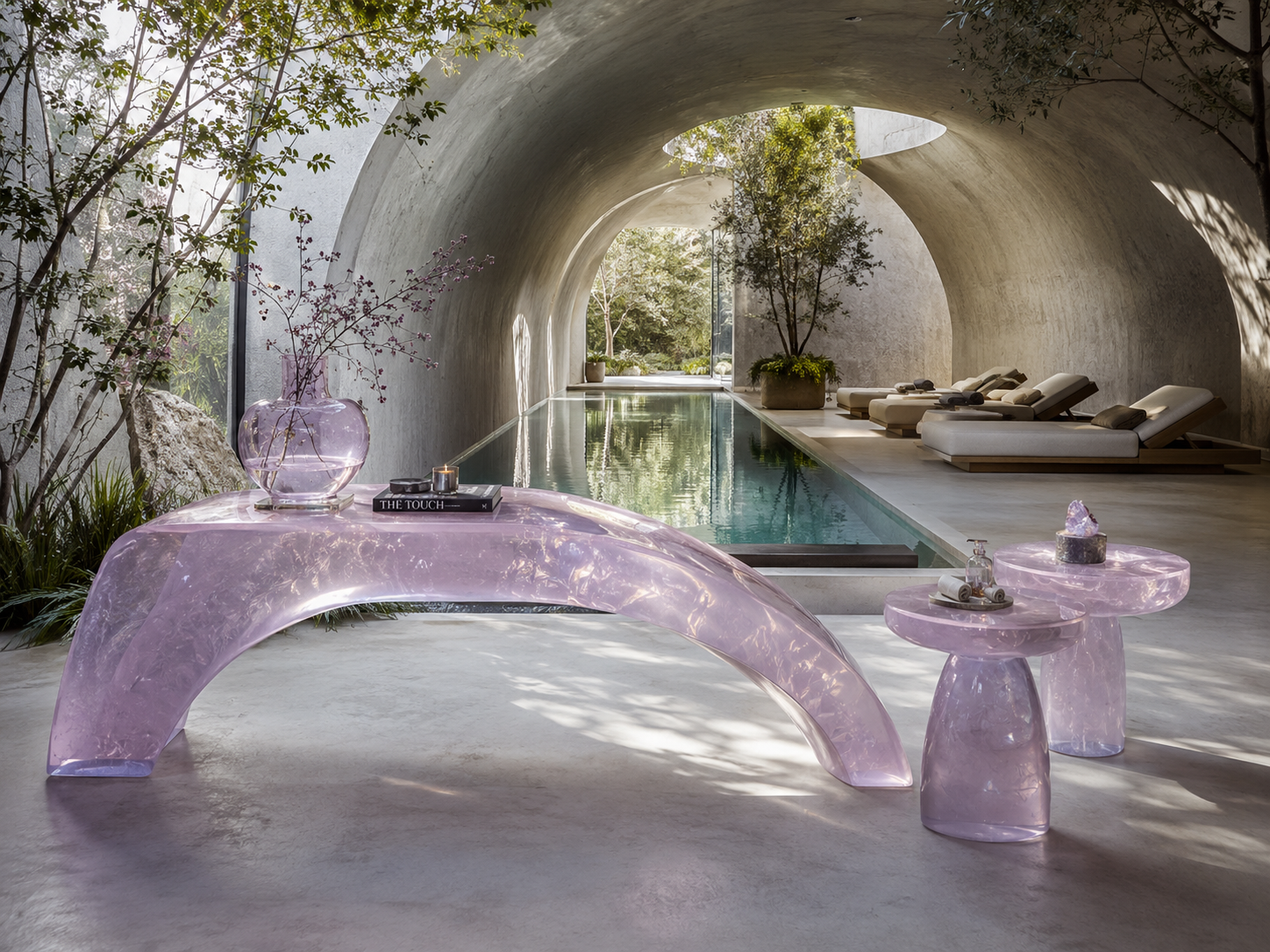
VIP Rooms Are an Ideal Place for Custom Pieces
Luxury retail often includes private consultation rooms or VIP areas.
These spaces have different requirements from the main sales floor.
They need to feel exclusive.
They also need to feel comfortable and personal.
This makes them ideal for custom synthetic crystal furniture.
A bespoke coffee table can anchor a private seating arrangement.
A crystal side table can create a refined contrast beside soft upholstery.
A custom console can support beverages, decorative objects, or product presentations.
Because the environment is smaller and more controlled, the furniture can be more sculptural.
This is an opportunity to introduce a memorable piece that reinforces the brand's premium identity without needing to function as mass display furniture.
Showrooms Can Use Transparent Furniture to Preserve Long Sight Lines
Many premium showrooms rely on depth.
Designers want visitors to see multiple product zones from one position.
This encourages movement through the space.
Opaque furniture can break those sight lines.
Synthetic crystal can help preserve them.
A consultation table can exist in the middle of the showroom without fully blocking the visual relationship between zones.
A display unit can organize products while maintaining openness.
Transparent supports can create structure without making the layout feel segmented.
This makes the showroom feel larger.
It also allows customers to understand the space more intuitively.
In commercial interiors, that sense of visual ease is valuable.
Custom Synthetic Crystal Can Solve Difficult Spatial Conditions
One of the biggest advantages of synthetic crystal furniture in commercial projects is the ability to customize.
Hotels, showrooms, and retail spaces often have unusual dimensions.
A standard table may be too deep.
A console may need to align with a specific architectural feature.
A display pedestal may require an unusual height.
A lounge table may need to fit between fixed seating.
This is where custom synthetic crystal furniture can provide value that off-the-shelf furniture cannot.
The dimensions can be designed around circulation.
The thickness can be adjusted to suit scale.
The geometry can respond to the architecture.
The form can be made more subtle or more sculptural depending on its role.
Customization allows transparency to become part of the spatial strategy rather than simply a material choice.
Brand Identity Can Be Expressed Through Form
Luxury brands often need furniture to feel proprietary.
Generic pieces may be functional, but they do not always strengthen brand recognition.
Custom synthetic crystal furniture can help create a unique visual language.
The shape of a pedestal can repeat brand geometry.
The proportions of display tables can become consistent across locations.
A distinctive crystal console can become part of a hospitality brand's signature interior.
A particular edge profile or sculptural form can appear across multiple showrooms.
Because synthetic crystal has a strong material identity, even subtle repetition can create recognition.
The furniture becomes part of the brand environment.
Transparent Furniture Helps Expensive Materials Remain Visible
High-end commercial interiors often invest heavily in architecture and finishes.
Custom stone floors.
Decorative walls.
Hand-finished timber.
Metalwork.
Textiles.
Specialty surfaces.
It makes little sense to cover those investments unnecessarily.
Synthetic crystal furniture allows surrounding materials to remain part of the visual experience.
A transparent table over marble allows the veining to continue visually.
A console against a decorative wall lets the surface remain visible.
A crystal pedestal allows architectural details behind it to remain readable.
This creates a stronger return on the overall interior investment.
Instead of adding another opaque layer, the furniture reveals what is already there.
It Can Make Small Luxury Spaces Feel Larger
Not every luxury retail or hotel space is large.
Some of the most exclusive environments are compact.
This makes visual density especially important.
A small boutique can quickly feel crowded if every table, display unit, and seating piece is opaque.
Synthetic crystal helps reduce that visual pressure.
A transparent table can provide display space without visually filling the center of the room.
A crystal side table can support seating without making the corner feel crowded.
A console can provide function while preserving wall visibility.
This does not increase the actual floor area.
But it can increase the perceived openness of the space.
In commercial interiors, perception strongly affects comfort.
Large Spaces Benefit From Synthetic Crystal for a Different Reason
In large interiors, the challenge is not usually crowding.
It is scale.
Furniture needs to be substantial enough to relate to the architecture.
Small pieces can feel lost.
This is where synthetic crystal offers a unique advantage.
It can be physically large without becoming visually oppressive.
A substantial console can occupy a long lobby wall.
A large coffee table can anchor oversized seating.
A long display table can match the scale of a showroom.
Because the material remains transparent, the piece can achieve physical scale without creating the same visual density as stone or timber.
This is especially effective in high-ceilinged spaces.
Lighting Installations and Synthetic Crystal Can Work Together
Many hotels and luxury stores invest in dramatic lighting.
Chandeliers.
Sculptural pendants.
Architectural lighting.
Integrated display illumination.
Synthetic crystal furniture can interact with these elements in a sophisticated way.
The material can capture and redirect highlights.
Edges can become more visible under directional light.
Thicker sections can create optical depth.
The piece can change character from day to night.
This makes it especially valuable in spaces where lighting is part of the identity.
However, restraint is important.
The furniture should support the lighting rather than create uncontrolled reflections.
The best results usually come from deliberate coordination between furniture placement and lighting design.
The Material Works Best Where Visibility Has Value
This is perhaps the most important principle.
Synthetic crystal furniture creates the greatest value where transparency solves a real design problem.
Where the view matters.
Where the floor matters.
Where the product needs to remain visible.
Where the architecture should dominate.
Where circulation needs to feel open.
Where a large piece is required but visual heaviness is not.
Where lighting needs something to interact with.
Where a display support should recede rather than compete.
These are the environments where transparent furniture becomes more than decoration.
It becomes functional design strategy.
Durability and Finish Quality Matter More in Commercial Settings
Commercial interiors place greater demands on furniture.
Hotel and retail pieces are touched, cleaned, moved around, and viewed by many people.
This makes quality especially important.
Poorly finished transparent furniture can quickly lose its premium appearance.
Scratches, uneven surfaces, imprecise edges, or weak proportions become very noticeable.
High-end synthetic crystal furniture therefore needs careful production and finishing.
The clearer the material, the more visible the details become.
Craftsmanship is not hidden.
It becomes part of the design.
For luxury commercial projects, this is essential.
The furniture needs to support the quality of the environment over time.
The Most Valuable Placement Is Often the Most Visible One
There is little reason to use a premium material in a location where its qualities cannot be appreciated.
High-end synthetic crystal furniture creates the greatest impact in areas where guests and customers can experience it directly.
Entrances.
Reception zones.
VIP rooms.
Main seating areas.
Display zones.
Window displays.
Consultation spaces.
Feature walls.
Central merchandising areas.
These are places where the furniture contributes to perception.
It helps shape the way people understand the brand or property.
That is where the investment becomes most meaningful.
Luxury Is Often About What Is Not Blocking the View
Traditional luxury interiors often relied on visual abundance.
More material.
More decoration.
More ornament.
More objects.
Contemporary luxury increasingly works differently.
It often depends on control.
Precision.
Space.
Material quality.
Light.
Restraint.
Synthetic crystal furniture fits naturally into this approach.
It can provide function without unnecessary visual obstruction.
It can communicate quality without dominating the room.
It can create a statement while still allowing architecture, merchandise, art, and lighting to remain visible.
This balance is particularly valuable in commercial interiors because the furniture is rarely the only thing that matters.
The experience matters.
The product matters.
The brand matters.
The architecture matters.
The furniture should strengthen all of them.
Final Thoughts
High-end synthetic crystal furniture creates the most value in hotels, showrooms, and luxury retail spaces when it is used strategically rather than everywhere.
In hotel lobbies, it can reduce visual density while maintaining scale.
In suites, it can preserve views and openness.
In lounges, it can add function without overcrowding.
In showrooms, it can protect sight lines and keep the product visually dominant.
In luxury retail, it can make displays feel lighter, more refined, and more intentional.
In VIP rooms, it can become a highly customized expression of exclusivity.
In window displays and product presentation, it can support merchandise without visually competing with it.
The material performs best when transparency is not simply an aesthetic preference, but a solution to a larger design challenge.
That is what separates high-end synthetic crystal furniture from ordinary transparent furniture.
Its value is not only in being clear.
Its value is in what that clarity allows the rest of the space to do.
When the right synthetic crystal piece is placed in the right commercial environment, it can make architecture feel stronger, products feel more important, circulation feel easier, and the entire space feel more considered without ever demanding all of the attention for itself. And that may be the real test of luxury commercial furniture: not whether people immediately notice the furniture, but whether they remember the entire space differently because it was there.


