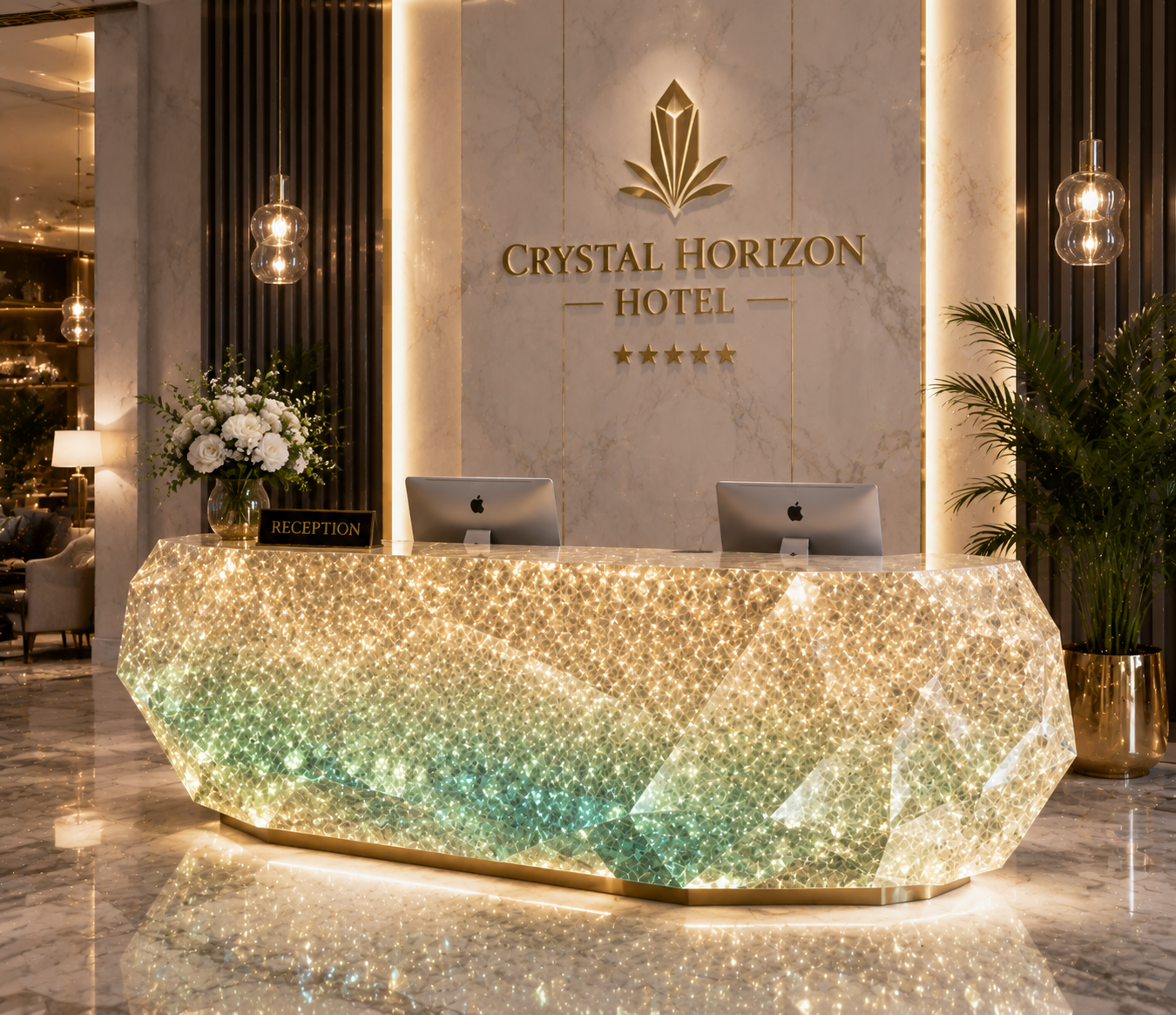
Luxury furniture has traditionally been associated with expensive raw materials, elaborate craftsmanship, prestigious brands, and long-established decorative styles. Solid hardwood, marble, leather, brass, bronze, and natural stone have all played important roles in defining what people consider premium furniture. Yet the expectations of high-end customers are changing.
Today, many affluent homeowners, interior designers, architects, boutique hotel operators, luxury retailers, and property developers are asking a different question. They are no longer simply asking, “What is this furniture made of?” They are asking, consciously or unconsciously, “How does this material make me feel?”
This shift is changing the way luxury furniture is designed, selected, and evaluated.
Synthetic crystal acrylic furniture is particularly interesting within this transformation. With exceptional transparency, polished surfaces, substantial visual depth, sculptural flexibility, and a contemporary aesthetic, high-quality acrylic can create an emotional experience that is fundamentally different from traditional opaque furniture materials.
A clear acrylic console can almost disappear into a room while simultaneously catching and reflecting light. A thick acrylic dining table base can resemble carved crystal. A transparent acrylic chair can appear visually weightless from one angle and architectural from another. A carefully polished acrylic coffee table can transform sunlight, shadows, and surrounding colors throughout the day.
These qualities explain why acrylic is increasingly considered not merely a substitute material but a design medium with its own emotional language.
For high-end clients, that emotional language can be more valuable than the material cost itself.
1. Luxury Furniture Is Moving from Ownership to Experience
For decades, the luxury market was strongly connected with visible indicators of expense. Rare woods, heavy construction, ornate details, prestigious logos, and precious materials helped communicate status. The value of an object was often closely associated with what it cost and how difficult it was to obtain.
That logic has not disappeared, but sophisticated customers increasingly want something more subtle.
A modern luxury interior is often expected to create an experience rather than simply display expensive objects. The atmosphere of a space matters. The interaction between furniture and architecture matters. Light, proportion, visual balance, touch, transparency, and even the amount of empty space around an object can influence how premium a room feels.
Furniture therefore becomes part of emotional architecture.
A piece may create calmness, excitement, curiosity, surprise, comfort, exclusivity, or visual pleasure. These feelings become part of its value.
Synthetic crystal acrylic is especially effective in this context because its visual presence is unusual. Unlike wood, which tends to absorb light visually, or metal, which often creates a strong solid boundary, transparent acrylic allows the surrounding environment to remain visible.
The furniture exists without completely interrupting the room.
This creates an intriguing contradiction: acrylic furniture can have significant physical volume while appearing visually light.
A thick transparent table leg, for example, may feel substantial and luxurious when viewed closely, yet it does not create the visual heaviness of an equally large wooden or stone structure. High-end designers can therefore introduce impressive furniture dimensions without overwhelming an interior.
This effect is particularly valuable in sophisticated urban residences, luxury apartments, hotel suites, penthouses, showrooms, and contemporary villas where architectural openness is important.
The emotional result is often a sense of freedom.
Instead of feeling surrounded by furniture, the user experiences a space where objects, light, and architecture remain connected.
That feeling is difficult to describe using conventional product specifications. It is not simply about thickness, transparency, or dimensions. It is emotional value created by material behavior.
And this is exactly what a growing number of high-end customers are willing to pay for.
2. Transparency Changes the Emotional Perception of Space
Transparency is one of the strongest characteristics of synthetic crystal acrylic furniture.
When properly manufactured and polished, premium clear acrylic can produce remarkable optical clarity. But transparency is valuable for more than appearance. It changes the psychological experience of an interior.
Opaque furniture creates boundaries.
A solid cabinet, table base, bench, or chair occupies both physical and visual space. Transparent acrylic occupies physical space while allowing the eye to continue traveling through the object.
As a result, the room may feel more open.
This can be particularly effective in interiors where designers want to preserve architectural lines, stone flooring, decorative walls, rugs, sculptures, or panoramic views.
Imagine a luxurious living room with a highly patterned natural stone floor. A heavy opaque coffee table may cover a significant part of the stone visually. A transparent acrylic table, however, can provide the necessary function while allowing the flooring to remain part of the visual composition.
The furniture supports the interior instead of competing with it.
This creates emotional harmony.
Light introduces another dimension.
Acrylic can interact with sunlight, spotlights, decorative lighting, and ambient illumination. Polished edges can catch highlights. Thick transparent components can create depth. Curved surfaces can distort reflections. Colored acrylic can filter light and produce subtle tones within the surrounding space.
Consequently, the same piece of furniture may look different in the morning, afternoon, and evening.
That transformation creates visual life.
Many high-end customers appreciate objects that continue to reveal new details over time. A static object may become visually familiar very quickly. A material that constantly interacts with changing light can maintain a sense of discovery.
This is one reason crystal, glass, polished stone, water features, mirrors, and reflective metals have historically appeared in prestigious interiors. They interact with their surroundings rather than remaining visually passive.
Synthetic crystal acrylic can create a similar dynamic effect while offering designers a different range of forms and construction possibilities.
The emotional impression can vary depending on the design.
Thin transparent structures may communicate minimalism and quiet sophistication.
Thick acrylic blocks may create an impression of solidity and exclusivity.
Curved transparent components can feel futuristic and fluid.
Tinted acrylic may introduce warmth, glamour, playfulness, or drama.
Frosted finishes may create privacy and softness.
The material therefore does not communicate one single emotion. Its treatment determines its personality.
This flexibility is particularly attractive in the high-end market, where designers rarely want every interior to look identical.
3. Furniture Is Increasingly Expected to Behave Like Sculpture
One of the most significant developments in luxury interiors is the growing overlap between furniture and collectible design.
A chair may still need to be comfortable. A dining table must still support dining. A console must remain functional. But in premium environments, furniture is increasingly expected to contribute artistic value as well.
Customers want objects that generate conversation.
They want a visitor to enter a room and notice something distinctive.
Synthetic crystal acrylic is well suited to this desire because it can create forms that feel both architectural and sculptural.
Consider a conventional wooden table. Its structure is immediately understandable: top, legs, joints, grain, weight.
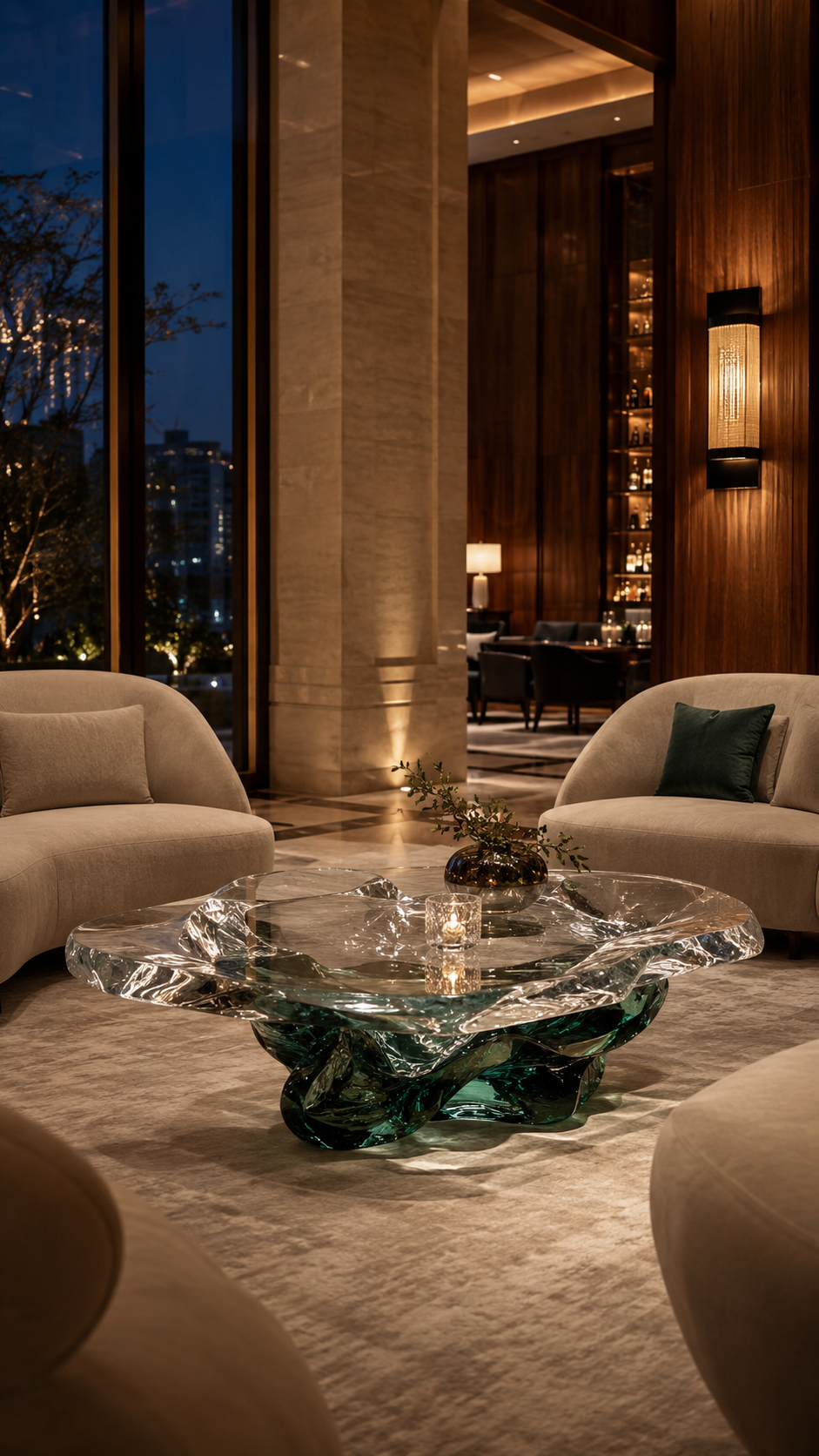
Now consider a substantial transparent acrylic table supported by curved monolithic bases. Depending on the design, it may appear as if the top is floating. The support structure can visually merge with the surrounding space. Light can pass through its edges. Shadows can become part of the design.
The object becomes less predictable.
That moment of visual surprise produces emotional value.
High-end customers often respond strongly to objects that cannot be understood instantly. They may walk around them, touch them, observe the thickness, examine the joints, and watch how the material responds to light.
In other words, the furniture encourages interaction.
Acrylic also allows designers to explore a wide range of visual languages.
It can be minimalist.
It can be glamorous.
It can be futuristic.
It can reference Art Deco.
It can support contemporary sculptural concepts.
It can be combined with brass for a warm luxury appearance, stainless steel for a technical aesthetic, marble for material contrast, upholstery for comfort, or natural wood for a balance between transparency and organic texture.
This ability to create contrast is extremely valuable.
Luxury is often created not by using one expensive material everywhere, but by placing different materials in a carefully controlled relationship.
A transparent acrylic base under a natural stone tabletop, for example, creates a strong dialogue between visual lightness and physical weight.
Acrylic combined with velvet introduces contrast between a cool polished surface and a soft tactile textile.
Acrylic with metal can create precision and structural tension.
These combinations make furniture emotionally richer because the eye and the hand experience different sensations within the same object.
For designers, the material becomes a vocabulary.
For customers, the result becomes a memorable experience.
4. Material Quality Communicates Taste Before the Brand Name Does
High-end customers tend to become more sensitive to details as they gain experience with design.
A less experienced buyer may primarily notice the overall shape of a piece of furniture. A sophisticated buyer often notices the finish.
They notice whether surfaces feel refined.
They notice whether edges are polished properly.
They notice whether joints are visually clean.
They notice whether proportions feel balanced.
They notice whether the object looks precise from every angle.
This is especially important with transparent furniture because transparency exposes construction.
An opaque surface can hide many structural details. Clear acrylic cannot.
For that reason, premium acrylic furniture requires extremely careful execution.
Material selection matters. Thickness matters. Cutting matters. Bonding matters. Polishing matters. Edge treatment matters. Assembly matters.
Small imperfections may become visible because light travels through the material.
Paradoxically, this is one of the reasons well-made acrylic furniture can feel so luxurious. The material demands discipline.
A beautifully executed transparent piece communicates precision without needing excessive decoration.
Its luxury is visible in restraint.
This appeals strongly to contemporary high-end customers who prefer discreet sophistication rather than obvious displays of wealth.
Instead of saying, “Look how expensive this is,” the furniture communicates, “Look how carefully this has been made.”
That difference is important.
Luxury consumption is becoming increasingly connected with personal identity. Many affluent buyers do not want their homes to resemble luxury catalogues filled with instantly recognizable products. They want their interiors to communicate individual taste.
Material becomes part of that identity.
A customer who chooses a dramatic marble dining table may be communicating permanence and grandeur.
A customer who chooses natural oak may value warmth and authenticity.
A customer who chooses sculptural synthetic crystal acrylic may be expressing modernity, experimentation, clarity, creativity, or architectural sophistication.
There is no universally superior emotional message.
The important point is that high-end customers increasingly understand that materials communicate personality.
As a result, furniture selection becomes more personal.
The buyer is not merely purchasing an object.
The buyer is constructing an environment that represents who they are—or how they want to feel when they enter the space.
5. Customization Creates Emotional Ownership
Another reason high-end clients increasingly value material-driven emotion is the growing importance of customization.
Mass-produced luxury and personalized luxury create very different psychological experiences.
A beautiful table available in thousands of identical examples may still be desirable. But a table designed specifically for a particular residence, hotel suite, boutique, or private club carries an additional layer of meaning.
It belongs to the space.
Synthetic crystal acrylic offers many customization possibilities.
Dimensions can be adapted to architecture.
Thickness can be adjusted to create different visual effects.
Clear, tinted, translucent, or frosted appearances can establish different moods.
Forms can range from precise geometric structures to expressive curves.
Acrylic can be paired with metal, stone, wood, upholstery, lighting, or decorative elements.
Designers can develop console tables, dining tables, coffee tables, side tables, benches, stools, chairs, shelves, display systems, decorative objects, and architectural furniture with a consistent visual language.
This customization creates emotional ownership.
When clients participate in selecting proportions, finishes, colors, combinations, and details, they become part of the creative process.
The resulting furniture is no longer simply something they purchased.
It becomes something they helped create.
This psychological difference is powerful.
People naturally develop stronger attachments to objects connected with personal decisions, important life moments, or specific environments.
A custom dining table may become associated with family gatherings.
A sculptural console may become the defining feature of an entrance hall.
A transparent display table may become part of a luxury fashion boutique's visual identity.
A custom acrylic reception desk may become one of the first physical experiences visitors associate with a brand.
In hospitality and commercial design, this emotional effect has strategic value.
Luxury hotels, restaurants, boutiques, galleries, spas, and clubs are constantly looking for ways to become memorable.
Furniture can contribute directly to that memory.
Guests may forget the precise dimensions of a table, but they may remember how the lobby felt.
Customers may not know the technical specifications of a transparent display unit, but they may remember the sense of lightness and exclusivity it created around the products.
This is emotional value translated into commercial value.
6. The Future of Luxury Is About Memorable Materials
The traditional definition of luxury focused heavily on scarcity and cost.
The future definition is broader.
Luxury can still involve expensive materials, but price alone is no longer enough. High-end clients have access to countless premium products. What becomes scarce is not necessarily the material itself.
What becomes scarce is a distinctive experience.
A memorable atmosphere is scarce.
A genuinely original design is scarce.
A piece that feels perfectly integrated with a specific interior is scarce.
A product that continues to generate visual pleasure after years of ownership is scarce.
This explains why emotional value is becoming central to luxury furniture.
High-end clients are increasingly evaluating furniture using questions such as:
Does this object make the room feel different?
Does it create a sense of calm or excitement?
Does it reflect my personality?
Does it photograph beautifully without feeling designed only for photographs?
Will guests remember it?
Does it work with the architecture rather than simply occupying it?
Will I still enjoy looking at it after the novelty disappears?
Can it become part of the identity of the space?
These questions go far beyond basic functionality.
Synthetic crystal acrylic can answer many of them because its greatest strength is not simply transparency. Its real strength is its ability to transform perception.
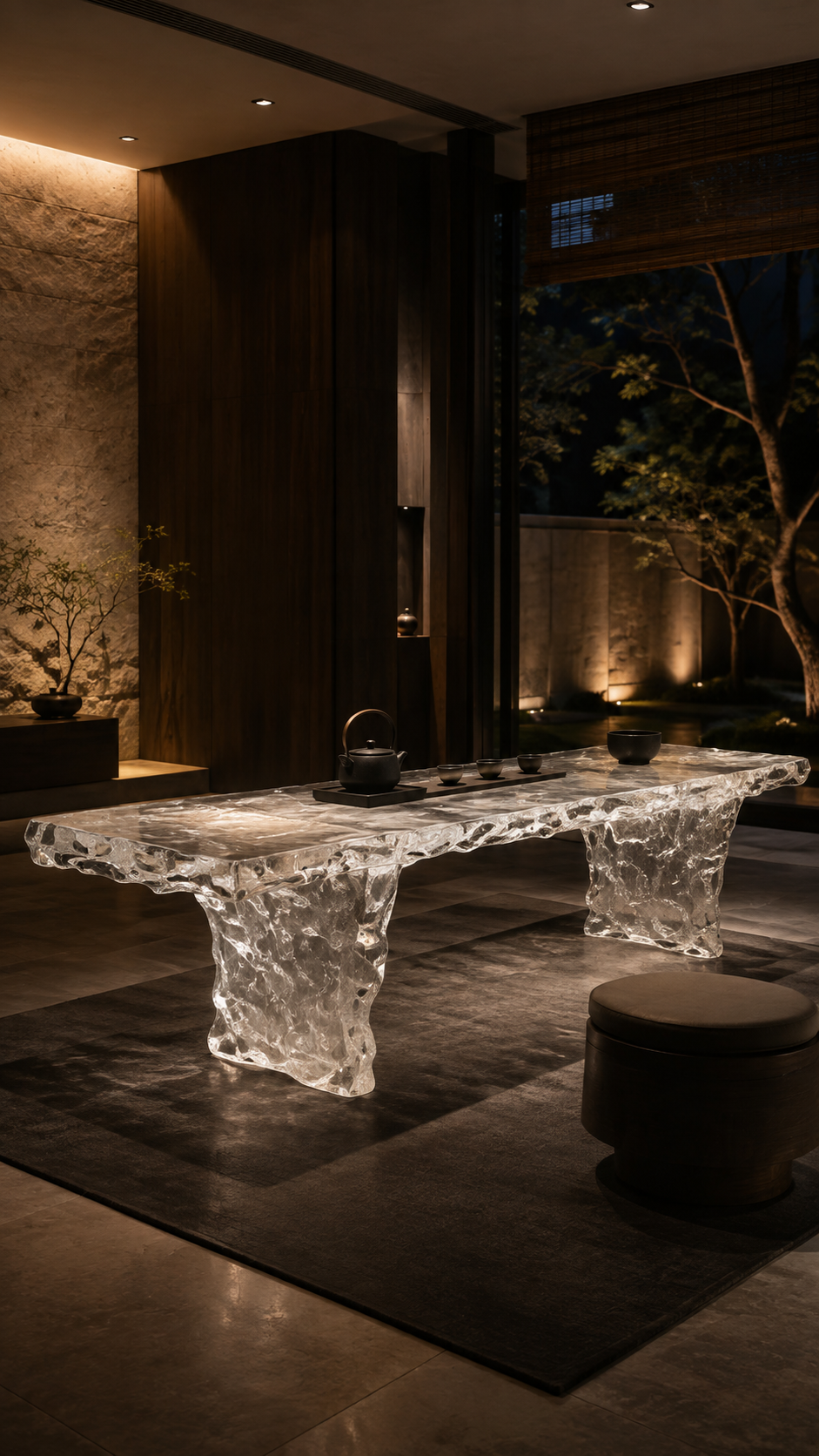
It can make heavy forms appear light.
It can make solid structures appear almost immaterial.
It can capture reflections without becoming a mirror.
It can introduce glamour without elaborate ornamentation.
It can create visual presence without blocking a space.
It can make a functional object feel architectural.
It can combine modern technology with artisanal finishing.
This complexity gives the material emotional range.
For designers working with premium clients, that range creates opportunities.
Acrylic furniture can be designed to disappear into a minimalist interior or become the dramatic centerpiece of a room.
A transparent console can quietly support an artwork.
A thick sculptural dining table base can function as the artwork.
A clear chair can preserve visual openness.
A tinted acrylic side table can introduce a controlled color accent.
Acrylic shelving can display luxury objects while minimizing visual obstruction.
The same material can therefore produce radically different experiences depending on how it is used.
That adaptability makes it particularly relevant to contemporary luxury.
Emotional Value Does Not Mean Ignoring Practical Quality
It is important to emphasize that emotional value does not replace technical quality.
High-end clients expect both.
A visually impressive piece that performs poorly will not create lasting luxury. Emotional satisfaction depends partly on confidence in the product.
Furniture must feel stable.
Surfaces must be appropriately finished.
Connections must be carefully engineered.
Dimensions must suit their intended function.
Materials must be selected according to the application.
Packaging, transportation, installation, and after-sales support also influence the final customer experience.
In the premium market, every stage contributes to perceived value.
A beautifully designed acrylic table that arrives poorly protected can immediately damage the emotional impression.
A customized product delivered with precise documentation, professional packaging, careful installation, and clear care instructions creates a very different relationship with the client.
Luxury is therefore not located in one material alone.
It is created by the complete experience surrounding that material.
This also explains why high-end buyers increasingly care about the manufacturer's capabilities.
They want to know whether a supplier understands design intent.
They want accurate dimensions and consistent finishing.
They want communication during customization.
They want predictable quality.
They want the finished object to match the emotional promise of the design.
For manufacturers of synthetic crystal acrylic furniture, this creates an important opportunity.
Competing only on price reduces the material to a commodity.
Competing on craftsmanship, optical quality, customization, design capability, engineering, finishing, and emotional impact creates a completely different market position.
Why Designers Are Important in This Shift
Interior designers and architects play a central role in the growing emphasis on emotional material value.
Professional designers do not select furniture in isolation. They consider the entire environment.
They think about how sunlight moves through a room.
They study sightlines.
They coordinate furniture with flooring, walls, ceilings, artwork, lighting, and architectural details.
They understand that two visually beautiful objects may not work together if they compete for attention.
Transparent acrylic gives designers another way to control visual hierarchy.
Acrylic furniture can provide function without introducing another dominant opaque mass.
This can be particularly useful when a room already contains expressive materials such as marble, decorative stone, patterned rugs, artwork, or dramatic lighting.
In other projects, designers may intentionally use thick or colored acrylic as a focal point.
The same material can either reduce visual noise or create visual drama.
That dual capability is rare.
As high-end interior design becomes more sophisticated, materials with this degree of flexibility become increasingly valuable.
Acrylic Furniture and the New Language of Contemporary Prestige
Prestige is changing.
For some buyers, prestige once meant demonstrating access to expensive objects.
For many contemporary high-end clients, prestige increasingly means demonstrating taste.
Taste is more difficult to purchase.
It depends on selection, proportion, restraint, context, and originality.
A transparent acrylic table may not immediately communicate its price to every visitor. That can actually increase its appeal to sophisticated customers.
Its value is discovered through observation.
The thickness becomes noticeable.
The polishing becomes noticeable.
The clarity becomes noticeable.
The way the base connects to the top becomes noticeable.
The interaction with light becomes noticeable.
This slow discovery creates a form of quiet luxury.
Instead of relying on obvious decoration, the product rewards attention.
That approach aligns particularly well with architects, designers, collectors, and design-conscious homeowners who prefer objects with conceptual clarity.
From Product to Memory
Ultimately, the strongest luxury furniture does something that ordinary furniture rarely achieves.
It becomes part of memory.
People remember the table where important dinners happened.
They remember the chair beside a favorite window.
They remember the extraordinary hotel lobby encountered during a journey.
They remember the boutique where everything seemed to float.
They remember the transparent console illuminated by afternoon sunlight.
When material contributes to these memories, furniture gains emotional significance.
Synthetic crystal acrylic has the potential to create exactly this type of experience because it interacts so strongly with its environment.
It changes with light.
It responds to surrounding colors.
It reveals architecture through itself.
It creates reflections and highlights.
It allows objects placed on or around it to remain visually connected.
It can feel both present and absent at the same time.
This characteristic gives acrylic an almost atmospheric role.
The furniture does not merely occupy the environment.
It participates in the environment.
Conclusion
High-end customers are increasingly interested in the emotional value created by materials because luxury itself is becoming more experiential, personal, and design-conscious.
Customers still care about quality, durability, craftsmanship, and function. But these factors increasingly represent the minimum expectation rather than the complete definition of luxury.
The next level of value comes from emotion.
How does a material transform light?
How does it affect the perceived size of a room?
Does it create visual calm or excitement?
Does it invite people to look closer?
Does it express individuality?
Can it become part of the identity of a space?
Can it create a memory?
Synthetic crystal acrylic furniture is particularly relevant to these questions. Its transparency, optical depth, sculptural possibilities, customization potential, and ability to interact with light make it more than a practical furniture material.
When designed and manufactured carefully, it becomes an emotional medium.
For premium homeowners, architects, interior designers, hospitality brands, luxury retailers, and developers, this is increasingly what distinguishes an ordinary furnishing from an exceptional one.
The future of high-end furniture will not be determined simply by which material is the most expensive.
It will be shaped by which materials create the most meaningful experiences.
And in that new definition of luxury, synthetic crystal acrylic has a compelling role to play.
READ MORE:
- The Secret to an Expensive-Looking Interior: Why Designers Pair Transparent Furniture with Metal, Stone and Low-Saturation Colors
- Smoke Grey, Amber, Champagne or Clear? What Different Resin Furniture Colors Do to the Atmosphere of a Space
- From Material Presence to Premium Appeal: The Color Logic Behind Synthetic Crystal and High-End Resin Furniture
- Transparency Is Not Cheap: How Platinum Acrylic Furniture Elevates Interiors Through Color and Light
- How Can Commercial Spaces Avoid Looking Cheap? Start with the Color and Clarity of High-End Resin Furniture
- Synthetic Crystal Acrylic Furniture: A Material Trend That Cannot Be Ignored in the Future of High-End Design
- Why Can One Crystal-Grade Acrylic Furniture Piece Transform the Perceived Value of an Entire Space?
- Synthetic Crystal Acrylic Furniture: The Differentiated Answer the High-End Home Market Is Looking For
- From Transparent Aesthetics to Brand Elevation: How Synthetic Crystal Acrylic Furniture Enhances Product Positioning


