1. Transparency Is Becoming a Premium Visual Language
In the furniture industry, product positioning determines far more than price. It influences how customers understand a brand, how designers evaluate a supplier, how products are presented in showrooms, and ultimately which type of customer is attracted to the company.
A furniture manufacturer may produce a technically excellent product, yet if the market perceives that product as ordinary, its commercial value will remain limited. Conversely, a product with a distinctive material identity, consistent design language, refined craftsmanship, and compelling presentation can occupy a much stronger position in the minds of buyers.
This is particularly important in the premium furniture market. High-end homeowners, interior designers, architects, boutique hotels, luxury retailers, property developers, and hospitality brands are not simply purchasing a table, chair, console, or display unit. They are purchasing an aesthetic direction, atmosphere, differentiation, and a visual statement that supports the identity of a space.
Synthetic crystal acrylic furniture has become increasingly relevant within this environment because it provides something traditional furniture materials cannot easily reproduce: a combination of transparency, sculptural freedom, visual lightness, modernity, and optical depth.
Every material communicates something before a customer touches the product. Solid wood may communicate warmth, craftsmanship, tradition, and natural character. Marble may suggest permanence, luxury, and architectural prestige. Metal can communicate precision, industrial strength, or contemporary minimalism. Synthetic crystal acrylic communicates clarity, lightness, modernity, and visual experimentation.
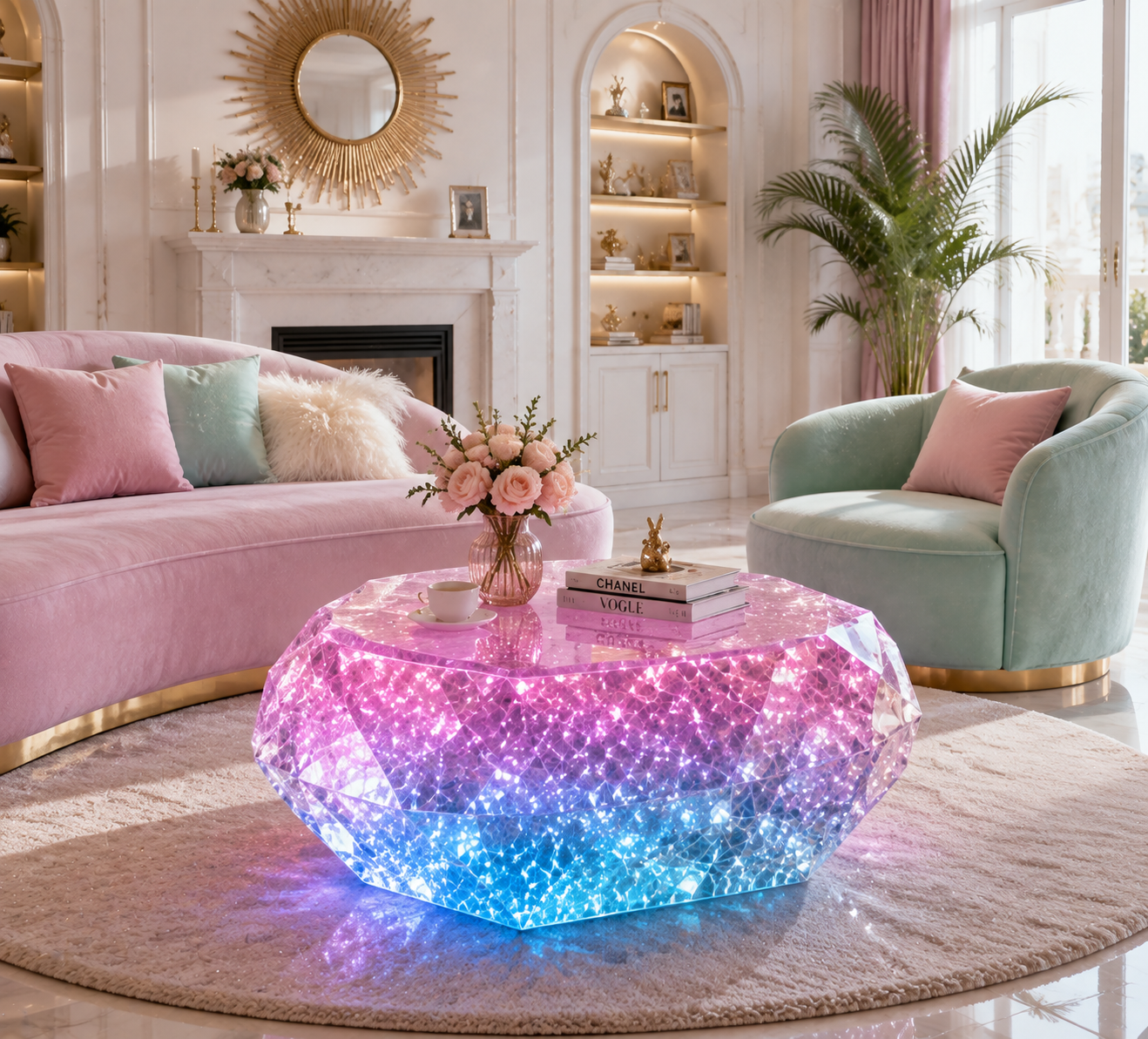
When properly designed and manufactured, high-quality clear acrylic can create an almost crystal-like appearance. The material interacts with its surroundings rather than visually blocking them. A transparent console table positioned against a decorative wall allows the wall to remain visible. A clear acrylic coffee table positioned on an expensive rug allows the pattern beneath it to remain part of the room. A transparent dining table base can support a substantial tabletop without introducing visual heaviness.
This interaction between furniture and architecture is one reason acrylic has become increasingly relevant in premium interior design. The product does not simply occupy a space. It participates in the composition of the space.
Transparency gives designers a valuable way to preserve architectural openness. It allows furniture to remain physically present while appearing visually lighter. This visual contradiction can immediately make a product feel more sophisticated, and sophistication is a fundamental component of premium positioning.
2. Acrylic Can Transform Furniture into a Design Statement
One of the greatest challenges in furniture branding is escaping commodity perception. A commodity product is evaluated primarily by price, size, material specification, delivery time, and basic function. A design product is evaluated differently. Customers consider originality, proportion, storytelling, visual impact, and whether the product contributes to the identity of the room.
If a company sells only “a clear acrylic table,” customers may compare it with dozens of similar tables based mainly on price. But if the same company presents a carefully designed sculptural dining table with thick crystal-clear supports, precision-polished edges, balanced proportions, custom dimensions, and a strong architectural concept, the comparison changes.
The customer is no longer comparing raw materials. The customer is comparing design value.
Synthetic crystal acrylic supports forms that can feel artistic rather than purely functional. Thick transparent panels can create monumental shapes without appearing visually heavy. Curved acrylic can introduce softness and motion. Precisely bonded structures can appear almost seamless. Layered transparent elements can create optical depth. Tinted acrylic can introduce subtle color while preserving transparency.
When these qualities are used intentionally, furniture moves closer to collectible design. A coffee table becomes a sculptural centerpiece. A console becomes an architectural object. A dining table becomes the visual anchor of a room. A display stand becomes part of a luxury retail experience.
This transition from function to statement strengthens positioning because customers are more willing to assign value to originality than to basic specifications. High-end brands do not sell only what a product does. They sell what the product represents.
3. Material Quality Becomes a Direct Signal of Brand Quality
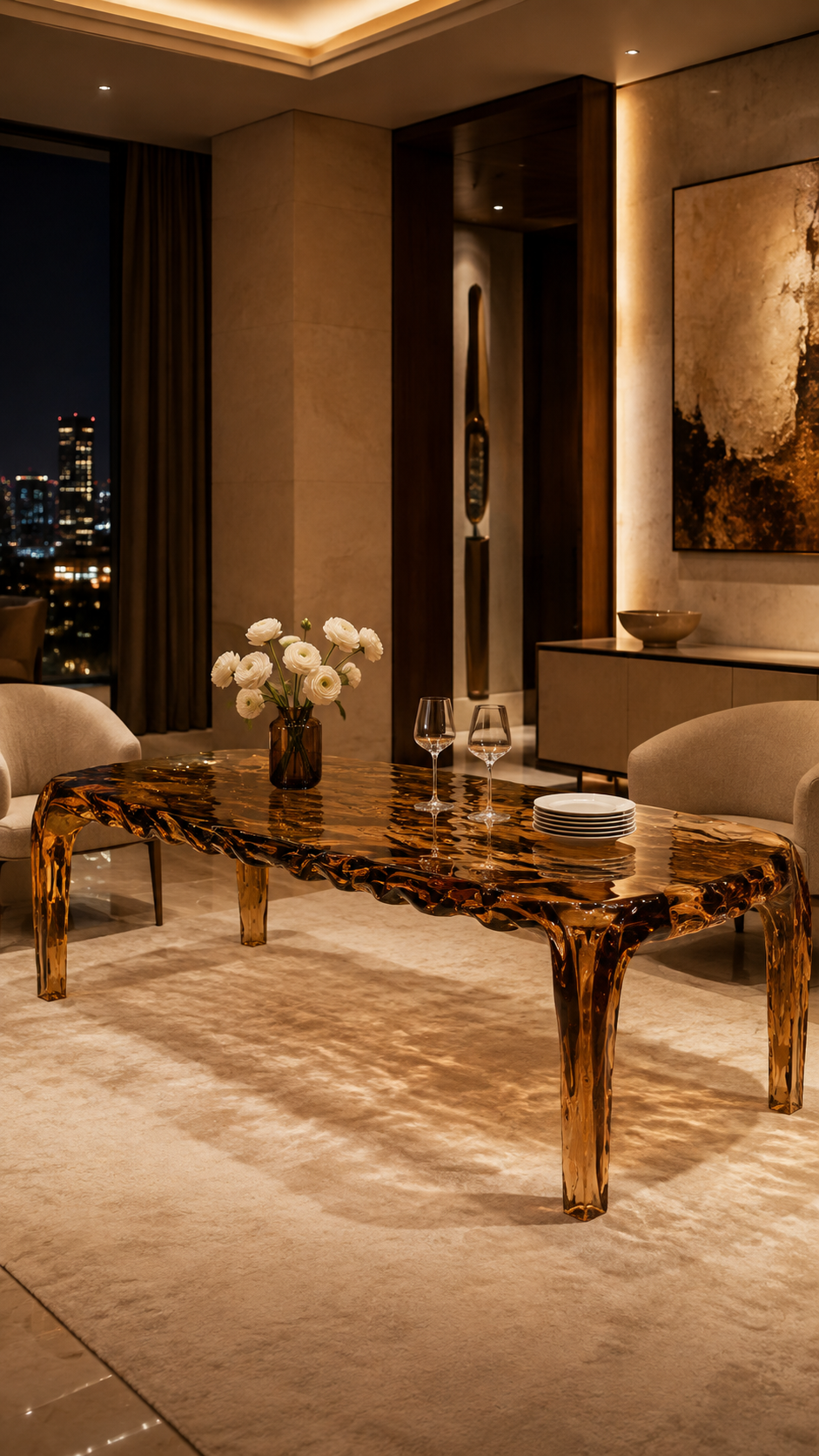
Transparent furniture has one unique advantage and one unique challenge: it reveals everything. With opaque materials, some joints, internal structures, small inconsistencies, and manufacturing details can be hidden. With clear acrylic, craftsmanship is exposed.
Edges are visible. Bonding is visible. Surface quality is visible. Polishing is visible. Thickness consistency is visible. Even small imperfections can influence the total impression.
This means high-quality synthetic crystal acrylic furniture can become a powerful demonstration of manufacturing capability. A perfectly polished edge reflects light cleanly. A carefully bonded joint appears precise. A consistent transparent surface communicates material control. A thick acrylic component with good optical clarity creates visual depth.
These details may appear technical, but to high-end customers they become emotional signals. Precision suggests professionalism. Consistency suggests reliability. Clean finishing suggests discipline. Material clarity suggests quality.
Together, these characteristics influence the way customers perceive the entire brand. A premium brand cannot rely only on logos, photography, or marketing language. Eventually, the product must confirm the promise.
If a company claims to produce luxury furniture but the polishing is inconsistent, the promise collapses. If joints appear rough or dimensions feel poorly resolved, the brand loses credibility. But when the physical product demonstrates exceptional control, customers begin to trust the brand at a higher level.
This is why acrylic craftsmanship can contribute directly to brand positioning. The material makes quality visible, and visible quality is one of the strongest tools in premium branding.
4. Customization Helps Brands Enter the High-End Market
Mass production is efficient, but exclusivity is valuable. The premium furniture market often requires a balance between technical manufacturing capability and personalized service.
Interior designers and architects may need very specific dimensions. Luxury hotels may require customized finishes. Retail stores may need furniture that reflects their brand identity. Private clients may want unique proportions, colors, or material combinations.
Synthetic crystal acrylic is particularly valuable in these situations because it supports extensive customization. A manufacturer can adjust size, thickness, profiles, colors, transparency levels, and finishes. Curved and geometric forms can be developed. Acrylic can be combined with stainless steel, brass, aluminum, marble, glass, natural stone, wood, leather, velvet, or other upholstery materials.
This flexibility changes the role of the manufacturer. Instead of acting only as a product supplier, the company can become a design partner.
A supplier responds to specifications. A design partner helps solve problems. A supplier competes on production. A design partner contributes to concepts. A supplier sells objects. A design partner helps create environments.
High-end clients value companies that understand this difference. Interior designers want suppliers capable of understanding design intent, communicating clearly, suggesting materials, handling unusual dimensions, explaining structural limitations, and delivering consistent finishing.
By offering customized synthetic crystal acrylic furniture, brands can move closer to this professional relationship. This gives them access to higher-value customer groups such as luxury villas, penthouse residences, five-star hotels, boutique hospitality projects, luxury retail environments, private clubs, high-end restaurants, interior design studios, architectural firms, and property developers.
These markets are not attracted simply by low prices. They are attracted by capability. Customization demonstrates capability, and capability strengthens positioning.
5. Acrylic Furniture Strengthens Brand Differentiation
One of the strongest brands in any design category has something recognizable about it. Sometimes it is a silhouette. Sometimes it is a color palette. Sometimes it is craftsmanship. Sometimes it is a recurring material. Sometimes it is a certain emotional atmosphere.
Furniture brands benefit greatly from this kind of consistency. If every product in a collection looks unrelated, customers may struggle to understand what the brand represents.
Synthetic crystal acrylic can help create a recognizable visual language. A brand might become known for massive crystal-clear bases. Another might focus on curved transparent forms. Another might specialize in acrylic combined with natural stone. Another may use tinted acrylic with metal detailing. Another may develop minimalist transparent furniture for architectural interiors.
The possibilities are broad, but the strategic principle is the same: material can create identity.
This identity becomes more powerful when it extends across product categories such as acrylic console tables, dining tables, coffee tables, side tables, benches, chairs, stools, shelving, display furniture, retail fixtures, and decorative objects.
When these products share visual characteristics, the brand begins to feel coherent. That coherence creates recognition. Recognition creates memory. Memory creates brand value.
This is particularly useful in a crowded furniture market where many companies sell similar basic categories. Almost every furniture supplier can offer a table. Far fewer can offer a clearly identifiable design language.
Synthetic crystal acrylic gives companies an opportunity to develop one.
6. From Product Price to Brand Value
Many manufacturers fall into the same competitive trap. They believe the easiest way to win business is to quote a lower price. This may generate orders, but it rarely builds premium positioning.
When customers learn to buy from a company primarily because it is cheaper, changing that perception later becomes difficult. The company becomes trapped in price comparison.
A stronger strategy is to increase the number of reasons customers choose the product: design, craftsmanship, customization, material clarity, service, reliability, packaging, engineering, visual identity, project support, and brand story.
Synthetic crystal acrylic furniture can support this transition because the material allows value to be expressed visibly. Instead of saying, “Our table is more expensive because we use more material,” the company can communicate a richer proposition.
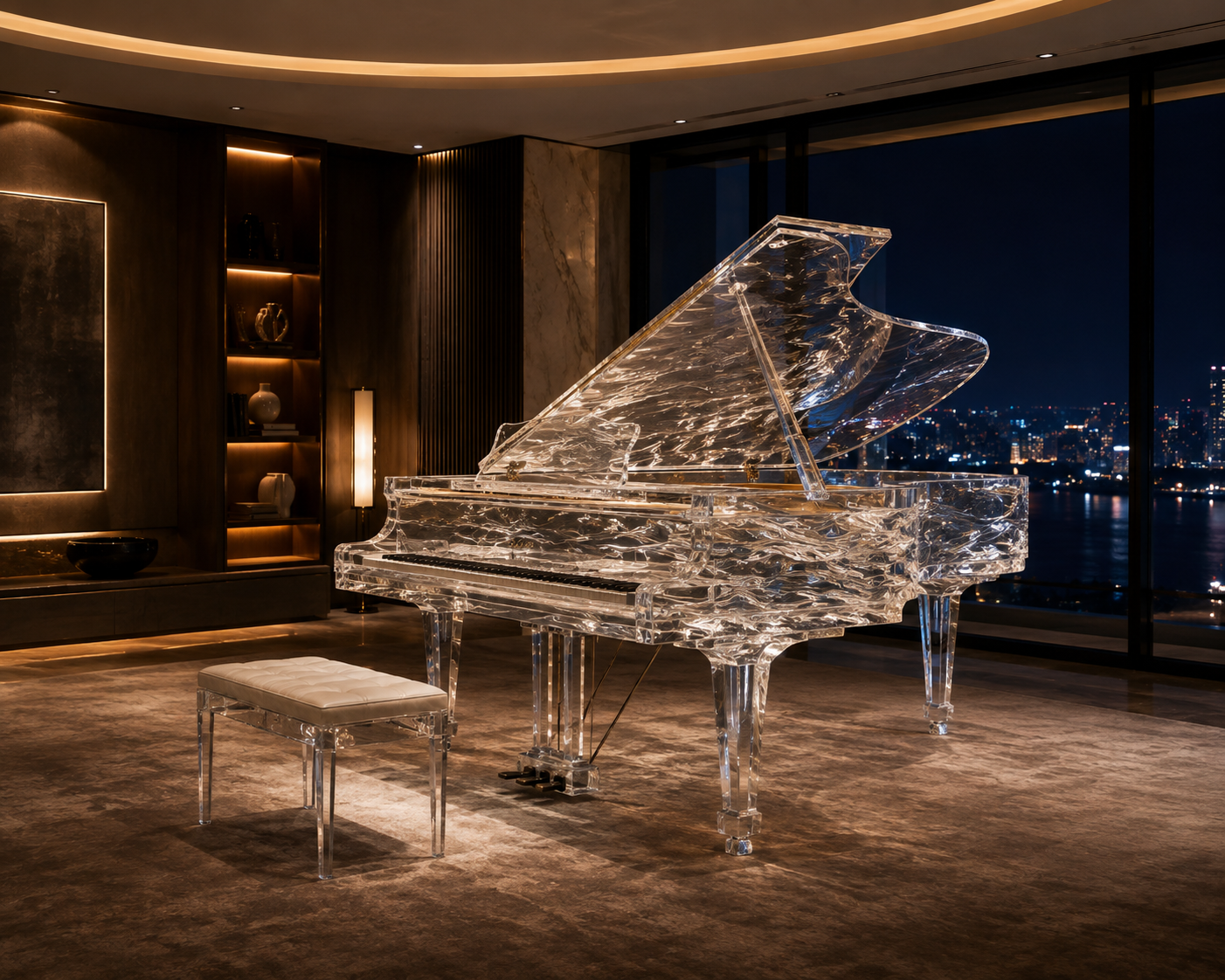
The transparency preserves the architecture of the room. The thickness creates optical depth. The edges are polished to achieve a crystal-like visual effect. The structure is engineered for stability. Dimensions can be customized. The design can be integrated with marble or metal. The piece can become a focal point within the interior.
The product now has multiple value layers. This helps shift the discussion from price toward experience, and this is one of the fundamental goals of premium positioning.
Material Combination Can Create a Higher Perceived Value
Acrylic is powerful on its own, but its positioning potential becomes even greater when combined with contrasting materials. Luxury furniture often depends on tension between transparent and opaque, soft and hard, warm and cool, natural and engineered, heavy and light.
Consider acrylic and marble. Marble is dense, opaque, natural, and visually heavy. Acrylic is clear, engineered, and visually light. When the two are combined, each material makes the other more noticeable. A marble top placed on a transparent acrylic base may appear as though it is floating.
Acrylic and brass can create a glamorous yet contemporary appearance. Acrylic and stainless steel may create a sharper architectural expression. Acrylic and velvet can combine polished transparency with tactile softness. Acrylic and wood can create a dialogue between modern clarity and natural warmth.
These combinations allow a furniture brand to target different market positions without abandoning its core material identity. They also make storytelling easier, allowing the brand to explain why certain materials were selected and how each contributes to the final visual experience.
Branding Should Extend Beyond the Physical Product
Furniture positioning is not created only in the factory. Photography matters. Website design matters. Catalogues matter. Packaging matters. Product descriptions matter. Showroom environments matter. Communication with architects and designers matters. After-sales support matters.
A premium acrylic product presented with low-quality photography may appear inexpensive. A beautifully polished console photographed without attention to lighting may lose much of its material effect.
Because acrylic interacts strongly with light, presentation is especially important. Professional imagery should show transparency, edge reflections, the relationship between furniture and architecture, scale, and craftsmanship through detailed photography.
Videos can be especially effective because transparent surfaces change as the camera moves. Customers can see how light travels through the material, understand thickness, observe reflections, and appreciate dimensional depth.
The product and the branding must support each other.
Acrylic Can Help Brands Speak to Architects and Designers
Professional design buyers evaluate furniture differently from ordinary consumers. Architects and interior designers frequently care about proportion, technical feasibility, customization, installation, materials, lead times, and project coordination.
A brand that wants to reach this audience should present itself as technically capable and design literate. Synthetic crystal acrylic furniture offers an excellent platform for this positioning.
Brands can provide information about custom sizes, available thicknesses, finish options, color possibilities, material combinations, structural recommendations, packaging solutions, project applications, customization procedures, and installation requirements.
When this technical information is combined with strong visual design, the brand becomes more credible to professional buyers. This credibility can lead to project-based business rather than isolated retail orders.
Product Positioning Is Ultimately About Perception
A material does not automatically create luxury. Acrylic itself is not enough.
The difference between ordinary acrylic furniture and premium synthetic crystal acrylic furniture lies in how the material is selected, designed, manufactured, finished, presented, and explained.
Poor proportions can make expensive material look cheap. Weak polishing can destroy optical clarity. Generic designs can reduce differentiation. Inconsistent product photography can weaken brand identity. Unclear communication can reduce trust.
Premium positioning requires consistency. The material must support the design. The design must support the brand. The manufacturing must support the promise. The marketing must support the product. The customer experience must support the price.
When all of these elements align, acrylic becomes more than a production material. It becomes a strategic branding asset.
From Transparent Product to Elevated Brand
The most important opportunity presented by synthetic crystal acrylic furniture is not transparency itself. It is transformation.
Transparency can transform the visual weight of furniture. Craftsmanship can transform material into luxury. Customization can transform manufacturing into partnership. Design can transform function into identity. Branding can transform a product into a recognizable statement. And positioning can transform a supplier into a premium furniture brand.
For companies operating in competitive furniture markets, this transformation has significant value. The lowest price is always vulnerable. Another factory can eventually offer something cheaper.
But strong design identity is harder to copy. Trust is harder to copy. Craftsmanship is harder to copy consistently. Project experience is harder to copy. A recognizable material language is harder to copy.
These are the elements that create sustainable brand value.
Conclusion
Synthetic crystal acrylic furniture can play a powerful role in elevating product positioning because it connects material, design, craftsmanship, customization, and brand identity.
Its transparency creates visual sophistication. Its optical qualities produce a sense of modern luxury. Its sculptural flexibility helps furniture become more distinctive. Its demand for precision allows craftsmanship to become visible. Its customization possibilities attract architects, designers, luxury homeowners, hotels, retailers, and high-end commercial projects.
Most importantly, acrylic gives brands the opportunity to change the conversation. Instead of competing only through price, dimensions, or basic specifications, companies can compete through design value.
They can communicate atmosphere, precision, personalization, architectural sensitivity, and identity.
This is how a material contributes to brand elevation.
The future of premium furniture will not belong only to companies that can manufacture attractive products. It will belong to companies that understand how materials shape perception.
A transparent object can do much more than allow light to pass through it. When designed strategically, synthetic crystal acrylic furniture can help customers see the product differently.
And when customers see the product differently, they begin to see the brand differently as well.
That is the real path from transparent aesthetics to brand elevation.
READ MORE:
- The Secret to an Expensive-Looking Interior: Why Designers Pair Transparent Furniture with Metal, Stone and Low-Saturation Colors
- Smoke Grey, Amber, Champagne or Clear? What Different Resin Furniture Colors Do to the Atmosphere of a Space
- From Material Presence to Premium Appeal: The Color Logic Behind Synthetic Crystal and High-End Resin Furniture
- Transparency Is Not Cheap: How Platinum Acrylic Furniture Elevates Interiors Through Color and Light
- How Can Commercial Spaces Avoid Looking Cheap? Start with the Color and Clarity of High-End Resin Furniture
- Synthetic Crystal Acrylic Furniture: A Material Trend That Cannot Be Ignored in the Future of High-End Design
- Why Can One Crystal-Grade Acrylic Furniture Piece Transform the Perceived Value of an Entire Space?
- Synthetic Crystal Acrylic Furniture: The Differentiated Answer the High-End Home Market Is Looking For
- Synthetic Crystal Acrylic Furniture: Why High-End Clients Increasingly Value the Emotional Power of Material


