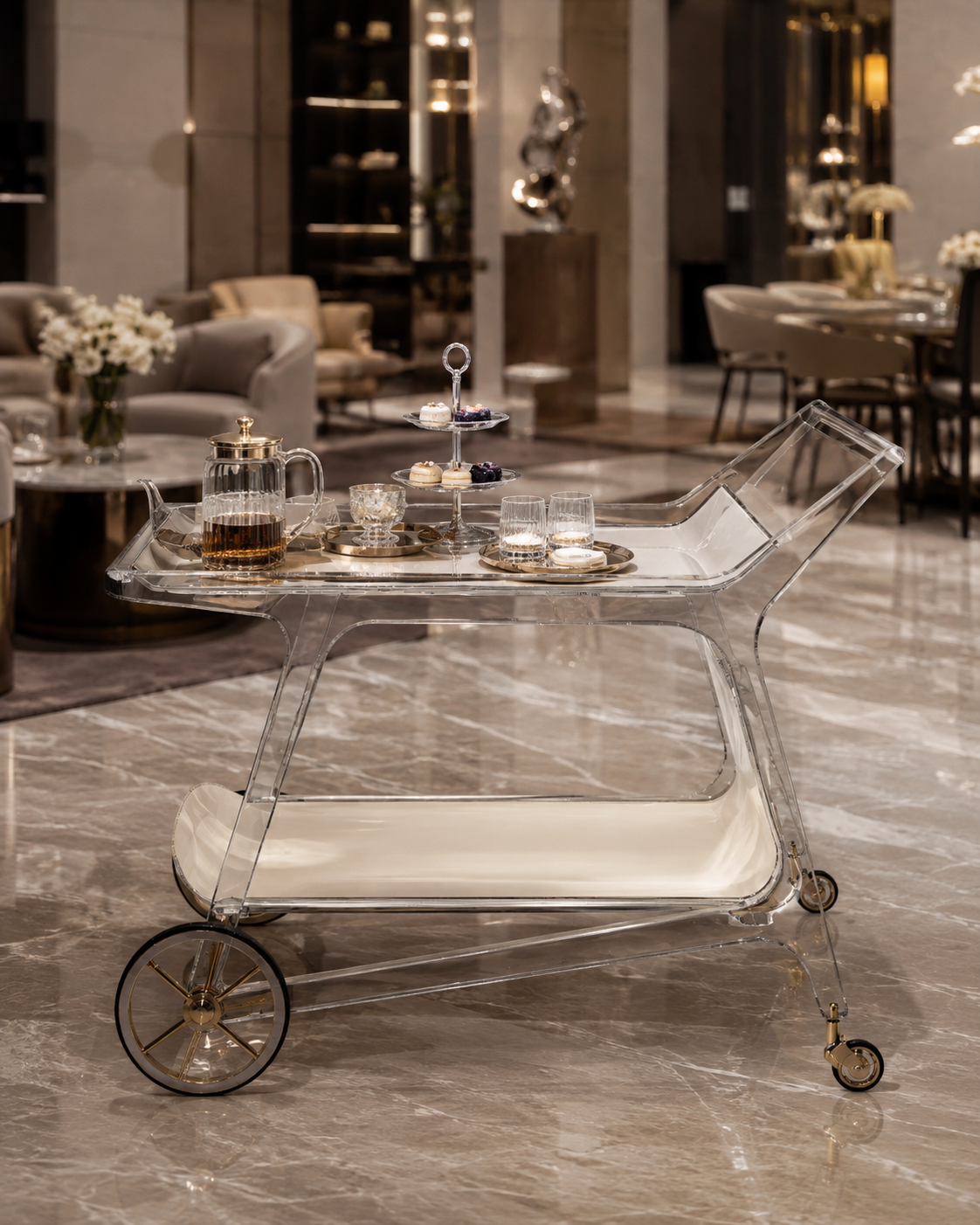
The high-end furniture market has never offered consumers more choices. Luxury homeowners can select from countless dining tables, consoles, chairs, coffee tables, cabinets, benches, shelving systems, and decorative pieces. Interior designers have access to suppliers from around the world. Architects can source products across multiple materials, styles, price levels, and manufacturing regions.
Yet this abundance has created an unexpected problem: too many products look similar.
In many furniture categories, differences are becoming increasingly difficult for customers to identify. A marble dining table from one brand may resemble one from another. Minimalist metal furniture can quickly become interchangeable. Upholstered seating often follows the same popular silhouettes. Even expensive collections sometimes struggle to create a clear visual identity.
As the premium market becomes more competitive, differentiation is no longer optional. It is becoming the foundation of positioning.
High-end customers do not simply want furniture that is well made. They want products that feel distinctive. They want objects with personality. They want furniture that contributes to the identity of a room and reflects a certain level of taste, confidence, and individuality.
This is where synthetic crystal acrylic furniture is becoming increasingly important.
Its transparency, optical depth, sculptural possibilities, visual lightness, customization flexibility, and compatibility with other premium materials give it a design language that traditional furniture cannot easily reproduce.
For brands, designers, hotels, property developers, and luxury homeowners searching for something beyond conventional furniture, synthetic crystal acrylic may offer exactly the kind of differentiated answer the market is looking for.
1. Differentiation Has Become the Real Luxury
Luxury used to be closely associated with material price. The more expensive the material, the more luxurious the product was assumed to be. Rare wood, natural marble, polished brass, leather, precious stone, and elaborate craftsmanship all became visible signals of value.
These materials remain important, but the logic of luxury is evolving.
Today, premium customers often have easy access to expensive products. The problem is no longer simply obtaining something costly. The challenge is obtaining something distinctive.
A wealthy homeowner can purchase marble furniture from dozens of brands. A boutique hotel can source brass and stone furniture from hundreds of suppliers. A luxury villa can be filled with high-value products while still feeling visually predictable.
This has changed the meaning of differentiation. The most desirable furniture is increasingly the furniture that creates a unique experience.
It may introduce an unexpected silhouette. It may interact with light in an unusual way. It may appear lighter than its physical dimensions suggest. It may use familiar materials in an unfamiliar combination. It may be customized specifically for one interior.
Synthetic crystal acrylic offers a strong response to these expectations because the material immediately introduces a different visual character.
Unlike wood, marble, or metal, clear acrylic does not create a fully opaque mass. It allows architecture, flooring, rugs, walls, artwork, and surrounding objects to remain visible through the furniture.
A thick acrylic table base can look powerful while remaining transparent. A clear console can occupy physical space without visually closing a corridor. A transparent chair can provide seating without interrupting sightlines.
This creates a type of luxury based not only on what is added to a room, but also on what is preserved. The architecture remains visible. The light continues through the space. The room maintains visual openness.
2. Transparency Creates a Unique Spatial Experience
One of the strongest advantages of synthetic crystal acrylic is its ability to influence how people perceive space.
High-end interiors are carefully composed. Designers consider scale, proportion, traffic flow, sightlines, lighting, artwork, natural materials, and the relationship between furniture and architecture. Every object changes the visual balance.
Traditional opaque furniture can easily create visual weight. A large wooden table base can divide a room. A heavy console can visually block a decorative wall. A dark coffee table can interrupt the pattern of an expensive rug.
Transparent acrylic behaves differently. It occupies space without completely blocking it. This allows designers to introduce function while preserving visual continuity.
Consider a premium living room with natural stone flooring. If a large opaque coffee table is placed in the center, much of the floor disappears visually. A clear acrylic coffee table allows the stone to remain visible. The furniture supports the room rather than competing with it.
The same principle applies to decorative rugs, architectural wall panels, sculptural staircases, panoramic windows, and other high-value features.
Acrylic also interacts strongly with light. Polished edges can catch highlights. Thick transparent sections can create optical depth. Curved surfaces can distort reflections. Tinted acrylic can subtly color the surrounding environment.
Under different lighting conditions, the furniture may appear to change throughout the day. Morning sunlight may create bright edge reflections. Afternoon light may produce softer shadows. Evening lighting can emphasize thickness and depth.
This changing appearance gives the material visual life. For premium customers, this creates a stronger emotional relationship with the furniture.
3. Sculptural Design Turns Furniture into a Signature Piece
In the premium market, functionality is expected. A dining table must be stable. A chair must support the body. A console must work within its intended space. A coffee table must perform its basic purpose.
These requirements alone do not create luxury. Luxury begins when function is combined with something memorable.
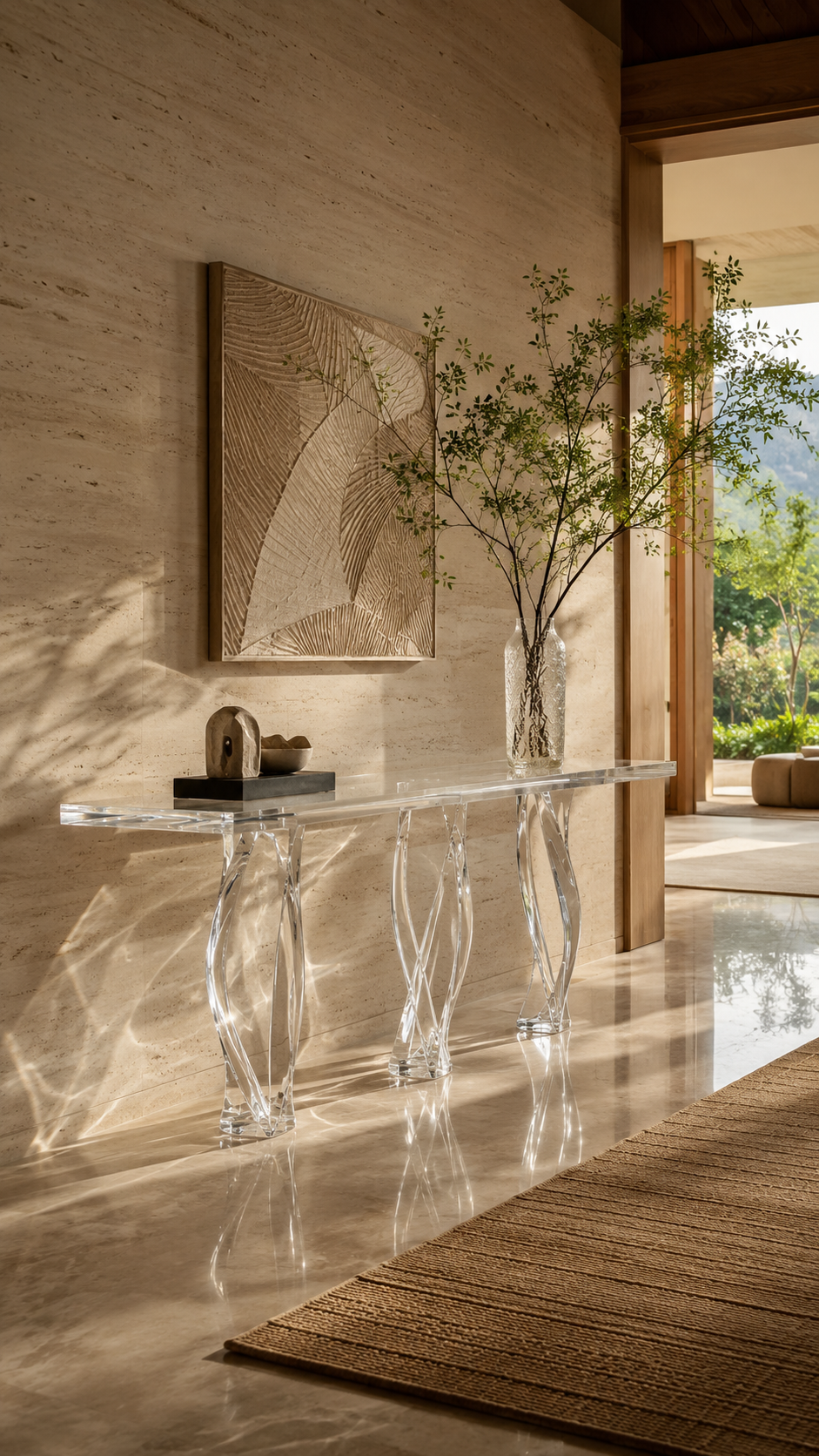
Synthetic crystal acrylic offers designers unusual sculptural possibilities. Thick transparent panels can create architectural forms. Curved components can introduce fluidity. Layered structures can generate depth. Monolithic shapes can resemble carved crystal. Precisely bonded parts can create visually clean structures. Transparent legs can make tabletops appear suspended in space.
These possibilities allow furniture to behave more like sculpture. A dining table can become the focal point of an entire room. A console can act as an architectural element. A coffee table can function as a collectible design object. A transparent bench can feel closer to an installation than ordinary seating.
This matters because signature pieces contribute strongly to brand identity. When customers remember a furniture brand, they rarely remember every product. They remember distinctive objects: a recognizable silhouette, an unusual material treatment, a dramatic proportion, or a surprising combination.
Synthetic crystal acrylic can help create these memorable moments.
4. Customization Converts Material into Exclusivity
High-end customers value personalization. A standard product may be beautiful, but a product created specifically for a residence or commercial space offers a different level of emotional and practical value.
Luxury projects often require dimensions that do not fit standard catalogues. An interior designer may need a console precisely matched to a wall. A penthouse may require an oversized dining table. A hotel may need multiple pieces adapted to its brand identity. A boutique may need acrylic display furniture designed around its merchandise.
Synthetic crystal acrylic can support this type of bespoke work. Dimensions can be adjusted. Thickness can be changed. Clear acrylic can be replaced with tinted, translucent, or frosted variations. Edges can be treated differently. Forms can be geometric, minimal, curved, or sculptural. Other materials can be integrated into the design.
This flexibility allows manufacturers to respond directly to professional design requirements. More importantly, it changes how the supplier is perceived.
A company offering only fixed products is a furniture supplier. A company capable of developing custom dimensions, engineering solutions, material combinations, and visual concepts can become a project partner.
This distinction is extremely important in the premium market. Architects and interior designers often prefer suppliers who understand the larger design concept. They want more than production. They want interpretation, problem-solving, technical advice, realistic communication, and consistent results.
Customization therefore creates value beyond the final object. It creates professional trust.
5. Craftsmanship Determines Whether Acrylic Looks Ordinary or Luxurious
Acrylic is not automatically luxurious. Material alone does not guarantee premium positioning. The difference between ordinary acrylic furniture and high-end synthetic crystal acrylic furniture is often found in craftsmanship.
Transparency reveals details. The edge quality is visible. The surface is visible. The bonding is visible. The structure is visible. The consistency of the material is visible.
This makes manufacturing precision critical. Poor polishing can make acrylic look dull. Visible bonding can reduce the sense of refinement. Improper proportions can make thick material feel heavy rather than sculptural. Inconsistent finishing can make even an expensive piece look cheap.
By contrast, precise craftsmanship can dramatically increase perceived value. A perfectly polished edge creates crystal-like reflections. Clean joints communicate control. Accurate dimensions communicate professionalism. Balanced proportions communicate design maturity. Smooth surfaces allow light to move through the product elegantly.
These details may appear minor individually, but together they define the luxury experience.
Because quality is so visible, well-executed acrylic furniture can act as proof of manufacturing capability. The product itself becomes a demonstration of precision and consistency.
.png)
6. Material Combinations Create New Luxury Languages
One of the most exciting aspects of synthetic crystal acrylic furniture is its ability to combine with other materials.
Acrylic and marble. Acrylic and brass. Acrylic and stainless steel. Acrylic and wood. Acrylic and glass. Acrylic and leather. Acrylic and velvet.
Each combination creates a different visual story because acrylic introduces strong contrast between transparent and opaque, soft and hard, warm and cool, natural and engineered, heavy and light.
Consider acrylic and marble. Marble is dense, opaque, natural, and visually heavy. Acrylic is clear, engineered, and visually light. When the two are combined, each material makes the other more noticeable. A marble tabletop on transparent acrylic supports may appear to float.
Acrylic combined with brass produces a different effect. The transparency of acrylic balances the warmth and richness of metallic surfaces. Acrylic and stainless steel may create a cleaner architectural expression. Acrylic and wood can balance engineered precision with natural warmth. Acrylic and upholstery can introduce softness into an otherwise highly polished object.
These material relationships are valuable because premium customers increasingly seek layered design. A carefully controlled combination can communicate several ideas at once: modernity and warmth, transparency and solidity, precision and comfort, minimalism and luxury.
Acrylic Helps Luxury Brands Avoid Visual Homogenization
The modern furniture industry is heavily influenced by global trends. Popular forms spread quickly. Once a particular table shape or chair design becomes successful, similar versions appear across numerous suppliers.
This creates visual homogenization. For high-end brands, that is dangerous. A premium product should not feel immediately interchangeable.
Material strategy can help solve this problem. Synthetic crystal acrylic is particularly effective because even relatively simple forms become visually distinctive when executed in transparent material.
A rectangular side table made from wood may feel familiar. The same geometry in thick polished acrylic creates a very different impression. A basic console structure can become more architectural through transparency. A standard table support can appear sculptural when optical depth is introduced.
This means manufacturers do not always need overly complicated forms to create differentiation. The material itself contributes to the visual identity.
Differentiation Is Also About the Customer Experience
A distinctive product must be supported by a distinctive experience. High-end customers evaluate the entire process.
How quickly does the supplier communicate? Are drawings clear? Can samples be provided? Can custom requirements be understood? Is the packaging professional? Is installation considered? Are care instructions available? Does the final piece match what was promised?
These factors become especially important with synthetic crystal acrylic furniture because the product is often customized and visually precise.
A small mismatch in dimension can affect the interior. Poor packaging can damage polished surfaces. Incorrect handling can reduce the quality of the final presentation.
The premium brand must therefore treat logistics and service as part of the product. Many companies can manufacture furniture. Fewer can deliver a complete professional experience.
The High-End Market Is Buying Identity, Not Just Furniture
Premium customers increasingly use interiors to express identity: restraint, creativity, warmth, confidence, modernity, sophistication, and individuality.
Furniture is one of the main tools used to create that expression. Synthetic crystal acrylic appeals strongly to this market because it does not carry a single fixed emotional meaning.
Depending on the design, it can feel futuristic, minimal, glamorous, architectural, playful, sculptural, quiet, or bold.
A clear acrylic console in a minimalist villa may feel almost invisible. A massive crystal-like dining table in a dramatic residence may become the visual centerpiece. A tinted acrylic table in a boutique may create a fashion-oriented aesthetic. A sculptural acrylic reception desk may strengthen the identity of a hotel or commercial brand.
The material therefore supports personal and brand expression.
From Furniture Manufacturer to Design Brand
For companies producing acrylic furniture, the largest opportunity may not be in selling more transparent products. The larger opportunity is repositioning.
A manufacturer that focuses only on technical specifications is easy to compare: thickness, dimensions, price, and delivery time. These criteria matter, but they rarely create strong brand loyalty.
A design brand communicates more. Why was the product designed this way? How does it interact with the room? What emotion does it create? Why were specific proportions selected? How does the transparent structure change the visual weight? What type of customer or project is it designed for? How can it be customized?
These questions move the conversation away from commodity comparison. They create a design narrative.
Synthetic crystal acrylic is particularly suitable for this strategy because the material is visually expressive enough to support storytelling. Brands can talk about light, transparency, architecture, precision, sculpture, customization, material contrast, and spatial openness.
These ideas help a manufacturer become associated with a design philosophy. And design philosophy creates long-term brand value.
The Real Differentiation Is Difficult to Copy
Competitors can copy dimensions. They can imitate shapes. They can reduce prices. They can purchase similar raw materials.
But sustainable differentiation usually comes from combining multiple strengths: design capability, material knowledge, manufacturing precision, customization, professional service, brand presentation, project experience, quality control, and consistent storytelling.
Synthetic crystal acrylic can become the center of this system, but the material works best when all of these elements support it.
A competitor may copy one table. It is far more difficult to copy an entire design language, production standard, client experience, and brand reputation.
That is the strategic value of differentiation.
Conclusion
The high-end furniture market is not simply searching for more products. It is searching for stronger reasons to choose one product over another.
Customers want furniture with identity. Designers want materials with flexibility. Architects want solutions that respect space. Luxury brands want distinctive environments. Developers want memorable interiors.
Synthetic crystal acrylic furniture addresses these demands through a rare combination of transparency, optical depth, sculptural freedom, customization, craftsmanship, and material versatility.
Its value is not limited to appearance. It can preserve architectural openness. It can create a signature visual language. It can turn ordinary furniture categories into memorable objects. It can support bespoke project requirements. It can work with marble, metal, wood, leather, glass, and textiles. It can help manufacturers move away from price competition and toward design-driven positioning.
Most importantly, it can help create products that are recognizable.
That is increasingly what the high-end home market wants: not simply another table, another chair, or another expensive material, but furniture that creates identity, atmosphere, and memory.
In that context, synthetic crystal acrylic furniture is more than a transparent alternative. It is a differentiated answer.
READ MORE:
- The Secret to an Expensive-Looking Interior: Why Designers Pair Transparent Furniture with Metal, Stone and Low-Saturation Colors
- Smoke Grey, Amber, Champagne or Clear? What Different Resin Furniture Colors Do to the Atmosphere of a Space
- From Material Presence to Premium Appeal: The Color Logic Behind Synthetic Crystal and High-End Resin Furniture
- Transparency Is Not Cheap: How Platinum Acrylic Furniture Elevates Interiors Through Color and Light
- How Can Commercial Spaces Avoid Looking Cheap? Start with the Color and Clarity of High-End Resin Furniture
- Synthetic Crystal Acrylic Furniture: A Material Trend That Cannot Be Ignored in the Future of High-End Design
- Why Can One Crystal-Grade Acrylic Furniture Piece Transform the Perceived Value of an Entire Space?
- From Transparent Aesthetics to Brand Elevation: How Synthetic Crystal Acrylic Furniture Enhances Product Positioning
- Synthetic Crystal Acrylic Furniture: Why High-End Clients Increasingly Value the Emotional Power of Material


