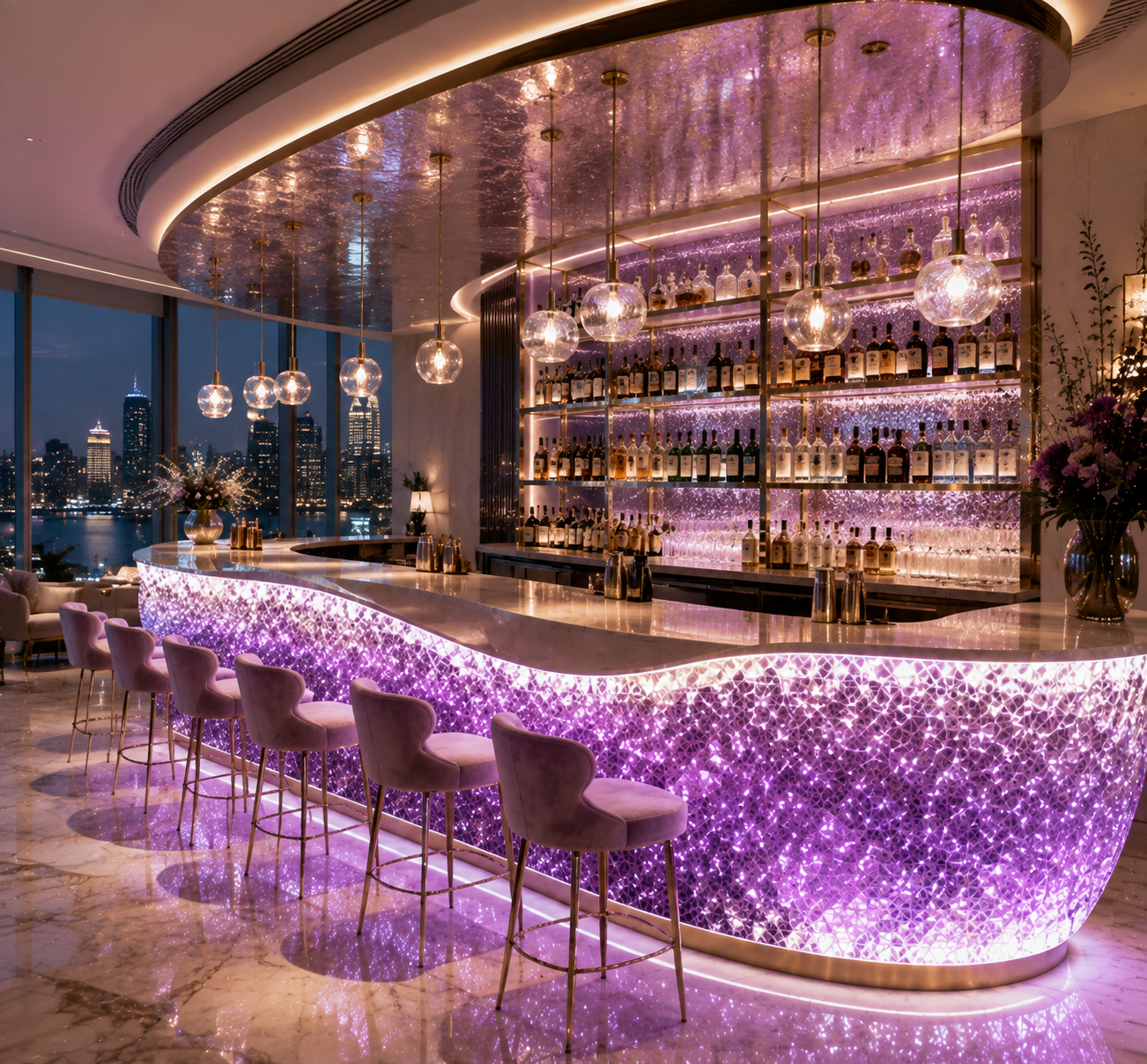
There are interiors filled with expensive furniture that still feel ordinary.
There are also interiors containing relatively few objects that immediately feel refined, deliberate, and luxurious.
The difference is rarely explained by price alone.
Luxury in interior design is created through perception. It comes from proportion, light, materials, craftsmanship, architecture, visual balance, and the emotional experience produced when all of these elements work together. Sometimes, a single carefully selected object can become the element that changes how the entire space is understood.
Crystal-grade acrylic furniture is a powerful example.
A transparent console table in an entrance hall, a substantial acrylic coffee table in a living room, a sculptural dining table base, or a crystal-clear bench can influence far more than its immediate function. When the material has exceptional clarity, polished edges, balanced proportions, and strong craftsmanship, it can create a visual effect that raises the perceived standard of everything around it.
The walls may be the same. The flooring may be the same. The lighting may be the same. Yet the room suddenly feels more sophisticated.
Why does this happen?
The answer lies in the relationship between material and perception.
High-quality acrylic does not merely occupy space. It changes how people experience space. Its transparency affects scale. Its polished surfaces affect light. Its thickness affects visual depth. Its precision affects perceived craftsmanship. Its sculptural form affects the identity of the room.
And because people often evaluate an interior as a complete experience rather than as a collection of individual products, one exceptional piece can influence the perceived value of the whole environment.
1. Materials Create the First Emotional Judgment
When people enter a room, they rarely begin by analyzing every object individually. They experience the space as a whole.
Before consciously identifying the brand of a table or the exact type of flooring, the brain has already formed an impression. Is the room warm? Minimal? Elegant? Expensive? Creative? Ordinary? Sophisticated?
Materials play a major role in creating this immediate judgment.
Wood can communicate warmth and natural character. Marble can communicate permanence and architectural luxury. Brass can suggest glamour. Leather can signal comfort and craftsmanship. Crystal-grade acrylic introduces another emotional language.
It communicates clarity. Precision. Lightness. Contemporary sophistication. Visual confidence.
This is especially powerful because transparent furniture remains relatively uncommon compared with traditional materials. A clear acrylic object immediately attracts attention because it behaves differently from the majority of furniture around it.
It is physically present, yet visually reduced. It can be thick, yet appear light. It can feel substantial when touched, yet almost disappear when viewed from a distance.
This contradiction creates curiosity. And curiosity increases perceived design value.
A room that contains something visually unexpected often feels more considered. The viewer assumes that the object was chosen intentionally. That sense of intention matters.
Luxury interiors rarely feel accidental. They feel edited. Every important object appears to belong where it is.
A crystal-grade acrylic table can reinforce that impression because its material presence is so distinctive that it rarely feels generic.
Once a viewer interprets one object as premium and deliberate, that judgment often spreads to the rest of the room. This psychological effect is important.
One exceptional piece can establish a quality benchmark. If the coffee table looks highly refined, people may begin to perceive the sofa, rug, lighting, and artwork as part of a carefully curated composition.
The furniture therefore influences more than itself. It changes the story of the room.
2. Transparency Makes the Space Feel More Valuable
One of the most important qualities of crystal-grade acrylic is transparency. Transparency is not simply a visual effect. It fundamentally changes spatial perception.
Traditional furniture blocks sightlines. A large wooden coffee table visually covers part of the floor. A heavy console hides the wall behind it. A solid dining table base creates visual mass. A dark chair can interrupt the continuity of a room.
Transparent acrylic behaves differently. The eye continues through the furniture. The rug remains visible. The stone flooring remains visible. The architecture remains visible. Decorative wall panels remain visible. The visual field stays open.
This can make a room feel larger. And spaciousness is strongly associated with luxury.
High-end interiors often feel generous even when their actual dimensions are not enormous. Designers create this impression through careful control of visual weight.
Furniture that appears too heavy can make a room feel crowded. Transparent acrylic reduces this problem.
A substantial acrylic coffee table may occupy the same physical area as a wooden table, but the visual experience is completely different.
Because the floor remains visible, the room feels less interrupted. Because light passes through the furniture, the object does not create a strong visual barrier. Because the structure appears lighter, the surrounding space feels more relaxed.
This sense of openness contributes directly to perceived value.
Imagine a luxury rug with a complex pattern. A solid coffee table may hide much of it. A crystal-clear acrylic table allows the rug to remain visually important.
Now imagine a marble floor with beautiful natural veining. Opaque furniture can cover the very surface that gives the room its premium character. Transparent furniture allows that material investment to remain visible.
This is why acrylic can amplify the value of other materials. It does not compete with them. It reveals them.
In this sense, a crystal-grade acrylic piece acts almost like a framing device. It allows the viewer to see more of the room. And when the room contains expensive flooring, artwork, architecture, or decorative finishes, that increased visibility raises the perceived value of the whole composition.
The furniture is not only beautiful itself. It helps everything else look more valuable.
.png)
3. Light Turns Acrylic into a Dynamic Material
Light is one of the most important ingredients in luxury interior design. Without good lighting, even expensive materials can appear flat. With carefully controlled light, relatively simple surfaces can become dramatic.
Crystal-grade acrylic interacts with light in a particularly powerful way.
Polished edges catch highlights. Thick transparent sections create optical depth. Curves distort reflections. Angles redirect illumination. Transparent surfaces respond to the colors around them.
As daylight changes, the appearance of the furniture changes with it.
Acrylic can look almost invisible under soft natural light. Under stronger directional light, edges may appear brighter and more defined. In evening conditions, architectural lighting can create luminous reflections inside the material.
This changing appearance gives the furniture a jewelry-like quality.
The comparison with jewelry is useful because luxury is often associated with materials that manipulate light. Crystal. Diamonds. Polished gemstones. Glass. Mirrors. Metal. All become more visually valuable because light activates them.
Premium acrylic can produce a similar sense of visual activation. It is not static. It responds.
This makes the room feel more dynamic. A person may walk past the same acrylic console several times during the day and notice different reflections each time. A dining table base may look completely different under daylight and evening pendant lighting. A thick acrylic side table may absorb the colors of nearby objects and architecture.
This creates visual richness without adding decorative clutter.
That is particularly valuable in modern luxury interiors. Many sophisticated interiors avoid excessive ornamentation. Instead, they use material behavior as decoration.
Acrylic is ideal for this approach. The material itself creates the visual effect.
No additional pattern is required. No complex carving is required. No heavy decorative detailing is necessary. Clarity, thickness, shape, and light become the decoration.
This is a highly contemporary form of luxury.
4. One Sculptural Object Can Reorganize the Entire Room
Every successful interior needs hierarchy. Not every object should demand equal attention. Some elements should remain quiet. Others should become focal points.
A room without hierarchy can feel confused. A room with one strong visual anchor often feels more sophisticated.
Crystal-grade acrylic furniture can perform this role extremely well.
The material can support bold forms without creating excessive visual heaviness. This gives designers unusual freedom.
A dining table can have thick, sculptural supports. A console can use a monolithic transparent structure. A coffee table can incorporate large geometric volumes. A bench can use dramatic curves. A side table can resemble a block of carved crystal.
If these same forms were created entirely from stone or wood, they might feel massive. In transparent acrylic, they can feel both powerful and light.
This is one of the material's most distinctive advantages. It allows scale without visual congestion.
As a result, one acrylic piece can become the focal point of the room while still allowing the architecture and surrounding furniture to remain visible.
This balance is difficult to achieve.
A focal object usually attracts attention by becoming heavier, brighter, darker, larger, or more decorative than everything around it. Crystal-grade acrylic can attract attention through transparency itself.
That makes the focal point feel more sophisticated. The object does not shout. It creates interest through material intelligence.
Once a strong focal point exists, other furniture begins to feel more intentional.
A simple sofa can look more refined when paired with a sculptural acrylic coffee table. A relatively minimal hallway can feel luxurious when anchored by a crystal-clear console. A dining room can gain architectural identity through a transparent table base. A bedroom can become more contemporary through acrylic bedside tables or a bench.
This is why one piece can change the perceived value of an entire room. It reorganizes visual hierarchy.
The viewer begins to interpret the rest of the room in relation to that object. The premium object becomes the reference point.
5. Precision Craftsmanship Raises the Perceived Quality of Everything Around It
Transparency is unforgiving. That is one of the reasons crystal-grade acrylic furniture can feel so premium when executed correctly.
Opaque materials can hide imperfections. Paint can cover irregularities. Wood grain can visually disguise small inconsistencies. Upholstery can conceal internal structures.
Clear acrylic exposes almost everything.
The edges are visible. The joints are visible. The bonding is visible. The thickness is visible. The surface condition is visible.
This creates a very high standard for manufacturing.
When the work is poor, it is obvious. But when the craftsmanship is excellent, the result can be extraordinary.
A perfectly polished acrylic edge has a luminous quality. A clean joint communicates control. Consistent transparency suggests material quality. Accurate alignment suggests engineering precision. Balanced thickness communicates intentional design.
These details may not always be consciously analyzed by the customer. Yet they influence perception.
People recognize precision even when they cannot explain exactly why an object feels well made.
That perception often expands beyond the furniture itself.
A highly precise acrylic console can make the entire entrance hall feel more carefully designed. A refined dining table can make the lighting above it appear more intentional. A crystal-clear coffee table can increase the perceived quality of the rug beneath it.
This happens because viewers assume that a space containing one highly refined object has been curated with similar care elsewhere.
Craftsmanship creates credibility. And credibility raises perceived value.
This is particularly important in luxury environments, where visible quality matters more than obvious branding.
A room does not need logos to feel premium. It needs evidence of care. Crystal-grade acrylic provides this evidence through material execution.
.png)
6. Acrylic Can Magnify the Value of Other Premium Materials
Luxury interiors are rarely built around a single material. Their richness often comes from contrast.
Stone and metal. Wood and leather. Glass and fabric. Matte and polished surfaces. Warm and cool tones.
Transparent acrylic is particularly effective because it can connect different materials without visually overwhelming them.
Consider an acrylic table paired with marble. The marble contributes natural pattern, weight, and permanence. The acrylic contributes clarity and lightness. Together, the contrast becomes stronger than either material alone.
The stone appears heavier because the support appears lighter. The acrylic appears clearer because it is placed next to an opaque surface. The relationship creates drama.
The same principle works with metal. Brass introduces warmth. Stainless steel introduces technical precision. Blackened metal introduces contrast. When these are combined with clear acrylic, each material becomes more visually distinct.
Acrylic also works well with softer materials. A transparent chair with upholstered seating creates a dialogue between hardness and softness. A crystal-clear bench beside a textured rug creates contrast between polished precision and tactile richness. An acrylic side table next to a velvet sofa allows the softness of the fabric to become more noticeable.
This ability to amplify contrast makes acrylic highly valuable in interior composition.
It does not need to dominate the room. Sometimes its greatest value comes from making other materials look better.
This is another reason why one acrylic piece can elevate an entire space. It can improve the relationship between existing elements.
Premium Space Is About Editing, Not Quantity
Many people assume that a luxurious room requires many expensive objects. In reality, sophisticated interiors often depend on restraint.
One excellent object can create more value than several average ones.
This principle is especially relevant to crystal-grade acrylic furniture. Because the material is visually distinctive, it does not need to appear everywhere.
In fact, too much transparency can reduce the effect. A single signature piece may be more powerful.
A sculptural coffee table. A dining table base. A console. A bench. A pair of side tables.
These objects can introduce enough visual difference to change the character of the room. The remaining furniture can be quieter.
This creates contrast. And contrast creates hierarchy.
The result often feels more expensive because the room appears curated rather than filled.
Luxury is not simply accumulation. It is selection.
A carefully chosen crystal-grade acrylic object communicates that someone made a deliberate decision about the room. That decision becomes part of the perceived value.
The Material Creates a Sense of Contemporary Luxury
Luxury changes over time. A heavily carved cabinet might once have represented prestige. Today, many high-end customers prefer cleaner forms.
They value openness. Precision. Customization. Architectural clarity. Material authenticity. Visual restraint.
Crystal-grade acrylic fits naturally into this contemporary definition of luxury.
It does not rely on ornament. Its value comes from execution.
The quality of the transparency matters. The quality of the polishing matters. The proportions matter. The thickness matters. The form matters. The relationship with surrounding materials matters.
This makes it particularly attractive to design-conscious customers.
Architects appreciate its spatial lightness. Interior designers appreciate its flexibility. Luxury homeowners appreciate its distinctive appearance. Hotels can use it to create memorable public spaces. Boutiques can use it to display products without visual obstruction. Developers can use it to distinguish premium show residences.
The material speaks the language of contemporary design.
And because high-end spaces are increasingly evaluated through design sophistication rather than decoration alone, acrylic can immediately strengthen perceived positioning.
Customization Adds Another Layer of Value
Acrylic becomes even more powerful when it is customized.
High-end interiors rarely fit perfectly into standard product dimensions. A console may need to match a specific wall. A dining table may need to accommodate an unusual architectural layout. A coffee table may need to align with a custom sofa. A hotel may require a specific tint. A boutique may need furniture that supports a brand color.
Crystal-grade acrylic can be adapted in many ways: dimensions, thickness, shape, edge treatment, transparency, color, curves, and material combinations.
This customization transforms furniture from a purchased object into a designed solution.
That difference is significant. When an object is clearly made for one space, the room feels more exclusive. The furniture no longer appears interchangeable. It belongs there.
This sense of belonging is a major part of high-end design.
Bespoke furniture creates emotional ownership. It tells the customer that the space is unique.
A single customized acrylic piece can therefore create a much stronger perception of luxury than several standard products.
A Memorable Object Increases the Emotional Value of a Space
Ultimately, people remember how spaces make them feel.
They may not remember the exact dimensions of a table. They may not know what type of acrylic was used. They may not understand the polishing process.
But they remember the impression.
The table that seemed to float. The console that looked like crystal. The coffee table that reflected the evening light. The transparent furniture that allowed the marble floor to remain visible.
These memories matter.
A memorable space feels more valuable than a forgettable one.
This is particularly important in hospitality, retail, and luxury residential design.
Hotels want guests to remember the lobby. Boutiques want customers to remember the environment. Developers want buyers to remember a show residence. Homeowners want their interiors to feel personal and distinctive.
One signature acrylic object can become the memory anchor. It gives people something to talk about. Something to photograph. Something to remember.
That emotional value becomes part of the space's perceived value.
Conclusion
A single crystal-grade acrylic furniture piece can transform the perceived value of an entire space because luxury is not created by price alone. It is created by perception.
Crystal-grade acrylic influences perception in several powerful ways.
Its transparency preserves visual openness. Its optical clarity makes architecture and surrounding materials more visible. Its polished edges interact with light. Its thickness creates depth. Its sculptural possibilities create focal points. Its precision communicates craftsmanship. Its compatibility with marble, metal, wood, glass, leather, and textiles strengthens material contrast. Its customization creates exclusivity. Its visual character produces memory.
All of these effects extend beyond the furniture itself. They influence how people judge the room.
A premium acrylic coffee table can make a living room feel more curated. A transparent console can make an entrance feel more architectural. A sculptural dining table can establish the identity of an entire dining space. A crystal-clear bench can introduce contemporary sophistication without visually closing the room.
The value of the piece therefore cannot be measured only by its function.
Its real value lies in what it does to everything around it.
It changes proportion. It changes light. It changes visual hierarchy. It changes the relationship between materials. It changes the emotional experience. Most importantly, it changes perception.
And in high-end interior design, perception is one of the most powerful forms of value.
That is why one carefully designed piece of crystal-grade acrylic furniture can do something far greater than fill an empty area. It can redefine the space.
READ MORE:
- The Secret to an Expensive-Looking Interior: Why Designers Pair Transparent Furniture with Metal, Stone and Low-Saturation Colors
- Smoke Grey, Amber, Champagne or Clear? What Different Resin Furniture Colors Do to the Atmosphere of a Space
- From Material Presence to Premium Appeal: The Color Logic Behind Synthetic Crystal and High-End Resin Furniture
- Transparency Is Not Cheap: How Platinum Acrylic Furniture Elevates Interiors Through Color and Light
- How Can Commercial Spaces Avoid Looking Cheap? Start with the Color and Clarity of High-End Resin Furniture
- Synthetic Crystal Acrylic Furniture: A Material Trend That Cannot Be Ignored in the Future of High-End Design
- Synthetic Crystal Acrylic Furniture: The Differentiated Answer the High-End Home Market Is Looking For
- From Transparent Aesthetics to Brand Elevation: How Synthetic Crystal Acrylic Furniture Enhances Product Positioning
- Synthetic Crystal Acrylic Furniture: Why High-End Clients Increasingly Value the Emotional Power of Material


