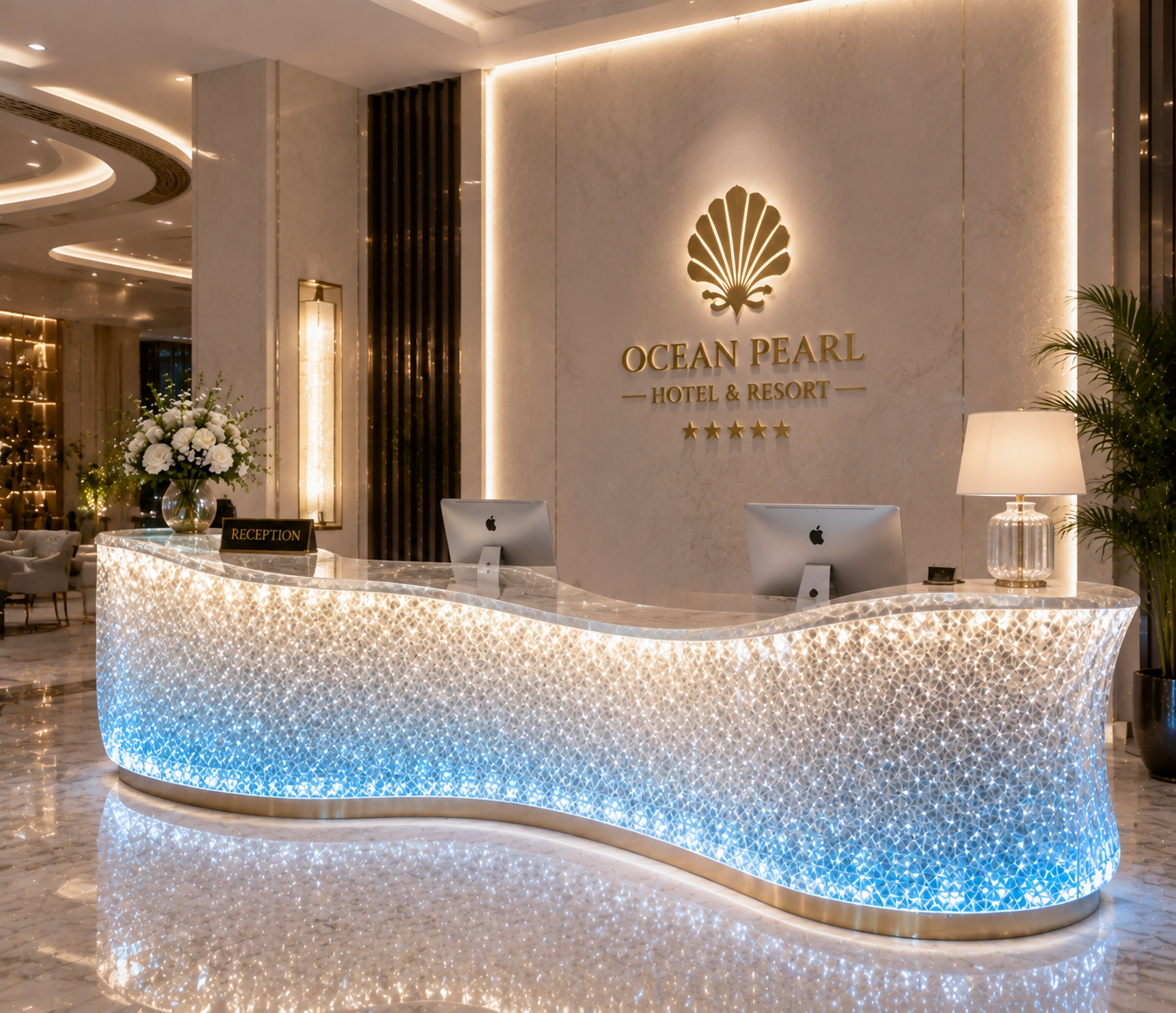
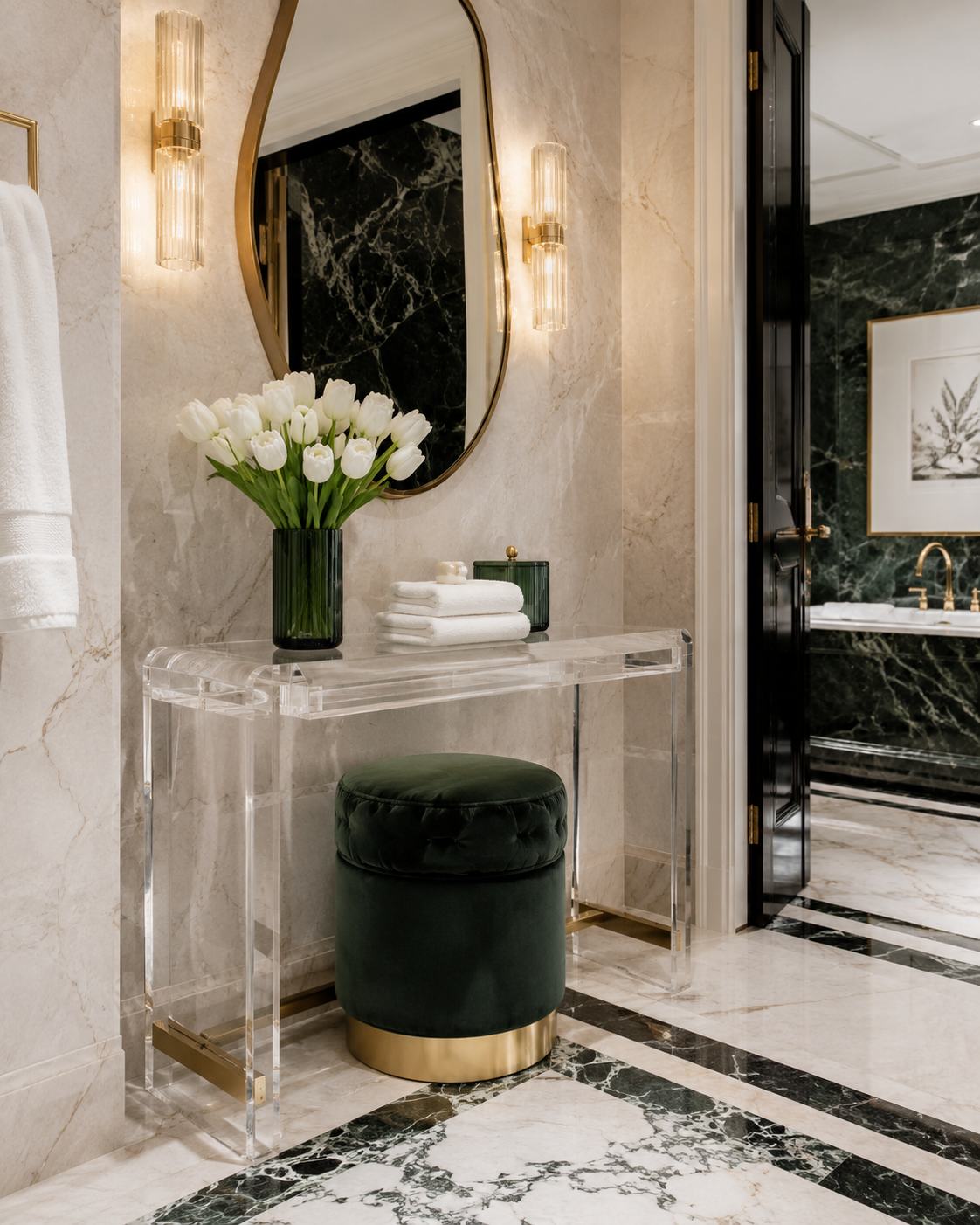
For years, transparent furniture has carried an unfair stereotype. In low-cost interiors, clear plastic furniture can look thin, bluish, cloudy or overly glossy, leading some designers and buyers to associate transparency with “cheap plastic.” Yet in luxury hotels, flagship stores, high-end residences, galleries and premium restaurants, the opposite can be true. When optical clarity, color, thickness, polishing and lighting are carefully controlled, transparent furniture can become one of the most sophisticated materials in a space.
This distinction is increasingly important as luxury customers place more value on environments and experiences. Bain & Company and Fondazione Altagamma estimated global luxury spending at approximately €1.44 trillion in 2025 and highlighted an ongoing shift from product ownership toward experiences, emotion and personal connection. Bain specifically argued that physical luxury retail needs to become more immersive and emotionally engaging. JLL also reported that newly opened luxury retail space in the United States increased 65.1% year over year in the first half of 2025, reinforcing the continuing strategic importance of well-designed physical environments.
Furniture therefore does more than fill space. A transparent platinum acrylic console, synthetic crystal table or high-end resin reception desk can influence how customers perceive the entire brand.
In this article, “platinum acrylic” refers to premium furniture-grade acrylic selected and processed for superior visual clarity, color consistency, substantial thickness and high-quality finishing. It should not be interpreted as a universal technical grade defined by an international standard.
1. Transparency Looks Expensive When It Creates Visual Space Instead of Visual Noise
The difference between inexpensive-looking transparent furniture and luxury transparent furniture often becomes obvious before a customer ever touches it.
Cheap-looking furniture attracts attention for the wrong reasons. The material may contain a slight gray, blue or yellow undertone. Edges may appear whitish after rough machining. Bonding lines may be visible. Internal reflections can look uncontrolled. Thin panels may flex visually, making the object feel temporary.
Premium transparent furniture behaves differently. Instead of becoming another visually heavy element, it allows architecture, flooring, lighting and merchandise to remain visible through the object.
Consider a luxury fashion boutique with limited floor area. Introducing several dark wood tables can divide the space into visually dense blocks. Replacing selected pieces with thick clear acrylic display tables can preserve sightlines between collections while still providing substantial furniture forms. The tables physically occupy space but do not visually close it.
This is particularly valuable in jewelry stores, beauty boutiques and watch showrooms. Transparent acrylic pedestals or synthetic crystal display bases can allow merchandise to appear almost suspended within the environment. In hotel lobbies, a clear or lightly tinted resin console can provide function without competing with stone walls, artwork or architectural lighting.
This design advantage becomes increasingly relevant as luxury stores compete not simply through inventory, but through physical experience. Bain's 2025 luxury research identifies experiences as a primary source of market growth and emphasizes the need for physical environments that deliver emotion and immersion. Transparent furniture supports this strategy because it can act more like an optical layer than a conventional solid object.
However, transparency alone never guarantees luxury.
The material must possess enough thickness and visual purity to communicate permanence. A thick platinum acrylic coffee table, for example, can create the impression of a precisely cut block of ice or crystal. A thin molded transparent table may communicate almost the opposite.
This is why designers should evaluate transparent furniture by more than its product photographs. They should look at the thickness of the legs and top, edge quality, internal clarity, joining method and how the piece interacts with the surrounding architecture.
Luxury transparency is not about making furniture invisible. It is about making its presence feel deliberate.
2. Color Turns Clear Furniture From a Material Into a Design Language
“Transparent” does not necessarily mean “colorless.”
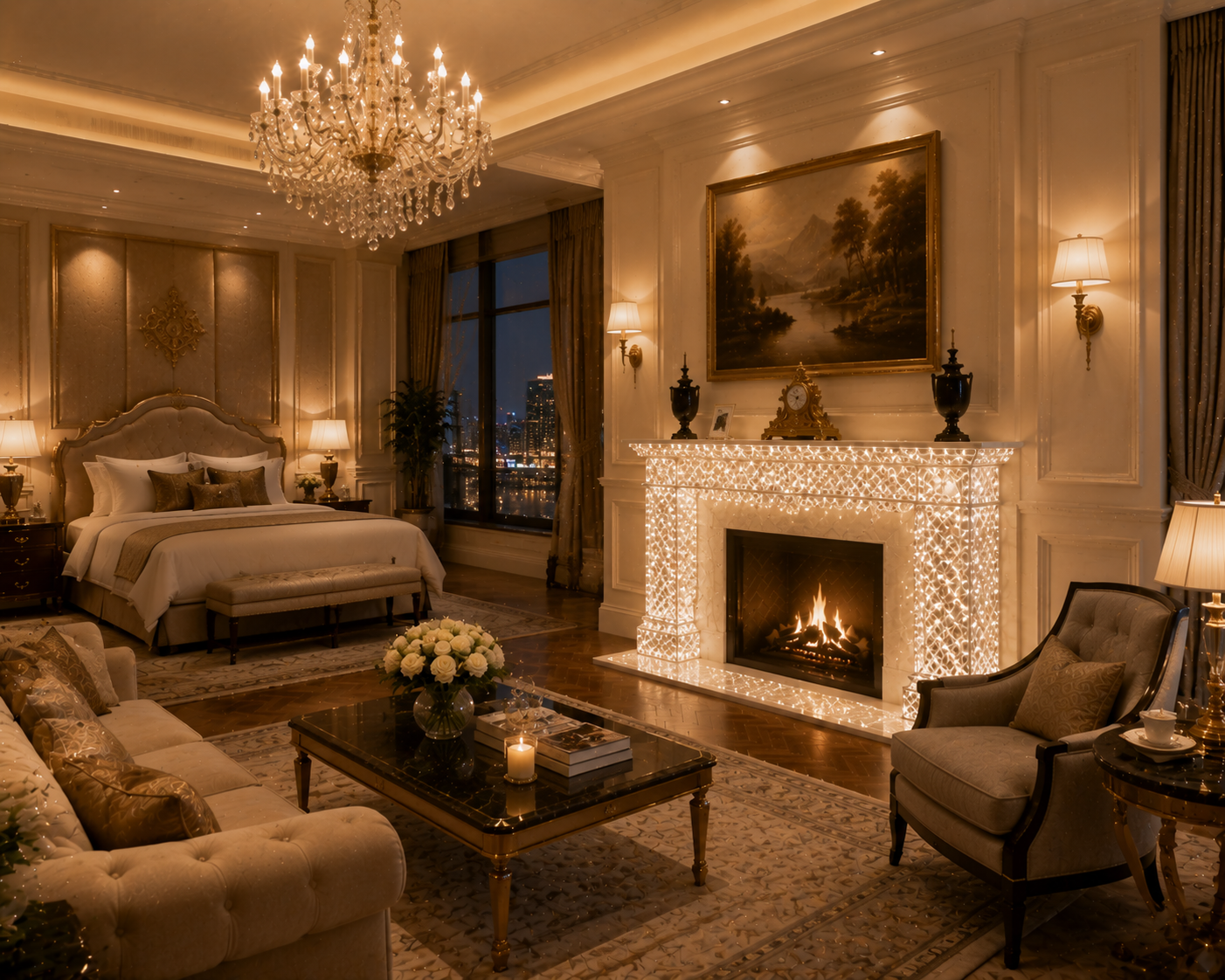
Some of the most sophisticated applications of premium acrylic, synthetic crystal and high-end resin furniture use subtle color rather than absolute clarity. Smoke gray, champagne, amber, bronze, ice blue, tea brown and pale rose can change the emotional character of an interior while preserving transparency.
The important word is subtle.
In a high-end hotel bar, a warm amber resin side table can pick up the color of brass lighting and walnut wall panels. Under low lighting, the table develops a jewel-like glow rather than reading as ordinary plastic.
In a luxury skincare store, a pale pink synthetic crystal pedestal can visually connect with product packaging without using opaque paint. Because light passes through the color, the result has depth rather than simply a colored surface.
For a minimalist fashion showroom, almost colorless platinum acrylic furniture can preserve the white, stone and stainless-steel palette while creating reflections that change as customers move through the room.
These effects depend on precise color control.
With transparent furniture, even a slight unwanted undertone can become stronger as material thickness increases. A small acrylic sample may appear perfectly neutral when viewed at 5 mm thickness, while a 60- or 100-mm furniture component can reveal much more noticeable edge color.
That is why professional buyers should evaluate the actual thickness required for the finished piece rather than approving color solely from a thin sample chip.
The industry has measurable methods for discussing such issues. ISO 17223:2026 specifies an instrumental method for determining yellowness index and changes in yellowness index in clear, translucent and opaque plastics. ISO notes that changes in yellowness index can be used to evaluate environmental effects such as heat and UV exposure on color stability.
For premium commercial furniture, this matters because intentional champagne is luxury; accidental yellowing is not.
The same principle applies to high-end resin and synthetic crystal furniture. If ten clear resin stools are installed around a bar, they should belong to the same visual family. If one is slightly warmer, another slightly cooler and another visibly cloudier, customers may not know why the installation looks inconsistent—but they will sense it.
Color consistency therefore becomes part of craftsmanship.
3. True Luxury Transparency Can Be Measured Through Light Transmission and Haze
One of the most important mistakes in transparent furniture procurement is accepting the word “clear” as a complete specification.
Clear materials can perform very differently.
Two acrylic panels may both appear transparent in a showroom, yet one can transmit light more cleanly while another creates noticeable haze. Two resin castings may look similar from a distance, but concentrated lighting can reveal internal bubbles, suspended particles or cloudiness in one of them.
Optical performance gives designers a more objective way to discuss these differences.
ASTM D1003 is a recognized test method for evaluating haze and luminous transmittance in transparent plastics. ASTM describes the method as covering light-transmitting and wide-angle light-scattering properties of essentially transparent plastic materials.
For furniture buyers, haze is especially relevant. A material can technically transmit substantial light while still scattering enough of that light to appear smoky or cloudy. In a luxury commercial space, this difference can be immediately visible when a spotlight passes through a transparent table edge or pedestal.
Premium PMMA products demonstrate what controlled optical performance can look like. Röhm states that clear PLEXIGLAS products can achieve visible light transmission of up to 92%. Its PLEXIGLAS Optical 0Z024 technical documentation is specifically designed for high optical quality and long light paths. These figures should be understood as benchmarks for specific products rather than automatic specifications for all acrylic furniture.
The broader lesson is more important than any single number: transparency should be treated as optical performance.
For a platinum acrylic dining table, designers should examine whether the center of a thick component remains visually clean. For a synthetic crystal reception desk, they should inspect large cast sections against both dark and bright backgrounds. For a high-end resin coffee table, they should evaluate internal bubbles and haze under directional lighting.
This is particularly important for large furniture.
The bigger and thicker the object becomes, the farther light may travel through the material. Small imperfections that are almost invisible in a sample can become prominent in an entire console or sculptural table base.
High-end transparency therefore comes from material selection, casting or fabrication quality, polishing and quality control working together.

4. Lighting Is What Makes Platinum Acrylic Furniture Come Alive
Transparent furniture is unusual because its appearance cannot be separated from its lighting environment.
Opaque furniture primarily reflects light from its surface. Transparent acrylic, synthetic crystal and clear resin can reflect, transmit, refract and guide light through the object itself.
That makes lighting part of the furniture design.
A platinum acrylic table positioned under soft diffuse illumination may appear quiet and almost weightless. Place the same table beneath narrow-beam spotlights and its polished edges may become bright lines of reflected light.
Move a champagne-colored resin console beside a 2700K decorative luminaire and the warm tone becomes more atmospheric. Place it under cooler retail lighting and the same piece can feel cleaner and more contemporary.
This is why material samples should ideally be reviewed under the lighting planned for the final project.
The U.S. Department of Energy explains that color rendition concerns how lighting interacts with objects to produce their perceived color appearance. DOE describes ANSI/IES TM-30 as a more comprehensive method for evaluating color rendition than earlier single-number approaches and notes its growing use among lighting manufacturers, specifiers and researchers.
For designers working with transparent furniture, that technical principle has very practical consequences.
Imagine a cosmetics store with pale pink acrylic display stands. The color of those stands must work with the lighting, packaging and customers' skin tones simultaneously. A lighting spectrum that distorts the pink can disrupt the intended brand palette.
Now imagine a cocktail bar using amber resin tables. Here, perfect color neutrality may be less important than creating warmth and saturation. Lighting can deliberately activate the resin and make each table appear almost illuminated from within.
Premium acrylic also opens possibilities for edge lighting. Because acrylic can guide light, LEDs hidden beneath a base or inside a furniture connection can cause polished edges to glow. Röhm specifically identifies acrylic's high light transmission and light-guiding properties as valuable for lighting-related applications.
Used carefully, this allows a console, bar counter, shelf or reception desk to become part furniture and part architectural lighting feature.
The key is restraint. Luxury lighting reveals the material; excessive lighting turns it into a gimmick.
5. Thickness, Polished Edges and Construction Details Determine Whether the Material Feels Like Crystal or Plastic
One reason premium transparent furniture can look extraordinarily expensive is that it exposes almost everything about its construction.
There is nowhere for poor craftsmanship to hide.
With an opaque cabinet, internal fixings and joints can often be concealed. With a transparent acrylic console, viewers may see directly through the legs, connections and underside of the top.
Edge finishing is therefore crucial.
A carefully polished platinum acrylic edge can look bright, precise and almost liquid. Poor machining leaves fine scratches that scatter light and create a cloudy white line around the object. Under hotel, retail or gallery lighting, this difference becomes even more obvious.
Thickness also changes perceived value.
A substantial transparent coffee table with thick geometric legs has visual weight even though it does not block the view through the room. This combination—physical mass with optical lightness—is one of the reasons premium acrylic and synthetic crystal work so well in luxury interiors.
High-end resin creates similar opportunities but with greater sculptural freedom. Resin can be cast into irregular forms, soft curves and larger artistic volumes. Designers can introduce controlled color gradients, embedded visual effects or translucent zones that would be difficult to achieve with conventional furniture materials.
Synthetic crystal furniture can sit between these two worlds: visually closer to a decorative crystal object, yet designed at furniture scale. Side tables, benches, consoles, stools and sculptural bases can become focal pieces without the visual heaviness of marble or dark timber.
In practice, designers should inspect furniture from the side and back, not only from the front. They should look through joints toward contrasting backgrounds. They should examine how polished surfaces transition into edges. They should check whether bonding areas interrupt clarity.
These details matter particularly in commercial spaces because customers often encounter furniture at close range.
A watch customer standing beside a clear display table may be only 30 centimeters from its edge. A hotel guest signing documents at an acrylic reception console will see the material from multiple angles. A restaurant customer sitting beside a resin pedestal base may spend two hours looking at it.
The closer and longer the interaction, the more finishing quality matters.
6. Real Luxury Means Maintaining Clarity and Color After Thousands of Customer Interactions
A transparent piece of furniture does not remain in a perfect rendering.
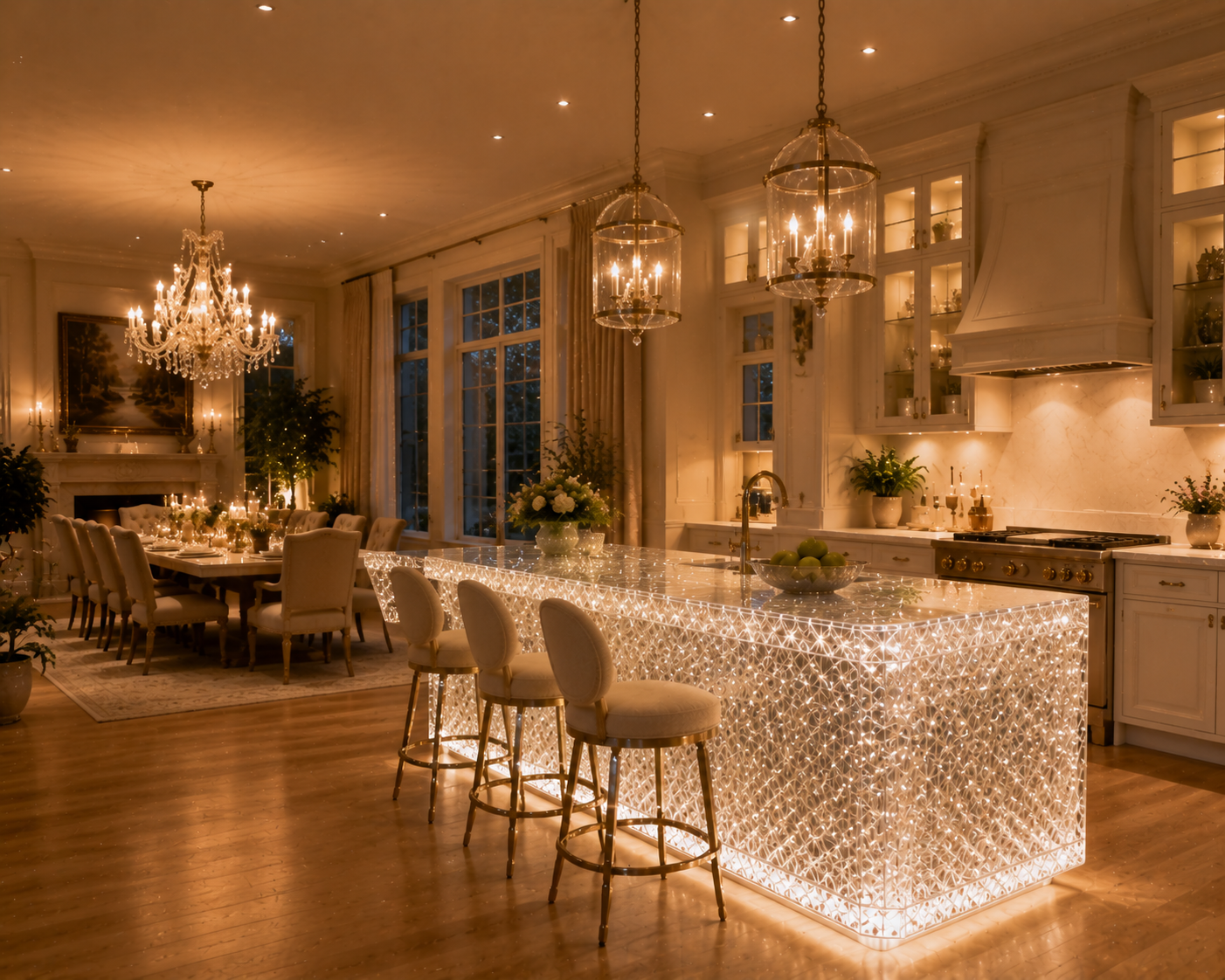
In real commercial environments, it is touched, cleaned, moved, exposed to lighting and sometimes positioned close to windows every day. Fingerprints, micro-scratches and unsuitable cleaners can gradually change its appearance.
This makes long-term visual performance one of the most important differences between premium and low-cost transparent furniture.
A platinum acrylic display pedestal may look excellent at installation, but if its surface quickly accumulates visible scratching, the premium impression disappears. A clear resin table exposed to strong daylight can become problematic if the selected formulation does not provide appropriate color stability. A synthetic crystal console that is cleaned using incompatible chemicals can lose the gloss that originally gave it depth.
Standards again help move the conversation beyond vague claims such as “non-yellowing.”
ASTM D4674-25 covers accelerated testing for the color stability of plastics under conditions associated with typical indoor office environments, including fluorescent lighting and window-filtered daylight. The standard explains that such testing is intended to induce property changes associated with exposure to light and heat under controlled conditions.
ISO 17223:2026 provides a method for measuring changes in yellowness index, giving designers and manufacturers another way to discuss whether a transparent plastic is maintaining its original appearance.
For commercial buyers, the practical requirement is to ask better questions.
How is the transparent material selected? How is color consistency controlled? What is the recommended cleaning method? How should scratches be handled? Has the material been evaluated for the expected lighting and daylight conditions? Can replacement pieces be produced with consistent color?
These questions are especially important for multi-location projects.
A luxury brand may initially purchase one platinum acrylic reception desk for a flagship store and later order matching display tables for locations in London, Dubai, New York or Singapore. Consistency between production runs becomes part of the brand's visual identity.
The same applies to hotels purchasing resin side tables for dozens of guestrooms or restaurants ordering synthetic crystal stools and bases across multiple locations.
Ultimately, transparent furniture does not become luxurious because it resembles glass. It becomes luxurious when designers and manufacturers control everything that transparency reveals.
Color must be intentional. Optical clarity must remain clean through real furniture thicknesses. Polished edges must interact precisely with light. Construction details must withstand close inspection. Lighting must enhance rather than distort the material. And the furniture must continue to look refined after real commercial use.
That is why premium platinum acrylic, synthetic crystal and high-end resin furniture can be powerful tools for contemporary interiors.
Transparency removes visual mass but does not have to remove presence. With the right color, thickness, craftsmanship and lighting, a transparent table, console, reception desk, pedestal or chair can feel less like “plastic furniture” and more like an architectural object made from captured light.
For luxury spaces, that distinction changes everything.
.png)
READ MORE:
- The Secret to an Expensive-Looking Interior: Why Designers Pair Transparent Furniture with Metal, Stone and Low-Saturation Colors
- Smoke Grey, Amber, Champagne or Clear? What Different Resin Furniture Colors Do to the Atmosphere of a Space
- From Material Presence to Premium Appeal: The Color Logic Behind Synthetic Crystal and High-End Resin Furniture
- How Can Commercial Spaces Avoid Looking Cheap? Start with the Color and Clarity of High-End Resin Furniture
- Synthetic Crystal Acrylic Furniture: A Material Trend That Cannot Be Ignored in the Future of High-End Design
- Why Can One Crystal-Grade Acrylic Furniture Piece Transform the Perceived Value of an Entire Space?
- Synthetic Crystal Acrylic Furniture: The Differentiated Answer the High-End Home Market Is Looking For
- From Transparent Aesthetics to Brand Elevation: How Synthetic Crystal Acrylic Furniture Enhances Product Positioning
- Synthetic Crystal Acrylic Furniture: Why High-End Clients Increasingly Value the Emotional Power of Material


